
The Revolutionary War History Production By Megan Brooks
The Revolutionary War History Production By: Megan Brooks
Answer These Questions • 1. When did the war start ? – What did they call it? • 2. What year did was the Declaration of Independence adopted by the Second Continental Congress? • 3. Who surrendered at Yorktown? • 4. What year did the war end?

“Shot Heard Around the World” • April 19, 1775 The first shots of the Revolutionary War are fired at Lexington and Concord in Massachusetts. The news of the bloodshed rockets along the eastern seaboard, and thousands of volunteers converge
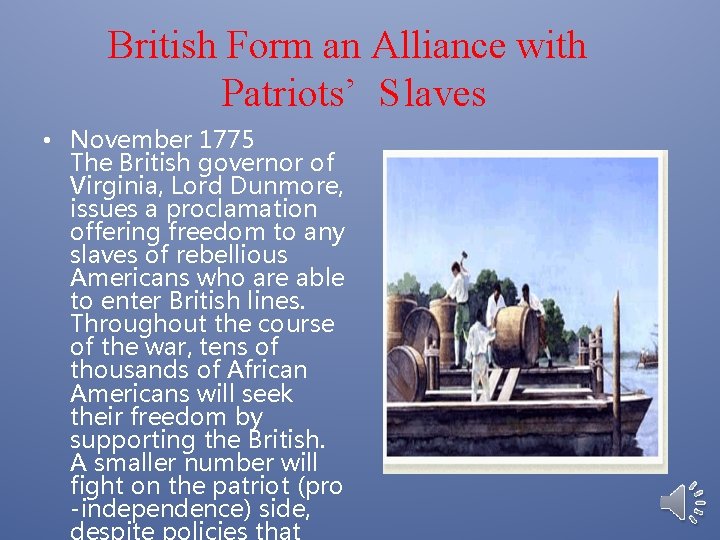
British Form an Alliance with Patriots’ S laves • November 1775 The British governor of Virginia, Lord Dunmore, issues a proclamation offering freedom to any slaves of rebellious Americans who are able to enter British lines. Throughout the course of the war, tens of thousands of African Americans will seek their freedom by supporting the British. A smaller number will fight on the patriot (pro -independence) side, despite policies that
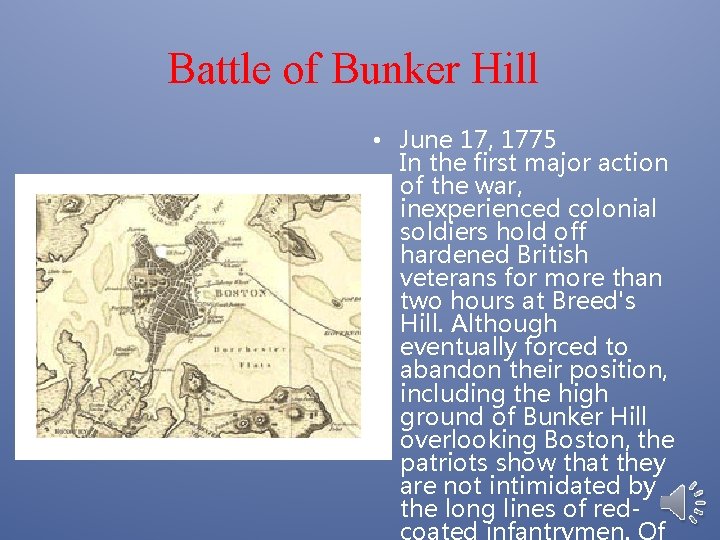
Battle of Bunker Hill • June 17, 1775 In the first major action of the war, inexperienced colonial soldiers hold off hardened British veterans for more than two hours at Breed's Hill. Although eventually forced to abandon their position, including the high ground of Bunker Hill overlooking Boston, the patriots show that they are not intimidated by the long lines of redcoated infantrymen. Of

Loyalists Defeated at Moore’s Creek • February 27, 1776 A force of loyalists (Americans who want to remain British subjects), most of them of Scots descent, is defeated by a patriot army at the Battle of Moore’s Creek Bridge. This setback will largely
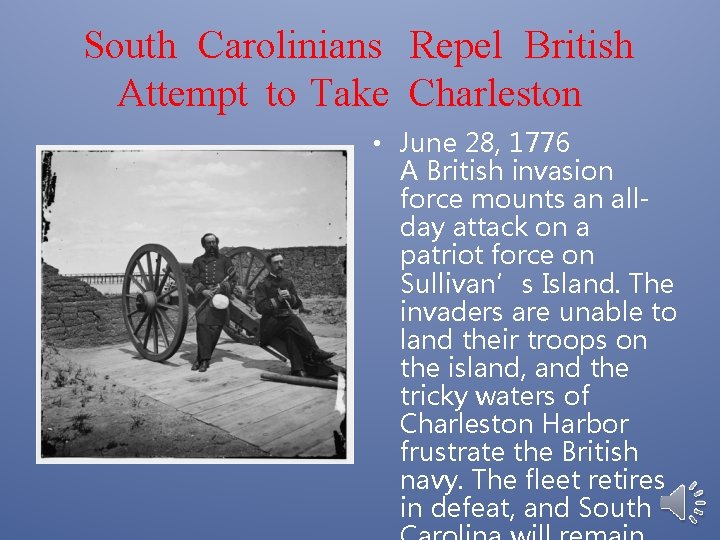
South Carolinians Repel British Attempt to Take Charleston • June 28, 1776 A British invasion force mounts an allday attack on a patriot force on Sullivan’s Island. The invaders are unable to land their troops on the island, and the tricky waters of Charleston Harbor frustrate the British navy. The fleet retires in defeat, and South
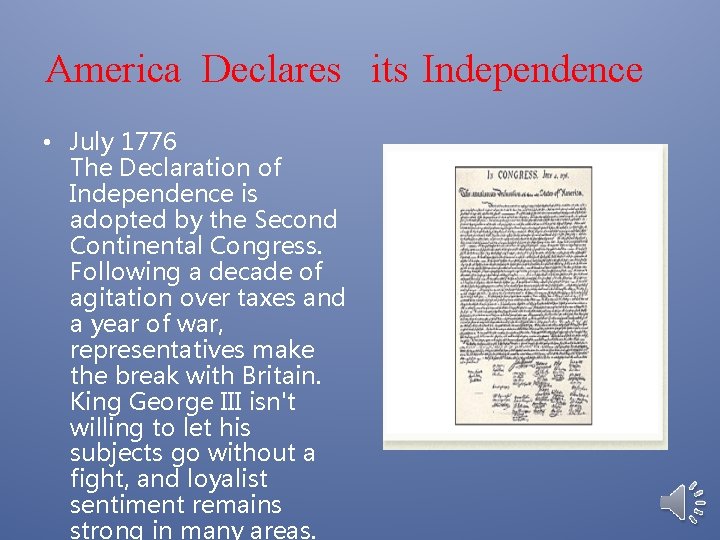
America Declares its Independence • July 1776 The Declaration of Independence is adopted by the Second Continental Congress. Following a decade of agitation over taxes and a year of war, representatives make the break with Britain. King George III isn't willing to let his subjects go without a fight, and loyalist sentiment remains strong in many areas.
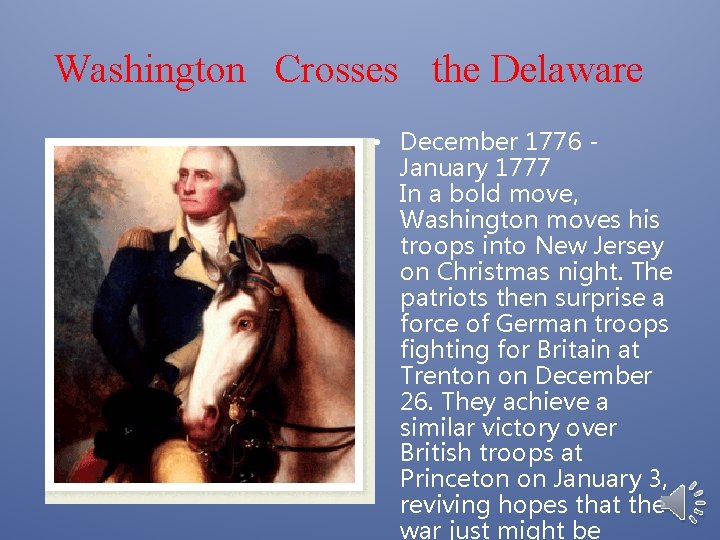
Washington Crosses the Delaware • December 1776 January 1777 In a bold move, Washington moves his troops into New Jersey on Christmas night. The patriots then surprise a force of German troops fighting for Britain at Trenton on December 26. They achieve a similar victory over British troops at Princeton on January 3, reviving hopes that the war just might be
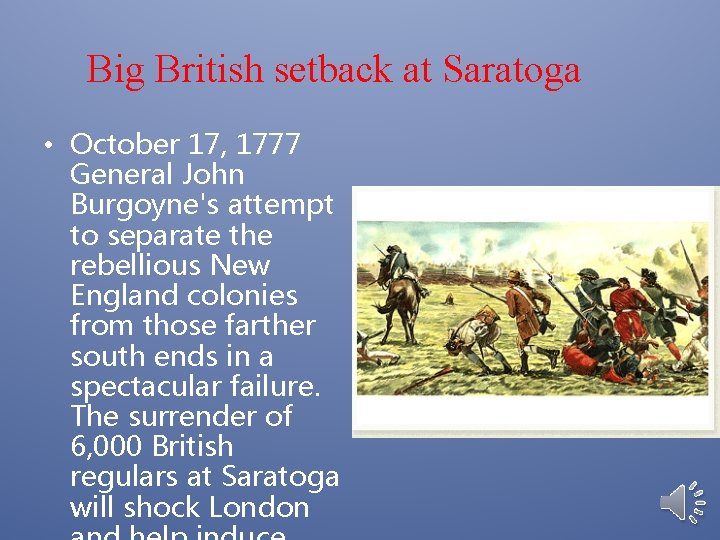
Big British setback at Saratoga • October 17, 1777 General John Burgoyne's attempt to separate the rebellious New England colonies from those farther south ends in a spectacular failure. The surrender of 6, 000 British regulars at Saratoga will shock London
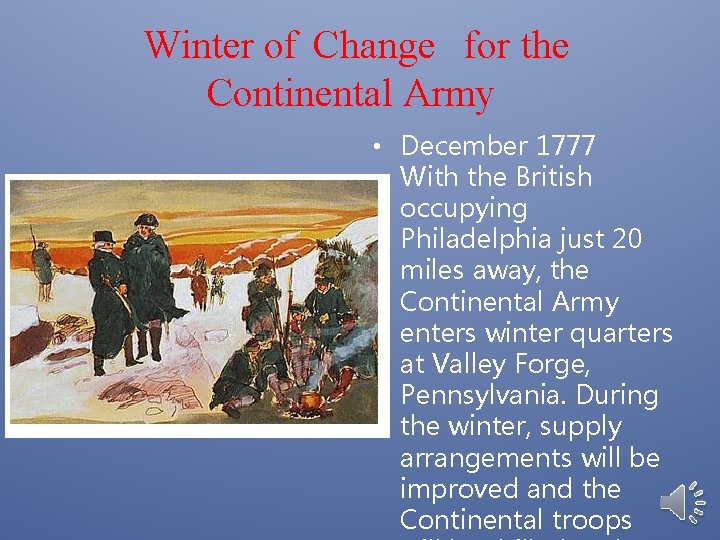
Winter of Change for the Continental Army • December 1777 With the British occupying Philadelphia just 20 miles away, the Continental Army enters winter quarters at Valley Forge, Pennsylvania. During the winter, supply arrangements will be improved and the Continental troops

France Enters the War Against Britain • February 1778 As a result of the patriot victory at Saratoga and American diplomatic efforts, France allies itself with the new American government. French financial and military aid will prove critical in winning the war.
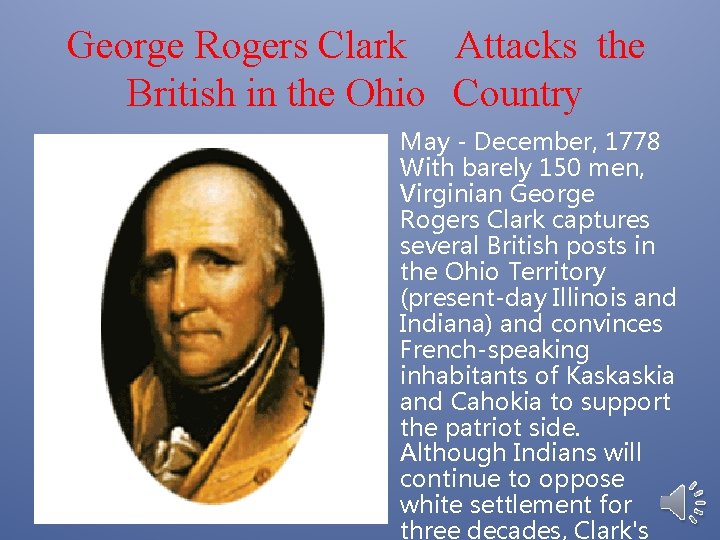
George Rogers Clark Attacks the British in the Ohio Country • May - December, 1778 With barely 150 men, Virginian George Rogers Clark captures several British posts in the Ohio Territory (present-day Illinois and Indiana) and convinces French-speaking inhabitants of Kaskaskia and Cahokia to support the patriot side. Although Indians will continue to oppose white settlement for three decades, Clark's
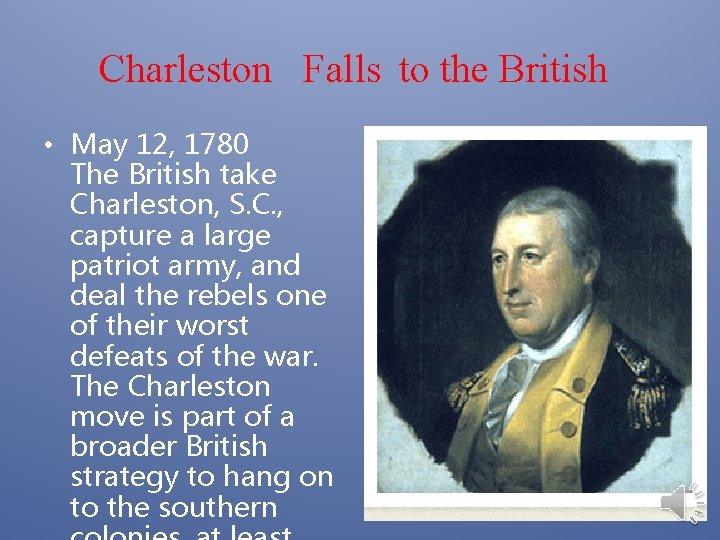
Charleston Falls to the British • May 12, 1780 The British take Charleston, S. C. , capture a large patriot army, and deal the rebels one of their worst defeats of the war. The Charleston move is part of a broader British strategy to hang on to the southern
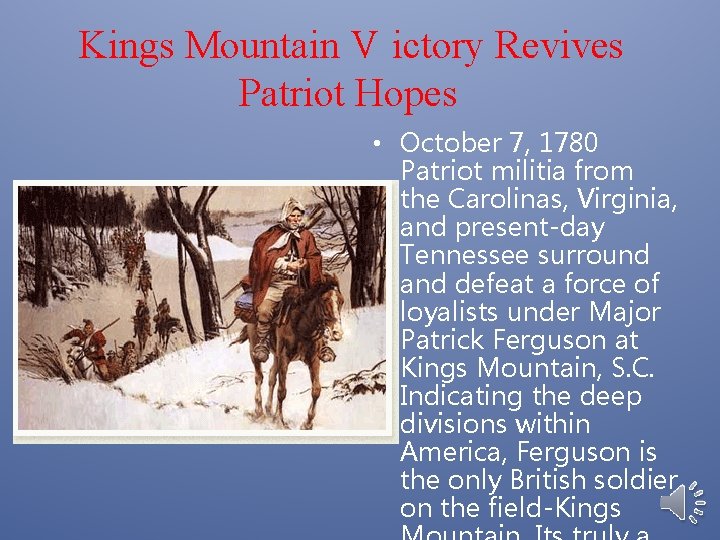
Kings Mountain V ictory Revives Patriot Hopes • October 7, 1780 Patriot militia from the Carolinas, Virginia, and present-day Tennessee surround and defeat a force of loyalists under Major Patrick Ferguson at Kings Mountain, S. C. Indicating the deep divisions within America, Ferguson is the only British soldier on the field-Kings
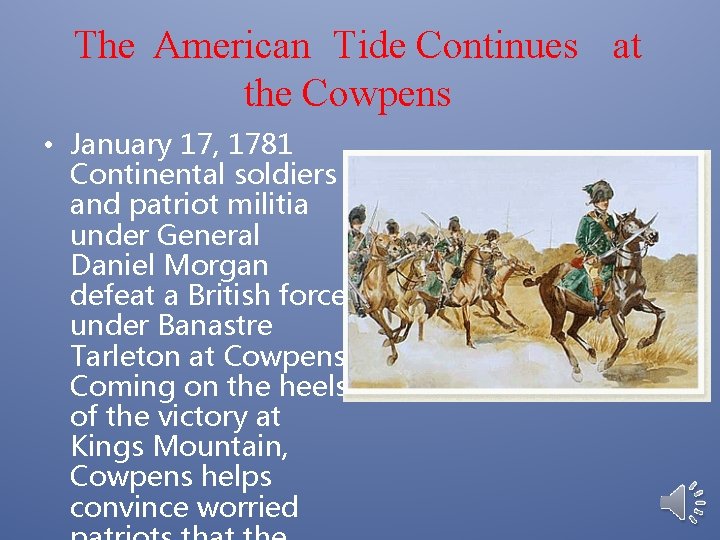
The American Tide Continues at the Cowpens • January 17, 1781 Continental soldiers and patriot militia under General Daniel Morgan defeat a British force under Banastre Tarleton at Cowpens. Coming on the heels of the victory at Kings Mountain, Cowpens helps convince worried
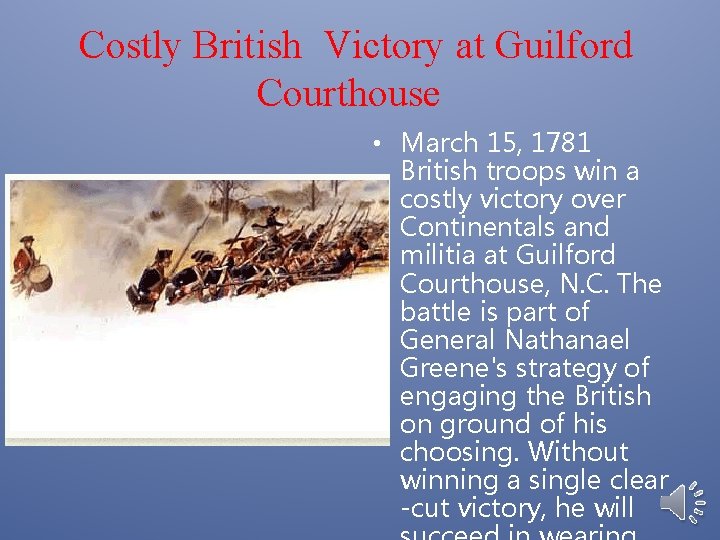
Costly British Victory at Guilford Courthouse • March 15, 1781 British troops win a costly victory over Continentals and militia at Guilford Courthouse, N. C. The battle is part of General Nathanael Greene's strategy of engaging the British on ground of his choosing. Without winning a single clear -cut victory, he will
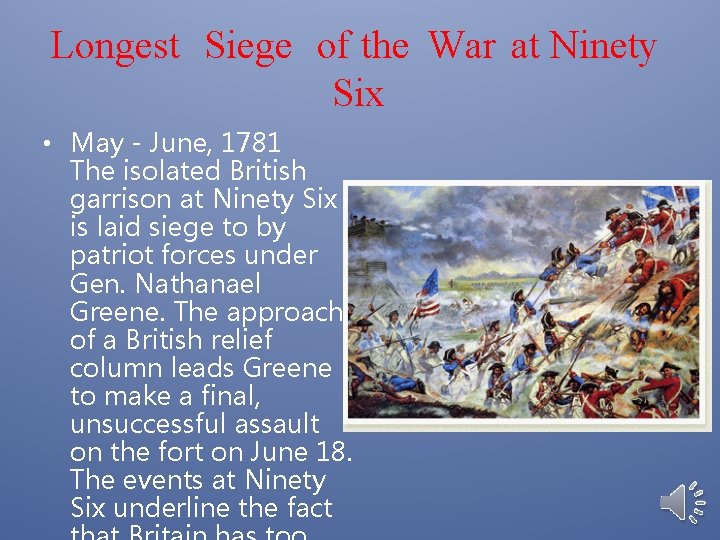
Longest Siege of the War at Ninety Six • May - June, 1781 The isolated British garrison at Ninety Six is laid siege to by patriot forces under Gen. Nathanael Greene. The approach of a British relief column leads Greene to make a final, unsuccessful assault on the fort on June 18. The events at Ninety Six underline the fact
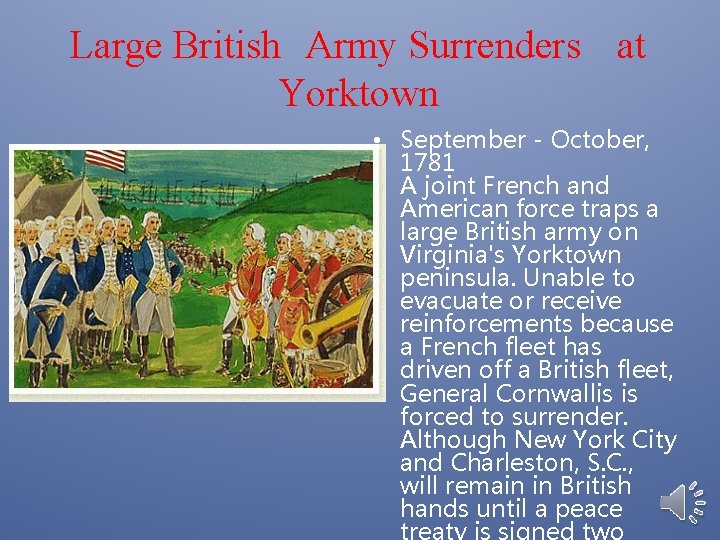
Large British Army Surrenders at Yorktown • September - October, 1781 A joint French and American force traps a large British army on Virginia's Yorktown peninsula. Unable to evacuate or receive reinforcements because a French fleet has driven off a British fleet, General Cornwallis is forced to surrender. Although New York City and Charleston, S. C. , will remain in British hands until a peace treaty is signed two
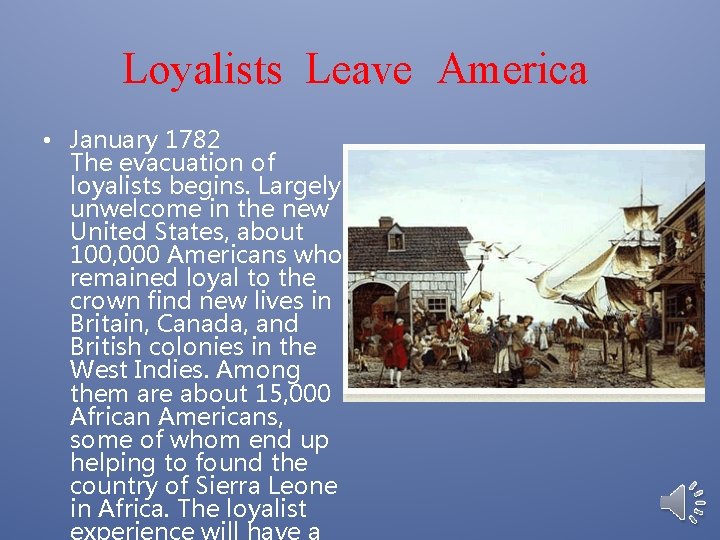
Loyalists Leave America • January 1782 The evacuation of loyalists begins. Largely unwelcome in the new United States, about 100, 000 Americans who remained loyal to the crown find new lives in Britain, Canada, and British colonies in the West Indies. Among them are about 15, 000 African Americans, some of whom end up helping to found the country of Sierra Leone in Africa. The loyalist experience will have a
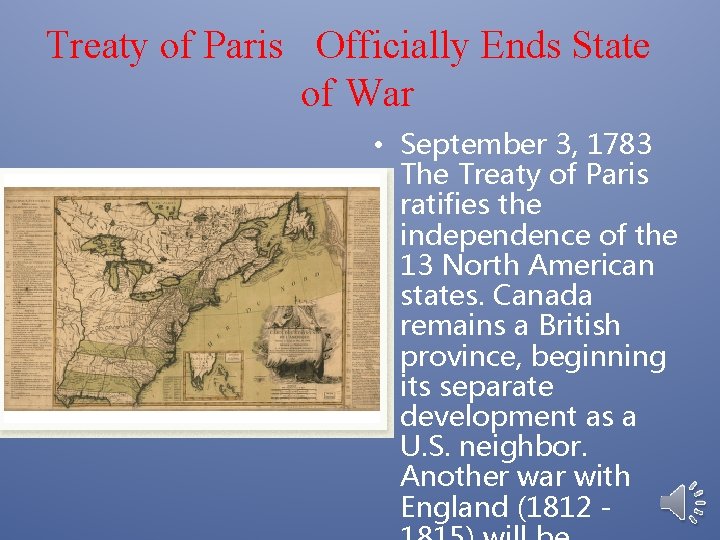
Treaty of Paris Officially Ends State of War • September 3, 1783 The Treaty of Paris ratifies the independence of the 13 North American states. Canada remains a British province, beginning its separate development as a U. S. neighbor. Another war with England (1812 -
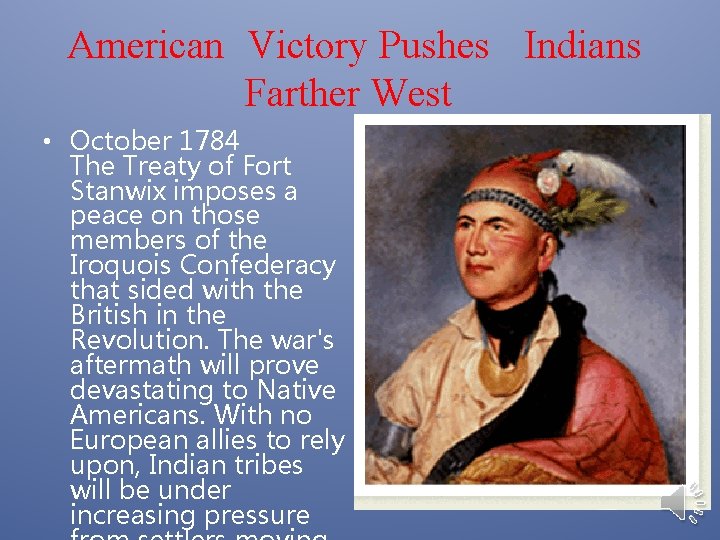
American Victory Pushes Indians Farther West • October 1784 The Treaty of Fort Stanwix imposes a peace on those members of the Iroquois Confederacy that sided with the British in the Revolution. The war's aftermath will prove devastating to Native Americans. With no European allies to rely upon, Indian tribes will be under increasing pressure
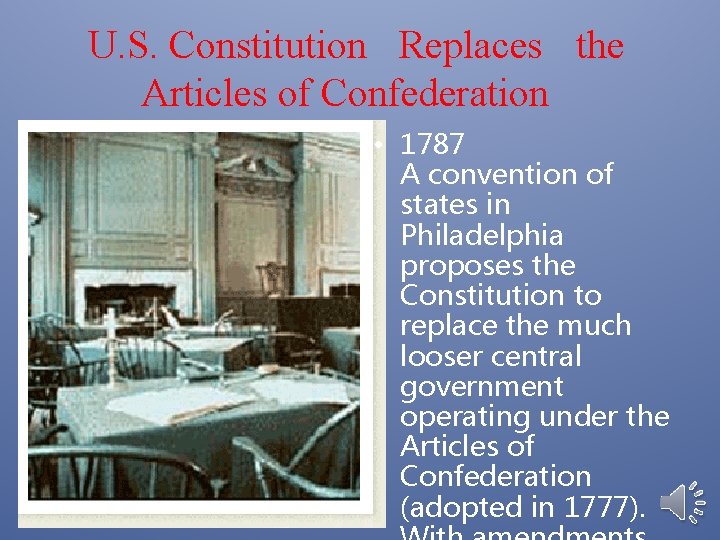
U. S. Constitution Replaces the Articles of Confederation • 1787 A convention of states in Philadelphia proposes the Constitution to replace the much looser central government operating under the Articles of Confederation (adopted in 1777).
Resources • http: //www. nps. gov/revwar/a bout_the_revolution/timeline _of_events_20_23. html • Library of Congress
- Slides: 24