
The Revolutionary Period England America Glorious Revolution A
- Slides: 21
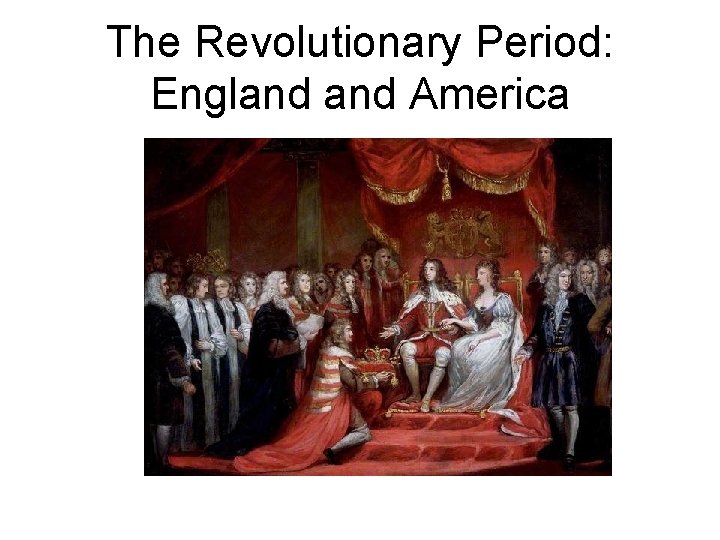
The Revolutionary Period: England America
Glorious Revolution Ø A group of noblemen invited the Dutch leader William of Orange to come to England to take over. Ø William and his wife Mary raised an army and arrived in 1688 without much opposition. Ø James fled. With no battles or bloodshed England had undergone a “Glorious Revolution”
England – William and Mary English Bill of Rights 1689 • William and Mary were given the throne after the English Bill of Rights was passed. • Guaranteed supremacy of Parliament over the monarchy. (destroyed divine right) • Parliament had to meet on a regular basis • Monarchy could neither make nor suspend laws • Trial by jury reinstated. • Abolished fines and cruel and unusual punishment. • Affirmed “writ of habeas corpus” – no person can be held in prison without first being charged with a specific crime. Due process of laws. • Laid groundwork for American system of laws.
Major Political Outcome • Established constitutional monarchy – monarchy in which the powers of the ruler are restricted by the laws of the nation.
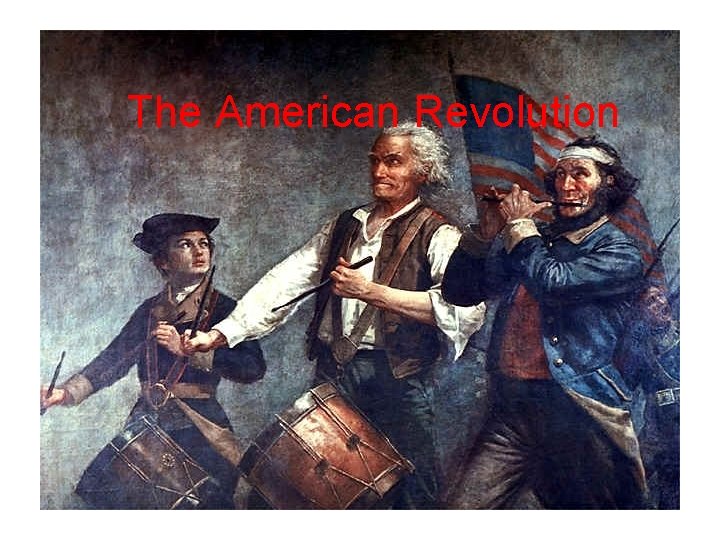
The American Revolution
Essential Question • Why did the colonists want their independence from the British? • How did Enlightenment ideas influence the American Revolution? • What were the political outcomes of the Revolution?
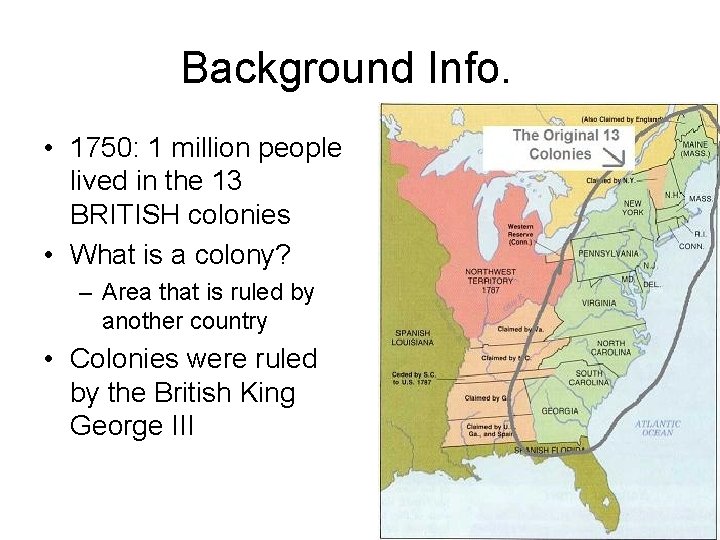
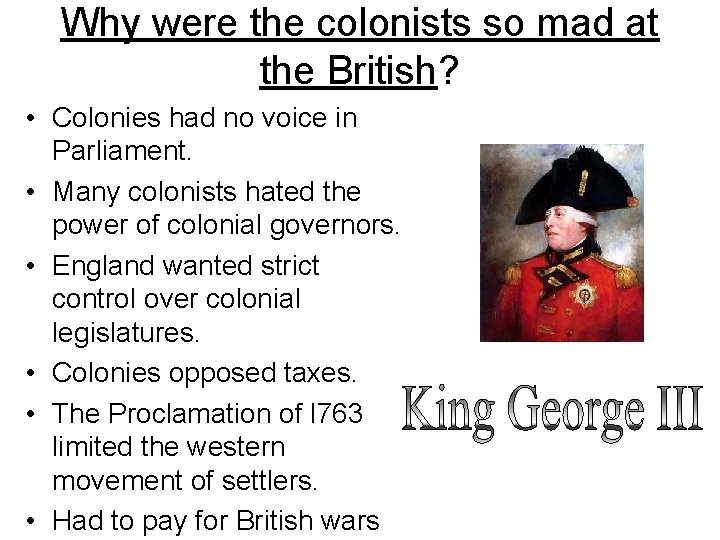
Background Info. • 1750: 1 million people lived in the 13 BRITISH colonies • What is a colony? – Area that is ruled by another country • Colonies were ruled by the British King George III
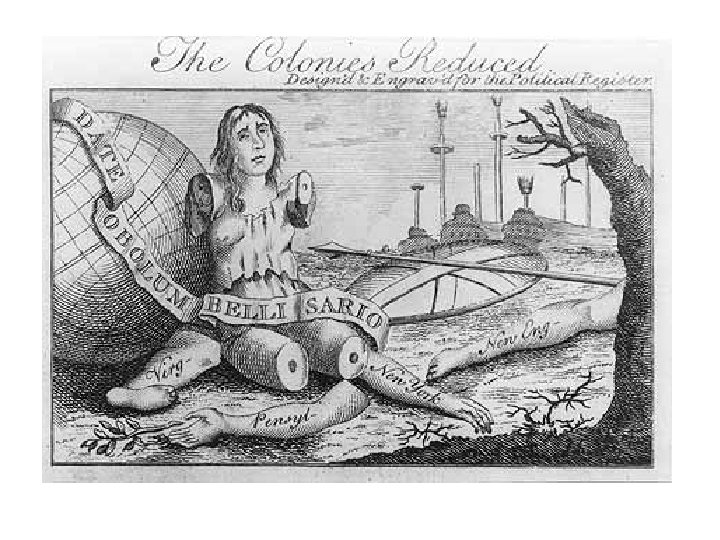
Why were the colonists so mad at the British? • Colonies had no voice in Parliament. • Many colonists hated the power of colonial governors. • England wanted strict control over colonial legislatures. • Colonies opposed taxes. • The Proclamation of l 763 limited the western movement of settlers. • Had to pay for British wars
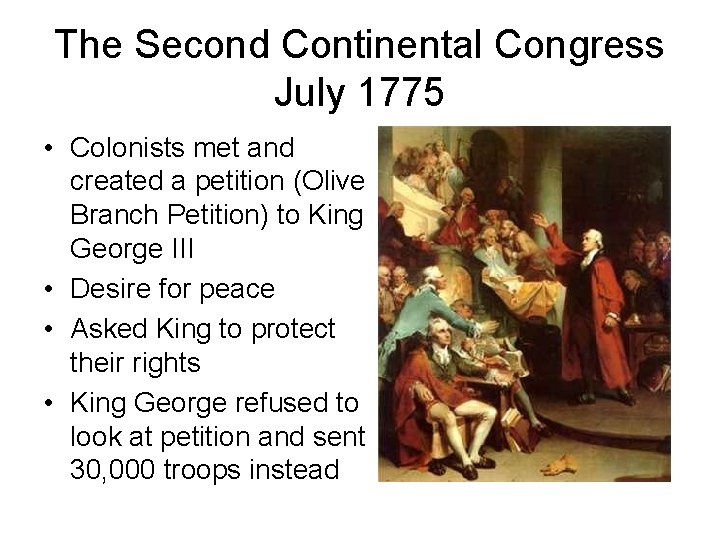
The Second Continental Congress July 1775 • Colonists met and created a petition (Olive Branch Petition) to King George III • Desire for peace • Asked King to protect their rights • King George refused to look at petition and sent 30, 000 troops instead
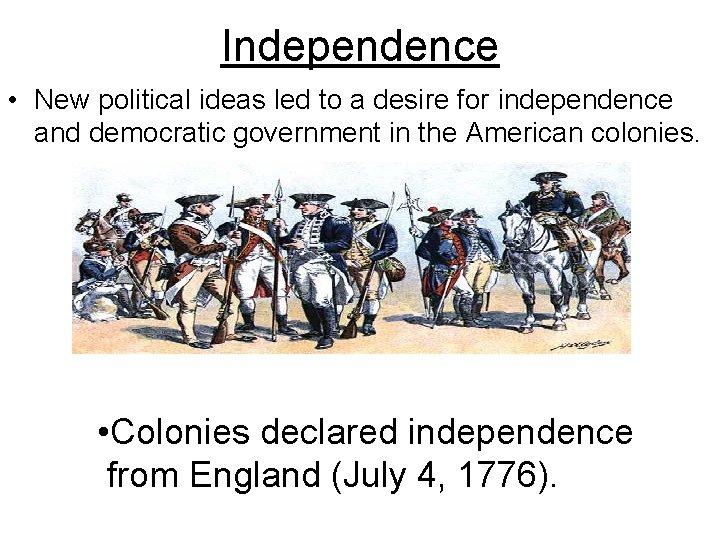
Independence • New political ideas led to a desire for independence and democratic government in the American colonies. • Colonies declared independence from England (July 4, 1776).
Enlightenment: John Locke • Social Contract Theory: governments are formed with the consent of citizens. • The most important rights are: Life, Liberty, and Property. • The state exists only to protect these rights. • If a government fails in this task, citizens should rebel against it and create a government that will protect them.
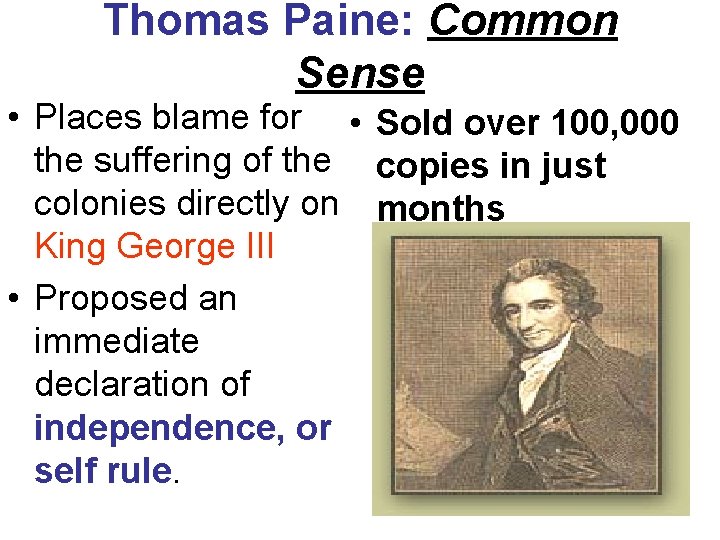
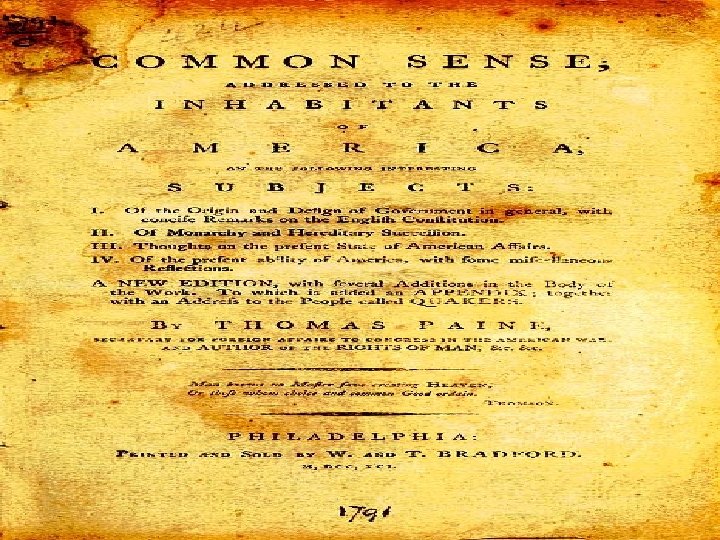
Thomas Paine: Common Sense • Places blame for • Sold over 100, 000 the suffering of the copies in just colonies directly on months King George III • Proposed an immediate declaration of independence, or self rule.
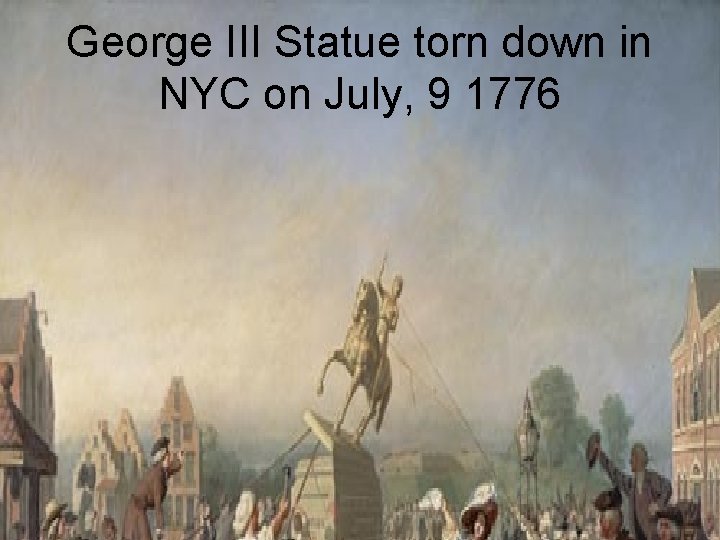
George III Statue torn down in NYC on July, 9 1776
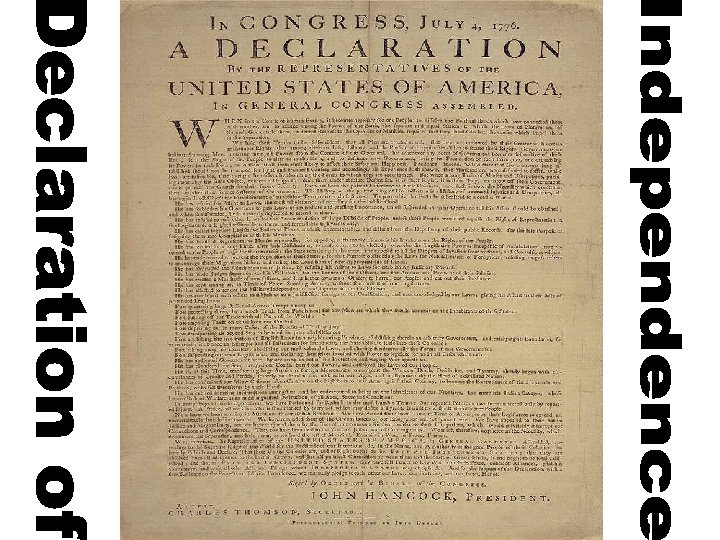
Declaration of Independence by Thomas Jefferson • Part 1: Preamble: Introduction • This part was just written to say why the document was being created. • Jefferson writes that the declaration was necessary because the colonists wanted to “dissolve the political bands, ” or separate from England.
Declaration of Independence • Part 2: Colonist’s Ideas on Government. • “We hold these truths to be self evident that all men are created equal, that they are endowed (provided) by their creator with certain unalienable (basic, cant be taken) Rights, that among these are Life, Liberty, and the Pursuit of Happiness. ”
• WAR WITH GREAT BRITAIN!!!!!!!!!!! • American Revolution Begins 1776
Articles of Confederation 1781 • Nations first form of gov’t • Weak Central Gov’t (opposite of British) • Strong state Gov’t • Many problems • No ability to tax • No common currency • Not the same laws • More like 13 diff. countries
The Constitution 1787 • Used ideas of Locke, Montesquieu, Rousseau and Voltaire • Created a Federal Republic • Government in which power is divided between the national, or federal government, and the states • Separation of powers • Bill of Rights added later. • Federalist Papers – Writing campaign to convince American citizens to ratify the new Constitution • First President: George Washington.