
The Review Economy Michael Luca Harvard Business School
The Review Economy Michael Luca Harvard Business School
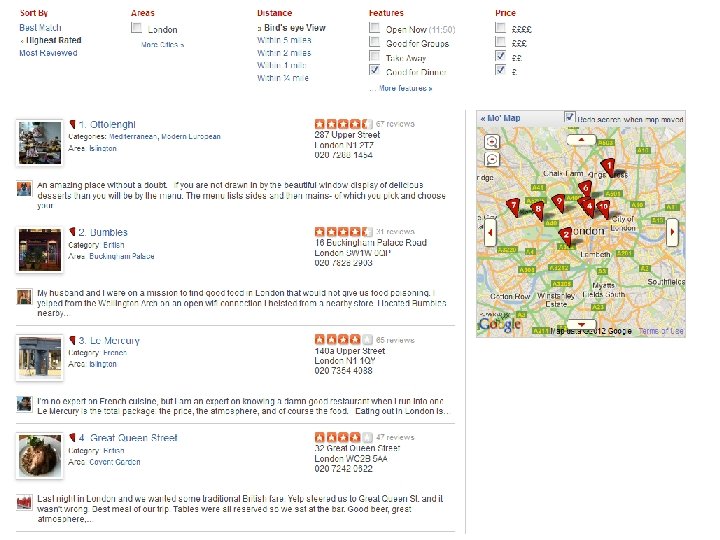
Introduction • How do consumers learn about product quality in the internet age? • Proliferation of consumer review websites – Yelp – Trip Advisor – Angie's List • Part of crowdsourcing movement. • The review process.
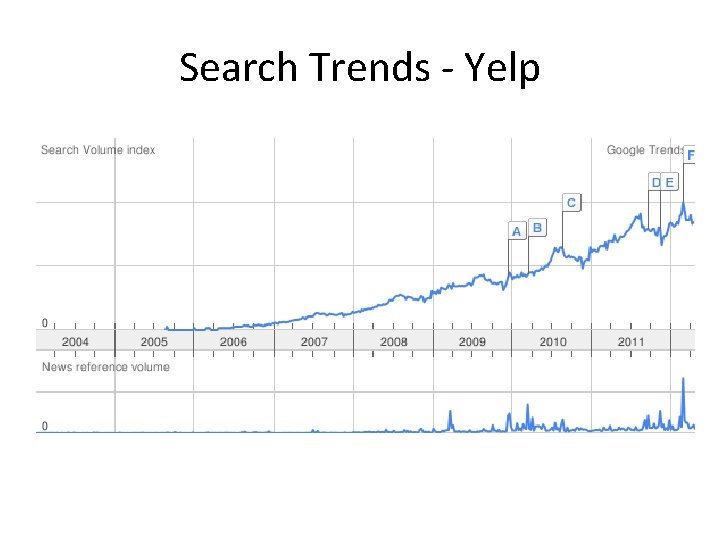
Search Trends - Yelp
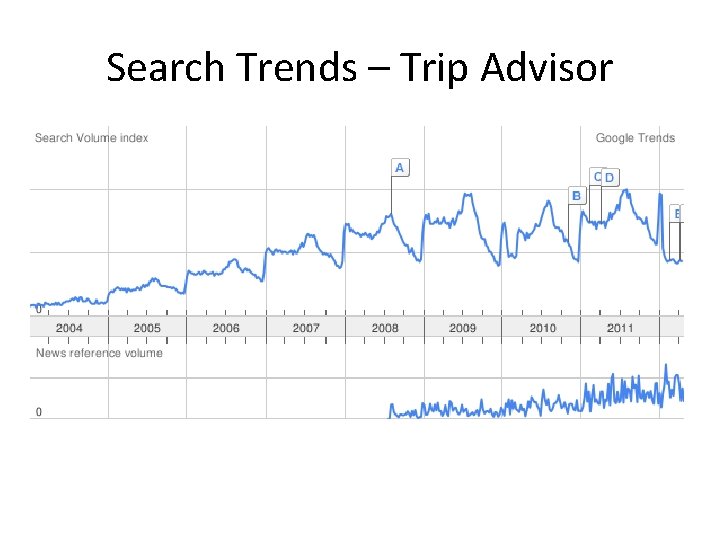
Search Trends – Trip Advisor
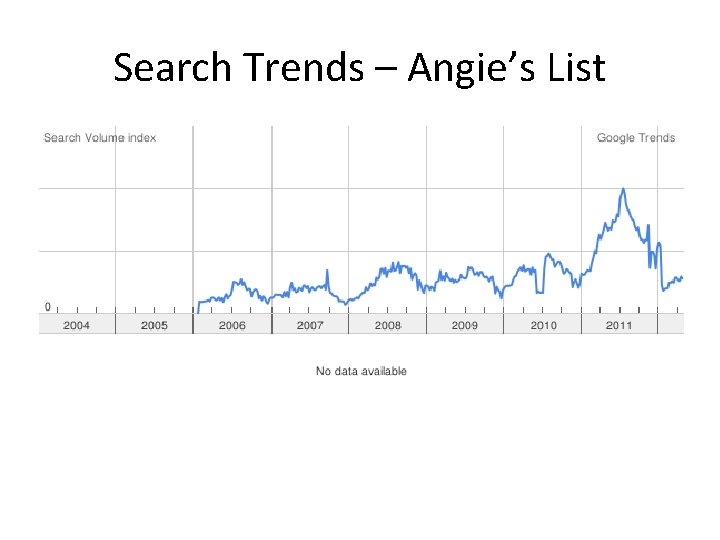
Search Trends – Angie’s List
Introduction • Reviews present a new way to learn about product quality. • Compare with: – Chain affiliation / advertising – Expert reviews / rankings – Quality disclosure laws • Each imperfectly addresses information problems.
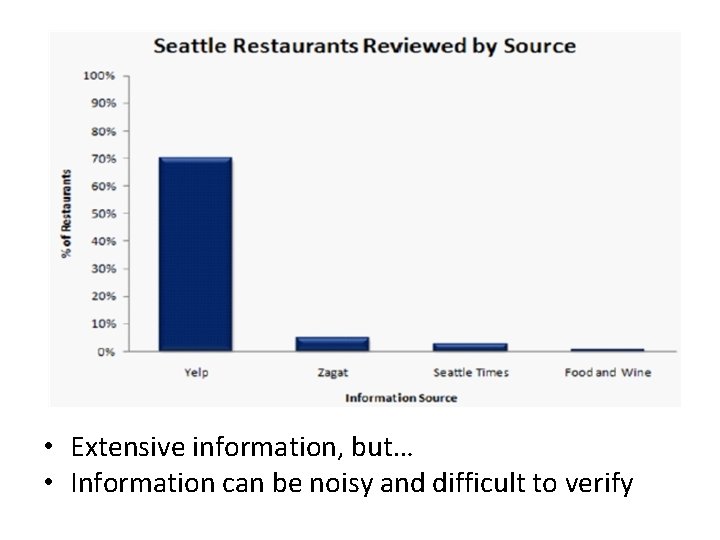
• Extensive information, but… • Information can be noisy and difficult to verify
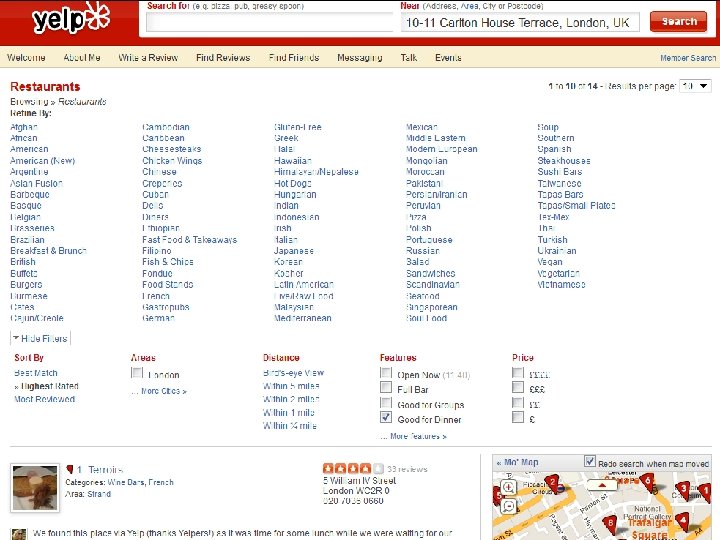
The impact of reviews on sales • The bottom line: Yelp works • 1 star increase leads to a 5% increase in revenue for independent restaurants • What about chains?
Chains are different • • Chains impose standards – menus, etc Spend on branding Quality relatively known A turkey sandwich:
Consumer Reviews and Public Policy • Use reviews to guide disclosure policy – Focus disclosure on gaps left by reviews – Use reviews to identify trouble areas (work with city governments) • Encourage reviews as alternative form of reporting • Ensure integrity of reviews
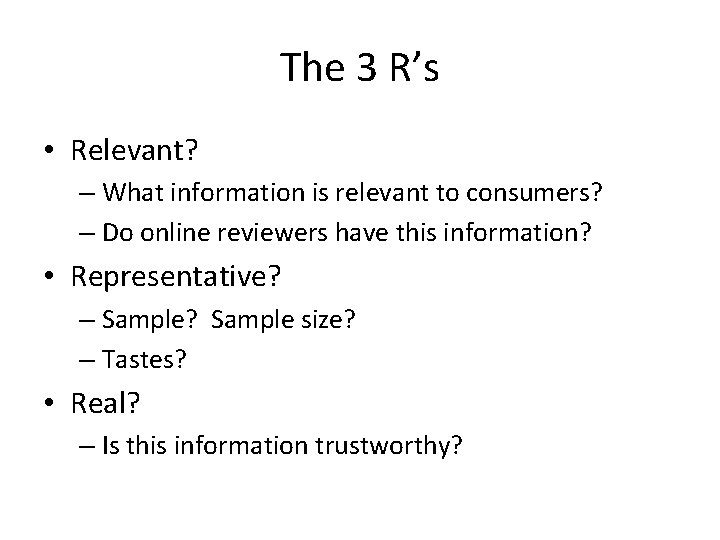
The 3 R’s • Relevant? – What information is relevant to consumers? – Do online reviewers have this information? • Representative? – Sample? Sample size? – Tastes? • Real? – Is this information trustworthy?
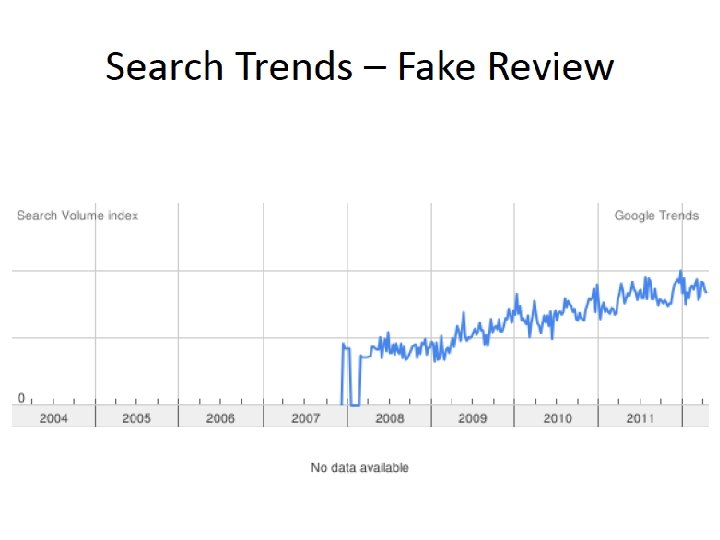
What is a promotional review? • “ I was in need of teeth whitening and my friend referred me to Southland Dental”… “Pain or non pain, it was very much worth it” • This is a sample from a help-wanted ad on Mechanical Turk. (Source: NY Times) • Promotional reviews: left by restaurant or employee of a restaurant.
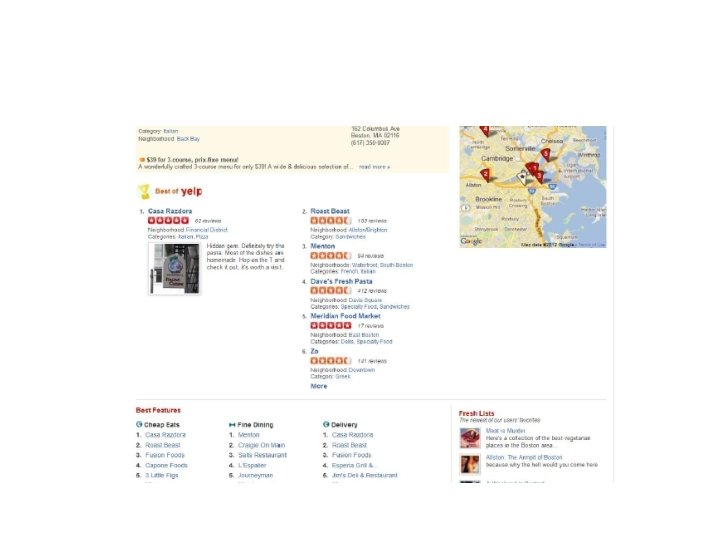
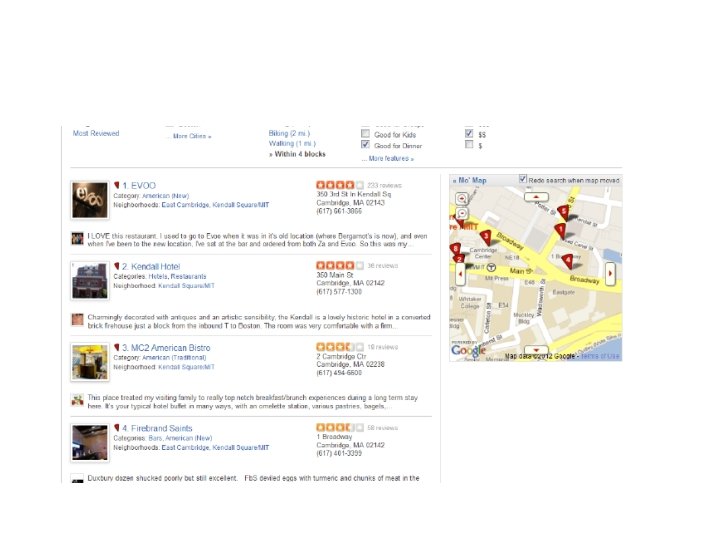
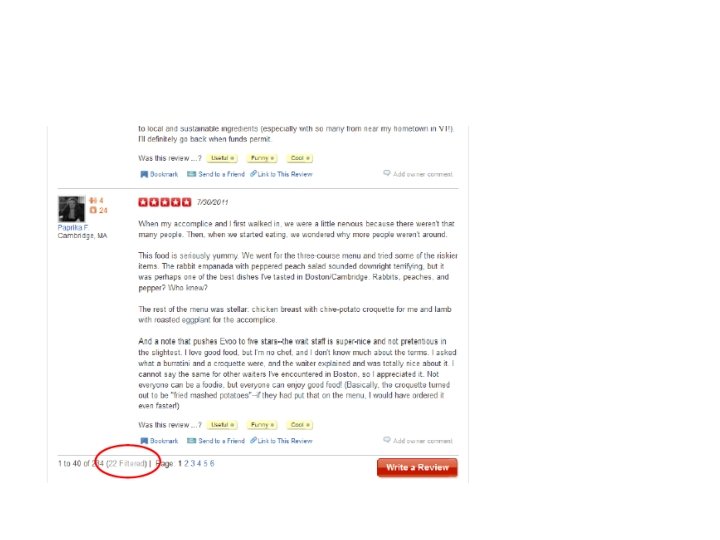
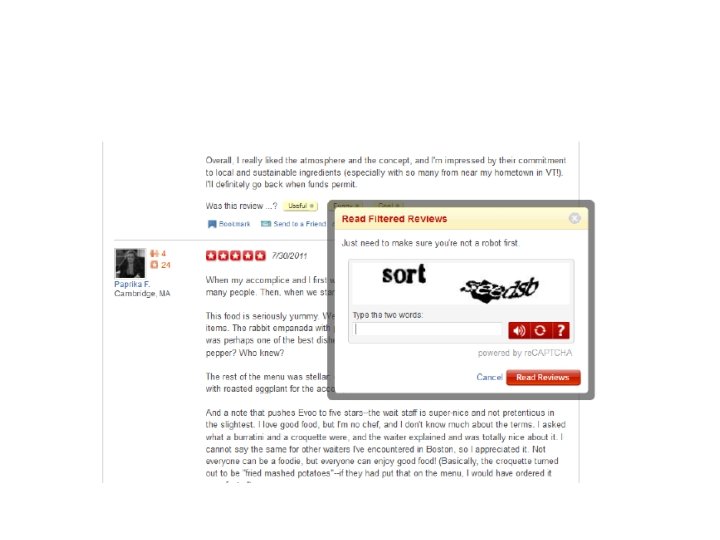
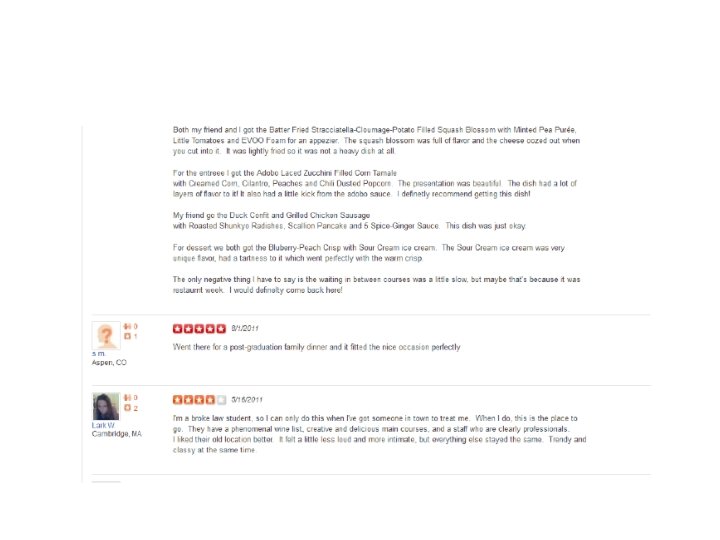
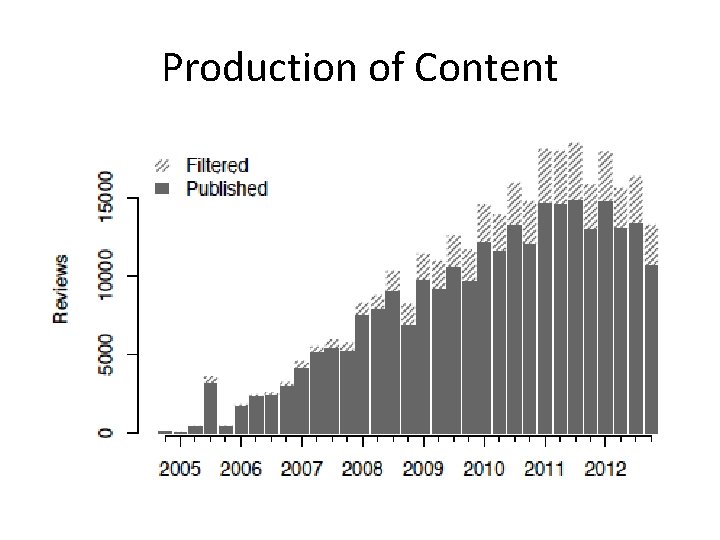
Production of Content
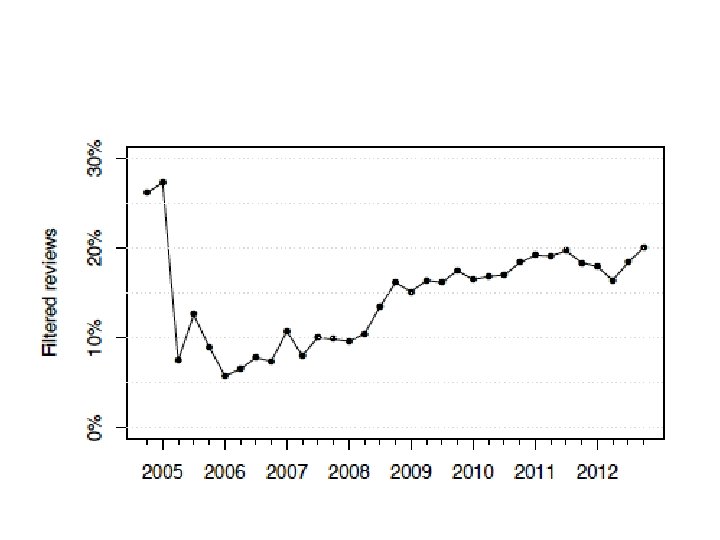
What does a fake review look like? • Might expect distribution of fake reviews to be bimodal. • Reviewers with more Yelp social capital are less likely to submit fake reviews: – They have many reviews. – They have many Yelp friends.
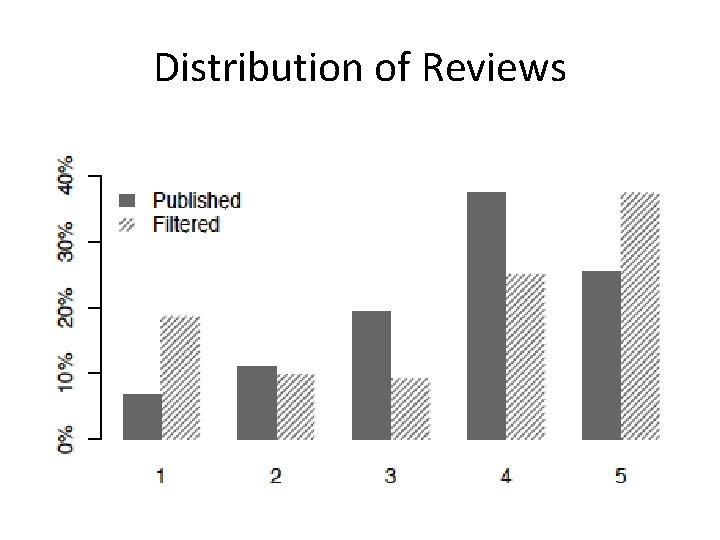
Distribution of Reviews
How serious is gaming? • Extensive gaming (16% across restaurants) • Not simply a matter of bad apples, but of incentives: – More prevalent when restaurant new or rating has fallen. • Elsewhere: – Trip. Advisor – e. Bay – others
How do platforms vet reviews? • Authentication • Reviewer reputation • Spam detection
Fake review warning signs • No formal authentication • No spam detection • Extreme ratings • Unknown reviewers
What can we do? • As consumers: – Look for warning signs. • As platforms: – Encourage legitimate reviews – Vet reviews – Detect and eliminate illegitimate reviews • As policymakers: – Vet review platforms – Identify and regulate bad practices

Thank you!
- Slides: 29