
The REVA TyrosineDerived Polycarbonate Bioresorbable Scaffold Longterm Outcomes
The REVA Tyrosine-Derived Polycarbonate Bioresorbable Scaffold: Long-term Outcomes Using Multimodality Imaging Greg L. Kaluza, MD, Ph. D, FACC Director of Research, Skirball Center for Cardiovascular Research Foundation New York, NY
Disclosure Statement REVA Medical, Inc. • Personal: scientific consultant • Institutional: SCCR performs a small volume of contract animal research for REVA and provides image core lab services
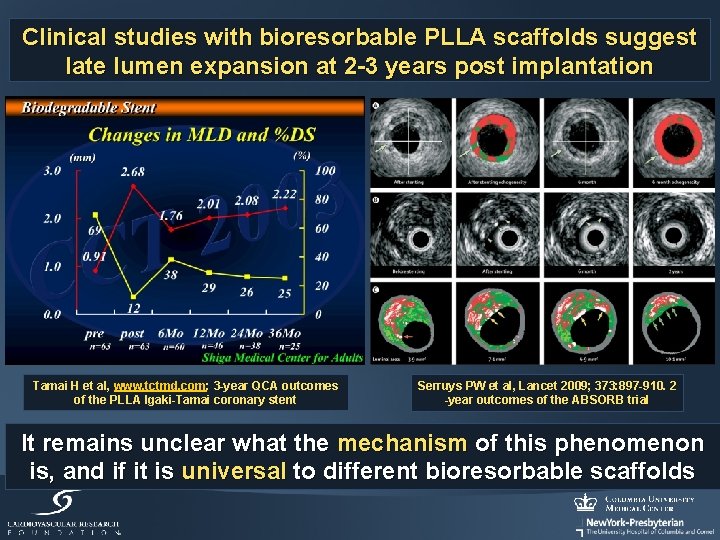
Clinical studies with bioresorbable PLLA scaffolds suggest late lumen expansion at 2 -3 years post implantation Tamai H et al, www. tctmd. com: 3 -year QCA outcomes of the PLLA Igaki-Tamai coronary stent Serruys PW et al, Lancet 2009; 373: 897 -910. 2 -year outcomes of the ABSORB trial It remains unclear what the mechanism of this phenomenon is, and if it is universal to different bioresorbable scaffolds
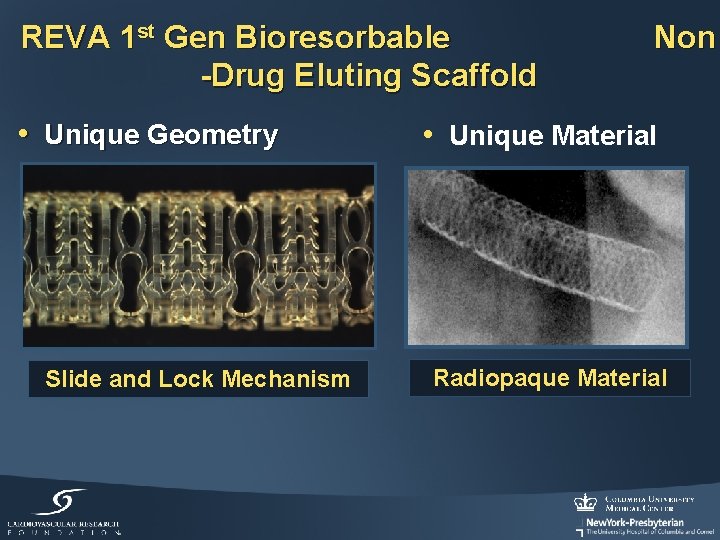
REVA 1 st Gen Bioresorbable -Drug Eluting Scaffold • Unique Geometry Slide and Lock Mechanism Non • Unique Material Radiopaque Material
Methods Pig (Yucatan miniswine) coronary arteries evaluated (pooled from several studies): ¡ 94 REVA 1 st Generation (“R 100”) Bioresorbable Non-Drug Eluting Scaffolds ¡ 46 BMS (BSC Express) ¡ Evaluated immediately post-implant, 5 days; 3, 6, 12, 18, 24 and 55 months post-treatment In Vivo Multimodality Imaging: ¡ Angiography and rotational angiography ¡ IVUS ¡ OCT RESORB Trial Patients: ¡ 3 REVA 1 st Generation Bioresorbable Non-Drug Eluting Scaffolds ¡ Implant, 4, 12 and 34 months post-treatment
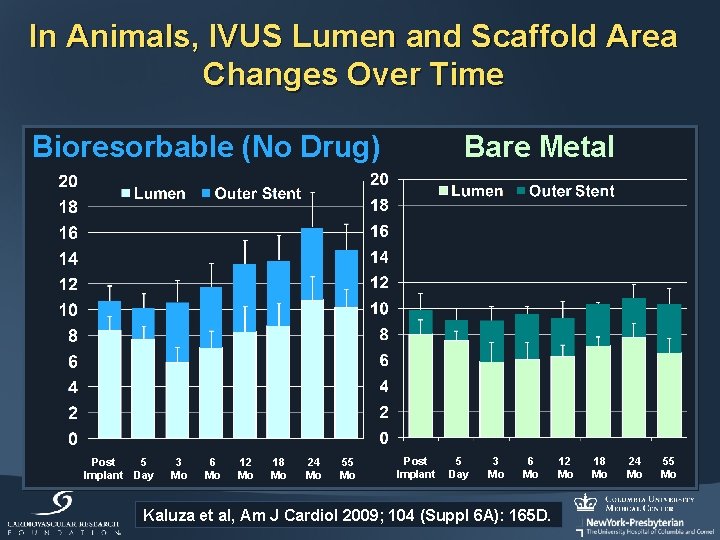
In Animals, IVUS Lumen and Scaffold Area Changes Over Time Bioresorbable (No Drug) Post 5 Implant Day 3 Mo 6 Mo 12 Mo 18 Mo 24 Mo 55 Mo Bare Metal Post Implant 5 Day 3 Mo 6 Mo Kaluza et al, Am J Cardiol 2009; 104 (Suppl 6 A): 165 D. 12 Mo 18 Mo 24 Mo 55 Mo
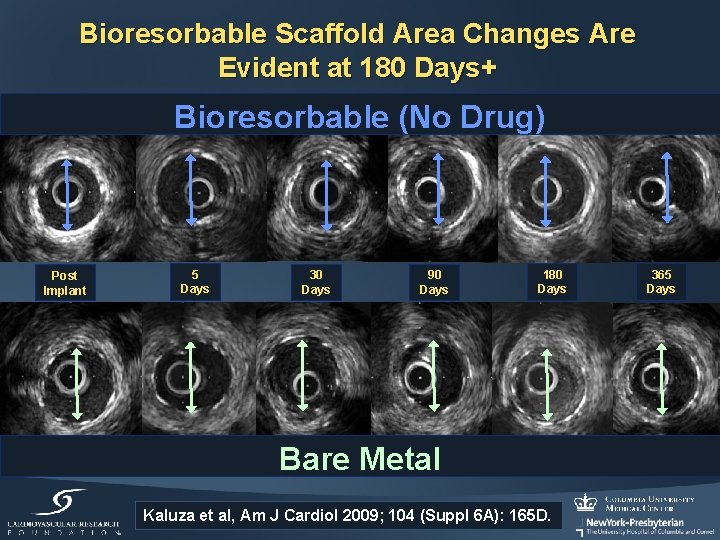
Bioresorbable Scaffold Area Changes Are Evident at 180 Days+ Bioresorbable (No Drug) Post Implant 5 Days 30 Days 90 Days 180 Days Bare Metal Kaluza et al, Am J Cardiol 2009; 104 (Suppl 6 A): 165 D. 365 Days
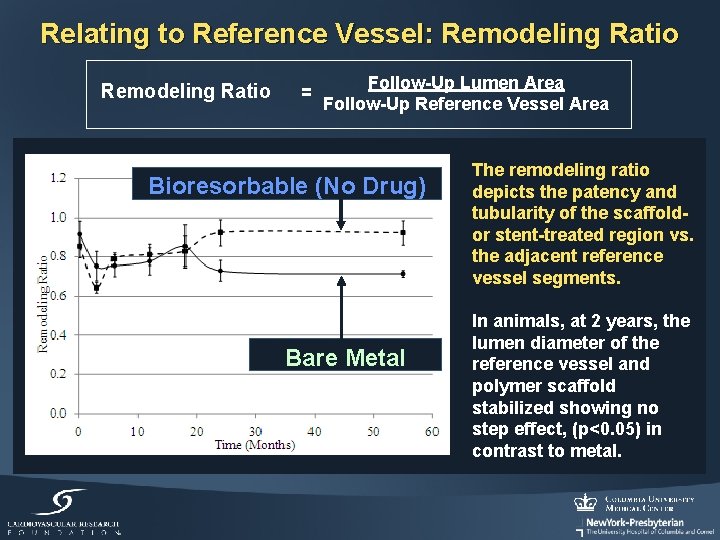
Relating to Reference Vessel: Remodeling Ratio = Follow-Up Lumen Area Follow-Up Reference Vessel Area Bioresorbable (No Drug) Bare Metal The remodeling ratio depicts the patency and tubularity of the scaffoldor stent-treated region vs. the adjacent reference vessel segments. In animals, at 2 years, the lumen diameter of the reference vessel and polymer scaffold stabilized showing no step effect, (p<0. 05) in contrast to metal.
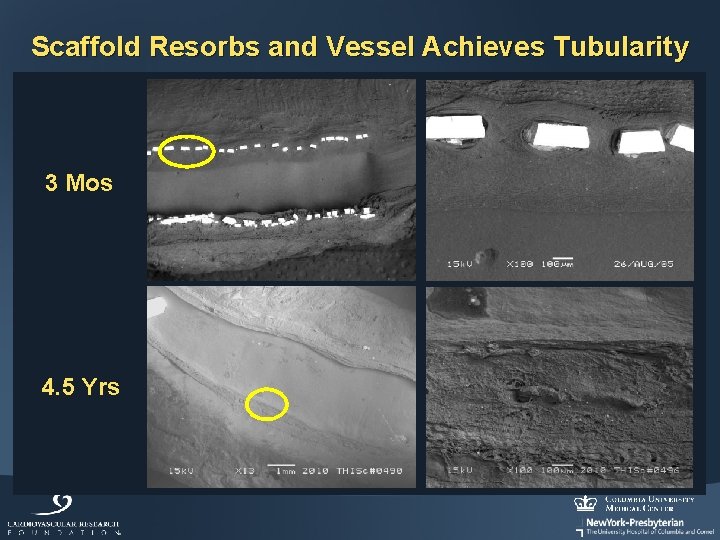
Scaffold Resorbs and Vessel Achieves Tubularity 3 Mos 4. 5 Yrs
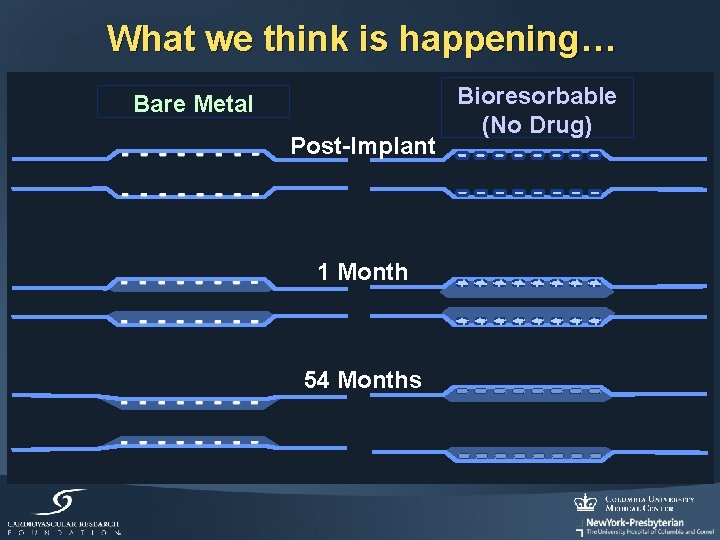
What we think is happening… Bare Metal Post-Implant 1 Month 54 Months Bioresorbable (No Drug)
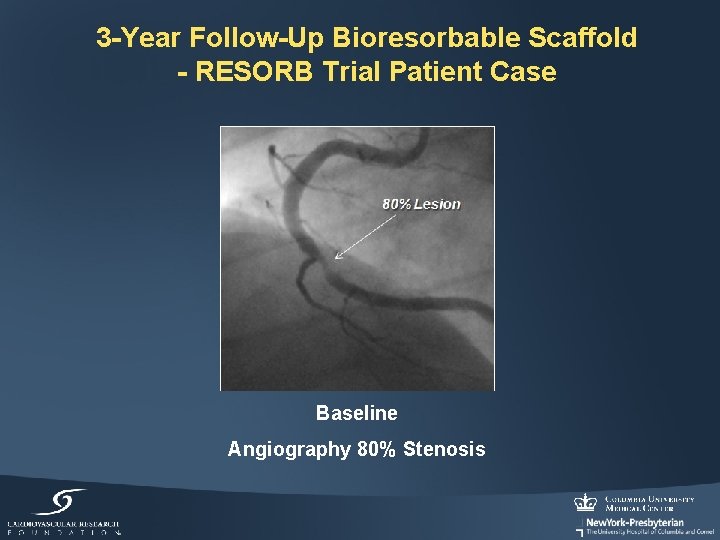
3 -Year Follow-Up Bioresorbable Scaffold - RESORB Trial Patient Case Baseline Angiography 80% Stenosis
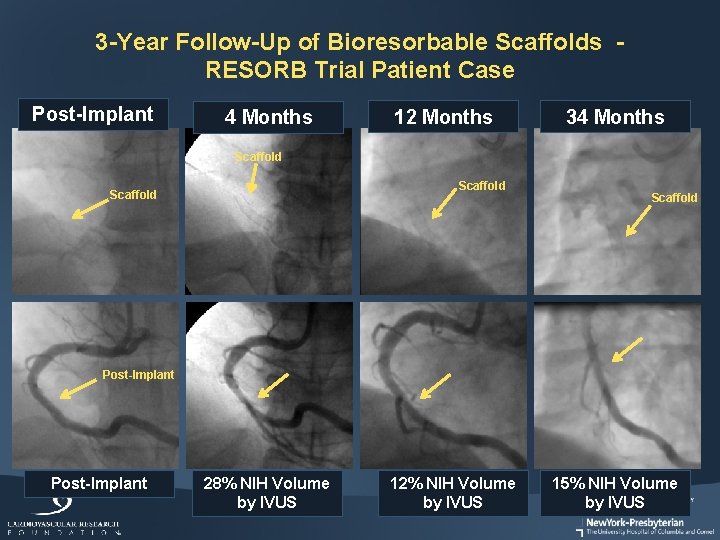
3 -Year Follow-Up of Bioresorbable Scaffolds RESORB Trial Patient Case Post-Implant 4 Months 12 Months 34 Months Scaffold Post-Implant 28% NIH Volume by IVUS 12% NIH Volume by IVUS 15% NIH Volume by IVUS
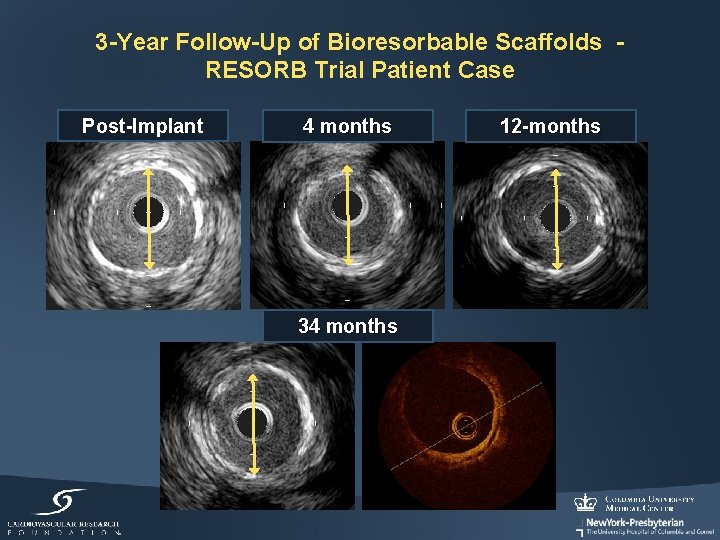
3 -Year Follow-Up of Bioresorbable Scaffolds RESORB Trial Patient Case Post-Implant 4 months 34 months 12 -months
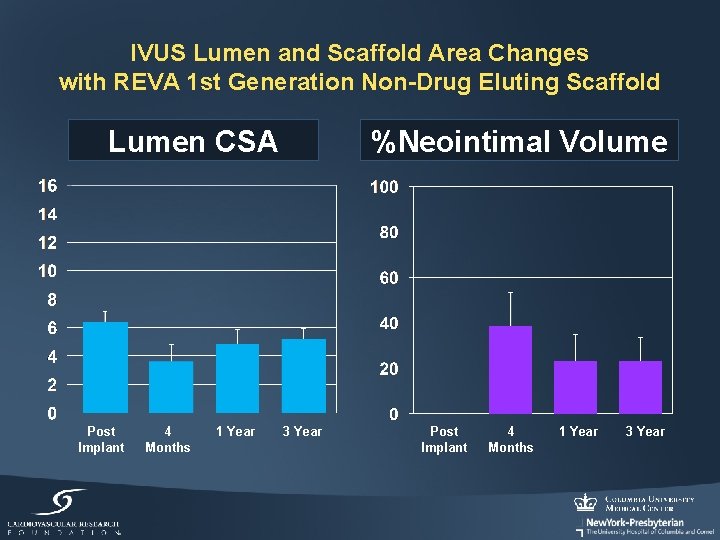
IVUS Lumen and Scaffold Area Changes with REVA 1 st Generation Non-Drug Eluting Scaffold %Neointimal Volume Lumen CSA Post Implant 4 Months 1 Year 3 Year

Bioresorbable Scaffolds: Unique Long-term Outcomes • Studies confirm that bioresorbable scaffolds: ¡ Universally undergo long-term, desirable geometric arterial changes ¡ Appear to re-establish vascular homeostasis and patency toward those characterizing a native artery • Multimodality Imaging ¡ In vivo angiography, rotational angiography, IVUS and OCT provide additional insight in the evaluation of bioresorbable scaffolds
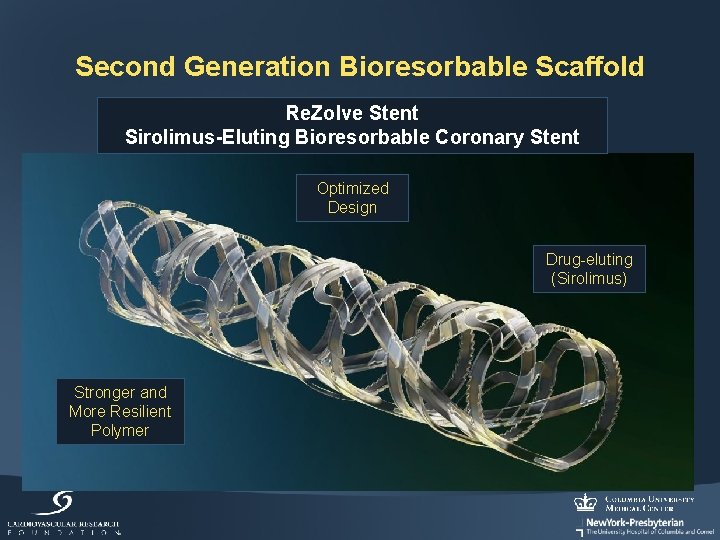
Second Generation Bioresorbable Scaffold Re. Zolve Stent Sirolimus-Eluting Bioresorbable Coronary Stent Optimized Design Drug-eluting (Sirolimus) Stronger and More Resilient Polymer
Future Clinical Plans • RESTORE Pilot Study ¡ Start ¡ 50 Q 2 -2011 patient pilot safety study ¡ Principal Investigator: Alexandre Abizaid ¡ Follow up at 1, 6 and 12 months and yearly thereafter ¡ No comparator
- Slides: 17