
The Restoration and Glorious Revolution England The Restoration





- Slides: 15
The Restoration and Glorious Revolution England
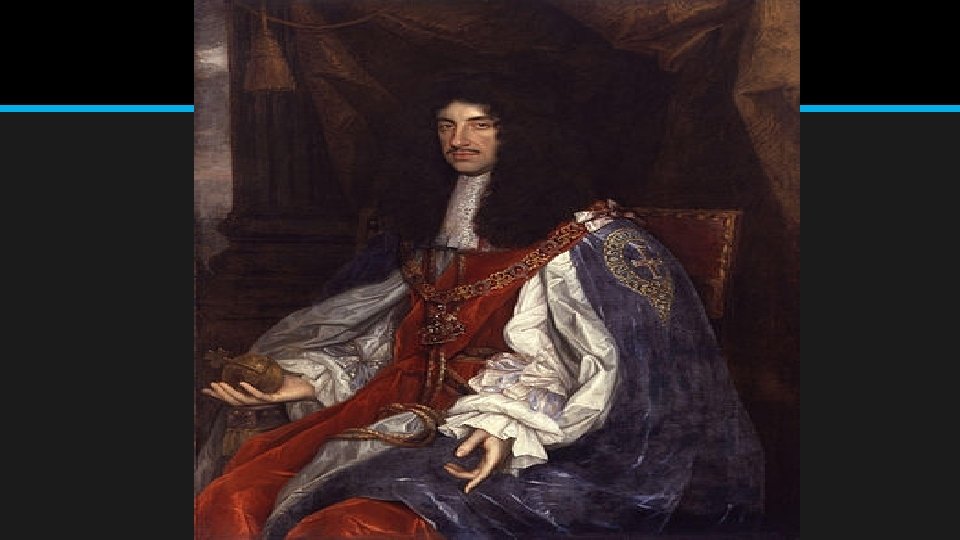
The Restoration 1660 • The Cavalier Parliament restored Charles II (1660 -1685) in 1660 • While in exile, he agreed to abide by Parliament’s decisions • Parliament was stronger in relation to the king than ever before in England • King’s power was not absolute • Granted religious toleration • He was known as the “Merry Monarch” for his affable personality.
Development of Two Political Parties • Whigs • Tories • Initially they were anti-Catholic (opposed James II) • Initially, they supported James II as king. • Later, they were composed of the wealthy middle-class and Puritans who favored Parliament and religious toleration. • They were composed of nobles, gentry, and Anglicans who supported the monarchy over Parliament. • They were more liberal in the classical sense. • Essentially conservative es
Habeas Corpus Act (1679) • Whig Parliament sought to limit Charles’ power • Provisions • Enabled judges to demand that prisoners be in court during their trials • Required just cause for continued imprisonment • Provided for speedy trials • Forbade double jeopardy
Charles II in Scotland • When Charles came to power (1660) he agreed to allow Presbyterianism (Calvinism) in Scotland • In 1661 he broke his promise and placed himself at the head of the Church of Scotland • Tried to impose and Anglican church hierarchy • This was met with resistance and thousands died in the struggle against Charles II • Last few years of Charles II reign are known as the “Killing Time”
James II (1685 -1688) • Inherited the throne from his brother, Charles II • Sought to return England to Catholicism • He appointed many Catholics to high positions in gov’t and in colleges.
“Glorious Revolution” of 1688 • Final act in the struggle for political sovereignty in England • Parliament was not willing to sacrifice constitutional gains of the English Civil War and return to absolute monarchy. • Issues with James II • James’ reissue of the Declaration of Indulgence (granting freedom of worship to Catholics • Birth of a Catholic heir to the English throne in 1688
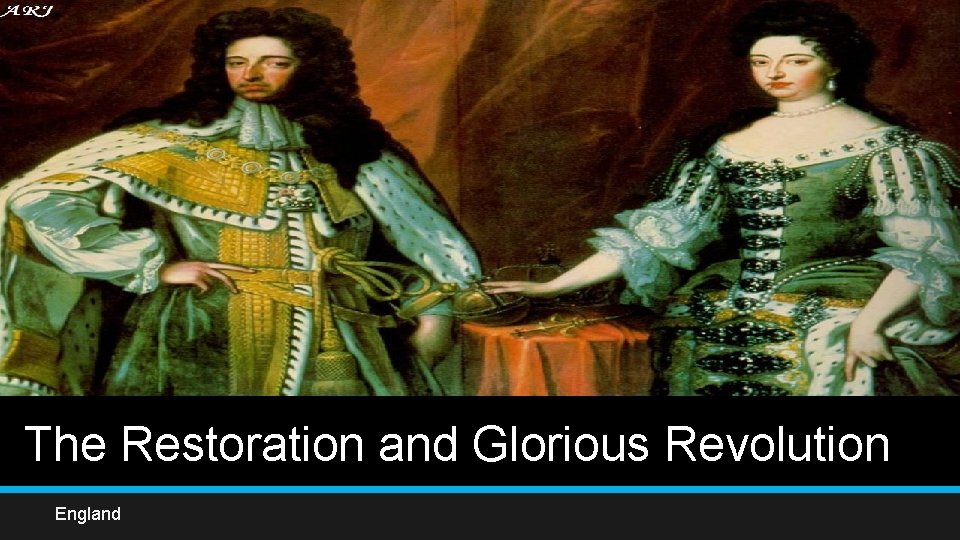
• James II is forced to abdicate his throne • His daughters, Mary and Anne, were Protestants. • Parliament invited Mary’s husband, the Dutch stadholder William of Orange, to assume throne. • In late 1688, James fled to France after his offers for concessions to Parliament were refused. • William III and Mary II were declared joint sovereigns by Parliament.
English Bill of Rights (1689) • William and Mary accepted what became known as the “Bill of Rights. ” • England became a constitutional monarchy • The Bill of rights established parliamentary sovereignty • This became the hallmark for constitutionalism in Europe. • The Petition of Right (1628), Habeas Corpus Act (1679), and the Bill of Rights (1689) are all part of the English Constitution.
Summary • Glorious Revolution was NOT a democratic revolution • Power remained largely in the hands of the nobility and gentry until at least the mid-19 th century. • Parliament essentially represented the upper classes. • The majority of English people did not have a say in political affairs.
Act of Settlement (1701) • Provided guidelines for succession once the Protestant Stuarts had passed on • If King William, or his sister-in-law, Anne, died without children, the Crown would pass to the granddaughter of James I, the Hanoverian electress dowager, or to her Protestant heirs. • The Stuarts were no longer in the line of succession. • When Anne died in 1714, her Hanoverian heir assumed the throne as George I.
Act of Union (1707) • It united England Scotland into Great Britain • The Scots desperately desired access to England’s trade empire and believed that it would continue to fall behind if it did not enter into a union. • Scottish Presbyterians feared the Stuarts (who were now staunchly Catholic) might attempt to return to the throne in Scotland. • Within a few decades, Scotland transformed into a modern society with dynamic economic and intellectual growth.