
THE REST OF ELASTICITY CROSS PRICE AND SUPPLY


- Slides: 20
THE REST OF ELASTICITY (CROSS PRICE AND SUPPLY)
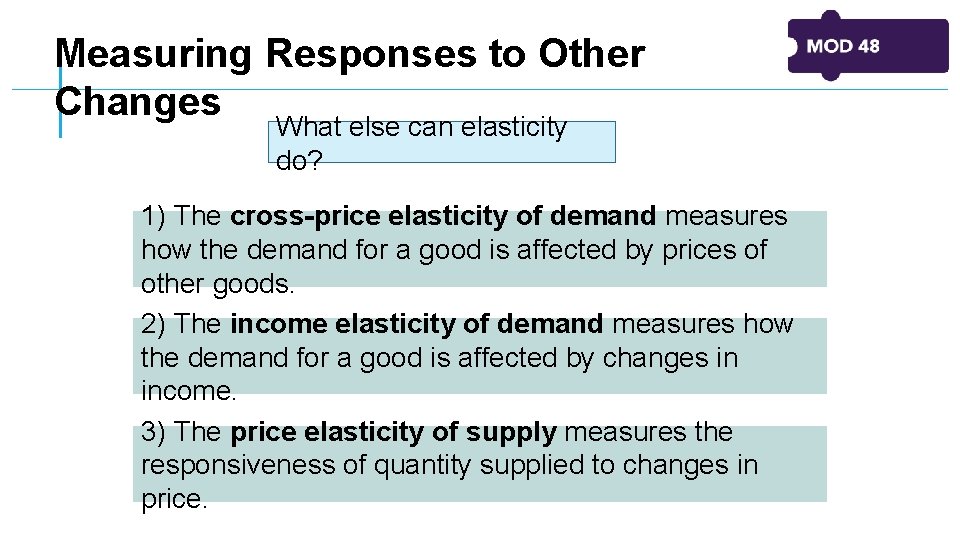
Measuring Responses to Other Changes What else can elasticity do? 1) The cross-price elasticity of demand measures how the demand for a good is affected by prices of other goods. 2) The income elasticity of demand measures how the demand for a good is affected by changes in income. 3) The price elasticity of supply measures the responsiveness of quantity supplied to changes in price.
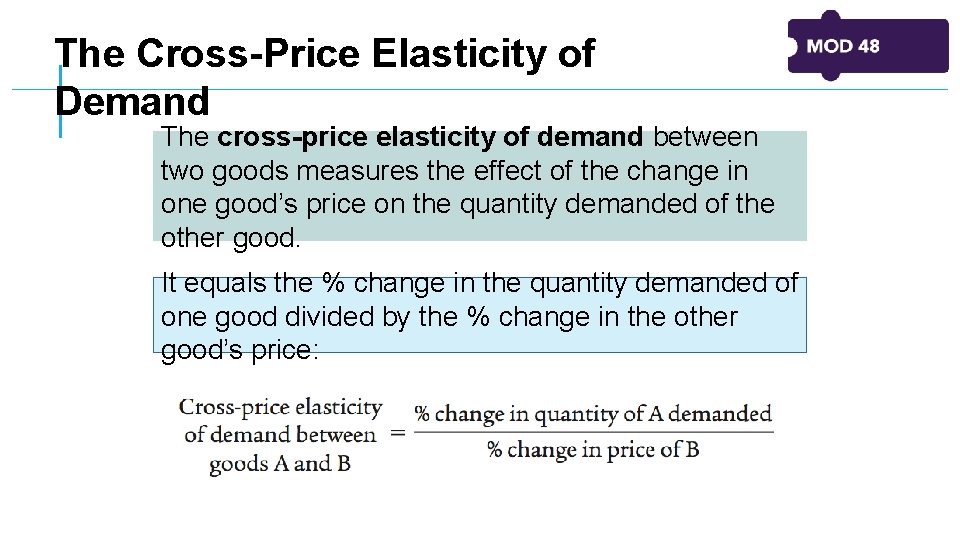
The Cross-Price Elasticity of Demand The cross-price elasticity of demand between two goods measures the effect of the change in one good’s price on the quantity demanded of the other good. It equals the % change in the quantity demanded of one good divided by the % change in the other good’s price:
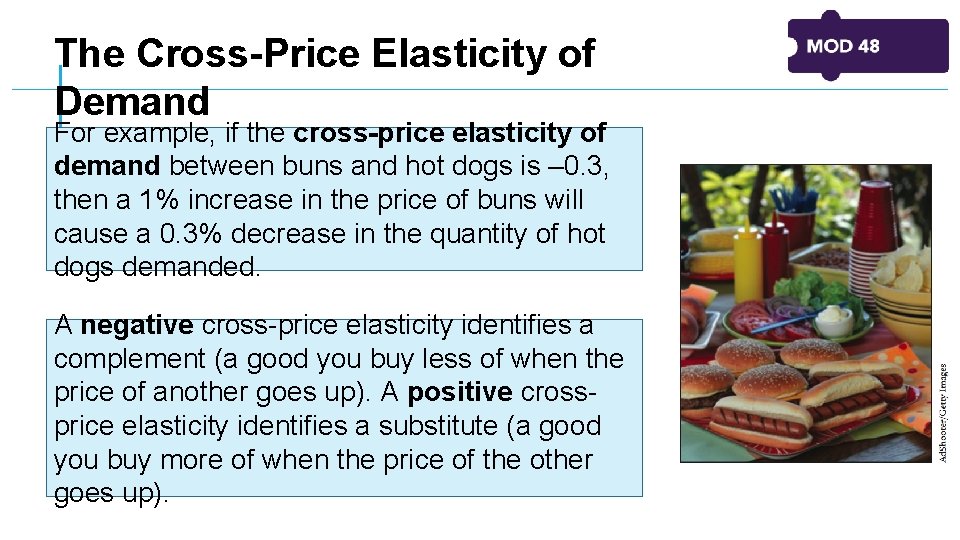
The Cross-Price Elasticity of Demand For example, if the cross-price elasticity of demand between buns and hot dogs is – 0. 3, then a 1% increase in the price of buns will cause a 0. 3% decrease in the quantity of hot dogs demanded. A negative cross-price elasticity identifies a complement (a good you buy less of when the price of another goes up). A positive crossprice elasticity identifies a substitute (a good you buy more of when the price of the other goes up).
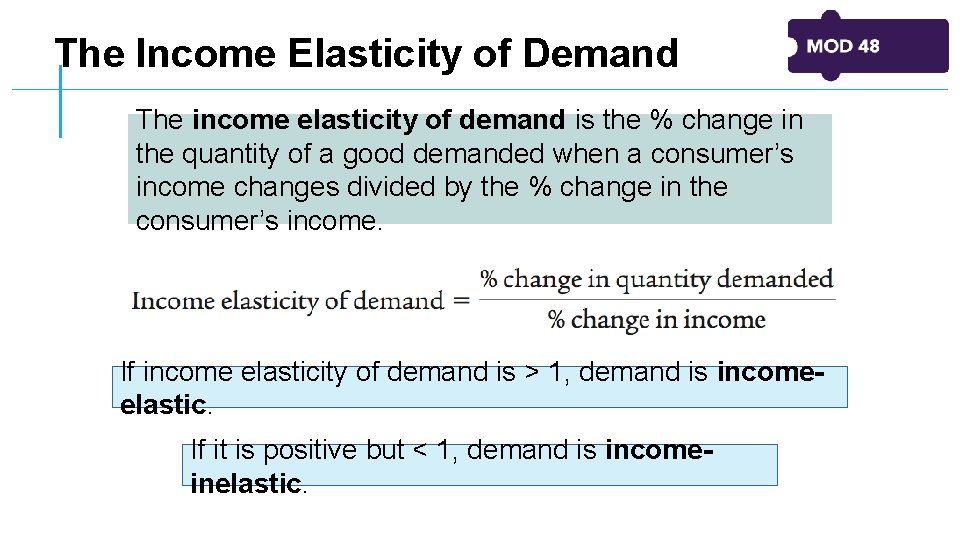
The Income Elasticity of Demand The income elasticity of demand is the % change in the quantity of a good demanded when a consumer’s income changes divided by the % change in the consumer’s income. If income elasticity of demand is > 1, demand is incomeelastic. If it is positive but < 1, demand is incomeinelastic.
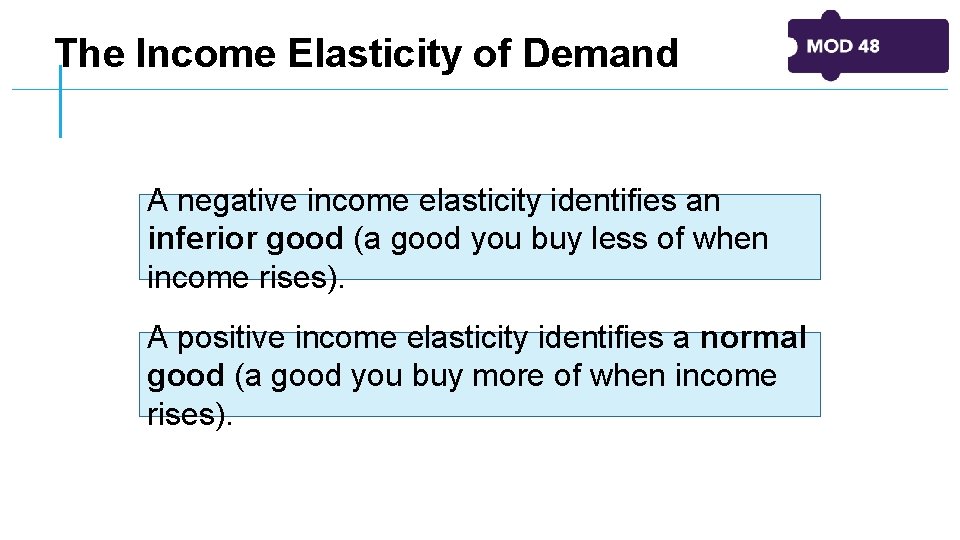
The Income Elasticity of Demand A negative income elasticity identifies an inferior good (a good you buy less of when income rises). A positive income elasticity identifies a normal good (a good you buy more of when income rises).
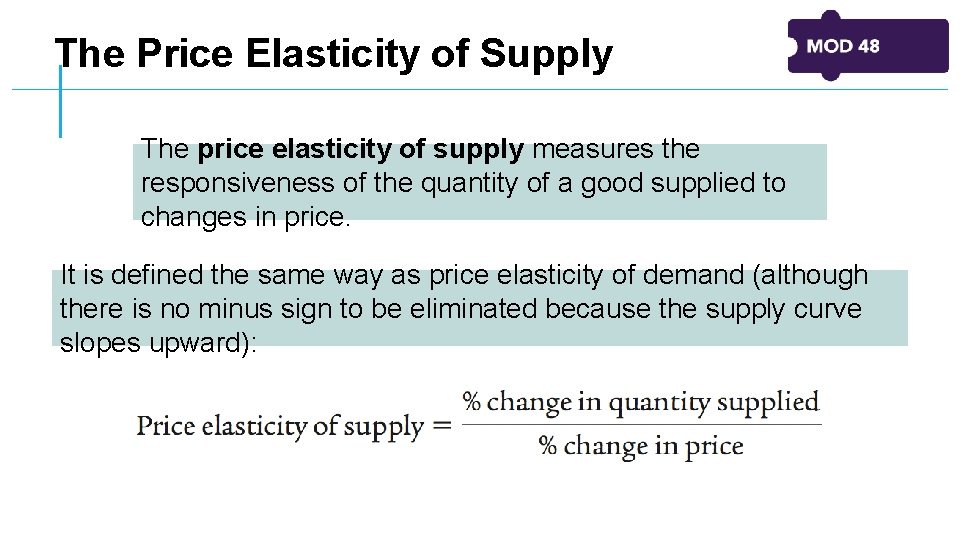
The Price Elasticity of Supply The price elasticity of supply measures the responsiveness of the quantity of a good supplied to changes in price. It is defined the same way as price elasticity of demand (although there is no minus sign to be eliminated because the supply curve slopes upward):
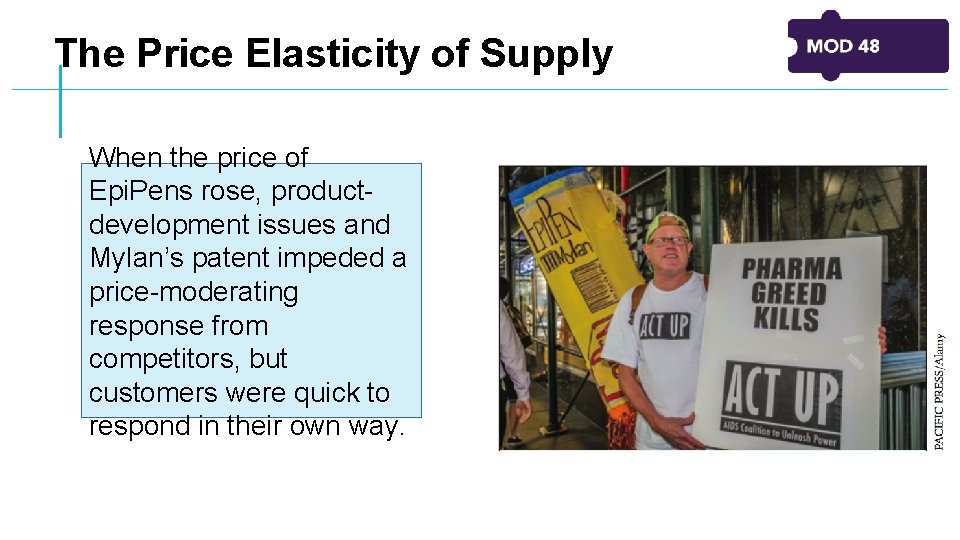
The Price Elasticity of Supply When the price of Epi. Pens rose, productdevelopment issues and Mylan’s patent impeded a price-moderating response from competitors, but customers were quick to respond in their own way.
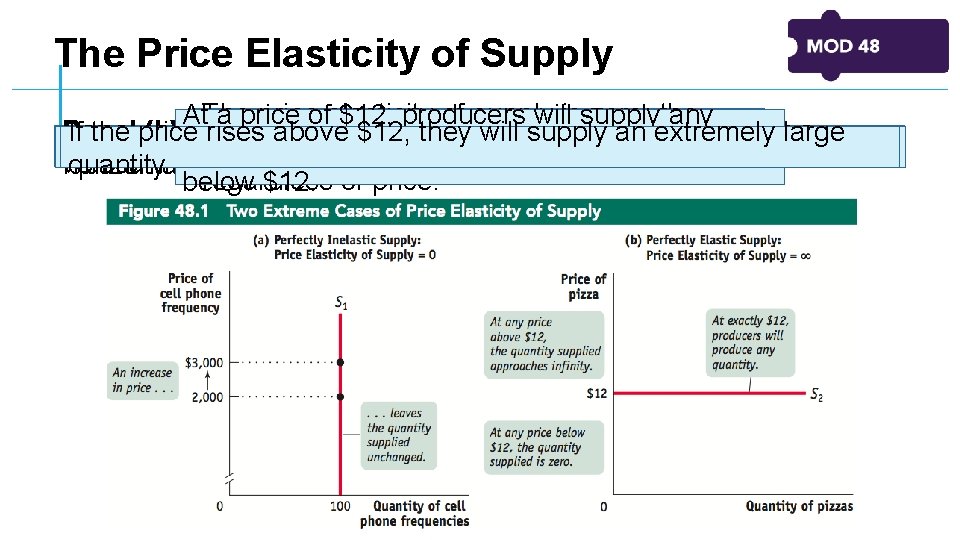
The Price Elasticity of Supply priceofelasticity of supply zero: the At. The a price $12, producers willissupply any Panel (a) a perfectly supply curve, whichisisalarge a (b) shows elastic supply curve, which If the price rises above $12, inelastic they will supply an extremely quantitybut supplied is always the same, quantity, they will supply none at a price vertical line. horizontal line. quantity. regardless below $12. of price.
The Price Elasticity of Supply Perfectly inelastic supply occurs when the price elasticity of supply is zero: changes in the price of the good have no effect on the quantity supplied. A perfectly inelastic supply curve is a vertical line. Perfectly elastic supply occurs when the quantity supplied is zero below some price and approaches infinity above that price. A perfectly elastic supply curve is a horizontal line.
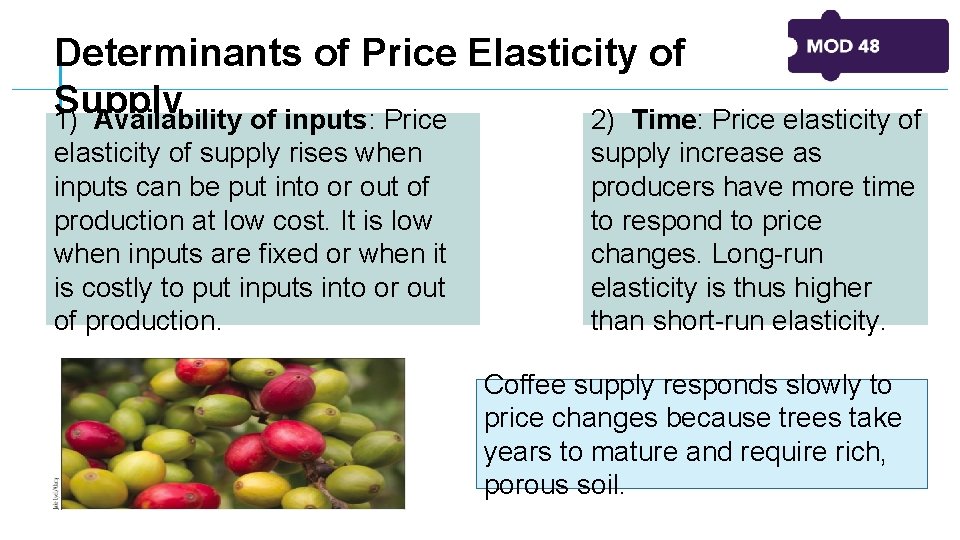
Determinants of Price Elasticity of Supply 1) Availability of inputs: Price 2) Time: Price elasticity of supply rises when inputs can be put into or out of production at low cost. It is low when inputs are fixed or when it is costly to put inputs into or out of production. supply increase as producers have more time to respond to price changes. Long-run elasticity is thus higher than short-run elasticity. Coffee supply responds slowly to price changes because trees take years to mature and require rich, porous soil.
An Elasticity Menagerie Table 48. 1 shows an overview of all the types of elasticity we have discussed, including their formulas and a quick summary of their significance for different types of products and different elasticity values.
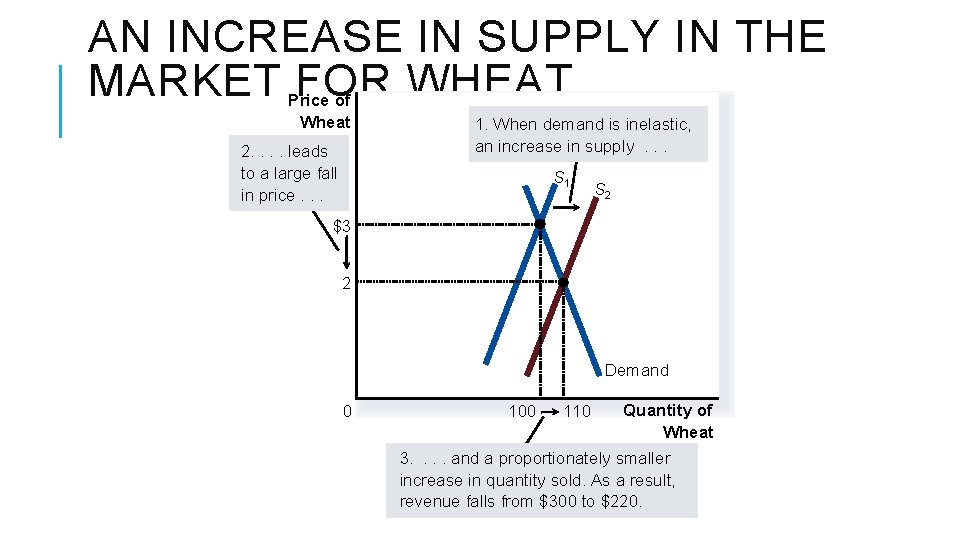
SO PUT IT ALL TOGETHER Can good news for farming be bad news for farmers? What happens to wheat farmers and the market for wheat when university agronomists discover a new wheat hybrid that is more productive than existing varieties?
- Examine whether the supply or demand curve shifts. - Determine the direction of the shift of the curve. - Use the supply-and-demand diagram to see how the market equilibrium changes.
AN INCREASE IN SUPPLY IN THE MARKET FOR WHEAT Price of Wheat 2. . leads to a large fall in price. . . 1. When demand is inelastic, an increase in supply. . . S 1 S 2 $3 2 Demand 0 100 110 Quantity of Wheat 3. . and a proportionately smaller increase in quantity sold. As a result, revenue falls from $300 to $220.
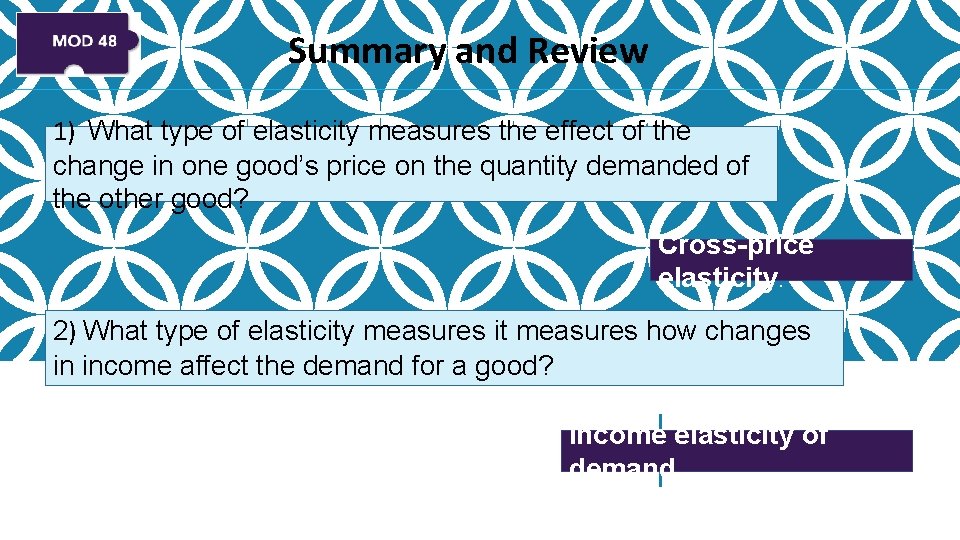
Summary and Review 1) What type of elasticity measures the effect of the change in one good’s price on the quantity demanded of the other good? Cross-price elasticity. 2) What type of elasticity measures it measures how changes in income affect the demand for a good? Income elasticity of demand.
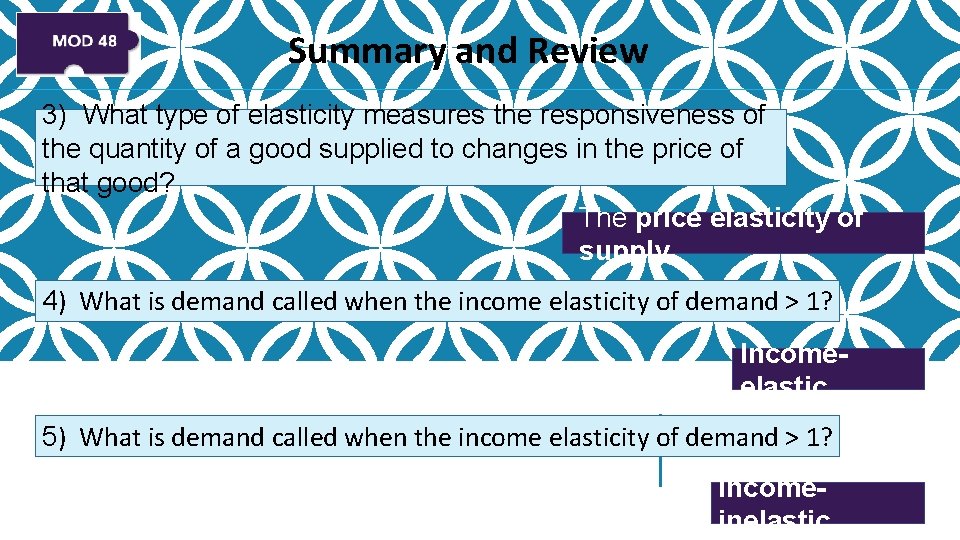
Summary and Review 3) What type of elasticity measures the responsiveness of the quantity of a good supplied to changes in the price of that good? The price elasticity of supply. 4) What is demand called when the income elasticity of demand > 1? Incomeelastic. 5) What is demand called when the income elasticity of demand > 1? Incomeinelastic.
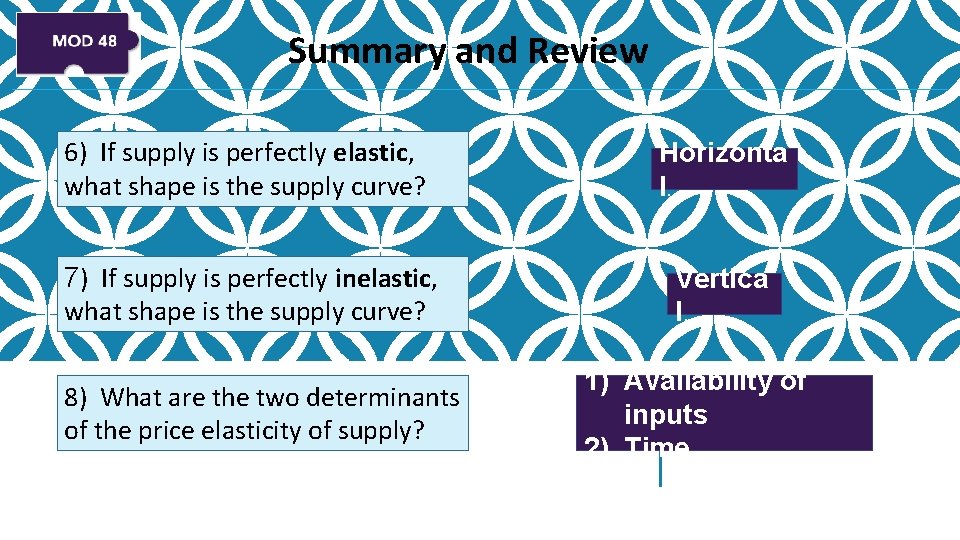
Summary and Review 6) If supply is perfectly elastic, what shape is the supply curve? Horizonta l. 7) If supply is perfectly inelastic, what shape is the supply curve? Vertica l. 8) What are the two determinants of the price elasticity of supply? 1) Availability of inputs 2) Time
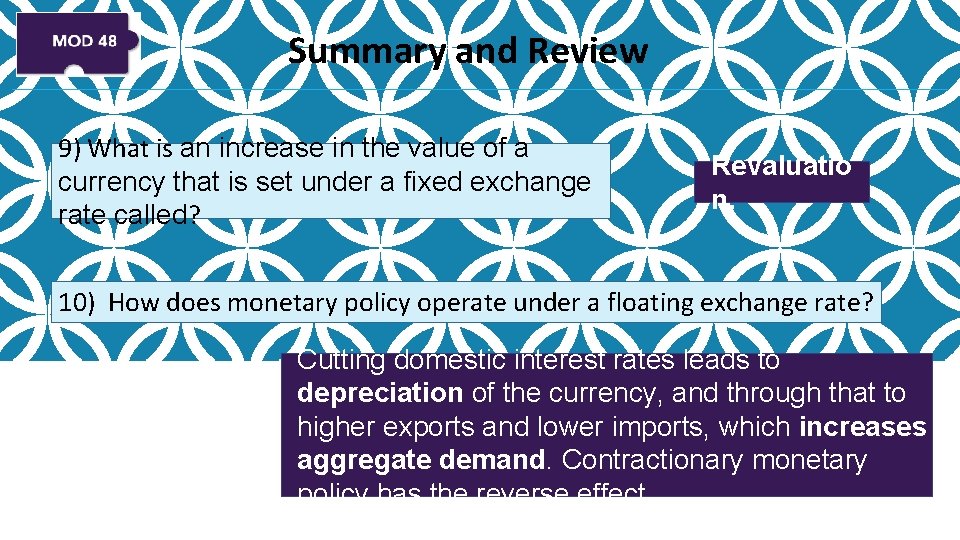
Summary and Review 9) What is an increase in the value of a currency that is set under a fixed exchange rate called? Revaluatio n. 10) How does monetary policy operate under a floating exchange rate? Cutting domestic interest rates leads to depreciation of the currency, and through that to higher exports and lower imports, which increases aggregate demand. Contractionary monetary policy has the reverse effect.
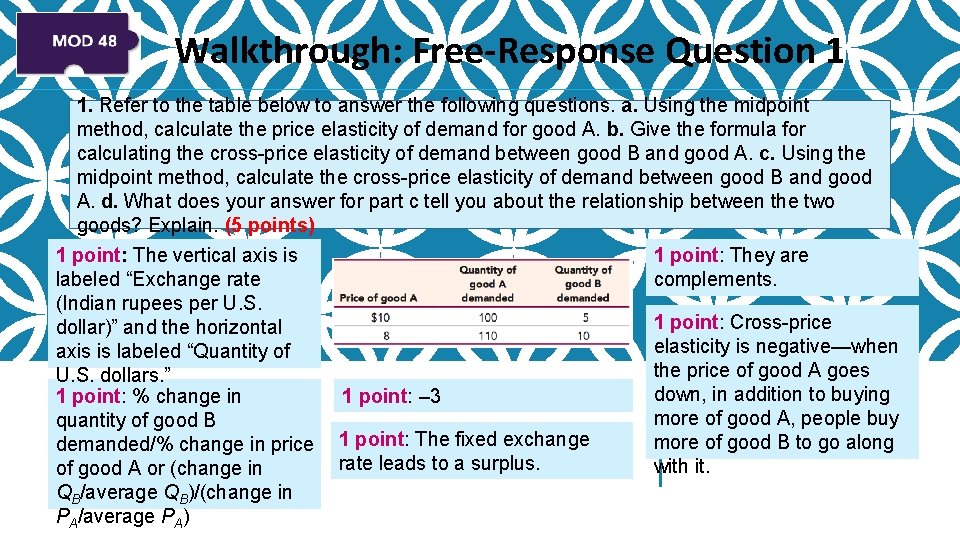
Walkthrough: Free-Response Question 1 1. Refer to the table below to answer the following questions. a. Using the midpoint method, calculate the price elasticity of demand for good A. b. Give the formula for calculating the cross-price elasticity of demand between good B and good A. c. Using the midpoint method, calculate the cross-price elasticity of demand between good B and good A. d. What does your answer for part c tell you about the relationship between the two goods? Explain. (5 points) 1 point: The vertical axis is labeled “Exchange rate (Indian rupees per U. S. dollar)” and the horizontal axis is labeled “Quantity of U. S. dollars. ” 1 point: % change in quantity of good B demanded/% change in price of good A or (change in QB/average QB)/(change in PA/average PA) 1 point: They are complements. 1 point: – 3 1 point: The fixed exchange rate leads to a surplus. 1 point: Cross-price elasticity is negative—when the price of good A goes down, in addition to buying more of good A, people buy more of good B to go along with it.