
The Responsible Thinking Process RTP Based On The
The Responsible Thinking Process (RTP) • Based On The Perceptual Control Theory
Responsible Thinking Process (RTP) Developed by Ed Ford during the early 1990’s. Teaching children to respect the rights of others through responsible thinking based on the perceptual control theory. Teachers have the right to teach and students have the right to learn without being disrupted by another. A school-wide system of discipline that involves a questioning process, goal writing and negotiating by misbehaving students, and interventions when necessary. In order to work it needs to be be embraced by the entire school.
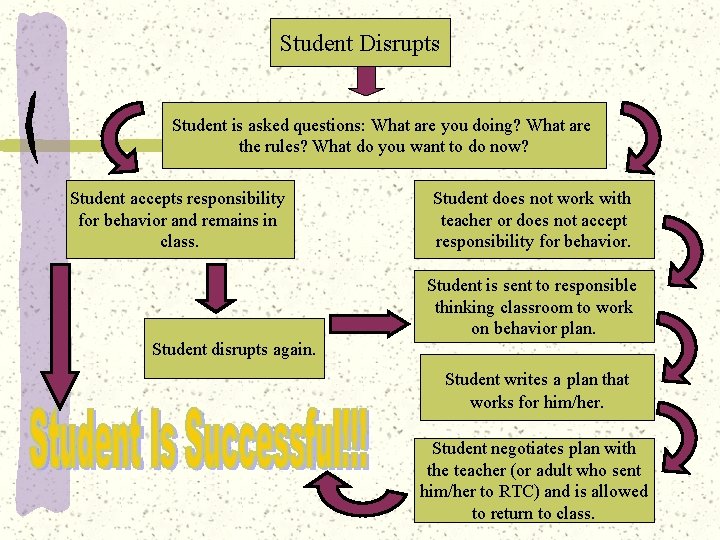
Student Disrupts Student is asked questions: What are you doing? What are the rules? What do you want to do now? Student accepts responsibility for behavior and remains in class. Student does not work with teacher or does not accept responsibility for behavior. Student is sent to responsible thinking classroom to work on behavior plan. Student disrupts again. Student writes a plan that works for him/her. Student negotiates plan with the teacher (or adult who sent him/her to RTC) and is allowed to return to class.
A Look At Theory. Perceptual Control Developed by William T. Powers in the 1950’s. PCT is about the inborn nature of human beings who control themselves, and are inherently in charge of what happens to themselves. Discipline, under this theory, is not one person trying to force another into behaving right. It is an individual (the student) trying to make personal sense of standards, goals, and relationships with other people.
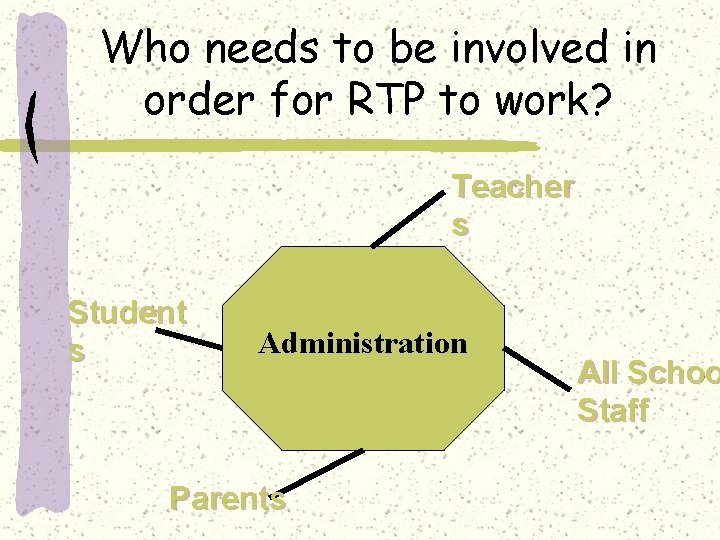
Who needs to be involved in order for RTP to work? Teacher s Student s Administration Parents All Schoo Staff
Responsibilities of Those Involved
The Questioning Phase What are you doing? What are the rules? What will you choose if you continue to…?

Example Of Referral To RTC
Writing a Plan- An Important Task
Negotiations are vital to the student/teacher relationship. The student must negotiate his/her plan with the teacher before returning to class.

Student Responsibilities While Negotiating the Plan The student must have created a thorough and specific plan with the RTC teacher before he/she negotiates with the teacher. If the plan is deemed unacceptable to the teacher the student must be willing to revise.

Problems When Negotiating The Plan The student must take responsibility for his/her behavior. If they do not then they are not ready to negotiate the plan, in which case they must return to RTC until they are ready to take responsibility for their behavior and negotiate. The student may try to “blame” someone else or downplay the effect his/her disruption had on the class.

Intervention Meetings- When Plans Are Not Working Interventions become necessary when students are not being successful with their written plan(s).
Continued Commitment to RTP
- Slides: 14