
The Respiratory Viruses Influenza RSV and Rhinoviruses Viruses




- Slides: 51
The Respiratory Viruses Influenza, RSV, and Rhinoviruses
• Viruses that cause disease in the respiratory tract • Some of the most common causes of symptomatic human infections • Viral upper respiratory tract infections alone account for 26 million days of school absence and 23 million days of work absence in the US EACH YEAR!
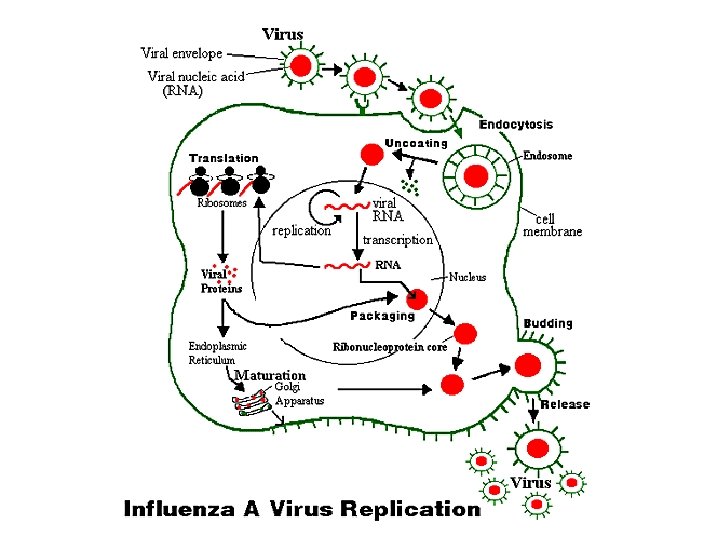
The Virus • Orthomyxovirus Family – Influenza A, B, and C • Enveloped viruses with single strand, negative sense RNA genomes • RNA is segmented – 8 segments in influenza A and B – 7 segments in influenza C
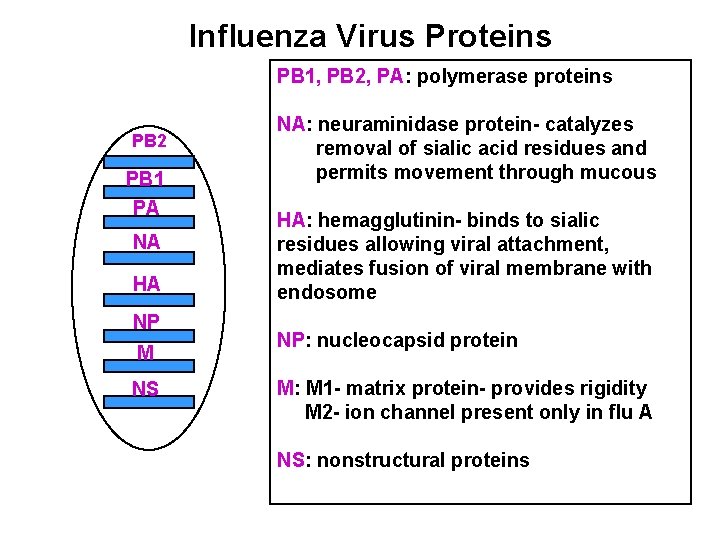
Influenza Virus Proteins PB 1, PB 2, PA: polymerase proteins PB 2 PB 1 PA NA HA NP M NS NA: neuraminidase protein- catalyzes removal of sialic acid residues and permits movement through mucous HA: hemagglutinin- binds to sialic residues allowing viral attachment, mediates fusion of viral membrane with endosome NP: nucleocapsid protein M: M 1 - matrix protein- provides rigidity M 2 - ion channel present only in flu A NS: nonstructural proteins
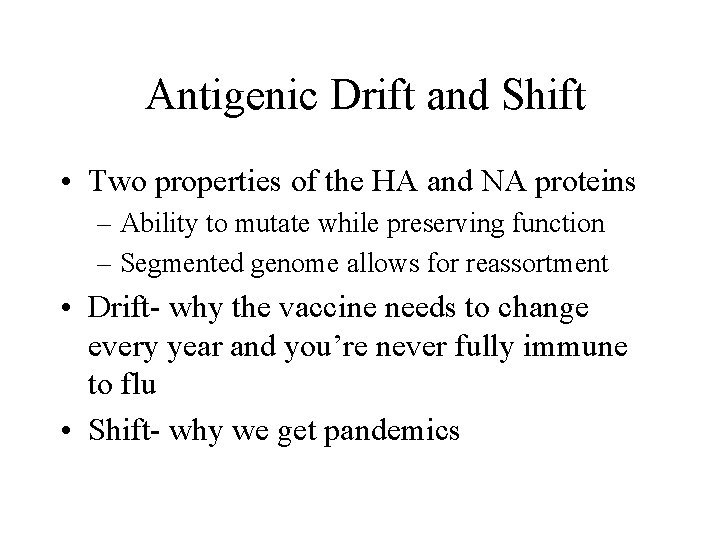
Antigenic Drift and Shift • Two properties of the HA and NA proteins – Ability to mutate while preserving function – Segmented genome allows for reassortment • Drift- why the vaccine needs to change every year and you’re never fully immune to flu • Shift- why we get pandemics
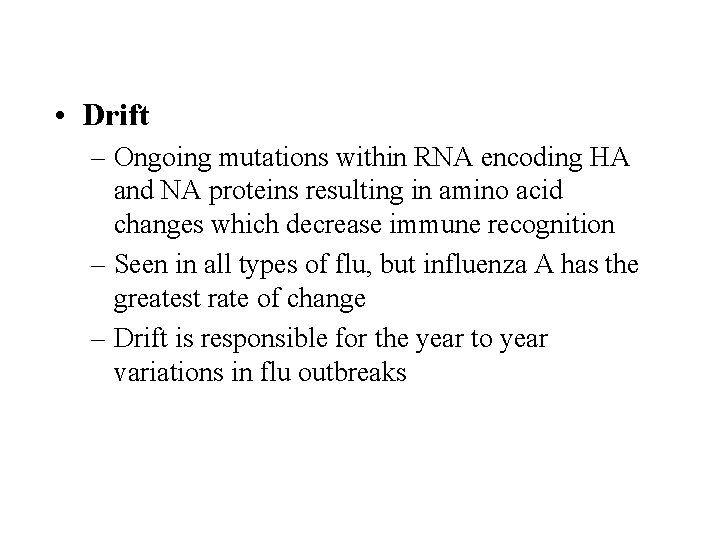
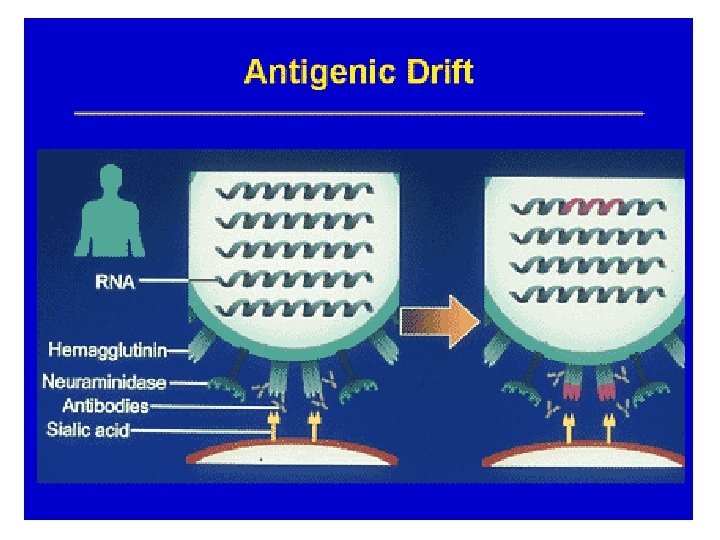
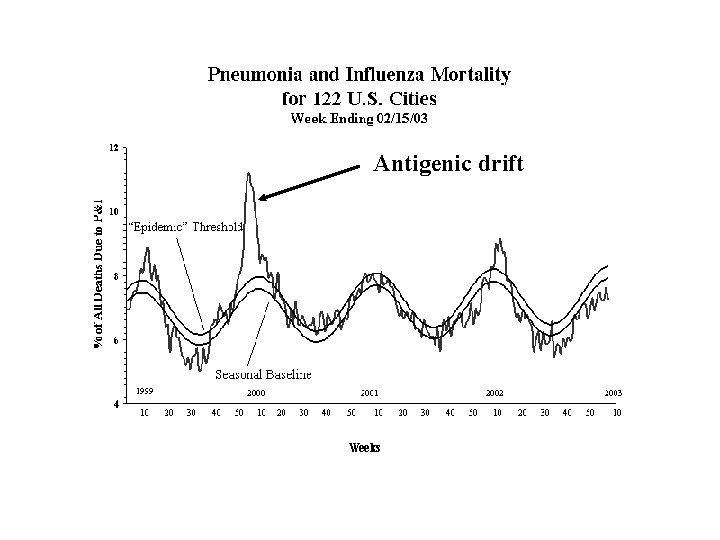
• Drift – Ongoing mutations within RNA encoding HA and NA proteins resulting in amino acid changes which decrease immune recognition – Seen in all types of flu, but influenza A has the greatest rate of change – Drift is responsible for the year to year variations in flu outbreaks
Antigenic drift
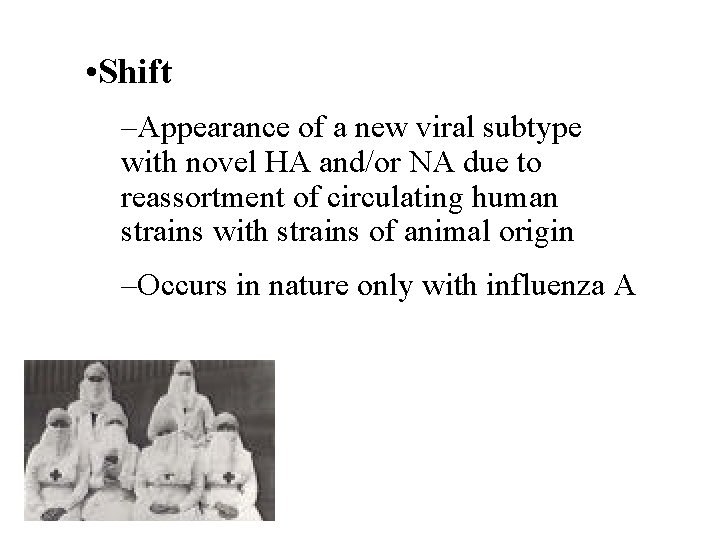
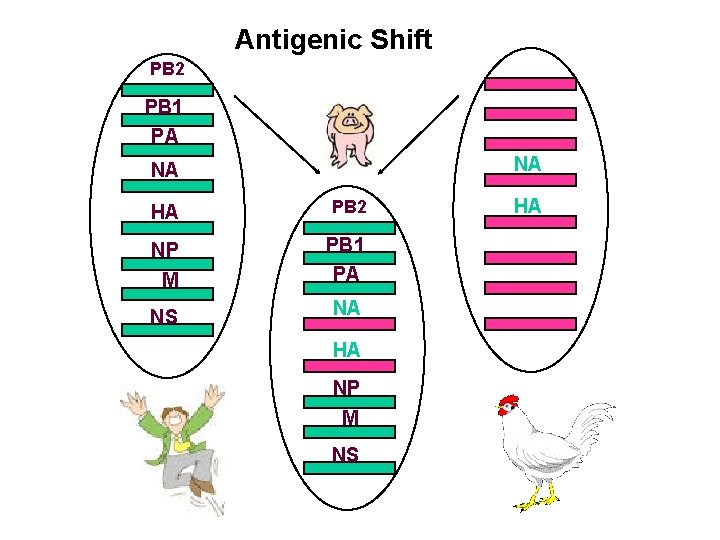
• Shift –Appearance of a new viral subtype with novel HA and/or NA due to reassortment of circulating human strains with strains of animal origin –Occurs in nature only with influenza A
Antigenic Shift PB 2 PB 1 PA NA NA HA PB 2 NP M PB 1 PA NS NA HA NP M NS HA
Influenza nomenclature • Strains named for: – Type of flu (A or B) – Place of initial isolation – Strain designation – Year of isolation – HA and NA subtype • Example: A/Texas/1/77/H 3 N 2
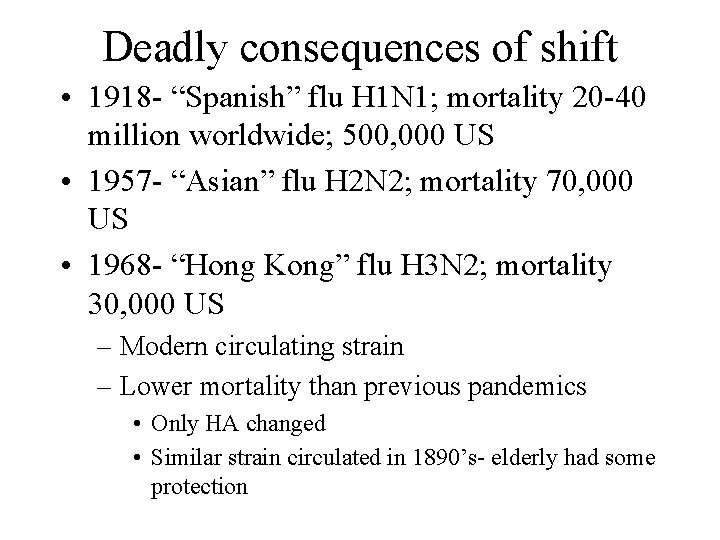
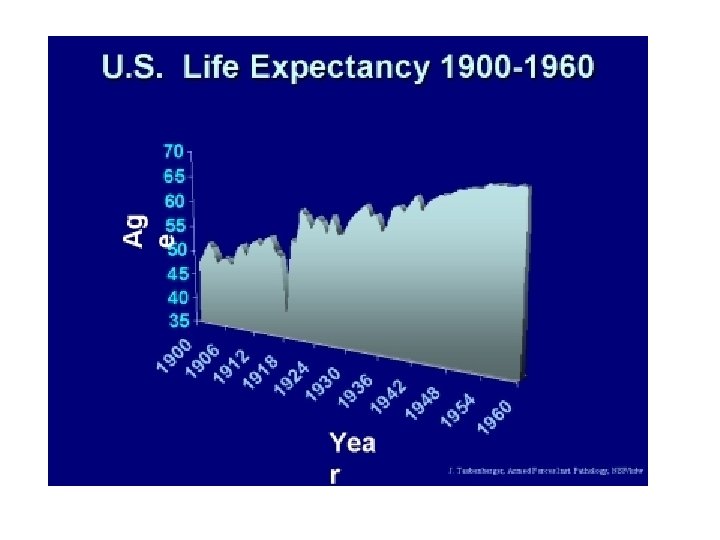
Deadly consequences of shift • 1918 - “Spanish” flu H 1 N 1; mortality 20 -40 million worldwide; 500, 000 US • 1957 - “Asian” flu H 2 N 2; mortality 70, 000 US • 1968 - “Hong Kong” flu H 3 N 2; mortality 30, 000 US – Modern circulating strain – Lower mortality than previous pandemics • Only HA changed • Similar strain circulated in 1890’s- elderly had some protection
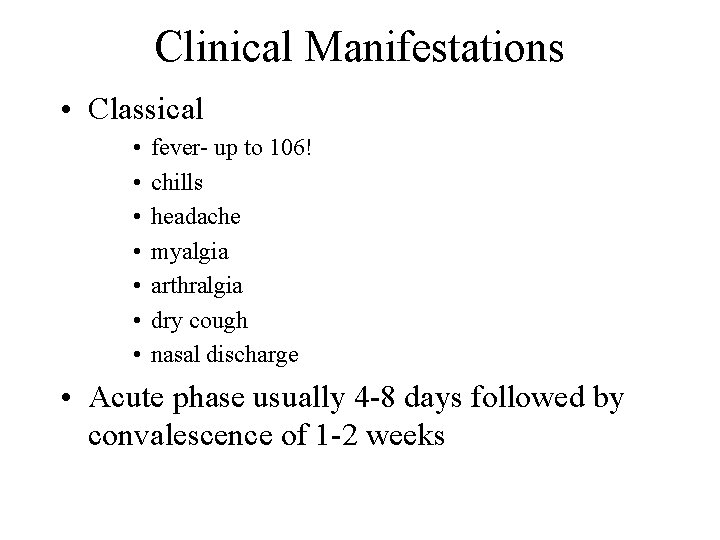
Clinical Manifestations • Classical • • fever- up to 106! chills headache myalgia arthralgia dry cough nasal discharge • Acute phase usually 4 -8 days followed by convalescence of 1 -2 weeks
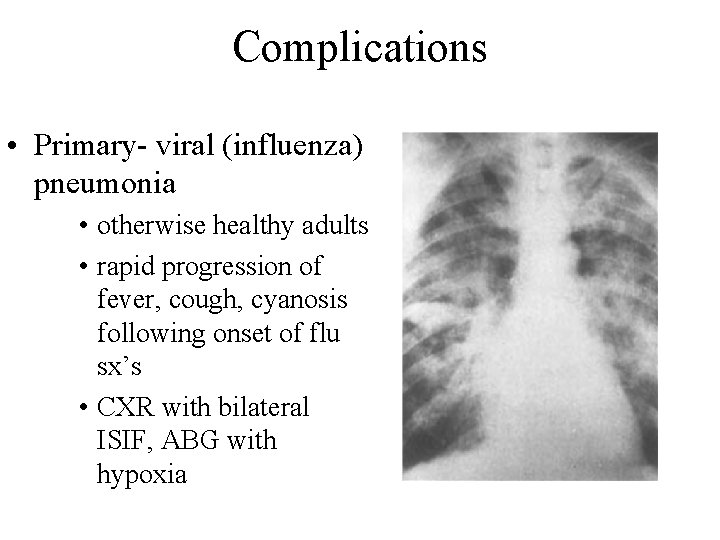
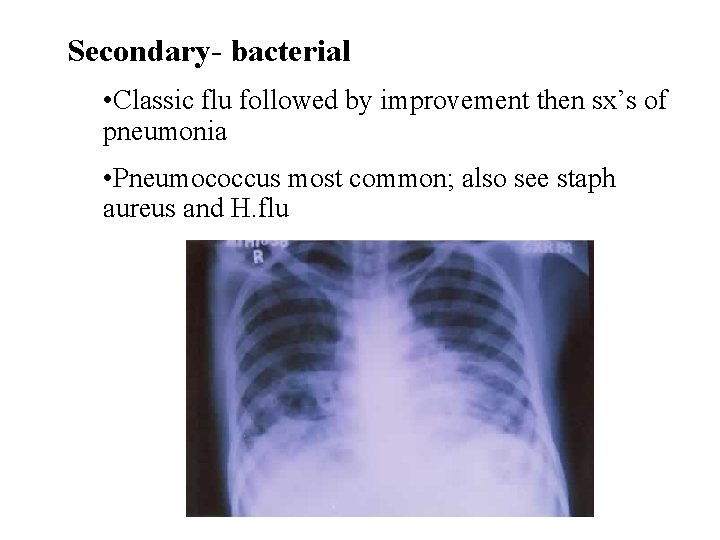
Complications • Primary- viral (influenza) pneumonia • otherwise healthy adults • rapid progression of fever, cough, cyanosis following onset of flu sx’s • CXR with bilateral ISIF, ABG with hypoxia
Secondary- bacterial • Classic flu followed by improvement then sx’s of pneumonia • Pneumococcus most common; also see staph aureus and H. flu
Complications (cont. ) • Myositis – Most common in children after flu B infection – Can prevent walking: affects gastrocs and soleus • Neurologic – GBS (controversial) – transverse myelitis and encephalitis • Reye syndrome
Diagnosis • Virus isolation and culture • Antigen Tests –Performed directly on patient samples –Rapid –EIA for flu A –DFA for flu B • Hexaplex -RT PCR for flu A and B, RSV, parainfluenza -Sens 100%; spec 98%
Influenza vaccine • Major public health intervention for preventing spread of influenza • Currently use inactivated viruses circulating during the previous influenza season • This year includes – H 1 N 1, A/New Caledonia/20/99/H 1 N 1 – H 3 N 2, A/Panama/2007/99/H 3 N 2 – B/Hong Kong/330/2001 -like virus strain* • Generally 50 -80% protective – Less efficacious in the elderly but decreases hospitalization by 70% and death by 80%
Vaccine: who should get it • Any individual > 6 mos who is at risk for complications of influenza – chronic cardiac, pulmonary (including asthma), renal disease, diabetes, hemoglobinopathies, immunosuppression • • Residents of nursing homes Individuals who care for high-risk patients Healthy people over age 50* Children between 6 mos and 2 years* * New ACIP recommendation
Treatment • Amantidine/rimantidine – Symmetric amines – Inhibit viral uncoating by interfering with M 2 protein – Approved for both treatment and prevention – If given within 48 hours of onset of symptoms, will decrease duration of illness by one day
• Neuraminidase inhibitors – zanamivir and oseltamivir – Mimic sialic acid residues blocking neuraminidase – Efficacious against both influenza A and B
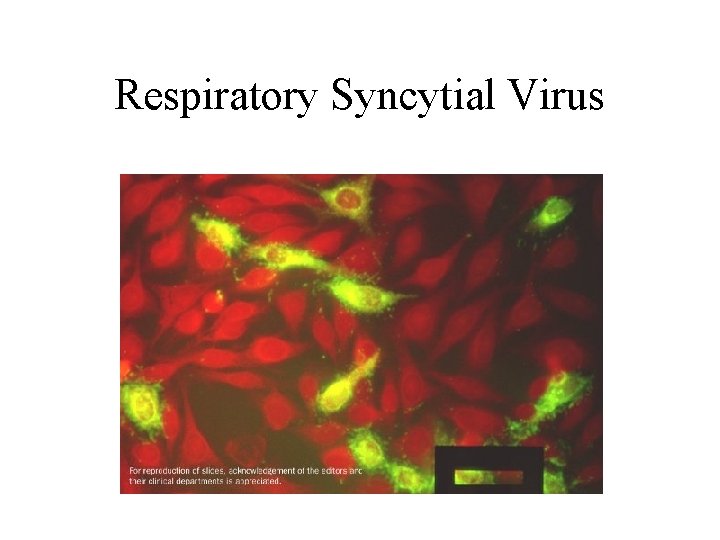
Respiratory Syncytial Virus
Microbiology • Paramyxovirus family – – Paramyxovirus- parainfluenza viruses 1 and 3 Rubulavirus- mumps and parainfluenza type 2 & 4 Morbillivuirus- measles Pneumovirus- RSV • Grows well in human cell lines and forms characteristic syncytia • Two groups of isolates have been identified and are designated A and B- circulate simultaneously during outbreaks
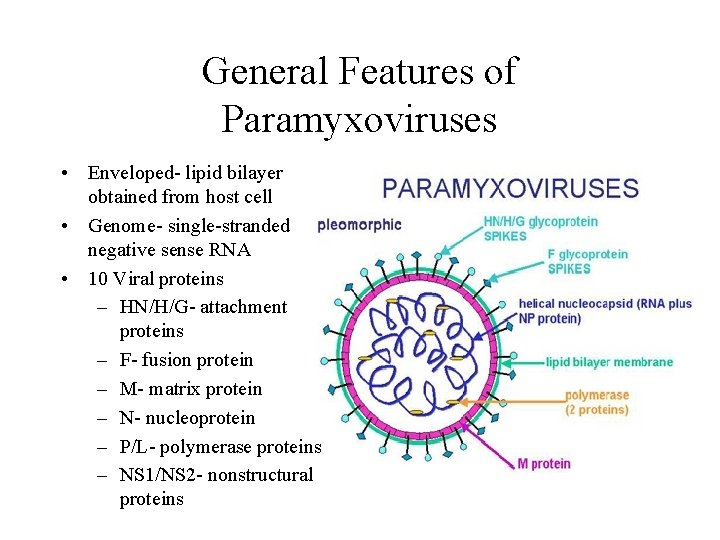
General Features of Paramyxoviruses • Enveloped- lipid bilayer obtained from host cell • Genome- single-stranded negative sense RNA • 10 Viral proteins – HN/H/G- attachment proteins – F- fusion protein – M- matrix protein – N- nucleoprotein – P/L- polymerase proteins – NS 1/NS 2 - nonstructural proteins
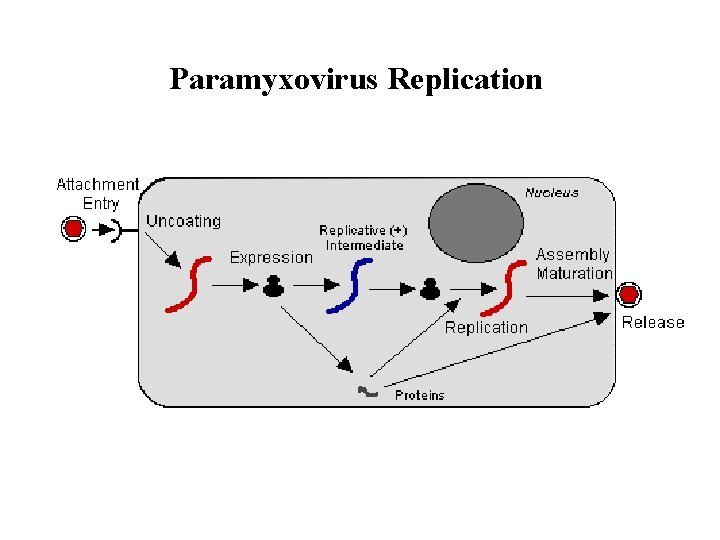
Paramyxovirus Replication
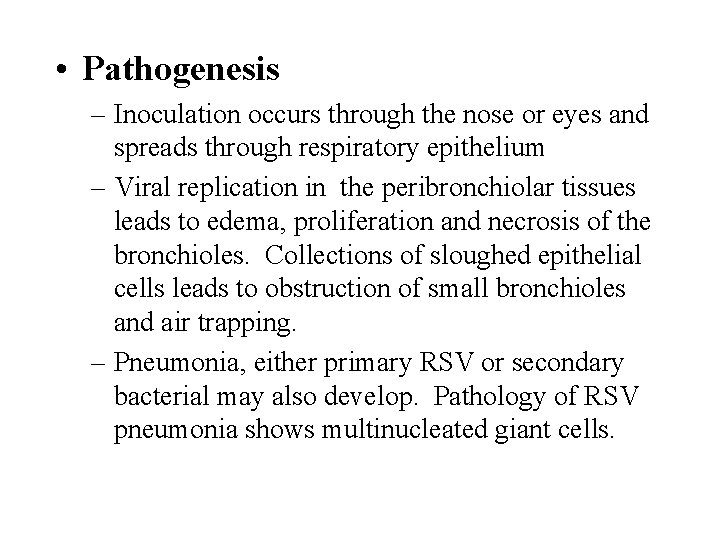
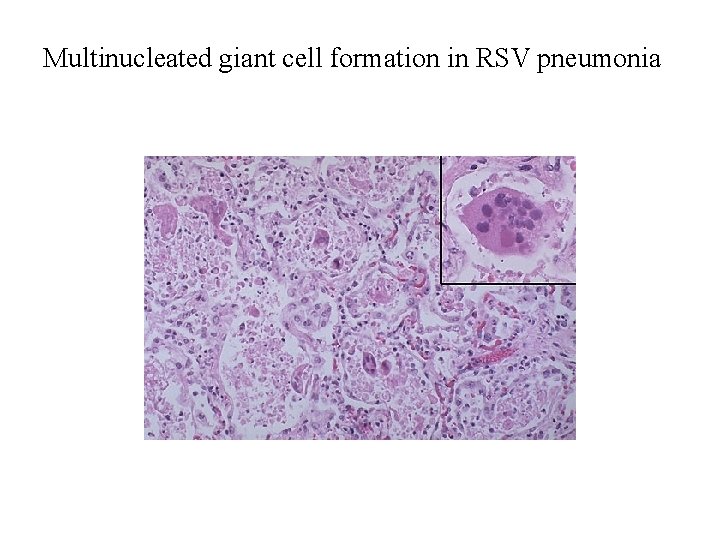
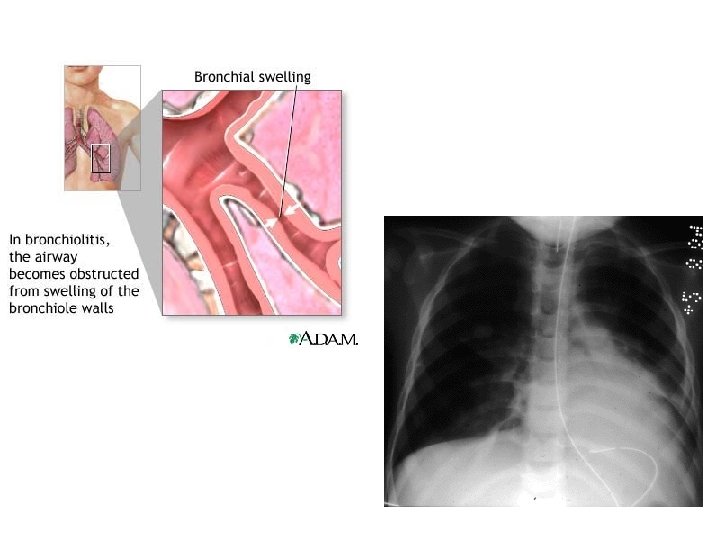
• Pathogenesis – Inoculation occurs through the nose or eyes and spreads through respiratory epithelium – Viral replication in the peribronchiolar tissues leads to edema, proliferation and necrosis of the bronchioles. Collections of sloughed epithelial cells leads to obstruction of small bronchioles and air trapping. – Pneumonia, either primary RSV or secondary bacterial may also develop. Pathology of RSV pneumonia shows multinucleated giant cells.
Multinucleated giant cell formation in RSV pneumonia
• Epidemiology – Ubiquitous – Virtually all children infected by age 2 – Severe illness most common in young infants • Boys are more likely to have serious illness than girls • Lower socioeconomic background correlates with worse disease • Major cause of lower respiratory tract disease in young children
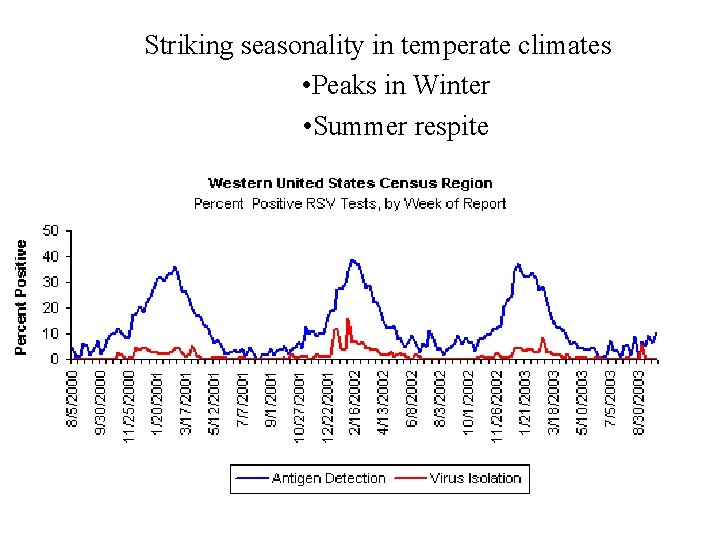
Striking seasonality in temperate climates • Peaks in Winter • Summer respite MMWR
• Clinical Features- hallmark is bronchiolitis – Primary infection is usually symptomatic and lasts 7 -21 days • Starts as URI with congestion, sore throat, fever • Cough deepens and becomes more prominent • LRT involvement heralded by increased respiratory rate and intercostal muscle retraction • Hospitalization rates can approach 40% in young infants – Reinfection in adults and older children • Rarely asymptomatic • Generally resembles a severe cold
• Immunity – Incomplete, reinfections are common – Cell-mediated immunity, as opposed to humoral, is important in protecting against severe disease. – Humoral immunity, in the absence of cell -mediated immunity, may predispose to more serious disease. – Vaccine experience
• High risk groups – Very young infants (<6 weeks) especially preemies – Older adults • Mortality from RSV pneumonia can approach 20% in this group – Children with bronchopulmonary dysplasia and congenital heart disease – Immunocompromised individuals • SCID • Transplant recipients • Hematologic malignancies
• Diagnosis – Clinical, during outbreak – Virus isolation and growth – Rapid diagnostic techniques • Immunofluoresence • EIA/RIA • PCR – Serology
• Treatment – Supportive care – Bronchodilators • Studies suggest inhaled epinephrine more efficacious than inhaled ß-agonists – Ribavirin • Aerosol • High-risk individuals only
• Prevention – Gown and glove isolation in hospital – RSV immune globulin (Respi. Gam®) and palivizumab (Synagis®)- AAP recommendations • Children < 2 years with bronchopulmonary dysplasia and oxygen therapy in the 6 months prior to RSV season • Infants with gestational age < 32 weeks • Not approved for children with congenital heart disease • Being used anecdotally in immunocompromised individuals – No vaccine yet
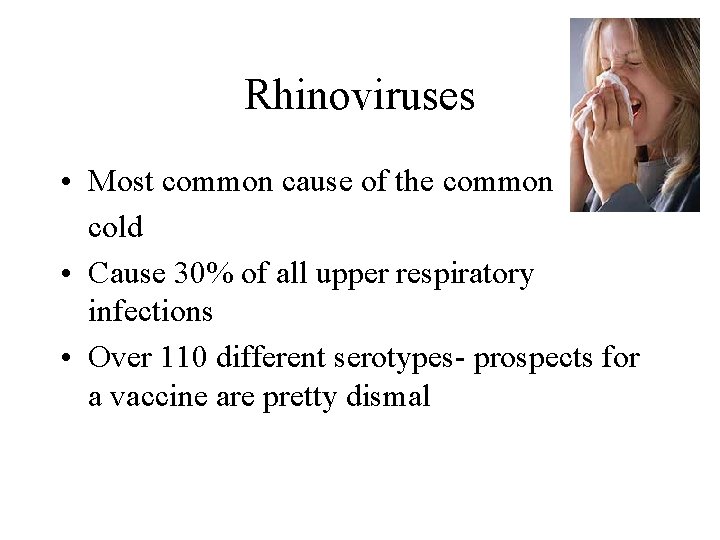
Rhinoviruses • Most common cause of the common cold • Cause 30% of all upper respiratory infections • Over 110 different serotypes- prospects for a vaccine are pretty dismal
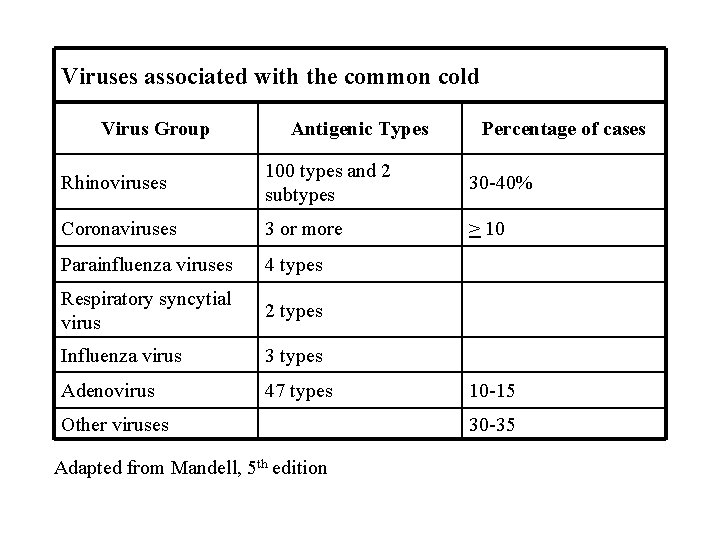
Viruses associated with the common cold Virus Group Antigenic Types Percentage of cases Rhinoviruses 100 types and 2 subtypes 30 -40% Coronaviruses 3 or more > 10 Parainfluenza viruses 4 types Respiratory syncytial virus 2 types Influenza virus 3 types Adenovirus 47 types 10 -15 Other viruses 30 -35 Adapted from Mandell, 5 th edition
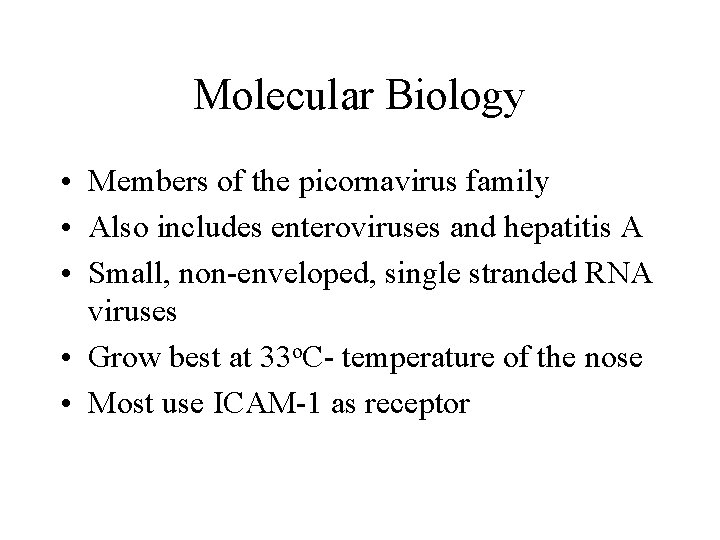
Molecular Biology • Members of the picornavirus family • Also includes enteroviruses and hepatitis A • Small, non-enveloped, single stranded RNA viruses • Grow best at 33 o. C- temperature of the nose • Most use ICAM-1 as receptor
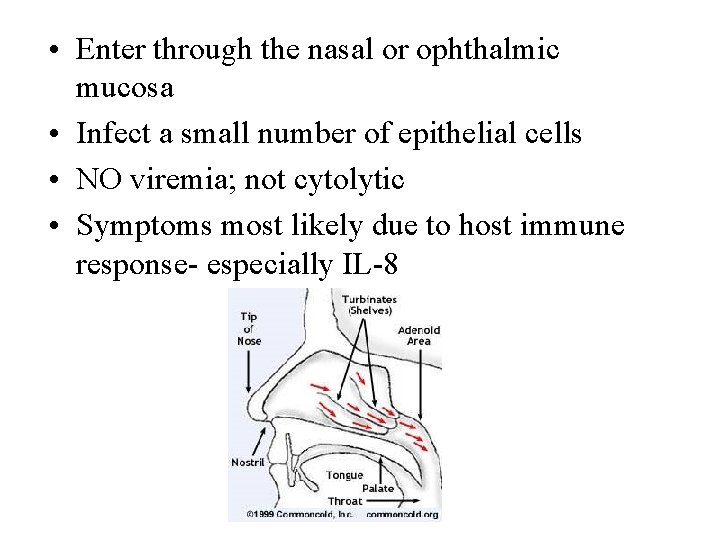
• Enter through the nasal or ophthalmic mucosa • Infect a small number of epithelial cells • NO viremia; not cytolytic • Symptoms most likely due to host immune response- especially IL-8
Epidemiology • Kids are the reservoir for rhinoviruses and have the most symptomatic infections • Worldwide distribution • Seasonal pattern in temperate climates – Seen in early fall and spring – Less common in winter and summer
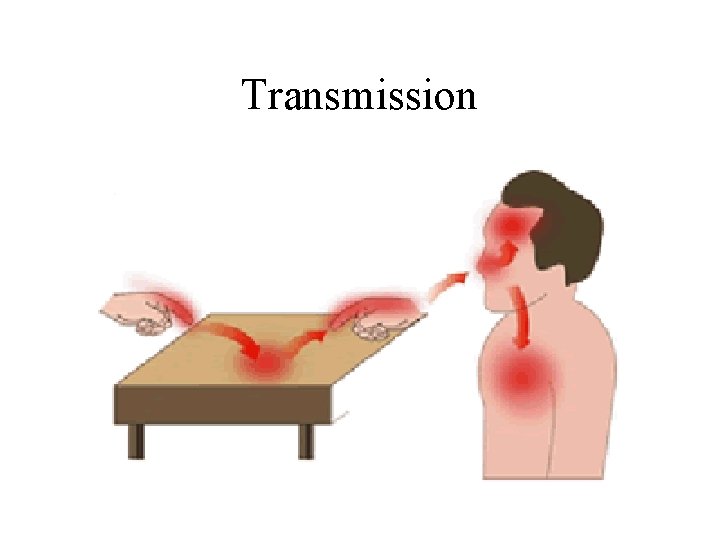
Transmission
Clinical Manifestations • You all know the symptoms • Rhinovirus colds rarely have fever associated with them • Most colds last about a week • A non-productive cough following a cold can last up to 3 weeks- this is NOT bronchitis
Complications • Sinusitis – 87% of individuals with colds will have CT evidence of sinusitis- this is mostly viral! • Exacerbation of chronic bronchitis and asthma • Distinguishing normal post-cold symptoms from true bacterial superinfection is tough
Treatment • Tincture of time • Symptomatic relief – Decongestants – Antihistamines – NSAIDs • Randomized, controlled clinical trials have failed to show a benefit from vitamin C, zinc or echinacea • Virus specific therapies not practically useful
DO NOT GIVE ANTIBIOTICS FOR THE COMMON COLD
Myths of the Common Cold • susceptibility to colds requires a weakened immune system. • Central heating dries the mucus membranes of the nose and makes a person more susceptible to catching a cold. • Becoming cold or chilled leads to catching a cold. • Having cold symptoms is good for you because they help you get over a cold, therefore you should not treat a cold. • Drinking milk causes increased nasal mucus during a cold. • You should feed a cold (and starve a fever). * From J. Gwaltney and F. Hayden’s common cold website
Lifelong Lessons • You can’t get flu from the flu vaccine • You can’t get worse flu because you were vaccinated • You don’t get a cold because you’re cold/not wearing a hat/wet • There is no moral or immunologic superiority associated with not getting colds • Stand firm- Don’t give out antibiotics for colds (or any other viral infections)