
The Respiratory System the exchange of gases Section
- Slides: 11
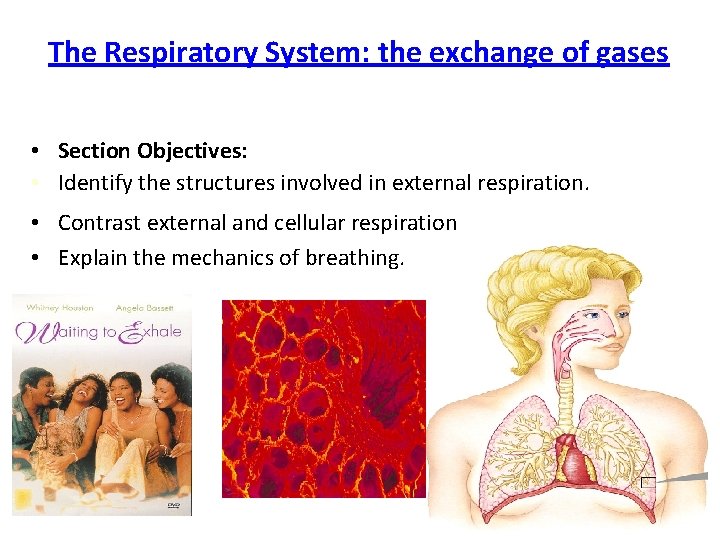
The Respiratory System: the exchange of gases • Section Objectives: • Identify the structures involved in external respiration. • Contrast external and cellular respiration • Explain the mechanics of breathing.
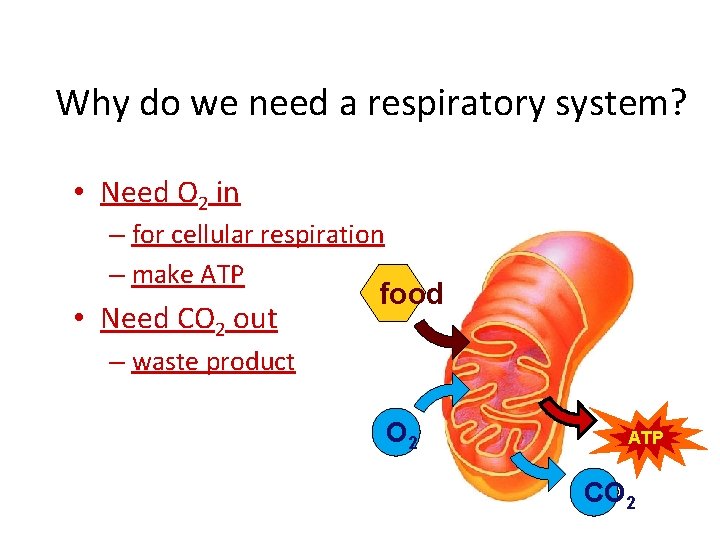
Why do we need a respiratory system? • Need O 2 in – for cellular respiration – make ATP • Need CO 2 out food – waste product O 2 ATP CO 2
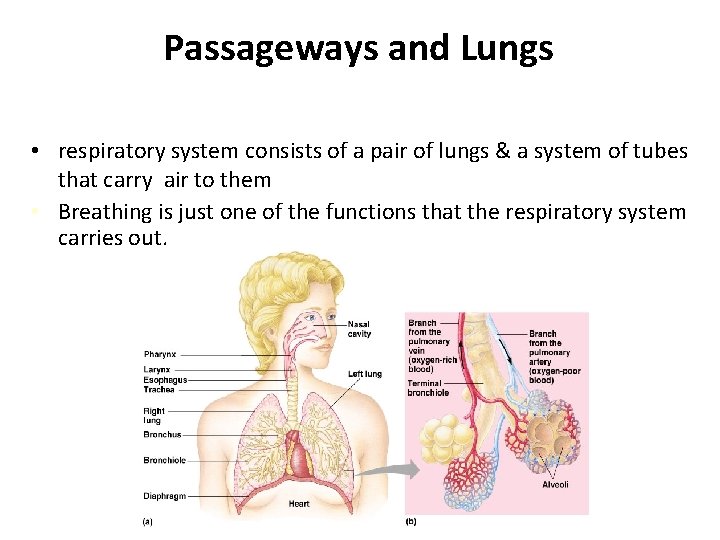
Passageways and Lungs • respiratory system consists of a pair of lungs & a system of tubes that carry air to them • Breathing is just one of the functions that the respiratory system carries out.
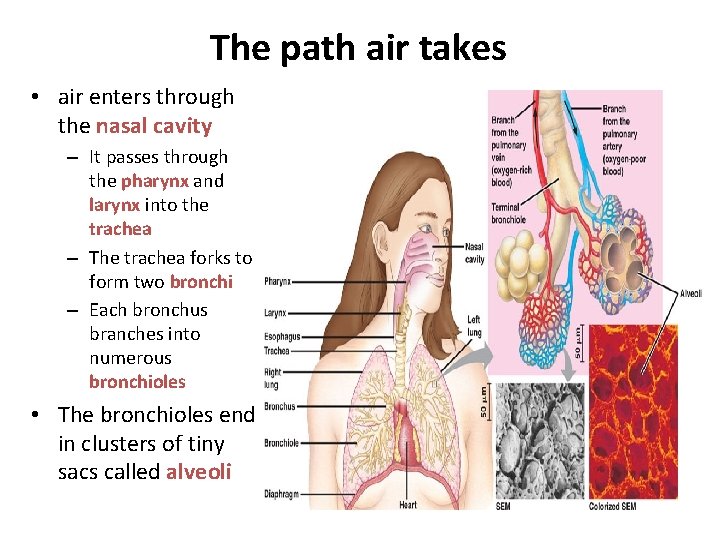
The path air takes • air enters through the nasal cavity – It passes through the pharynx and larynx into the trachea – The trachea forks to form two bronchi – Each bronchus branches into numerous bronchioles • The bronchioles end in clusters of tiny sacs called alveoli
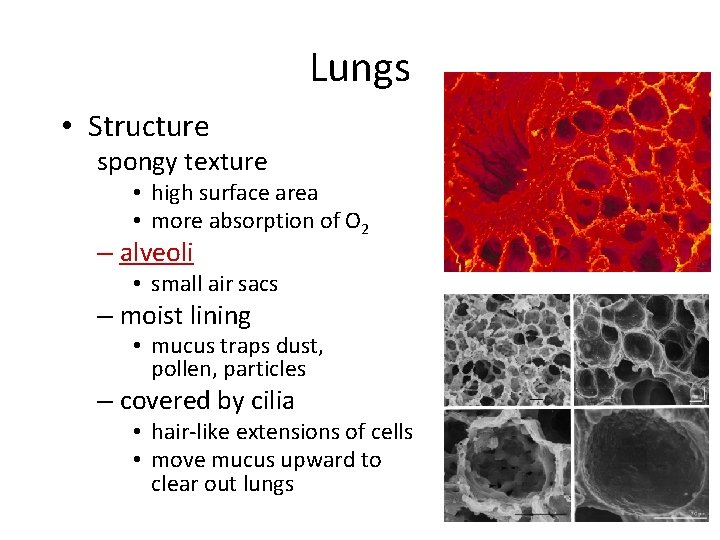
Lungs • Structure spongy texture • high surface area • more absorption of O 2 – alveoli • small air sacs – moist lining • mucus traps dust, pollen, particles – covered by cilia • hair-like extensions of cells • move mucus upward to clear out lungs
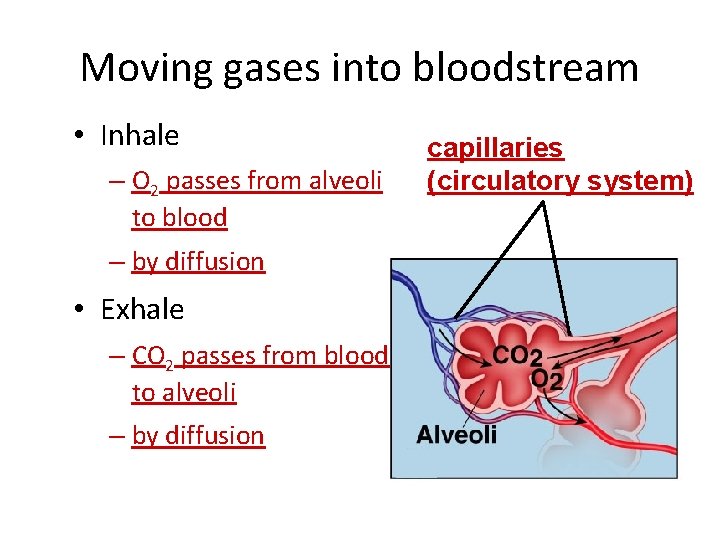
Moving gases into bloodstream • Inhale – O 2 passes from alveoli to blood – by diffusion • Exhale – CO 2 passes from blood to alveoli – by diffusion capillaries (circulatory system)
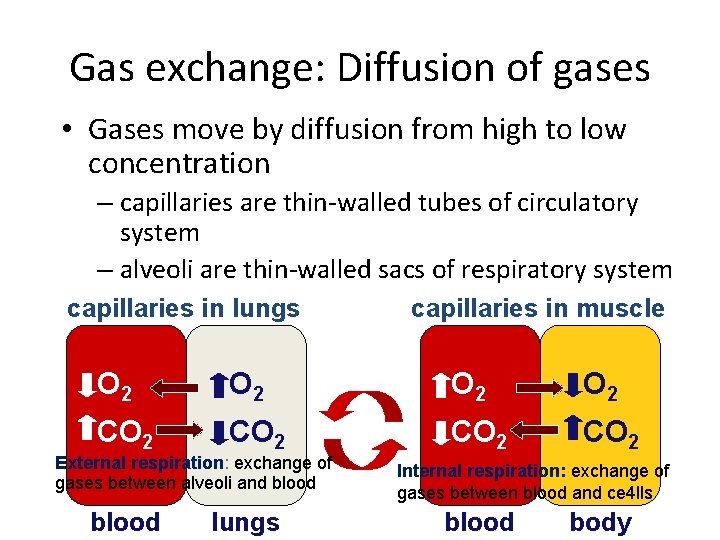
Gas exchange: Diffusion of gases • Gases move by diffusion from high to low concentration – capillaries are thin-walled tubes of circulatory system – alveoli are thin-walled sacs of respiratory system capillaries in lungs capillaries in muscle O 2 O 2 CO 2 External respiration: exchange of gases between alveoli and blood lungs Internal respiration: exchange of gases between blood and ce 4 lls blood body
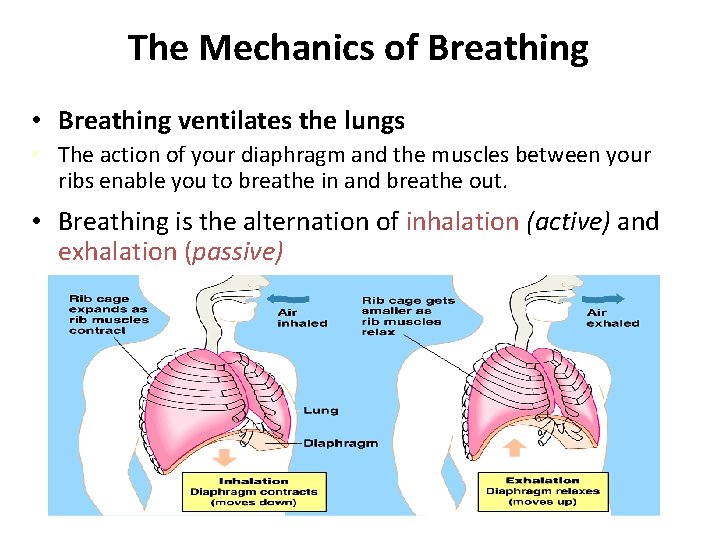
The Mechanics of Breathing • Breathing ventilates the lungs • The action of your diaphragm and the muscles between your ribs enable you to breathe in and breathe out. • Breathing is the alternation of inhalation (active) and exhalation (passive)
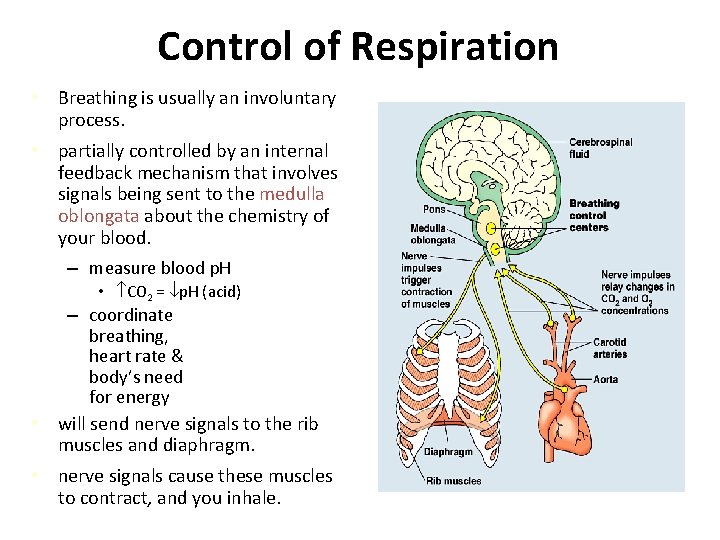
Control of Respiration • Breathing is usually an involuntary process. • partially controlled by an internal feedback mechanism that involves signals being sent to the medulla oblongata about the chemistry of your blood. – measure blood p. H • CO 2 = p. H (acid) • – coordinate breathing, heart rate & body’s need for energy will send nerve signals to the rib muscles and diaphragm. • nerve signals cause these muscles to contract, and you inhale.
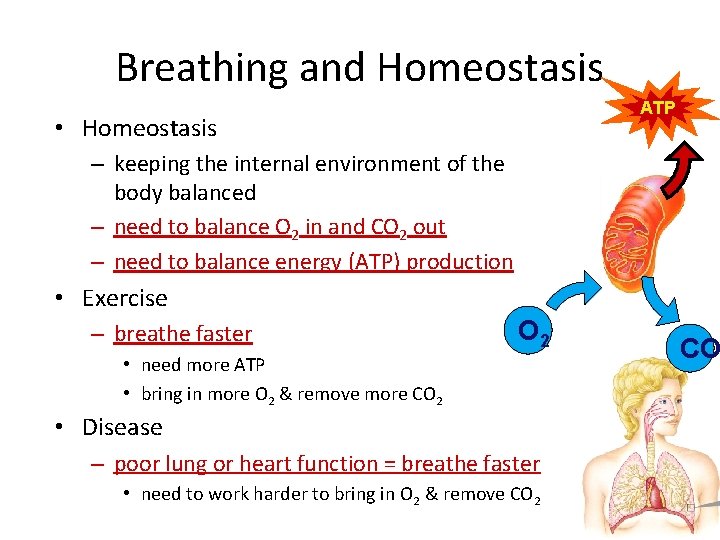
Breathing and Homeostasis ATP • Homeostasis – keeping the internal environment of the body balanced – need to balance O 2 in and CO 2 out – need to balance energy (ATP) production • Exercise – breathe faster O 2 • need more ATP • bring in more O 2 & remove more CO 2 • Disease – poor lung or heart function = breathe faster • need to work harder to bring in O 2 & remove CO 2 CO
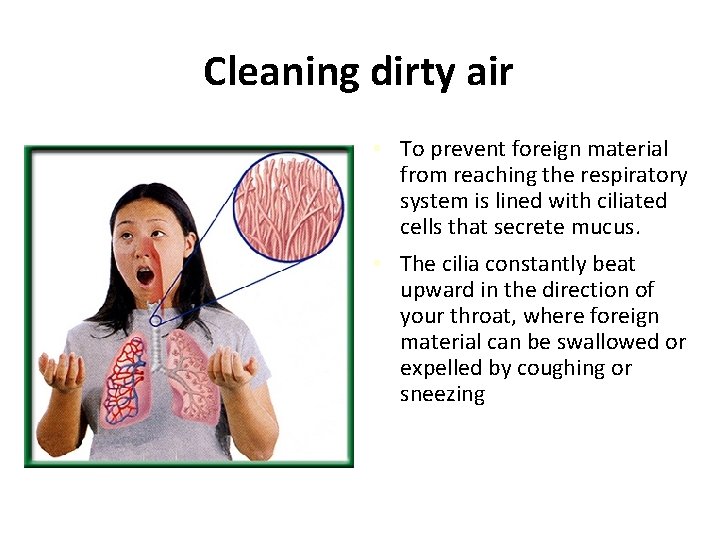
Cleaning dirty air • To prevent foreign material from reaching the respiratory system is lined with ciliated cells that secrete mucus. • The cilia constantly beat upward in the direction of your throat, where foreign material can be swallowed or expelled by coughing or sneezing