
The Respiratory System System Overview Includes tubes that
The Respiratory System
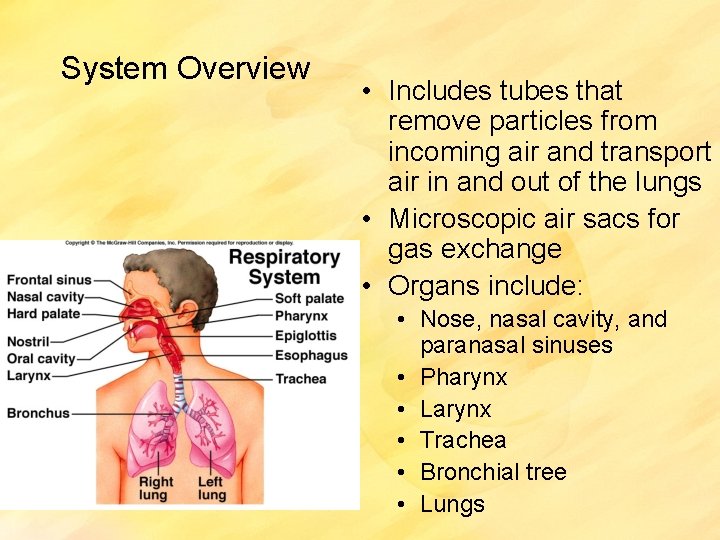
System Overview • Includes tubes that remove particles from incoming air and transport air in and out of the lungs • Microscopic air sacs for gas exchange • Organs include: • Nose, nasal cavity, and paranasal sinuses • Pharynx • Larynx • Trachea • Bronchial tree • Lungs
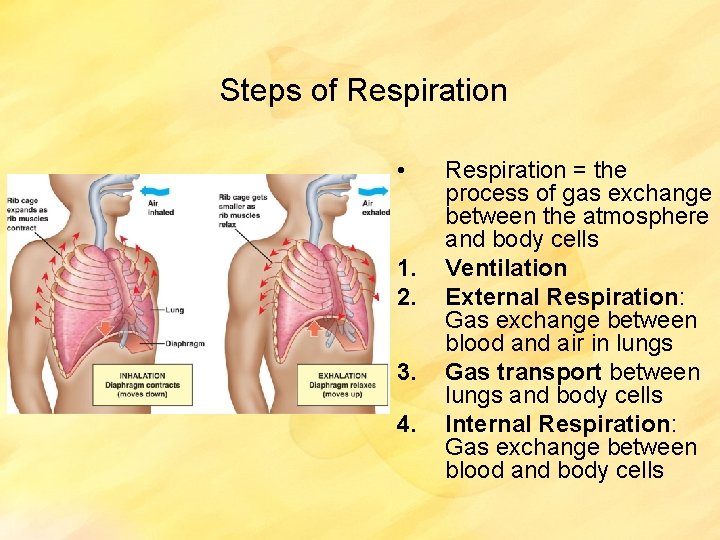
Steps of Respiration • 1. 2. 3. 4. Respiration = the process of gas exchange between the atmosphere and body cells Ventilation External Respiration: Gas exchange between blood and air in lungs Gas transport between lungs and body cells Internal Respiration: Gas exchange between blood and body cells

Upper and Lower Respiratory Tracts • Upper Respiratory Tract • Organs located outside thorax • Lower Respiratory Tract • Organs located within the thorax
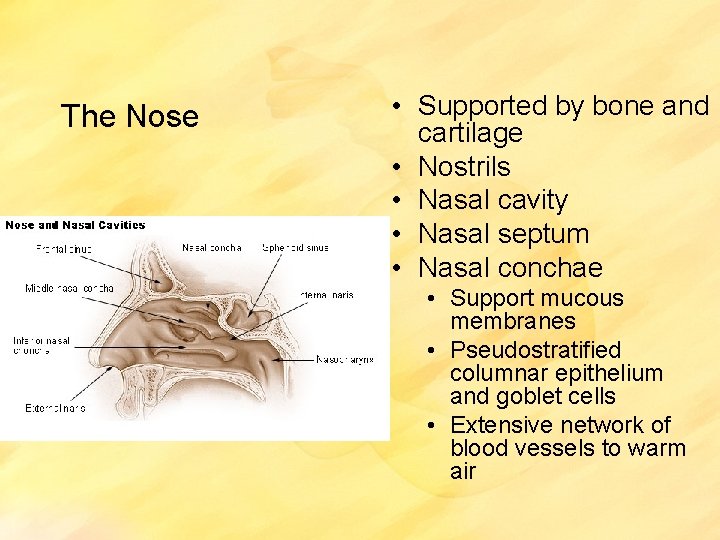
The Nose • Supported by bone and cartilage • Nostrils • Nasal cavity • Nasal septum • Nasal conchae • Support mucous membranes • Pseudostratified columnar epithelium and goblet cells • Extensive network of blood vessels to warm air

Paranasal Sinuses • Air-filled spaces within: • • Maxillary bones Frontal bone Ethmoid bone Sphenoid bone • Reduce skull weight • Resonance chambers
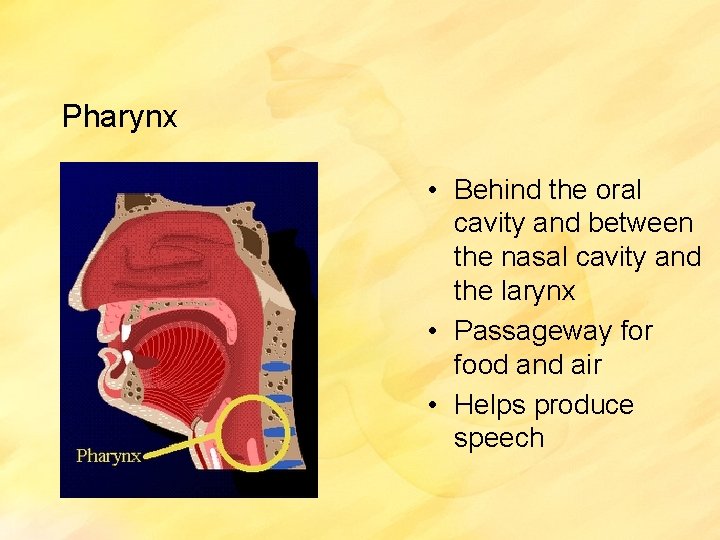
Pharynx • Behind the oral cavity and between the nasal cavity and the larynx • Passageway for food and air • Helps produce speech
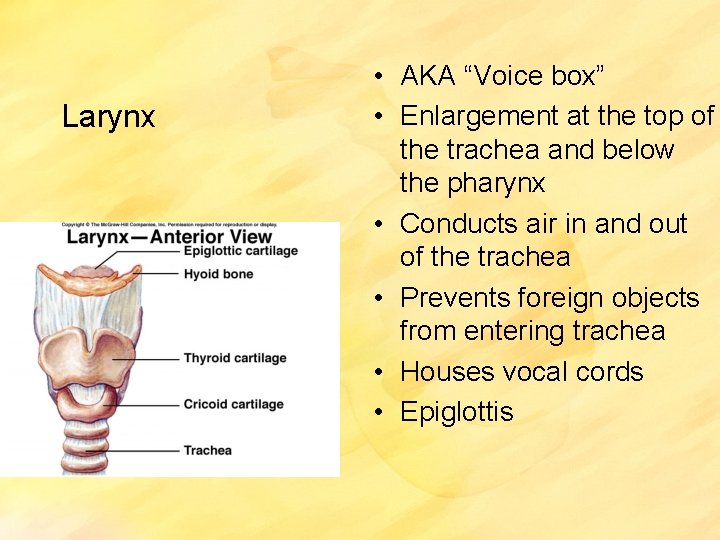
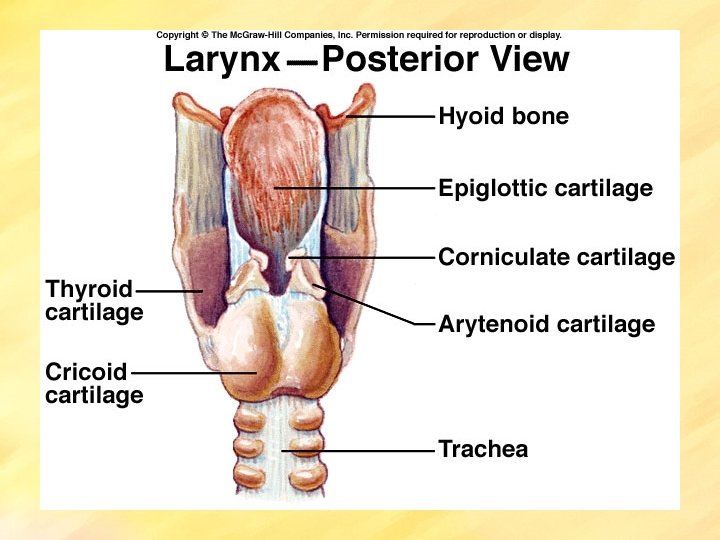
Larynx • AKA “Voice box” • Enlargement at the top of the trachea and below the pharynx • Conducts air in and out of the trachea • Prevents foreign objects from entering trachea • Houses vocal cords • Epiglottis
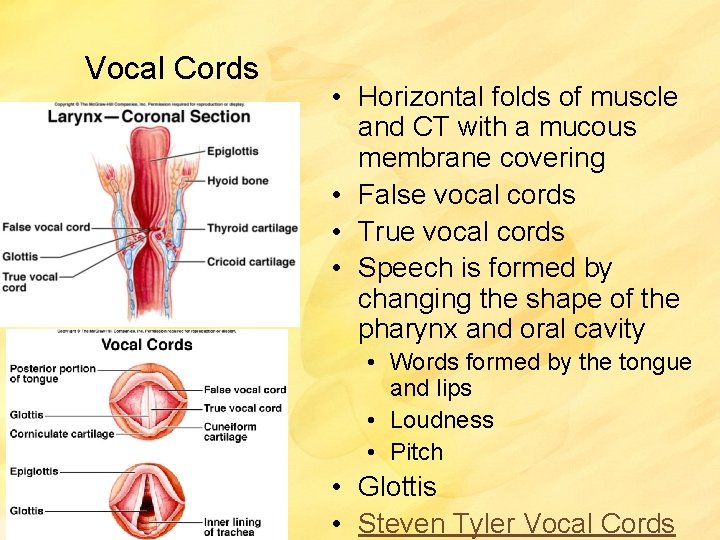
Vocal Cords • Horizontal folds of muscle and CT with a mucous membrane covering • False vocal cords • True vocal cords • Speech is formed by changing the shape of the pharynx and oral cavity • Words formed by the tongue and lips • Loudness • Pitch • Glottis • Steven Tyler Vocal Cords
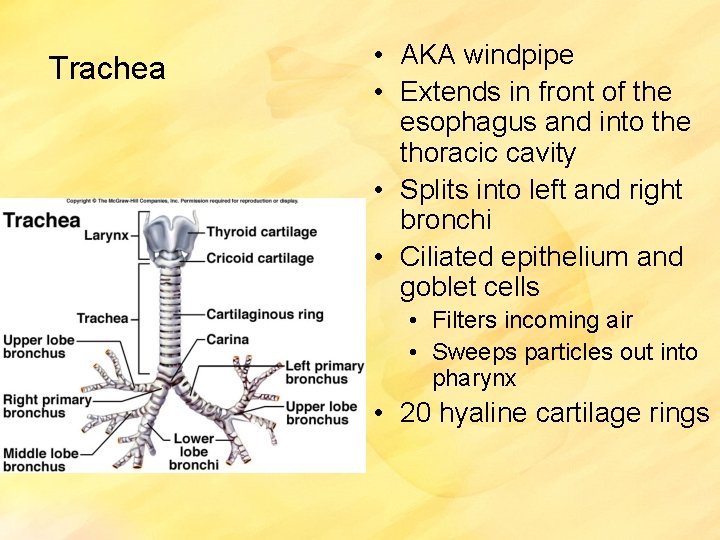
Trachea • AKA windpipe • Extends in front of the esophagus and into the thoracic cavity • Splits into left and right bronchi • Ciliated epithelium and goblet cells • Filters incoming air • Sweeps particles out into pharynx • 20 hyaline cartilage rings
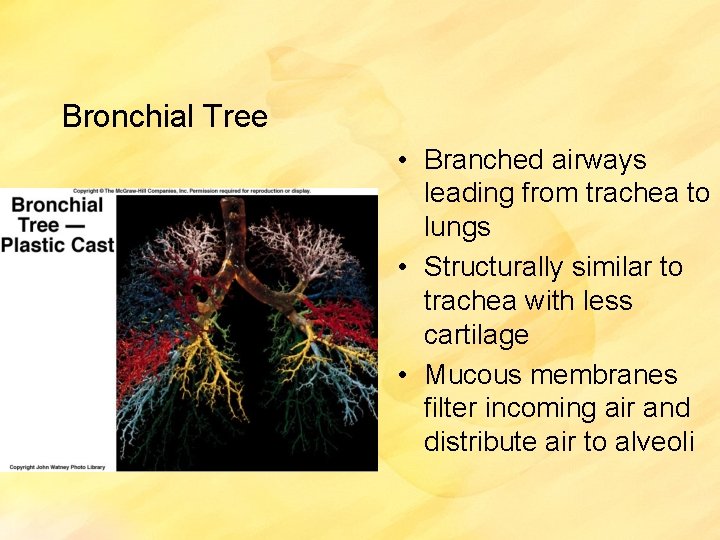
Bronchial Tree • Branched airways leading from trachea to lungs • Structurally similar to trachea with less cartilage • Mucous membranes filter incoming air and distribute air to alveoli
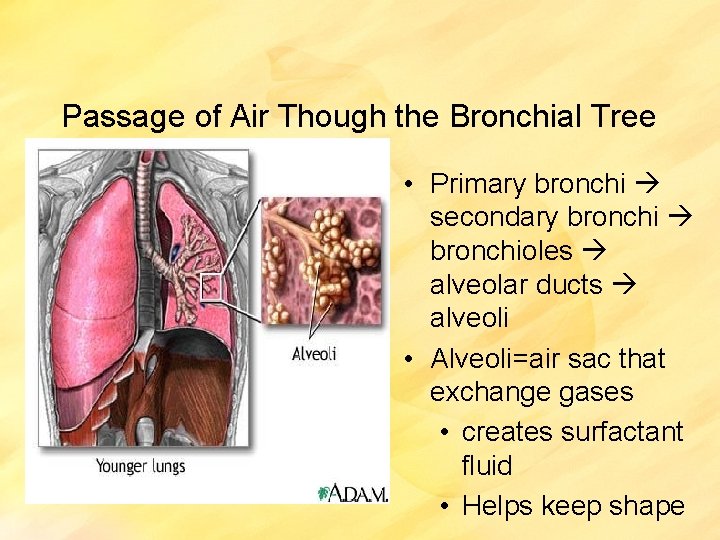
Passage of Air Though the Bronchial Tree • Primary bronchi secondary bronchioles alveolar ducts alveoli • Alveoli=air sac that exchange gases • creates surfactant fluid • Helps keep shape
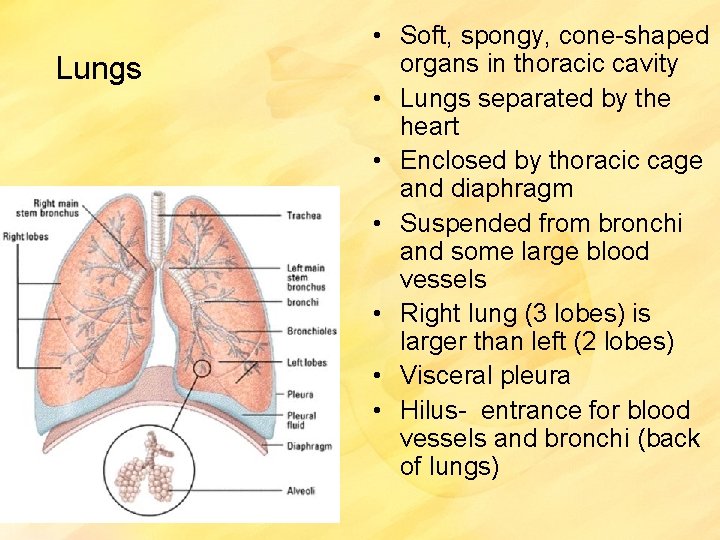
Lungs • Soft, spongy, cone-shaped organs in thoracic cavity • Lungs separated by the heart • Enclosed by thoracic cage and diaphragm • Suspended from bronchi and some large blood vessels • Right lung (3 lobes) is larger than left (2 lobes) • Visceral pleura • Hilus- entrance for blood vessels and bronchi (back of lungs)
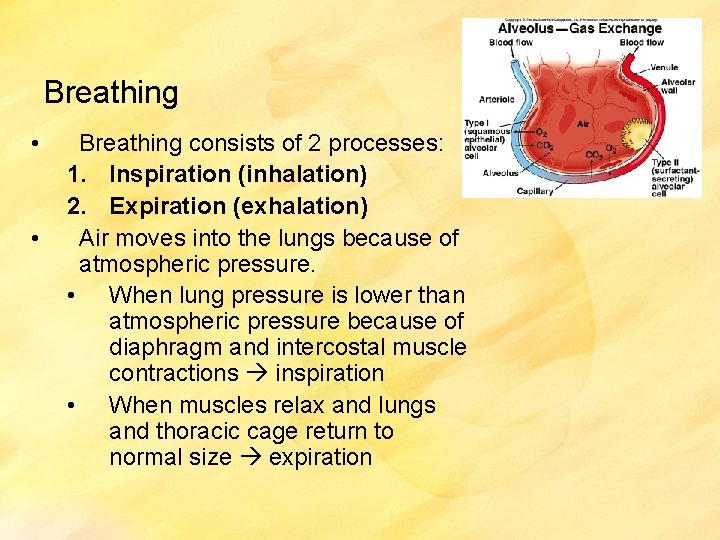
Breathing • • Breathing consists of 2 processes: 1. Inspiration (inhalation) 2. Expiration (exhalation) Air moves into the lungs because of atmospheric pressure. • When lung pressure is lower than atmospheric pressure because of diaphragm and intercostal muscle contractions inspiration • When muscles relax and lungs and thoracic cage return to normal size expiration

How do Lungs work?
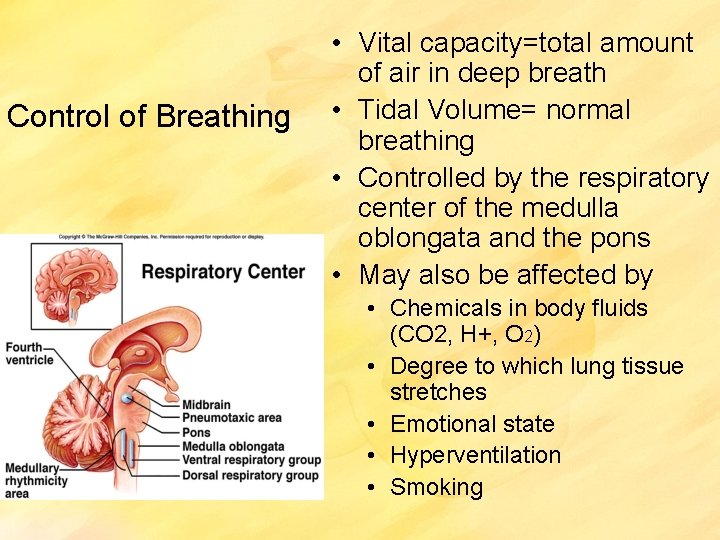
Control of Breathing • Vital capacity=total amount of air in deep breath • Tidal Volume= normal breathing • Controlled by the respiratory center of the medulla oblongata and the pons • May also be affected by • Chemicals in body fluids (CO 2, H+, O 2) • Degree to which lung tissue stretches • Emotional state • Hyperventilation • Smoking
Incredible Human Machine Video
- Slides: 18