
The Respiratory System Respiratory system moves oxygen into
- Slides: 22
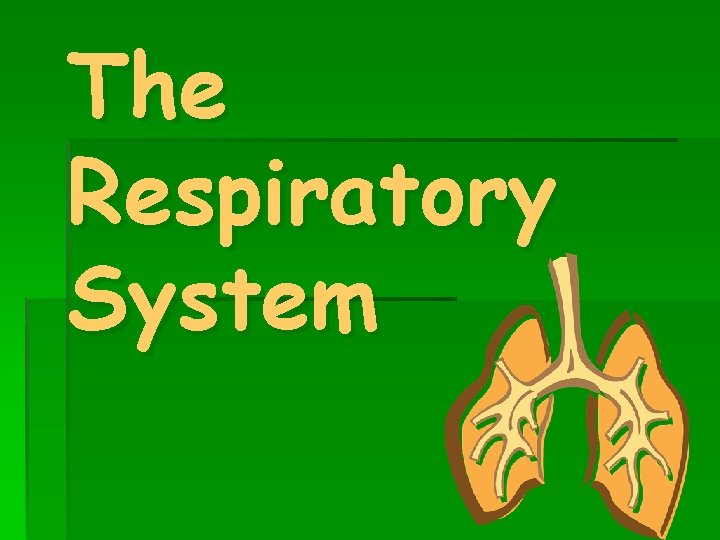
The Respiratory System
Respiratory system: moves oxygen into the body & removes carbon dioxide produced as wastes.
Respiration… Chemical process that uses oxygen to release energy from food.
Breathing… process of moving air into & out of the body.
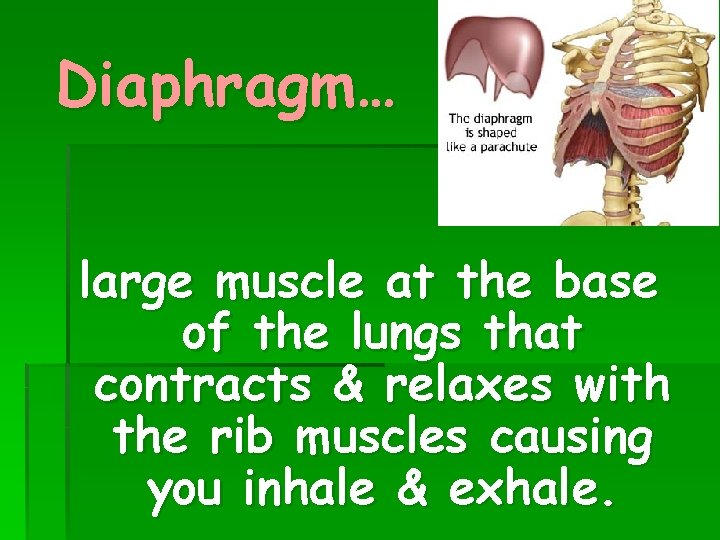
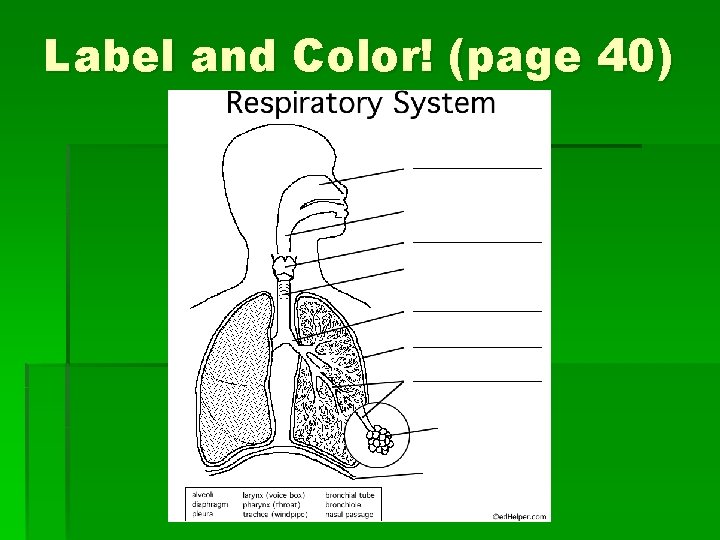
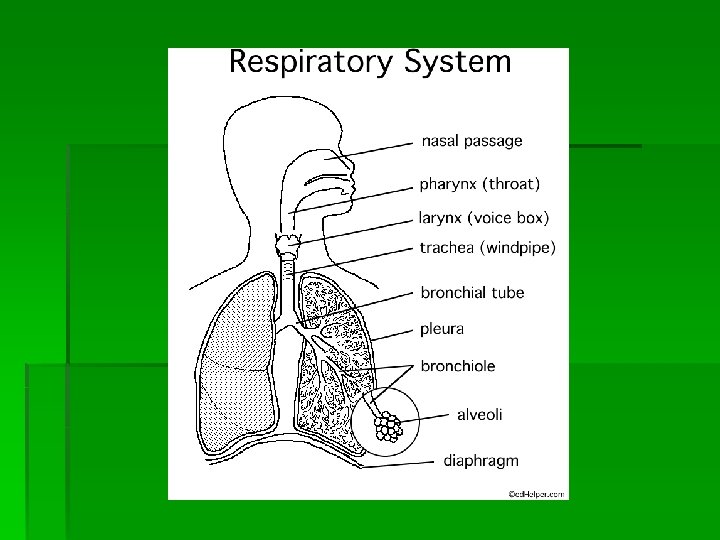
Diaphragm… large muscle at the base of the lungs that contracts & relaxes with the rib muscles causing you inhale & exhale.
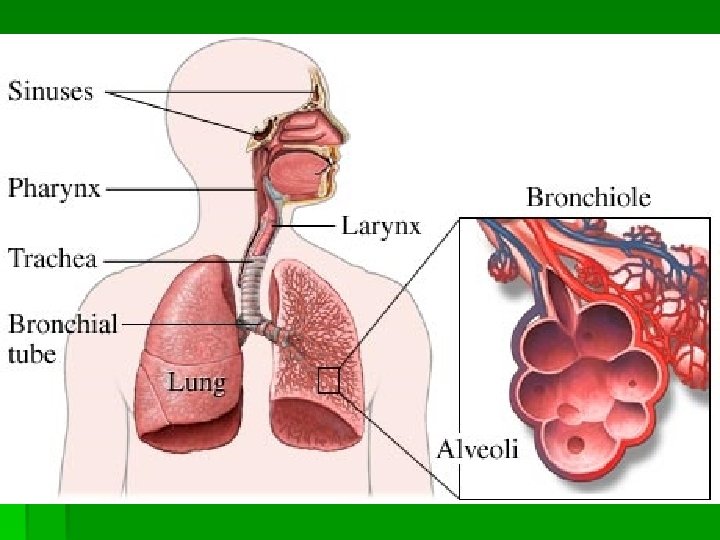
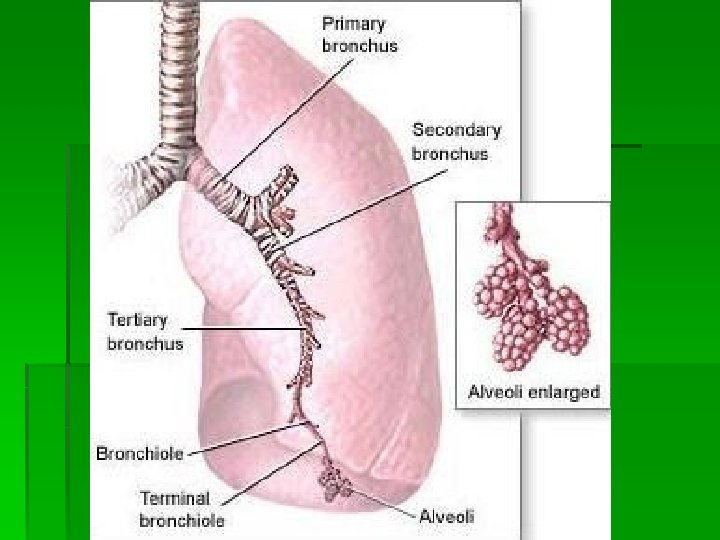
Path of air to lungs… Nose (mouth)=> Pharynx=> Trachea=> Bronchial Tubes=> Alveoli
Mucus… traps dust & bacteria… moistens air to keep nasal tissues from drying out.
Cilia… tiny hair like structures that line the nasal cavities & clean air by sweeping mucus, dust & bacteria to be swallowed & destroyed by the stomach acid.
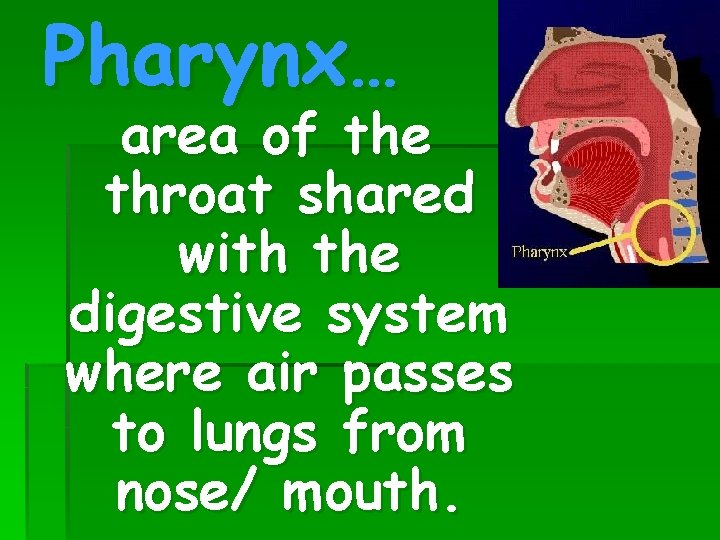
Pharynx… area of the throat shared with the digestive system where air passes to lungs from nose/ mouth.
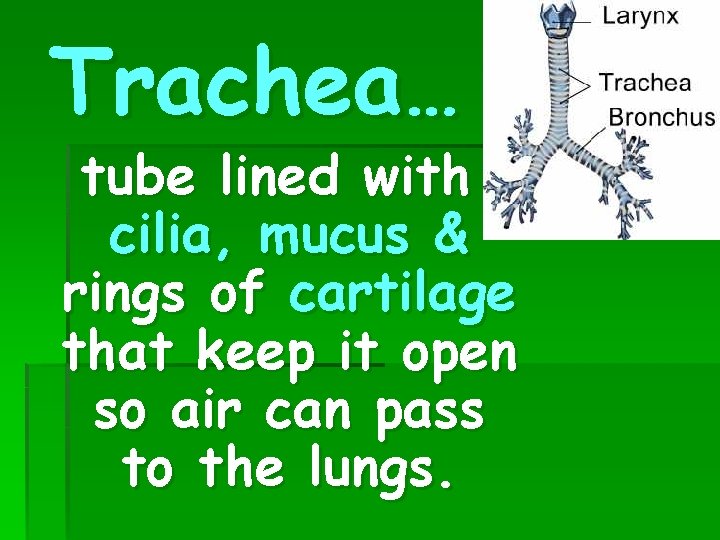
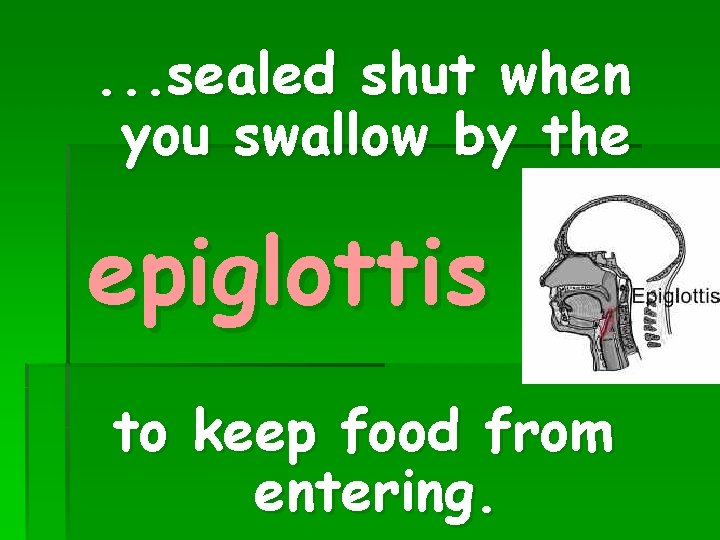
Trachea… tube lined with cilia, mucus & rings of cartilage that keep it open so air can pass to the lungs.
. . . sealed shut when you swallow by the epiglottis to keep food from entering.
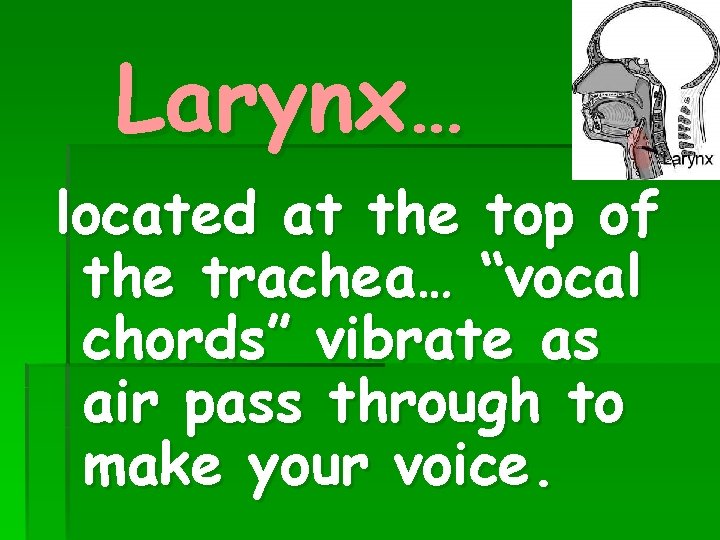
Larynx… located at the top of the trachea… “vocal chords” vibrate as air pass through to make your voice.
Bronchus bronchial & tubes… tubes that branch to move air from the trachea into each lung.
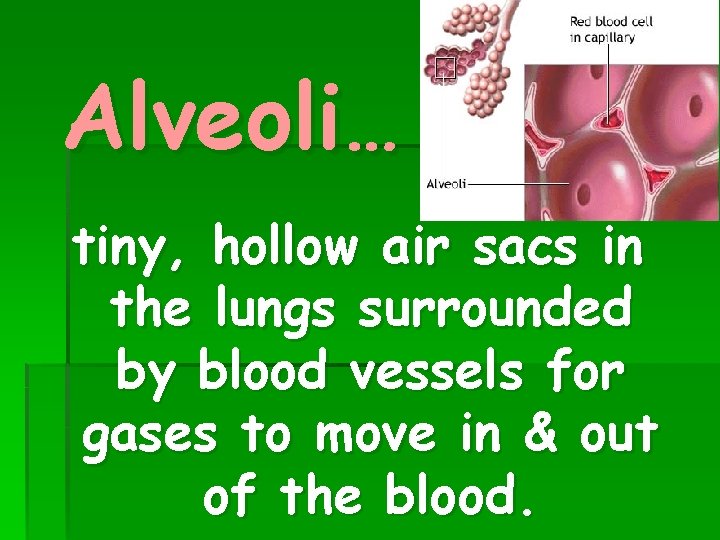
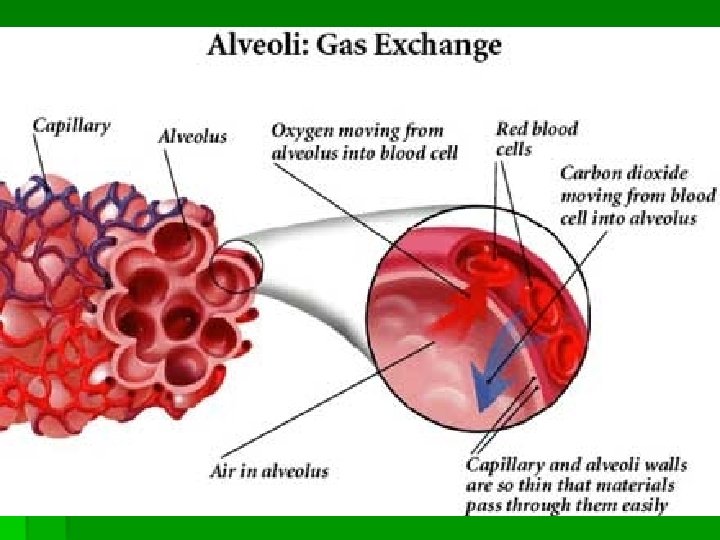
Alveoli… tiny, hollow air sacs in the lungs surrounded by blood vessels for gases to move in & out of the blood.
Gas exchange: oxygen diffuses through the wall of the alveoli then through the wall of the capillaries to get into the blood…
…at the same time, carbon dioxide diffuses from the blood into the alveoli to be exhaled.
Video links § Respiratory system parts § Respiratory System made easy
Label and Color! (page 40)