
THE RESPIRATORY SYSTEM Lesson 04 Overview of the
- Slides: 25
THE RESPIRATORY SYSTEM Lesson 04
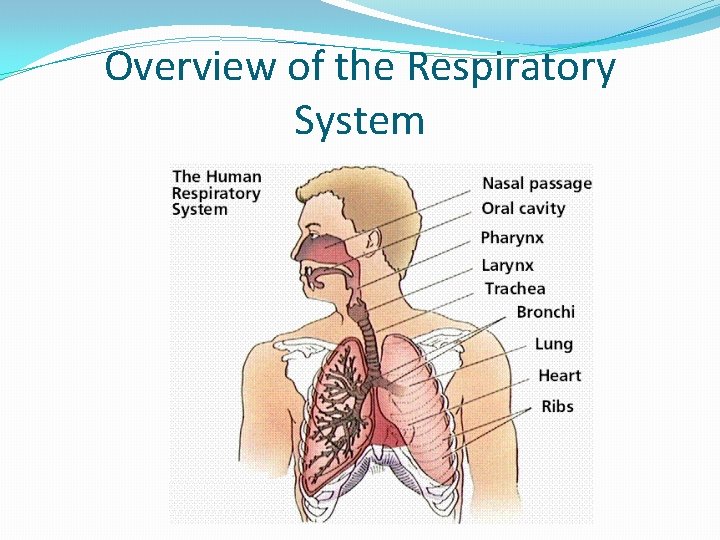
Overview of the Respiratory System
Primary Functions • Gas exchange, carries oxygen into body and excels carbon dioxide • Provides oxygen to body which is required for ENERGY producing process called aerobic respiration • Eliminates the potentially toxic waste of this reaction, carbon dioxide, from the body • Controls and regulates the temperature and humidity of the inhaled air
Need for gas-exchange surfaces • All living cells in an organism’s body respire to produce their own energy. They need O 2 ! • They also need to get rid of CO 2. • Not all of them are in direct contact with the outside medium. • In all such cases, there has been evolved specialized surfaces on which gaseous exchange occurs. • Delivery of O 2 to and collection of CO 2 from various parts of the body shall be dealt with in the next lecture.
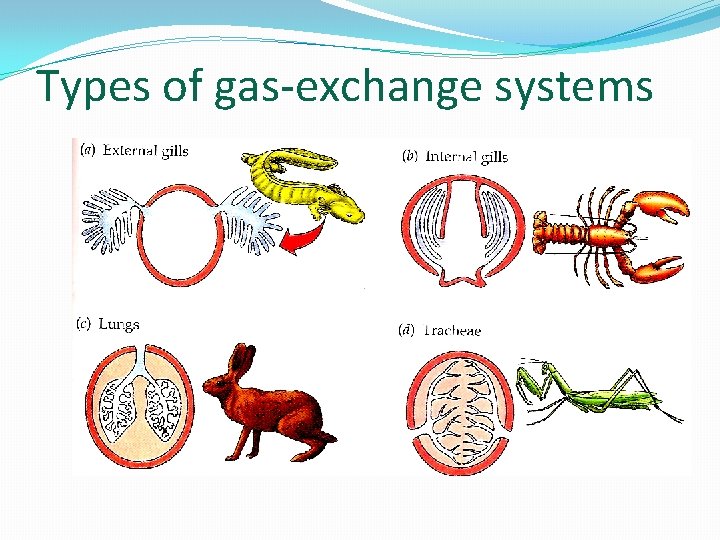
Types of gas-exchange systems
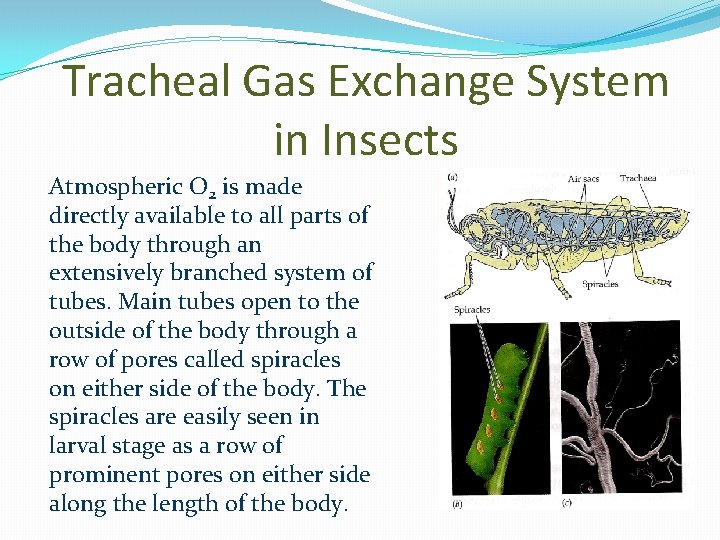
Tracheal Gas Exchange System in Insects Atmospheric O 2 is made directly available to all parts of the body through an extensively branched system of tubes. Main tubes open to the outside of the body through a row of pores called spiracles on either side of the body. The spiracles are easily seen in larval stage as a row of prominent pores on either side along the length of the body.
Tracheal Tubes �Gas enters through spiracles, the openings on the surface of the body, into tracheal tubes. �Tracheal tubes end in fluid-filled tracheoles �Diffusion of air across the moist tracheoles and body cells.
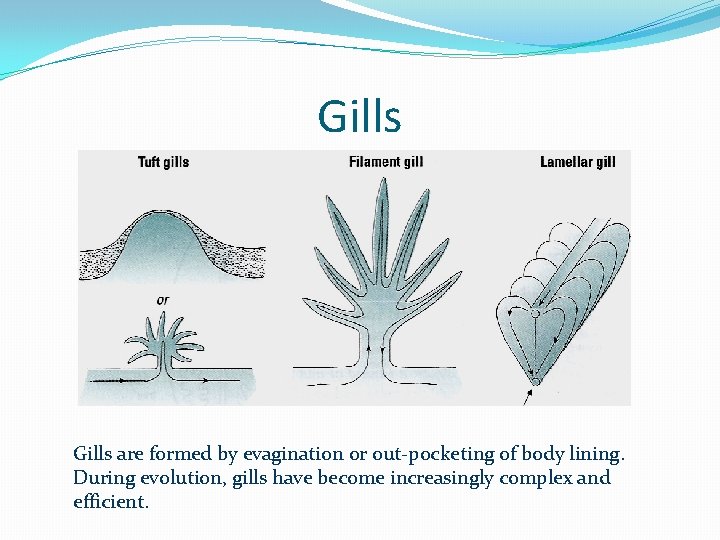
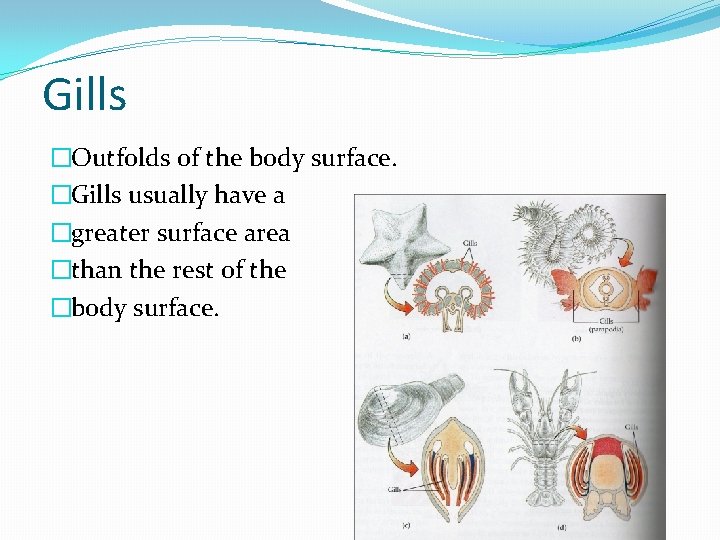
Gills are formed by evagination or out-pocketing of body lining. During evolution, gills have become increasingly complex and efficient.
Gills �Outfolds of the body surface. �Gills usually have a �greater surface area �than the rest of the �body surface.
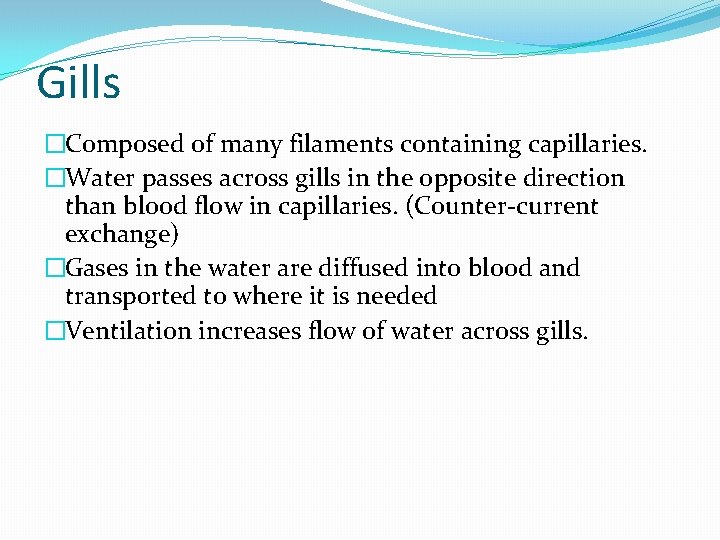
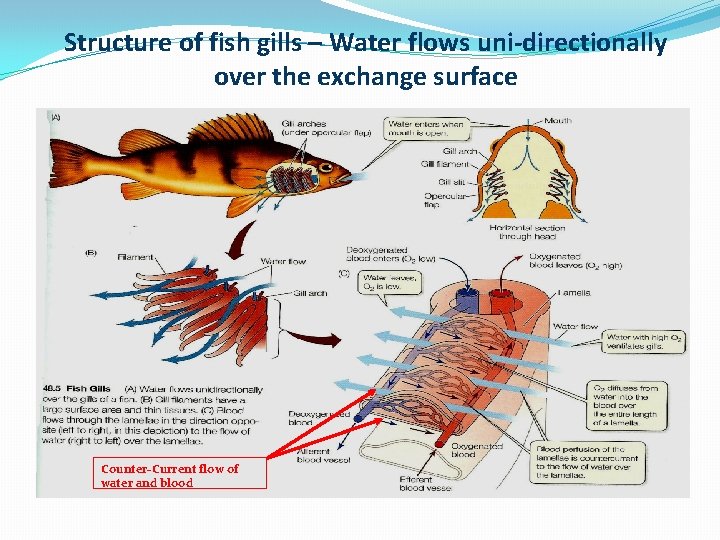
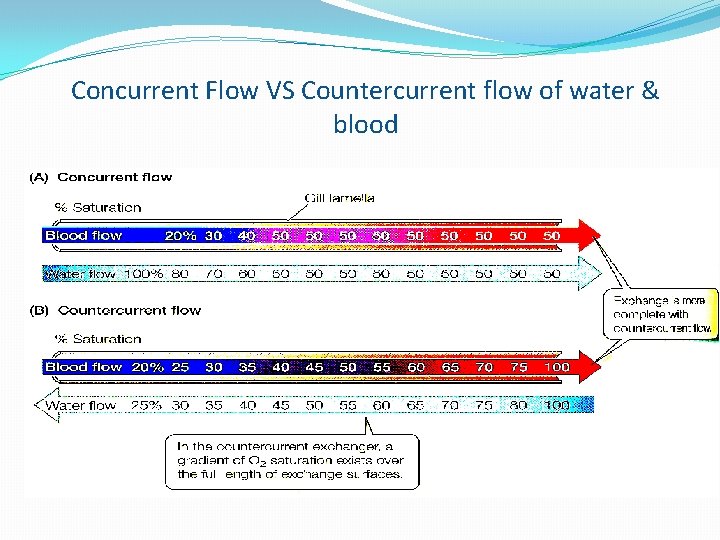
Gills �Composed of many filaments containing capillaries. �Water passes across gills in the opposite direction than blood flow in capillaries. (Counter-current exchange) �Gases in the water are diffused into blood and transported to where it is needed �Ventilation increases flow of water across gills.
Structure of fish gills – Water flows uni-directionally over the exchange surface Counter-Current flow of water and blood
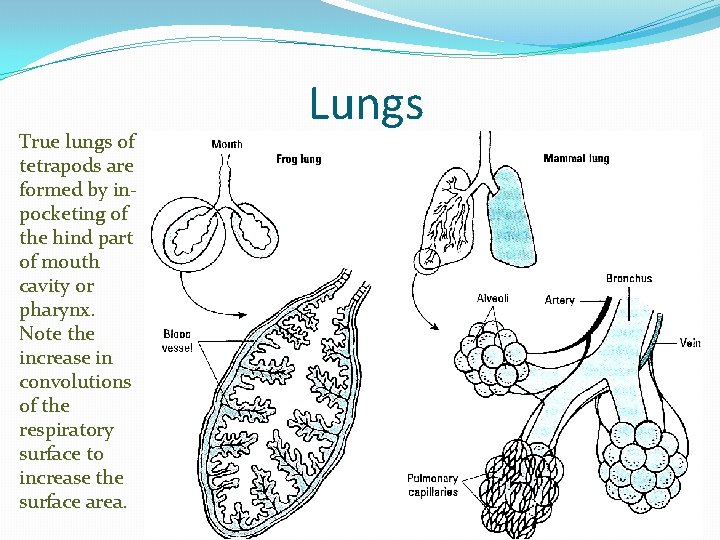
True lungs of tetrapods are formed by inpocketing of the hind part of mouth cavity or pharynx. Note the increase in convolutions of the respiratory surface to increase the surface area. Lungs
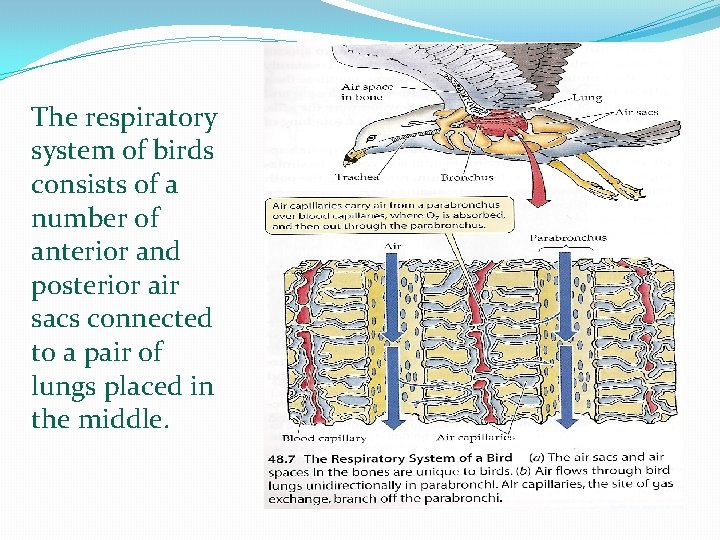
The respiratory system of birds consists of a number of anterior and posterior air sacs connected to a pair of lungs placed in the middle.
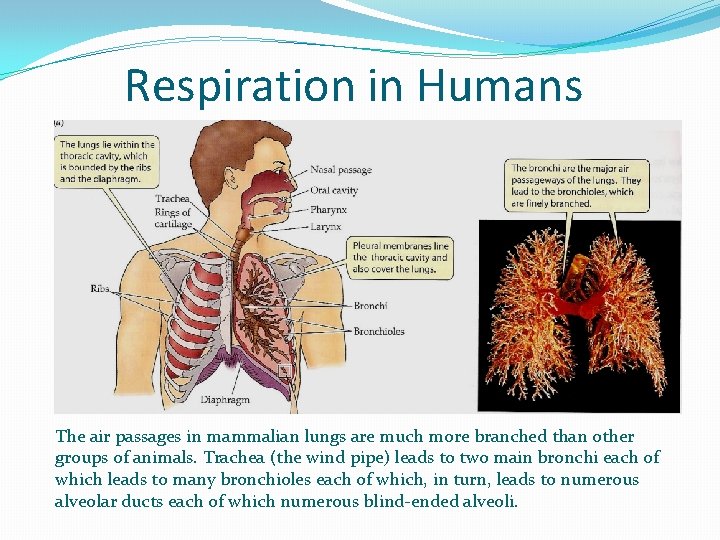
Respiration in Humans The air passages in mammalian lungs are much more branched than other groups of animals. Trachea (the wind pipe) leads to two main bronchi each of which leads to many bronchioles each of which, in turn, leads to numerous alveolar ducts each of which numerous blind-ended alveoli.
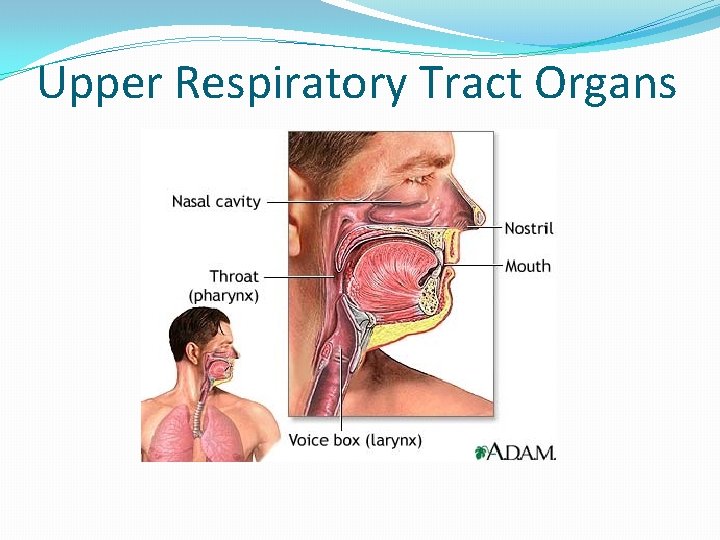
Upper Respiratory Tract Organs • Nasal cavity: located behind the nose and is covered by mucous membrane, blood vessels and tiny hairs. • Functions: Filtration, Moisturizing and Temperature Control of the air • Pharynx: located in-between nasal cavities and larynx • Function: Passes air to larynx and coordinates inspiration and swallowing when eating • Larynx: situated at the opening of the trachea and is the location of the vocal cords • Functions: Protects and ensures breathing pathway to trachea is open. Also allows vocal cords to vibrate producing sounds
Upper Respiratory Tract Organs
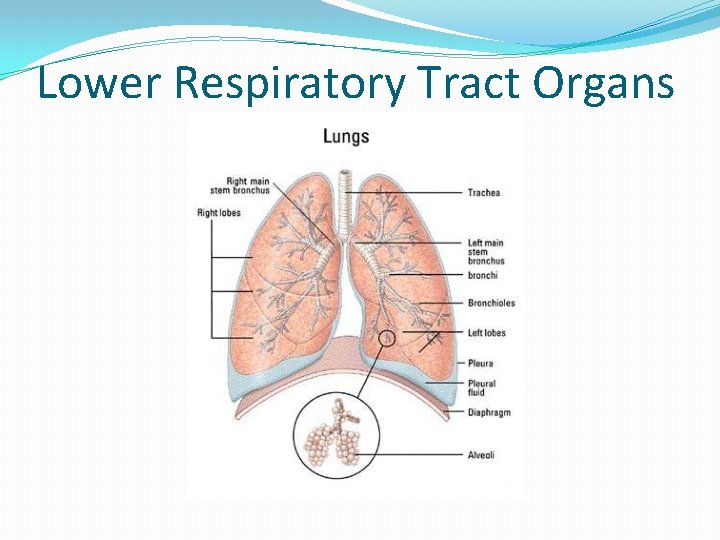
Lower Respiratory Tract Organs �Trachea: tube that joins larynx to lungs, it is composed of C-shaped hyaline cartilage rings • Functions: airway in which air travels and cartilage rings ensures it remains open �Lungs: biggest structure of respiratory system that is filled with alveoli, 2 lungs in human; 3 lobes in right lung and 2 in other • Function: produces inspiration and expiration when it is expanded and compressed
Lower Respiratory Tract Organs
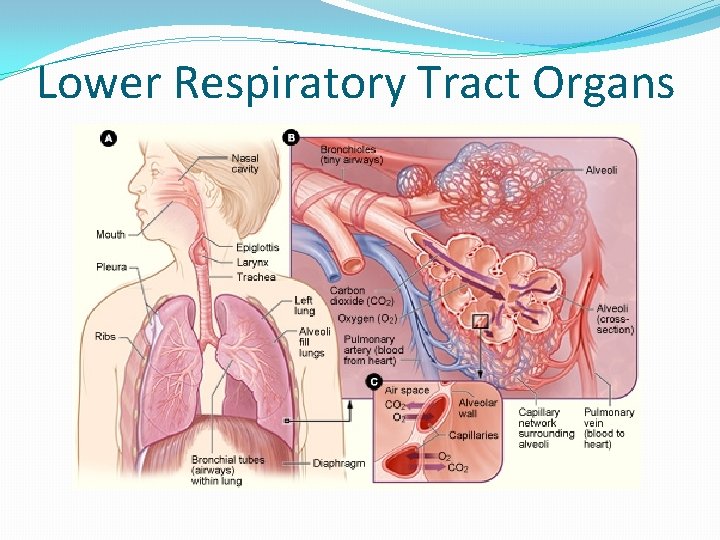
Lower Respiratory Tract Organs �Bronchial Tubes: divisions of the trachea in each lung, also called bronchi �Bronchioles: small branches of the bronchi that terminates into the alveoli �Alveoli: tiny sac-like structures grouped at the end of the bronchioles, are in very large number in lungs and their large total surface area is covered by a capillary network • Functions: location of gas exchange with blood
Lower Respiratory Tract Organs
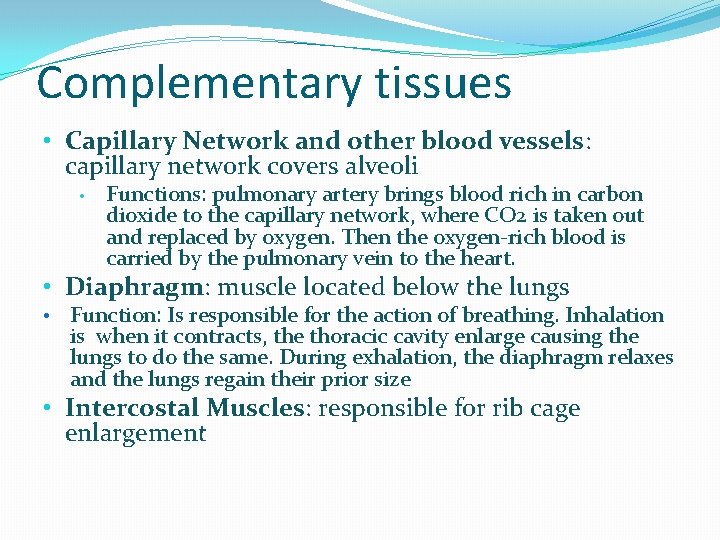
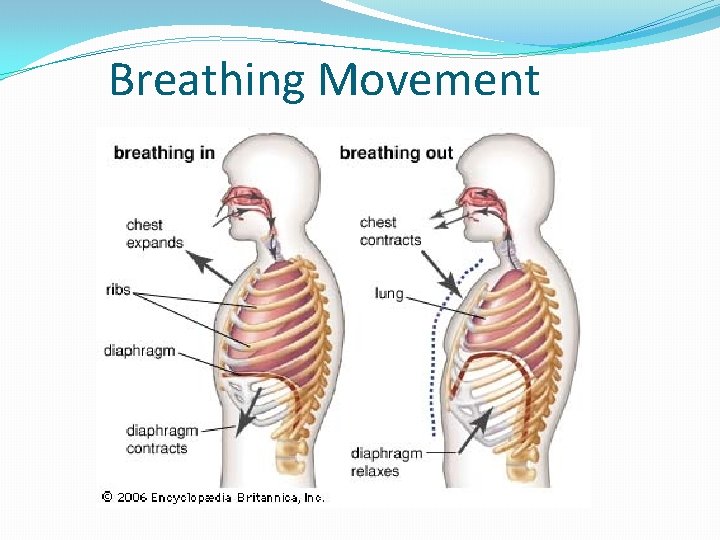
Complementary tissues • Capillary Network and other blood vessels: capillary network covers alveoli • Functions: pulmonary artery brings blood rich in carbon dioxide to the capillary network, where CO 2 is taken out and replaced by oxygen. Then the oxygen-rich blood is carried by the pulmonary vein to the heart. • Diaphragm: muscle located below the lungs • Function: Is responsible for the action of breathing. Inhalation is when it contracts, the thoracic cavity enlarge causing the lungs to do the same. During exhalation, the diaphragm relaxes and the lungs regain their prior size • Intercostal Muscles: responsible for rib cage enlargement
Breathing Movement
Breathing Control • The respiratory control center is located at the base of the brain and sends ongoing signals to the muscles. • Mostly involuntary to ensure it is regular and continuous although it can be modified voluntarily • Changes in oxygen level in blood, activity level as well as the presence of irritants in the airways or liquid in the lungs can alter respiration rate
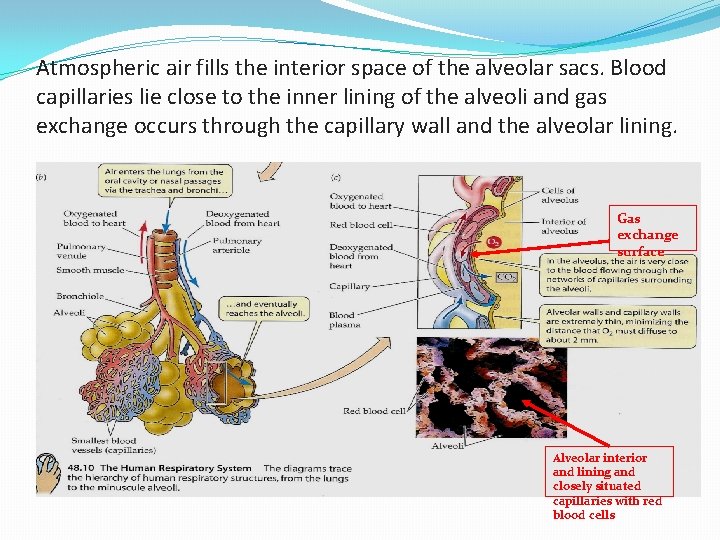
Atmospheric air fills the interior space of the alveolar sacs. Blood capillaries lie close to the inner lining of the alveoli and gas exchange occurs through the capillary wall and the alveolar lining. Gas exchange surface Alveolar interior and lining and closely situated capillaries with red blood cells
Concurrent Flow VS Countercurrent flow of water & blood