
The Respiratory System Importance Oxygen Gas O 2

- Slides: 16
The Respiratory System
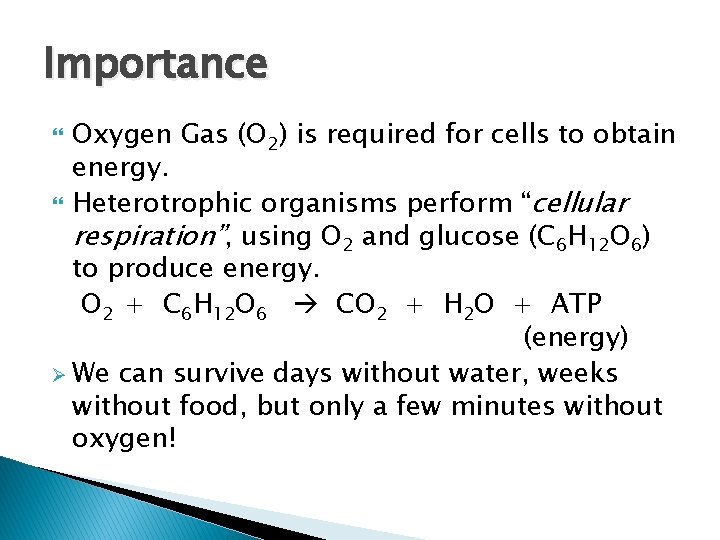
Importance Oxygen Gas (O 2) is required for cells to obtain energy. Heterotrophic organisms perform “cellular respiration”, using O 2 and glucose (C 6 H 12 O 6) to produce energy. O 2 + C 6 H 12 O 6 CO 2 + H 2 O + ATP (energy) Ø We can survive days without water, weeks without food, but only a few minutes without oxygen!
ATP Adenosine Triphosphate The body’s chemical form of energy ATP is used for: ◦ ◦ ◦ Movement of materials in and out of cells. Muscle contractions Organ functioning Cell replication (mitosis + meiosis) Protein synthesis
Stages of Respiration 1. Breathing: The process of inhaling (bringing air the lungs) and exhaling (air leaving the lungs). ◦ Inspiration: breathing in, or inhaling ◦ Expiration: breathing out, or exhaling 2. External Respiration: Exchange of gases between the air in the lungs and the blood. 3. Internal Respiration: Exchange of gases between the blood and the tissues. 4. Cellular Respiration: Use of oxygen in cells to produce ATP.
Respiration in Different Organisms
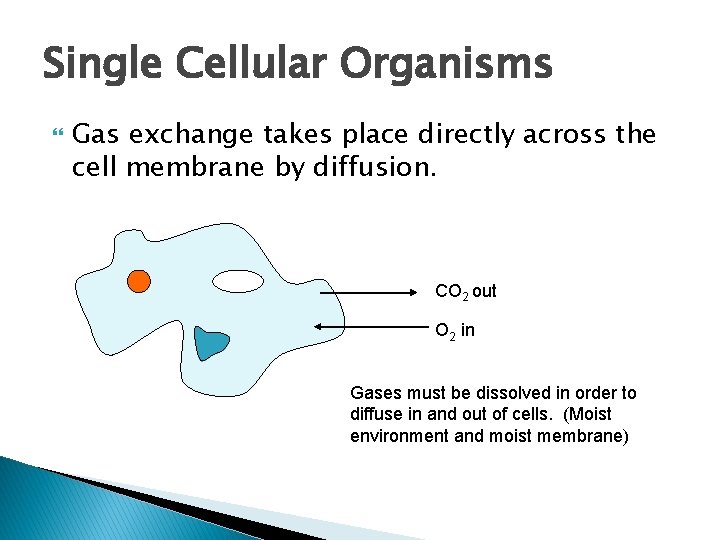
Single Cellular Organisms Gas exchange takes place directly across the cell membrane by diffusion. CO 2 out O 2 in Gases must be dissolved in order to diffuse in and out of cells. (Moist environment and moist membrane)
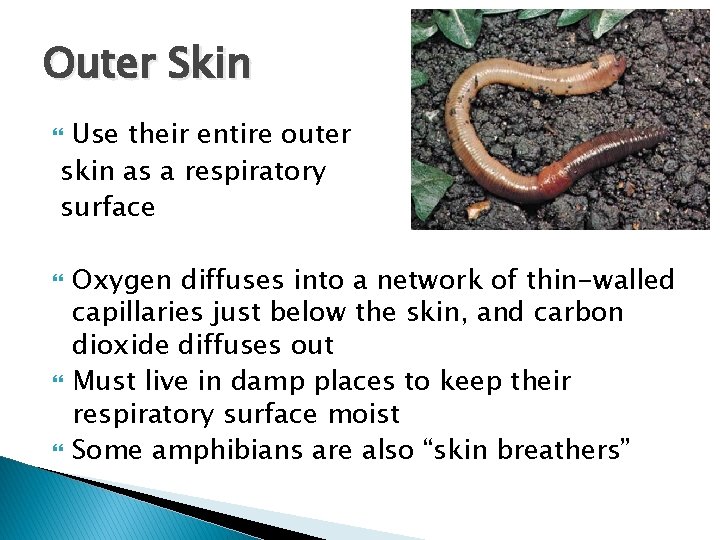
Outer Skin Use their entire outer skin as a respiratory surface Oxygen diffuses into a network of thin-walled capillaries just below the skin, and carbon dioxide diffuses out Must live in damp places to keep their respiratory surface moist Some amphibians are also “skin breathers”
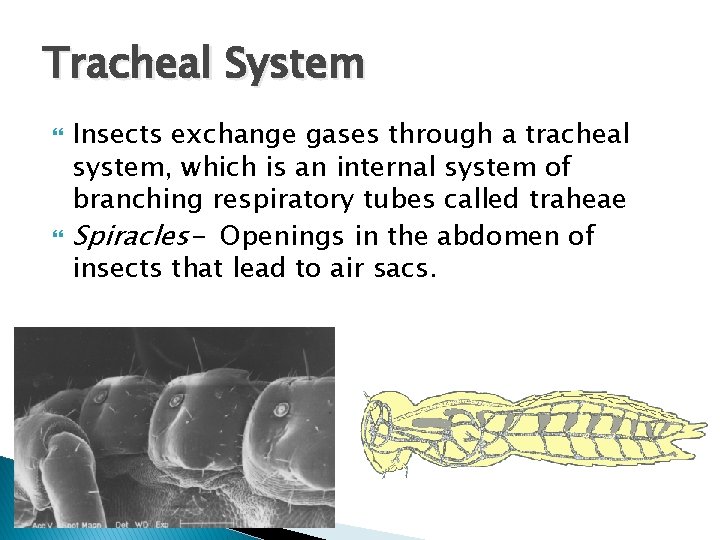
Tracheal System Insects exchange gases through a tracheal system, which is an internal system of branching respiratory tubes called traheae Spiracles- Openings in the abdomen of insects that lead to air sacs.
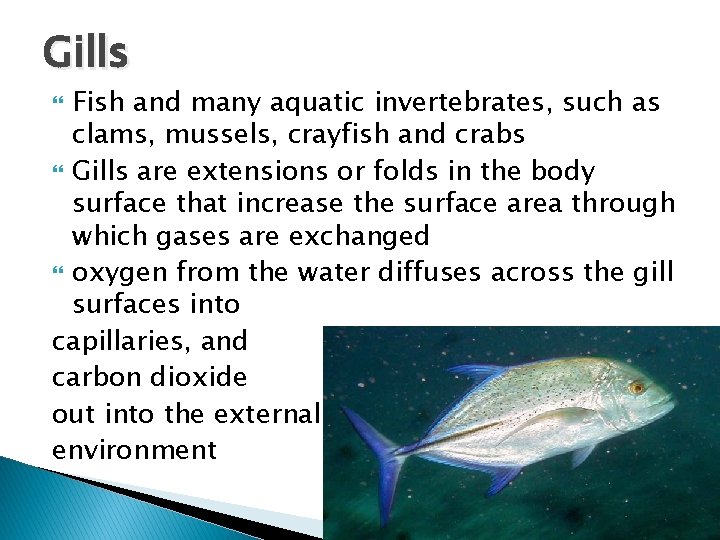
Gills Fish and many aquatic invertebrates, such as clams, mussels, crayfish and crabs Gills are extensions or folds in the body surface that increase the surface area through which gases are exchanged oxygen from the water diffuses across the gill surfaces into capillaries, and carbon dioxide out into the external environment
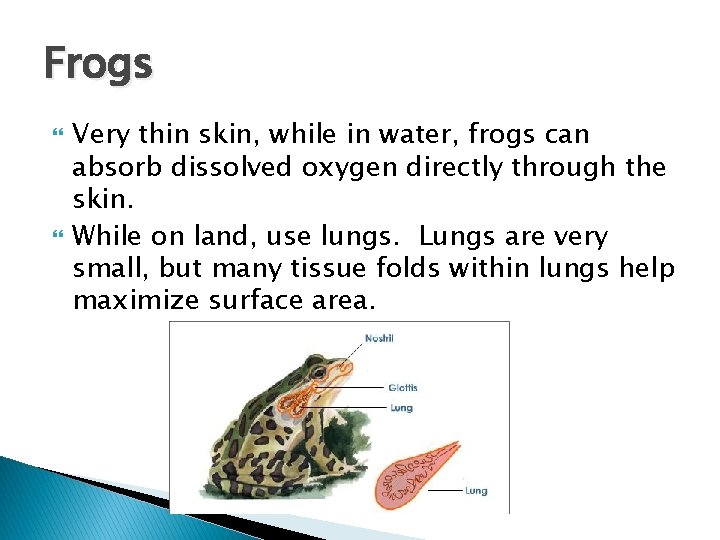
Frogs Very thin skin, while in water, frogs can absorb dissolved oxygen directly through the skin. While on land, use lungs. Lungs are very small, but many tissue folds within lungs help maximize surface area.
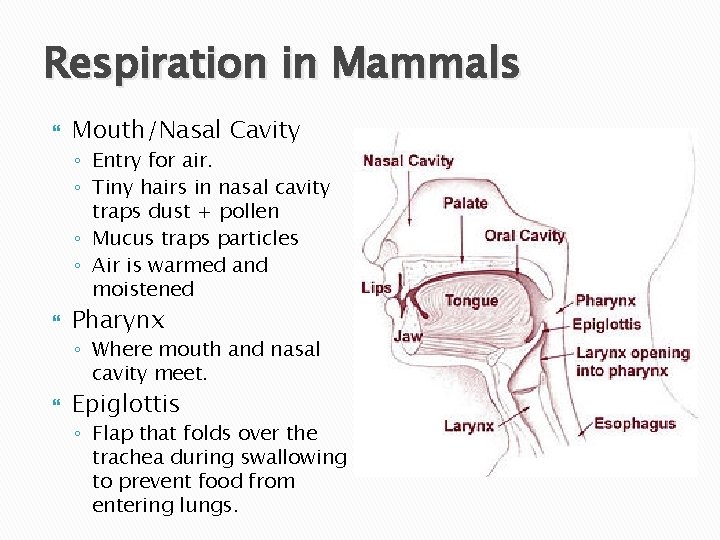
Respiration in Mammals Mouth/Nasal Cavity ◦ Entry for air. ◦ Tiny hairs in nasal cavity traps dust + pollen ◦ Mucus traps particles ◦ Air is warmed and moistened Pharynx ◦ Where mouth and nasal cavity meet. Epiglottis ◦ Flap that folds over the trachea during swallowing to prevent food from entering lungs.
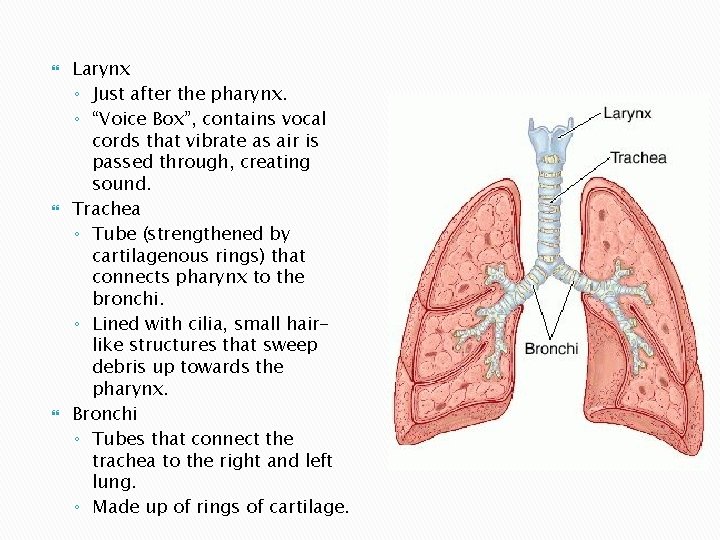
Larynx ◦ Just after the pharynx. ◦ “Voice Box”, contains vocal cords that vibrate as air is passed through, creating sound. Trachea ◦ Tube (strengthened by cartilagenous rings) that connects pharynx to the bronchi. ◦ Lined with cilia, small hairlike structures that sweep debris up towards the pharynx. Bronchi ◦ Tubes that connect the trachea to the right and left lung. ◦ Made up of rings of cartilage.
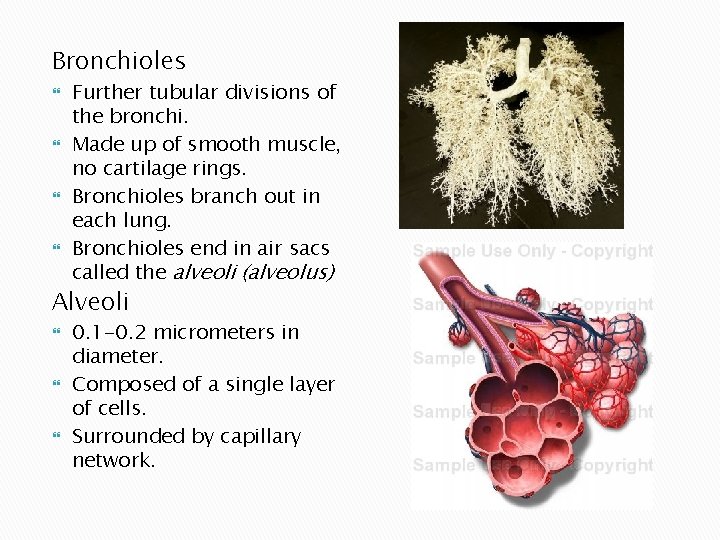
Bronchioles Further tubular divisions of the bronchi. Made up of smooth muscle, no cartilage rings. Bronchioles branch out in each lung. Bronchioles end in air sacs called the alveoli (alveolus) Alveoli 0. 1 -0. 2 micrometers in diameter. Composed of a single layer of cells. Surrounded by capillary network.
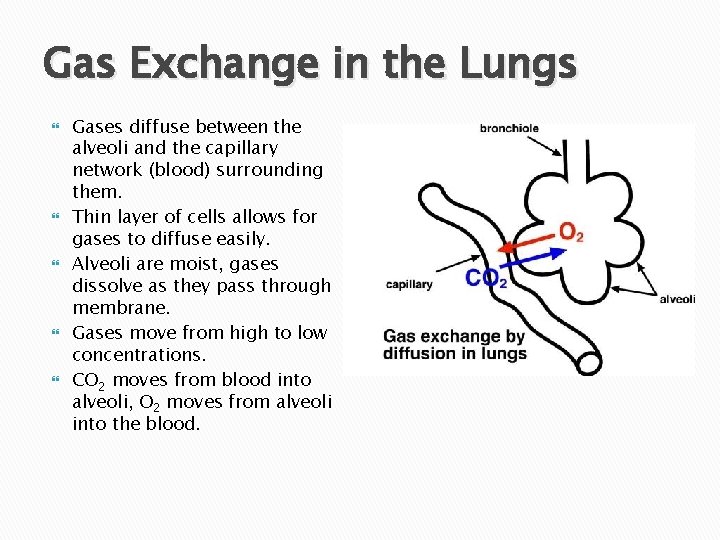
Gas Exchange in the Lungs Gases diffuse between the alveoli and the capillary network (blood) surrounding them. Thin layer of cells allows for gases to diffuse easily. Alveoli are moist, gases dissolve as they pass through membrane. Gases move from high to low concentrations. CO 2 moves from blood into alveoli, O 2 moves from alveoli into the blood.
Homework -flow chart of respiratory system -coloring sheet for respiratory system Digestion worksheets (complete MON) Digestion gizmo (your own practice) Genetics practice problems and test (suggested by Jan 15 so you have a chance for extra help)