
The Respiratory System Identify the structures of the




- Slides: 13
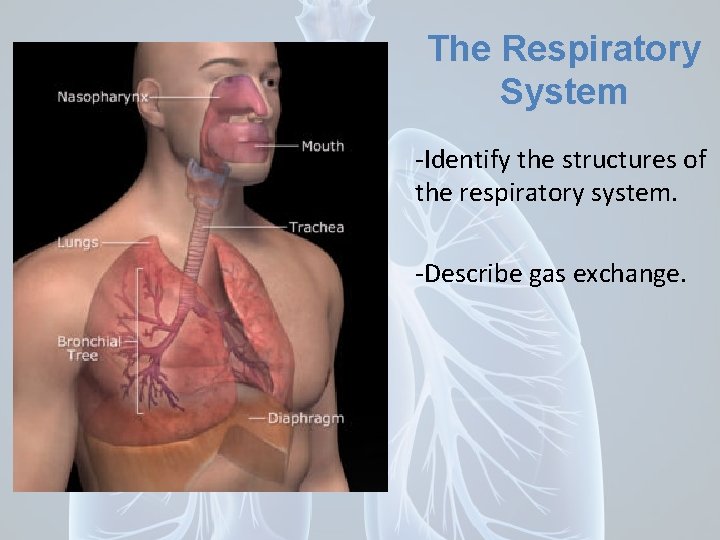
The Respiratory System -Identify the structures of the respiratory system. -Describe gas exchange.
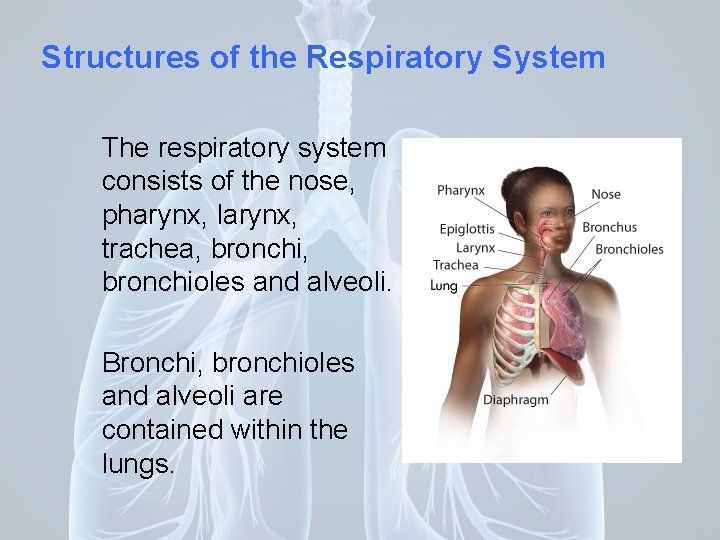
Structures of the Respiratory System The respiratory system consists of the nose, pharynx, larynx, trachea, bronchioles and alveoli. Bronchi, bronchioles and alveoli are contained within the lungs.
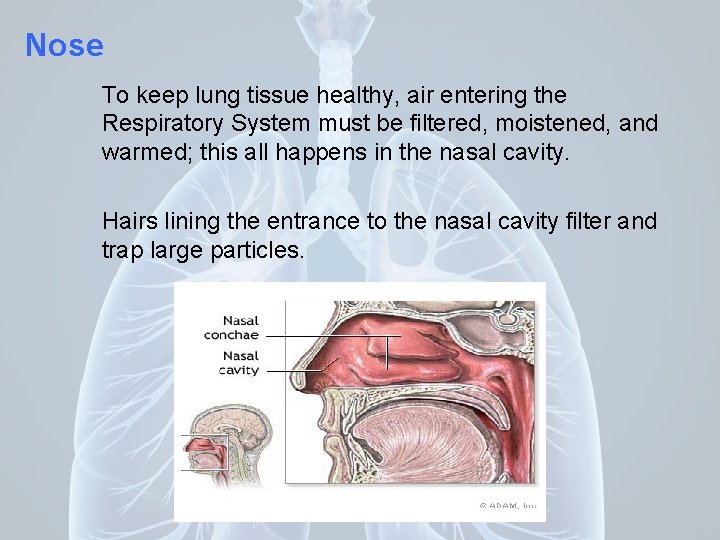
Nose To keep lung tissue healthy, air entering the Respiratory System must be filtered, moistened, and warmed; this all happens in the nasal cavity. Hairs lining the entrance to the nasal cavity filter and trap large particles.
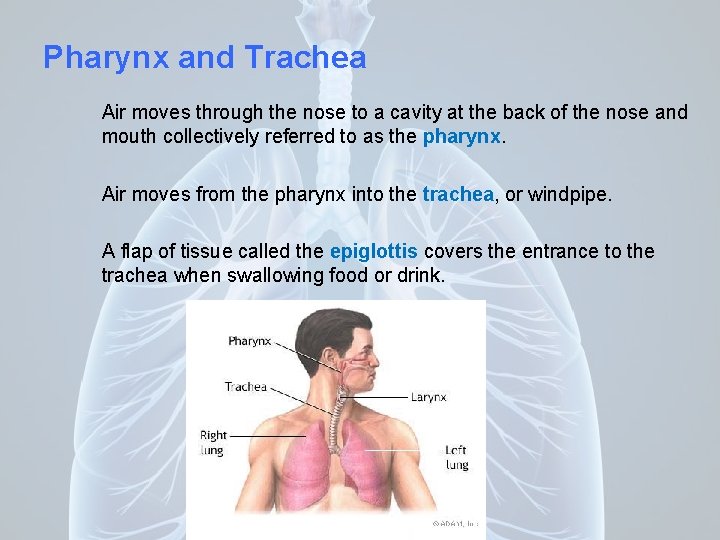
Pharynx and Trachea Air moves through the nose to a cavity at the back of the nose and mouth collectively referred to as the pharynx. Air moves from the pharynx into the trachea, or windpipe. A flap of tissue called the epiglottis covers the entrance to the trachea when swallowing food or drink.
Larynx Between the pharynx and the trachea is the larynx, which contains two highly elastic folds of tissue known as the vocal cords.
Trachea Mucus produced in the trachea continues to trap inhaled particles. Cilia lining the trachea sweep both mucus and trapped particles away from the lungs toward the pharynx, where they can be swallowed or spit out.
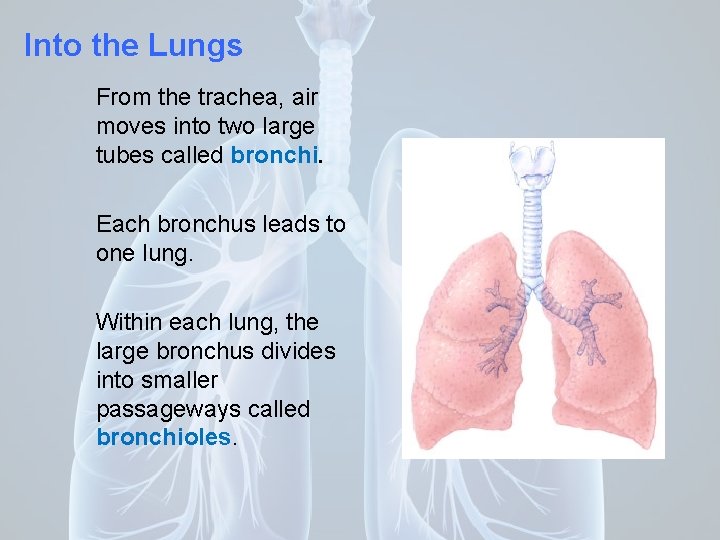
Into the Lungs From the trachea, air moves into two large tubes called bronchi. Each bronchus leads to one lung. Within each lung, the large bronchus divides into smaller passageways called bronchioles.
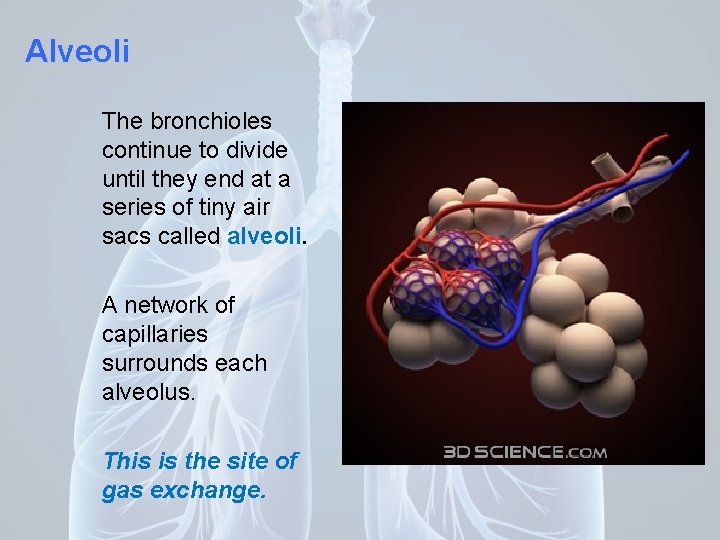
Alveoli The bronchioles continue to divide until they end at a series of tiny air sacs called alveoli. A network of capillaries surrounds each alveolus. This is the site of gas exchange.
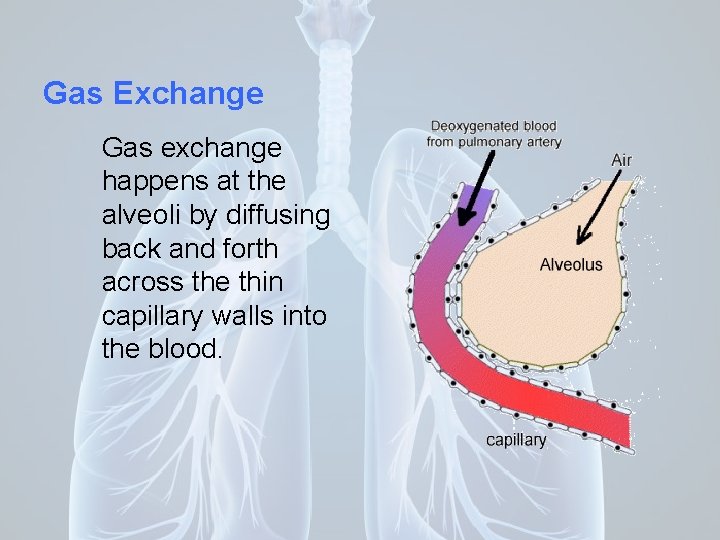
Gas Exchange Gas exchange happens at the alveoli by diffusing back and forth across the thin capillary walls into the blood.
Breathing is a NEGATIVE FEEDBACK mechanism Any automatic response your brain directs to bring the function of an organ or system back to within the normal range is considered negative feedback. Remember that the brain registers CO 2 levels in the blood to modify the rate of breathing.
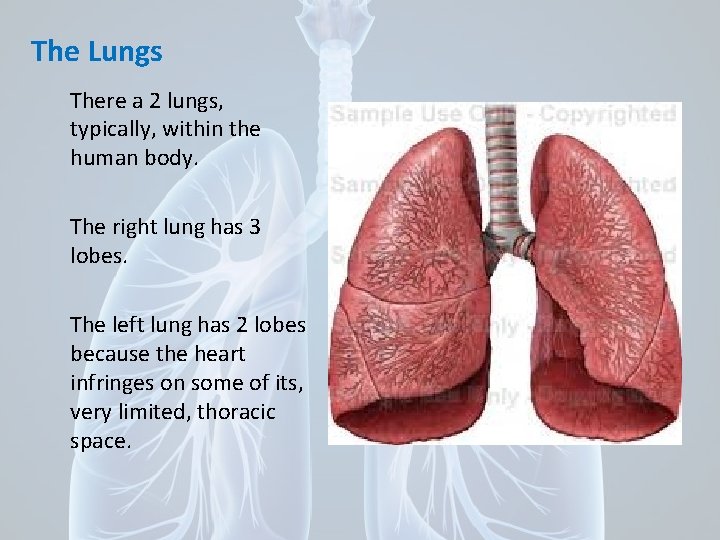
The Lungs There a 2 lungs, typically, within the human body. The right lung has 3 lobes. The left lung has 2 lobes because the heart infringes on some of its, very limited, thoracic space.
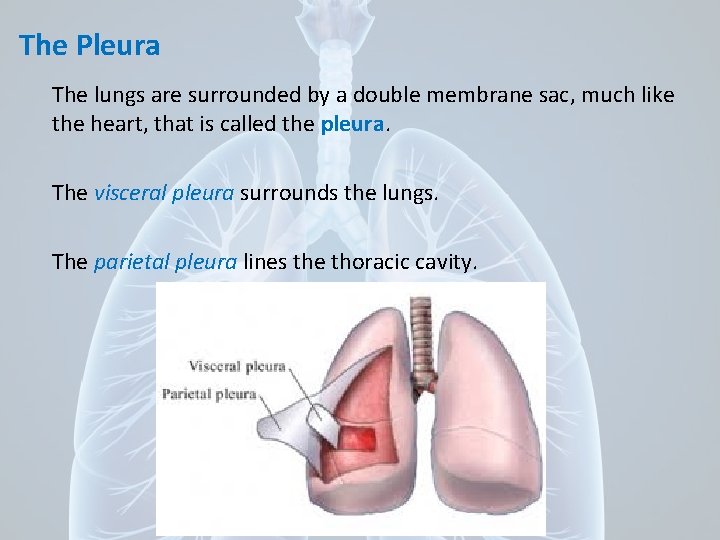
The Pleura The lungs are surrounded by a double membrane sac, much like the heart, that is called the pleura. The visceral pleura surrounds the lungs. The parietal pleura lines the thoracic cavity.
Cast of airways (left) and blood vessels (right) leading within the lungs.