
THE RESPIRATORY SYSTEM Health Science 1 1 The
- Slides: 36
THE RESPIRATORY SYSTEM Health Science 1 1
The Respiratory System Objectives 30 -1 Explain the functions of the respiratory system. 30 -2 Explain the difference between internal and external respiration. 30 -3 Describe how the larynx produces voice sounds. 30 -4 List the structures contained within the lungs. 30 -5 Describe the coverings of the lungs and chest cavity. 30 -6 Describe the events that lead to the inspiration and expiration of air. 30 -7 Explain how the brain controls breathing and how normal breathing patterns can be disrupted. 30 -8 List and explain various respiratory volumes and tell how they are used to diagnose respiratory problems. 30 -9 Describe how oxygen is transported from the lungs to body cells. 30 -10 Describe how carbon dioxide is transported from body cells to the lungs. 30 -11 Describe the signs, symptoms, causes, and treatments of various 2 respiratory disorders and diseases.
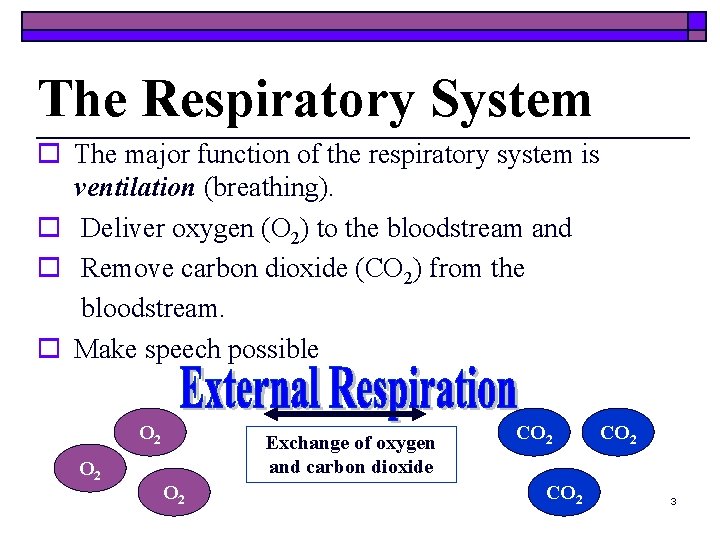
The Respiratory System o The major function of the respiratory system is ventilation (breathing). o Deliver oxygen (O 2) to the bloodstream and o Remove carbon dioxide (CO 2) from the bloodstream. o Make speech possible O 2 Exchange of oxygen and carbon dioxide O 2 CO 2 3
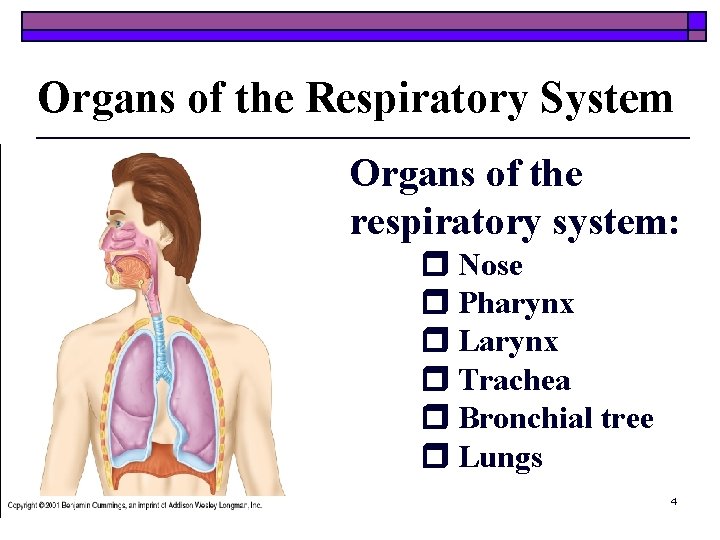
Organs of the Respiratory System Organs of the respiratory system: Nose Pharynx Larynx Trachea Bronchial tree Lungs 4
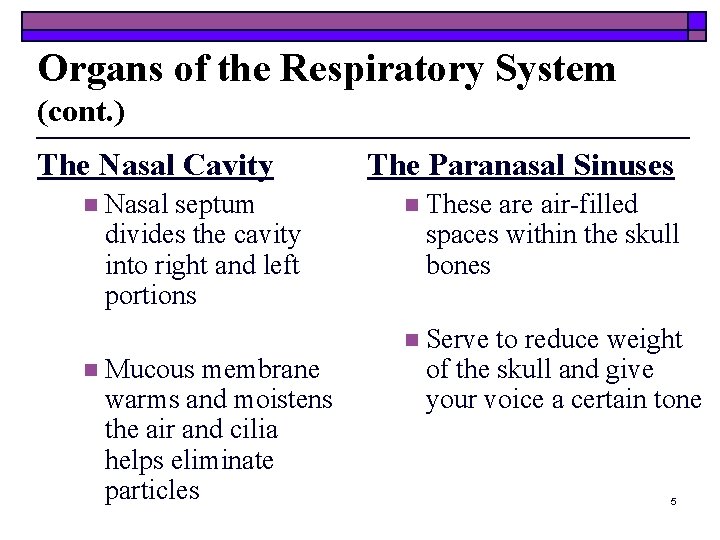
Organs of the Respiratory System (cont. ) The Nasal Cavity n Nasal septum divides the cavity into right and left portions n Mucous membrane warms and moistens the air and cilia helps eliminate particles The Paranasal Sinuses n These are air-filled spaces within the skull bones n Serve to reduce weight of the skull and give your voice a certain tone 5
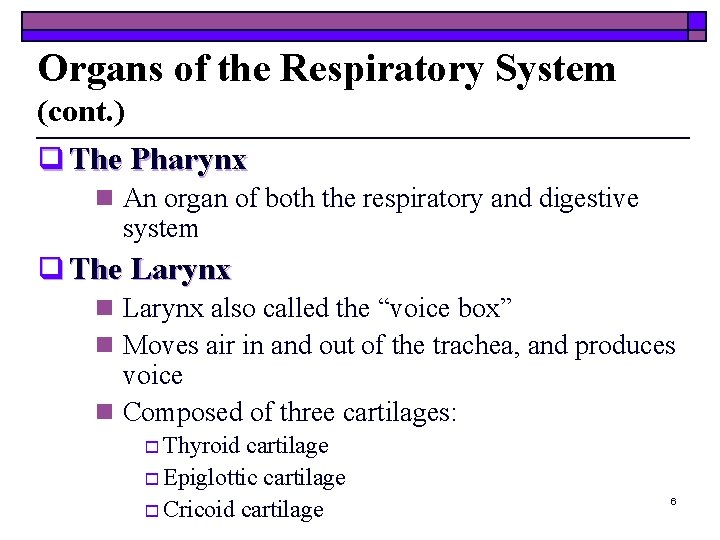
Organs of the Respiratory System (cont. ) q The Pharynx n An organ of both the respiratory and digestive system q The Larynx n Larynx also called the “voice box” n Moves air in and out of the trachea, and produces voice n Composed of three cartilages: o Thyroid cartilage o Epiglottic cartilage o Cricoid cartilage 6
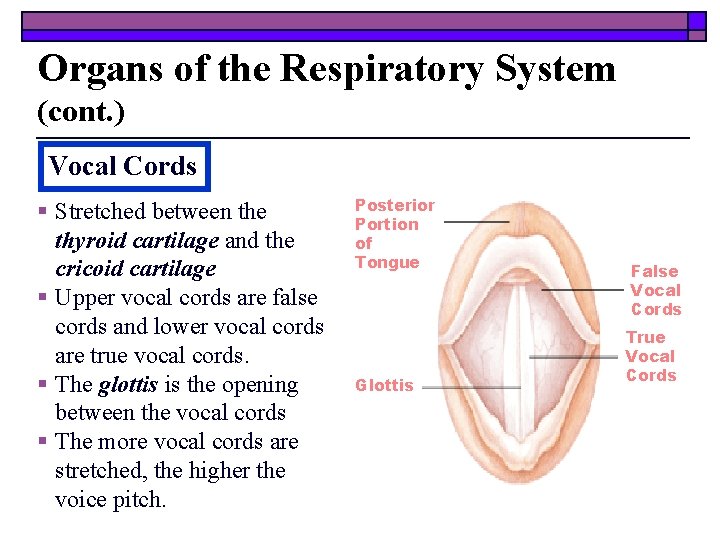
Organs of the Respiratory System (cont. ) Vocal Cords § Stretched between the thyroid cartilage and the cricoid cartilage § Upper vocal cords are false cords and lower vocal cords are true vocal cords. § The glottis is the opening between the vocal cords § The more vocal cords are stretched, the higher the voice pitch. Posterior Portion of Tongue Glottis False Vocal Cords True Vocal Cords 7
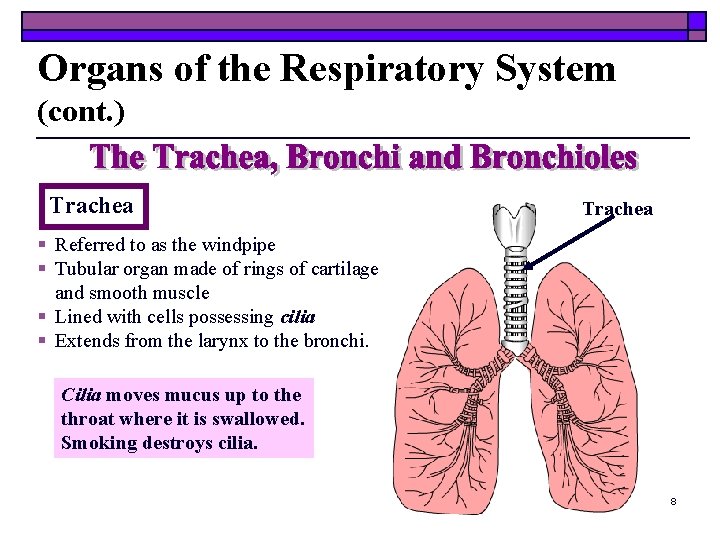
Organs of the Respiratory System (cont. ) Trachea § Referred to as the windpipe § Tubular organ made of rings of cartilage and smooth muscle § Lined with cells possessing cilia § Extends from the larynx to the bronchi. Cilia moves mucus up to the throat where it is swallowed. Smoking destroys cilia. 8
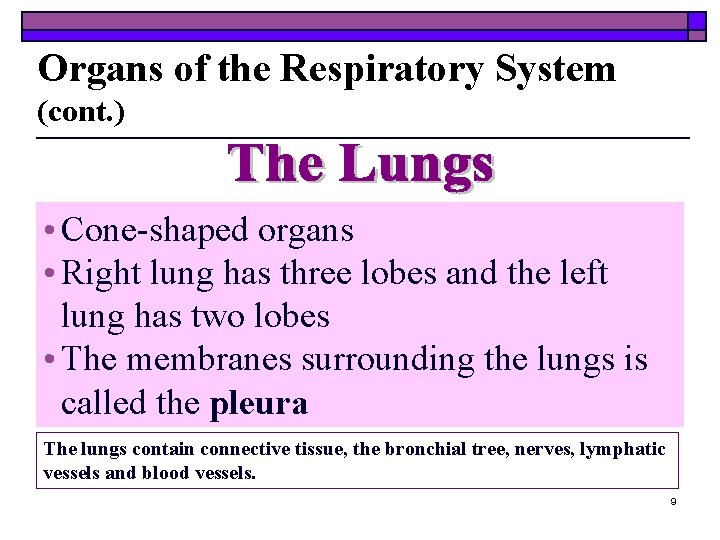
Organs of the Respiratory System (cont. ) • Cone-shaped organs • Right lung has three lobes and the left lung has two lobes • The membranes surrounding the lungs is called the pleura The lungs contain connective tissue, the bronchial tree, nerves, lymphatic vessels and blood vessels. 9
Apply Your Knowledge Which of the following sites would be the most lethal if obstructed by a foreign body? a. Right bronchus b. Left bronchiole c. Trachea 10
Apply Your Knowledge - Answer Which of the following sites would be the most lethal if obstructed by a foreign body? a. Right bronchus b. Left bronchiole c. Trachea 11
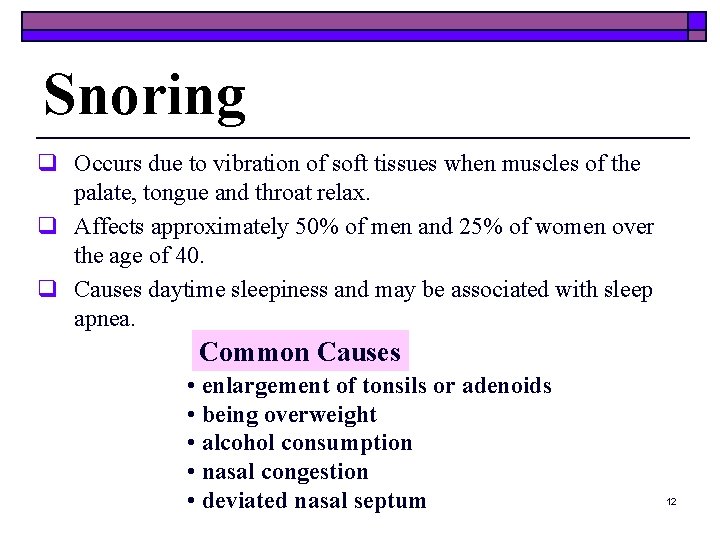
Snoring q Occurs due to vibration of soft tissues when muscles of the palate, tongue and throat relax. q Affects approximately 50% of men and 25% of women over the age of 40. q Causes daytime sleepiness and may be associated with sleep apnea. Common Causes • enlargement of tonsils or adenoids • being overweight • alcohol consumption • nasal congestion • deviated nasal septum 12
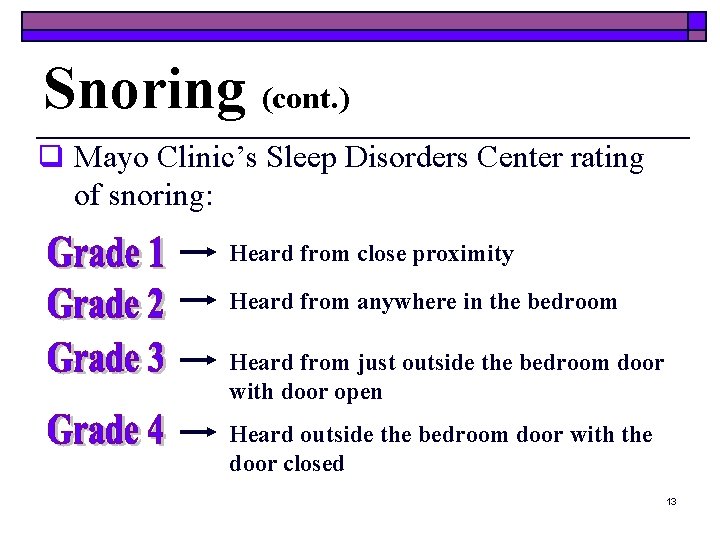
Snoring (cont. ) q Mayo Clinic’s Sleep Disorders Center rating of snoring: Heard from close proximity Heard from anywhere in the bedroom Heard from just outside the bedroom door with door open Heard outside the bedroom door with the door closed 13
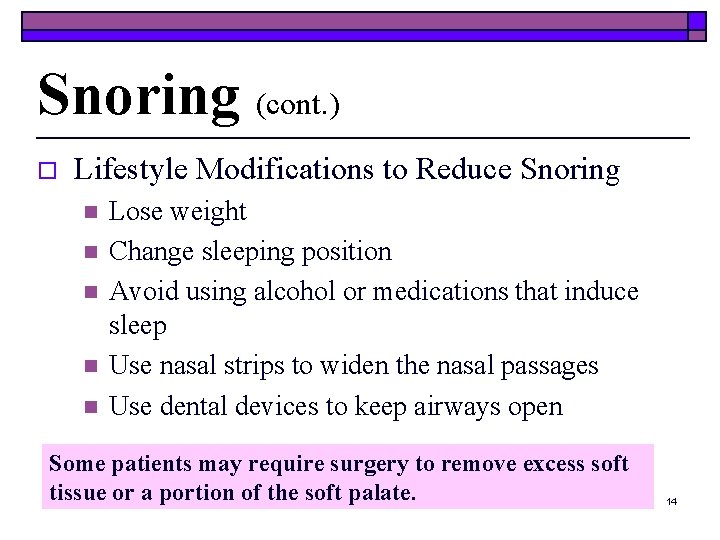
Snoring (cont. ) o Lifestyle Modifications to Reduce Snoring n n n Lose weight Change sleeping position Avoid using alcohol or medications that induce sleep Use nasal strips to widen the nasal passages Use dental devices to keep airways open Some patients may require surgery to remove excess soft tissue or a portion of the soft palate. 14
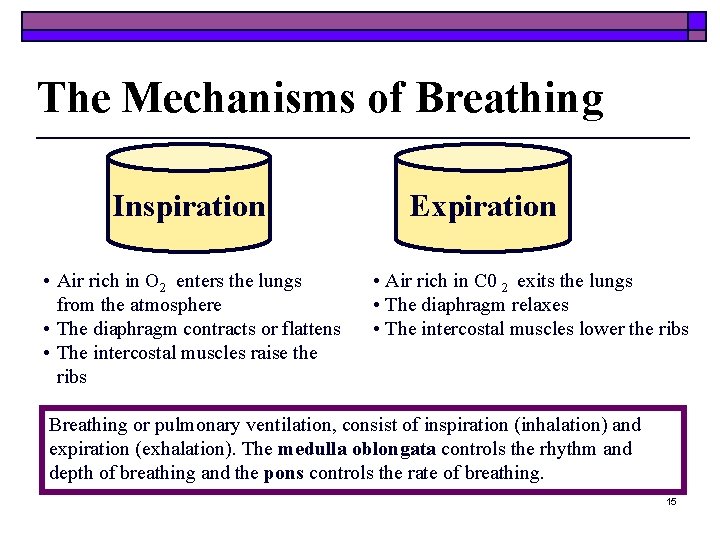
The Mechanisms of Breathing Inspiration • Air rich in O 2 enters the lungs from the atmosphere • The diaphragm contracts or flattens • The intercostal muscles raise the ribs Expiration • Air rich in C 0 2 exits the lungs • The diaphragm relaxes • The intercostal muscles lower the ribs Breathing or pulmonary ventilation, consist of inspiration (inhalation) and expiration (exhalation). The medulla oblongata controls the rhythm and depth of breathing and the pons controls the rate of breathing. 15
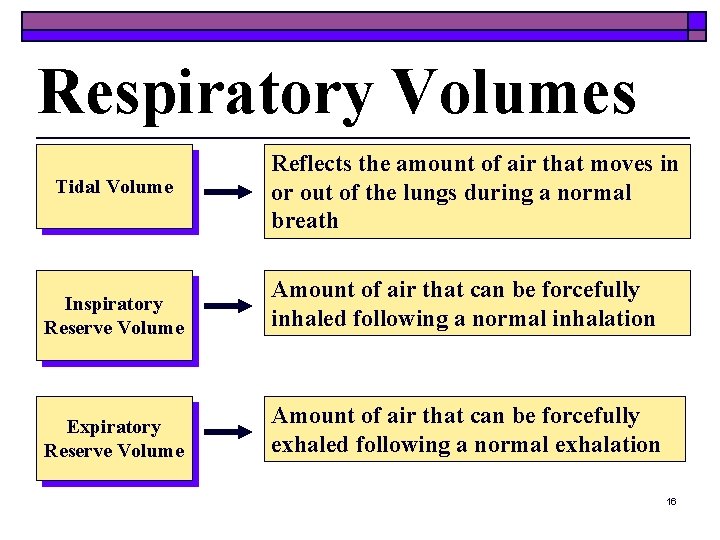
Respiratory Volumes Tidal Volume Reflects the amount of air that moves in or out of the lungs during a normal breath Inspiratory Reserve Volume Amount of air that can be forcefully inhaled following a normal inhalation Expiratory Reserve Volume Amount of air that can be forcefully exhaled following a normal exhalation 16
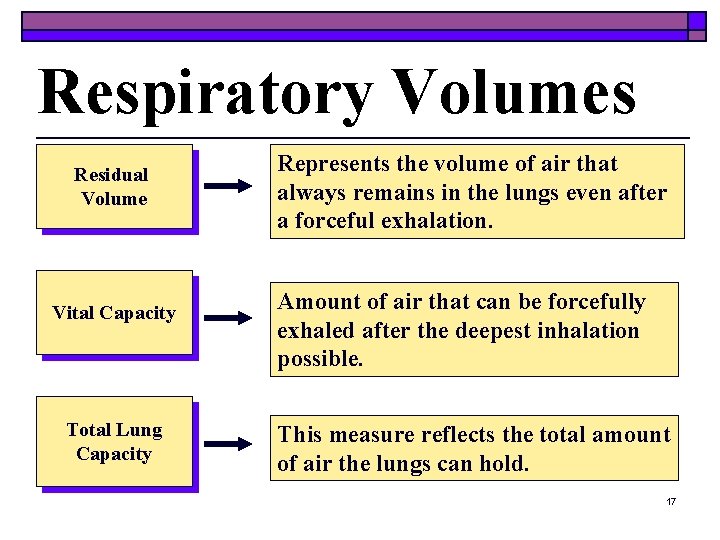
Respiratory Volumes Residual Volume Vital Capacity Total Lung Capacity Represents the volume of air that always remains in the lungs even after a forceful exhalation. Amount of air that can be forcefully exhaled after the deepest inhalation possible. This measure reflects the total amount of air the lungs can hold. 17
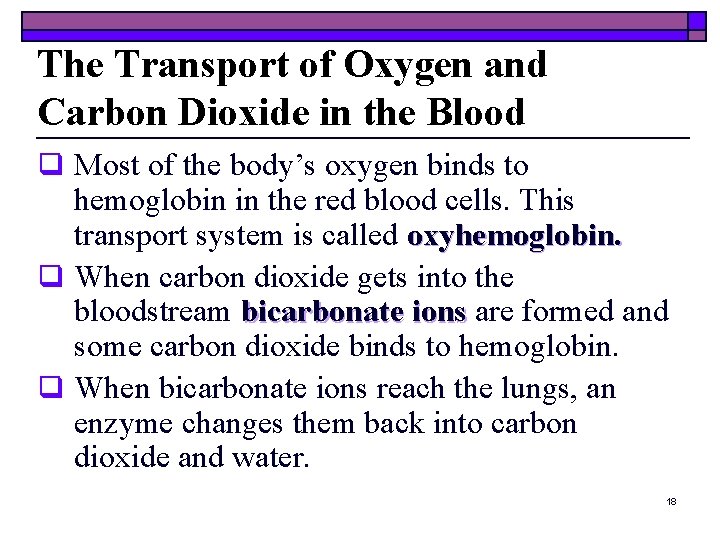
The Transport of Oxygen and Carbon Dioxide in the Blood q Most of the body’s oxygen binds to hemoglobin in the red blood cells. This transport system is called oxyhemoglobin. q When carbon dioxide gets into the bloodstream bicarbonate ions are formed and some carbon dioxide binds to hemoglobin. q When bicarbonate ions reach the lungs, an enzyme changes them back into carbon dioxide and water. 18
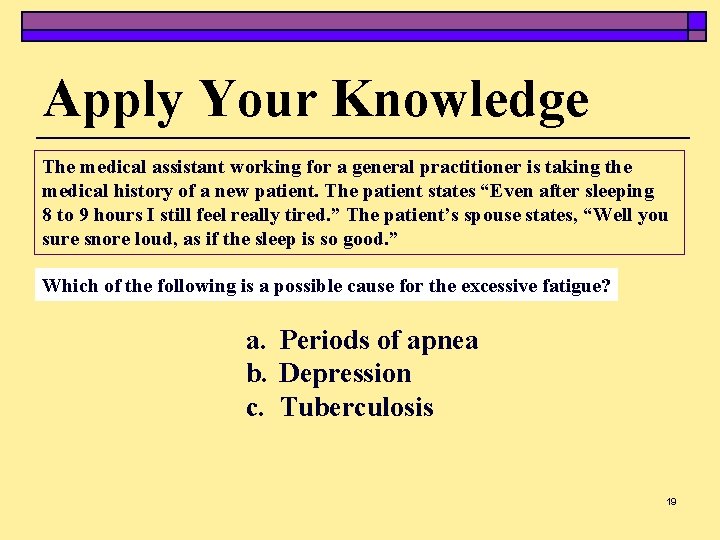
Apply Your Knowledge The medical assistant working for a general practitioner is taking the medical history of a new patient. The patient states “Even after sleeping 8 to 9 hours I still feel really tired. ” The patient’s spouse states, “Well you sure snore loud, as if the sleep is so good. ” Which of the following is a possible cause for the excessive fatigue? a. Periods of apnea b. Depression c. Tuberculosis 19
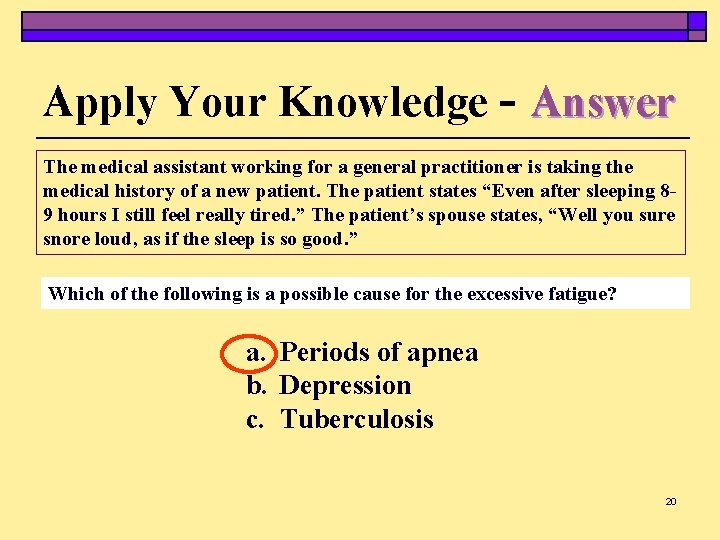
Apply Your Knowledge - Answer The medical assistant working for a general practitioner is taking the medical history of a new patient. The patient states “Even after sleeping 89 hours I still feel really tired. ” The patient’s spouse states, “Well you sure snore loud, as if the sleep is so good. ” Which of the following is a possible cause for the excessive fatigue? a. Periods of apnea b. Depression c. Tuberculosis 20
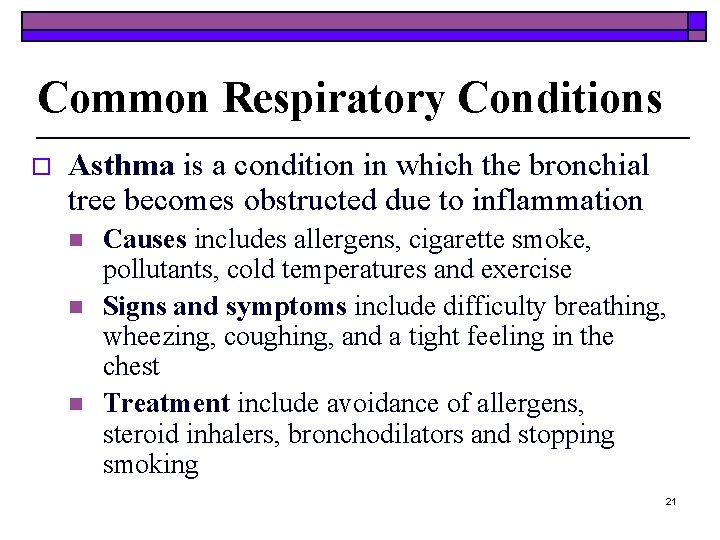
Common Respiratory Conditions o Asthma is a condition in which the bronchial tree becomes obstructed due to inflammation n Causes includes allergens, cigarette smoke, pollutants, cold temperatures and exercise Signs and symptoms include difficulty breathing, wheezing, coughing, and a tight feeling in the chest Treatment include avoidance of allergens, steroid inhalers, bronchodilators and stopping smoking 21
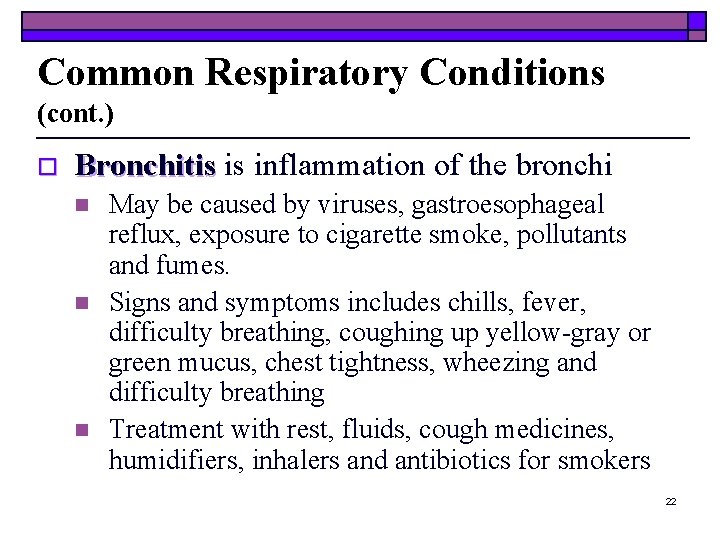
Common Respiratory Conditions (cont. ) o Bronchitis is inflammation of the bronchi n n n May be caused by viruses, gastroesophageal reflux, exposure to cigarette smoke, pollutants and fumes. Signs and symptoms includes chills, fever, difficulty breathing, coughing up yellow-gray or green mucus, chest tightness, wheezing and difficulty breathing Treatment with rest, fluids, cough medicines, humidifiers, inhalers and antibiotics for smokers 22
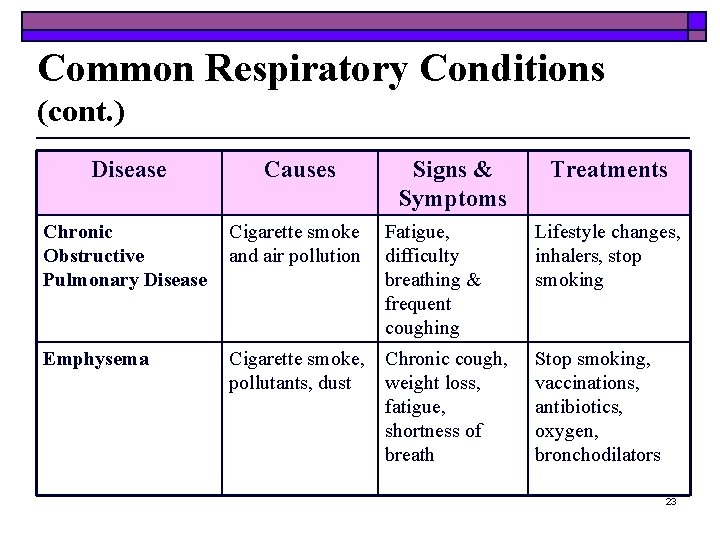
Common Respiratory Conditions (cont. ) Disease Causes Signs & Symptoms Treatments Chronic Obstructive Pulmonary Disease Cigarette smoke and air pollution Fatigue, difficulty breathing & frequent coughing Lifestyle changes, inhalers, stop smoking Emphysema Cigarette smoke, pollutants, dust Chronic cough, weight loss, fatigue, shortness of breath Stop smoking, vaccinations, antibiotics, oxygen, bronchodilators 23
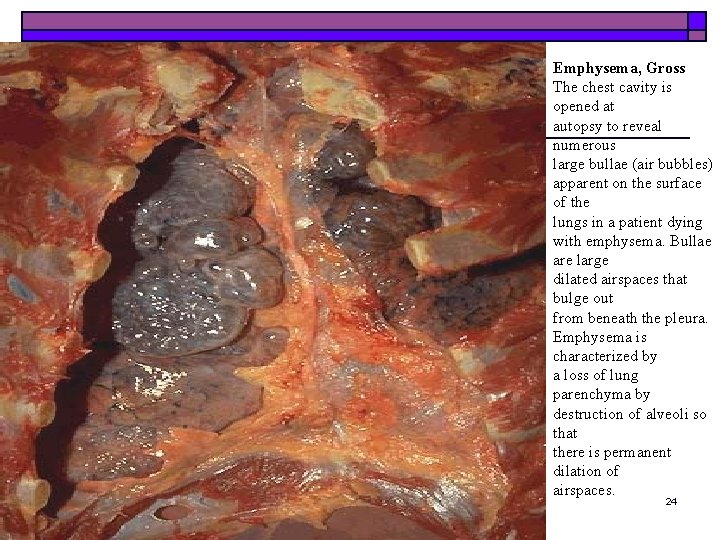
Emphysema, Gross The chest cavity is opened at autopsy to reveal numerous large bullae (air bubbles) apparent on the surface of the lungs in a patient dying with emphysema. Bullae are large dilated airspaces that bulge out from beneath the pleura. Emphysema is characterized by a loss of lung parenchyma by destruction of alveoli so that there is permanent dilation of airspaces. 24
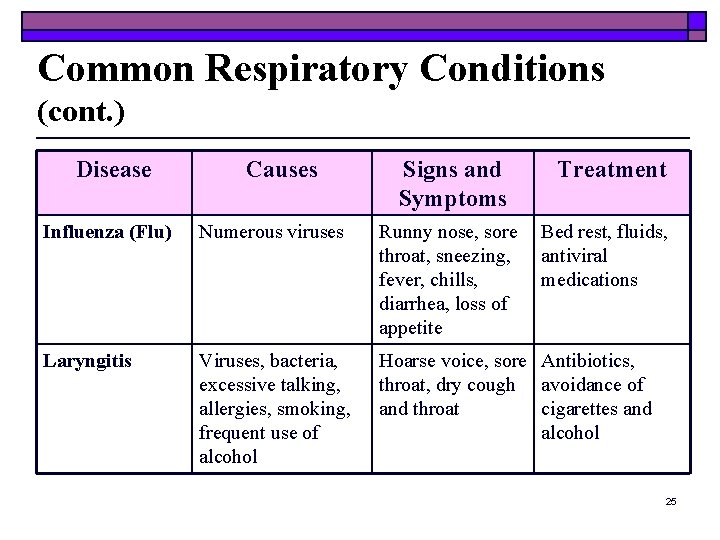
Common Respiratory Conditions (cont. ) Disease Causes Signs and Symptoms Treatment Influenza (Flu) Numerous viruses Runny nose, sore throat, sneezing, fever, chills, diarrhea, loss of appetite Bed rest, fluids, antiviral medications Laryngitis Viruses, bacteria, excessive talking, allergies, smoking, frequent use of alcohol Hoarse voice, sore Antibiotics, throat, dry cough avoidance of and throat cigarettes and alcohol 25
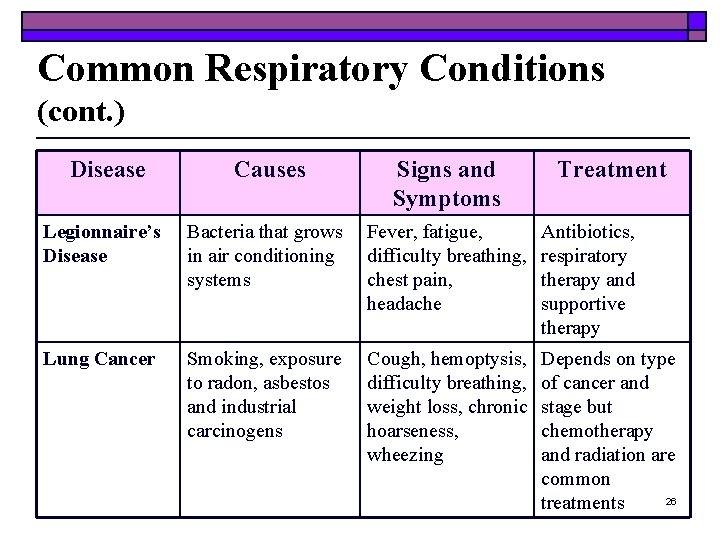
Common Respiratory Conditions (cont. ) Disease Causes Signs and Symptoms Treatment Legionnaire’s Disease Bacteria that grows in air conditioning systems Fever, fatigue, difficulty breathing, chest pain, headache Antibiotics, respiratory therapy and supportive therapy Lung Cancer Smoking, exposure to radon, asbestos and industrial carcinogens Cough, hemoptysis, difficulty breathing, weight loss, chronic hoarseness, wheezing Depends on type of cancer and stage but chemotherapy and radiation are common 26 treatments
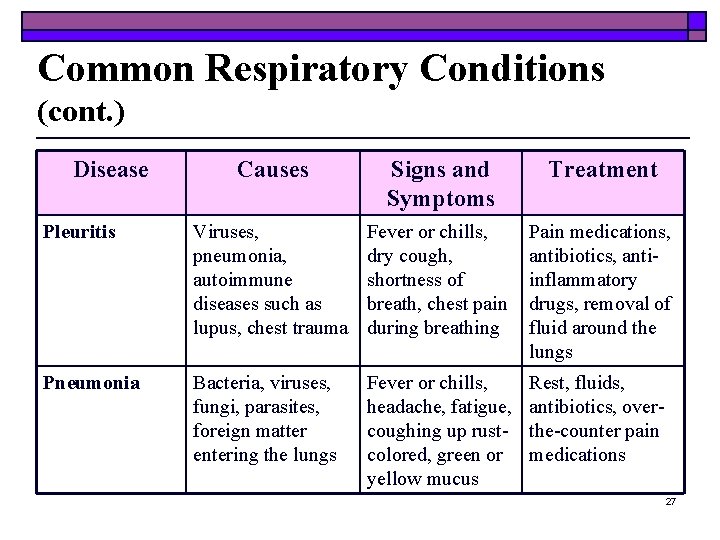
Common Respiratory Conditions (cont. ) Disease Causes Signs and Symptoms Treatment Pleuritis Viruses, pneumonia, autoimmune diseases such as lupus, chest trauma Fever or chills, dry cough, shortness of breath, chest pain during breathing Pain medications, antibiotics, antiinflammatory drugs, removal of fluid around the lungs Pneumonia Bacteria, viruses, fungi, parasites, foreign matter entering the lungs Fever or chills, headache, fatigue, coughing up rustcolored, green or yellow mucus Rest, fluids, antibiotics, overthe-counter pain medications 27
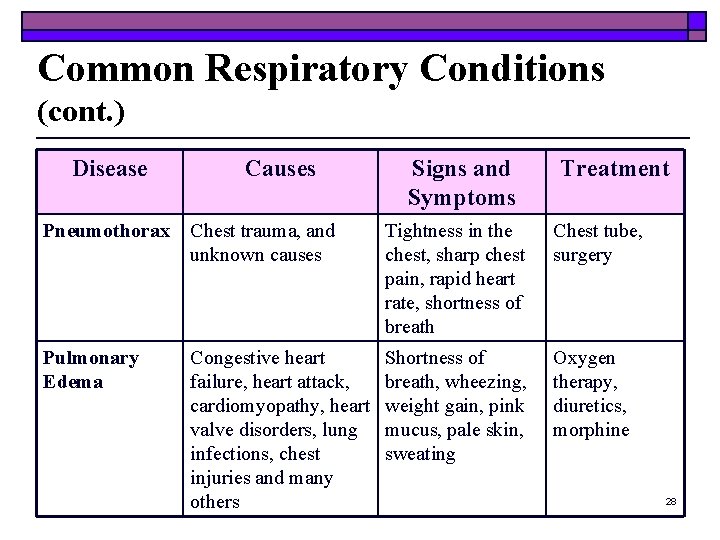
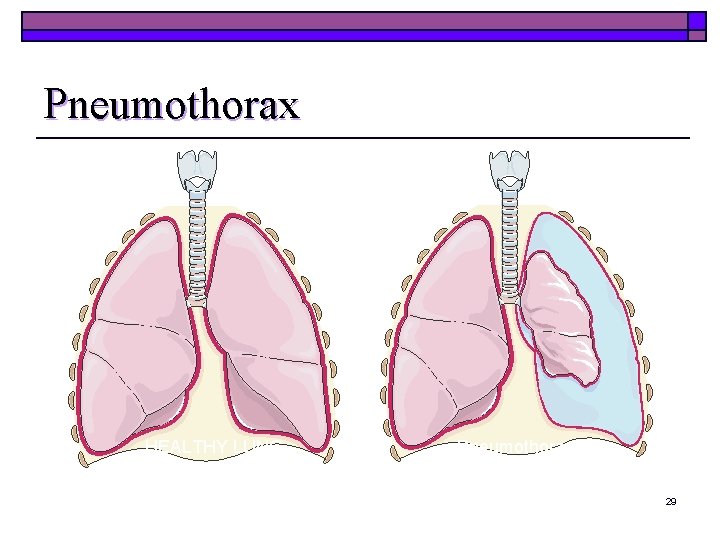
Common Respiratory Conditions (cont. ) Disease Causes Signs and Symptoms Treatment Pneumothorax Chest trauma, and unknown causes Tightness in the chest, sharp chest pain, rapid heart rate, shortness of breath Chest tube, surgery Pulmonary Edema Congestive heart failure, heart attack, cardiomyopathy, heart valve disorders, lung infections, chest injuries and many others Shortness of breath, wheezing, weight gain, pink mucus, pale skin, sweating Oxygen therapy, diuretics, morphine 28
Pneumothorax HEALTHY LUNG Pneumothorax 29
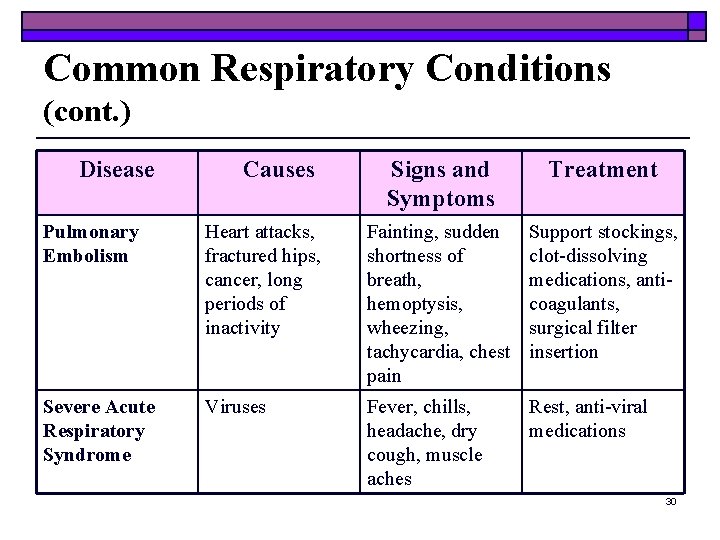
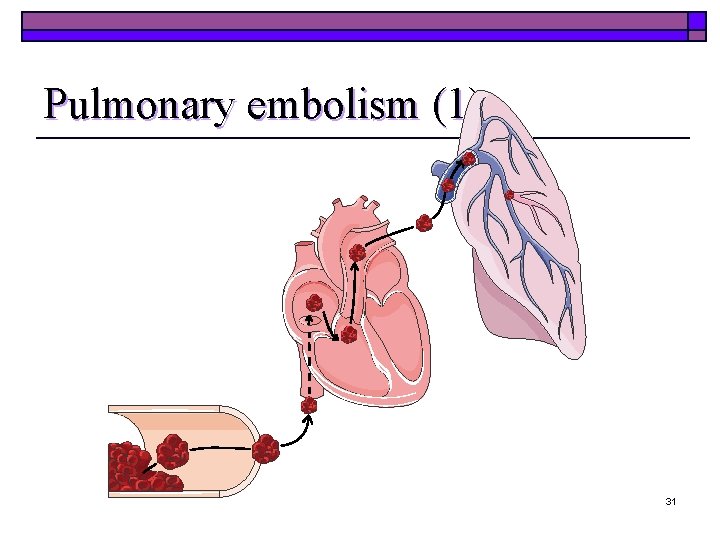
Common Respiratory Conditions (cont. ) Disease Causes Signs and Symptoms Treatment Pulmonary Embolism Heart attacks, fractured hips, cancer, long periods of inactivity Fainting, sudden shortness of breath, hemoptysis, wheezing, tachycardia, chest pain Support stockings, clot-dissolving medications, anticoagulants, surgical filter insertion Severe Acute Respiratory Syndrome Viruses Fever, chills, headache, dry cough, muscle aches Rest, anti-viral medications 30
Pulmonary embolism (1) 31
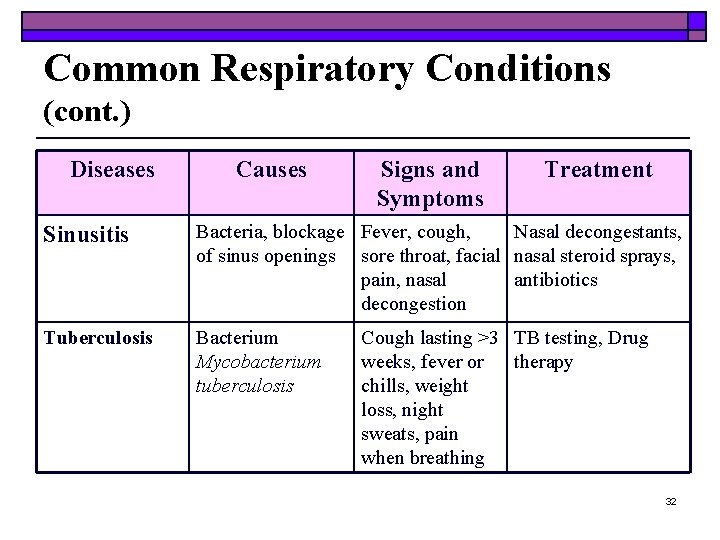
Common Respiratory Conditions (cont. ) Diseases Causes Signs and Symptoms Treatment Sinusitis Bacteria, blockage Fever, cough, Nasal decongestants, of sinus openings sore throat, facial nasal steroid sprays, pain, nasal antibiotics decongestion Tuberculosis Bacterium Mycobacterium tuberculosis Cough lasting >3 TB testing, Drug weeks, fever or therapy chills, weight loss, night sweats, pain when breathing 32
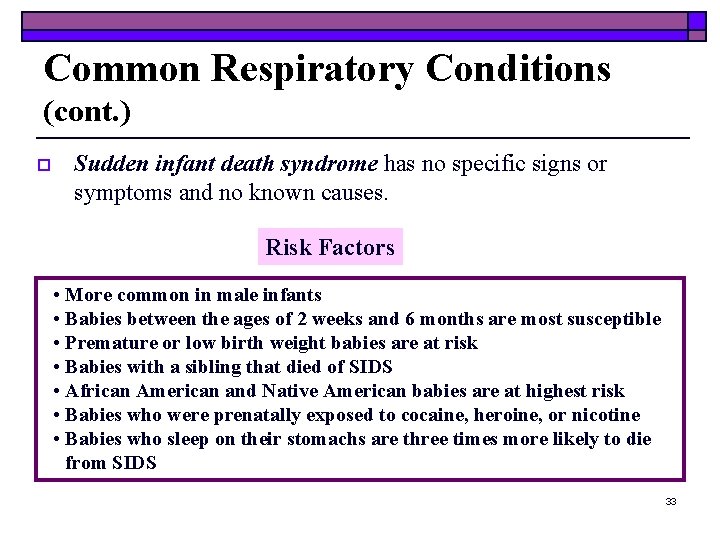
Common Respiratory Conditions (cont. ) o Sudden infant death syndrome has no specific signs or symptoms and no known causes. Risk Factors • More common in male infants • Babies between the ages of 2 weeks and 6 months are most susceptible • Premature or low birth weight babies are at risk • Babies with a sibling that died of SIDS • African American and Native American babies are at highest risk • Babies who were prenatally exposed to cocaine, heroine, or nicotine • Babies who sleep on their stomachs are three times more likely to die from SIDS 33
Apply Your Knowledge Which of the following diseases must all health care workers be screened for annually? a. Pneumonia b. Tuberculosis c. Legionnaire’s disease 34
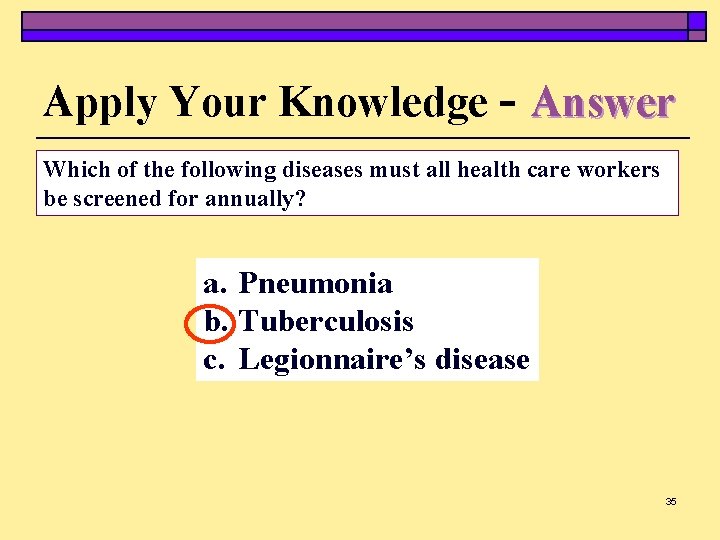
Apply Your Knowledge - Answer Which of the following diseases must all health care workers be screened for annually? a. Pneumonia b. Tuberculosis c. Legionnaire’s disease 35
END OF PRESENTATION 36