
The Respiratory System Functions Respiration breathing Ventilation moving
The Respiratory System

Functions • Respiration: “breathing” – Ventilation: moving air into and out of the lungs – External respiration: gas exchange between the air in the lungs and the blood – Transport of oxygen and carbon dioxide in the blood – Internal respiration: gas exchange between blood and the tissues

Functions • Breathing provides oxygen needed in cellular respiration to make ATP from glucose, gets rid of CO 2 • Regulation of blood p. H: alter p. H by changing blood carbon dioxide levels • Production of chemical mediators: lungs make an enzyme to help regulate blood pressure • Voice production: air moving past vocal folds makes sound and speech possible • Olfaction: sensation of smell occurs when airborne molecules are drawn into the nasal cavity
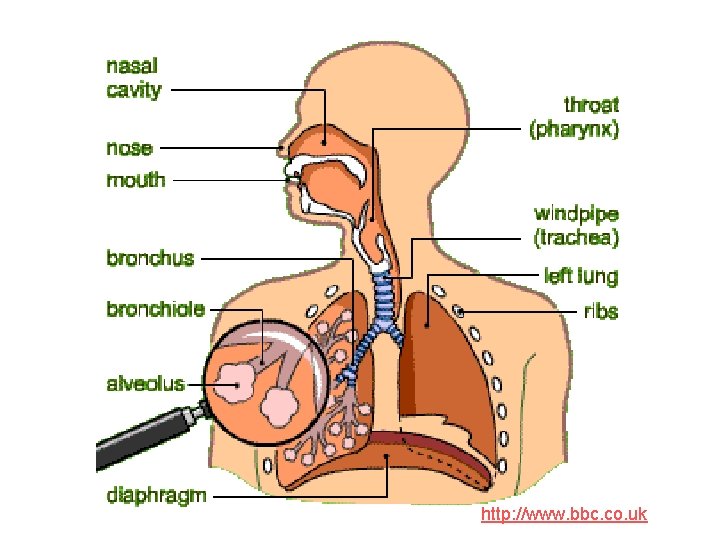
Organs of the respiratory system • • • Nose / mouth Nasal cavity Pharynx Epiglottis Larynx Trachea • • • Trachea Bronchus (bronchi) Bronchioles Lungs Alveoli Pleura Diaphragm
http: //www. bbc. co. uk

Mouth & Nose • Nose: – Brings air into the body – Nasal hairs in nostrils trap dust • Nasal Cavity: hollow space behind the nose – Nasal Septum: dividing the cavity from left to right – Nasal Conchae: bones and processes that curl to each side of the pathway – Goblet cells: secret mucus
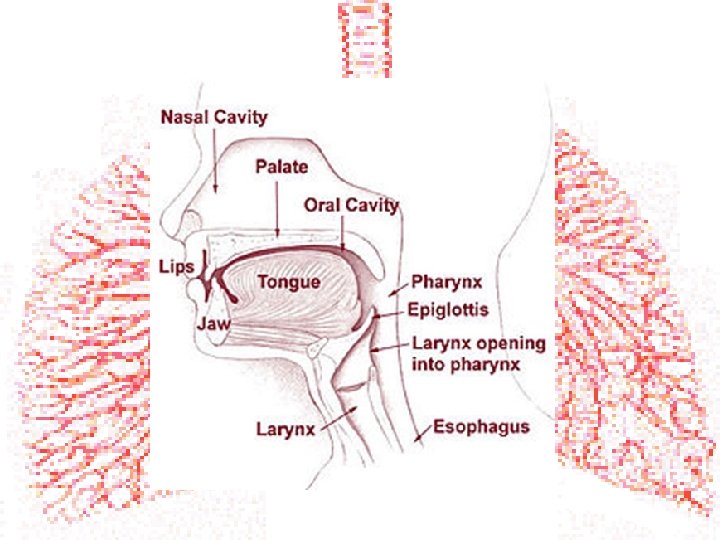
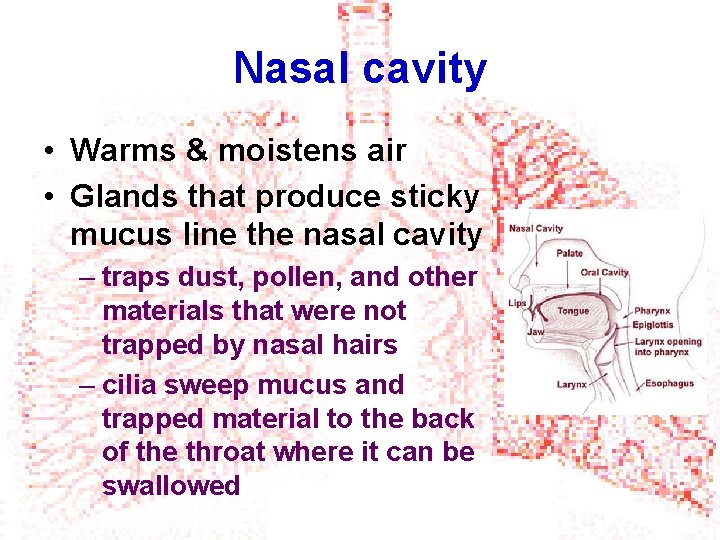
Nasal cavity • Warms & moistens air • Glands that produce sticky mucus line the nasal cavity – traps dust, pollen, and other materials that were not trapped by nasal hairs – cilia sweep mucus and trapped material to the back of the throat where it can be swallowed
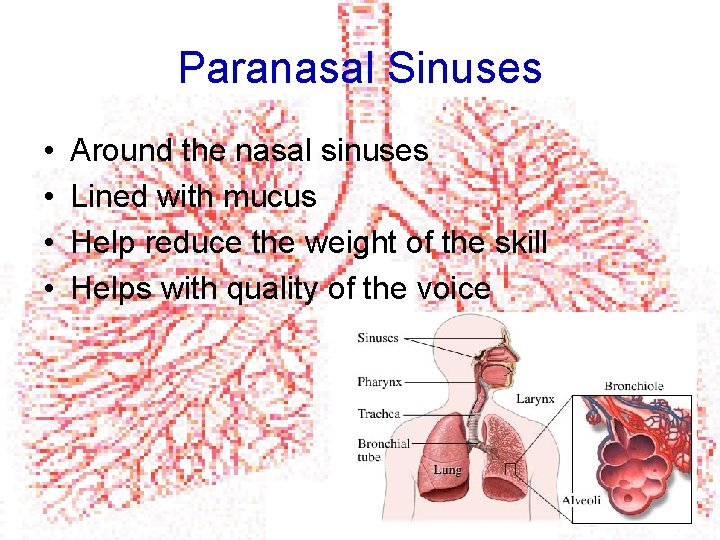
Paranasal Sinuses • • Around the nasal sinuses Lined with mucus Help reduce the weight of the skill Helps with quality of the voice
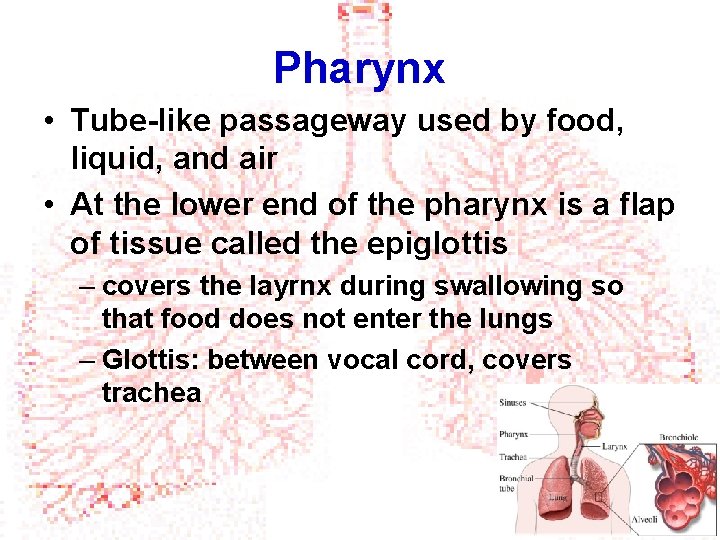
Pharynx • Tube-like passageway used by food, liquid, and air • At the lower end of the pharynx is a flap of tissue called the epiglottis – covers the layrnx during swallowing so that food does not enter the lungs – Glottis: between vocal cord, covers trachea

Larynx • “Voice box” • The airway to which two pairs of horizontal folds of tissue, called vocal cords, are attached

Trachea • Air-conducting tube • Connects the larynx with the bronchi • Lined with mucous membranes and cilia • Contains strong cartilage rings


Lung Anatomy
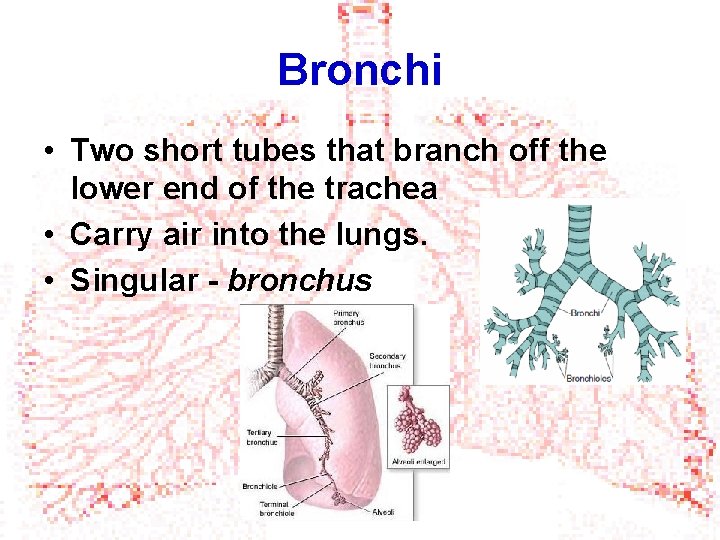
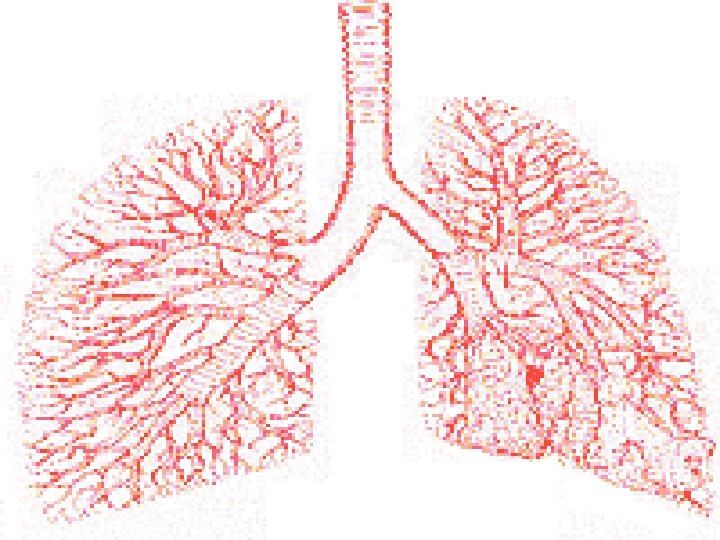
Bronchi • Two short tubes that branch off the lower end of the trachea • Carry air into the lungs. • Singular - bronchus
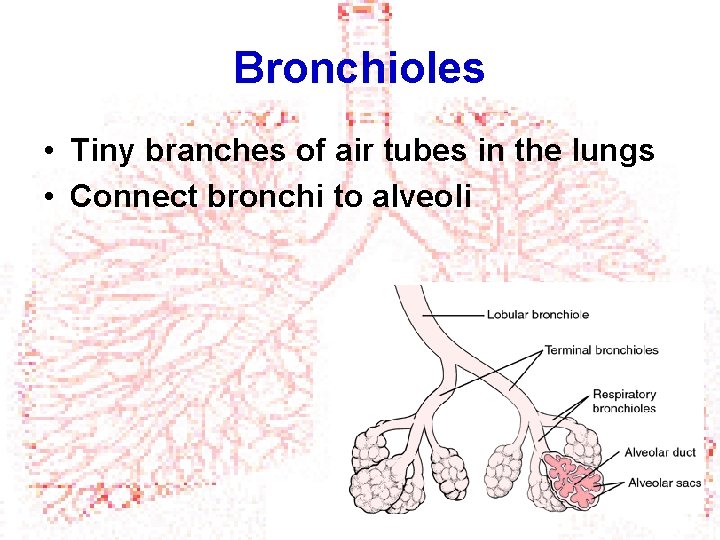
Bronchioles • Tiny branches of air tubes in the lungs • Connect bronchi to alveoli

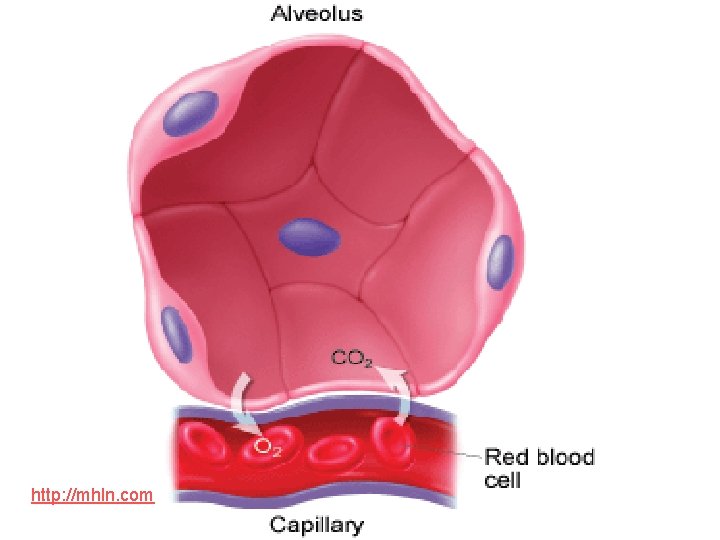
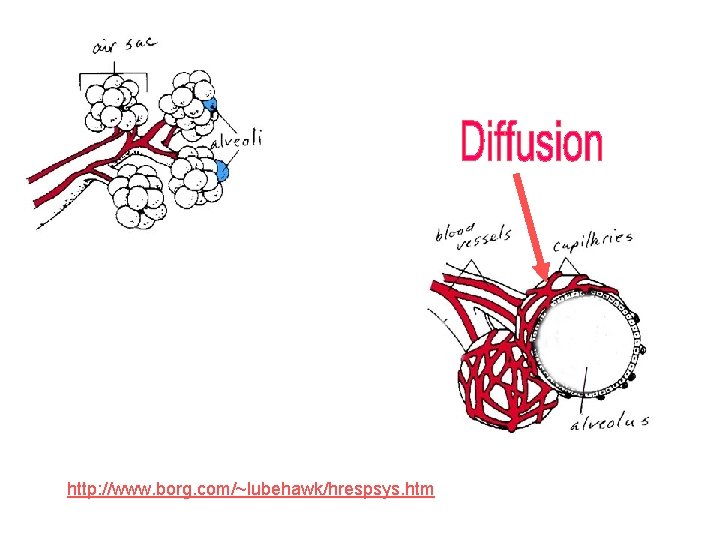
Alveoli • Tiny, thin-walled, grapelike clusters at the end of each bronchiole • Surrounded by capillaries • Where carbon dioxide and oxygen exchange take place • Singular - alveolus
http: //mhln. com
http: //www. borg. com/~lubehawk/hrespsys. htm
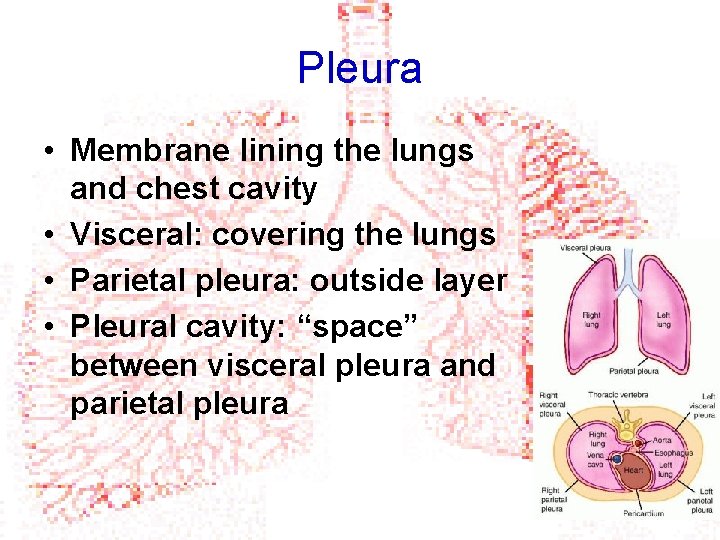
Pleura • Membrane lining the lungs and chest cavity • Visceral: covering the lungs • Parietal pleura: outside layer • Pleural cavity: “space” between visceral pleura and parietal pleura

Diaphragm • Muscle wall between the chest and the abdomen that the body uses for breathing
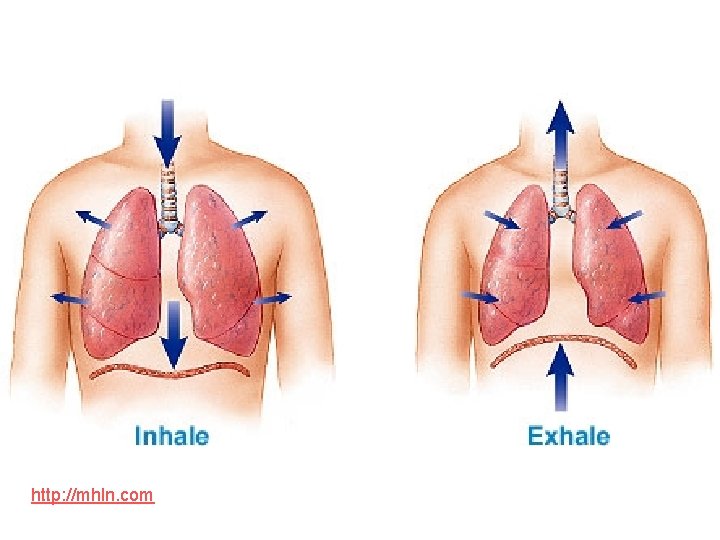
http: //mhln. com
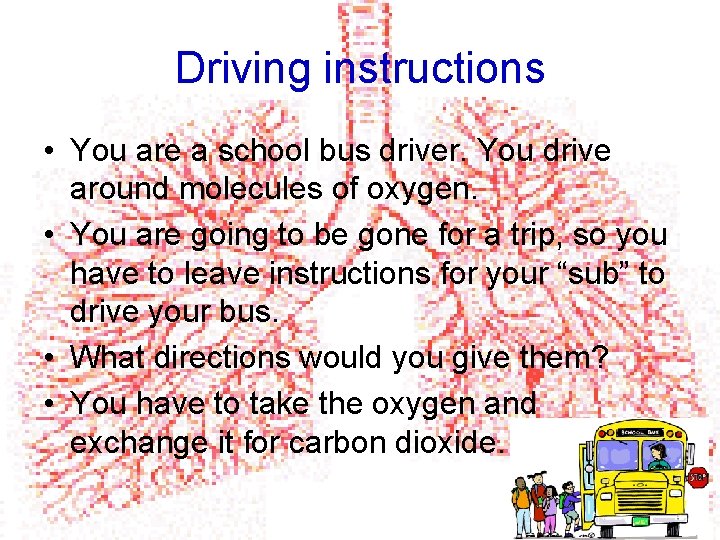
Driving instructions • You are a school bus driver. You drive around molecules of oxygen. • You are going to be gone for a trip, so you have to leave instructions for your “sub” to drive your bus. • What directions would you give them? • You have to take the oxygen and exchange it for carbon dioxide.

Relationship to digestive system • Cellular respiration requires glucose and oxygen to release energy to the body • C 6 H 12 O 6 + 6 O 2 6 CO 2 + 6 H 2 O + Energy • Oxygen is provided by the respiratory system • Glucose is provided by the digestive system • (glucose is made during photosynthesis)

- Slides: 26