
The Respiratory System Functions of the Respiratory System
- Slides: 12
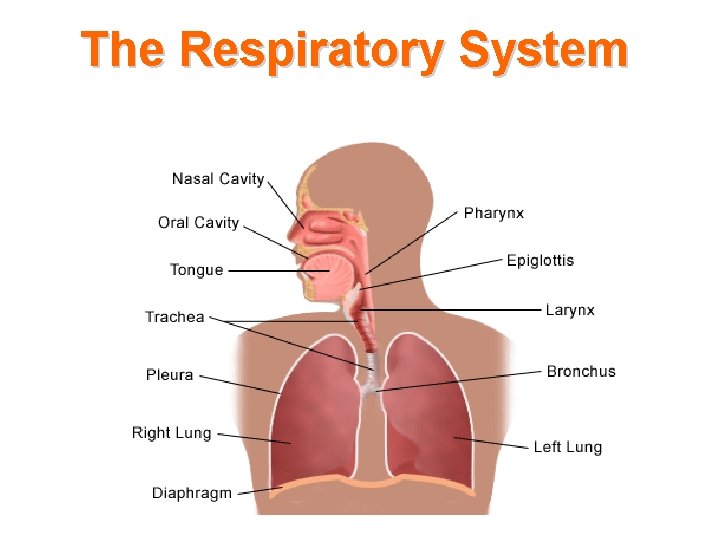
The Respiratory System
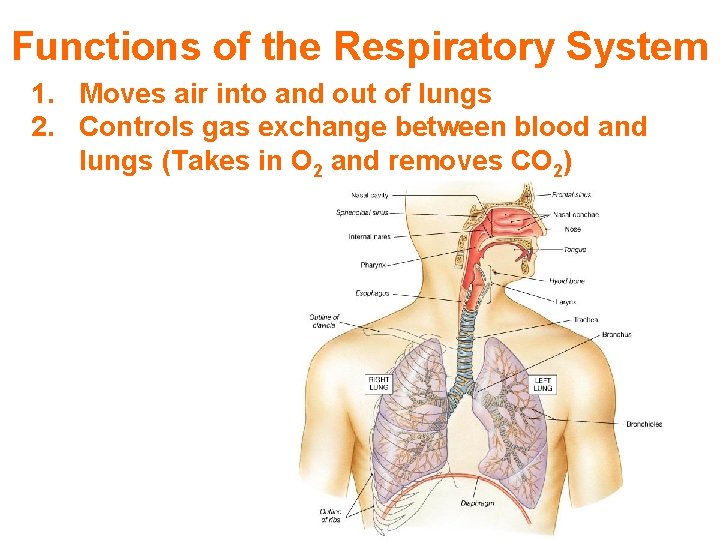
Functions of the Respiratory System 1. Moves air into and out of lungs 2. Controls gas exchange between blood and lungs (Takes in O 2 and removes CO 2)
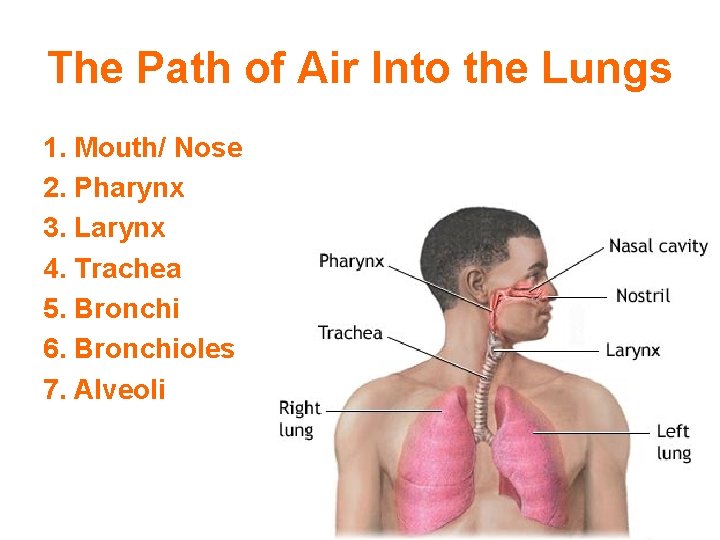
The Path of Air Into the Lungs 1. Mouth/ Nose 2. Pharynx 3. Larynx 4. Trachea 5. Bronchi 6. Bronchioles 7. Alveoli
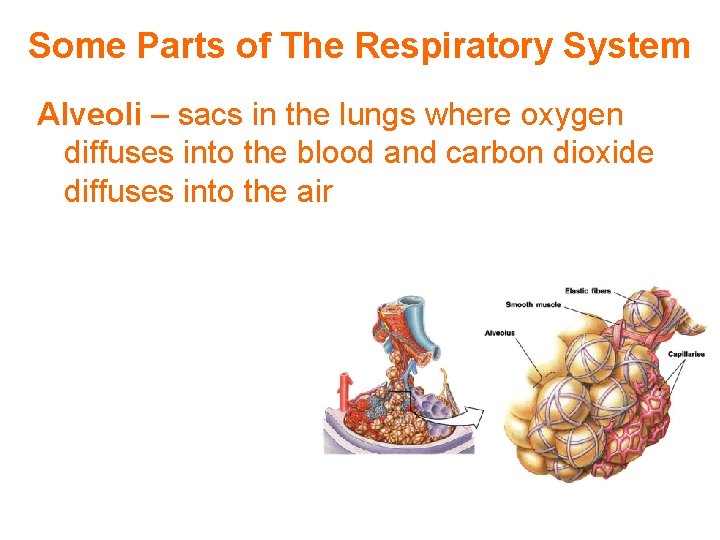
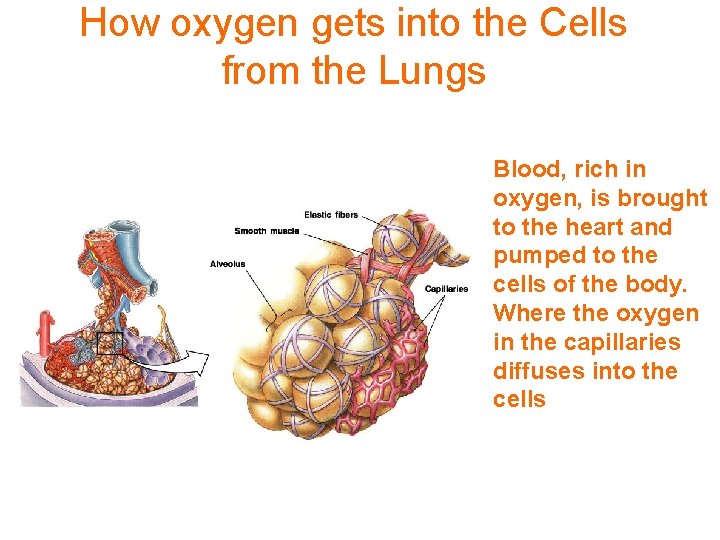
Some Parts of The Respiratory System Alveoli – sacs in the lungs where oxygen diffuses into the blood and carbon dioxide diffuses into the air
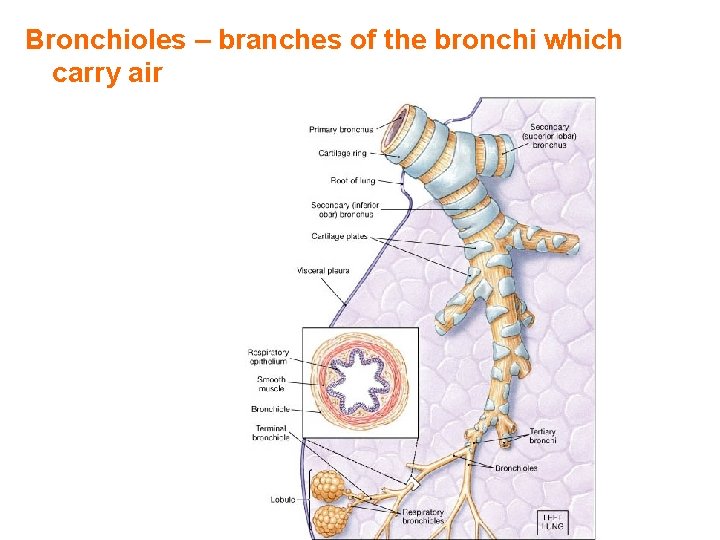
Bronchioles – branches of the bronchi which carry air
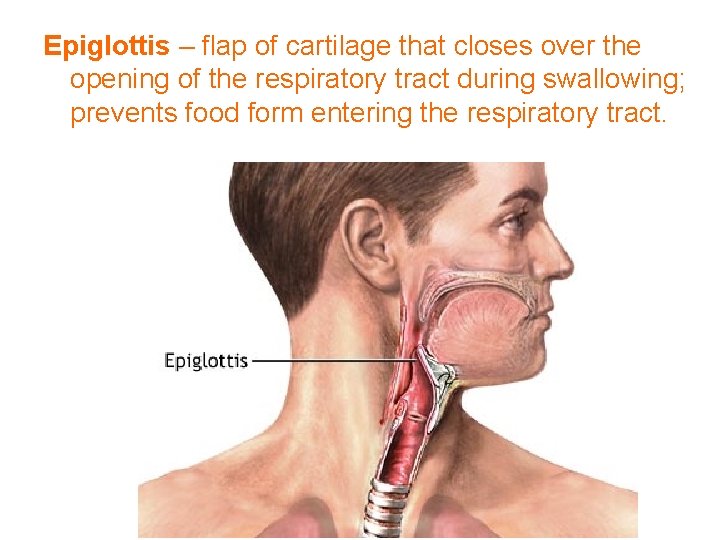
Epiglottis – flap of cartilage that closes over the opening of the respiratory tract during swallowing; prevents food form entering the respiratory tract.
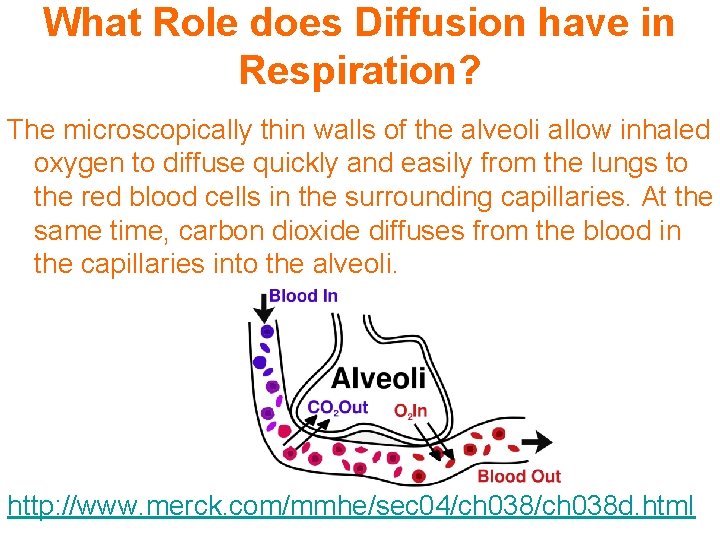
What Role does Diffusion have in Respiration? The microscopically thin walls of the alveoli allow inhaled oxygen to diffuse quickly and easily from the lungs to the red blood cells in the surrounding capillaries. At the same time, carbon dioxide diffuses from the blood in the capillaries into the alveoli. http: //www. merck. com/mmhe/sec 04/ch 038 d. html
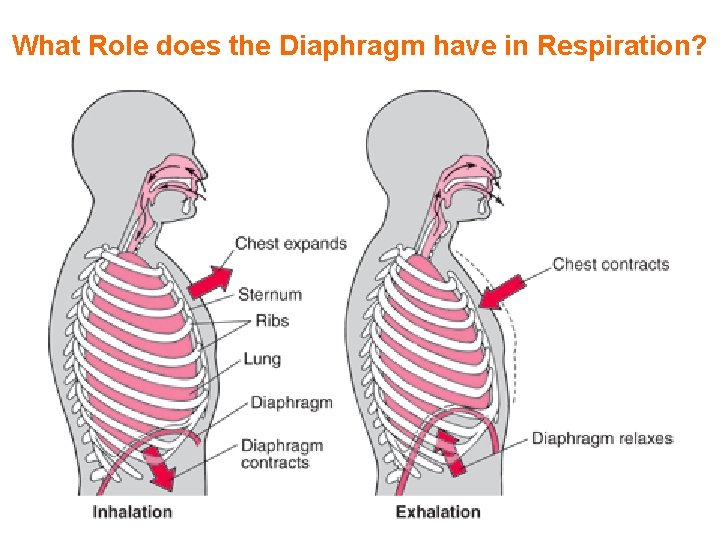
What Role does the Diaphragm have in Respiration?
How oxygen gets into the Cells from the Lungs Blood, rich in oxygen, is brought to the heart and pumped to the cells of the body. Where the oxygen in the capillaries diffuses into the cells
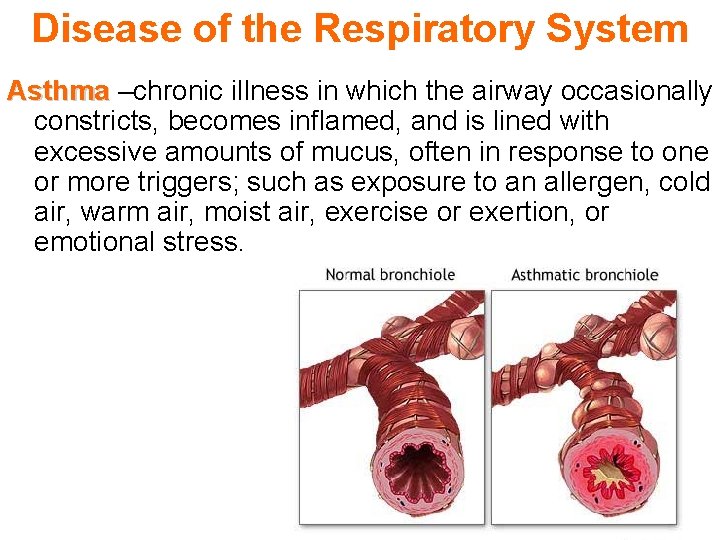
Disease of the Respiratory System Asthma –chronic illness in which the airway occasionally constricts, becomes inflamed, and is lined with excessive amounts of mucus, often in response to one or more triggers; such as exposure to an allergen, cold air, warm air, moist air, exercise or exertion, or emotional stress.
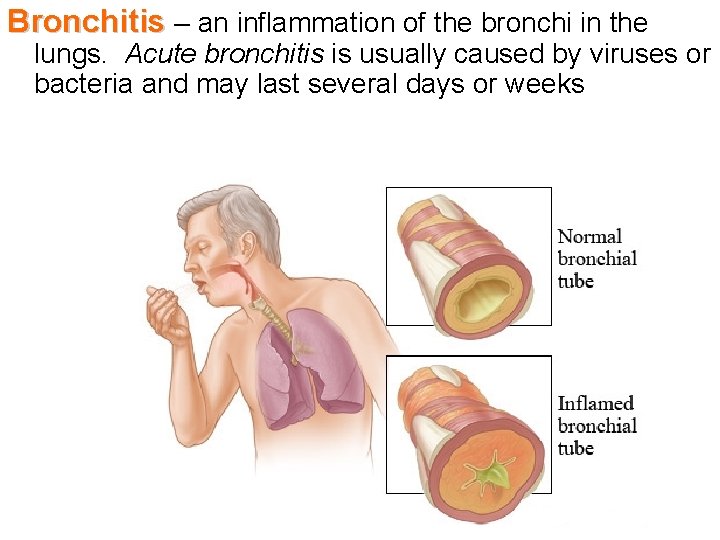
Bronchitis – an inflammation of the bronchi in the lungs. Acute bronchitis is usually caused by viruses or bacteria and may last several days or weeks
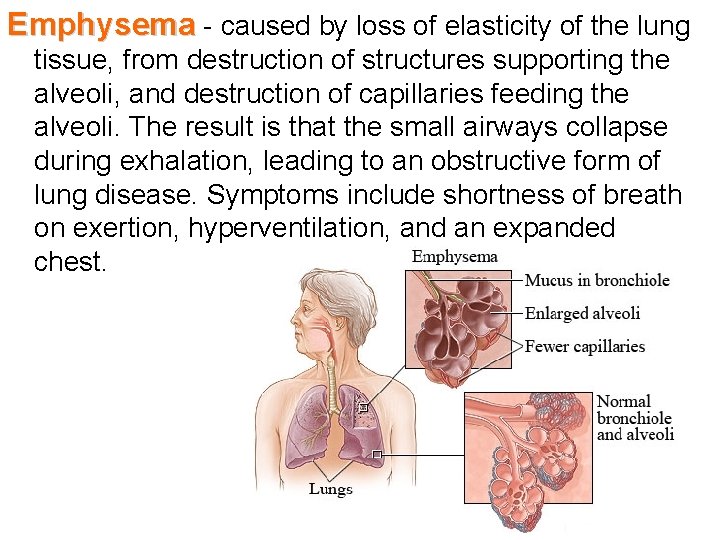
Emphysema - caused by loss of elasticity of the lung tissue, from destruction of structures supporting the alveoli, and destruction of capillaries feeding the alveoli. The result is that the small airways collapse during exhalation, leading to an obstructive form of lung disease. Symptoms include shortness of breath on exertion, hyperventilation, and an expanded chest.