
The RESPIRATORY System Functions of the Respiratory System
- Slides: 39
The RESPIRATORY System
Functions of the Respiratory System • Provides structures and mechanisms for gas exchange – Intake of O 2 – Elimination of CO 2 • Helps maintains body’s p. H
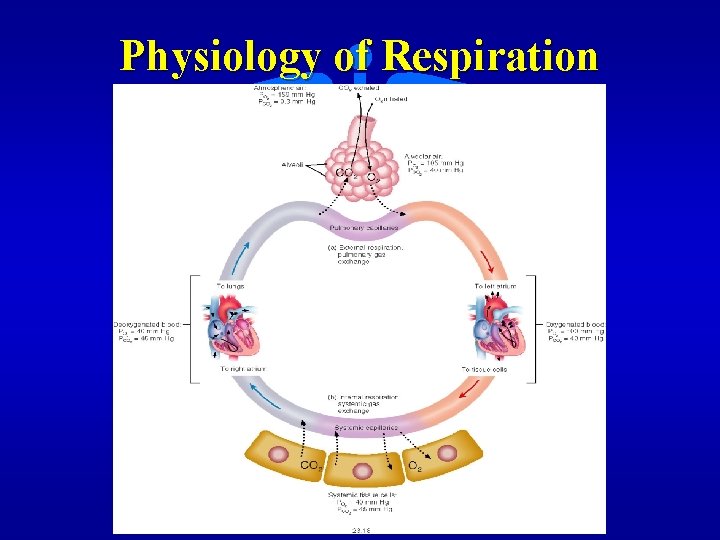
Respiration • • The exchange of gases between the atmosphere, blood, and cells Pulmonary Ventilation - the exchange of air between the atmosphere and lungs External (Pulmonary) Respiration - gas exchange between the lungs and blood Internal (Tissue) Respiration - gas exchange between the blood and cells
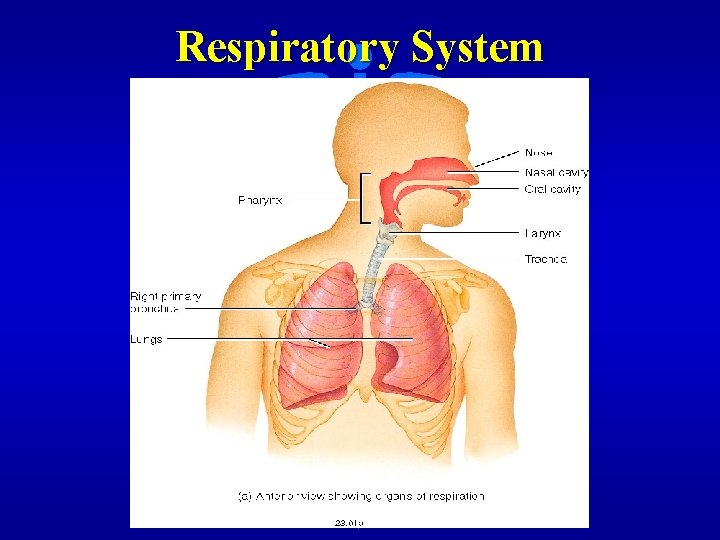
Organs of the Respiratory System • • • Nose Pharynx Larynx Trachea Bronchi Lungs
Respiratory System
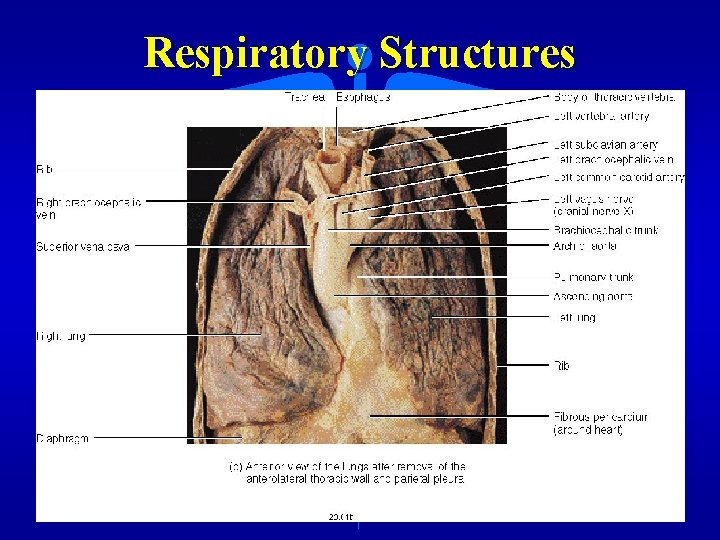
Respiratory Structures
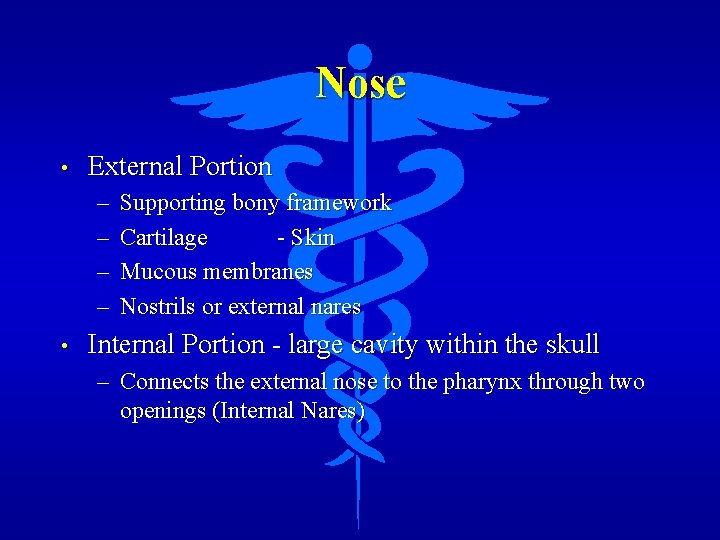
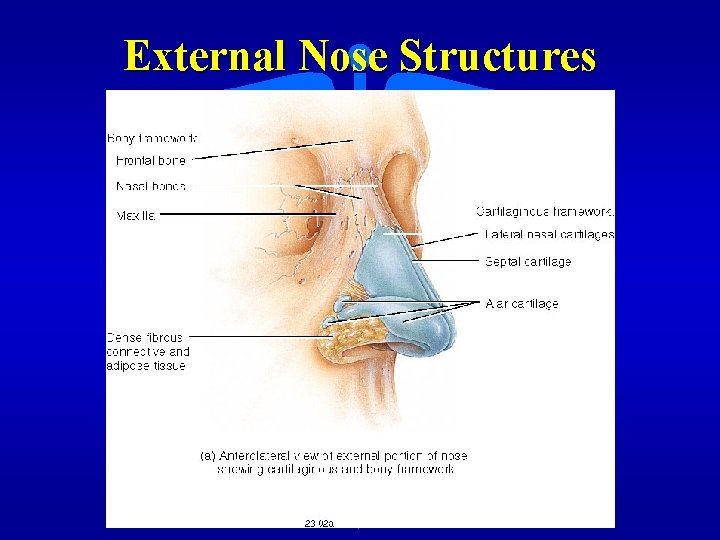
Nose • External Portion – – • Supporting bony framework Cartilage - Skin Mucous membranes Nostrils or external nares Internal Portion - large cavity within the skull – Connects the external nose to the pharynx through two openings (Internal Nares)
External Nose Structures
Nose • • Nasal Cavity - large cavity that contains both the external and internal nose cavities divided into the right and left sides by the NASAL SEPTUM
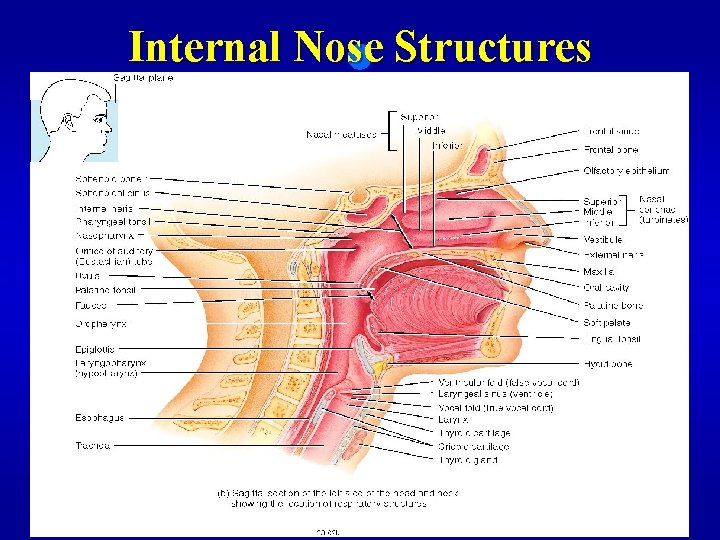
Internal Nose Structures
Functions of the Nose • • • Warming, moisturizing and filtering incoming air Smell (reception of olfactory stimulus) Resonating chamber for speech
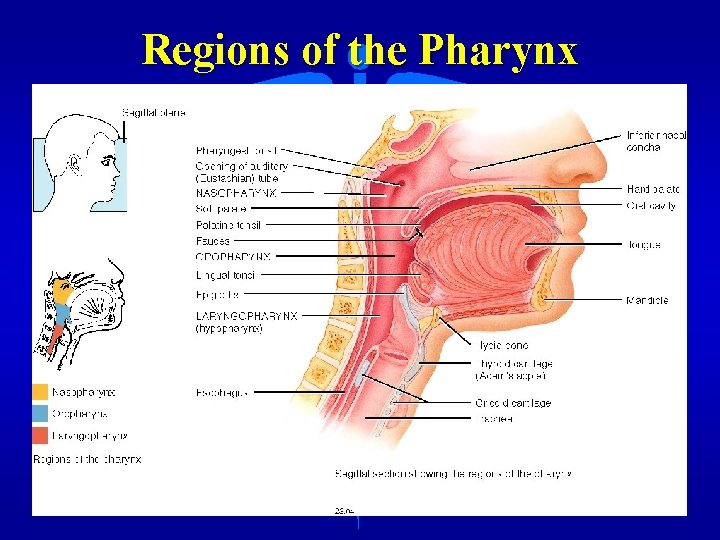
Pharynx • • Funnel-shaped tube about 13 cm long Extends from the internal nares down to the cricoid cartilage of the larynx Walls composed of skeletal muscle lined with a mucous membrane Divided into three areas – – – Nasopharynx Oropharynx Laryngopharynx
Regions of the Pharynx
Functions of the Pharynx • • Passageway for food and air Resonating chamber for speech
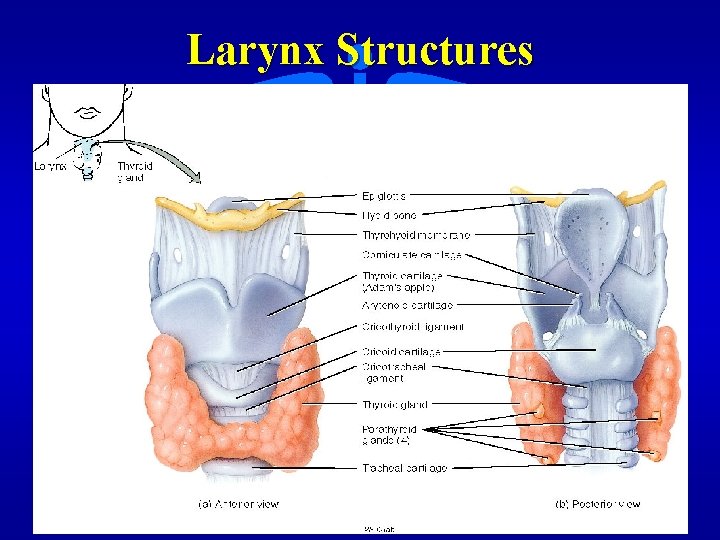
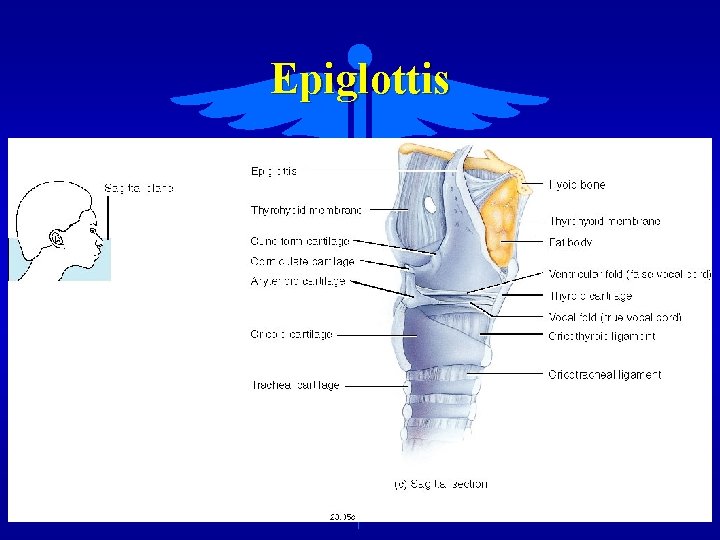
Larynx (Voice Box) • • A short passageway that connects the pharynx with the trachea Walls of the larynx is composed of 9 pieces of cartilage – Three single pieces of cartilage • • • epiglottic cartilage (Epiglottis) thyroid cartilage (Adam’s Apple) cricoid cartilage (attaches the Larynx to the Trachea) – Three paired pieces of cartilage • arytenoid - corniculate - cuneiform
Larynx Structures
Epiglottis • Large leaf-shaped piece of cartilage lying on top of the larynx – The stem of the epiglottic cartilage is attached to the thyroid cartilage • Leaf portion of the cartilage is unattached and acts like a trap door covering the opening to the trachea which is called the glottis. – Dependent upon breathing or swallowing
Epiglottis
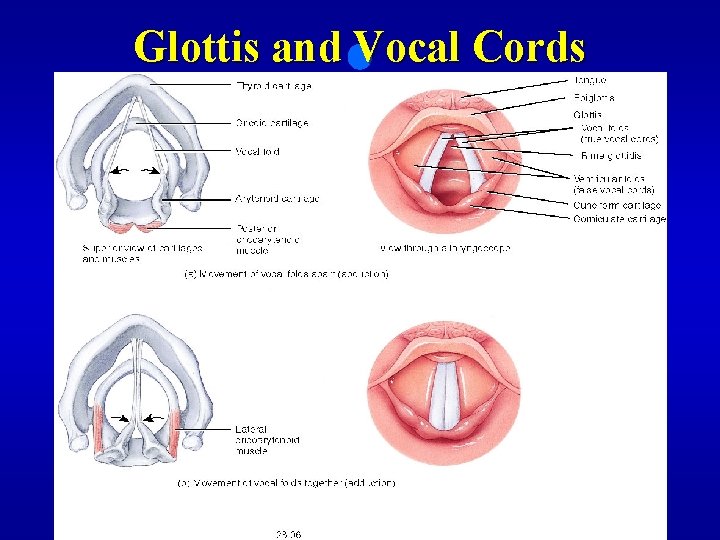
Glottis • The opening from the pharynx to the larynx that contains the vocal cords – Vocal Cords - mucous membrane folds that extend across the glottis in two layers • • • upper layer or folds - false vocal folds lower layer or folds - true vocal folds Sounds originate from vibration of these true vocal cords
Glottis and Vocal Cords
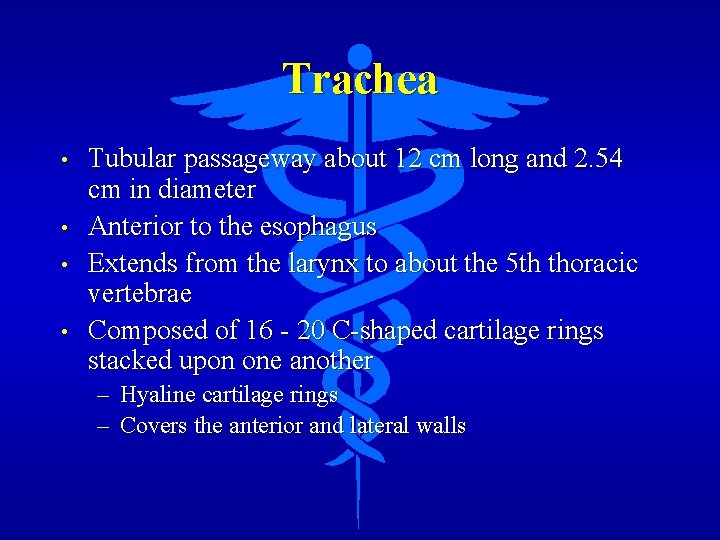
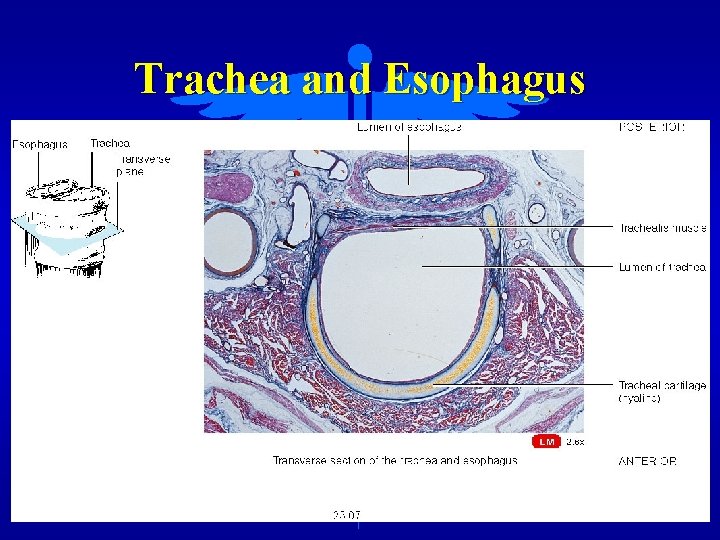
Trachea • • Tubular passageway about 12 cm long and 2. 54 cm in diameter Anterior to the esophagus Extends from the larynx to about the 5 th thoracic vertebrae Composed of 16 - 20 C-shaped cartilage rings stacked upon one another – Hyaline cartilage rings – Covers the anterior and lateral walls
Trachea and Esophagus
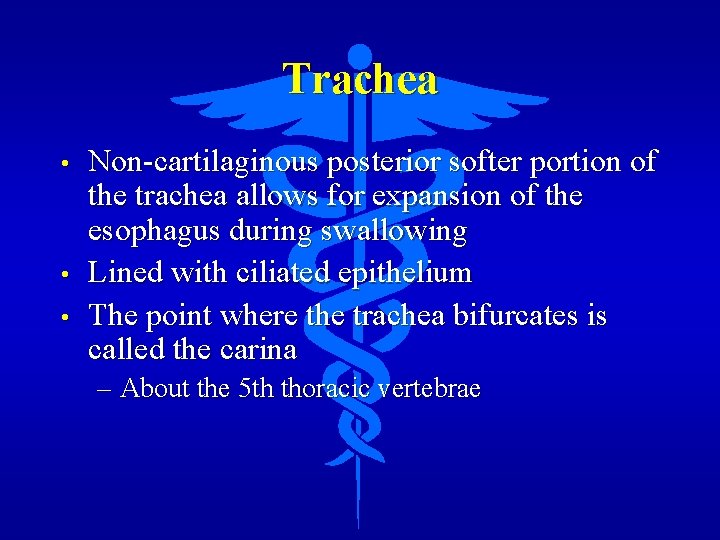
Trachea • • • Non-cartilaginous posterior softer portion of the trachea allows for expansion of the esophagus during swallowing Lined with ciliated epithelium The point where the trachea bifurcates is called the carina – About the 5 th thoracic vertebrae
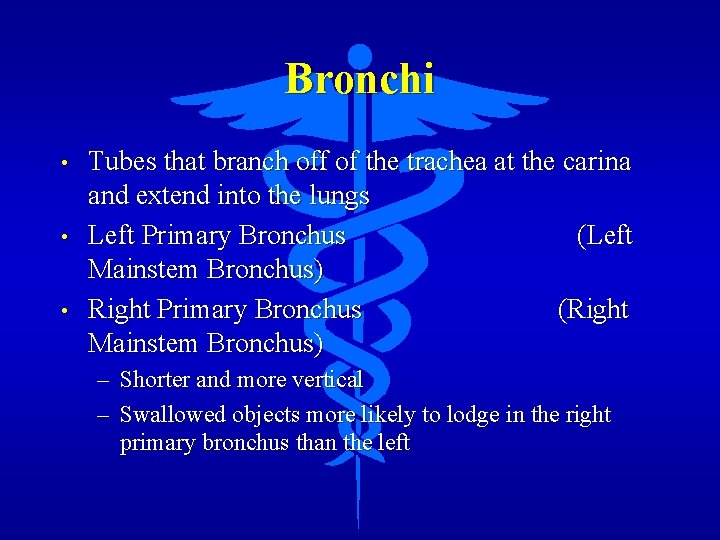
Bronchi • • • Tubes that branch off of the trachea at the carina and extend into the lungs Left Primary Bronchus (Left Mainstem Bronchus) Right Primary Bronchus (Right Mainstem Bronchus) – Shorter and more vertical – Swallowed objects more likely to lodge in the right primary bronchus than the left
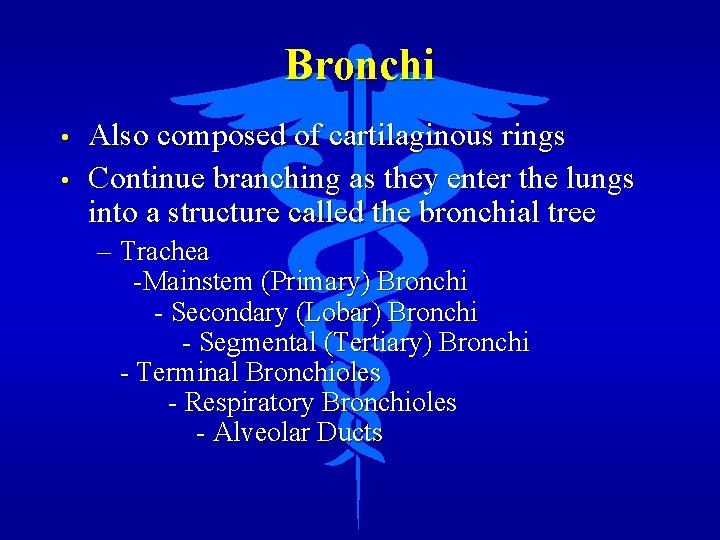
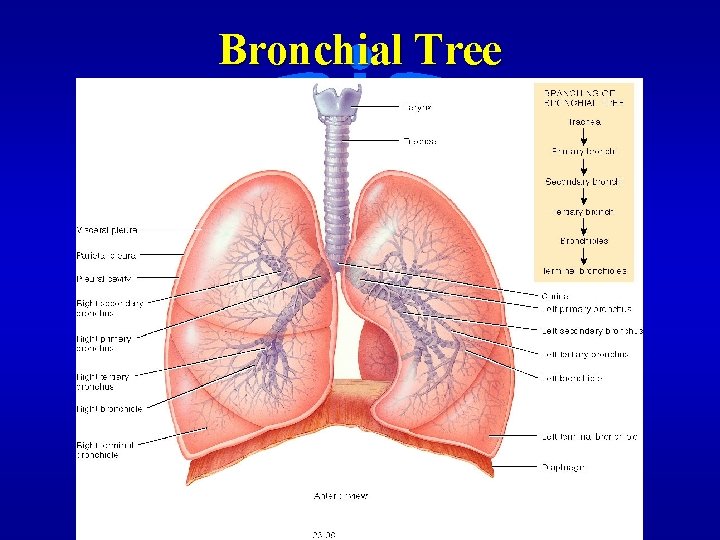
Bronchi • • Also composed of cartilaginous rings Continue branching as they enter the lungs into a structure called the bronchial tree – Trachea -Mainstem (Primary) Bronchi - Secondary (Lobar) Bronchi - Segmental (Tertiary) Bronchi - Terminal Bronchioles - Respiratory Bronchioles - Alveolar Ducts
Bronchial Tree
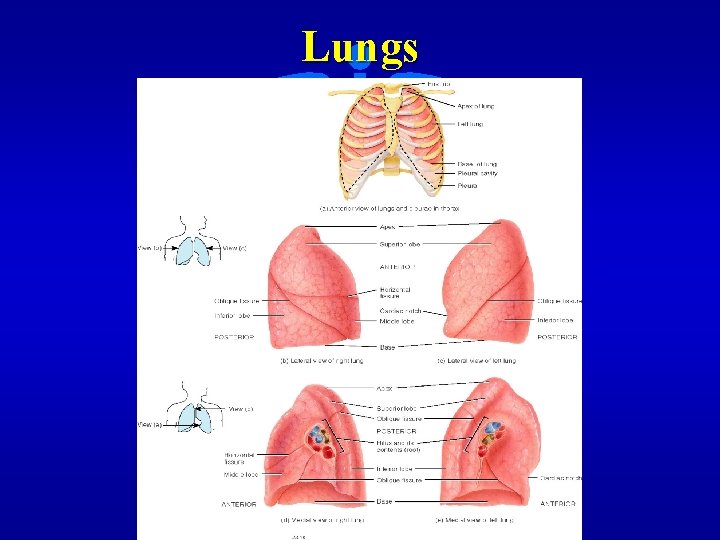
Lungs • • • Paired - cone shaped organs that occupy most of the thoracic cavity Separated from each other by the heart and other structures of the mediastinum Surrounded by a double layered serous membrane called the pleural membrane
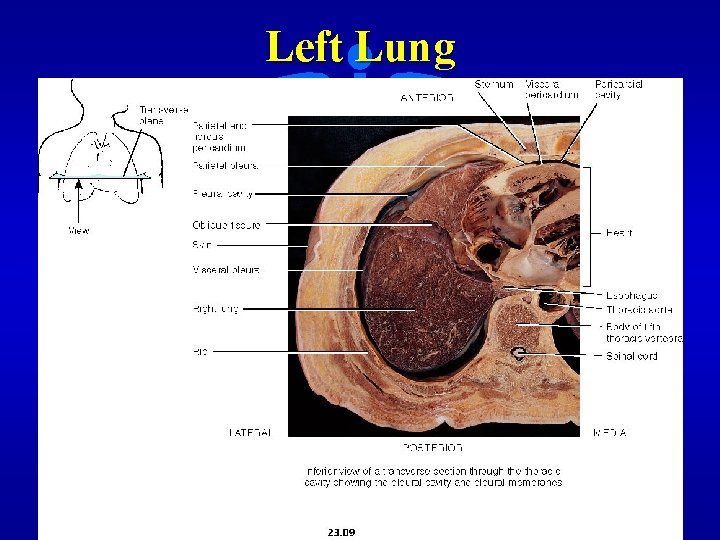
Left Lung
Pleural Membrane • Parietal Pleura - outer layer of the pleural membrane – Attached to the thoracic wall • Visceral Pleura - inner layer of the pleural membrane – Attached to the lungs themselves • Between the parietal pleura and the visceral pleura is a potential space called the pleural cavity – Contains pleural (serous) fluid (reduces friction)
Lungs
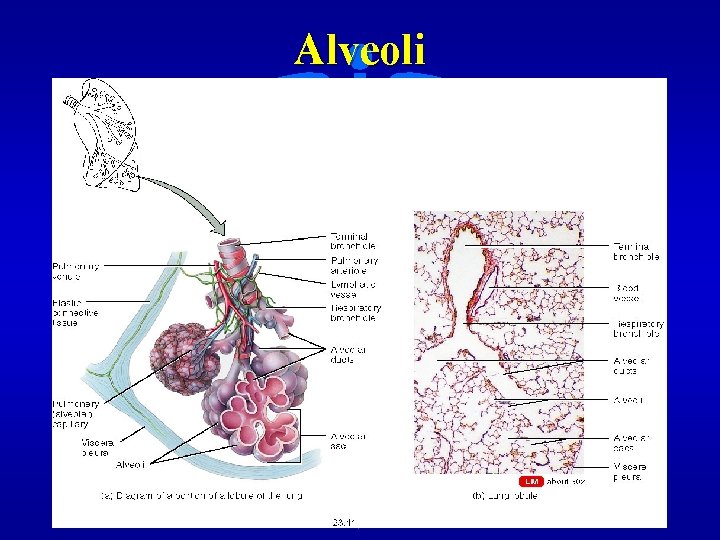
Alveoli • • • A cup shaped out pouching of epithelial tissue Place where external respiration occurs (gas exchange between the lungs and the blood) Lungs contain 300 - 500 million alveoli – Surface area of about 750 sq. ft. – The size of a Tennis Court
Alveoli
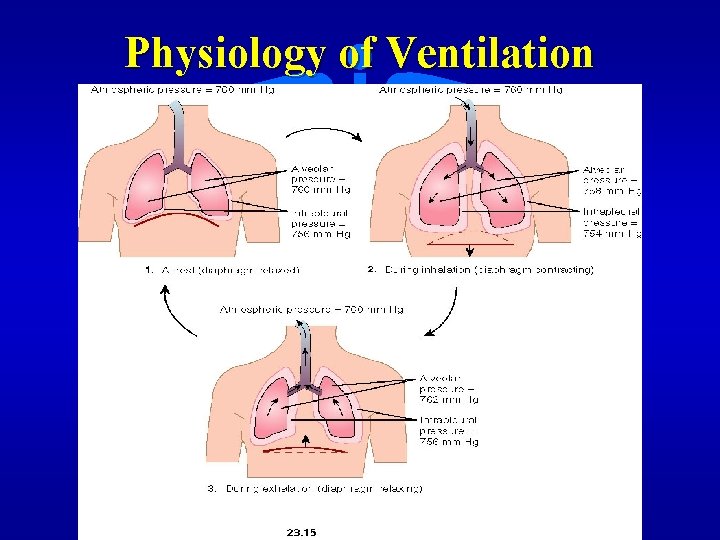
Physiology of Ventilation • • • Ventilation - the process of inhaling and exhaling air in and out of the lungs Pulmonary Ventilation - the process by which air flows between the lungs and the external environment Due to a change in pressure between the atmosphere and the air in the lungs
Physiology of Ventilation
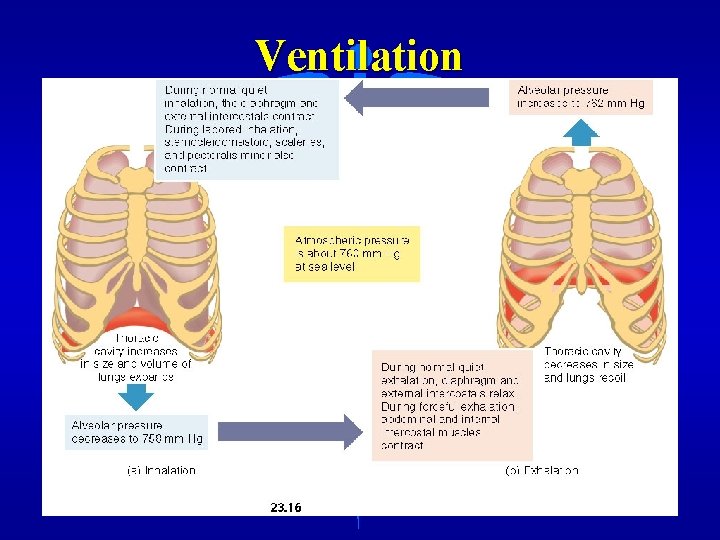
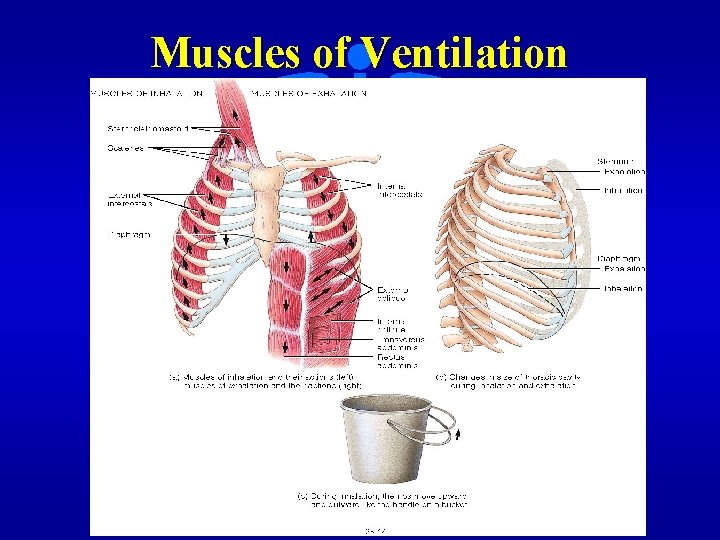
Inspiration (Inhalation) • • Bringing air into the lungs from the external environment The lungs themselves contain no muscles and thus depend upon the relationship with the muscles of the walls of the thoracic cavity to alter lung volumes
Ventilation
Muscles of Ventilation
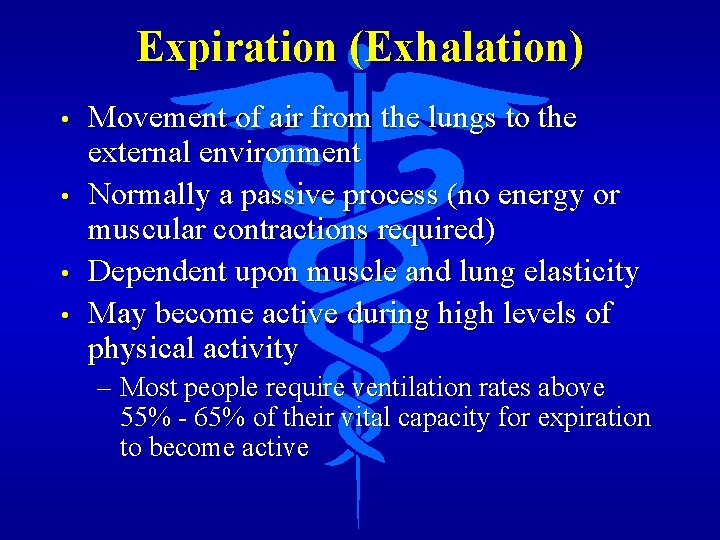
Expiration (Exhalation) • • Movement of air from the lungs to the external environment Normally a passive process (no energy or muscular contractions required) Dependent upon muscle and lung elasticity May become active during high levels of physical activity – Most people require ventilation rates above 55% - 65% of their vital capacity for expiration to become active
Physiology of Respiration