
The Respiratory System Functions of Respiratory System Pulmonary

- Slides: 38
The Respiratory System
Functions of Respiratory System Pulmonary Ventilation- air moved into and out of lungs External Respiration- Diffusion of oxygen from lungs to blood Internal Respiration- Oxygen diffusion from blood to tissues Transport of respiratory gases Relies of cardiovascular for the last 2
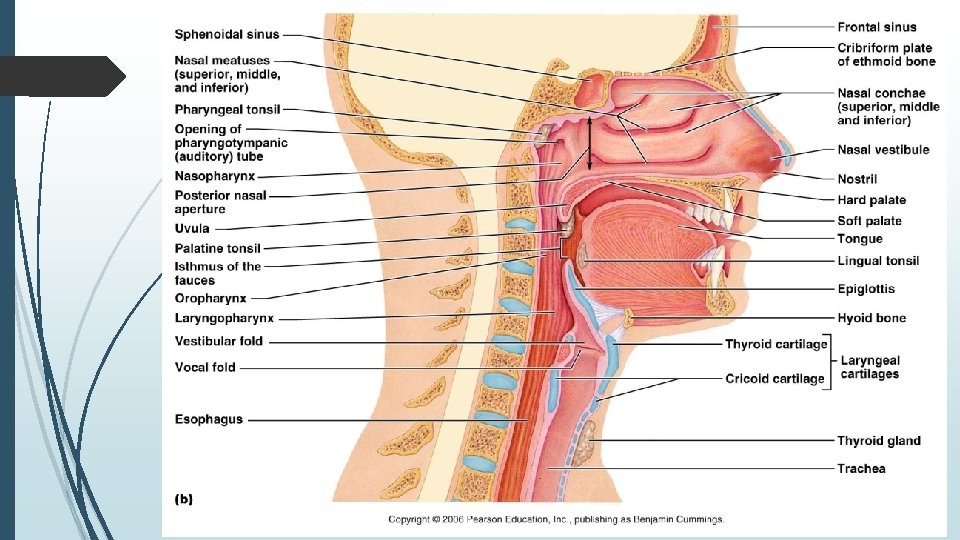
Anatomy of Respiratory system Conducting zone- no gas exchange. Rigid tubes. Respiratory zone- gas exchange. Resp. bronchioles, alveoli Nose Moistens and warms air Filters and cleans inspired air Resonating chamber for speech Sense of smell
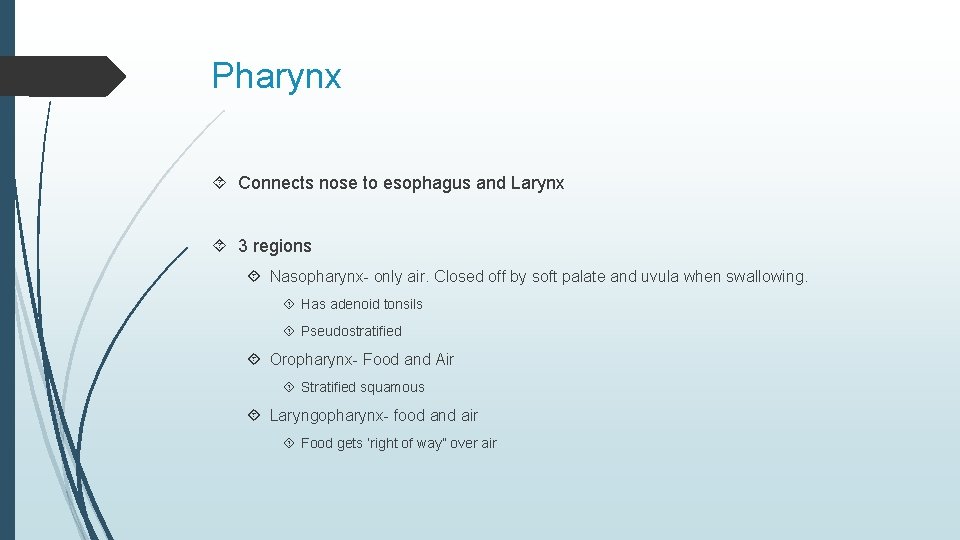
Pharynx Connects nose to esophagus and Larynx 3 regions Nasopharynx- only air. Closed off by soft palate and uvula when swallowing. Has adenoid tonsils Pseudostratified Oropharynx- Food and Air Stratified squamous Laryngopharynx- food and air Food gets ‘right of way” over air
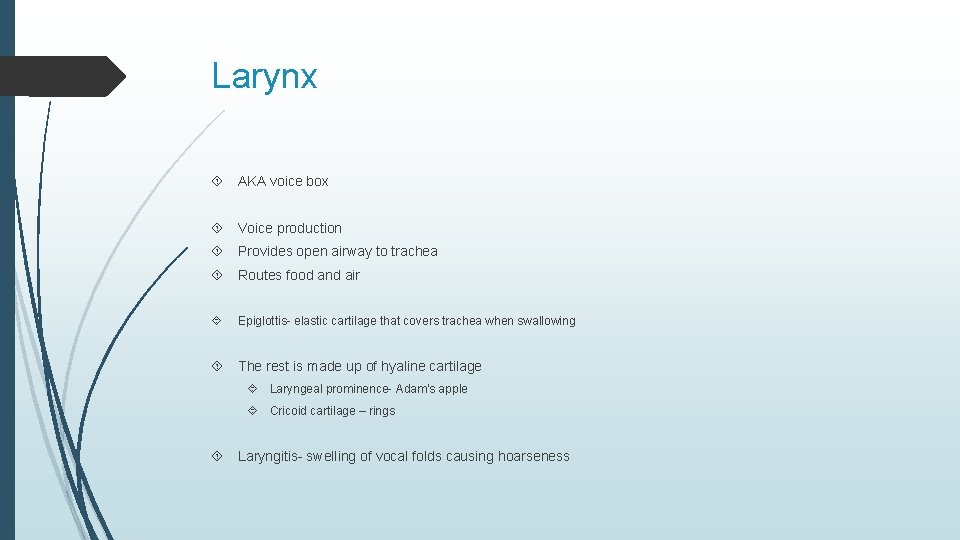
Larynx AKA voice box Voice production Provides open airway to trachea Routes food and air Epiglottis- elastic cartilage that covers trachea when swallowing The rest is made up of hyaline cartilage Laryngeal prominence- Adam's apple Cricoid cartilage – rings Laryngitis- swelling of vocal folds causing hoarseness
Trachea AKA: Windpipe Ends by dividing into two primary bronchi Covered with pseudo. Epithelium Smoking destroys the cilia Coughing is the only way to remove mucus in the absence of cilia Smokers should not try to stop the coughing bc of this
Upper Respiratory Endoscopy https: //www. youtube. com/watch? v=Z 6 z. Rxr. BE 3 ws
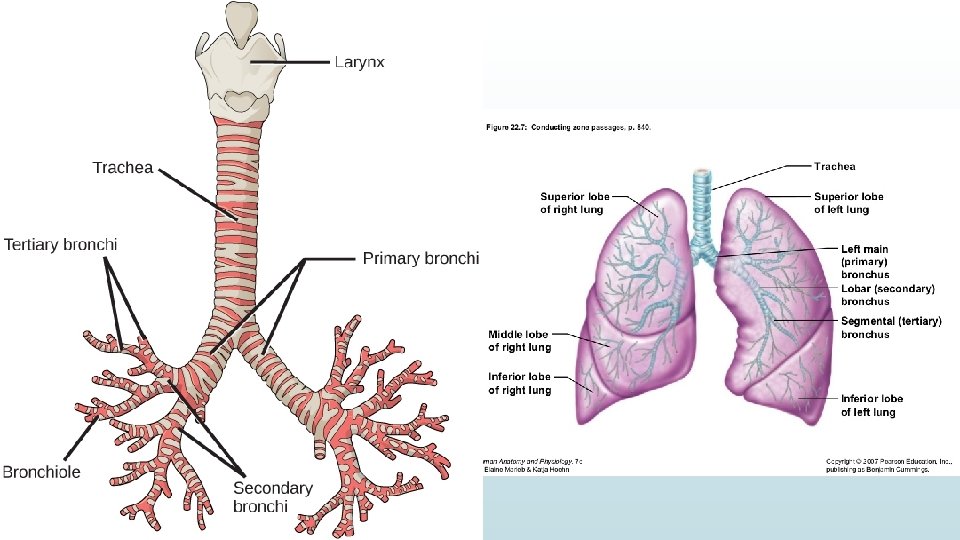
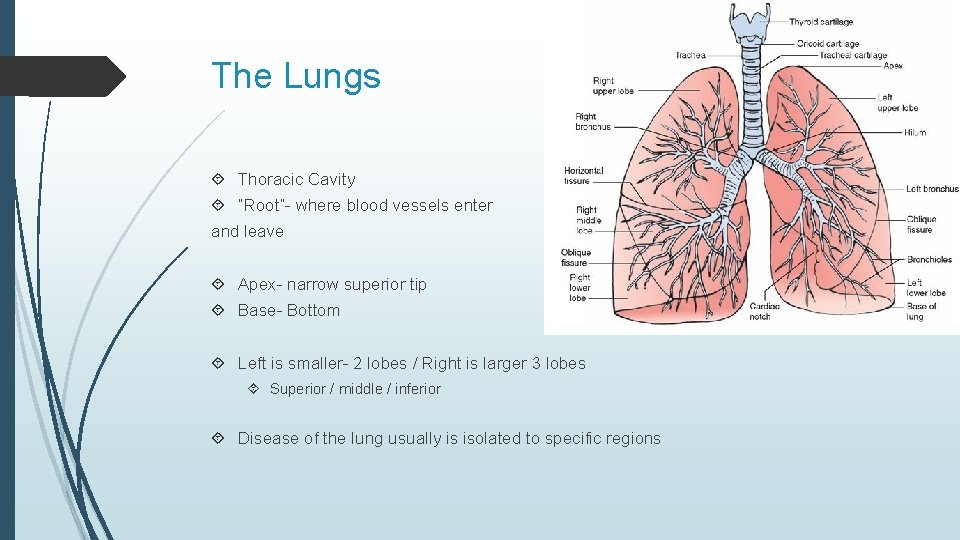
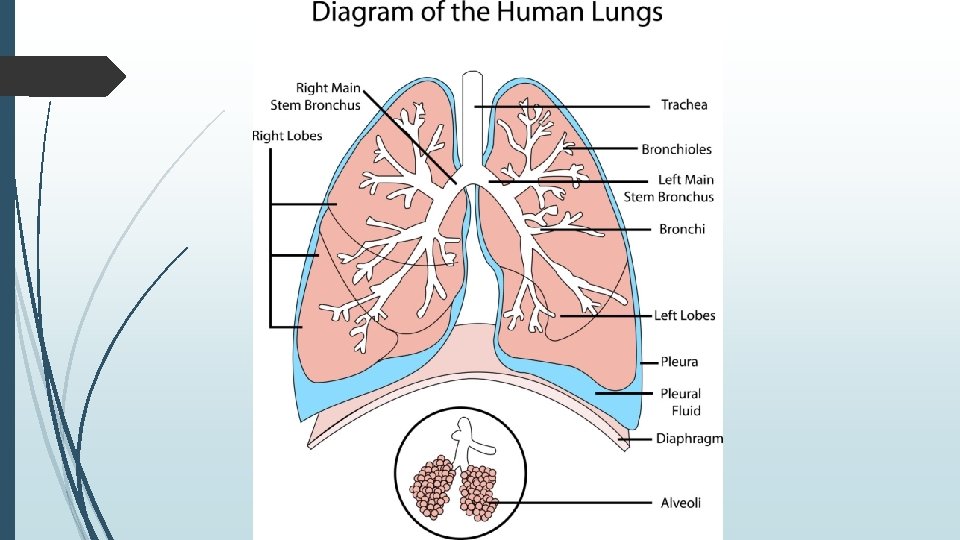
The Lungs Thoracic Cavity “Root”- where blood vessels enter and leave Apex- narrow superior tip Base- Bottom Left is smaller- 2 lobes / Right is larger 3 lobes Superior / middle / inferior Disease of the lung usually is isolated to specific regions
Pleura Double layer serous membrane Parietal pleura- covers thoracic wall and diaphragm Visceral Pleura- cover external lung Pleural Cavity between them Pleural fluid to lubricate movement Pleurisy- inflammation often from pneumonia. Becomes rough Stabbing pain with each breath Pleural effusion- buildup of fluid in lungs
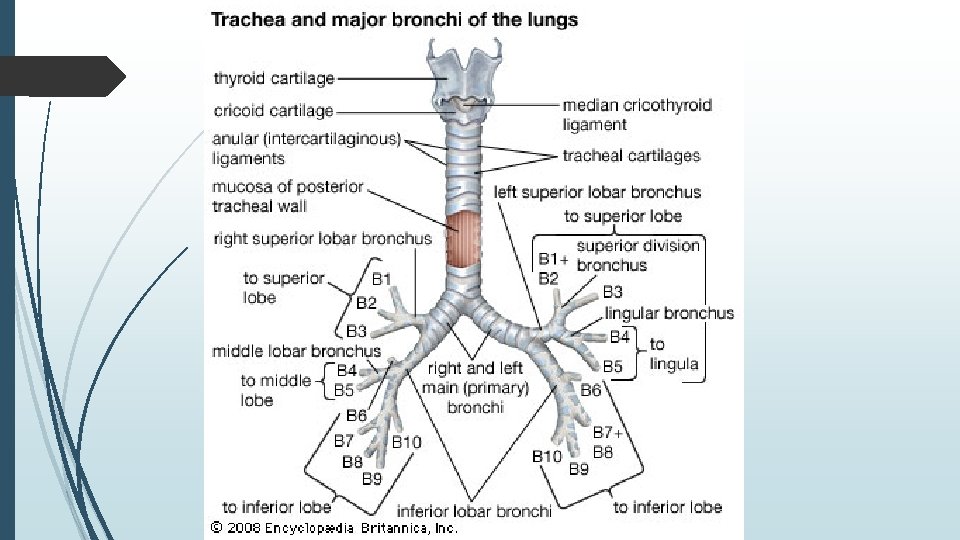
Bronchi Right and left Primary bronchus – enter lung at hilum. - secondary, tertiary No gas exchange As you go inferior; cartilage decreases and smooth muscle increases When no longer have cartilage, they are called bronchioles.
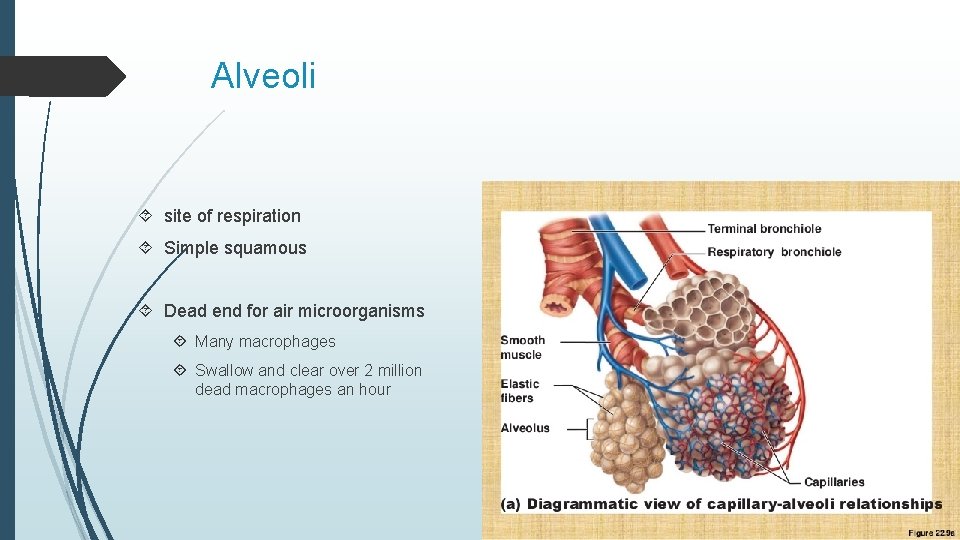
Alveoli site of respiration Simple squamous Dead end for air microorganisms Many macrophages Swallow and clear over 2 million dead macrophages an hour
11/28
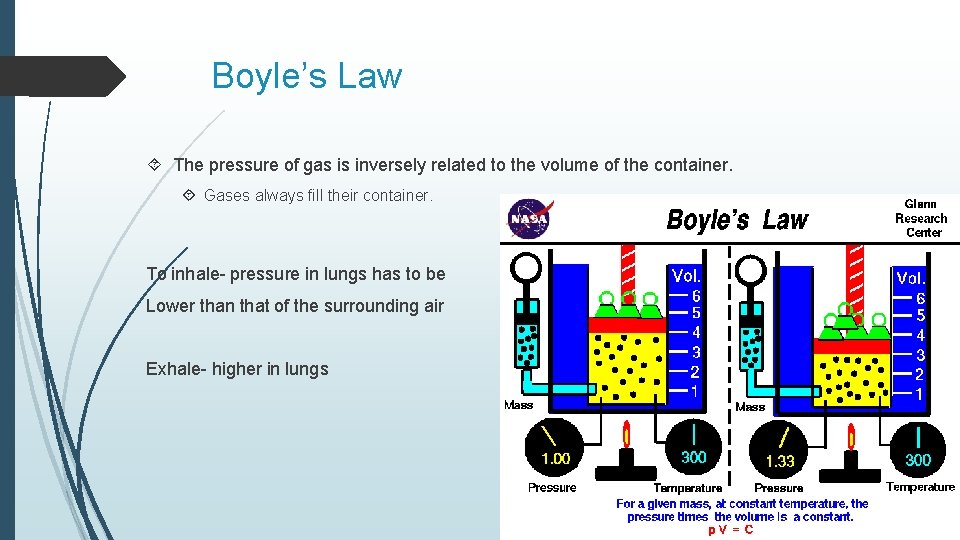
Boyle’s Law The pressure of gas is inversely related to the volume of the container. Gases always fill their container. To inhale- pressure in lungs has to be Lower than that of the surrounding air Exhale- higher in lungs
Alveoli Have cells to produce surfactant- decreases Water liked to bond to itself, which would close up the alveoli Keeps the alveoli open to allow gas exchange Premature babies have issues with this- 2 months premature
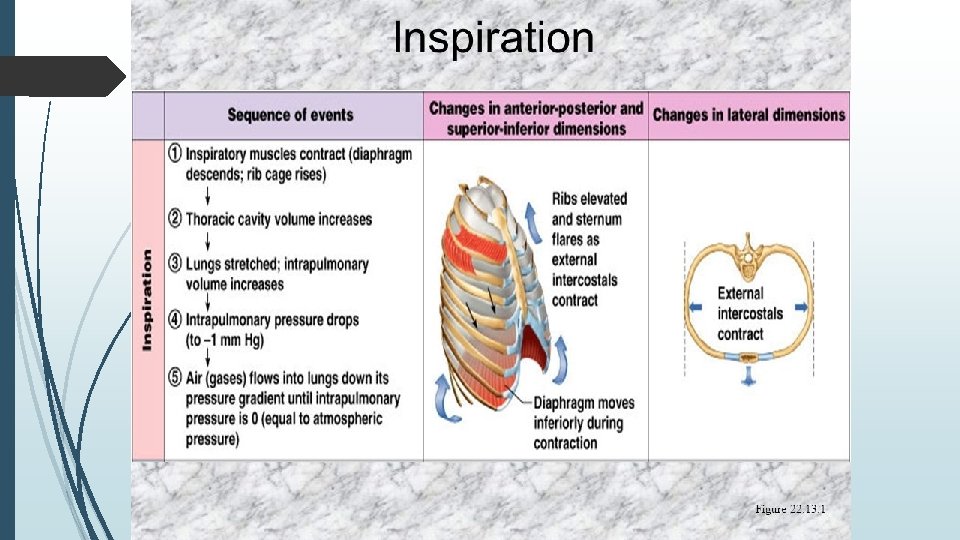
Inspiration
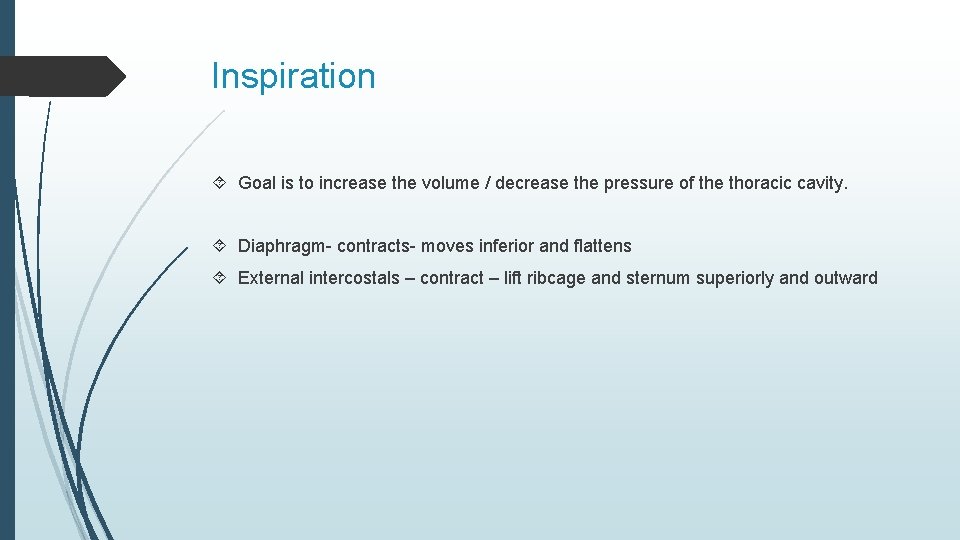
Inspiration Goal is to increase the volume / decrease the pressure of the thoracic cavity. Diaphragm- contracts- moves inferior and flattens External intercostals – contract – lift ribcage and sternum superiorly and outward
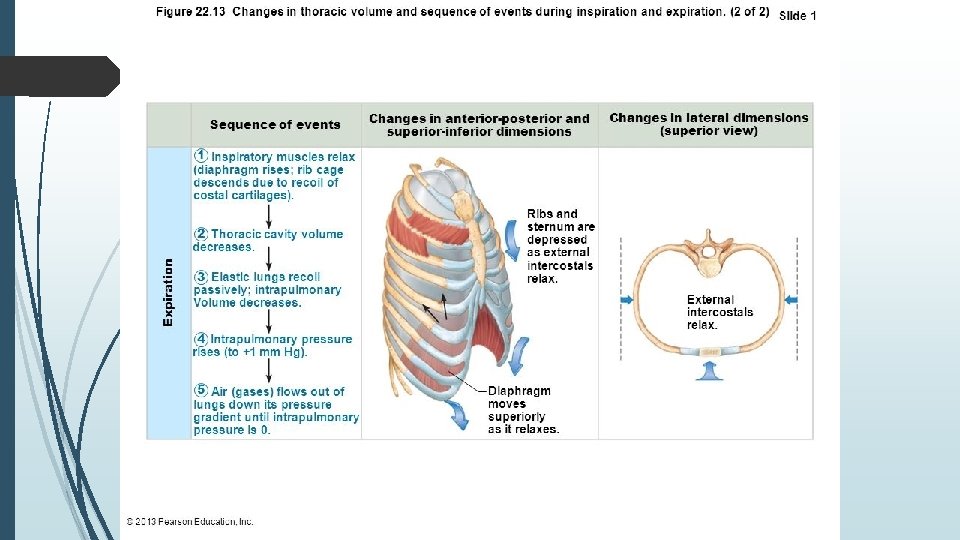
Expiration
Expiration Usually a passive process- no muscle contraction required. Relies on lung elasticity External intercostals and diaphragm relax. Decrease volume / increase pressure of thoracic cavity Forced expiration- relies of contraction of: Abdominal muscles (obliques) to force abdominal organ superior against the diaphragm Internal intercostals- depress ribcage
Why harder to breathe at high altitude?
Breath sounds https: //www. youtube. com/watch? v=O 8 OC 7 Eiq. BKQ&t=6 s
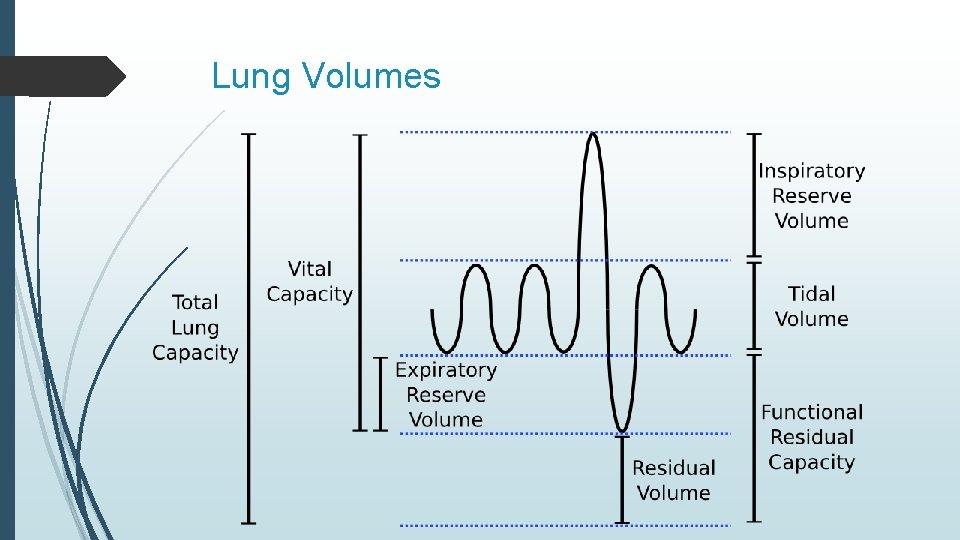
Lung Volumes
Lung Volume Practice
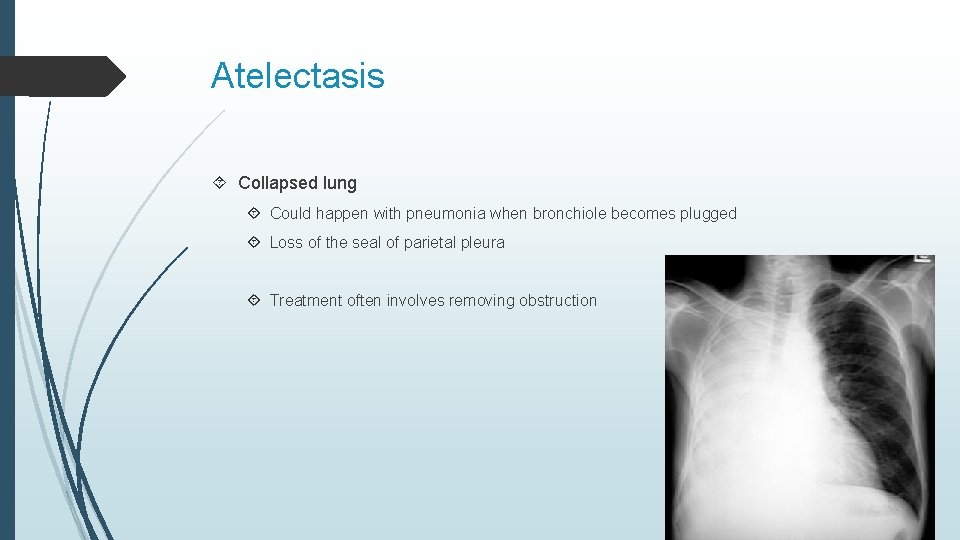
Atelectasis Collapsed lung Could happen with pneumonia when bronchiole becomes plugged Loss of the seal of parietal pleura Treatment often involves removing obstruction
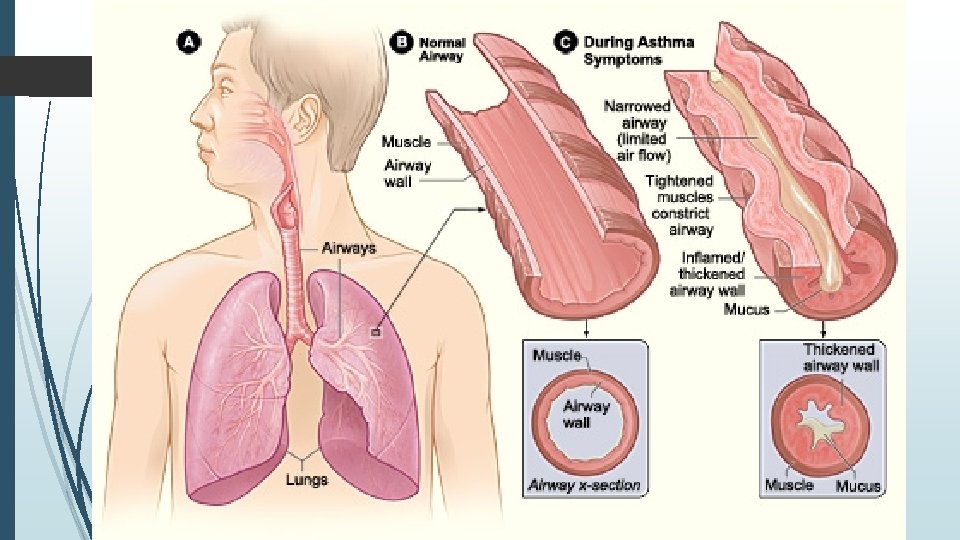
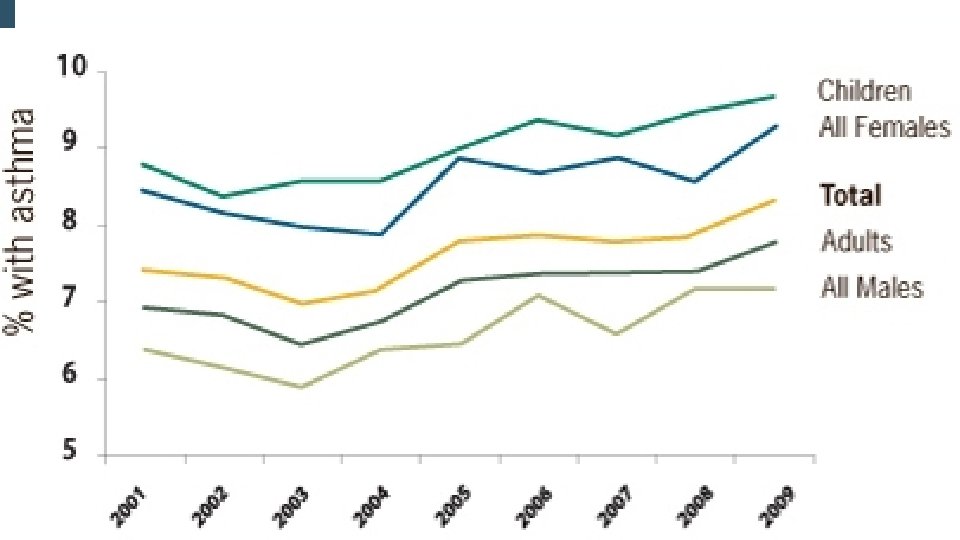
Asthma Episodic coughing, chest tightness, wheezing, difficulty breathing. Reversible obstruction Hard to determine cause Initially thought to be bronchospasm triggered by allergens, cold air or exercise Bronchospasm has been shown to have little impact though. Thought to be allergic response caused by inflammation Once sensitized, bronchospasm has even greater impact 1 of 10 have it, increasing rapidly Treatments focus on corticosteroids to decrease underlying inflammation instead of fast acting bronchodilators of past.
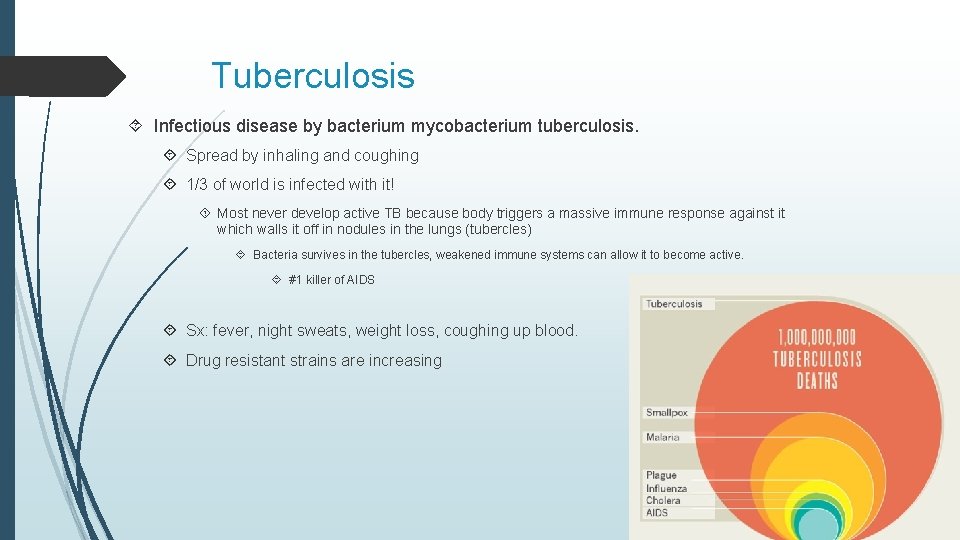
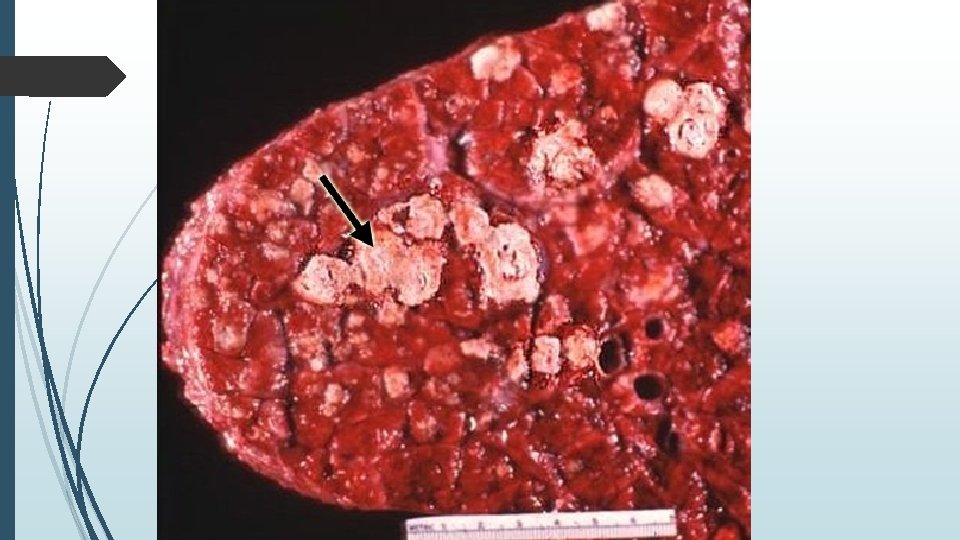
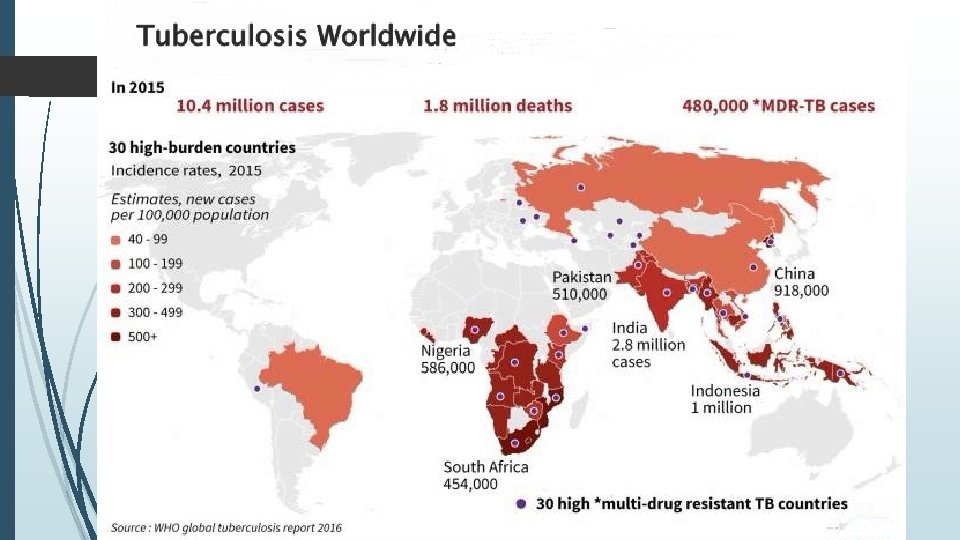
Tuberculosis Infectious disease by bacterium mycobacterium tuberculosis. Spread by inhaling and coughing 1/3 of world is infected with it! Most never develop active TB because body triggers a massive immune response against it which walls it off in nodules in the lungs (tubercles) Bacteria survives in the tubercles, weakened immune systems can allow it to become active. #1 killer of AIDS Sx: fever, night sweats, weight loss, coughing up blood. Drug resistant strains are increasing
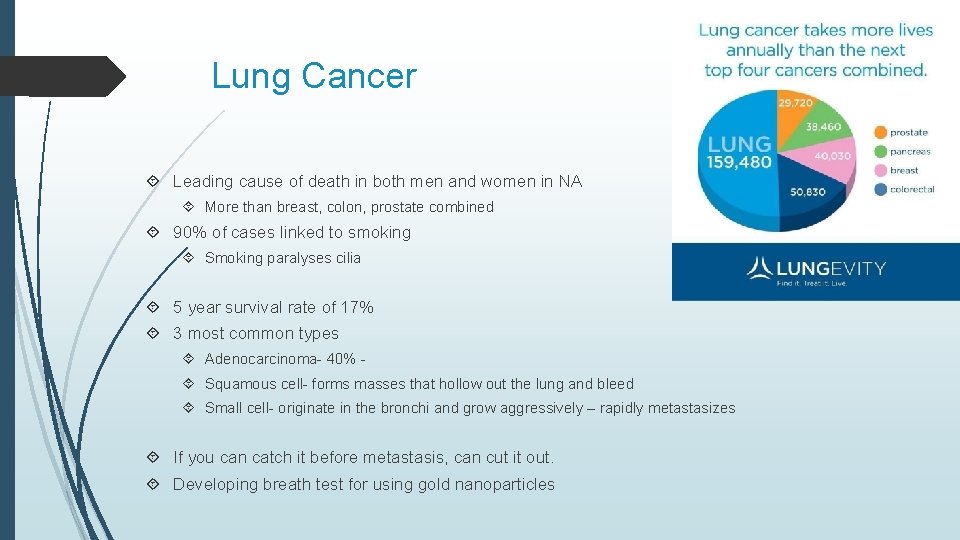
Lung Cancer Leading cause of death in both men and women in NA More than breast, colon, prostate combined 90% of cases linked to smoking Smoking paralyses cilia 5 year survival rate of 17% 3 most common types Adenocarcinoma- 40% Squamous cell- forms masses that hollow out the lung and bleed Small cell- originate in the bronchi and grow aggressively – rapidly metastasizes If you can catch it before metastasis, can cut it out. Developing breath test for using gold nanoparticles
Smoker versus normal lung https: //www. youtube. com/watch? v=e. GNiw. CXHYJo
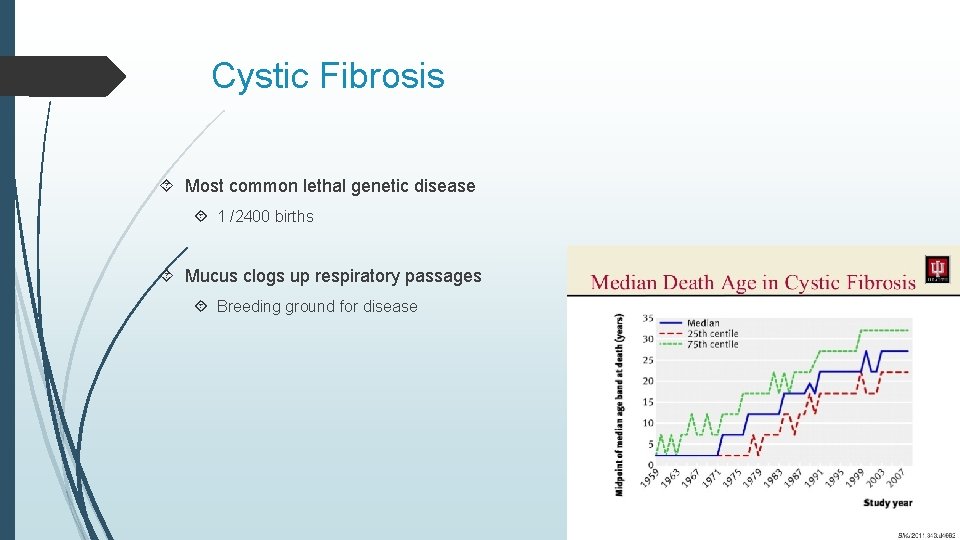
Cystic Fibrosis Most common lethal genetic disease 1 /2400 births Mucus clogs up respiratory passages Breeding ground for disease
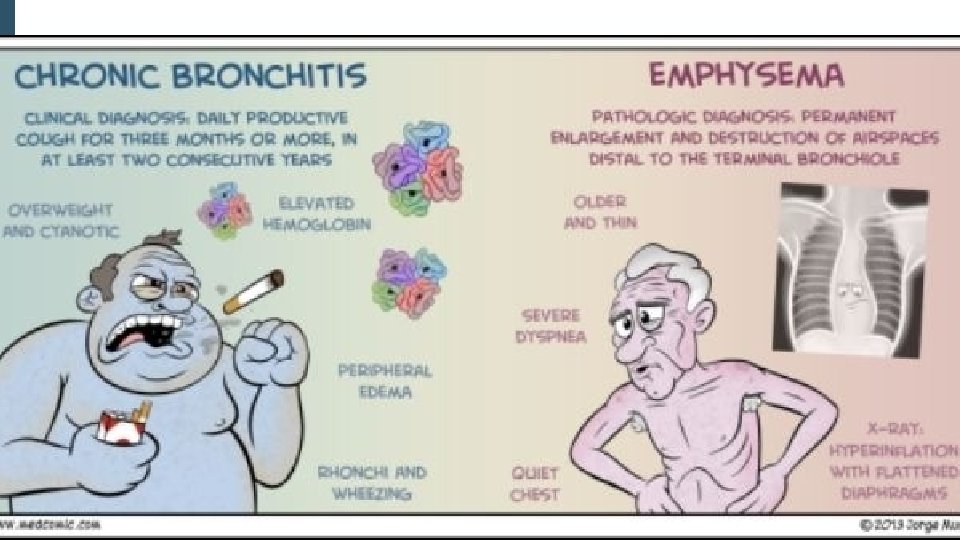
COPD- Chronic Obstructive Pulmonary Disease Emphysema- permanent enlargement of alveoli and destruction of alveoli walls. Barrel chested. Chronic Bronchitis- inflammation of lower respiratory tract which causes the body to form fibrosis, impacting lung function SX: both are irreversible decrease in ability to breathe air out. 80% were smokers/ Dyspnea (labored breathing) / coughing / hypoventilation