
The RESPIRATORY System Functions of Respiratory System Creating

- Slides: 20
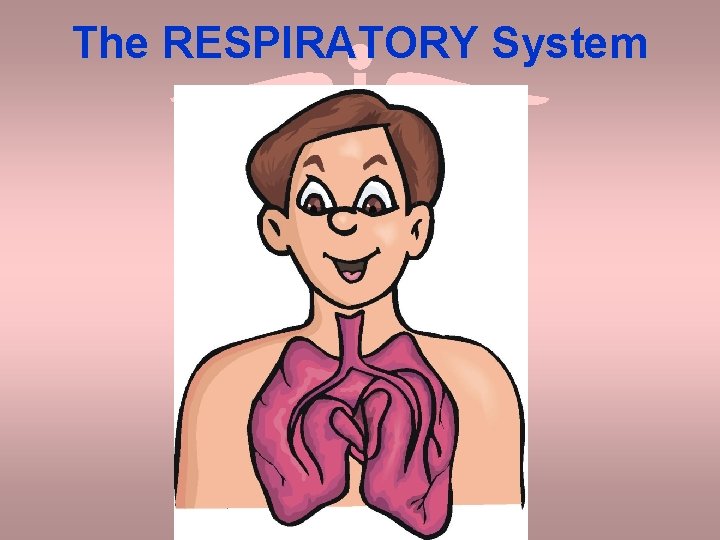
The RESPIRATORY System
Functions of Respiratory System Creating voice (singing, talking, etc. ) Gas exchange p. H Fighting infection
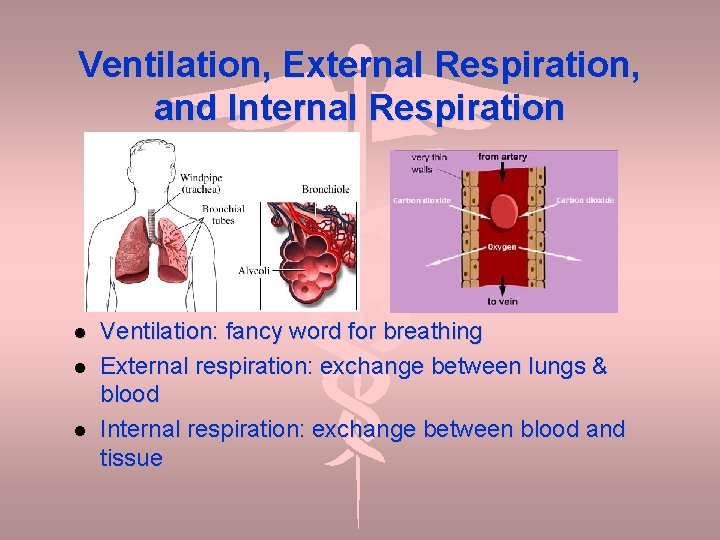
Ventilation, External Respiration, and Internal Respiration Ventilation: fancy word for breathing External respiration: exchange between lungs & blood Internal respiration: exchange between blood and tissue
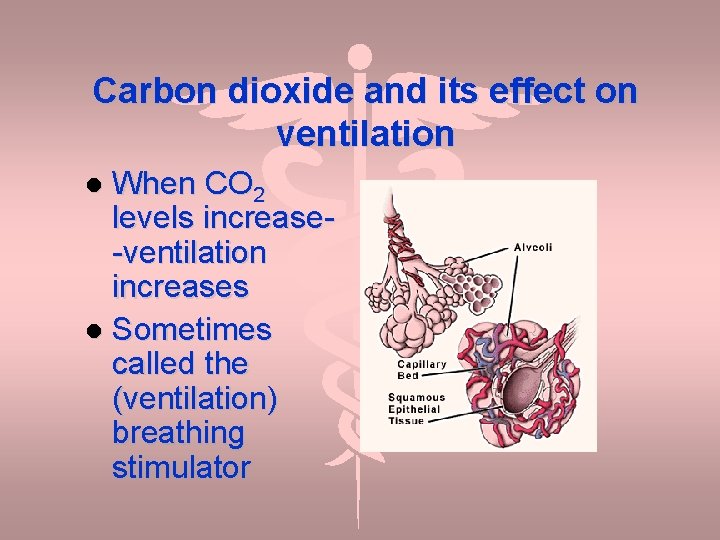
Carbon dioxide and its effect on ventilation When CO 2 levels increase-ventilation increases Sometimes called the (ventilation) breathing stimulator
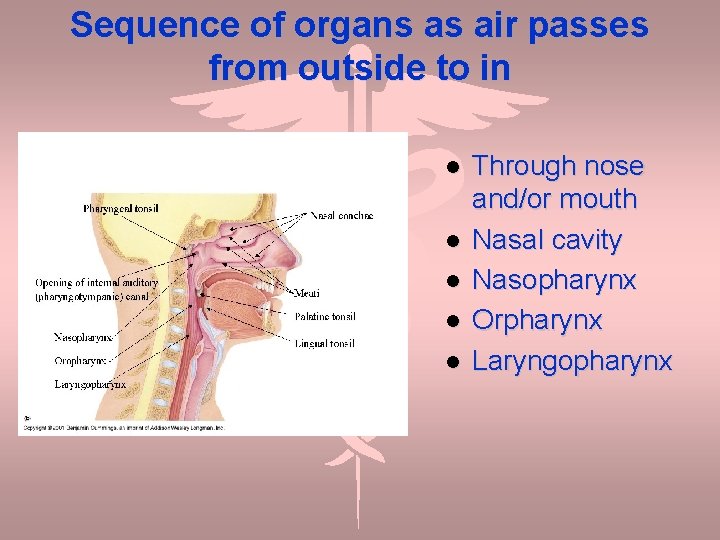
Sequence of organs as air passes from outside to in Through nose and/or mouth Nasal cavity Nasopharynx Orpharynx Laryngopharynx
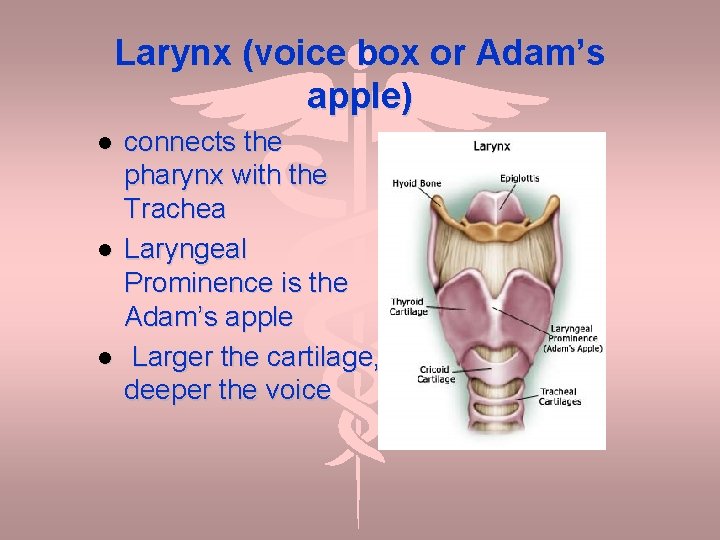
Larynx (voice box or Adam’s apple) connects the pharynx with the Trachea Laryngeal Prominence is the Adam’s apple Larger the cartilage, deeper the voice
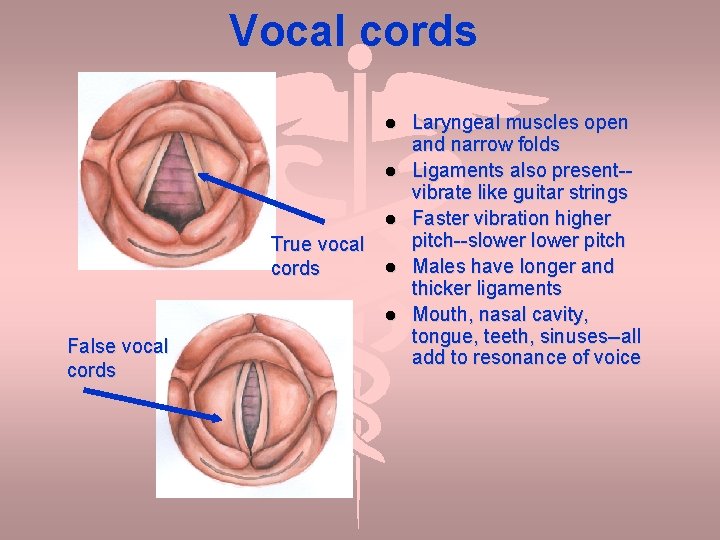
Vocal cords True vocal cords False vocal cords Laryngeal muscles open and narrow folds Ligaments also present-vibrate like guitar strings Faster vibration higher pitch--slower pitch Males have longer and thicker ligaments Mouth, nasal cavity, tongue, teeth, sinuses--all add to resonance of voice
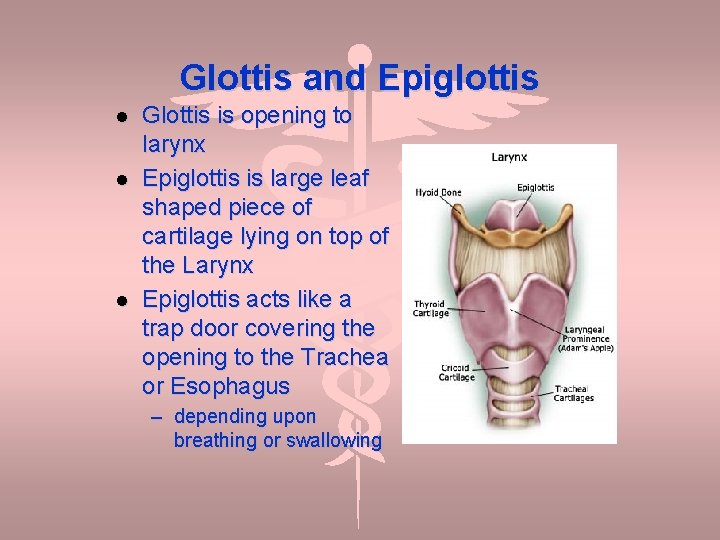
Glottis and Epiglottis Glottis is opening to larynx Epiglottis is large leaf shaped piece of cartilage lying on top of the Larynx Epiglottis acts like a trap door covering the opening to the Trachea or Esophagus – depending upon breathing or swallowing
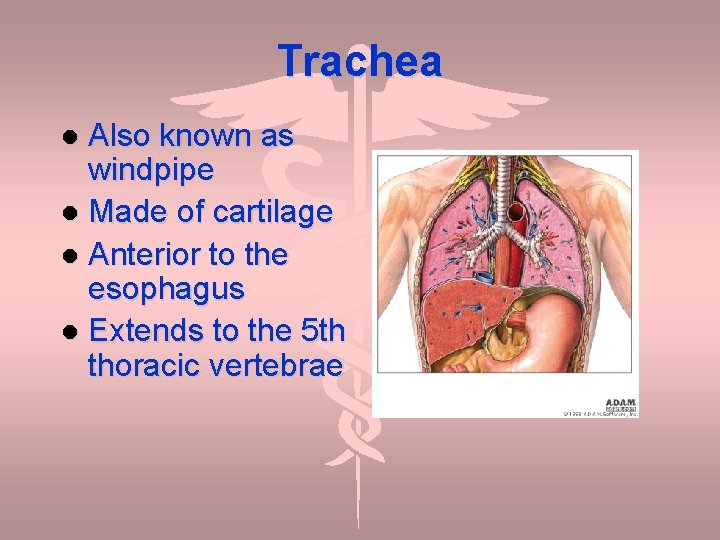
Trachea Also known as windpipe Made of cartilage Anterior to the esophagus Extends to the 5 th thoracic vertebrae
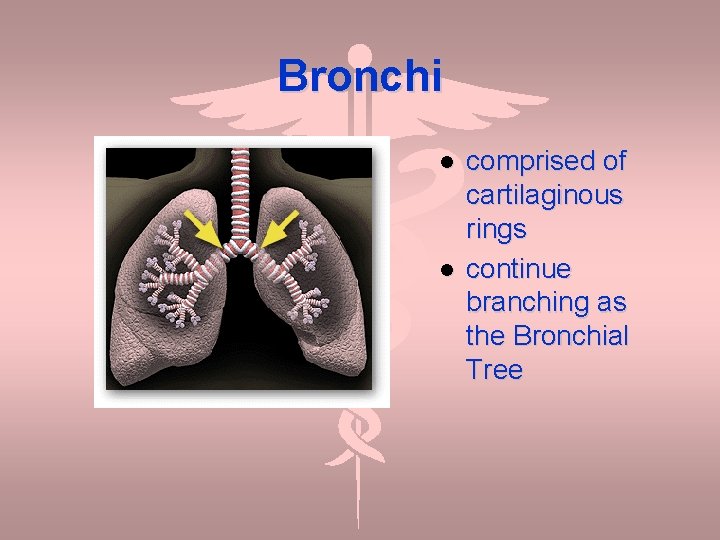
Bronchi comprised of cartilaginous rings continue branching as the Bronchial Tree
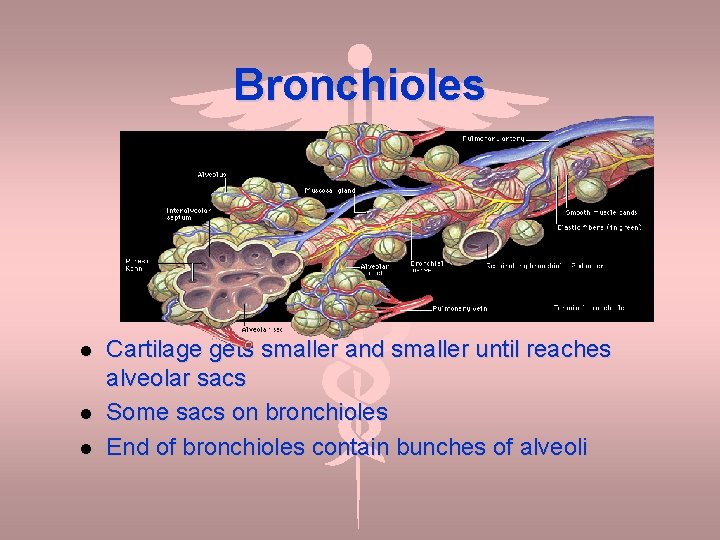
Bronchioles Cartilage gets smaller and smaller until reaches alveolar sacs Some sacs on bronchioles End of bronchioles contain bunches of alveoli
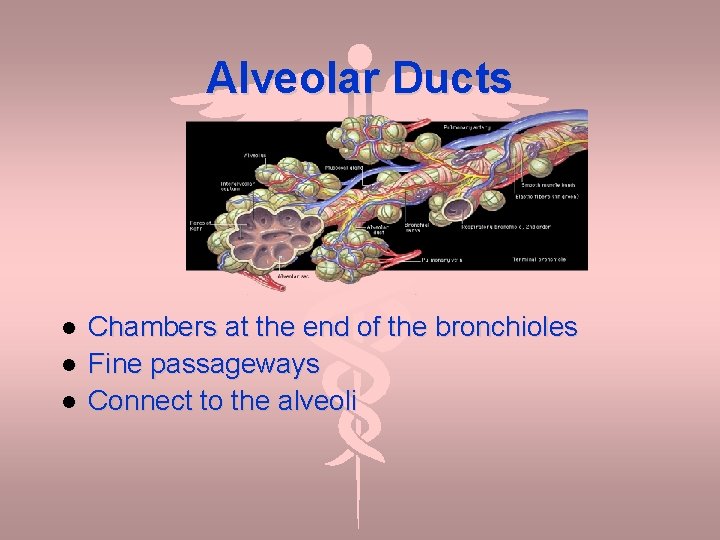
Alveolar Ducts Chambers at the end of the bronchioles Fine passageways Connect to the alveoli
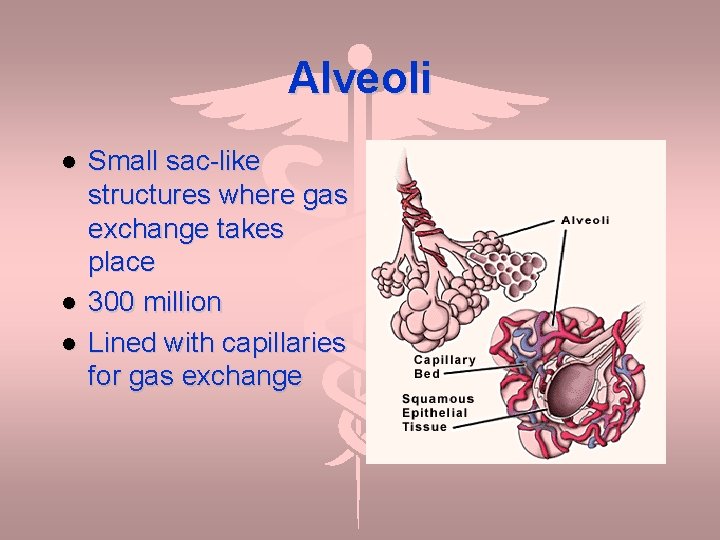
Alveoli Small sac-like structures where gas exchange takes place 300 million Lined with capillaries for gas exchange
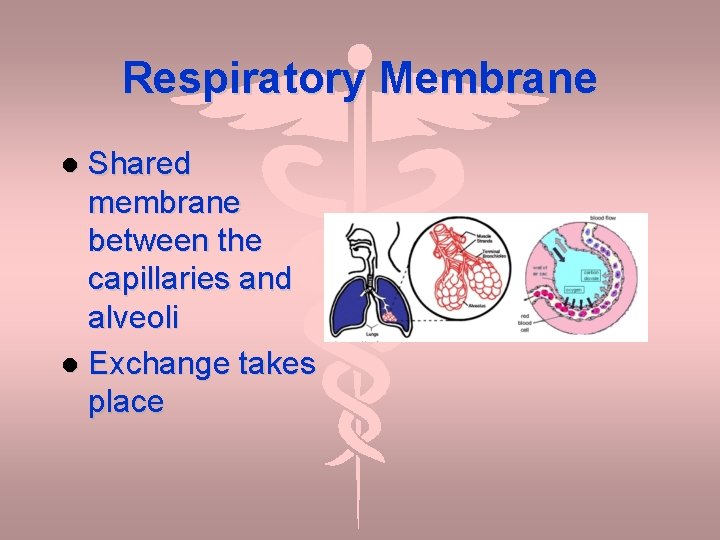
Respiratory Membrane Shared membrane between the capillaries and alveoli Exchange takes place
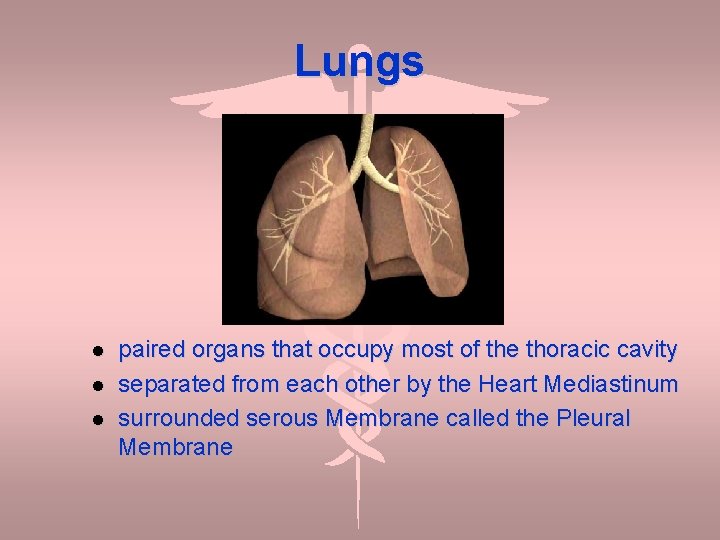
Lungs paired organs that occupy most of the thoracic cavity separated from each other by the Heart Mediastinum surrounded serous Membrane called the Pleural Membrane
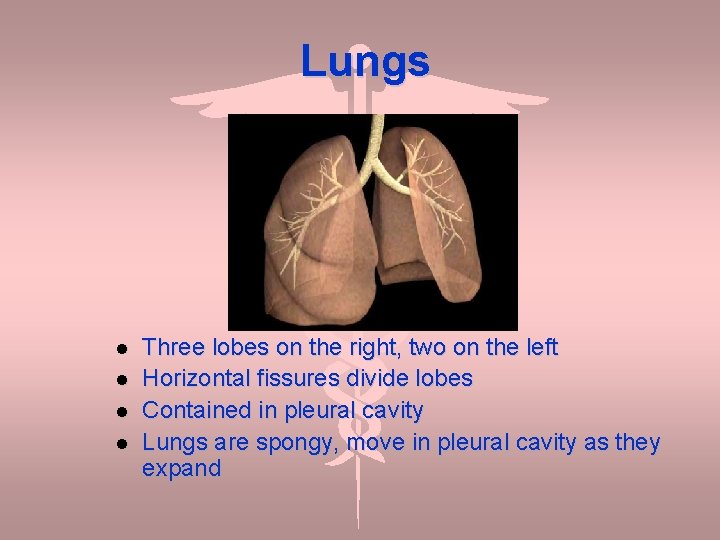
Lungs Three lobes on the right, two on the left Horizontal fissures divide lobes Contained in pleural cavity Lungs are spongy, move in pleural cavity as they expand
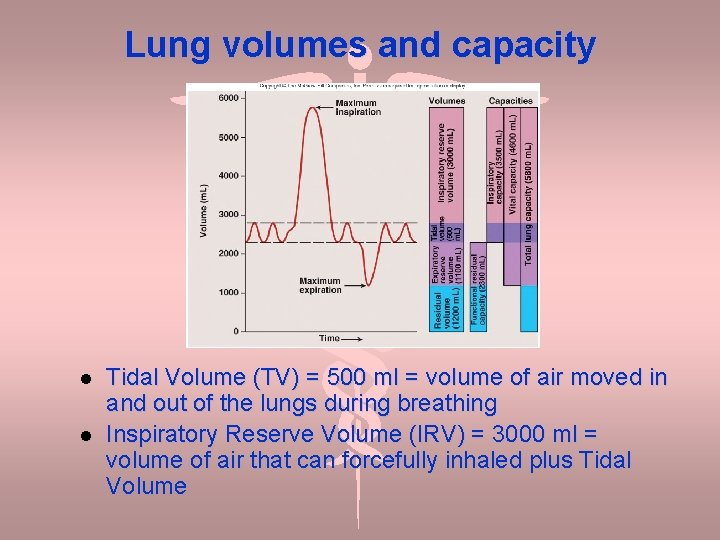
Lung volumes and capacity Tidal Volume (TV) = 500 ml = volume of air moved in and out of the lungs during breathing Inspiratory Reserve Volume (IRV) = 3000 ml = volume of air that can forcefully inhaled plus Tidal Volume
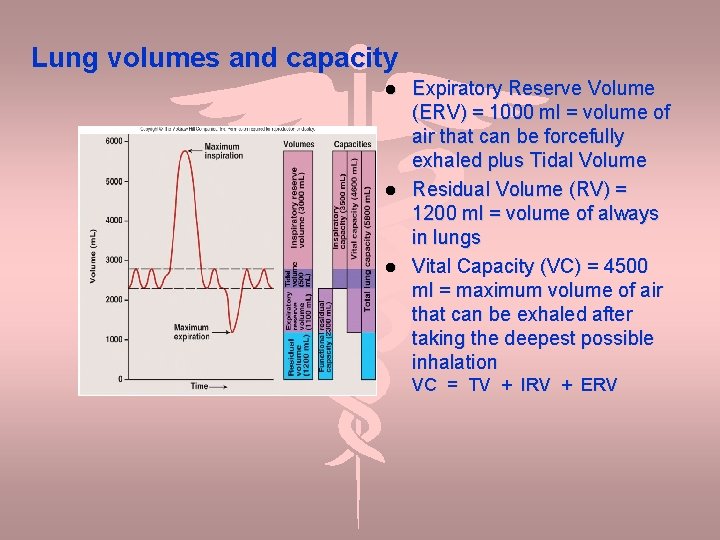
Lung volumes and capacity Expiratory Reserve Volume (ERV) = 1000 ml = volume of air that can be forcefully exhaled plus Tidal Volume Residual Volume (RV) = 1200 ml = volume of always in lungs Vital Capacity (VC) = 4500 ml = maximum volume of air that can be exhaled after taking the deepest possible inhalation VC = TV + IRV + ERV
Respiratory System The end