
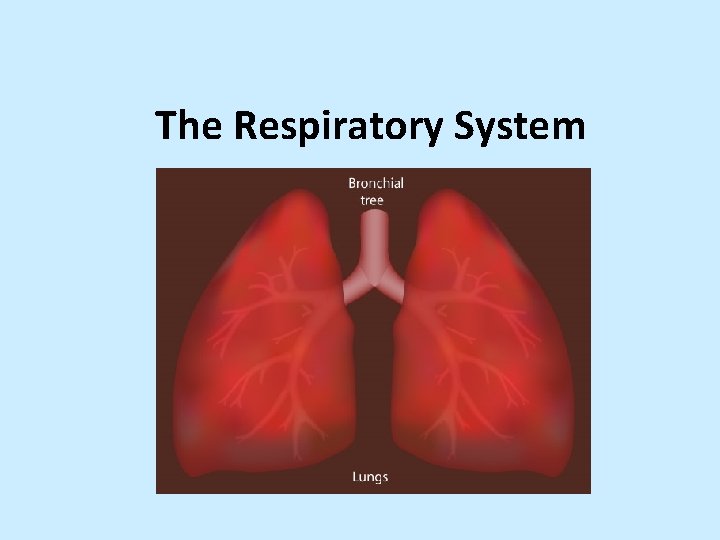
The Respiratory System Function of Respiration Structures Structures
- Slides: 9
The Respiratory System
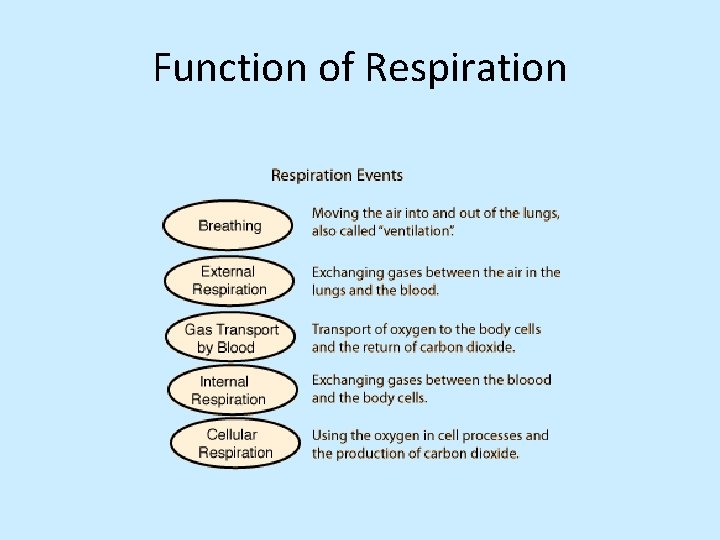
Function of Respiration
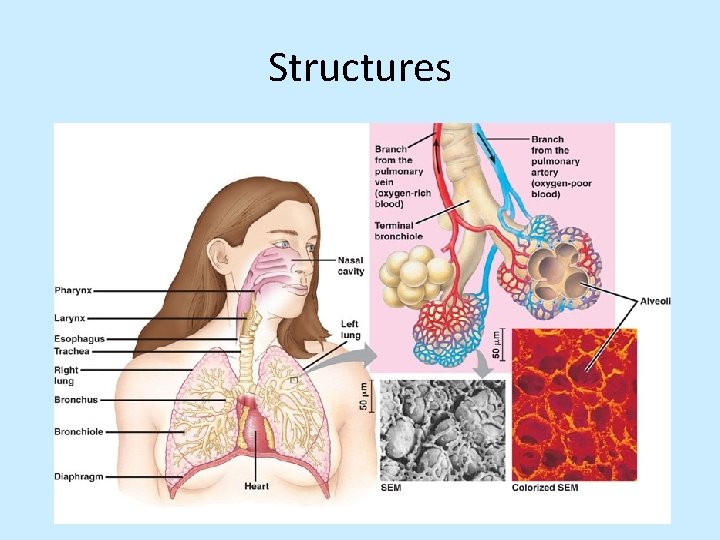
Structures
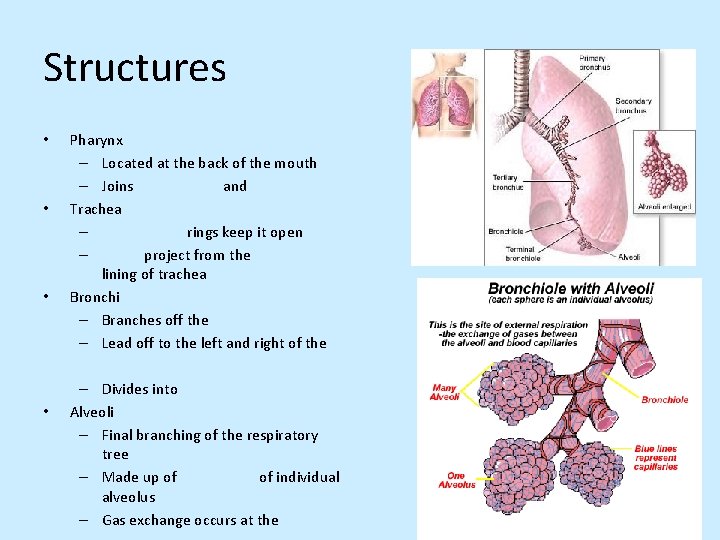
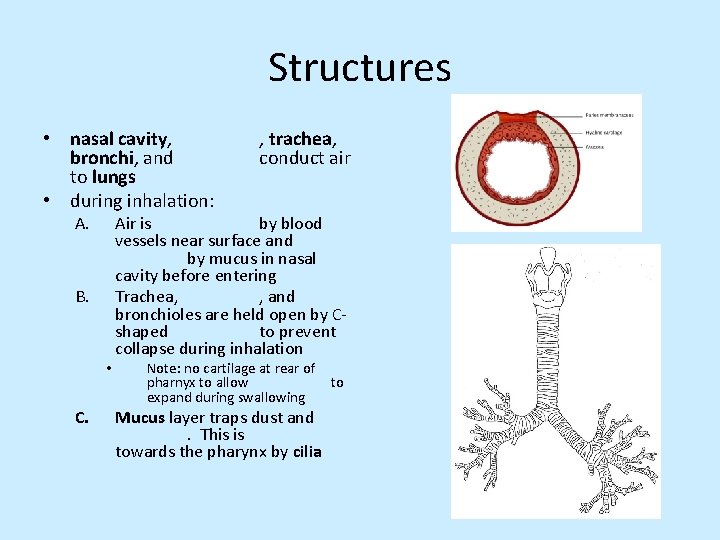
Structures • • Pharynx – Located at the back of the mouth – Joins and Trachea – rings keep it open – project from the lining of trachea Bronchi – Branches off the – Lead off to the left and right of the – Divides into Alveoli – Final branching of the respiratory tree – Made up of individual alveolus – Gas exchange occurs at the
Structures • nasal cavity, bronchi, and to lungs • during inhalation: A. B. • C. , trachea, conduct air Air is by blood vessels near surface and by mucus in nasal cavity before entering Trachea, , and bronchioles are held open by Cshaped to prevent collapse during inhalation Note: no cartilage at rear of pharnyx to allow to expand during swallowing Mucus layer traps dust and . This is towards the pharynx by cilia
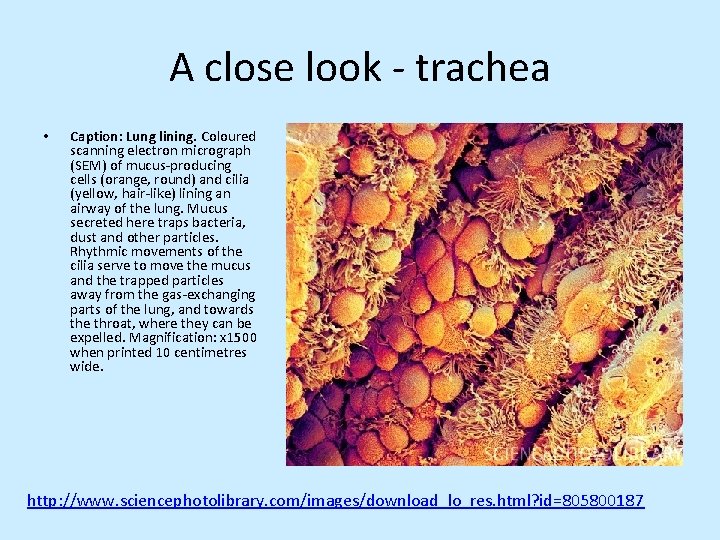
A close look - trachea • Caption: Lung lining. Coloured scanning electron micrograph (SEM) of mucus-producing cells (orange, round) and cilia (yellow, hair-like) lining an airway of the lung. Mucus secreted here traps bacteria, dust and other particles. Rhythmic movements of the cilia serve to move the mucus and the trapped particles away from the gas-exchanging parts of the lung, and towards the throat, where they can be expelled. Magnification: x 1500 when printed 10 centimetres wide. http: //www. sciencephotolibrary. com/images/download_lo_res. html? id=805800187
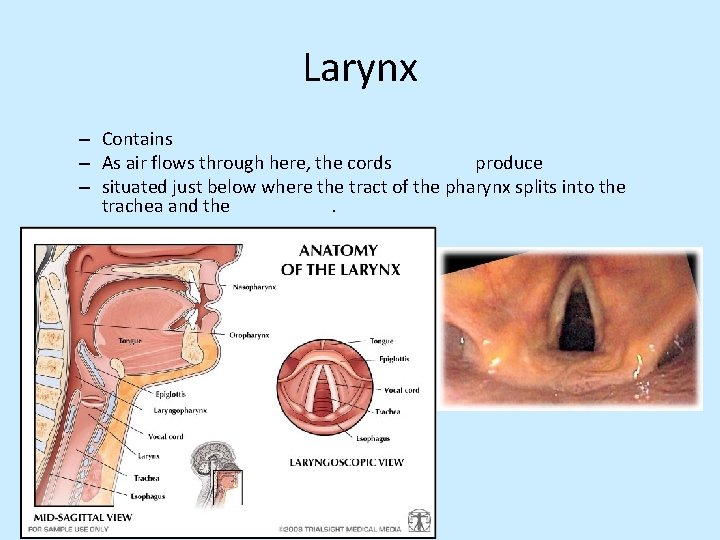
Larynx – Contains – As air flows through here, the cords produce – situated just below where the tract of the pharynx splits into the trachea and the .
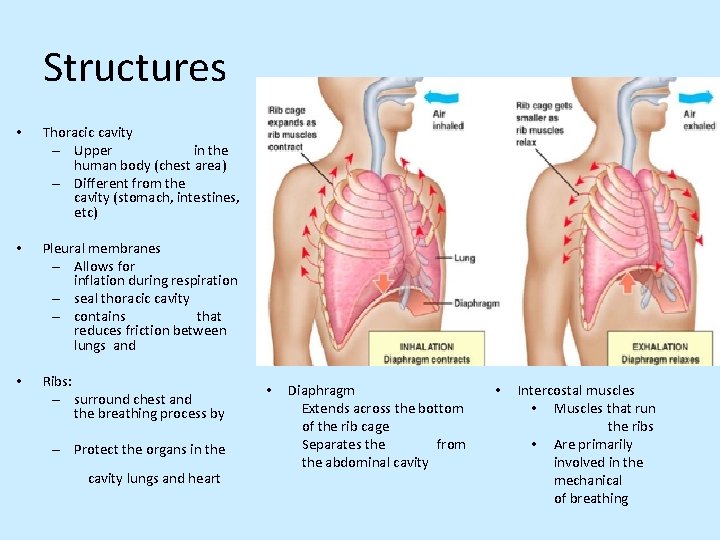
Structures • Thoracic cavity – Upper in the human body (chest area) – Different from the cavity (stomach, intestines, etc) • Pleural membranes – Allows for inflation during respiration – seal thoracic cavity – contains that reduces friction between lungs and • Ribs: – surround chest and the breathing process by – Protect the organs in the cavity lungs and heart • Diaphragm Extends across the bottom of the rib cage Separates the from the abdominal cavity • Intercostal muscles • Muscles that run the ribs • Are primarily involved in the mechanical of breathing
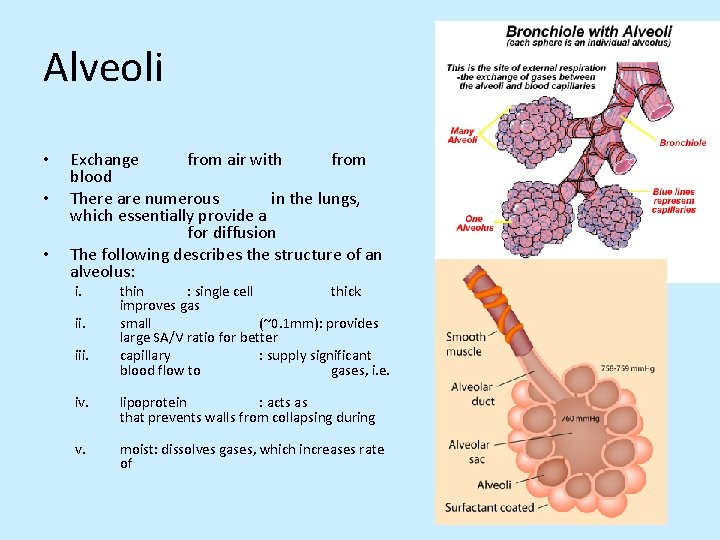
Alveoli • • • Exchange from air with from blood There are numerous in the lungs, which essentially provide a for diffusion The following describes the structure of an alveolus: i. ii. iii. thin : single cell thick improves gas small (~0. 1 mm): provides large SA/V ratio for better capillary : supply significant blood flow to gases, i. e. iv. lipoprotein : acts as that prevents walls from collapsing during v. moist: dissolves gases, which increases rate of