
The Respiratory System Exchange of Oxygen and Carbon
The Respiratory System Exchange of Oxygen and Carbon Dioxide
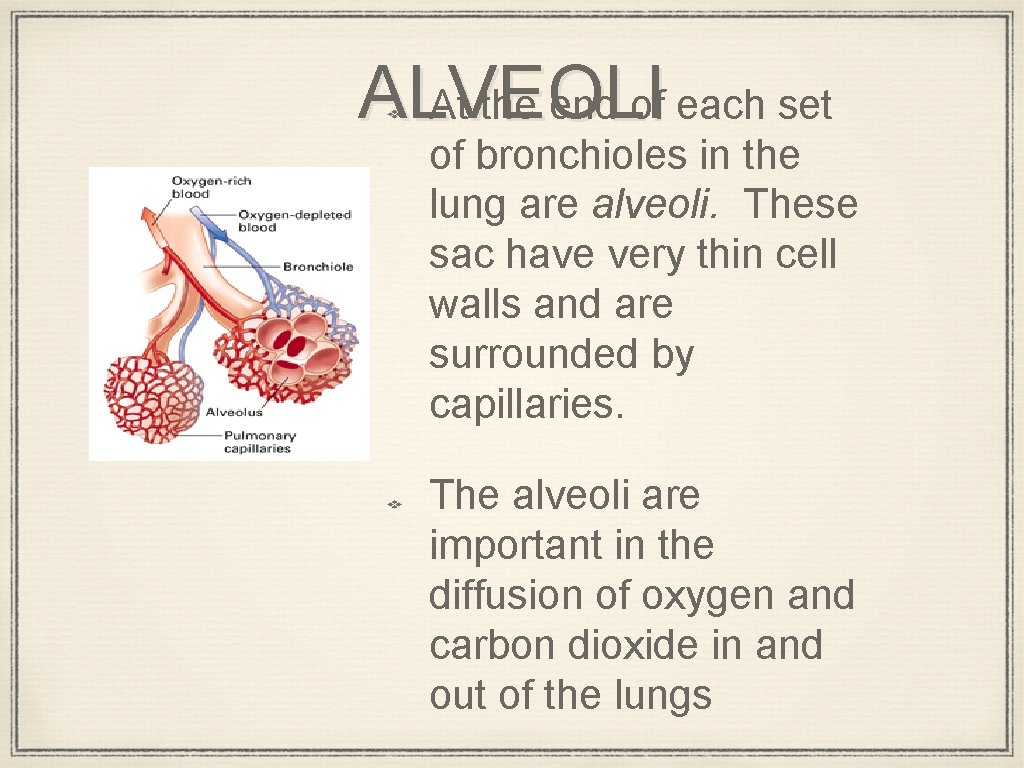
ALVEOLI At the end of each set of bronchioles in the lung are alveoli. These sac have very thin cell walls and are surrounded by capillaries. The alveoli are important in the diffusion of oxygen and carbon dioxide in and out of the lungs
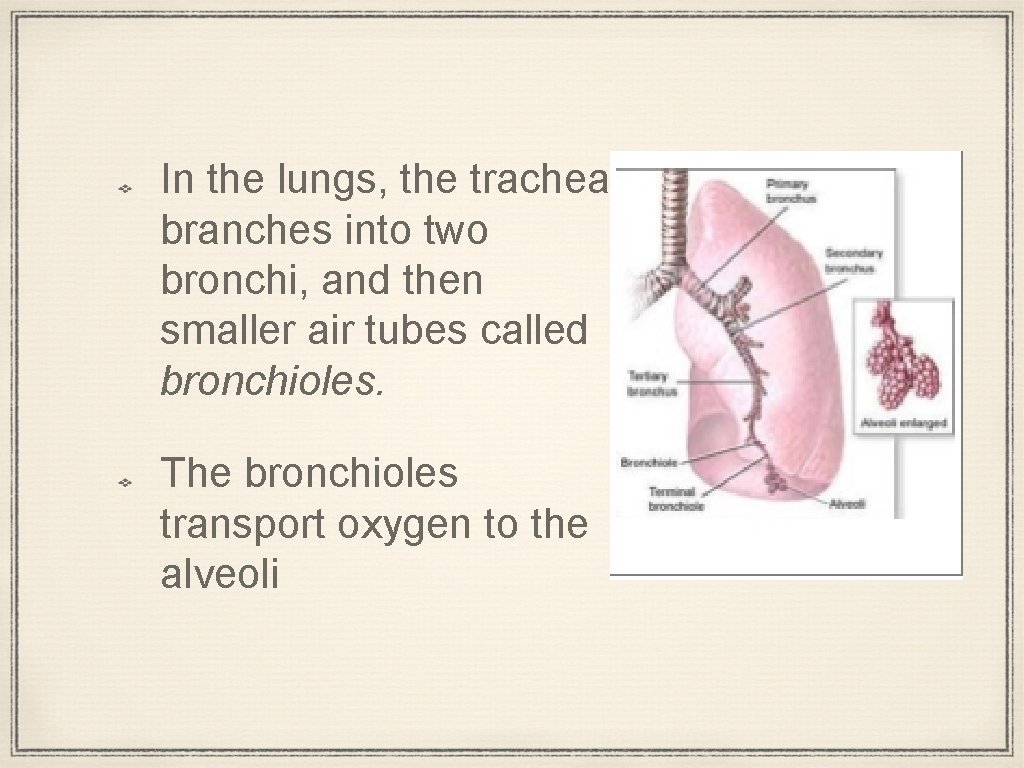
In the lungs, the trachea branches into two bronchi, and then smaller air tubes called bronchioles. The bronchioles transport oxygen to the alveoli
Diffusion - Oxygen in Diffusion is the movement of molecules from high concentration to low concentration Air travels from the nose and mouth through the bronchioles to the alveoli. The air in the alveoli have a higher concentration of oxygen than the blood in the capillaries surrounding them Oxygen can diffuse through the thin membranes of the alveoli into the capillaries The oxygen can then be transported to the rest of the body cells through the bloodstream

Diffusion Carbon Dioxide Out The concentration of carbon dioxide in the capillaries that surround the alveoli is higher than the concentration of carbon dioxide in the alveoli. Therefore, as blood travels through the capillaries, the carbon dioxide can diffuse through the thin cell membranes into the alveoli, and be carried out of the body when we exhale

Rate of Breathing The rate of breathing is controlled by the amount of carbon dioxide in the bloodstream All activity burns up oxygen, converting it to carbon dioxide. Increase carbon dioxide causes the p. H to go down This low p. H number indicates high acidity in the blood, which is sensed by the brain The brain signals the respiratory system to speed up - removing the carbon dioxide and bringing in more oxygen
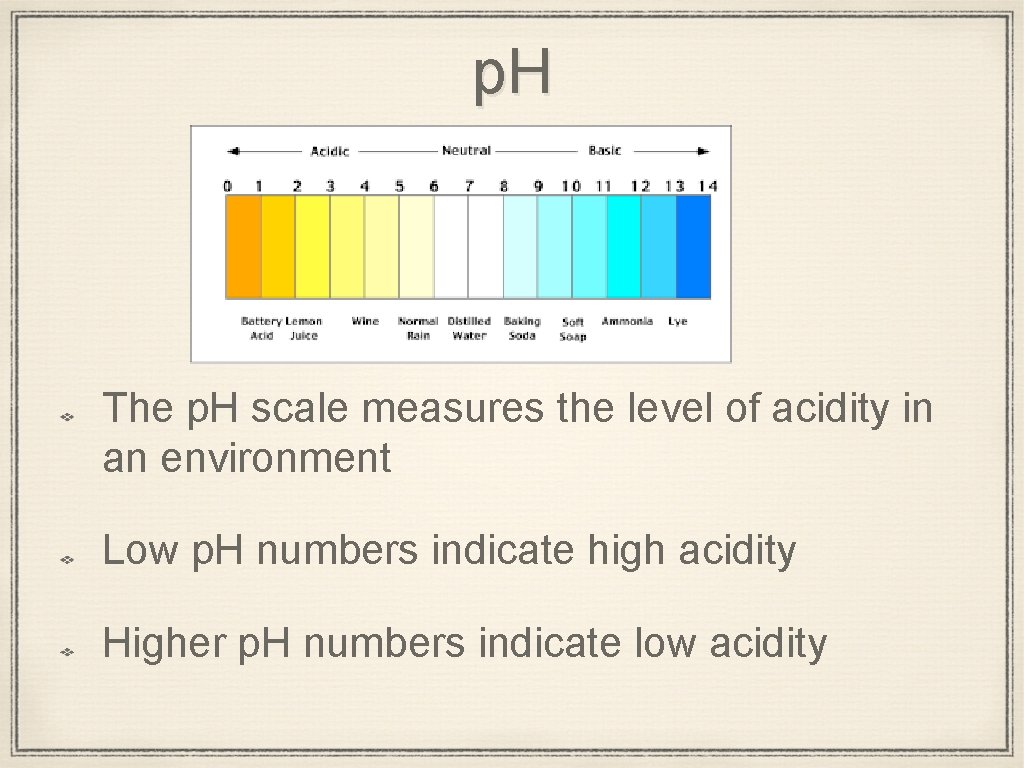
p. H The p. H scale measures the level of acidity in an environment Low p. H numbers indicate high acidity Higher p. H numbers indicate low acidity
- Slides: 7