
THE RESPIRATORY SYSTEM Ch 16 Notes IDENTIFY THE



- Slides: 20
THE RESPIRATORY SYSTEM Ch 16 Notes
IDENTIFY THE FUNCTIONS OF THE RESPIRATORY SYSTEM. • Obtaining oxygen and removing carbon dioxide. • Cellular Respiration: carbs + O 2 -> CO 2 + H 2 O + 36 ATP • Filters incoming air; control water content and temperature of incoming air; produce vocal sounds, regulate blood p. H, aid in the sense of smell.
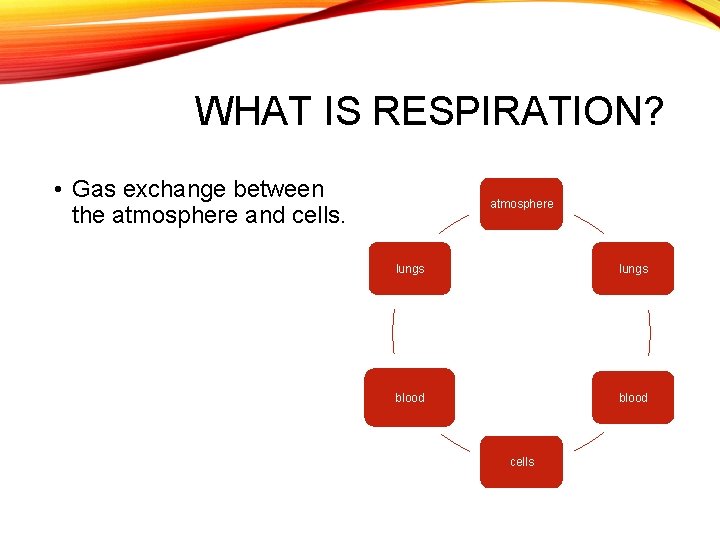
WHAT IS RESPIRATION? • Gas exchange between the atmosphere and cells. atmosphere lungs blood cells
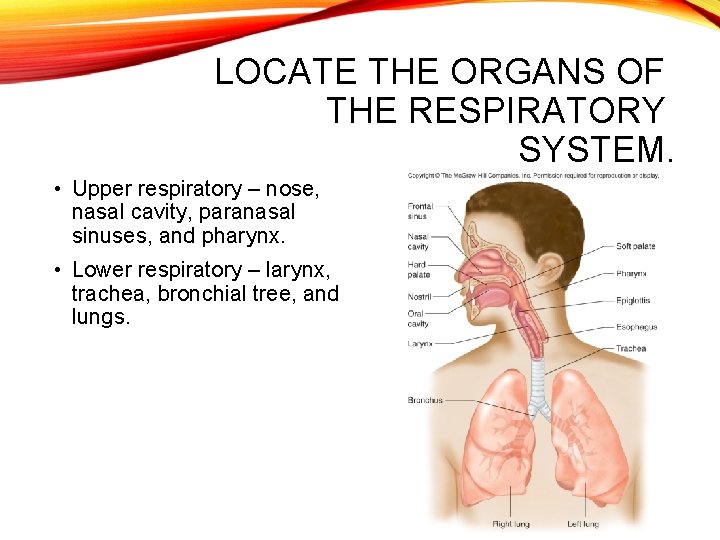
LOCATE THE ORGANS OF THE RESPIRATORY SYSTEM. • Upper respiratory – nose, nasal cavity, paranasal sinuses, and pharynx. • Lower respiratory – larynx, trachea, bronchial tree, and lungs.
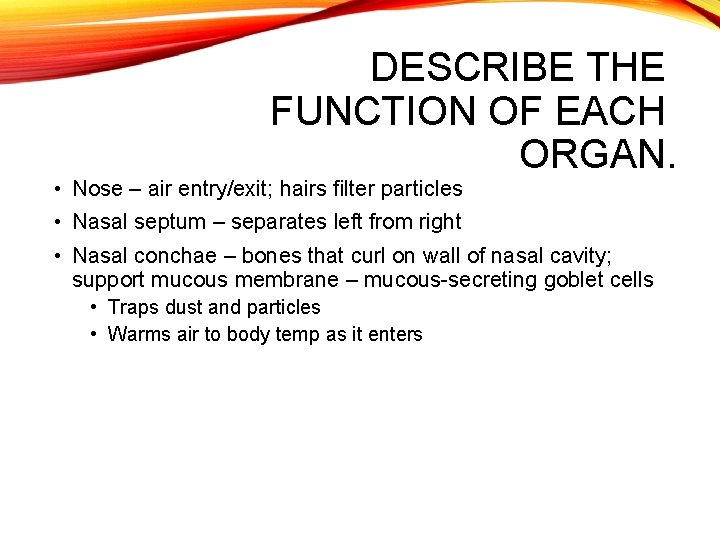
DESCRIBE THE FUNCTION OF EACH ORGAN. • Nose – air entry/exit; hairs filter particles • Nasal septum – separates left from right • Nasal conchae – bones that curl on wall of nasal cavity; support mucous membrane – mucous-secreting goblet cells • Traps dust and particles • Warms air to body temp as it enters
MOVEMENT OF AIR FROM ATMOSPHERE TO BLOOD • Nose/Moutth – over the nasal conchae • Lobar bronchi • Pharynx • Alveolar ducts • Larynx – through the glottis • Trachea • Bronchial tree • Primary bronchi • Bronchioles • Alveolar sacs • Alveoli
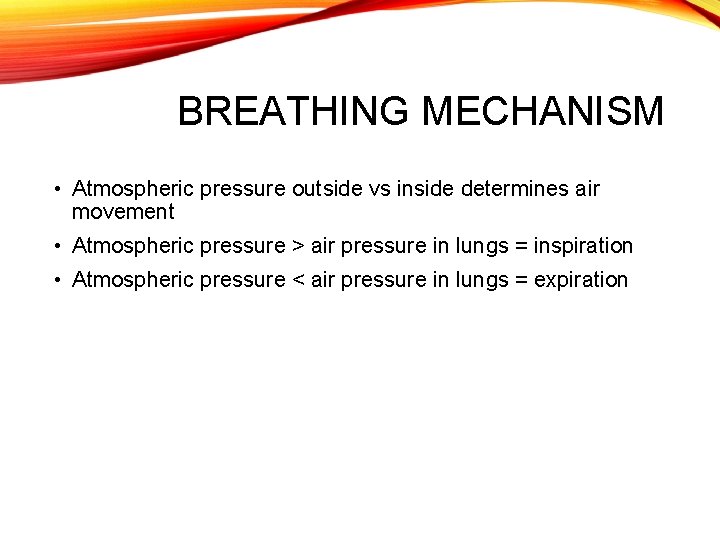
BREATHING MECHANISM • Atmospheric pressure outside vs inside determines air movement • Atmospheric pressure > air pressure in lungs = inspiration • Atmospheric pressure < air pressure in lungs = expiration
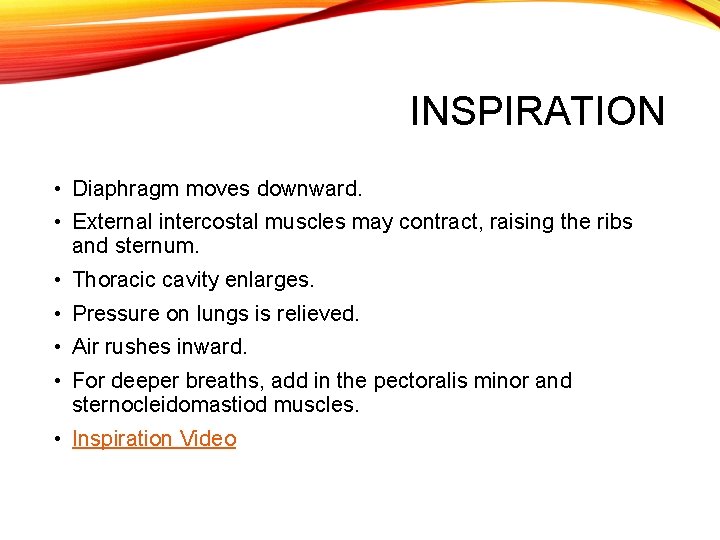
INSPIRATION • Diaphragm moves downward. • External intercostal muscles may contract, raising the ribs and sternum. • Thoracic cavity enlarges. • Pressure on lungs is relieved. • Air rushes inward. • For deeper breaths, add in the pectoralis minor and sternocleidomastiod muscles. • Inspiration Video
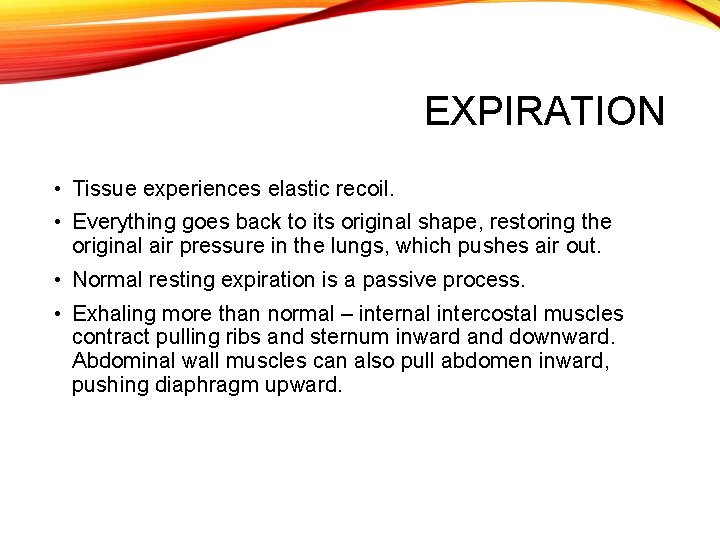
EXPIRATION • Tissue experiences elastic recoil. • Everything goes back to its original shape, restoring the original air pressure in the lungs, which pushes air out. • Normal resting expiration is a passive process. • Exhaling more than normal – internal intercostal muscles contract pulling ribs and sternum inward and downward. Abdominal wall muscles can also pull abdomen inward, pushing diaphragm upward.
AIR VOLUMES • Respiratory cycle = 1 inspiration + 1 expiration • Spirometry – Test that measures air volumes • Tidal volume = amount of air that enters or leaves in one respiratory cycle • Resting tidal volume (normal) = about 500 m. L
AIR VOLUMES • Inspiratory Reserve Volume = extra amount of air taken in during forced inspiration. (max = about 3, 000 m. L) • Expiratory Reserve Volume = extra amount of air breathed out during forced expiration (max = about 1, 100 m. L) • Residual Volume = amount of air left in lungs after a forced expiration.
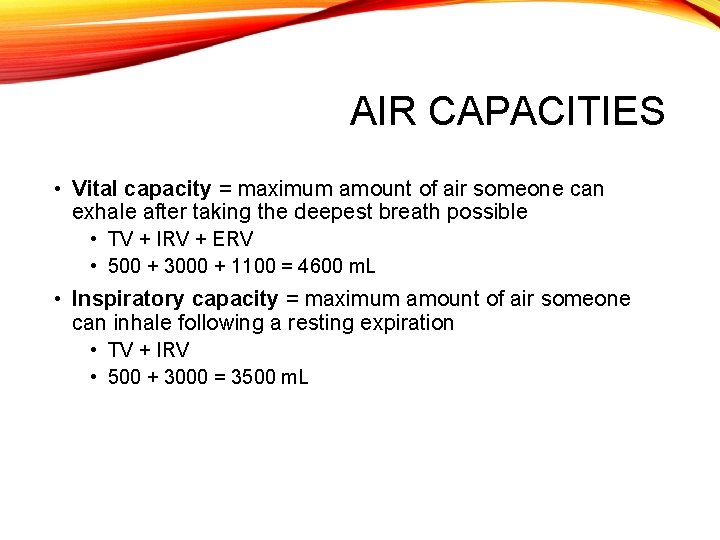
AIR CAPACITIES • Vital capacity = maximum amount of air someone can exhale after taking the deepest breath possible • TV + IRV + ERV • 500 + 3000 + 1100 = 4600 m. L • Inspiratory capacity = maximum amount of air someone can inhale following a resting expiration • TV + IRV • 500 + 3000 = 3500 m. L
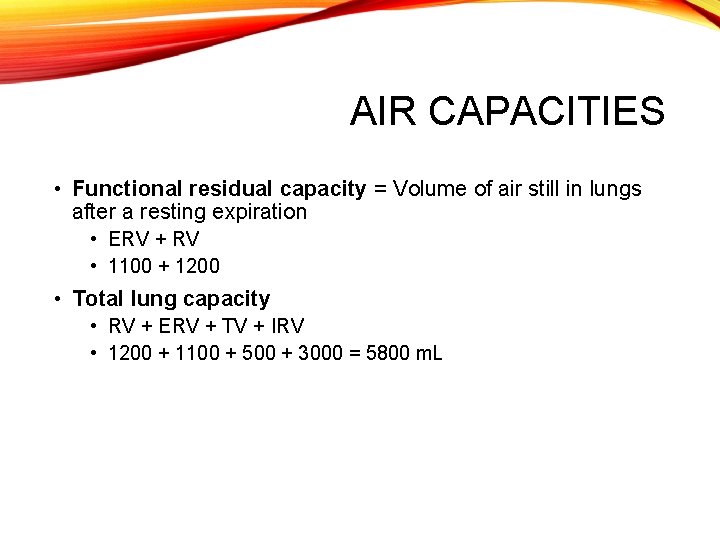
AIR CAPACITIES • Functional residual capacity = Volume of air still in lungs after a resting expiration • ERV + RV • 1100 + 1200 • Total lung capacity • RV + ERV + TV + IRV • 1200 + 1100 + 500 + 3000 = 5800 m. L
RESPIRATORY VOLUMES AND CAPACITIES
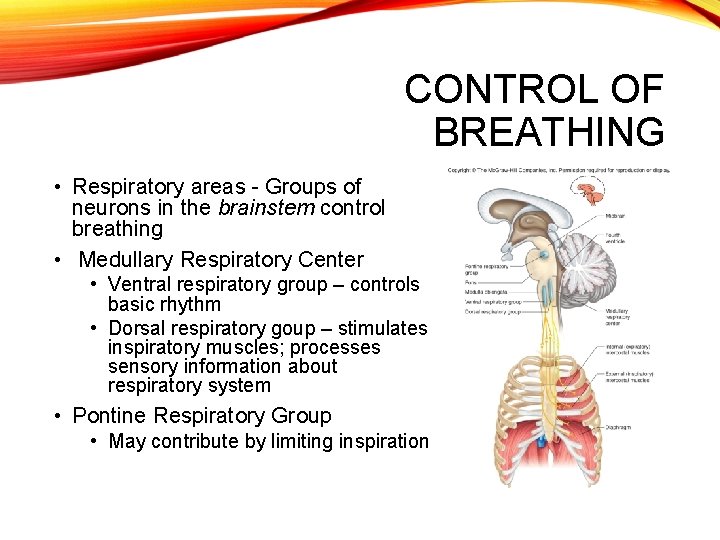
CONTROL OF BREATHING • Respiratory areas - Groups of neurons in the brainstem control breathing • Medullary Respiratory Center • Ventral respiratory group – controls basic rhythm • Dorsal respiratory goup – stimulates inspiratory muscles; processes sensory information about respiratory system • Pontine Respiratory Group • May contribute by limiting inspiration
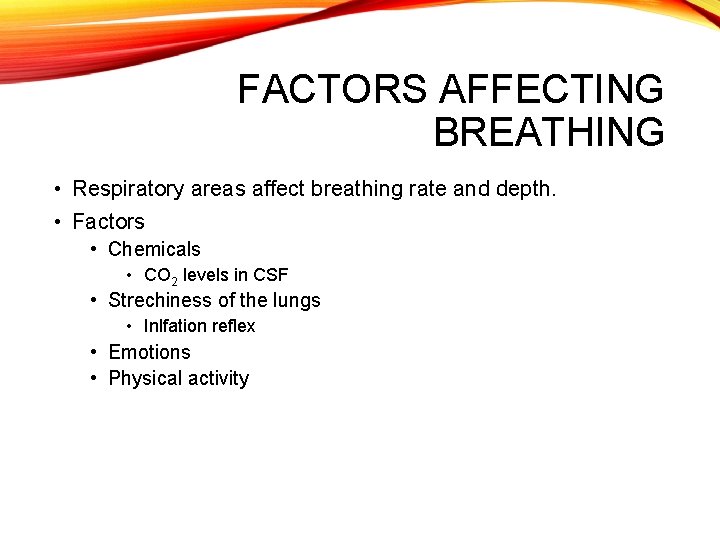
FACTORS AFFECTING BREATHING • Respiratory areas affect breathing rate and depth. • Factors • Chemicals • CO 2 levels in CSF • Strechiness of the lungs • Inlfation reflex • Emotions • Physical activity
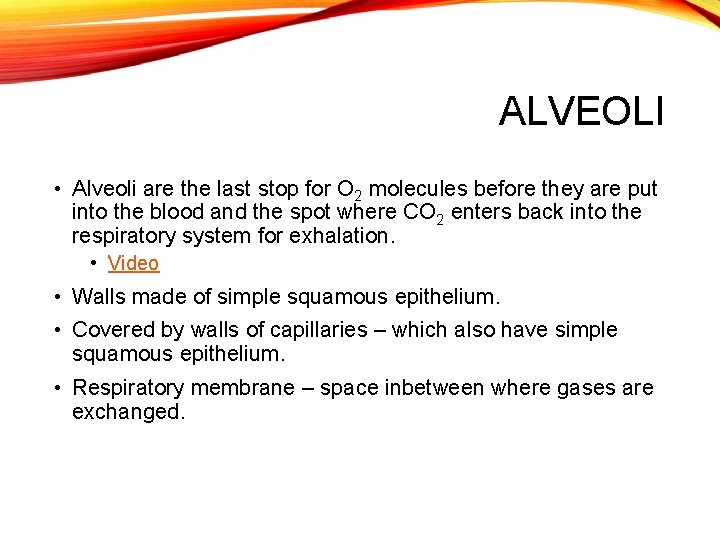
ALVEOLI • Alveoli are the last stop for O 2 molecules before they are put into the blood and the spot where CO 2 enters back into the respiratory system for exhalation. • Video • Walls made of simple squamous epithelium. • Covered by walls of capillaries – which also have simple squamous epithelium. • Respiratory membrane – space inbetween where gases are exchanged.
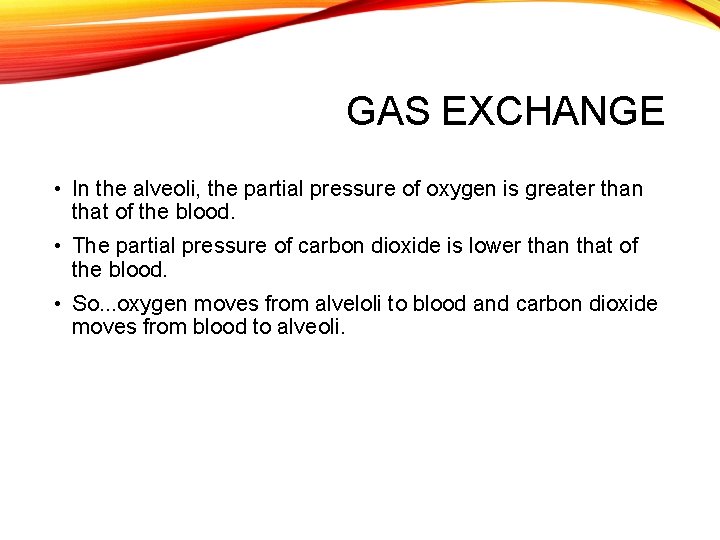
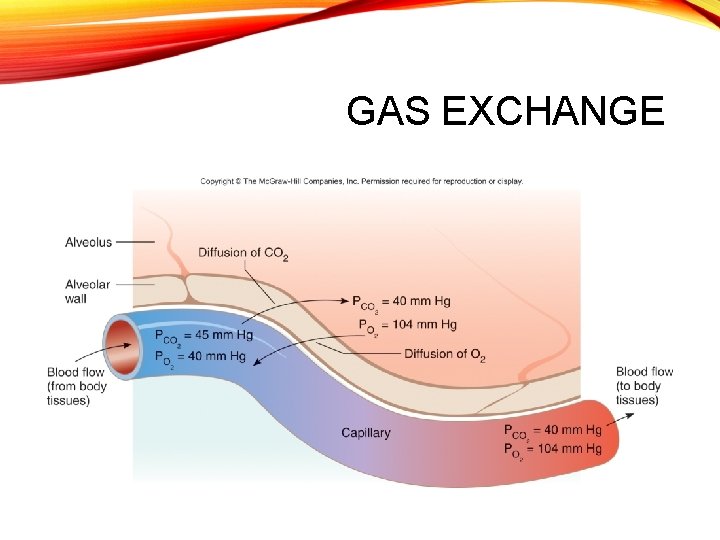
GAS EXCHANGE • In the alveoli, the partial pressure of oxygen is greater than that of the blood. • The partial pressure of carbon dioxide is lower than that of the blood. • So. . . oxygen moves from alveloli to blood and carbon dioxide moves from blood to alveoli.
GAS EXCHANGE
OXYGEN TRANSPORT • Blood carries oxygen from the lungs to the cells and carries carbon dioxide back. • It’s transported by hemoglobin in red blood cells. • Hypoxia – a deficiency of oxygen in cells • Carbon dioxide is transported dissolved in plasma, bonding to hemoglobin, or as a bicarbonate ion.