
The Respiratory System BY SCIENTIST CINDY Divisions of
The Respiratory System BY SCIENTIST CINDY
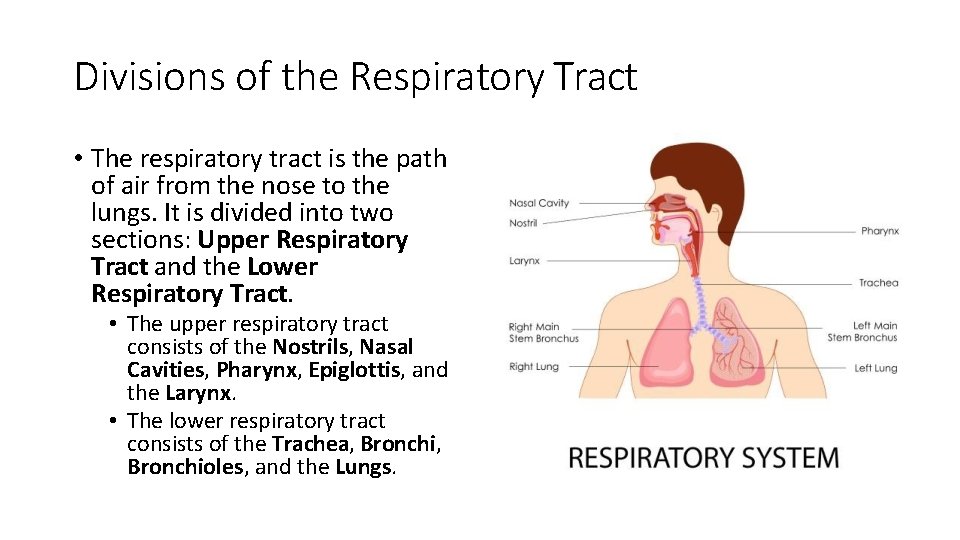
Divisions of the Respiratory Tract • The respiratory tract is the path of air from the nose to the lungs. It is divided into two sections: Upper Respiratory Tract and the Lower Respiratory Tract. • The upper respiratory tract consists of the Nostrils, Nasal Cavities, Pharynx, Epiglottis, and the Larynx. • The lower respiratory tract consists of the Trachea, Bronchioles, and the Lungs.
BREATHING or ventilation The four primary processes of respiration are: EXTERNAL RESPIRATION, which is the exchange of gases (oxygen and carbon dioxide) between inhaled air and the blood. INTERNAL RESPIRATION, which is the exchange of gases between the blood and tissue fluids. CELLULAR RESPIRATION
REGULATION OF BLOOD p. H, which occurs in coordination with the kidneys The secondary processes of respiration include: DEFENSE AGAINST MICROBES CONTROL OF BODY TEMPERATURE due to loss of evaporate during expiration
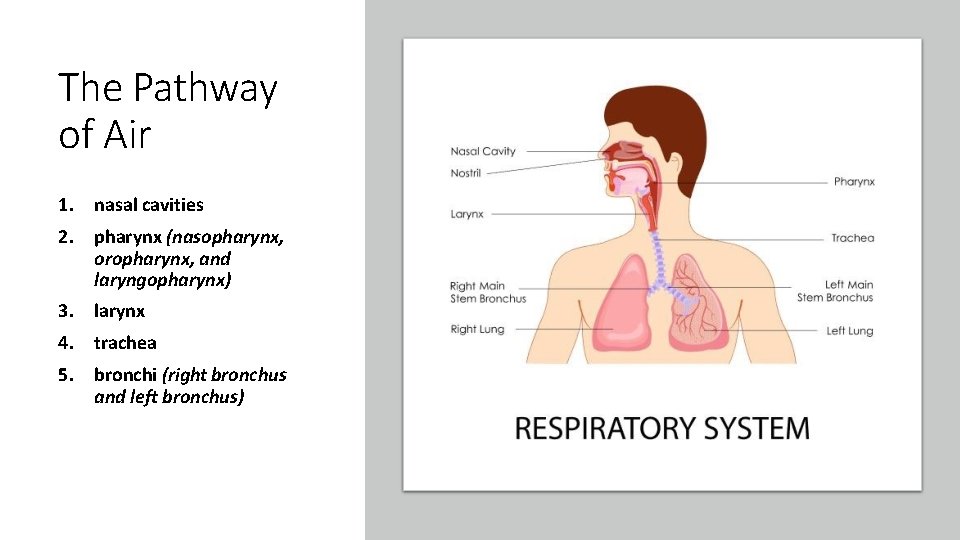
The Pathway of Air 1. nasal cavities 2. pharynx (nasopharynx, oropharynx, and laryngopharynx) 3. larynx 4. trachea 5. bronchi (right bronchus and left bronchus)
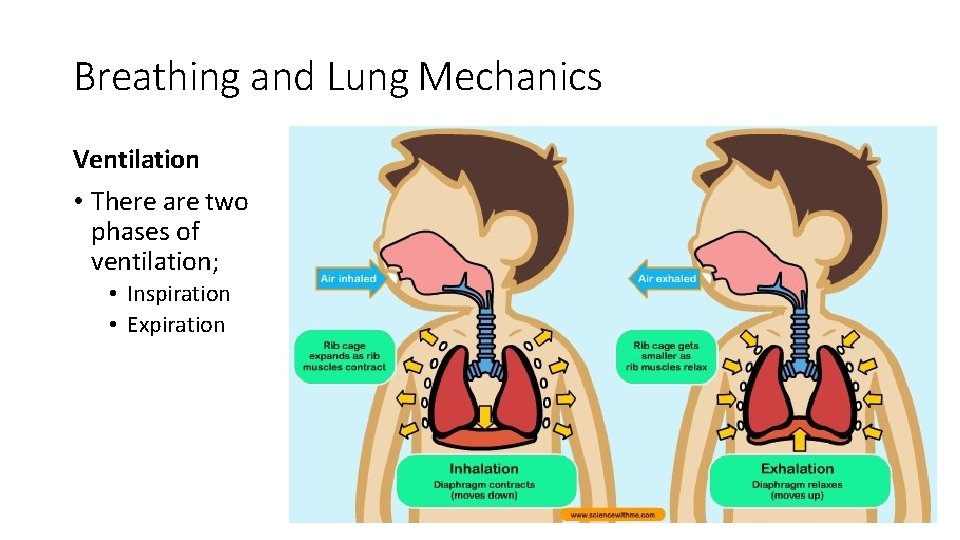
Breathing and Lung Mechanics Ventilation • There are two phases of ventilation; • Inspiration • Expiration
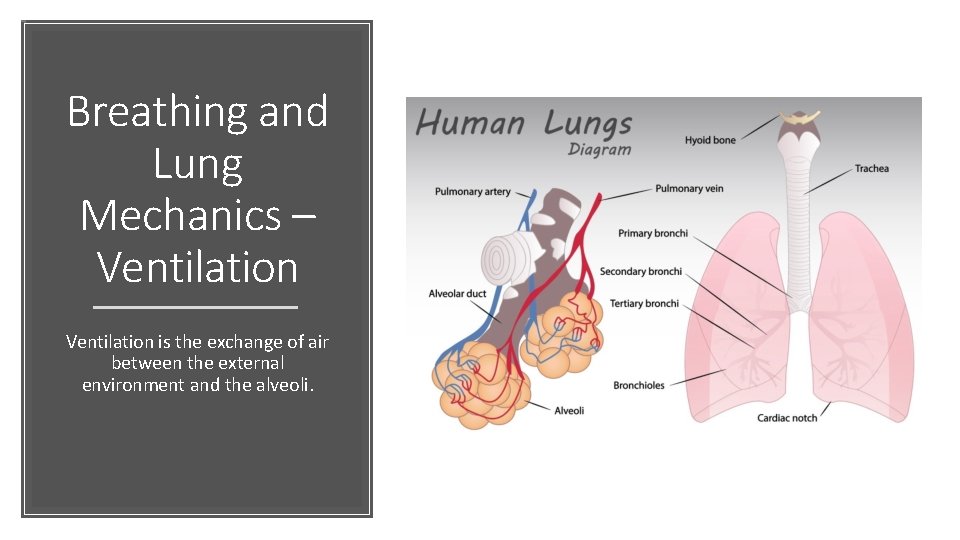
Breathing and Lung Mechanics – Ventilation is the exchange of air between the external environment and the alveoli.
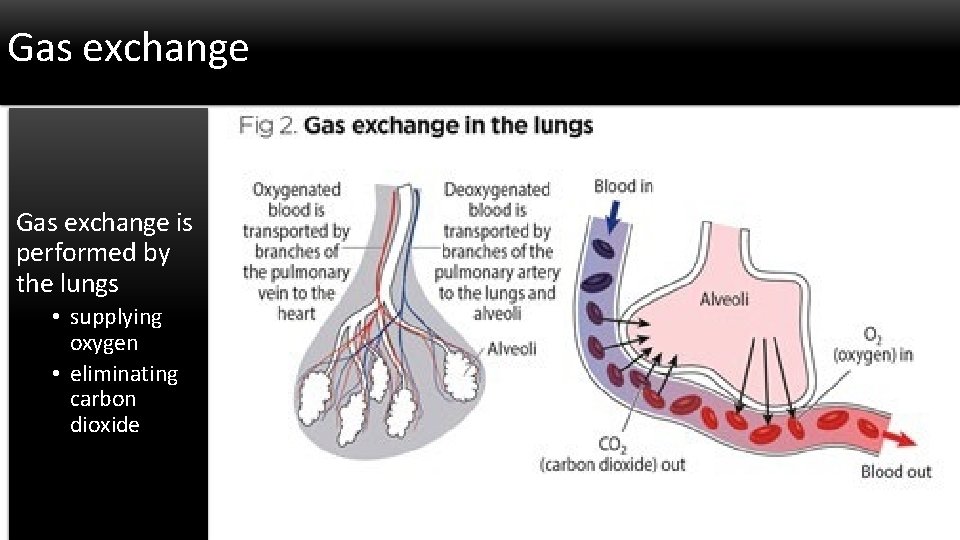
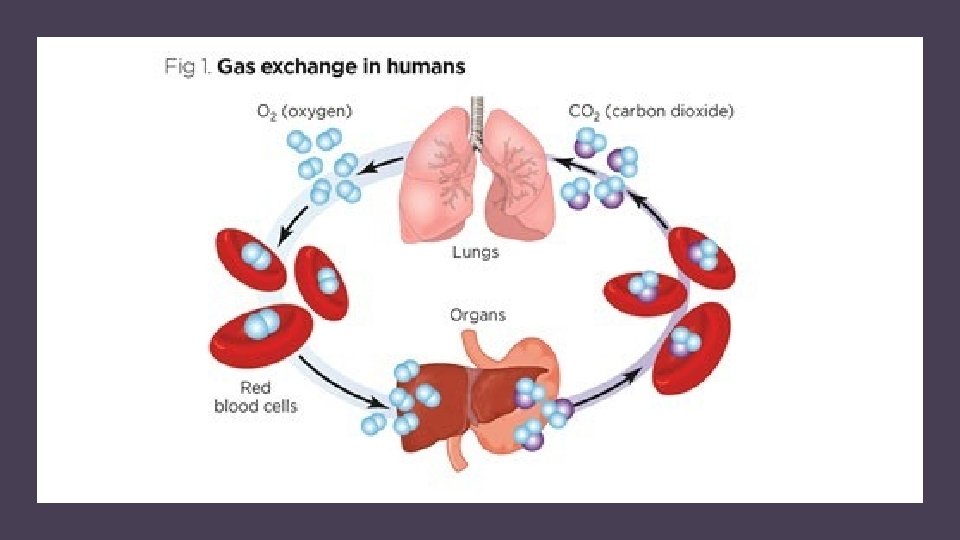
Gas exchange is performed by the lungs • supplying oxygen • eliminating carbon dioxide
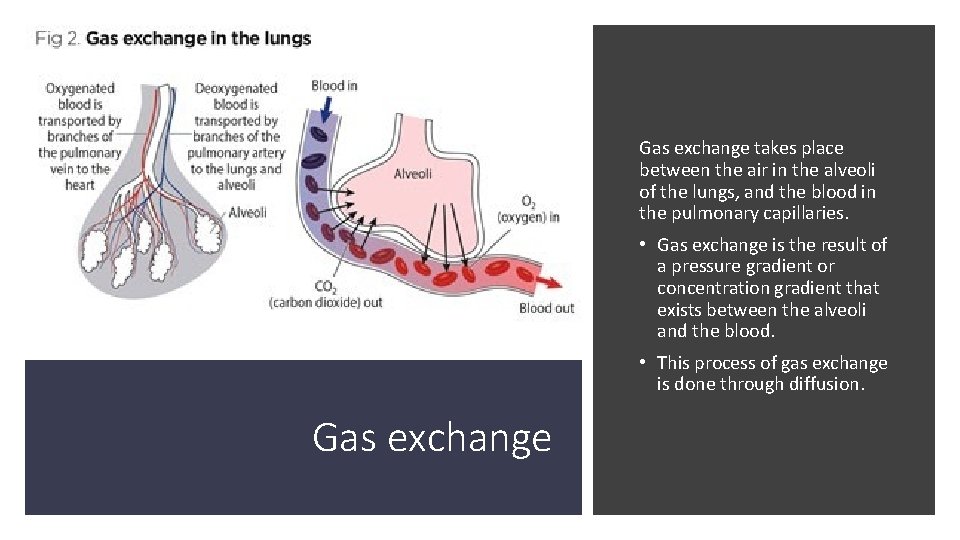
Gas exchange takes place between the air in the alveoli of the lungs, and the blood in the pulmonary capillaries. • Gas exchange is the result of a pressure gradient or concentration gradient that exists between the alveoli and the blood. • This process of gas exchange is done through diffusion. Gas exchange
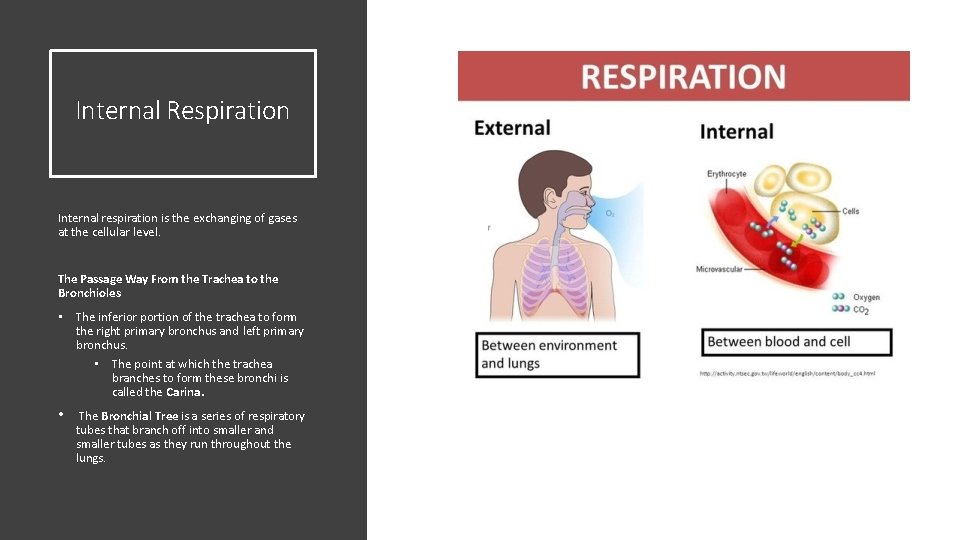
Internal Respiration Internal respiration is the exchanging of gases at the cellular level. The Passage Way From the Trachea to the Bronchioles • The inferior portion of the trachea to form the right primary bronchus and left primary bronchus. • The point at which the trachea branches to form these bronchi is called the Carina. • The Bronchial Tree is a series of respiratory tubes that branch off into smaller and smaller tubes as they run throughout the lungs.
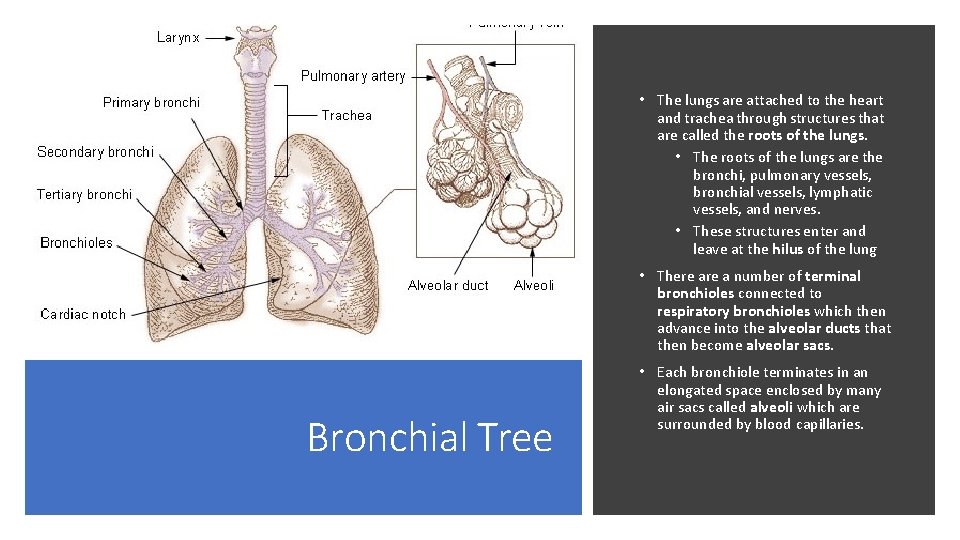
• The lungs are attached to the heart and trachea through structures that are called the roots of the lungs. • The roots of the lungs are the bronchi, pulmonary vessels, bronchial vessels, lymphatic vessels, and nerves. • These structures enter and leave at the hilus of the lung • There a number of terminal bronchioles connected to respiratory bronchioles which then advance into the alveolar ducts that then become alveolar sacs. Bronchial Tree • Each bronchiole terminates in an elongated space enclosed by many air sacs called alveoli which are surrounded by blood capillaries.
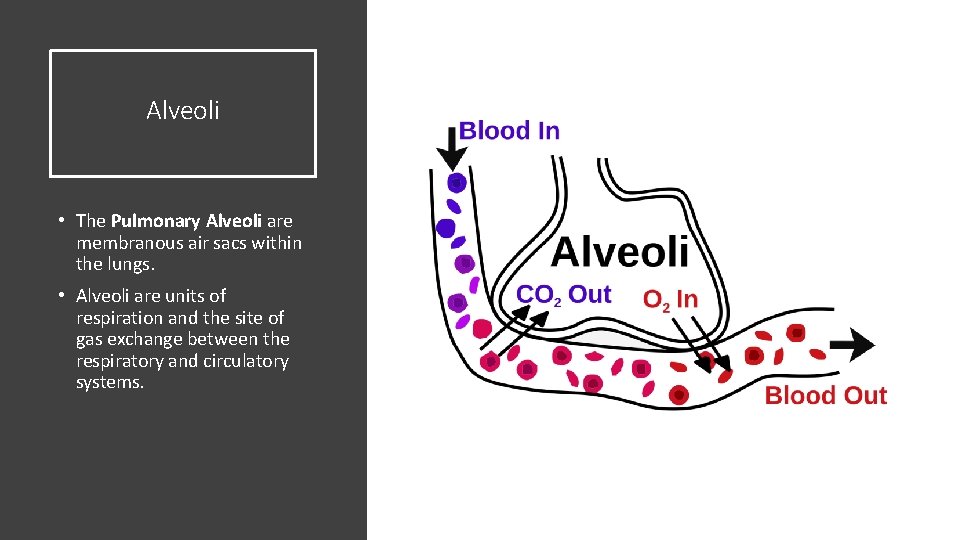
Alveoli • The Pulmonary Alveoli are membranous air sacs within the lungs. • Alveoli are units of respiration and the site of gas exchange between the respiratory and circulatory systems.
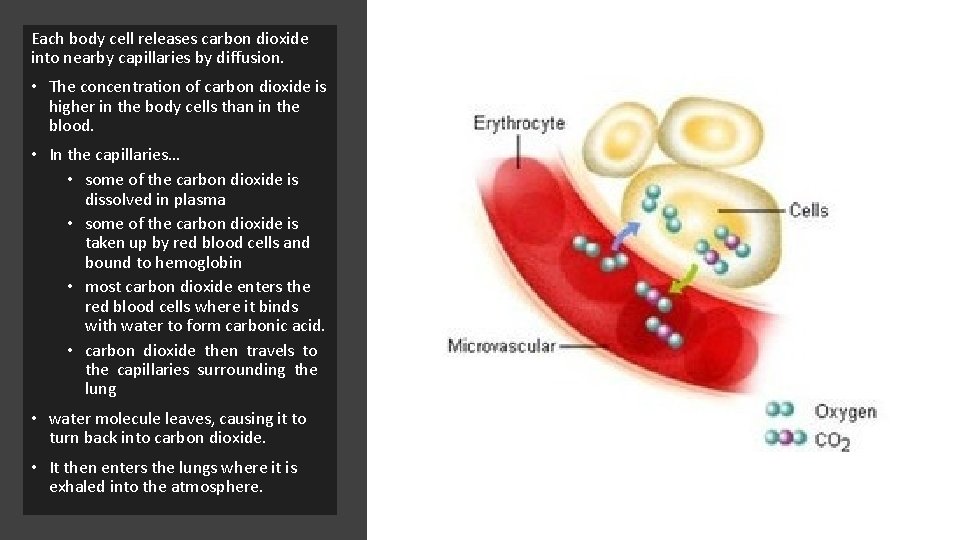
Each body cell releases carbon dioxide into nearby capillaries by diffusion. • The concentration of carbon dioxide is higher in the body cells than in the blood. • In the capillaries… • some of the carbon dioxide is dissolved in plasma • some of the carbon dioxide is taken up by red blood cells and bound to hemoglobin • most carbon dioxide enters the red blood cells where it binds with water to form carbonic acid. • carbon dioxide then travels to the capillaries surrounding the lung • water molecule leaves, causing it to turn back into carbon dioxide. • It then enters the lungs where it is exhaled into the atmosphere.
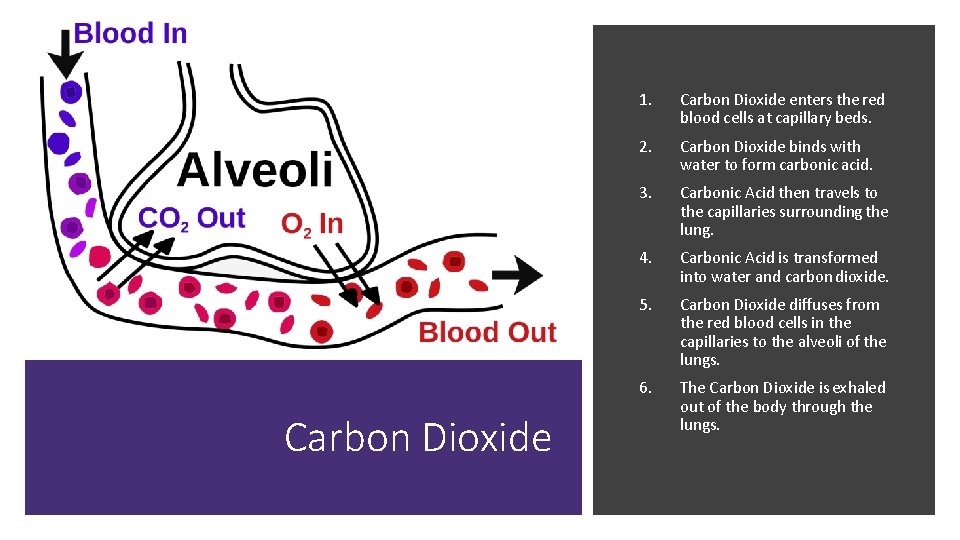
Carbon Dioxide 1. Carbon Dioxide enters the red blood cells at capillary beds. 2. Carbon Dioxide binds with water to form carbonic acid. 3. Carbonic Acid then travels to the capillaries surrounding the lung. 4. Carbonic Acid is transformed into water and carbon dioxide. 5. Carbon Dioxide diffuses from the red blood cells in the capillaries to the alveoli of the lungs. 6. The Carbon Dioxide is exhaled out of the body through the lungs.
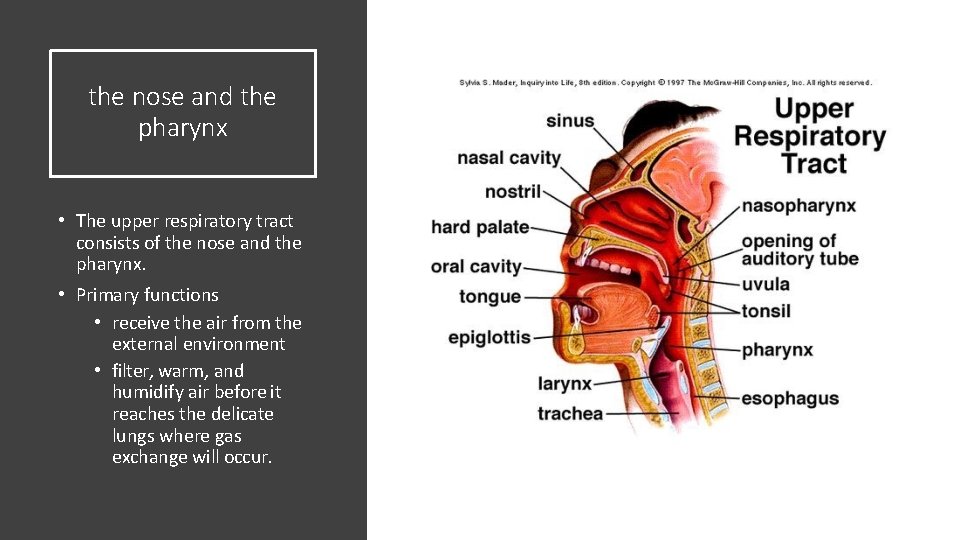
the nose and the pharynx • The upper respiratory tract consists of the nose and the pharynx. • Primary functions • receive the air from the external environment • filter, warm, and humidify air before it reaches the delicate lungs where gas exchange will occur.
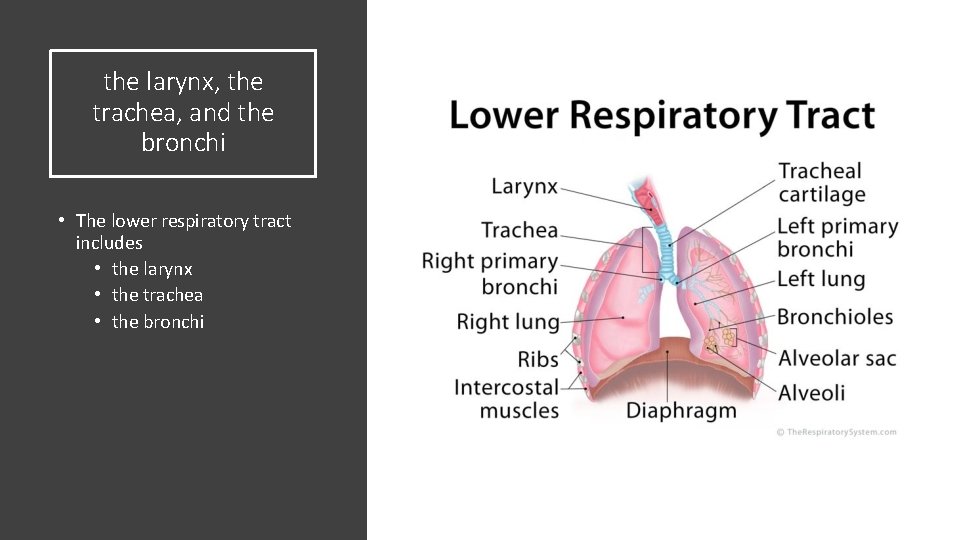
the larynx, the trachea, and the bronchi • The lower respiratory tract includes • the larynx • the trachea • the bronchi
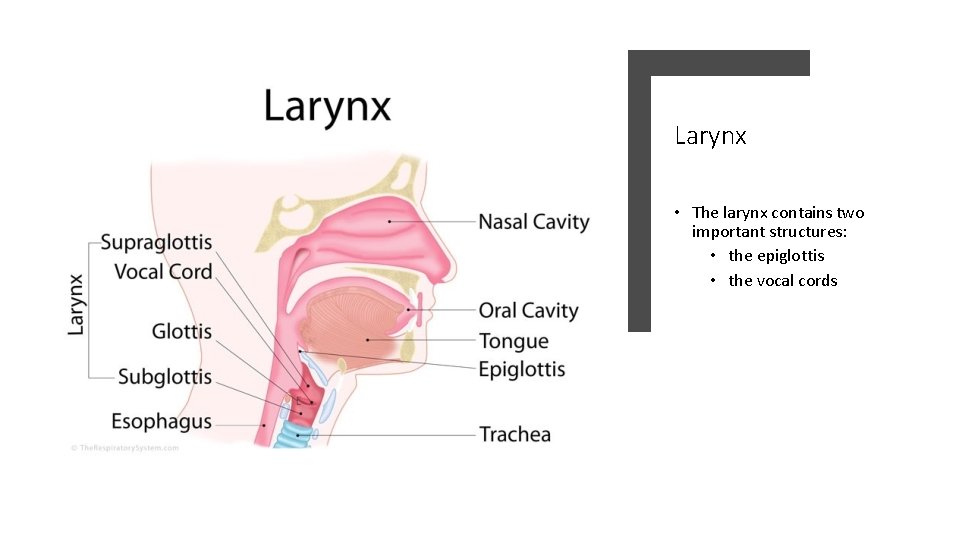
Larynx • The larynx contains two important structures: • the epiglottis • the vocal cords
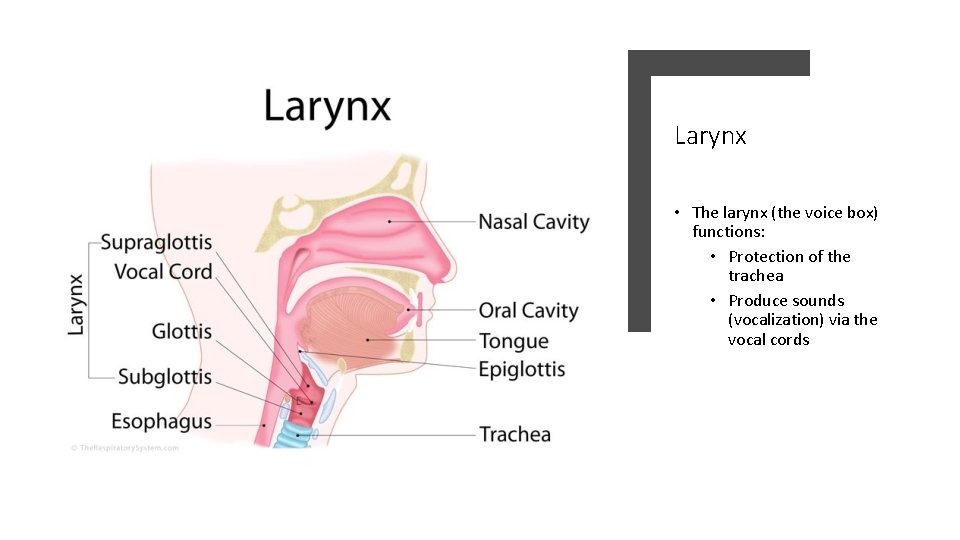
Larynx • The larynx (the voice box) functions: • Protection of the trachea • Produce sounds (vocalization) via the vocal cords
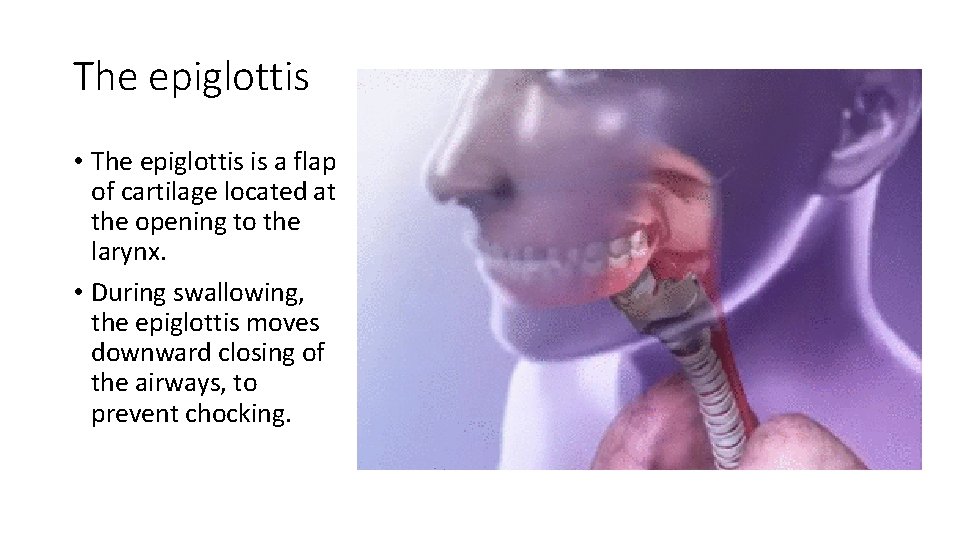
The epiglottis • The epiglottis is a flap of cartilage located at the opening to the larynx. • During swallowing, the epiglottis moves downward closing of the airways, to prevent chocking.
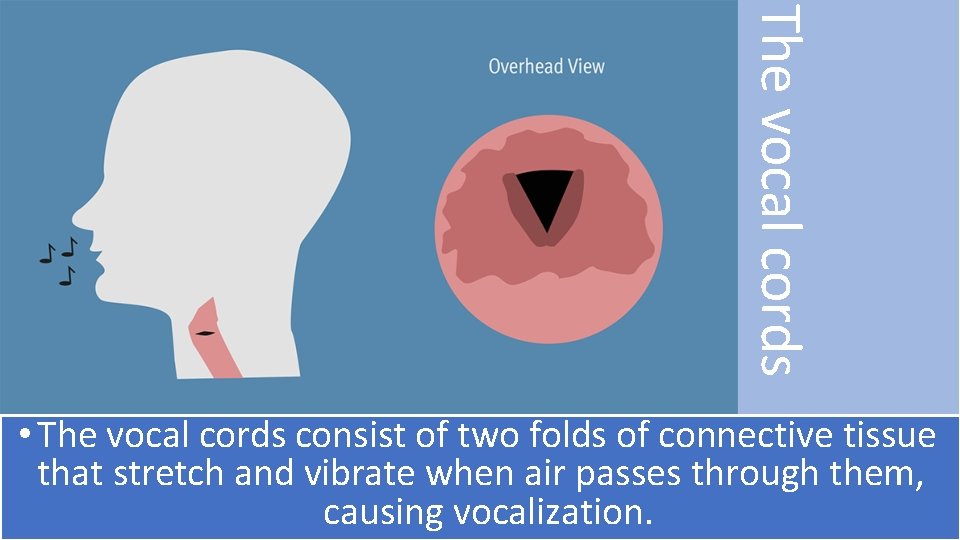
The vocal cords • The vocal cords consist of two folds of connective tissue that stretch and vibrate when air passes through them, causing vocalization.
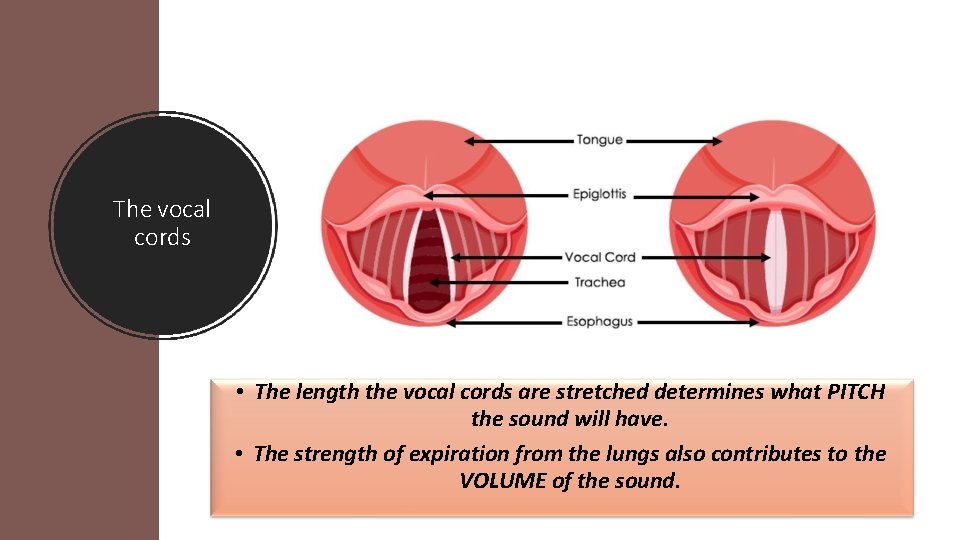
The vocal cords • The length the vocal cords are stretched determines what PITCH the sound will have. • The strength of expiration from the lungs also contributes to the VOLUME of the sound.
- Slides: 22