
The Respiratory System By Ryan Dimmig Spencer Valdez
The Respiratory System By Ryan Dimmig, Spencer Valdez, and Luke Reed
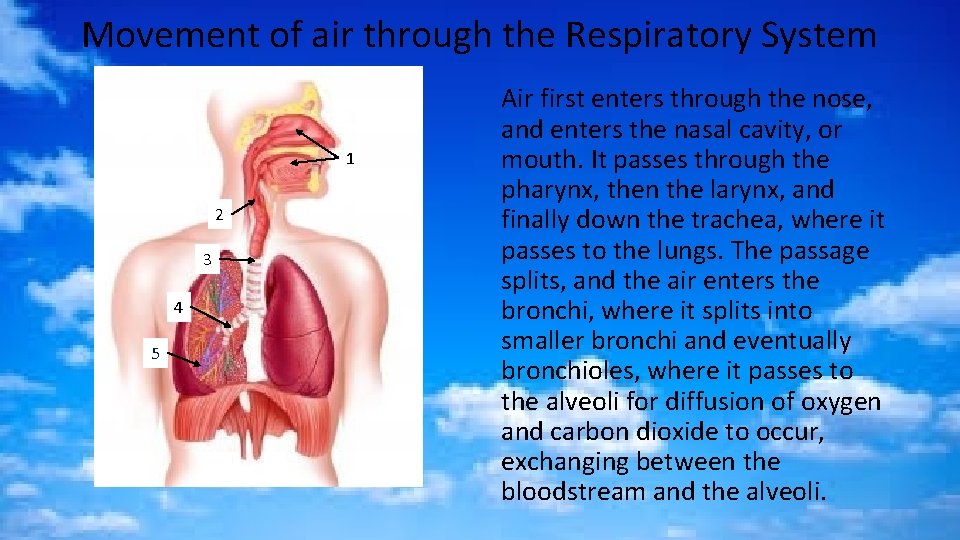
Movement of air through the Respiratory System 1 2 3 4 5 Air first enters through the nose, and enters the nasal cavity, or mouth. It passes through the pharynx, then the larynx, and finally down the trachea, where it passes to the lungs. The passage splits, and the air enters the bronchi, where it splits into smaller bronchi and eventually bronchioles, where it passes to the alveoli for diffusion of oxygen and carbon dioxide to occur, exchanging between the bloodstream and the alveoli.

Process of Inhaling and Exhaling • When you inhale, air enters into your lungs, then leaves when you exhale. The pressure in the lungs drops during inhalation, and rises during exhalation. • During inhalation, the diaphragm contracts to expand the lungs for breathing. • The intercostal muscles elevate the ribs and make the chest rise, and depress the ribs.
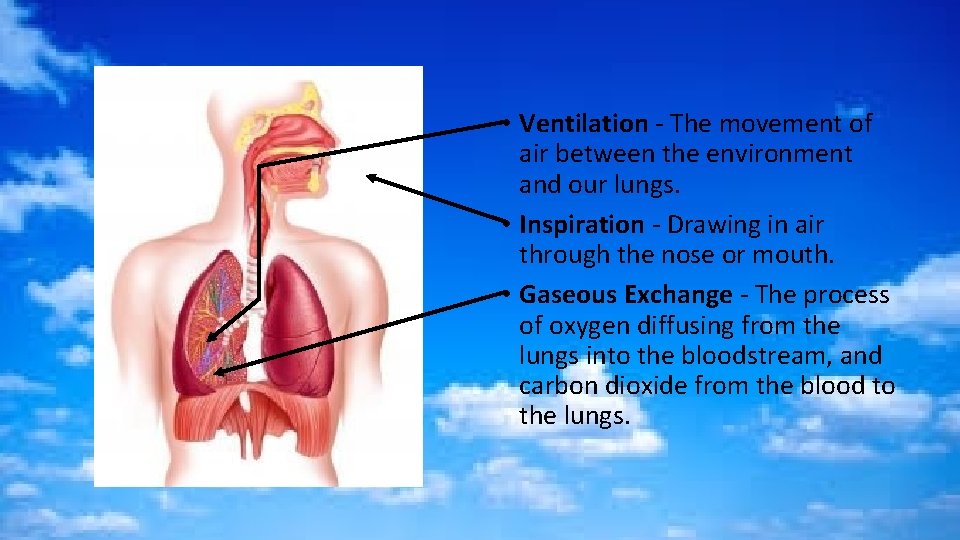
• Ventilation - The movement of air between the environment and our lungs. • Inspiration - Drawing in air through the nose or mouth. • Gaseous Exchange - The process of oxygen diffusing from the lungs into the bloodstream, and carbon dioxide from the blood to the lungs.
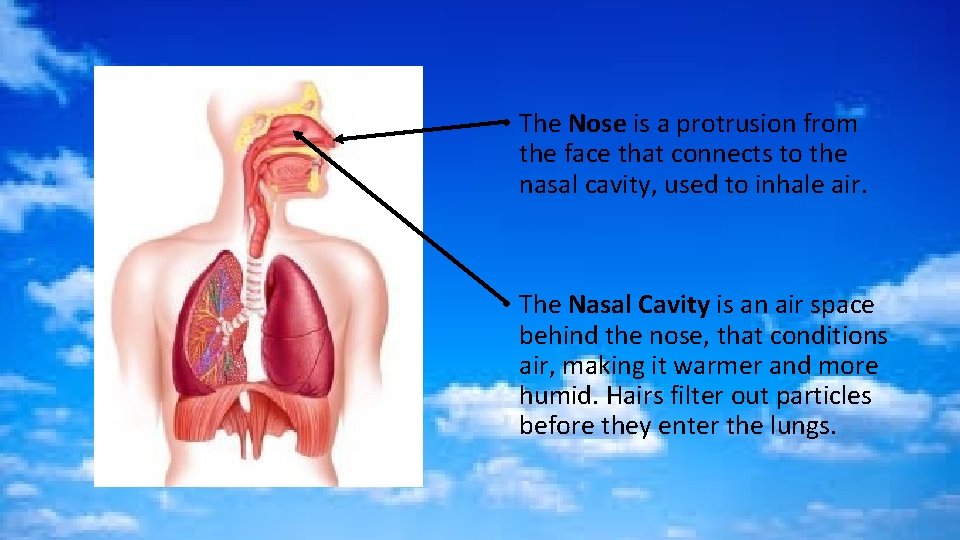
• The Nose is a protrusion from the face that connects to the nasal cavity, used to inhale air. • The Nasal Cavity is an air space behind the nose, that conditions air, making it warmer and more humid. Hairs filter out particles before they enter the lungs.
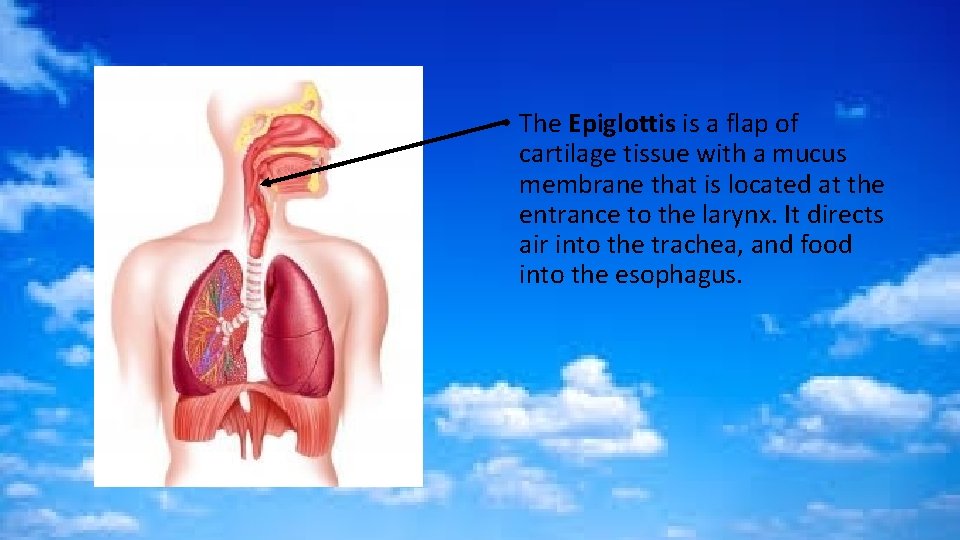
• The Epiglottis is a flap of cartilage tissue with a mucus membrane that is located at the entrance to the larynx. It directs air into the trachea, and food into the esophagus.
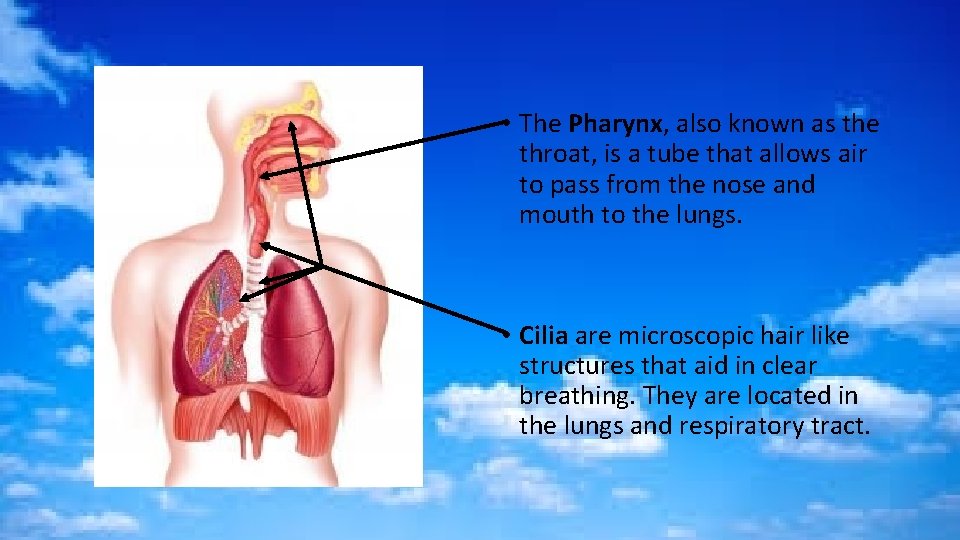
• The Pharynx, also known as the throat, is a tube that allows air to pass from the nose and mouth to the lungs. • Cilia are microscopic hair like structures that aid in clear breathing. They are located in the lungs and respiratory tract.
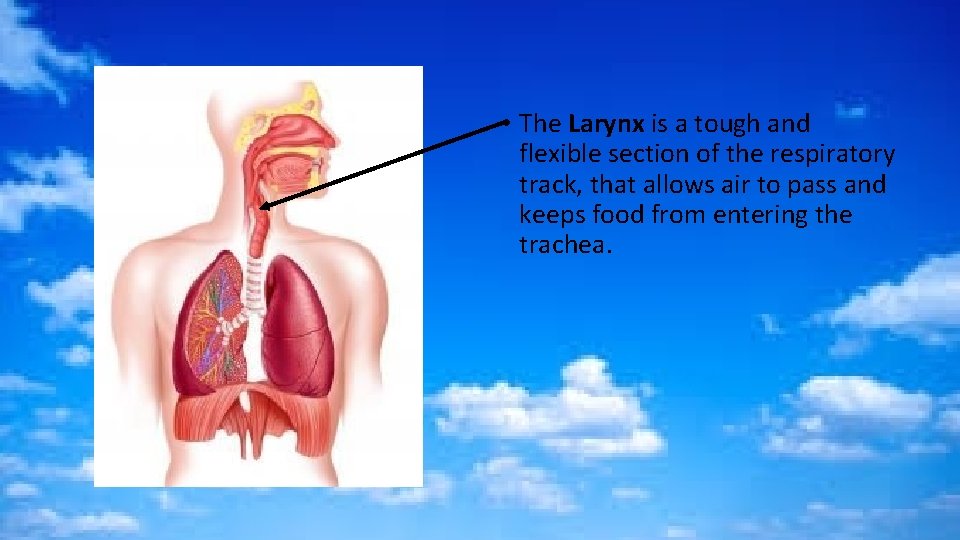
• The Larynx is a tough and flexible section of the respiratory track, that allows air to pass and keeps food from entering the trachea.
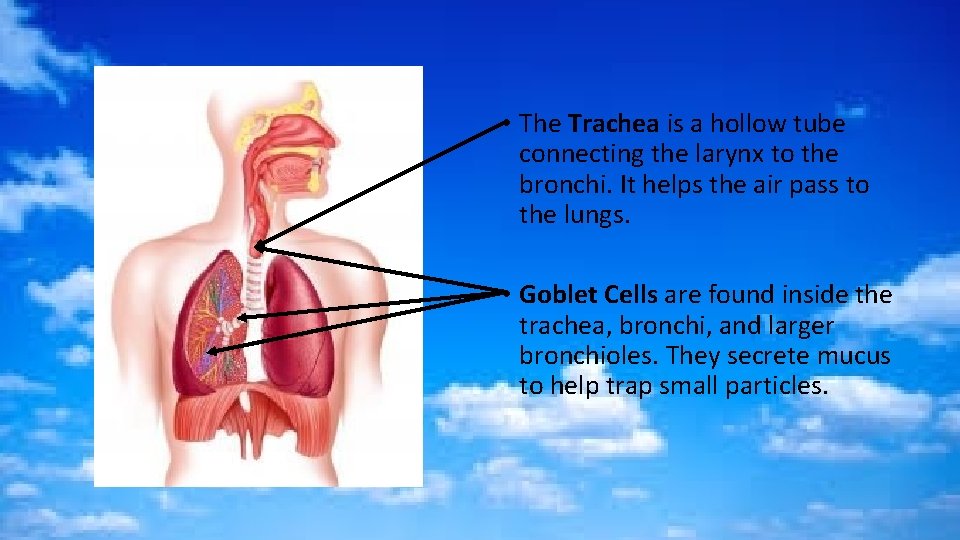
• The Trachea is a hollow tube connecting the larynx to the bronchi. It helps the air pass to the lungs. • Goblet Cells are found inside the trachea, bronchi, and larger bronchioles. They secrete mucus to help trap small particles.
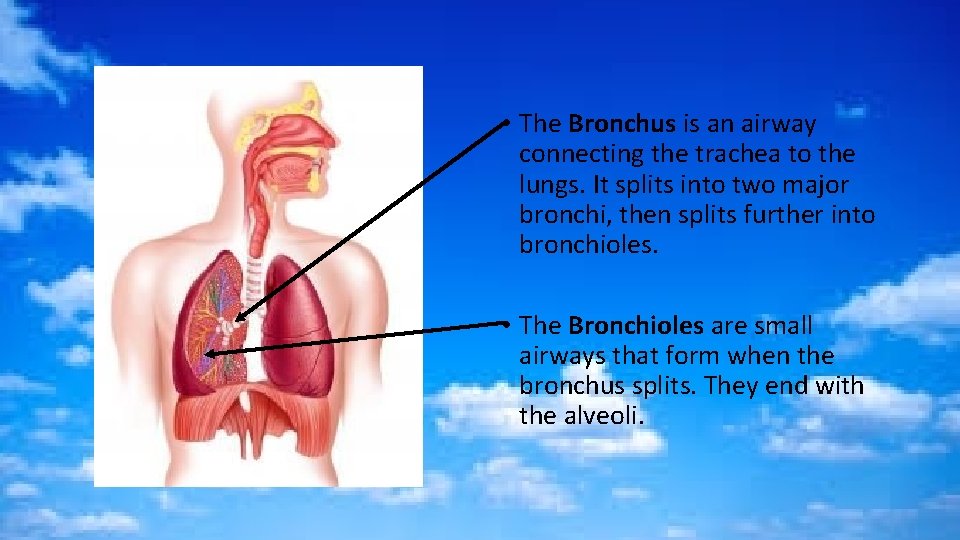
• The Bronchus is an airway connecting the trachea to the lungs. It splits into two major bronchi, then splits further into bronchioles. • The Bronchioles are small airways that form when the bronchus splits. They end with the alveoli.
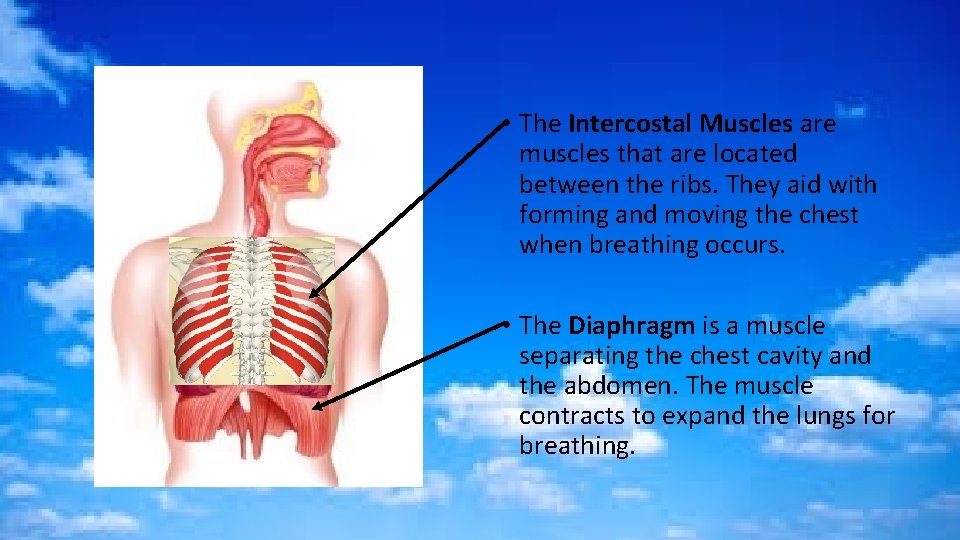
• The Intercostal Muscles are muscles that are located between the ribs. They aid with forming and moving the chest when breathing occurs. • The Diaphragm is a muscle separating the chest cavity and the abdomen. The muscle contracts to expand the lungs for breathing.
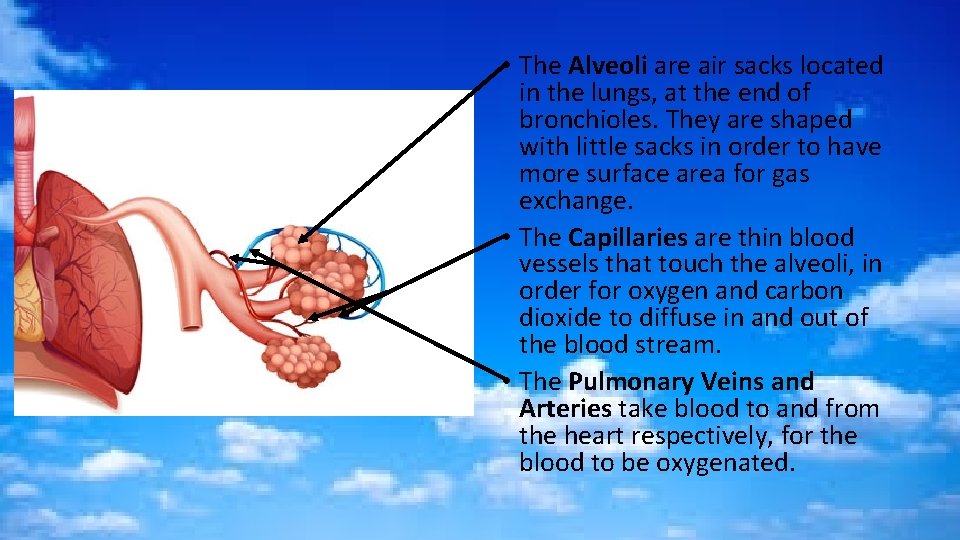
• The Alveoli are air sacks located in the lungs, at the end of bronchioles. They are shaped with little sacks in order to have more surface area for gas exchange. • The Capillaries are thin blood vessels that touch the alveoli, in order for oxygen and carbon dioxide to diffuse in and out of the blood stream. • The Pulmonary Veins and Arteries take blood to and from the heart respectively, for the blood to be oxygenated.

Websites Used Mdhealth. com Wikipedia. com Medicinenet. com Ciliopathyalliance. com Medicine. Plus. com Innerbody. com
- Slides: 13