
The Respiratory System Amy Nelson Jack Mc Cormick
- Slides: 17
The Respiratory System Amy Nelson, Jack Mc. Cormick, Cary Clark, Dylann Middleton, Emma Gleysteen, Lejla Markovic
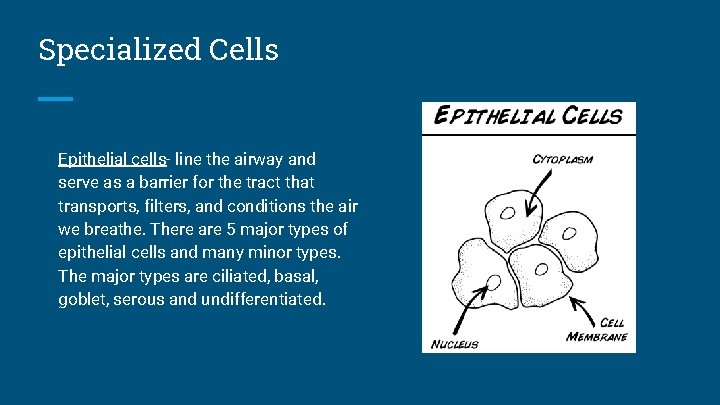
Specialized Cells Epithelial cells- line the airway and serve as a barrier for the tract that transports, filters, and conditions the air we breathe. There are 5 major types of epithelial cells and many minor types. The major types are ciliated, basal, goblet, serous and undifferentiated.
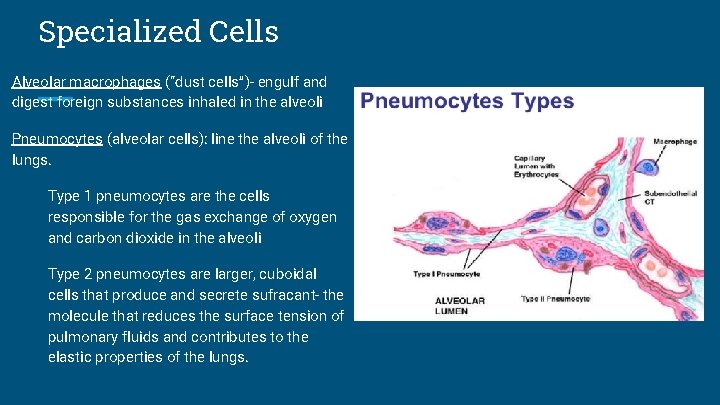
Specialized Cells Alveolar macrophages (“dust cells”)- engulf and digest foreign substances inhaled in the alveoli Pneumocytes (alveolar cells): line the alveoli of the lungs. Type 1 pneumocytes are the cells responsible for the gas exchange of oxygen and carbon dioxide in the alveoli Type 2 pneumocytes are larger, cuboidal cells that produce and secrete sufracant- the molecule that reduces the surface tension of pulmonary fluids and contributes to the elastic properties of the lungs.
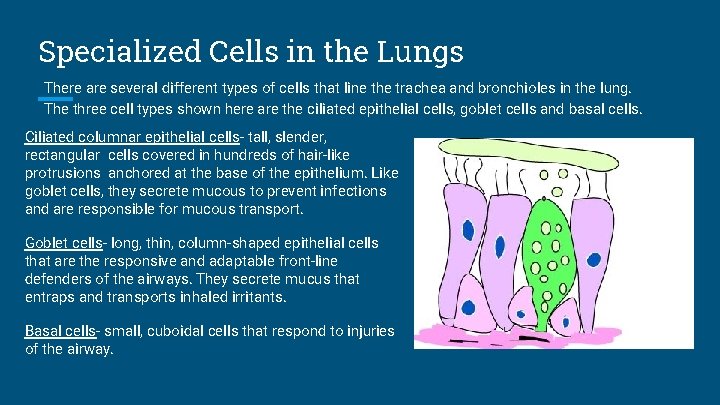
Specialized Cells in the Lungs There are several different types of cells that line the trachea and bronchioles in the lung. The three cell types shown here are the ciliated epithelial cells, goblet cells and basal cells. Ciliated columnar epithelial cells- tall, slender, rectangular cells covered in hundreds of hair-like protrusions anchored at the base of the epithelium. Like goblet cells, they secrete mucous to prevent infections and are responsible for mucous transport. Goblet cells- long, thin, column-shaped epithelial cells that are the responsive and adaptable front-line defenders of the airways. They secrete mucus that entraps and transports inhaled irritants. Basal cells- small, cuboidal cells that respond to injuries of the airway.
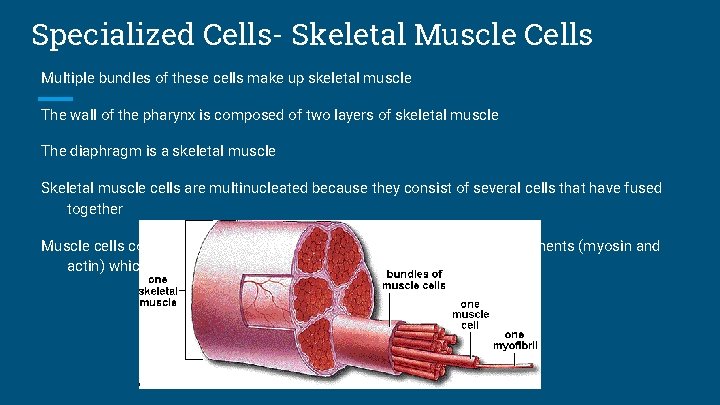
Specialized Cells- Skeletal Muscle Cells Multiple bundles of these cells make up skeletal muscle The wall of the pharynx is composed of two layers of skeletal muscle The diaphragm is a skeletal muscle Skeletal muscle cells are multinucleated because they consist of several cells that have fused together Muscle cells contain many mitochondria and the characteristic protein filaments (myosin and actin) which are responsible for the muscle contraction.
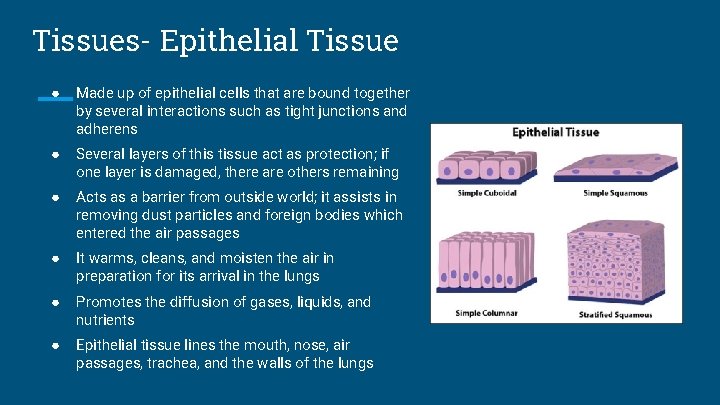
Tissues- Epithelial Tissue ● Made up of epithelial cells that are bound together by several interactions such as tight junctions and adherens ● Several layers of this tissue act as protection; if one layer is damaged, there are others remaining ● Acts as a barrier from outside world; it assists in removing dust particles and foreign bodies which entered the air passages ● It warms, cleans, and moisten the air in preparation for its arrival in the lungs ● Promotes the diffusion of gases, liquids, and nutrients ● Epithelial tissue lines the mouth, nose, air passages, trachea, and the walls of the lungs
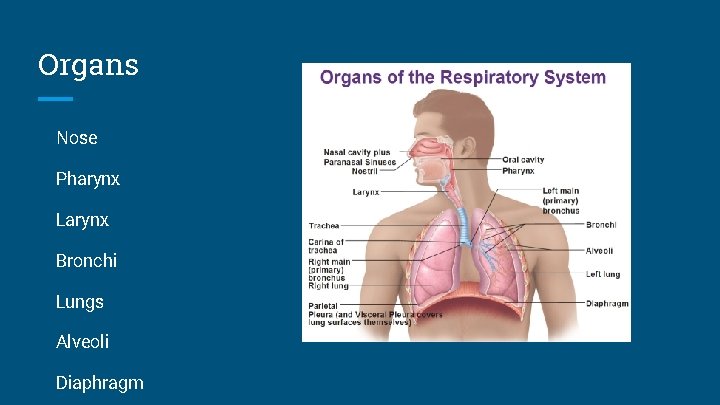
Organs Nose Pharynx Larynx Bronchi Lungs Alveoli Diaphragm
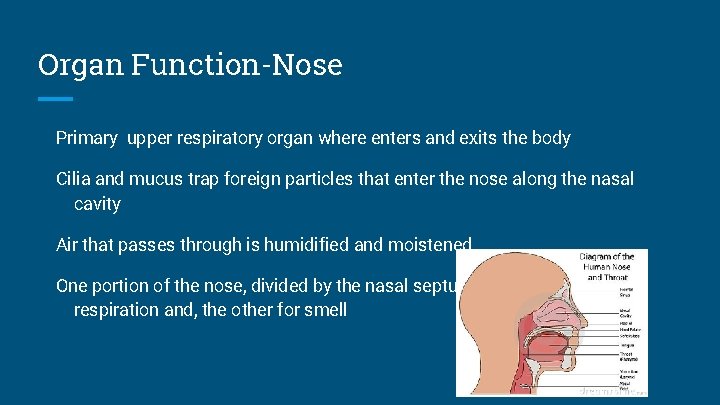
Organ Function-Nose Primary upper respiratory organ where enters and exits the body Cilia and mucus trap foreign particles that enter the nose along the nasal cavity Air that passes through is humidified and moistened One portion of the nose, divided by the nasal septum, is dedicated for respiration and, the other for smell
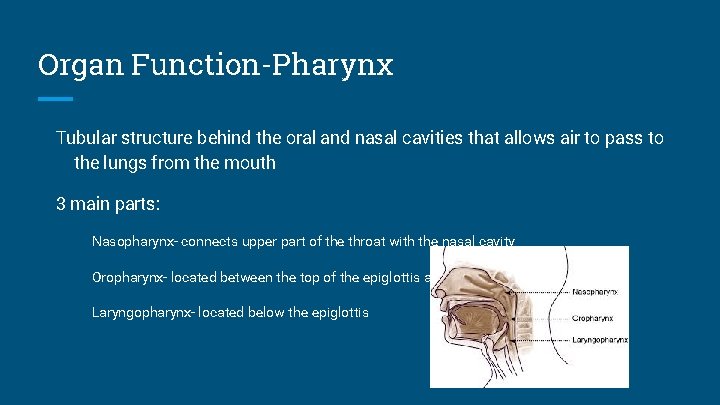
Organ Function-Pharynx Tubular structure behind the oral and nasal cavities that allows air to pass to the lungs from the mouth 3 main parts: Nasopharynx- connects upper part of the throat with the nasal cavity Oropharynx- located between the top of the epiglottis and soft palate Laryngopharynx- located below the epiglottis
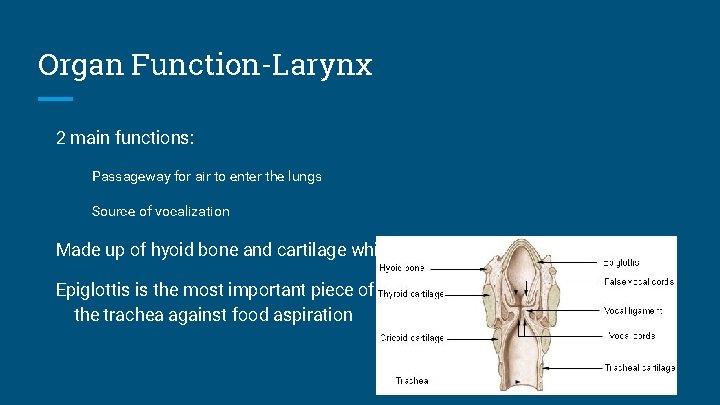
Organ Function-Larynx 2 main functions: Passageway for air to enter the lungs Source of vocalization Made up of hyoid bone and cartilage which help regulate the flow of air Epiglottis is the most important piece of cartilage in the larynx as it protects the trachea against food aspiration
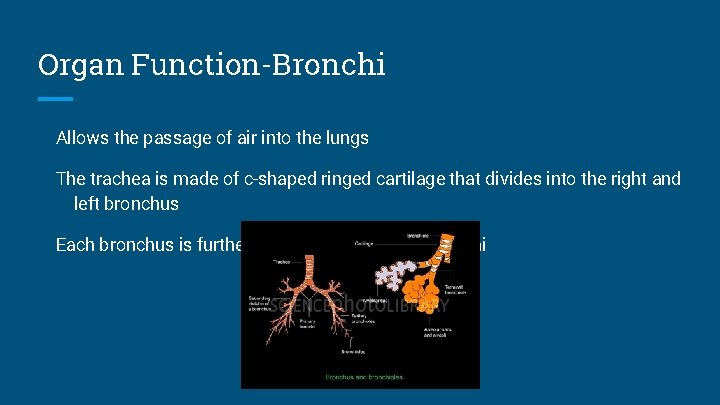
Organ Function-Bronchi Allows the passage of air into the lungs The trachea is made of c-shaped ringed cartilage that divides into the right and left bronchus Each bronchus is further subdivided into lobar bronchi
Organ Function-Lungs Spongy, air-filled organs positioned on both sides of the chest cavity Left lung divided into superior and inferior lobe, while the right lung is divided into superior, middle, and inferior lobes Pleura- a thin layer of tissue lining the lungs allowing them to expand contract easily Primary function of the lungs is to respire Specifically to transfer oxygen from the atmosphere release of carbon dioxide into the air into the bloodstream and the
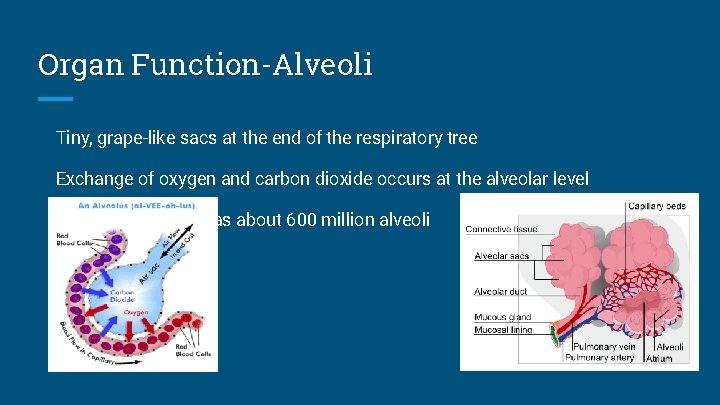
Organ Function-Alveoli Tiny, grape-like sacs at the end of the respiratory tree Exchange of oxygen and carbon dioxide occurs at the alveolar level The average adult has about 600 million alveoli
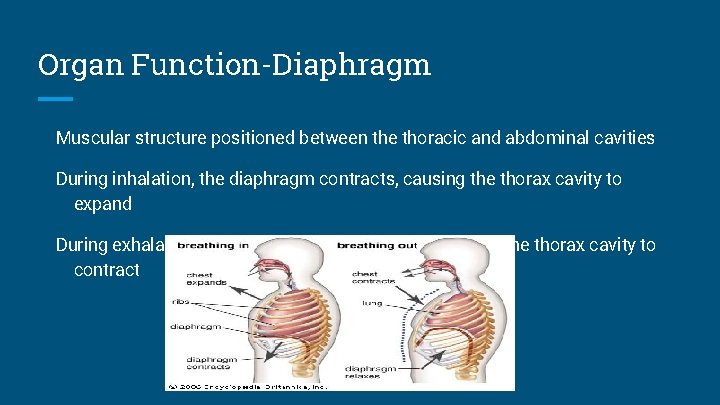
Organ Function-Diaphragm Muscular structure positioned between the thoracic and abdominal cavities During inhalation, the diaphragm contracts, causing the thorax cavity to expand During exhalation, the release of the diaphragm leads to the thorax cavity to contract
Cell Communication- Hormones Progesterone: Produced by corpus luteum and activates a steroid receptor in the medulla oblongata to stimulate and facilitate respiration. Thyroxine: Produced by thyroid gland is received by nearly every cell in the body. Facilitates respiration.
Cell Communication- Enzymes Carbonic anhydrase: Produced and found within red blood cells. Triggered by a zinc ion at the active site. Catalyzes the combination of CO 2 and water to form carbonic acid, protons, and bicarbonate ions in a reversible reaction to allow for the transport of CO 2 through the bloodstream Angiotensin-converting enzyme (ACE): Mainly located within the capillaries of the lungs. Also activated by a zinc ion. Converts angiotensin I to angiotensin II, a vasoconstrictor (increases blood pressure)
Works Cited http: //www. ncbi. nlm. nih. gov/pubmed/7995400 http: //bodywikifoundry. com/page/Specialized+Cells+and+Structures+of+th e+Respiratory+System http: //www. medicinenet. com/script/main/art. asp? articlekey=17679 http: //www. md-health. com/Function-Of-Organs-In-Respiratory-System. html http: //www. livestrong. com/article/85294 -respiratory-epithelial-cells/ http: //www. bio. davidson. edu/people/kabernd/bernd. CV/Lab/Epithelial. Info. Web/ Ciliated%20 Columnar%20 Epithelium. html http: //pdb 101. rcsb. org/motm/49