
The Respiratory System A Breathtaking Analysis of Structure
The Respiratory System A Breathtaking Analysis of Structure and Function
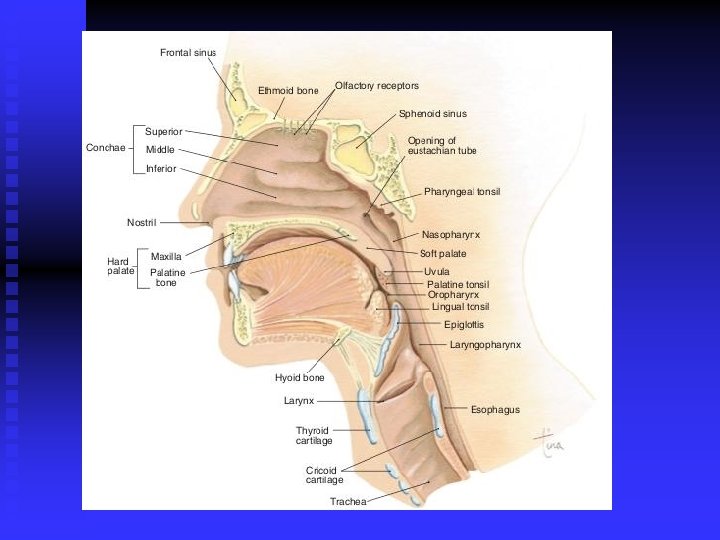
Nose n External nares = nostrils n Vestibule – small hair-lined chamber n Nasal cavity Divided by nasal septum u. Lined with nasal conchae to increase surface area u** Ciliated mucous membrane u
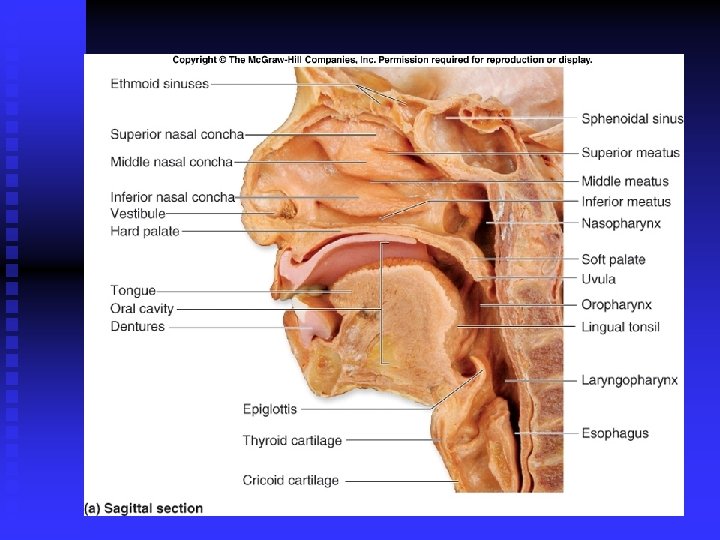
Pharynx n Segments Nasopharynx – behind nose; air only u. Oropharynx – behind mouth; air & food u. Laryngopharynx – air & food u
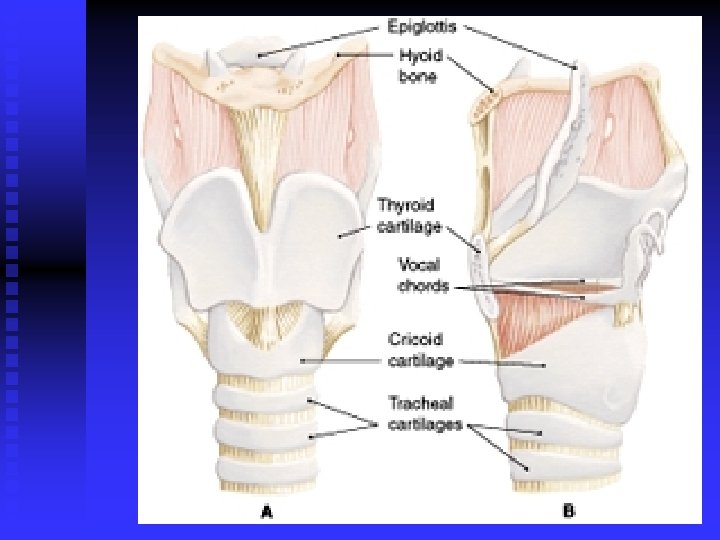
Larnyx n AKA Voice Box n Thyroid & cricoid cartilage n Epiglottis – flap of tissue that closes over trachea when swallowing n Vocal cords – elastic tissue UNCILIATED u
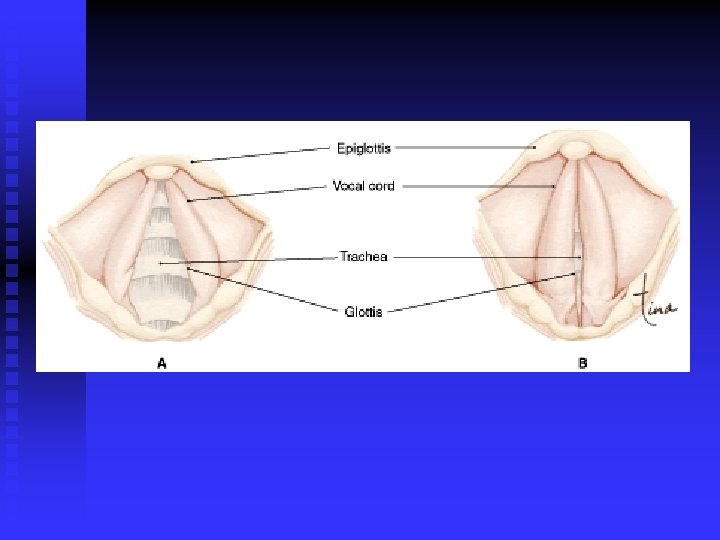
WHY DO WE CLEAR OUR THROATS?
Trachea n C rings of cartilage allow esophagus to expand n Lined with ciliated mucous membrane
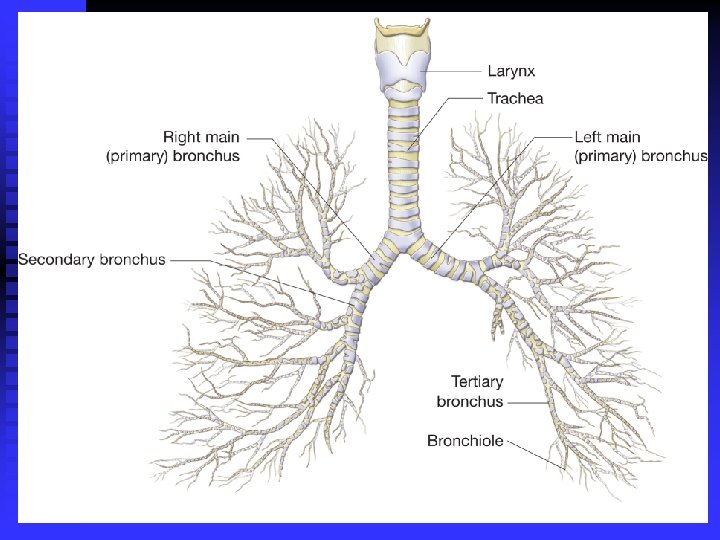
Bronchial Tree n R & L primary bronchi n Branching network n Smallest tubes = Bronchioles n Connect to alveoli n Lined with surfactant to counteract surface tension of water
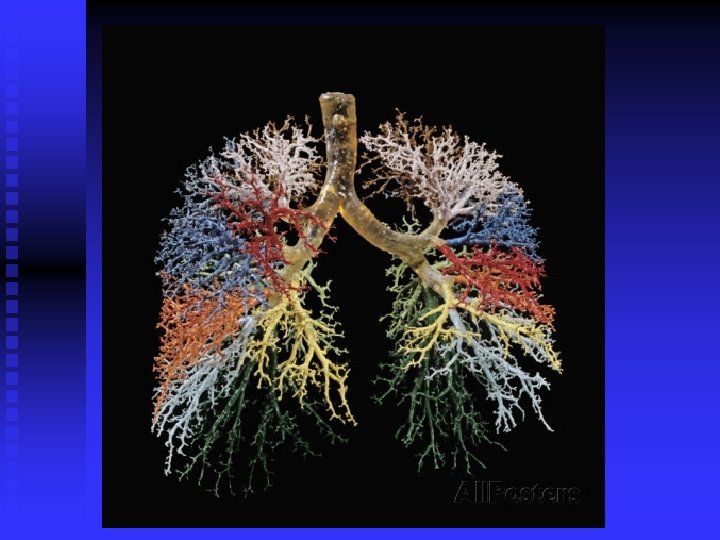
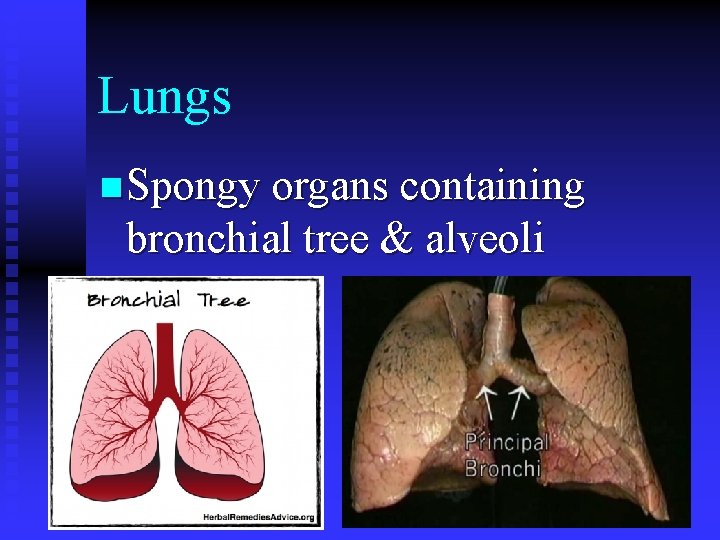
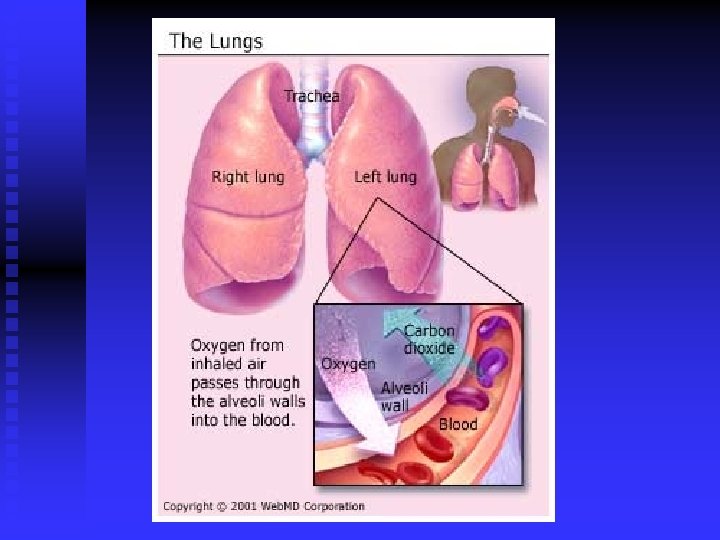
Lungs n Spongy organs containing bronchial tree & alveoli
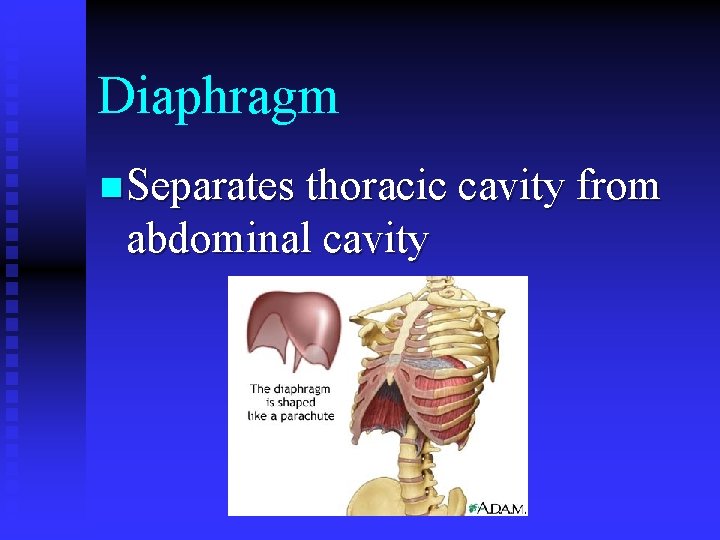
Diaphragm n Separates thoracic cavity from abdominal cavity
Respiration n Pulmonary ventilation – air in and out n External respiration – gases between lungs & blood n Internal respiration – gases between blood & body cells
Mechanics of Breathing
Background Information n Pressure is basically the number of collisions between molecules n Increasing the volume will… n Decreasing the volume will…
Inspiration (Inhalation) n Contraction of diaphragm & intercostals n Thoracic cavity expands, increasing the volume n Thoracic cavity pressure decreases
Inspiration (Inhalation) n Lung surface pulls outward, increasing the lung volume n Alveoli volume increases & pressure drops n Air rushes in to restore equilibrium
Expiration (Exhalation) n Diaphragm & intercostals relax n Thoracic cavity reduces in size, increasing pressure n Lung surface recoils to original shape, increasing pressure
Expiration (Exhalation) n Volume of alveoli decreases n Alveolar pressure increases n Air flows out of alveoli
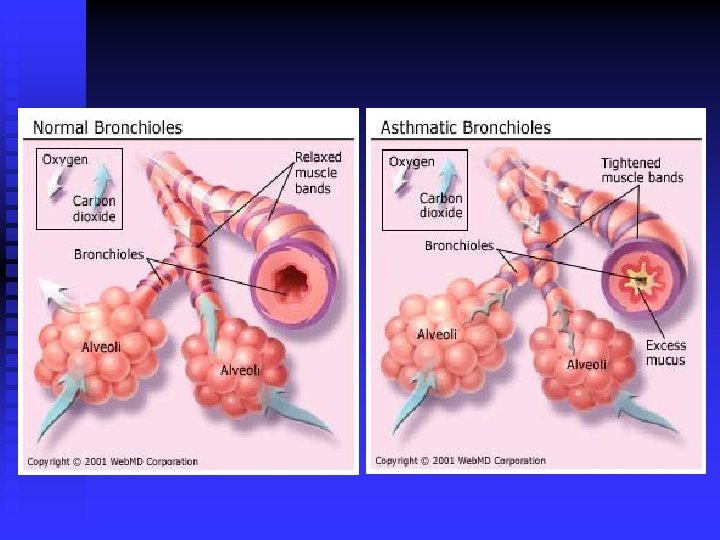
ASTHMA n Tightening of bronchial tubes from spasms & mucus n Chronic vs. exercise-induced vs. occupational Vary based on trigger/cause u
Exchange of Gases
Basic Information n Partial pressures determine direction of movement of gases n Only gases in the plasma affect the partial pressure n Oxygen & CO 2 diffuse independently of each other
External Respiration n Between alveoli & bloodstream n PO 2 in alveoli > PO 2 in plasma n Most O 2 entering blood is bound by Hb n O 2 goes to plasma only when Hb is saturated
External Respiration n CO 2 in opposite direction n PCO 2 in plasma > PCO 2 in alveoli
Internal Respiration n Between capillaries & body cells n PO 2 in capillaries > cytoplasm n PCO 2 in cytoplasm > capillaries
But there’s a catch… n CO 2 has an affinity for Hb n If CO 2 binds to Hb, it blocks the binding sites for O 2 n If O 2 can’t bind to Hb, we can’t bring nearly as much O 2 into the blood
So… n When CO 2 enters the blood, it combines with water to form carbonic acid n The carbonic acid immediately breaks down into Hydrogen ions (H+) & Bicarbonate ions (HCO 3 -)
Then… n The + H can’t be left in the plasma so it hitches a ride on the Hb n The HCO 3 just chills in the plasma and makes the trip to the lungs
In the lungs… n H+ & HCO 3 - recombine to form carbonic acid and then CO 2 & H 2 O n The CO 2 is exhaled and the H 2 O stays in the body
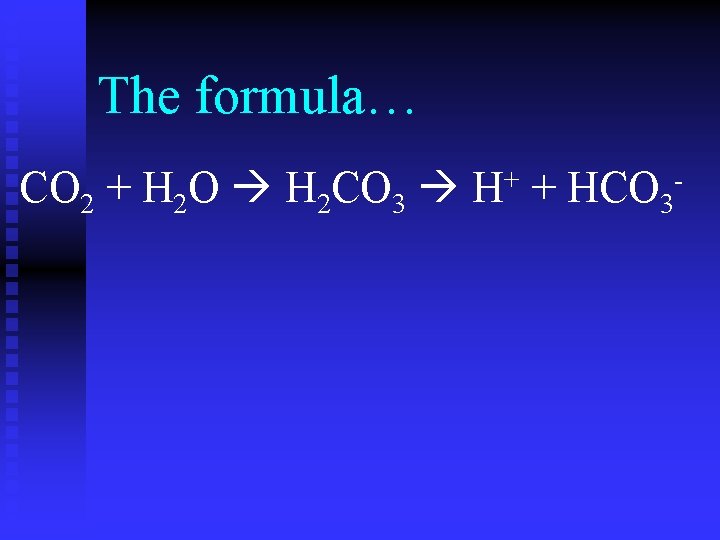
The formula… CO 2 + H 2 O H 2 CO 3 H+ + HCO 3 -
- Slides: 35