
The Respiratory System 10162021 SAP 4 b 1
The Respiratory System 10/16/2021 SAP 4 b 1
SAP 4. b Students will analyze the physical, chemical, and biological properties of process systems as these relate to transportation, absorption and excretion, including the cardiovascular, respiratory, digestive, excretory and immune systems. b. Analyze, and explain the relationships between the respiratory and cardiovascular systems as they obtain oxygen needed for the oxidation of nutrients and removal of carbon dioxide. 10/16/2021 SAP 4 b 2
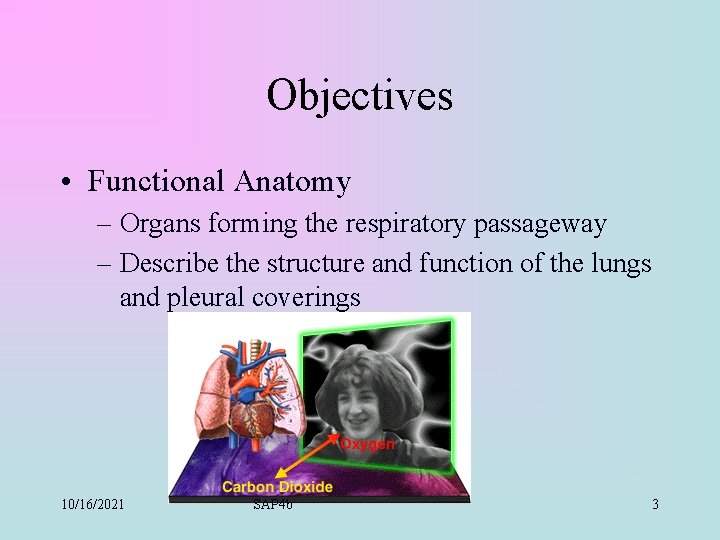
Objectives • Functional Anatomy – Organs forming the respiratory passageway – Describe the structure and function of the lungs and pleural coverings 10/16/2021 SAP 4 b 3
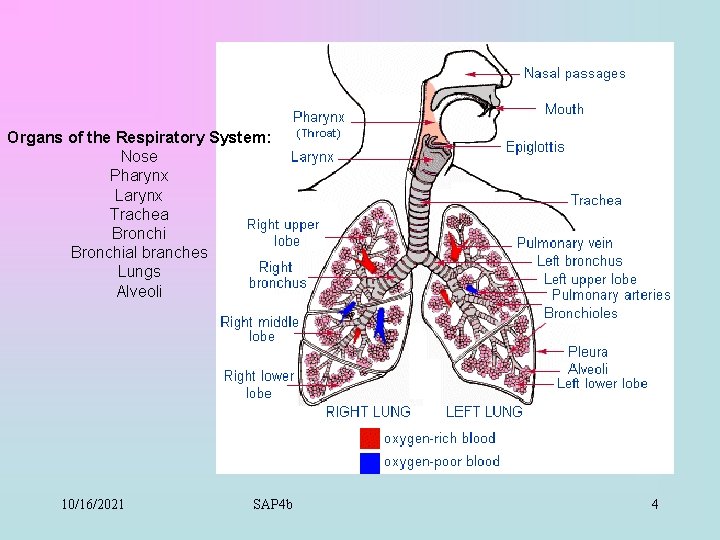
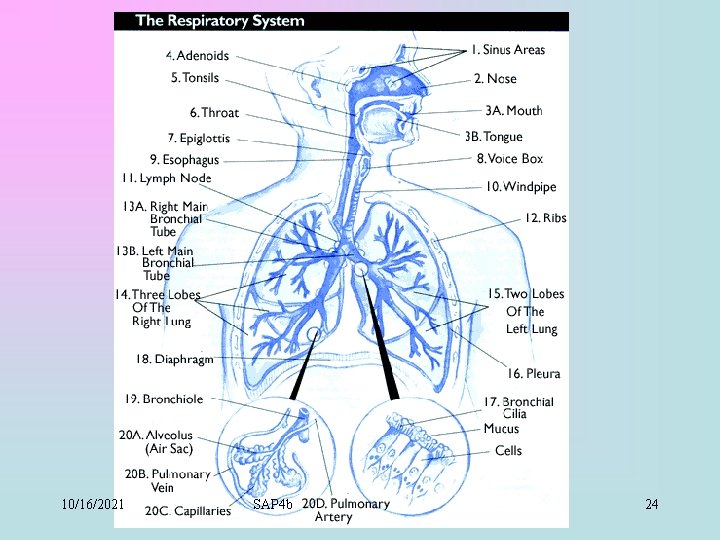
Organs of the Respiratory System: Nose Pharynx Larynx Trachea Bronchial branches Lungs Alveoli 10/16/2021 SAP 4 b 4
Functions of Respiratory System • • Delivers O 2 Removes CO 2 Filters the air Regulates blood p. H 10/16/2021 SAP 4 b 5

Respiratory System Anatomy Nose – Openings = nostrils/external nares – Nasal Cavity = large open chamber • Lined with mucous membrane – Sticky – Wet – Warm (blood vessels) – Separated by the septum – Contains the sinuses- air pockets in the skull bones • Lightens skull • Affects voice – Named for bones: 10/16/2021 • • Frontal Ethmoidal Sphenoidal Maxillary SAP 4 b 6
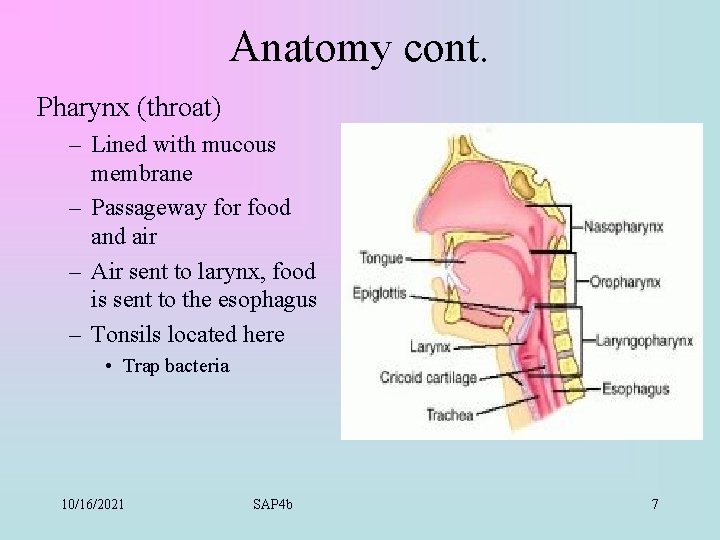
Anatomy cont. Pharynx (throat) – Lined with mucous membrane – Passageway for food and air – Air sent to larynx, food is sent to the esophagus – Tonsils located here • Trap bacteria 10/16/2021 SAP 4 b 7
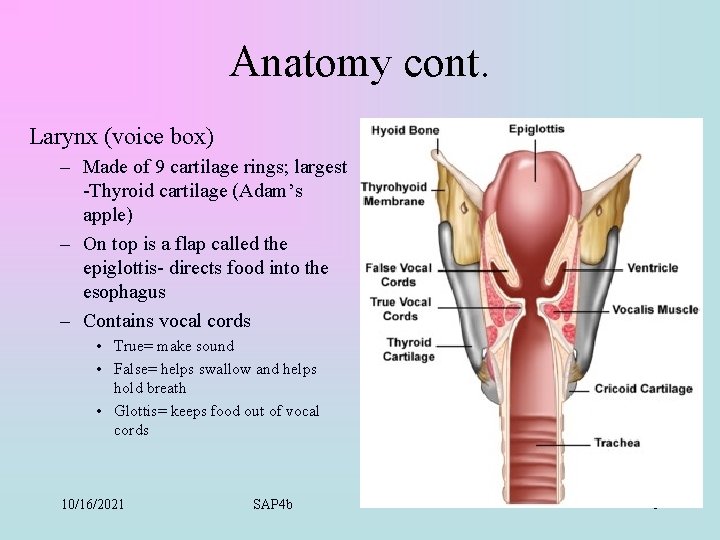
Anatomy cont. Larynx (voice box) – Made of 9 cartilage rings; largest -Thyroid cartilage (Adam’s apple) – On top is a flap called the epiglottis- directs food into the esophagus – Contains vocal cords • True= make sound • False= helps swallow and helps hold breath • Glottis= keeps food out of vocal cords 10/16/2021 SAP 4 b 8
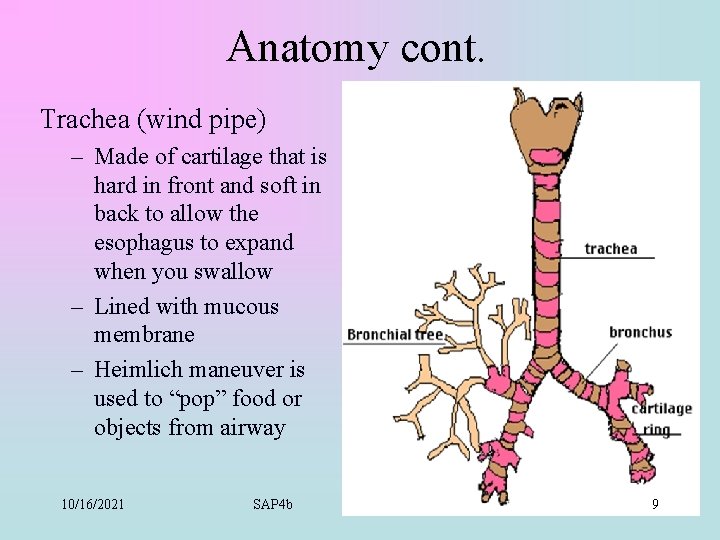
Anatomy cont. Trachea (wind pipe) – Made of cartilage that is hard in front and soft in back to allow the esophagus to expand when you swallow – Lined with mucous membrane – Heimlich maneuver is used to “pop” food or objects from airway 10/16/2021 SAP 4 b 9
Anatomy cont. Lungs- air sacs/ not muscle – Right lung- 3 lobes; left lung- 2 lobes – Surrounded by a pleural membrane – Contains bronchiole tree • • • Primary bronchus (1º) Secondary (2º) bronchi Tertiary (3º) bronchioles Terminal bronchioles Alveolar sac – Contains alveoli – Gas exchange/covered with capillaries – Very thin, easy to damage 10/16/2021 SAP 4 b 10
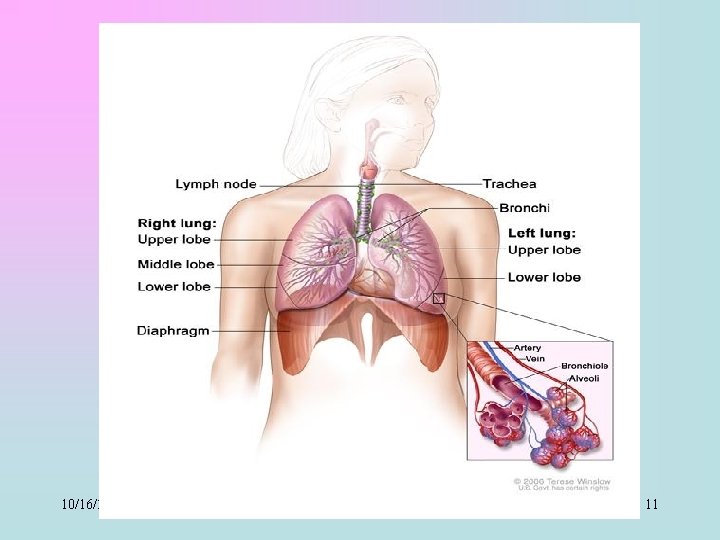
10/16/2021 SAP 4 b 11
Lung volumes/capacities • Tidal volume- amount of air breathed in and out in 1 breath • Inspiratory Reserve Volume- maximum amount of air you can pull in • Expiratory Reserve Volume- maximum amount of air you can exhale * NO BIG BREATH FIRST • Residual Volume- amount of air left in lungs after exhaling everything possible 1. Keeps the lungs slightly inflated 2. Keeps gas exchange happening • Vital Capacity- take in a big breath first and then exhale as much as possible • Functional Residual Volume- amount of air left in lungs after normal breathing • Total Lung Capacity- total of all volumes; total air in/out and residual 10/16/2021 SAP 4 b 12 *6 liters
Overview • The primary function of the respiratory system is to supply the blood with oxygen in order for the blood to deliver oxygen to all parts of the body. The respiratory system does this through breathing. When we breathe, we inhale oxygen and exhale carbon dioxide. This exchange of gases is the respiratory system's means of getting oxygen to the blood. 10/16/2021 SAP 4 b 13
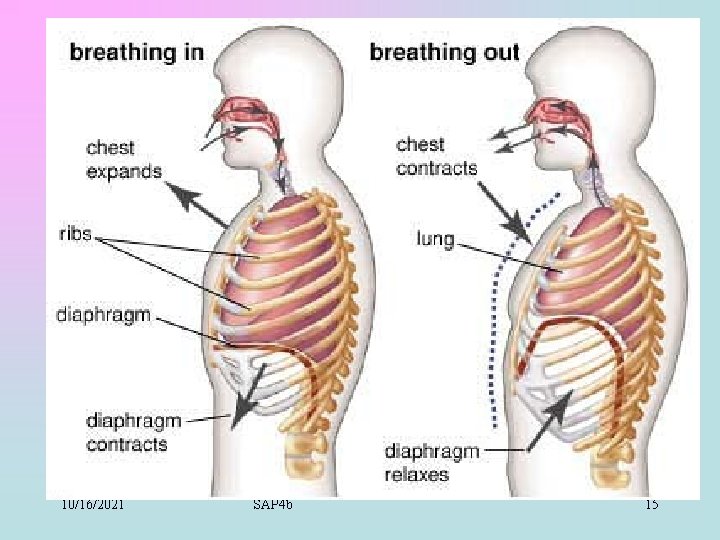
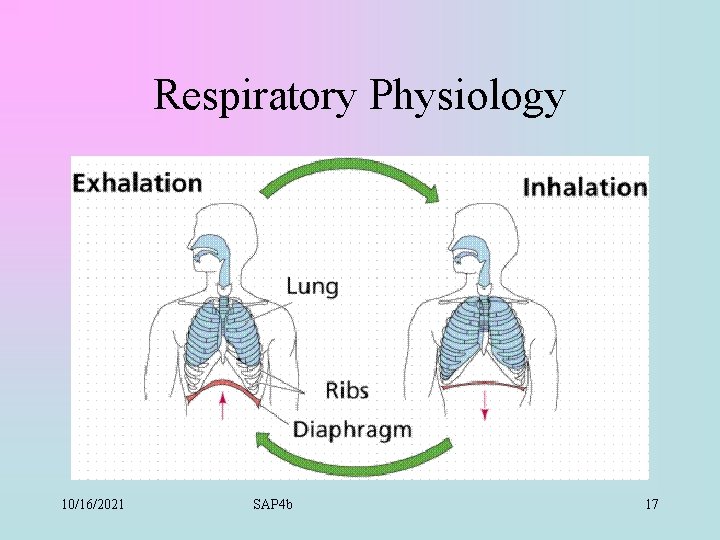
Breathing In=Inhalation/Inspiration – Active process- muscle contract/energy – Diaphragm contracts and moves down – External intercostals contract and pulls ribcage up and out – Surface Tension between the lung and the chest wall makes the lung be pulled out with the ribs (in step 3) – Volume in the lungs increases, pressure decreases – To equalize the pressure we bring in more air 10/16/2021 SAP 4 b 14
10/16/2021 SAP 4 b 15
Breathing cont. Out=Exhalation/Expiration *passive- caused by muscles relaxing – Muscles relax pushing on lungs – Volume decreased, pressure increased – To equalize the pressure we push air out In a forced exhale, your ab muscles and your oblique muscles will contract to push on stomach and then diaphragm 10/16/2021 SAP 4 b 16
Respiratory Physiology 10/16/2021 SAP 4 b 17
Factors that Influence Respiration • Emotional • Physical – Fear – Sadness – Excitement – Talking – Coughing – Exercising • Chemical • Volition – Conscious control 10/16/2021 SAP 4 b – Carbon dioxide levels – Decreased ph of blood 18
Non Respiratory Air Movements • Voluntary or reflex activities that move air in or out of the lungs 10/16/2021 SAP 4 b • Include: – – – Sneezing Laughing Coughing Crying Hiccupping Yawning 19
Respiratory Disorders 10/16/2021 SAP 4 b 20
COPD (Chronic Obstructive Pulmonary Disorders) • Emphysema- associated with smoking and second hand smoke – Alveoli become enlarged and eventually rupture – Poor gas exchange, difficulty breathing, possibly rasping noise • Lung Cancer- associated with smoking; tumor in lung tissue. – Depending on what part of the lung is affected symptoms vary • Chronic Bronchitis- inflammation of the bronchioles; with increased mucus production; person has a productive cough (coughs up sputum) & labored breathing 10/16/2021 SAP 4 b 21
Disorders cont. • Pneumonia- fluid accumulates in the lungs, viral or bacterial • Asthma- bronchiol walls spasm causing “spits” of air to enter lungs instead of a stream of air; inhalers relax the bronchioles to allow air to enter • Cystic Fibrosis- genetic; increased mucus production. Too much mucus clogs air ways & tubes of the respiratory and digestive system • Sinusitis- inflamed mucus membranes in the sinuses, causes increased pressure in sinus cavities (headaches) 10/16/2021 SAP 4 b 22
Disorders of RS • URI— – Upper respiratory infection – “Head Cold” • LRI— – Lower respiratory infection – “Chest Cold” • TB – Tuberculosis – Destroys lungs • Pleurisy – Inflammation of the pleura 10/16/2021 SAP 4 b • Influenza – Acute infectious viral disease – Fever, chills, myalgia, headache, anorexia • Cystic fibrosis – Hereditary disorder, affects exocrine glands – lungs, pancreas, digestive tract affected – Viscous mucus blocks bronchioles – Gas exchange impaired 23
10/16/2021 SAP 4 b 24
- Slides: 24