
The Respiratory System 1 Anatomy and Physiology Consists
- Slides: 21
The Respiratory System 1
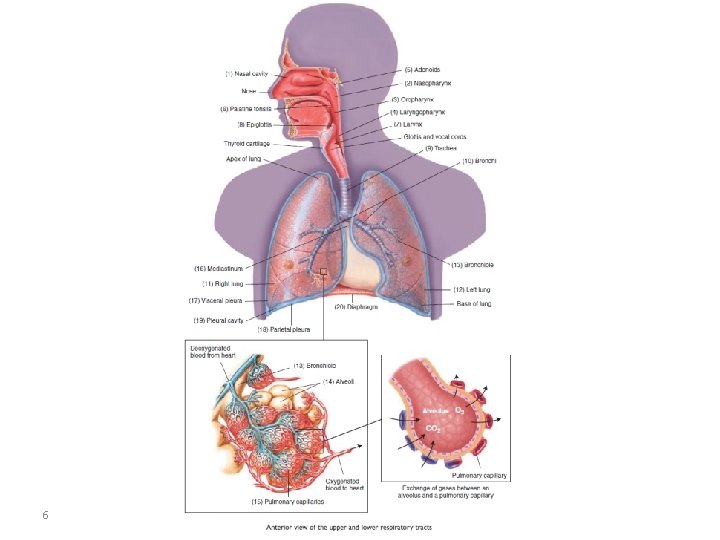
Anatomy and Physiology • Consists of upper and lower respiratory tracts, lungs, and thoracic cage. • The respiratory system is responsible for; The exchange of oxygen (O 2) and carbon dioxide (CO 2). q Helps regulate the body’s acid-base balance thereby maintaining homeostasis. q Helps regulate the body’s temperature. q Phonation q 2
Upper Respiratory Tract • Consists of the nose, mouth, nasopharynx, oropharynx, laryngopharynx, and larynx. • Besides warming and humidifying inhaled air, these structures enable taste, smell, and the chewing of food. • Air gets into the nose through the nares (nostrils). In the nares, small hairs filter the air out of dust and large foreign particles. • Air passes into two nasal passages separated by the nasal septum. • Cartilage forms the anterior walls of the nasal passages, whereas bony structures, conchae, form the posterior walls of the nasal passages. • Olfactory neurons are receptors for the sense of smell. These neurons are located deep in the nasal cavity, embedded among the epithelial cells lining the nasal tract. 3
Upper Respiratory Tract (cont. ) • Pharynx, (Greek = throat), a muscular tube that serves as a passageway for food and air. It consists of three sections: q q q Nasopharynx, posterior to the nose, extends from the posterior nares to the soft palate. Nasopharynx has a collection of lymphoid tissue known as adenoids (pharyngeal tonsils). Oropharynx, posterior to the mouth, extends from the soft palate to the upper portion of the epiglottis. Palatine tonsils, more commonly known as tonsils, are located in the oropharynx. Laryngopharynx, superior to the larynx, extends to the esophagus and larynx. • Larynx (voice box). Contains the vocal cord. It connects the pharynx with the trachea. q q 4 Glottis = a slit like opening between the vocal cords, causes vibration of the vocal cords during expiration, creating the sound of the voice. Epiglottis = A leaf-shaped flexible cartilage on top of the larynx that bends reflexively to close the larynx during swallowing.
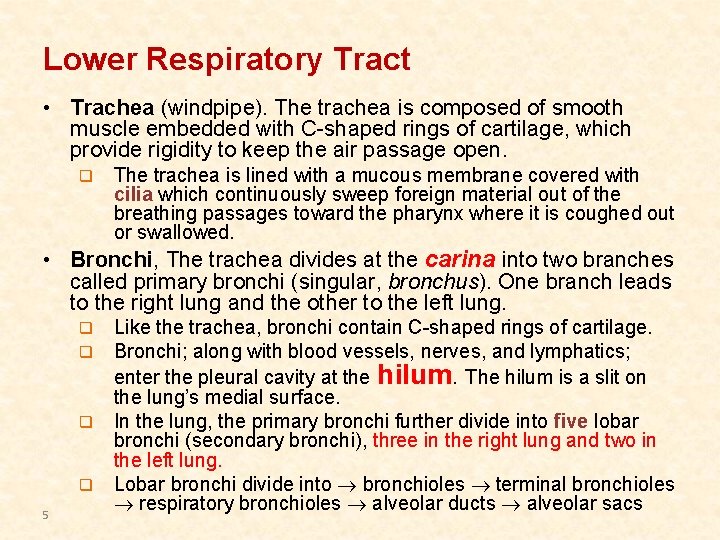
Lower Respiratory Tract • Trachea (windpipe). The trachea is composed of smooth muscle embedded with C-shaped rings of cartilage, which provide rigidity to keep the air passage open. q The trachea is lined with a mucous membrane covered with cilia which continuously sweep foreign material out of the breathing passages toward the pharynx where it is coughed out or swallowed. • Bronchi, The trachea divides at the carina into two branches called primary bronchi (singular, bronchus). One branch leads to the right lung and the other to the left lung. q q 5 Like the trachea, bronchi contain C-shaped rings of cartilage. Bronchi; along with blood vessels, nerves, and lymphatics; enter the pleural cavity at the hilum. The hilum is a slit on the lung’s medial surface. In the lung, the primary bronchi further divide into five lobar bronchi (secondary bronchi), three in the right lung and two in the left lung. Lobar bronchi divide into bronchioles terminal bronchioles respiratory bronchioles alveolar ducts alveolar sacs
6
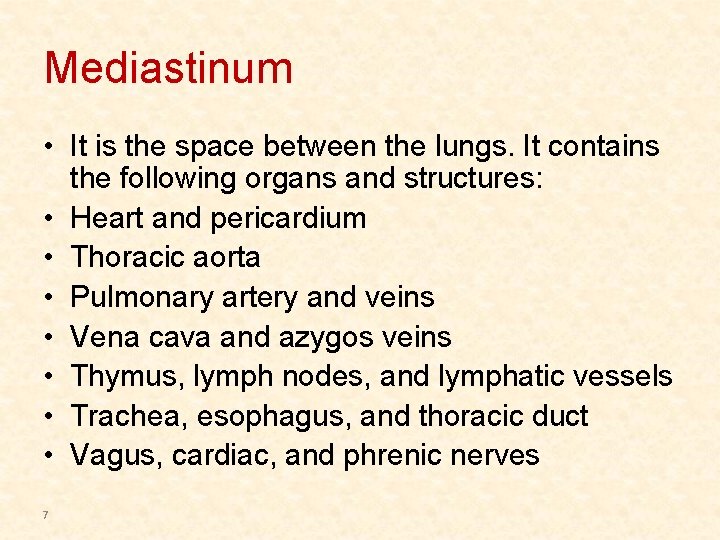
Mediastinum • It is the space between the lungs. It contains the following organs and structures: • Heart and pericardium • Thoracic aorta • Pulmonary artery and veins • Vena cava and azygos veins • Thymus, lymph nodes, and lymphatic vessels • Trachea, esophagus, and thoracic duct • Vagus, cardiac, and phrenic nerves 7
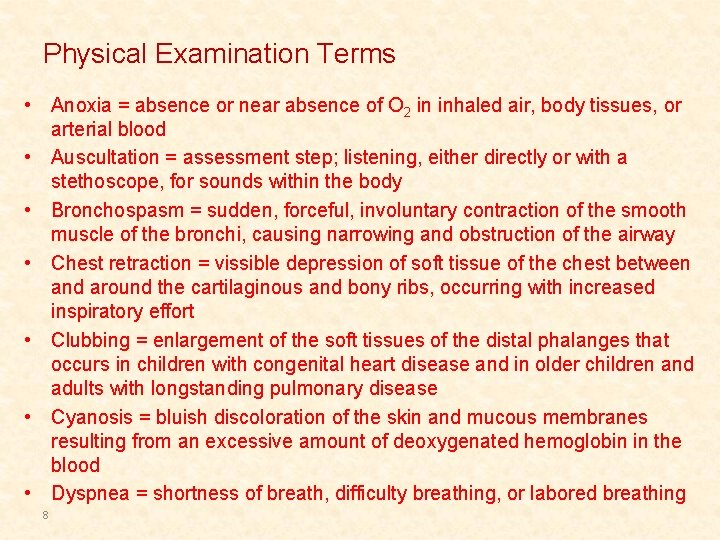
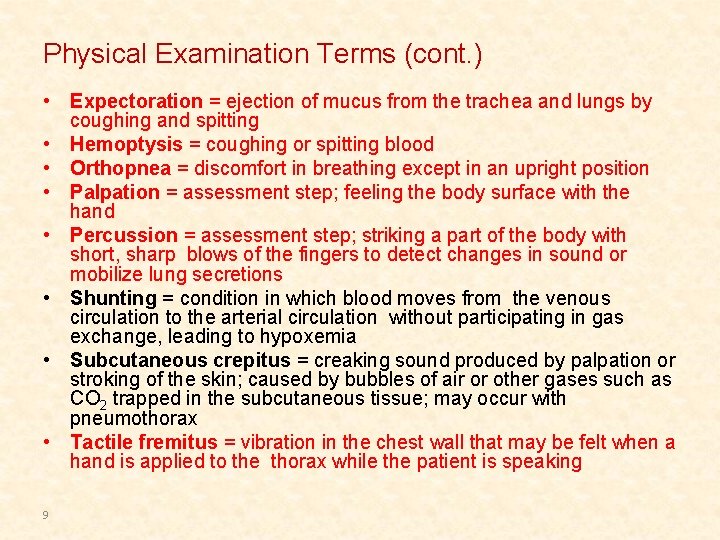
Physical Examination Terms • Anoxia = absence or near absence of O 2 in inhaled air, body tissues, or arterial blood • Auscultation = assessment step; listening, either directly or with a stethoscope, for sounds within the body • Bronchospasm = sudden, forceful, involuntary contraction of the smooth muscle of the bronchi, causing narrowing and obstruction of the airway • Chest retraction = vissible depression of soft tissue of the chest between and around the cartilaginous and bony ribs, occurring with increased inspiratory effort • Clubbing = enlargement of the soft tissues of the distal phalanges that occurs in children with congenital heart disease and in older children and adults with longstanding pulmonary disease • Cyanosis = bluish discoloration of the skin and mucous membranes resulting from an excessive amount of deoxygenated hemoglobin in the blood • Dyspnea = shortness of breath, difficulty breathing, or labored breathing 8
Physical Examination Terms (cont. ) • Expectoration = ejection of mucus from the trachea and lungs by coughing and spitting • Hemoptysis = coughing or spitting blood • Orthopnea = discomfort in breathing except in an upright position • Palpation = assessment step; feeling the body surface with the hand • Percussion = assessment step; striking a part of the body with short, sharp blows of the fingers to detect changes in sound or mobilize lung secretions • Shunting = condition in which blood moves from the venous circulation to the arterial circulation without participating in gas exchange, leading to hypoxemia • Subcutaneous crepitus = creaking sound produced by palpation or stroking of the skin; caused by bubbles of air or other gases such as CO 2 trapped in the subcutaneous tissue; may occur with pneumothorax • Tactile fremitus = vibration in the chest wall that may be felt when a hand is applied to the thorax while the patient is speaking 9
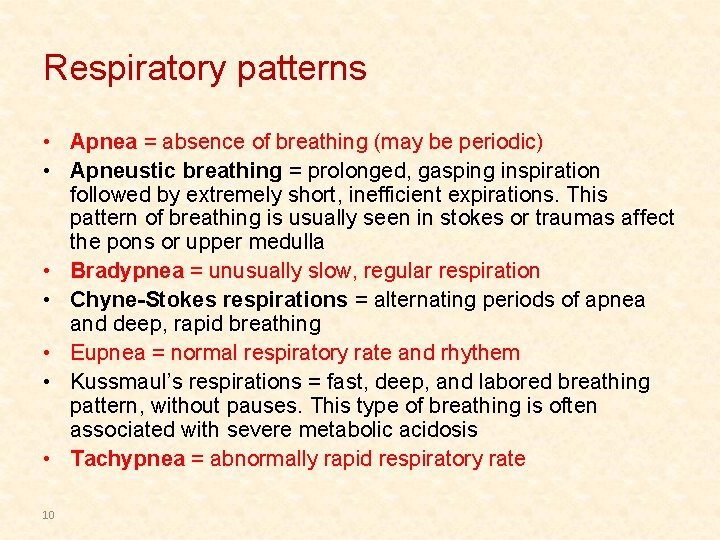
Respiratory patterns • Apnea = absence of breathing (may be periodic) • Apneustic breathing = prolonged, gasping inspiration followed by extremely short, inefficient expirations. This pattern of breathing is usually seen in stokes or traumas affect the pons or upper medulla • Bradypnea = unusually slow, regular respiration • Chyne-Stokes respirations = alternating periods of apnea and deep, rapid breathing • Eupnea = normal respiratory rate and rhythem • Kussmaul’s respirations = fast, deep, and labored breathing pattern, without pauses. This type of breathing is often associated with severe metabolic acidosis • Tachypnea = abnormally rapid respiratory rate 10
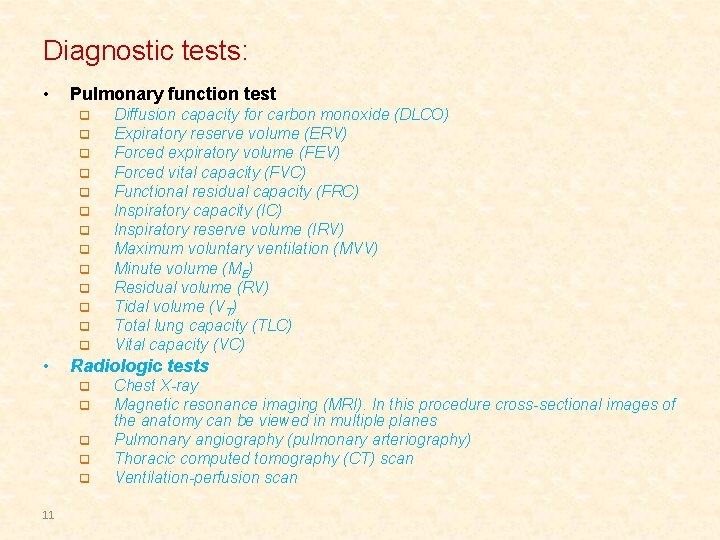
Diagnostic tests: • Pulmonary function test q q q q • Radiologic tests q q q 11 Diffusion capacity for carbon monoxide (DLCO) Expiratory reserve volume (ERV) Forced expiratory volume (FEV) Forced vital capacity (FVC) Functional residual capacity (FRC) Inspiratory capacity (IC) Inspiratory reserve volume (IRV) Maximum voluntary ventilation (MVV) Minute volume (ME) Residual volume (RV) Tidal volume (VT) Total lung capacity (TLC) Vital capacity (VC) Chest X-ray Magnetic resonance imaging (MRI). In this procedure cross-sectional images of the anatomy can be viewed in multiple planes Pulmonary angiography (pulmonary arteriography) Thoracic computed tomography (CT) scan Ventilation-perfusion scan
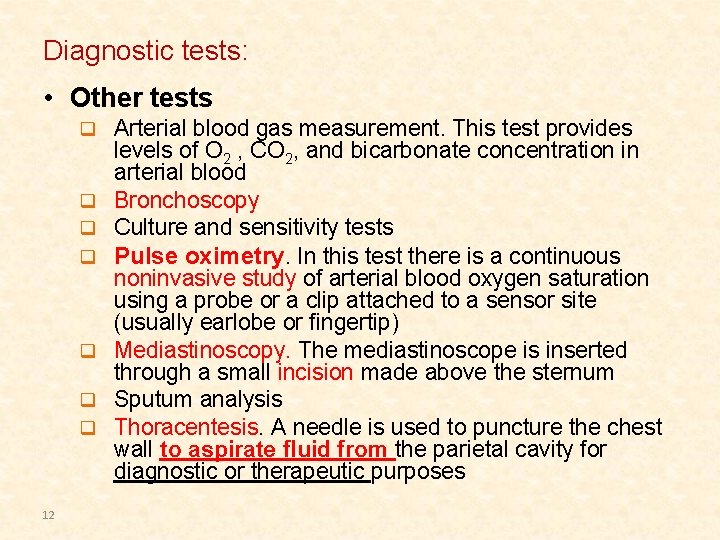
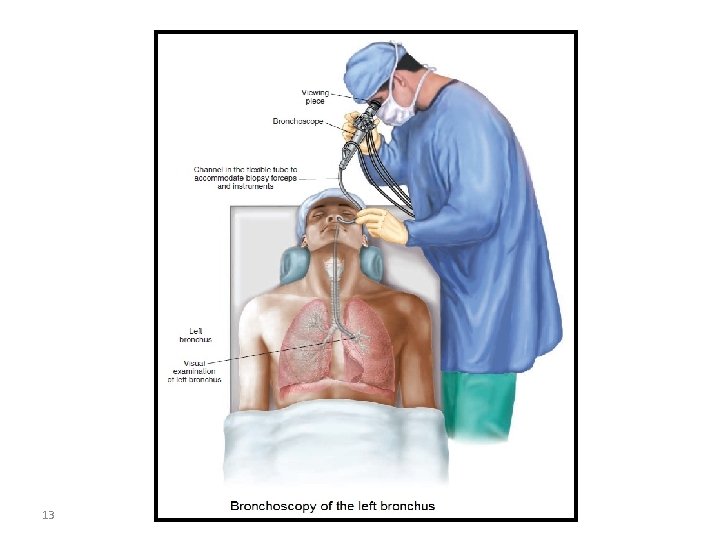
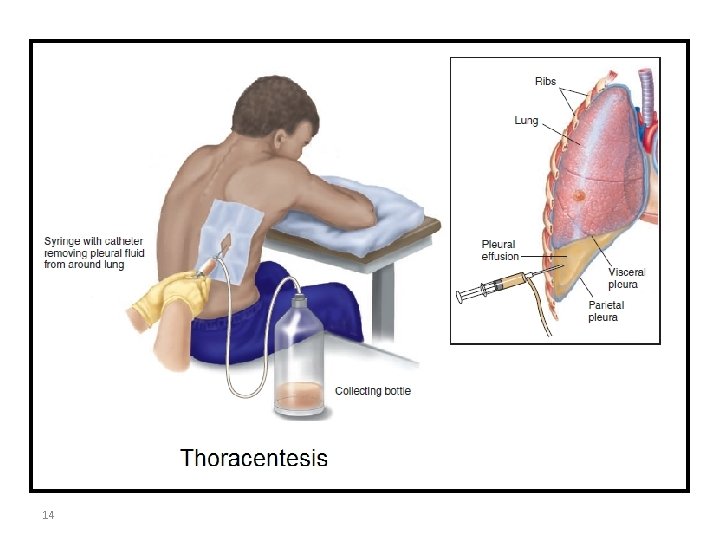
Diagnostic tests: • Other tests q q q q 12 Arterial blood gas measurement. This test provides levels of O 2 , CO 2, and bicarbonate concentration in arterial blood Bronchoscopy Culture and sensitivity tests Pulse oximetry. In this test there is a continuous noninvasive study of arterial blood oxygen saturation using a probe or a clip attached to a sensor site (usually earlobe or fingertip) Mediastinoscopy. The mediastinoscope is inserted through a small incision made above the sternum Sputum analysis Thoracentesis. A needle is used to puncture the chest wall to aspirate fluid from the parietal cavity for diagnostic or therapeutic purposes
13
14
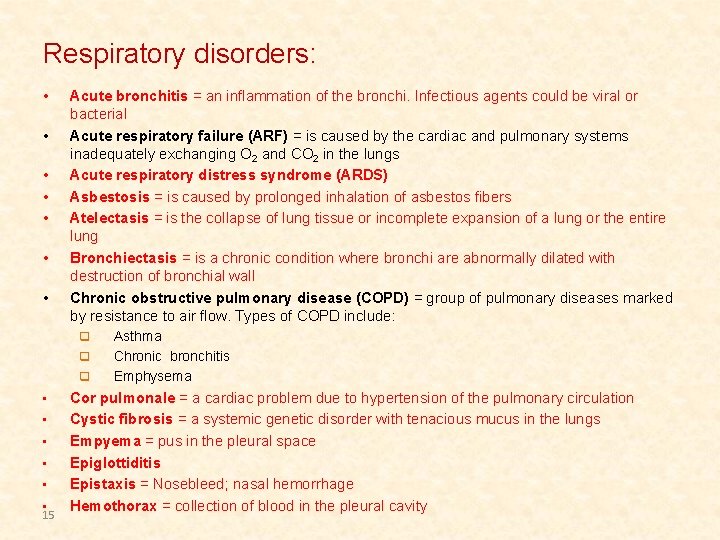
Respiratory disorders: • • Acute bronchitis = an inflammation of the bronchi. Infectious agents could be viral or bacterial Acute respiratory failure (ARF) = is caused by the cardiac and pulmonary systems inadequately exchanging O 2 and CO 2 in the lungs Acute respiratory distress syndrome (ARDS) Asbestosis = is caused by prolonged inhalation of asbestos fibers Atelectasis = is the collapse of lung tissue or incomplete expansion of a lung or the entire lung Bronchiectasis = is a chronic condition where bronchi are abnormally dilated with destruction of bronchial wall Chronic obstructive pulmonary disease (COPD) = group of pulmonary diseases marked by resistance to air flow. Types of COPD include: q q q • • • 15 Asthma Chronic bronchitis Emphysema Cor pulmonale = a cardiac problem due to hypertension of the pulmonary circulation Cystic fibrosis = a systemic genetic disorder with tenacious mucus in the lungs Empyema = pus in the pleural space Epiglottiditis Epistaxis = Nosebleed; nasal hemorrhage Hemothorax = collection of blood in the pleural cavity
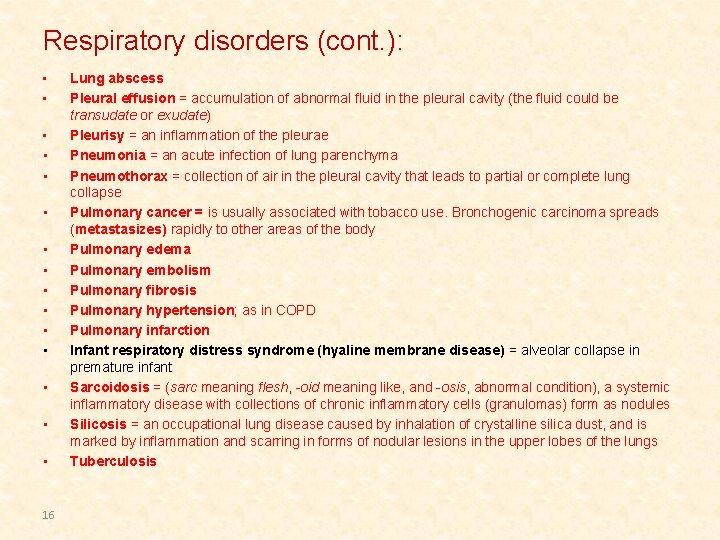
Respiratory disorders (cont. ): • • • • 16 Lung abscess Pleural effusion = accumulation of abnormal fluid in the pleural cavity (the fluid could be transudate or exudate) Pleurisy = an inflammation of the pleurae Pneumonia = an acute infection of lung parenchyma Pneumothorax = collection of air in the pleural cavity that leads to partial or complete lung collapse Pulmonary cancer = is usually associated with tobacco use. Bronchogenic carcinoma spreads (metastasizes) rapidly to other areas of the body Pulmonary edema Pulmonary embolism Pulmonary fibrosis Pulmonary hypertension; as in COPD Pulmonary infarction Infant respiratory distress syndrome (hyaline membrane disease) = alveolar collapse in premature infant Sarcoidosis = (sarc meaning flesh, -oid meaning like, and -osis, abnormal condition), a systemic inflammatory disease with collections of chronic inflammatory cells (granulomas) form as nodules Silicosis = an occupational lung disease caused by inhalation of crystalline silica dust, and is marked by inflammation and scarring in forms of nodular lesions in the upper lobes of the lungs Tuberculosis
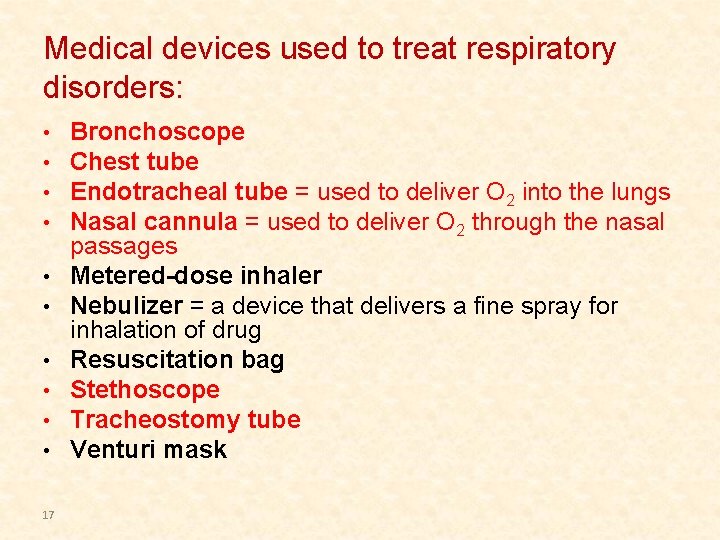
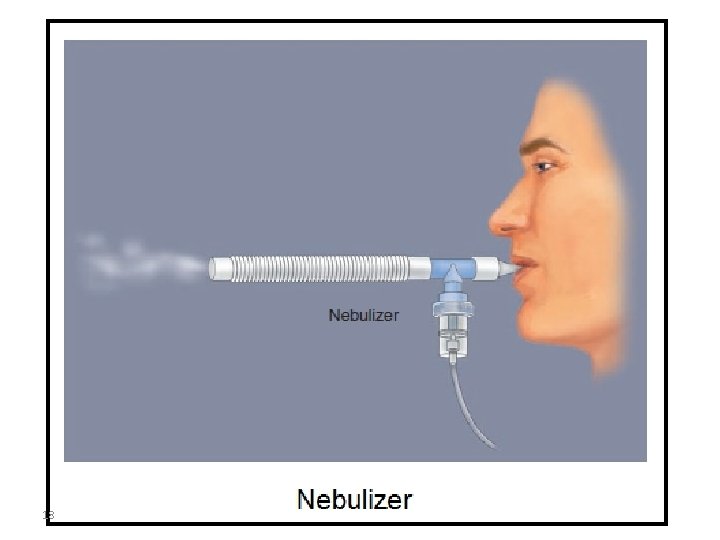
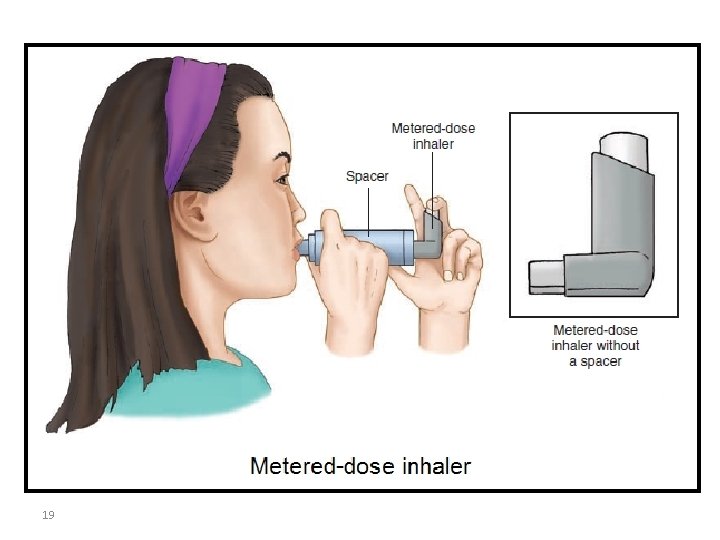
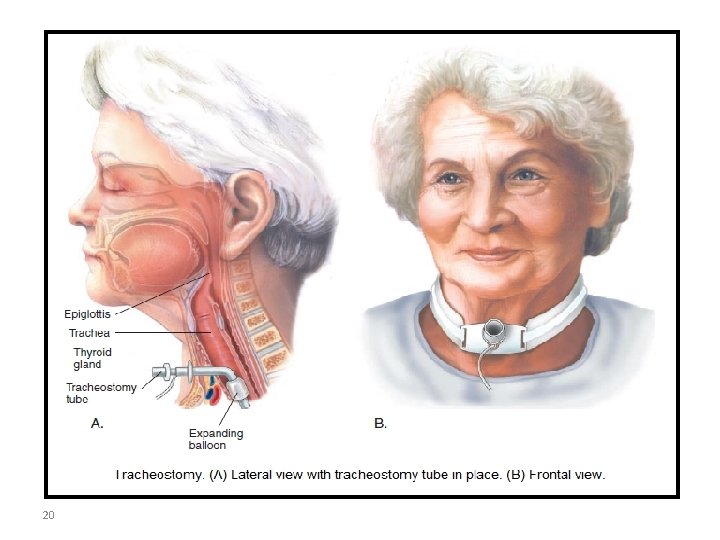
Medical devices used to treat respiratory disorders: • • • 17 Bronchoscope Chest tube Endotracheal tube = used to deliver O 2 into the lungs Nasal cannula = used to deliver O 2 through the nasal passages Metered-dose inhaler Nebulizer = a device that delivers a fine spray for inhalation of drug Resuscitation bag Stethoscope Tracheostomy tube Venturi mask
18
19
20
Drug therapy: • Antitussives; to suppress cough • Decongestants; to relieve swelling in nasal passages • Expectorants; which liquefy secretions, by increasing the amount or hydration of secretions, to help remove mucus • Bronchodilators; to relax bronchial smooth muscle in patients with asthma and restore respiratory function in patients with bronchitis, emphysema, and apnea • Corticosteroids; to suppress the immune system. Corticosteroids are available as nasal sprays (inhaled steroids) and in oral forms (pills or syrups) to treat chronic lung conditions such as asthma and COPD. • Mucolytics; to enhance mucus removal. They do so by dissolving various chemical bonds within secretions, which in turn can lower the viscosity 21