
The Research School of Astronomy and Astrophysics Mount




- Slides: 45
The Research School of Astronomy and Astrophysics Mount Stromlo Observatory
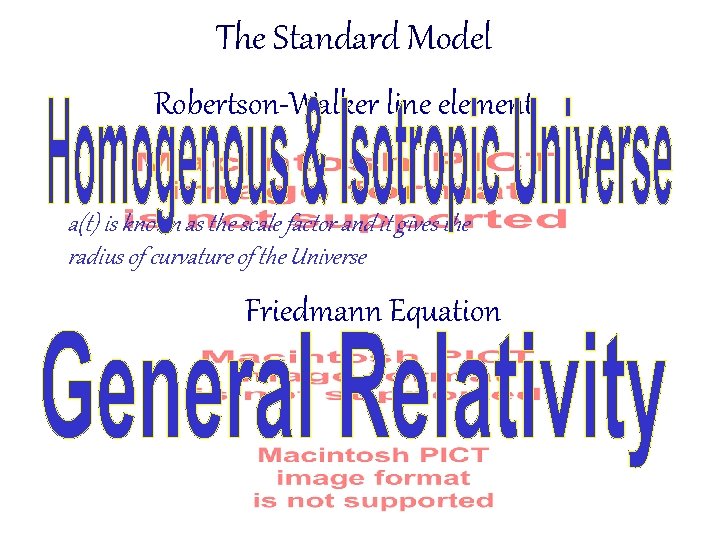
The Standard Model Robertson-Walker line element a(t) is known as the scale factor and it gives the radius of curvature of the Universe Friedmann Equation
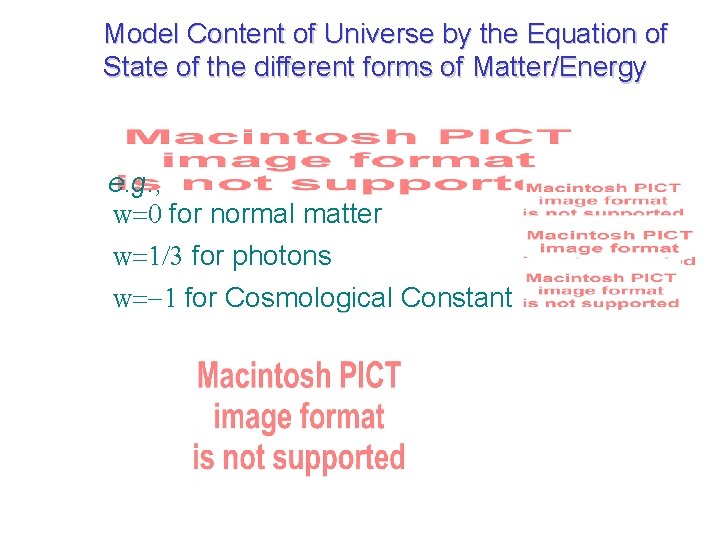
Model Content of Universe by the Equation of State of the different forms of Matter/Energy e. g. , w=0 for normal matter w=1/3 for photons w=-1 for Cosmological Constant
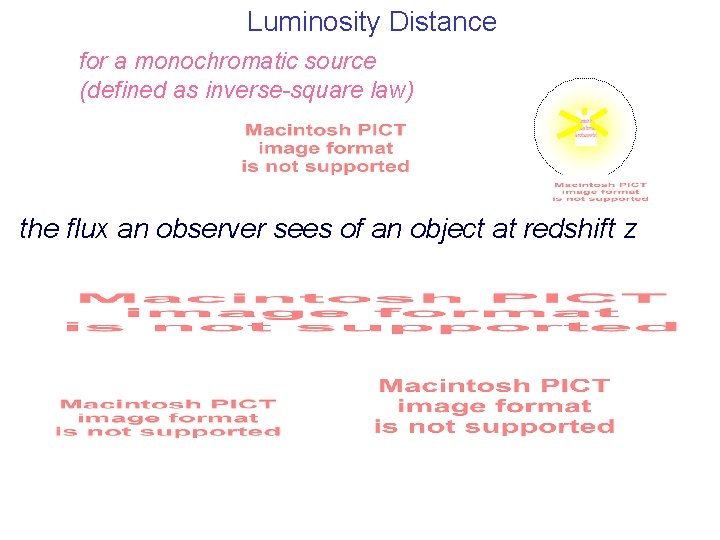
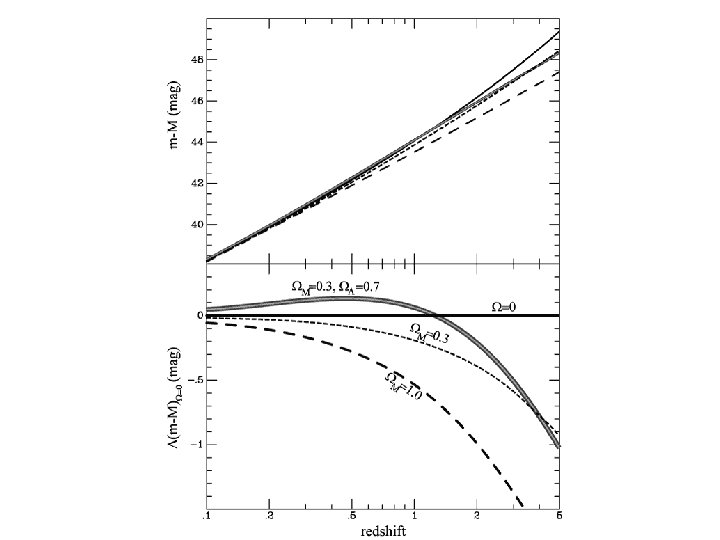
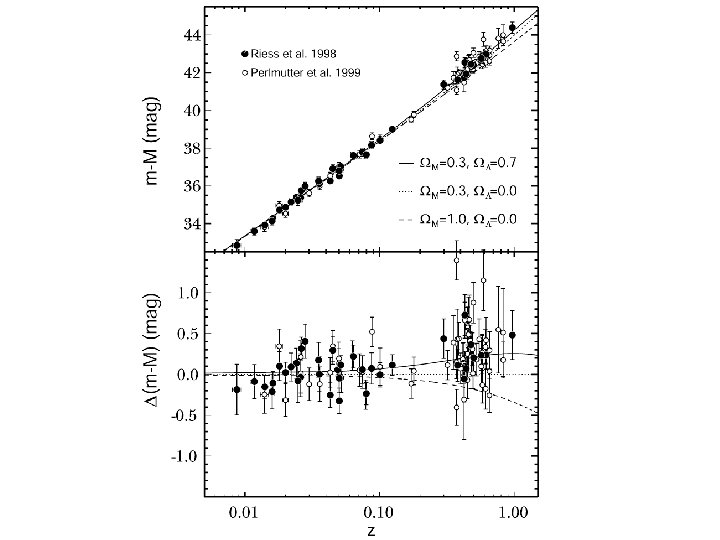
Luminosity Distance for a monochromatic source (defined as inverse-square law) the flux an observer sees of an object at redshift z
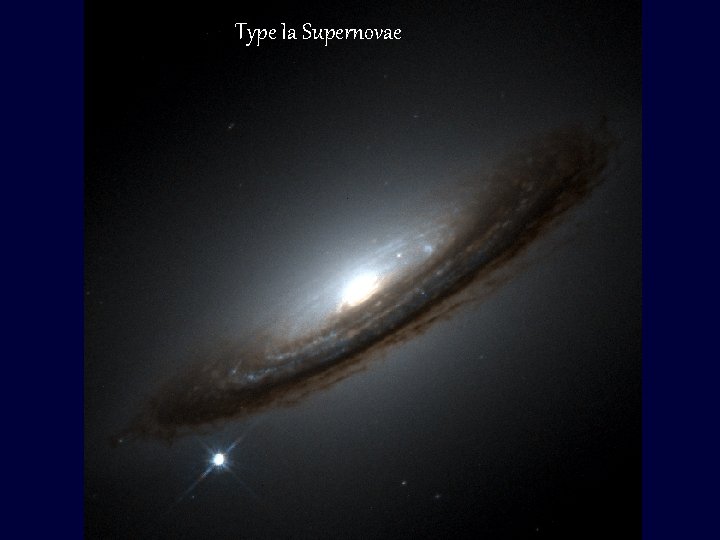
Type Ia Supernovae
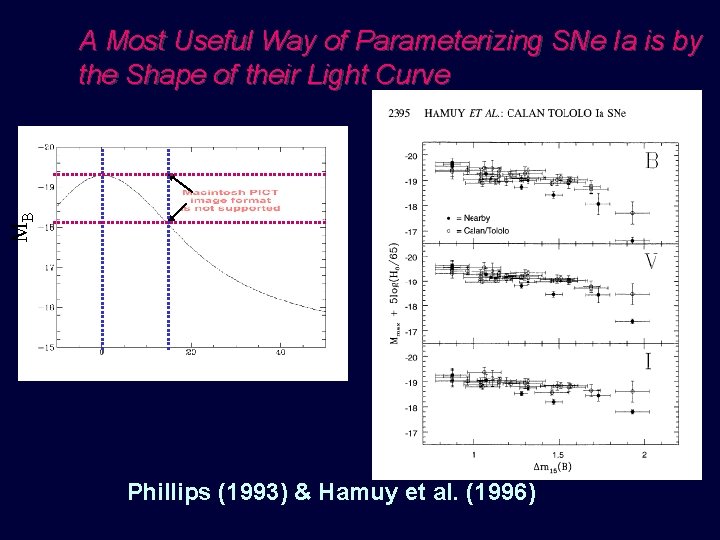
MB A Most Useful Way of Parameterizing SNe Ia is by the Shape of their Light Curve Phillips (1993) & Hamuy et al. (1996)
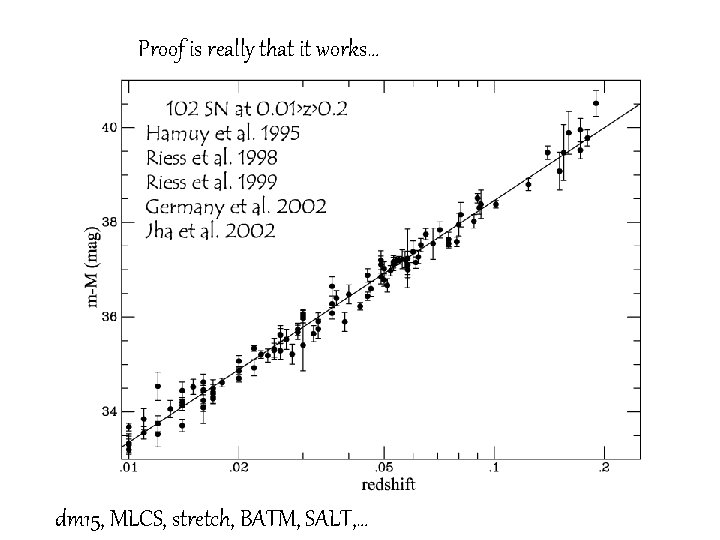
Proof is really that it works… dm 15, MLCS, stretch, BATM, SALT, …
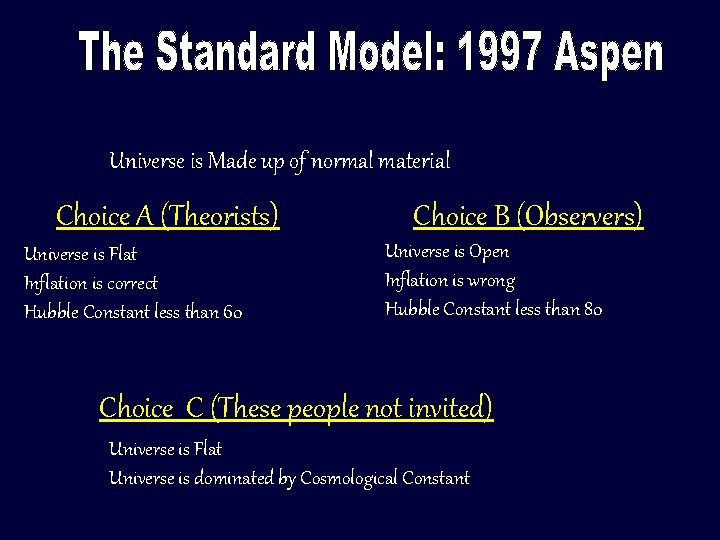
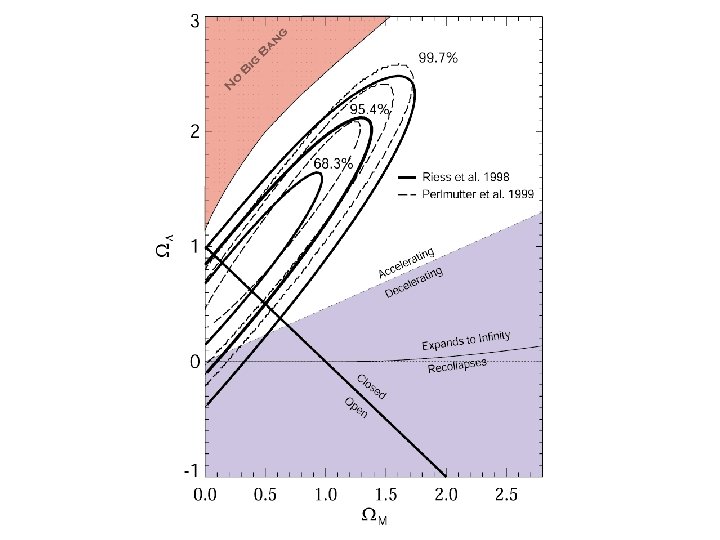
Universe is Made up of normal material Choice A (Theorists) Universe is Flat Inflation is correct Hubble Constant less than 60 Choice B (Observers) Universe is Open Inflation is wrong Hubble Constant less than 80 Choice C (These people not invited) Universe is Flat Universe is dominated by Cosmological Constant
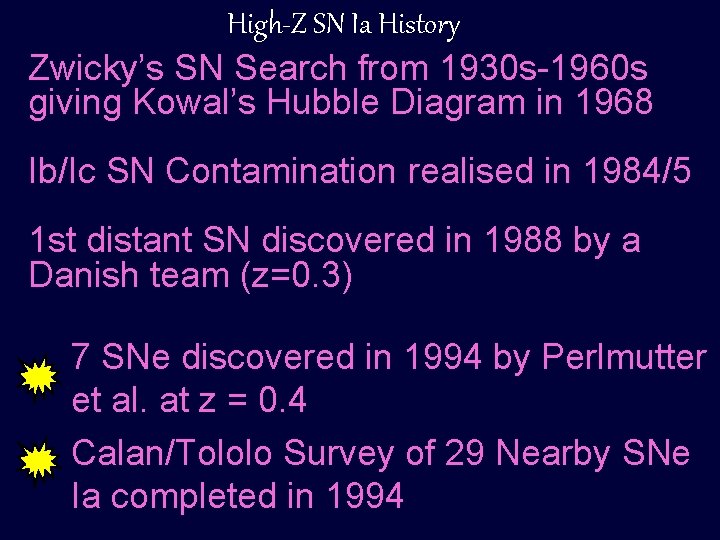
High-Z SN Ia History Zwicky’s SN Search from 1930 s-1960 s giving Kowal’s Hubble Diagram in 1968 Ib/Ic SN Contamination realised in 1984/5 1 st distant SN discovered in 1988 by a Danish team (z=0. 3) 7 SNe discovered in 1994 by Perlmutter et al. at z = 0. 4 Calan/Tololo Survey of 29 Nearby SNe Ia completed in 1994
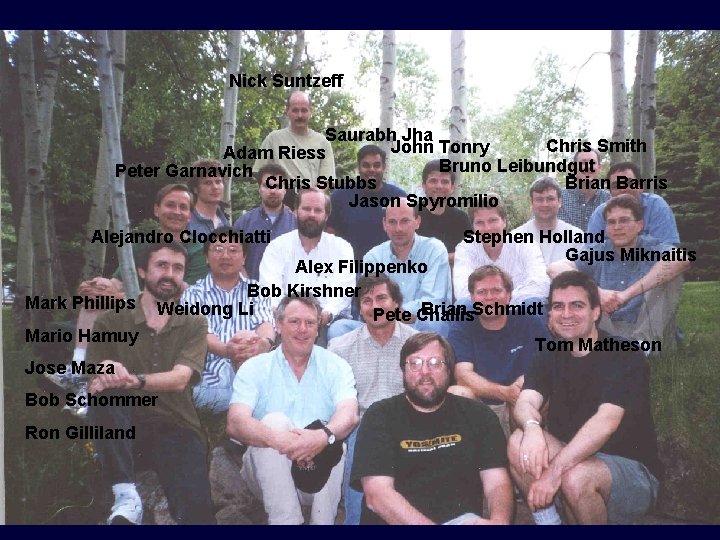
Nick Suntzeff Saurabh Jha Chris Smith John Tonry Adam Riess Bruno Leibundgut Peter Garnavich Chris Stubbs Brian Barris Jason Spyromilio Alejandro Clocchiatti Mark Phillips Alex Filippenko Bob Kirshner Weidong Li Brian Schmidt Pete Challis Mario Hamuy Jose Maza Bob Schommer Ron Gilliland Stephen Holland Gajus Miknaitis Tom Matheson
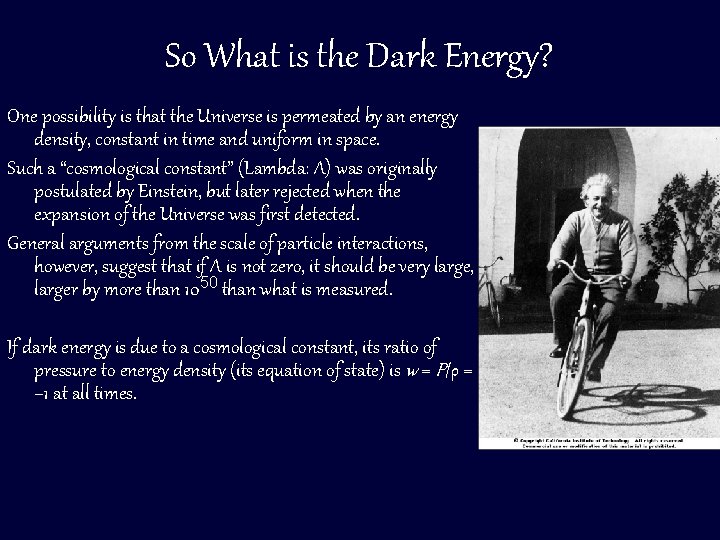
So What is the Dark Energy? One possibility is that the Universe is permeated by an energy density, constant in time and uniform in space. Such a “cosmological constant” (Lambda: Λ) was originally postulated by Einstein, but later rejected when the expansion of the Universe was first detected. General arguments from the scale of particle interactions, however, suggest that if Λ is not zero, it should be very large, larger by more than 1050 than what is measured. If dark energy is due to a cosmological constant, its ratio of pressure to energy density (its equation of state) is w = P/ρ = − 1 at all times.
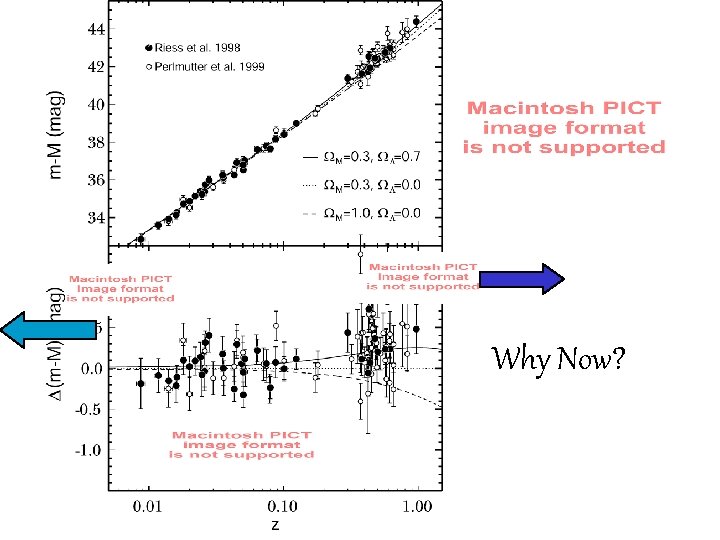
Why Now?
So What is the Dark Energy? Another possibility is that the dark energy is some kind of dynamical fluid, not previously known to physics, but similar to what caused inflation. In this case the equation of state of the fluid would likely not be constant, but would vary with time. Different theories of dynamical dark energy are distinguished through their differing predictions for the evolution of the equation of state. Unfortunately none of these theories has any particularly sound basis, and most spend much of their time looking like a Cosmological Constant.
So What is the Dark Energy? An alternative explanation of the accelerating expansion of the Universe is that general relativity or the standard cosmological model is incorrect. Whether general relativity is incorrect or the Universe is filled with an unanticipated form of energy, exploration of the acceleration of the Universe’s expansion might profoundly change our understanding of the composition and nature of the Universe.
Stolen from Karl Glazebrook
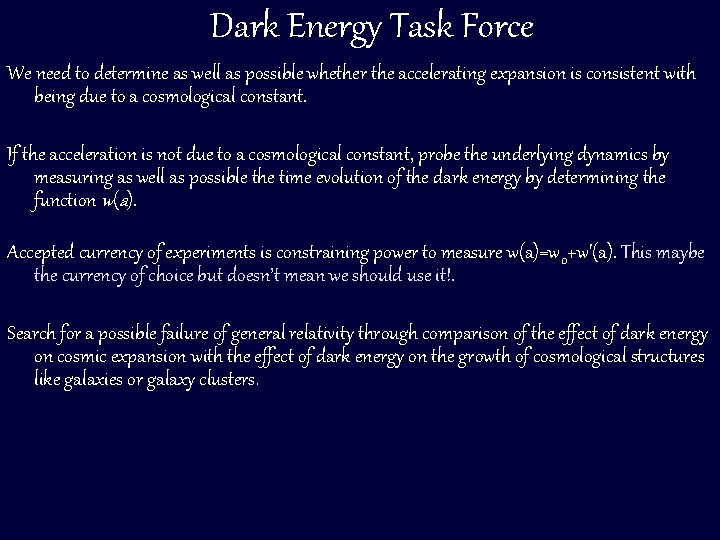
Dark Energy Task Force We need to determine as well as possible whether the accelerating expansion is consistent with being due to a cosmological constant. If the acceleration is not due to a cosmological constant, probe the underlying dynamics by measuring as well as possible the time evolution of the dark energy by determining the function w(a). Accepted currency of experiments is constraining power to measure w(a)=w 0+w'(a). This maybe the currency of choice but doesn’t mean we should use it!. Search for a possible failure of general relativity through comparison of the effect of dark energy on cosmic expansion with the effect of dark energy on the growth of cosmological structures like galaxies or galaxy clusters.
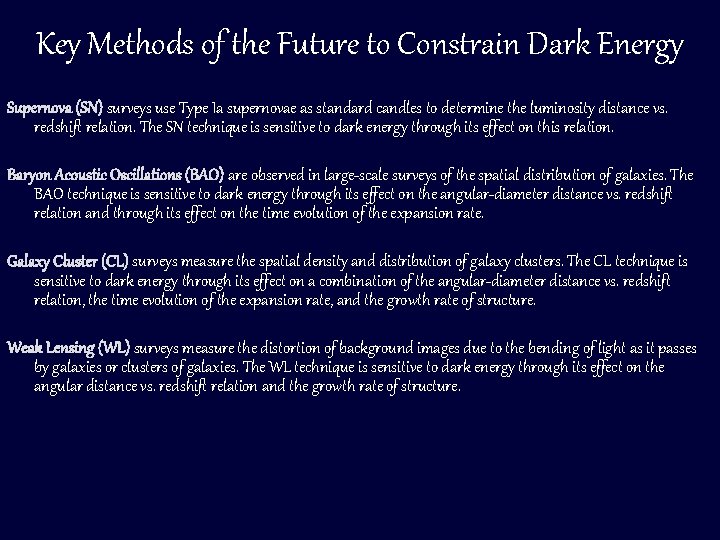
Key Methods of the Future to Constrain Dark Energy Supernova (SN) surveys use Type Ia supernovae as standard candles to determine the luminosity distance vs. redshift relation. The SN technique is sensitive to dark energy through its effect on this relation. Baryon Acoustic Oscillations (BAO) are observed in large-scale surveys of the spatial distribution of galaxies. The BAO technique is sensitive to dark energy through its effect on the angular-diameter distance vs. redshift relation and through its effect on the time evolution of the expansion rate. Galaxy Cluster (CL) surveys measure the spatial density and distribution of galaxy clusters. The CL technique is sensitive to dark energy through its effect on a combination of the angular-diameter distance vs. redshift relation, the time evolution of the expansion rate, and the growth rate of structure. Weak Lensing (WL) surveys measure the distortion of background images due to the bending of light as it passes by galaxies or clusters of galaxies. The WL technique is sensitive to dark energy through its effect on the angular distance vs. redshift relation and the growth rate of structure.
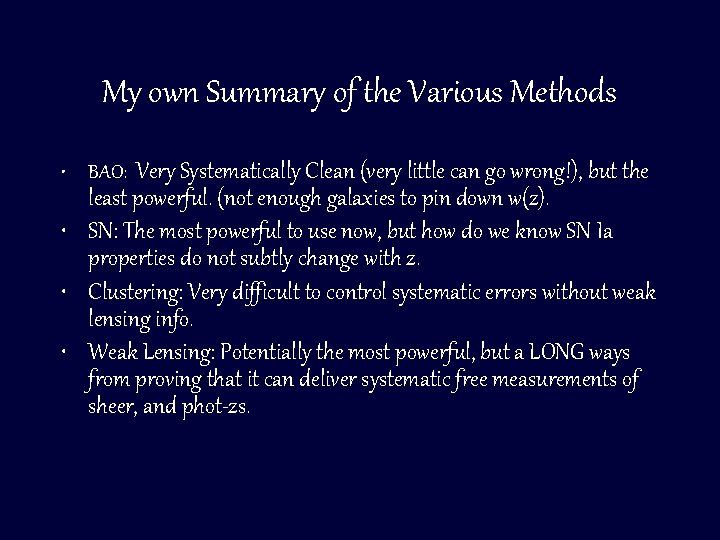
My own Summary of the Various Methods • BAO: Very Systematically Clean (very little can go wrong!), but the least powerful. (not enough galaxies to pin down w(z). • SN: The most powerful to use now, but how do we know SN Ia properties do not subtly change with z. • Clustering: Very difficult to control systematic errors without weak lensing info. • Weak Lensing: Potentially the most powerful, but a LONG ways from proving that it can deliver systematic free measurements of sheer, and phot-zs.
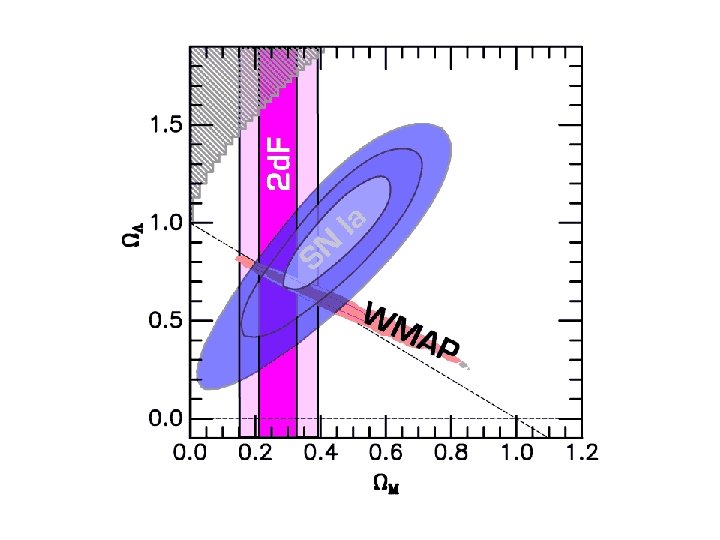
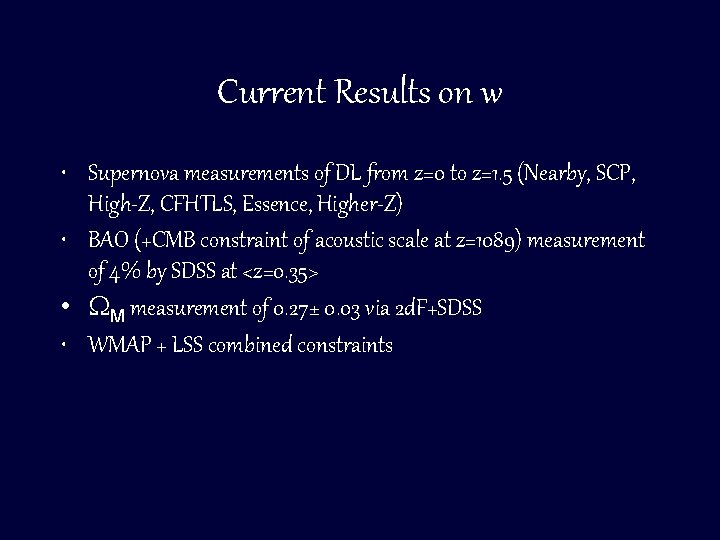
Current Results on w • Supernova measurements of DL from z=0 to z=1. 5 (Nearby, SCP, High-Z, CFHTLS, Essence, Higher-Z) • BAO (+CMB constraint of acoustic scale at z=1089) measurement of 4% by SDSS at <z=0. 35> • M measurement of 0. 27± 0. 03 via 2 d. F+SDSS • WMAP + LSS combined constraints
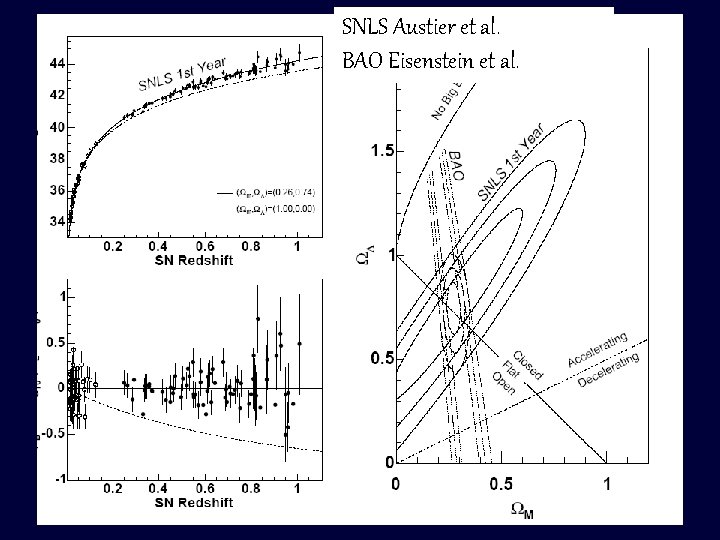
SNLS Austier et al. BAO Eisenstein et al.
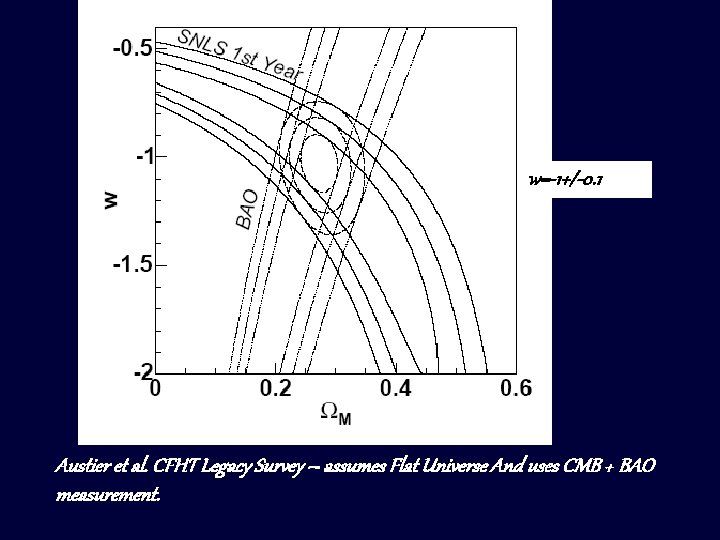
w=-1+/-0. 1 Austier et al. CFHT Legacy Survey – assumes Flat Universe And uses CMB + BAO measurement.
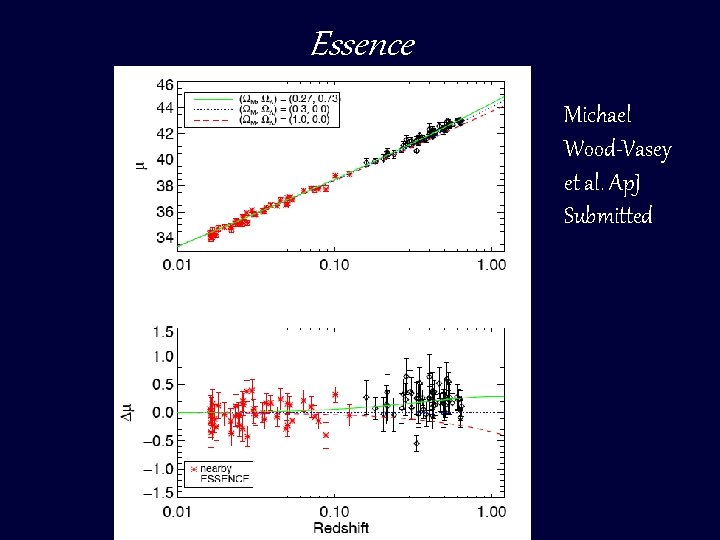
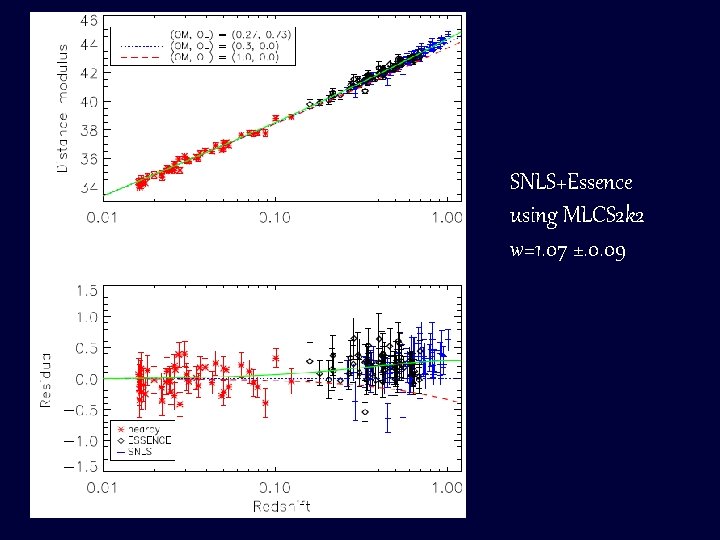
Essence Michael Wood-Vasey et al. Ap. J Submitted
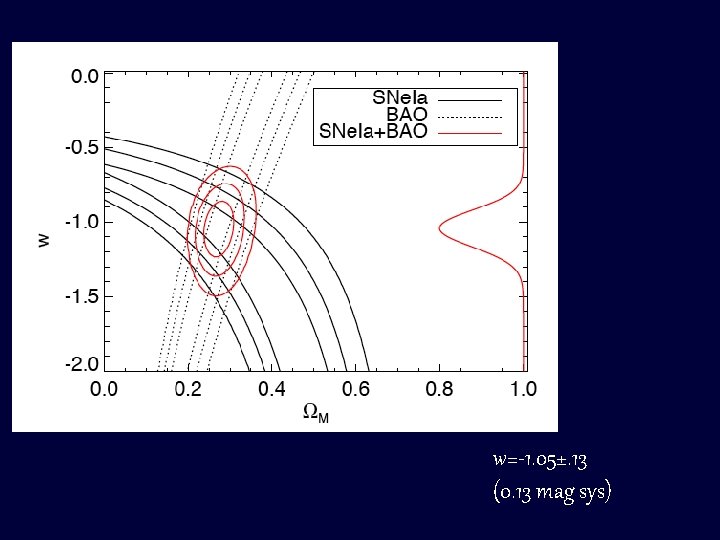
w=-1. 05±. 13 (0. 13 mag sys)
SNLS+Essence using MLCS 2 k 2 w=1. 07 ±. 0. 09
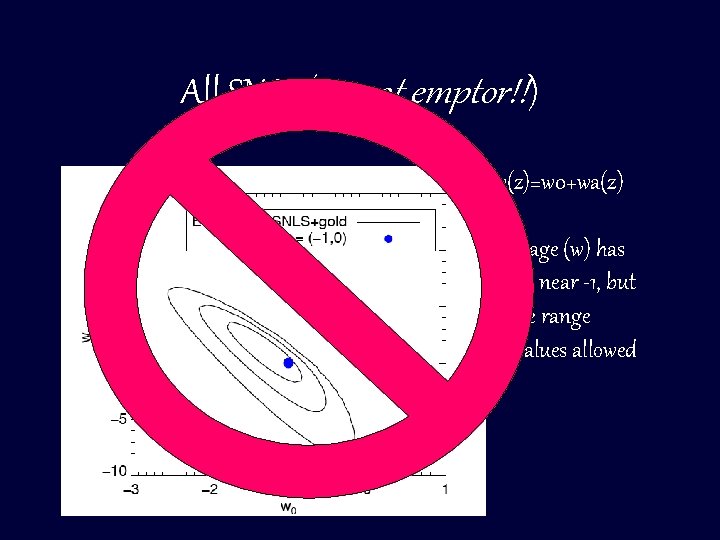
All SN Ia (caveat emptor!!) w(z)=w 0+wa(z) average (w) has to be near -1, but large range of values allowed
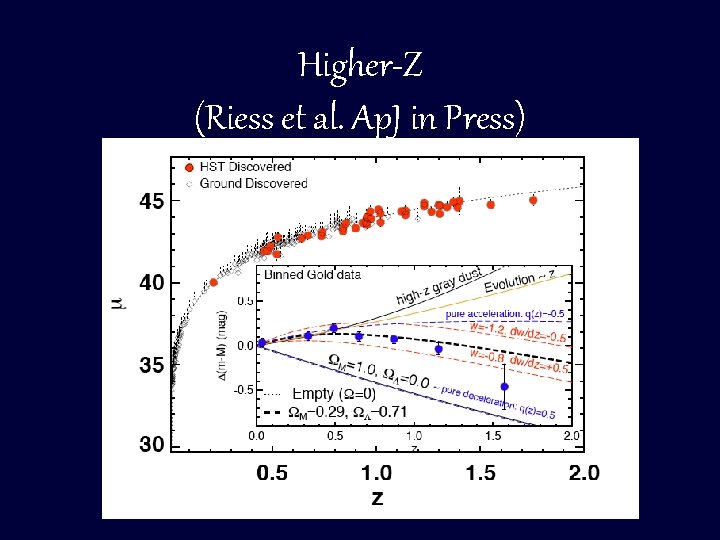
Higher-Z (Riess et al. Ap. J in Press)
Hubble has found 50 new Supernovae Half beyond the reach of the ground
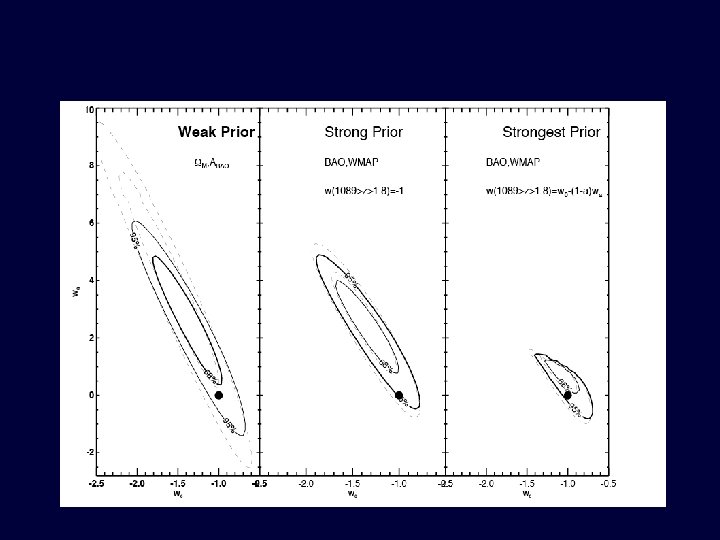
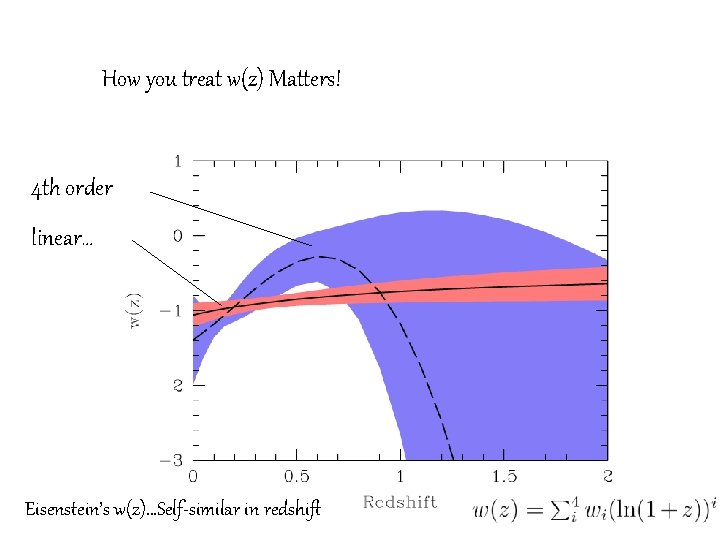
How you treat w(z) Matters! 4 th order linear… Eisenstein’s w(z)…Self-similar in redshift
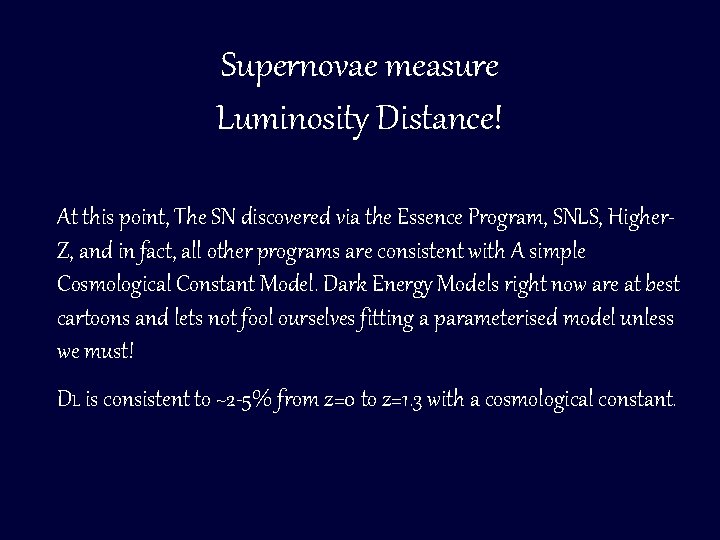
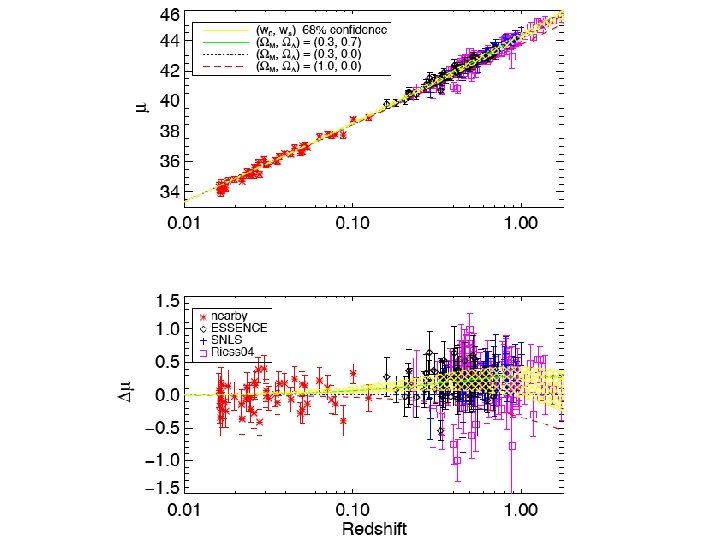
Supernovae measure Luminosity Distance! At this point, The SN discovered via the Essence Program, SNLS, Higher. Z, and in fact, all other programs are consistent with A simple Cosmological Constant Model. Dark Energy Models right now are at best cartoons and lets not fool ourselves fitting a parameterised model unless we must! DL is consistent to ~2 -5% from z=0 to z=1. 3 with a cosmological constant.
CMB constraints. . Consistent. Spergel et al. 2006 Ap. J submitted
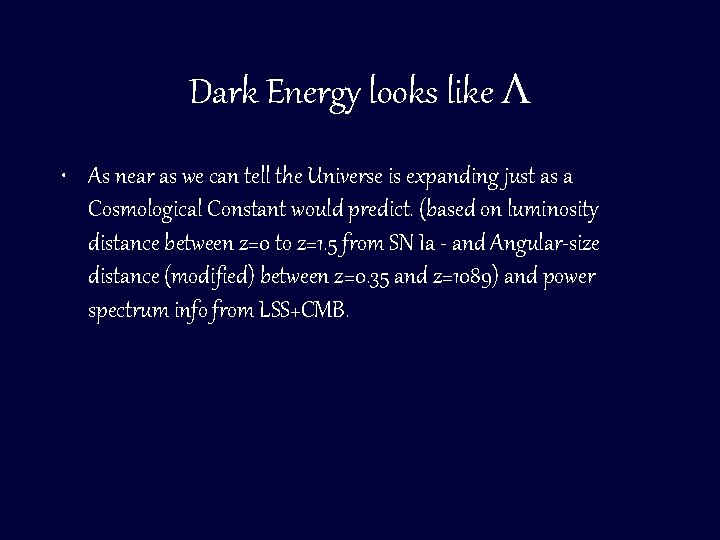
Dark Energy looks like • As near as we can tell the Universe is expanding just as a Cosmological Constant would predict. (based on luminosity distance between z=0 to z=1. 5 from SN Ia - and Angular-size distance (modified) between z=0. 35 and z=1089) and power spectrum info from LSS+CMB.
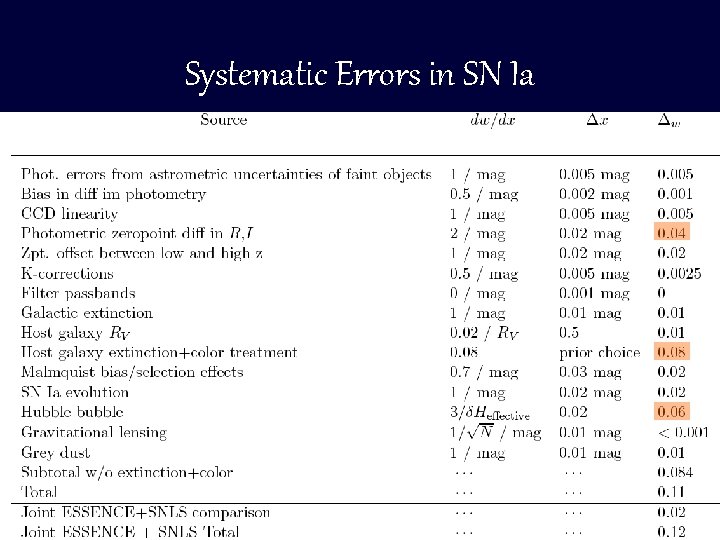
Systematic Errors in SN Ia
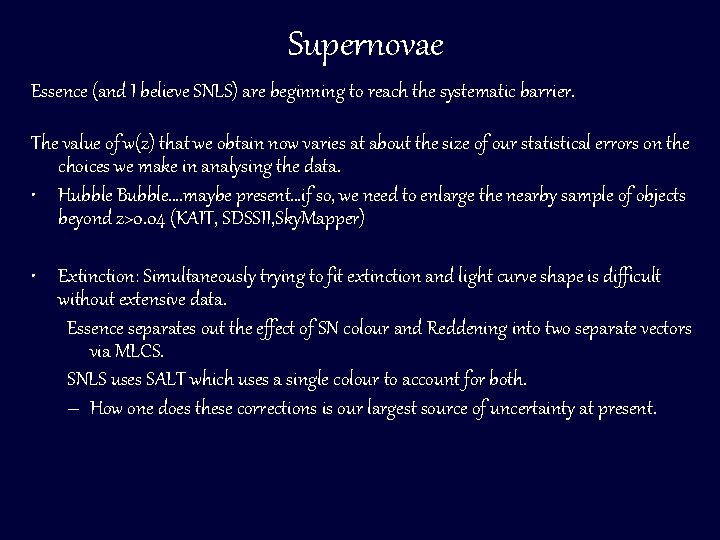
Supernovae Essence (and I believe SNLS) are beginning to reach the systematic barrier. The value of w(z) that we obtain now varies at about the size of our statistical errors on the choices we make in analysing the data. • Hubble Bubble…. maybe present…if so, we need to enlarge the nearby sample of objects beyond z>0. 04 (KAIT, SDSSII, Sky. Mapper) • Extinction: Simultaneously trying to fit extinction and light curve shape is difficult without extensive data. Essence separates out the effect of SN colour and Reddening into two separate vectors via MLCS. SNLS uses SALT which uses a single colour to account for both. – How one does these corrections is our largest source of uncertainty at present.
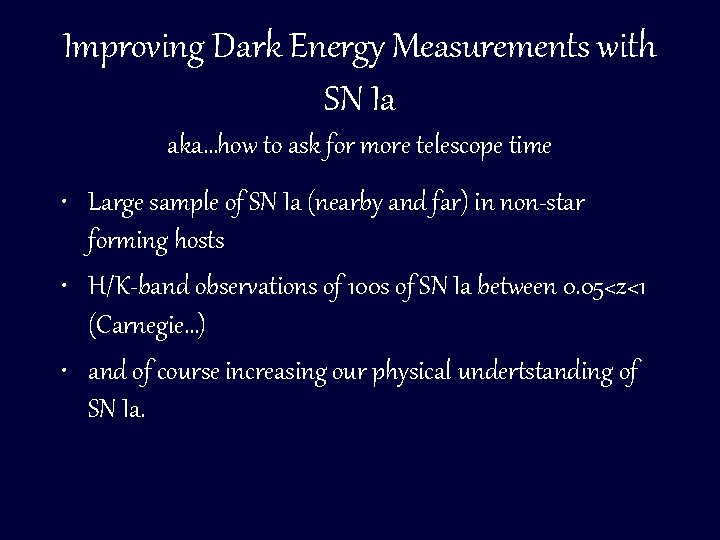
Improving Dark Energy Measurements with SN Ia aka…how to ask for more telescope time • Large sample of SN Ia (nearby and far) in non-star forming hosts • H/K-band observations of 100 s of SN Ia between 0. 05<z<1 (Carnegie…) • and of course increasing our physical undertstanding of SN Ia.
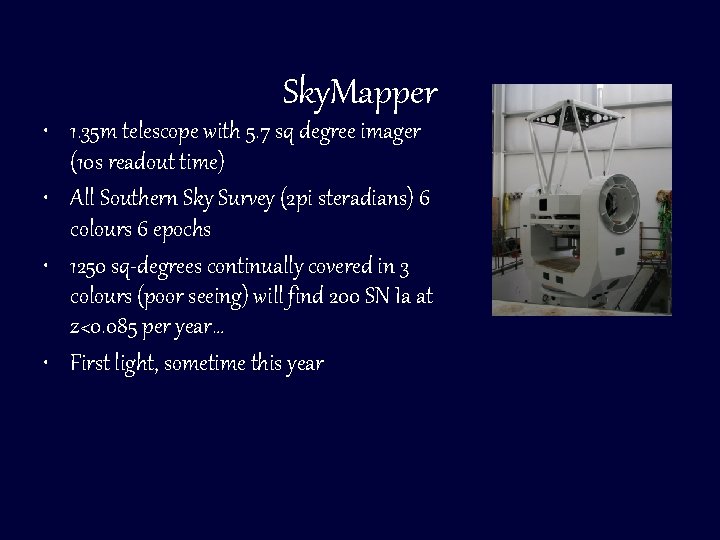
Sky. Mapper • 1. 35 m telescope with 5. 7 sq degree imager (10 s readout time) • All Southern Sky Survey (2 pi steradians) 6 colours 6 epochs • 1250 sq-degrees continually covered in 3 colours (poor seeing) will find 200 SN Ia at z<0. 085 per year… • First light, sometime this year
The Future • Improving SN Ia measurements becoming very difficult. • BAO will provide interesting (systematic free? ) measurements in the next few years at z=0. 7 (AAT) z=1. 2 (Subaru), but will not markedly improve on precision of SN Ia measurements. ADEPT or WFMOS will provide 2 -3 times better precision than currently possible and naturally combine with SN Ia to give D from z=0 to z=1089 • In the future, the only hope of pushing to an order of magnitude greater precision is to hugely expensive surveys. But I am extremely dubious of the ability to constrain systematic errors (be it SN or Weak Lensing).