
The Research Process Evaluating Sources Creating Source Cards




- Slides: 17
The Research Process: Evaluating Sources & Creating Source Cards
Why Do We Research? • To learn more about the world around us • To find facts that support our opinions • Because Mrs. N says we have to do it
Research: Step 1 1) Choose a topic. Brainstorm what you know about this topic, and come up with some key questions to direct your research. 2) Do a preliminary (beginning) search on your topic – decide if enough information is available, or if there is too much information about your topic. 3) Finalize your topic – narrow, expand, or change your topic to fit available research
Research: Step 2 • Begin gathering sources. You can use encyclopedias, news articles, the internet, books, magazines, audio/video clips, and more. • Make sure that your sources are credible, especially when using online sources.
A credible source is a source that is reliable and can be trusted to give accurate information. What you should check for: Age of source Author of essay, article, or book Publication source (who authorized the creation of this material? )
Research: Step 3 Create Source Cards A source card is a card that cites any source from which you have gathered information. Source cards use MLA formatting to give proper credit to a source's author. A source card is NOT the same thing is a note card! A note card contains specific facts (notes) from a source. A source card simply lists the source's publication information.
Source Cards (Continued) • A source card should include (if available): – The author's first and last name – Title of the work, and/or any larger volume it is housed in (if your source is an encyclopedia or magazine article, or a clip from a website) – Publication information: who published this material, where, and when – The URL (if it's a website) All source cards should be numbered!
Source Card: Example
Source Card: Example
PRACTICE!! • Look at the SOURCE CARD document you were given at the beginning of class. • Use the information to help you create a source card for your independent reading book.
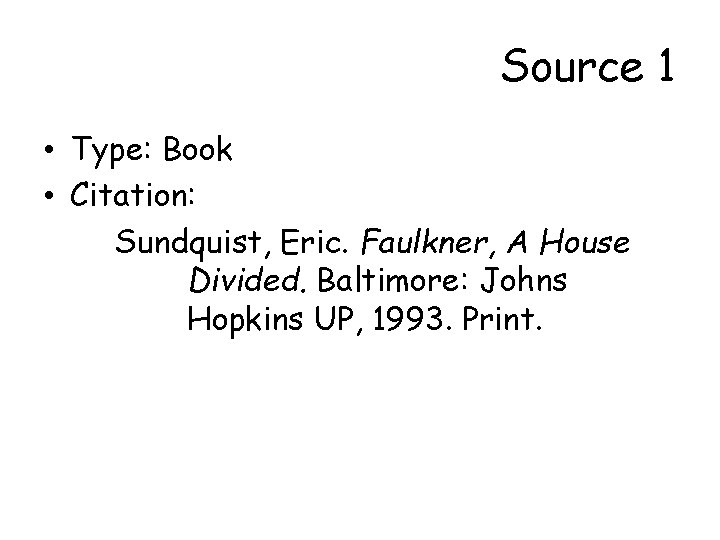
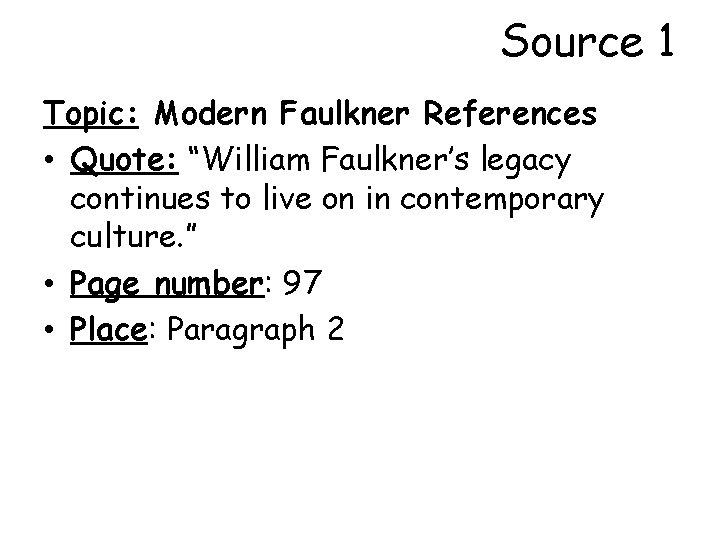
Step 4: Note Card System • Card 1 (source card) will include the following: – Type of source – Citation of your source • Note Cards will include the following: – Quote or info you are going to use – Page or paragraph number
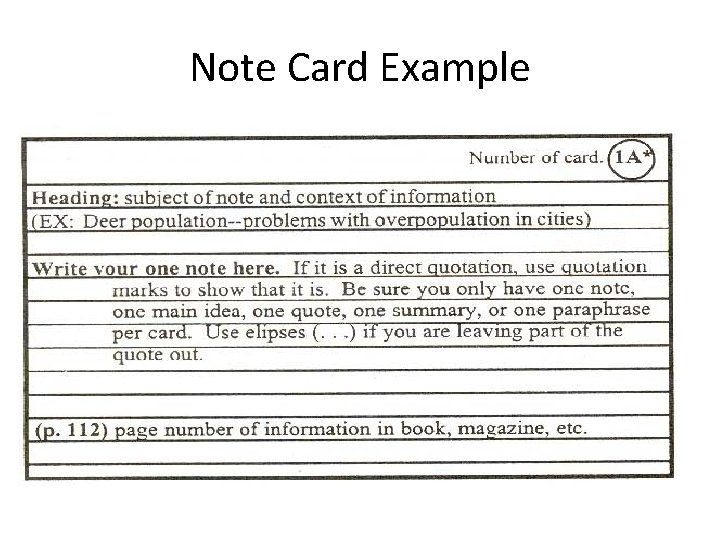
Step 4: Creating Note Cards • Note cards contain facts or quotes that you can use in your paper • They can be written in sentence form or as lists or phrases • Notes on cards should be paraphrased – NEVER plagiarize information. • IF you are using a direct quote, you must put it in quotation marks and list the name of the person who said it
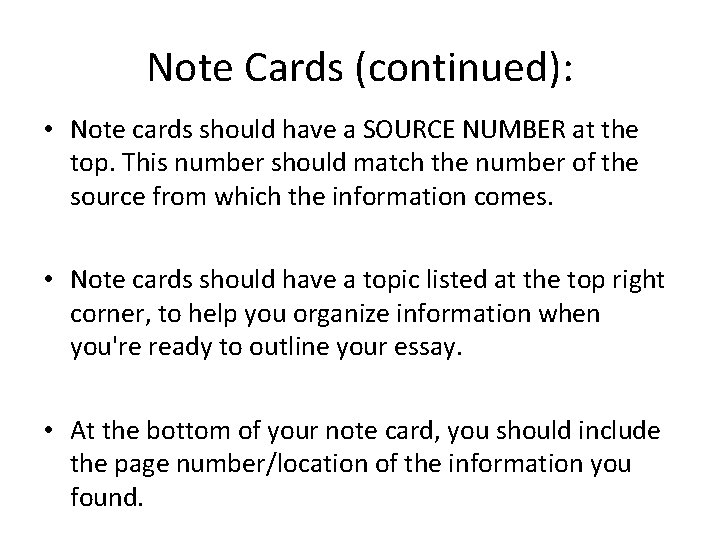
Note Cards (continued): • Note cards should have a SOURCE NUMBER at the top. This number should match the number of the source from which the information comes. • Note cards should have a topic listed at the top right corner, to help you organize information when you're ready to outline your essay. • At the bottom of your note card, you should include the page number/location of the information you found.
Note Card Example
Source 1 • Type: Book • Citation: Sundquist, Eric. Faulkner, A House Divided. Baltimore: Johns Hopkins UP, 1993. Print.
Source 1 Topic: Modern Faulkner References • Quote: “William Faulkner’s legacy continues to live on in contemporary culture. ” • Page number: 97 • Place: Paragraph 2
Practice!! Use your notes/examples to create a note card from your independent reading book. Find a quote that you liked and cite it appropriately on your note card.