
The Republic of China 1912 1949 The Revolution
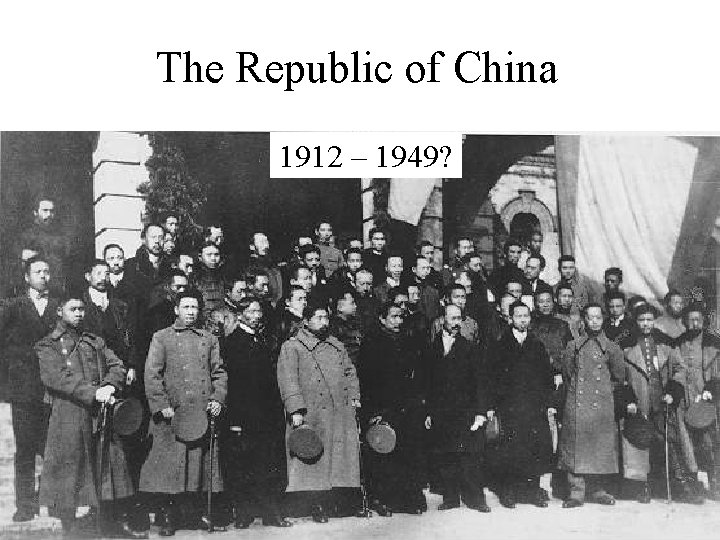
The Republic of China 1912 – 1949?
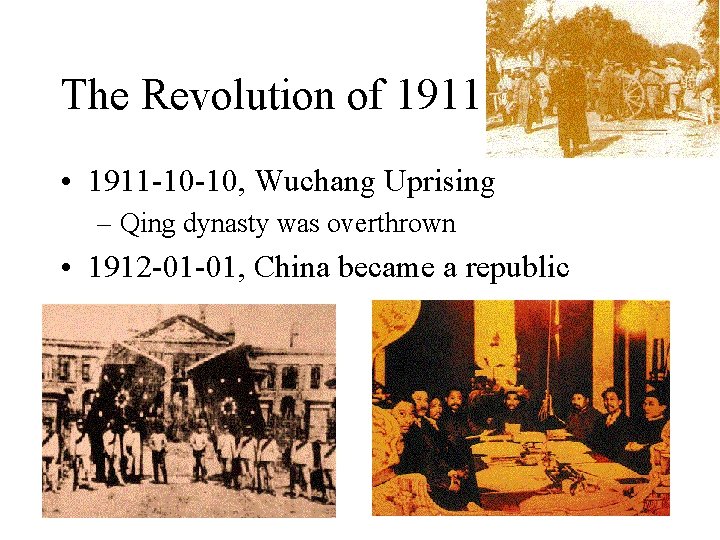
The Revolution of 1911 • 1911 -10 -10, Wuchang Uprising – Qing dynasty was overthrown • 1912 -01 -01, China became a republic
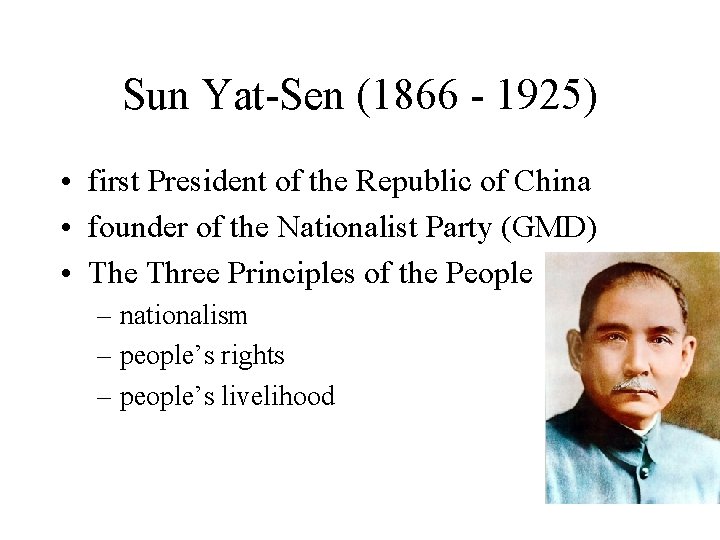
Sun Yat-Sen (1866 - 1925) • first President of the Republic of China • founder of the Nationalist Party (GMD) • The Three Principles of the People – nationalism – people’s rights – people’s livelihood
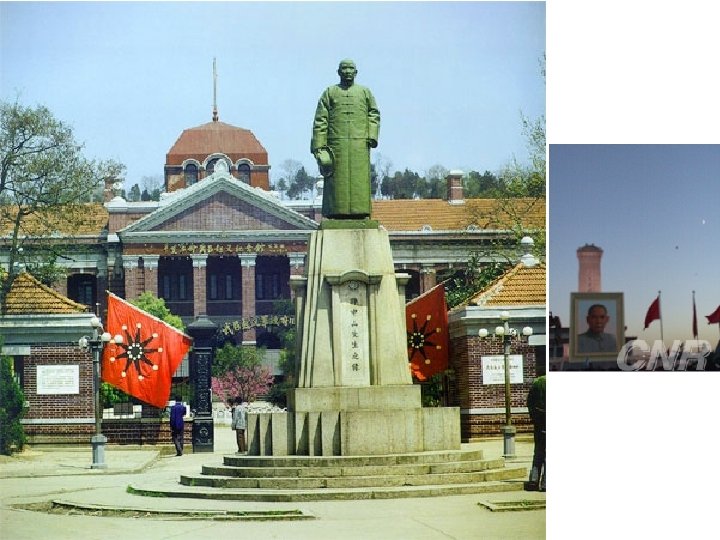
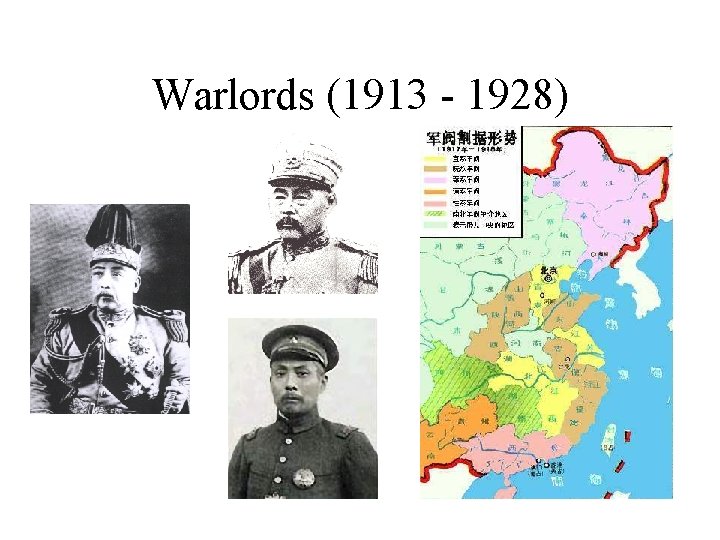
Warlords (1913 - 1928)
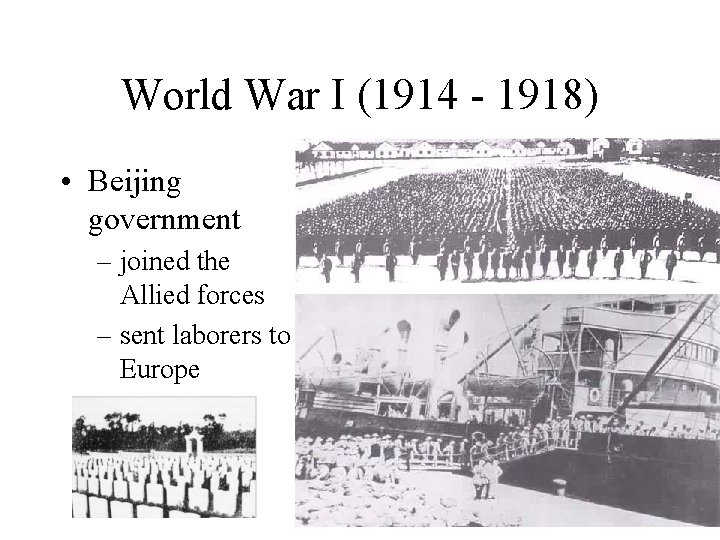
World War I (1914 - 1918) • Beijing government – joined the Allied forces – sent laborers to Europe
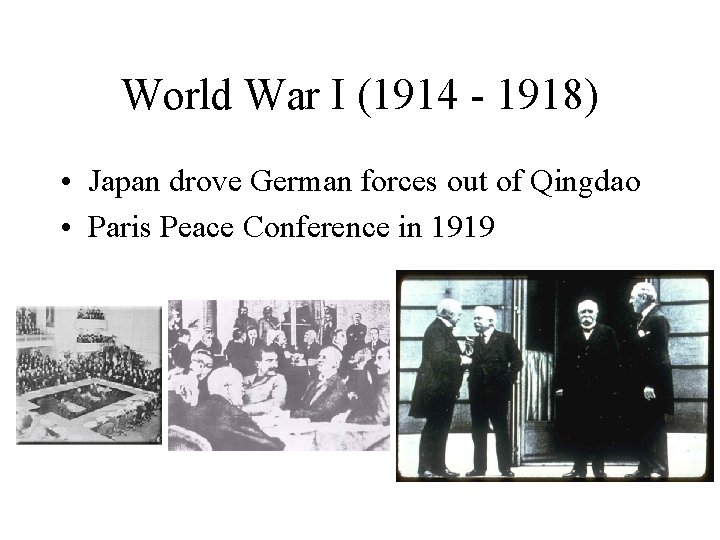
World War I (1914 - 1918) • Japan drove German forces out of Qingdao • Paris Peace Conference in 1919
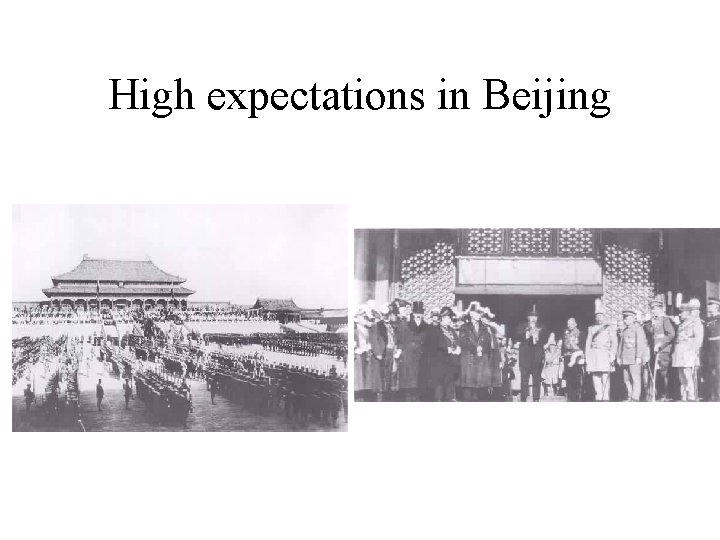
High expectations in Beijing
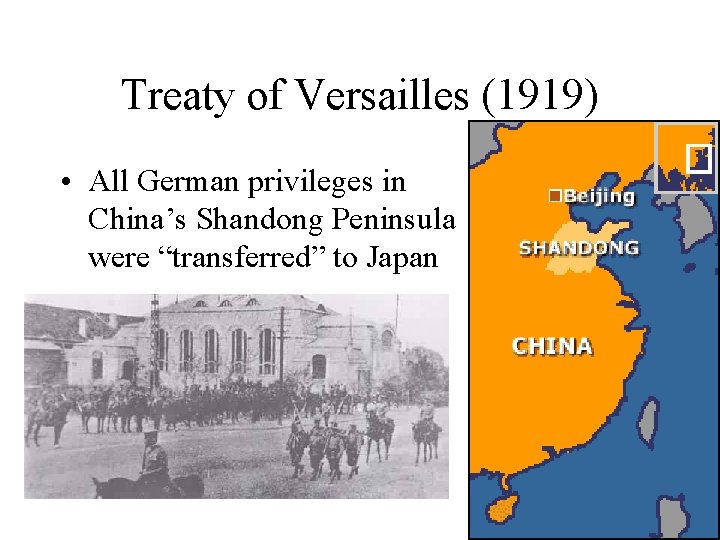
Treaty of Versailles (1919) • All German privileges in China’s Shandong Peninsula were “transferred” to Japan
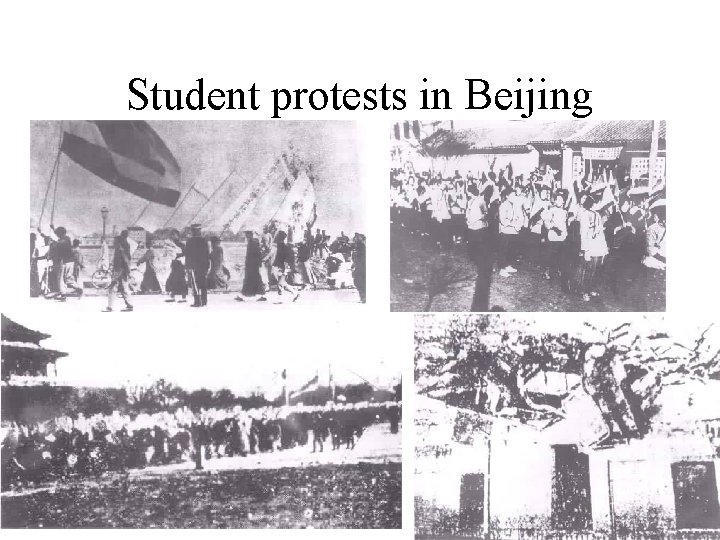
Student protests in Beijing
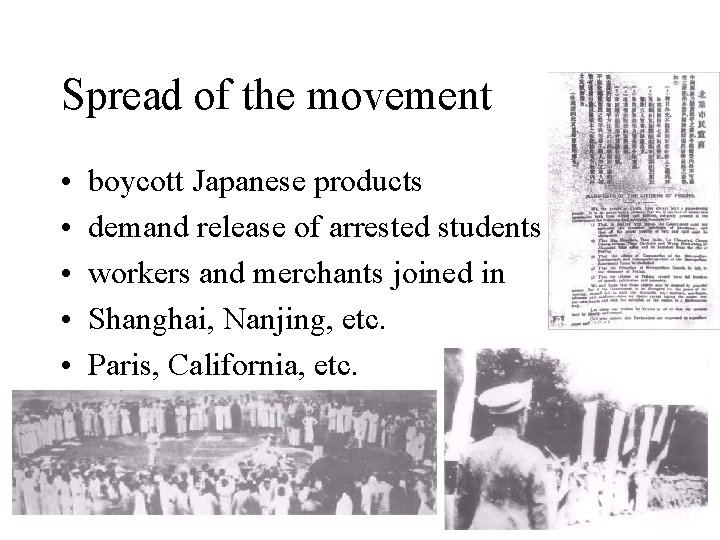
Spread of the movement • • • boycott Japanese products demand release of arrested students workers and merchants joined in Shanghai, Nanjing, etc. Paris, California, etc.
Frustrated nationalism • China’s previous efforts to borrow from the West to achieve wealth and power all failed – military hardware and related technologies – economic institutions and organization – science, scholarship, and education – government, political processes and organizations
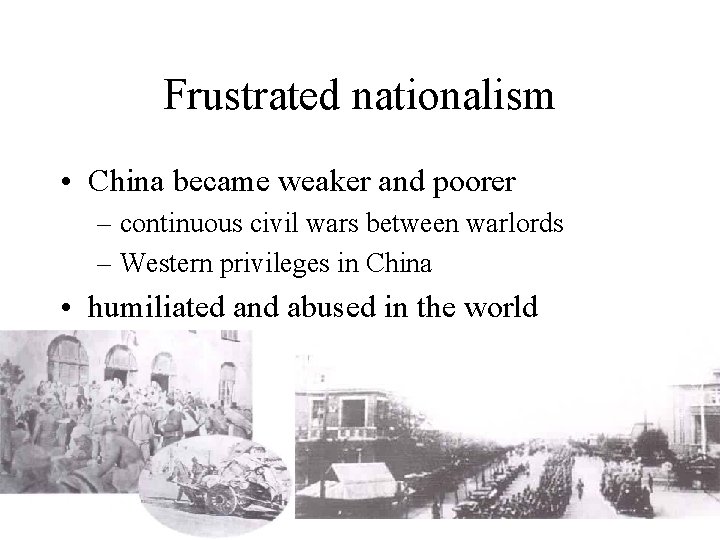
Frustrated nationalism • China became weaker and poorer – continuous civil wars between warlords – Western privileges in China • humiliated and abused in the world
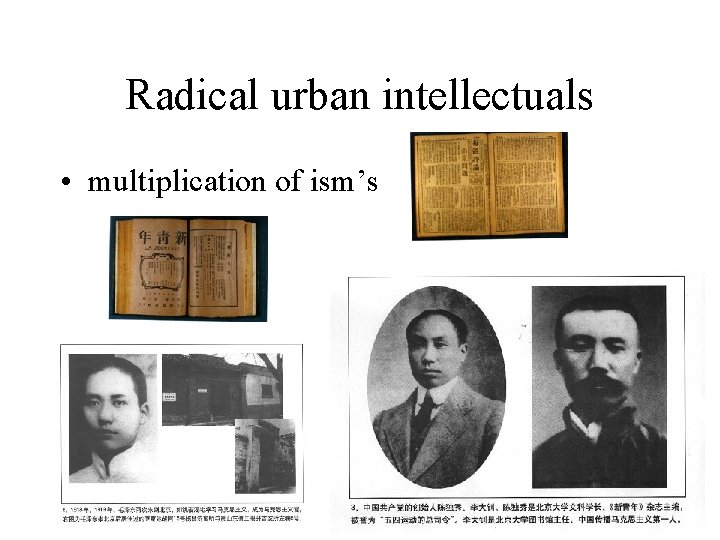
Radical urban intellectuals • multiplication of ism’s
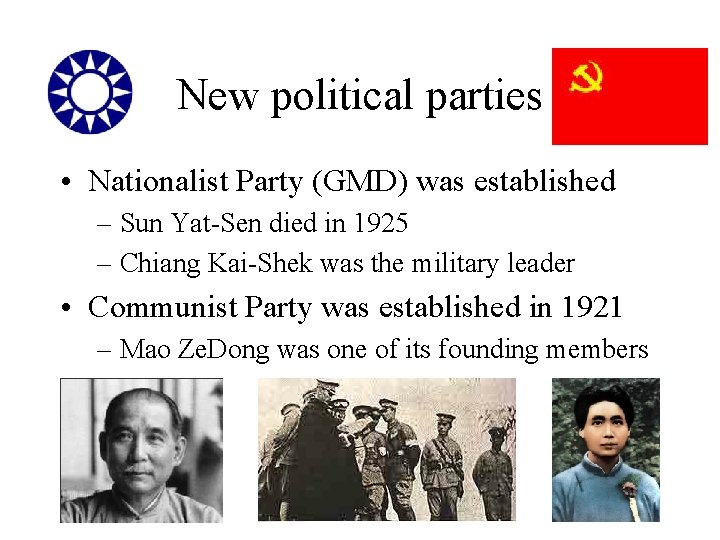
New political parties • Nationalist Party (GMD) was established – Sun Yat-Sen died in 1925 – Chiang Kai-Shek was the military leader • Communist Party was established in 1921 – Mao Ze. Dong was one of its founding members
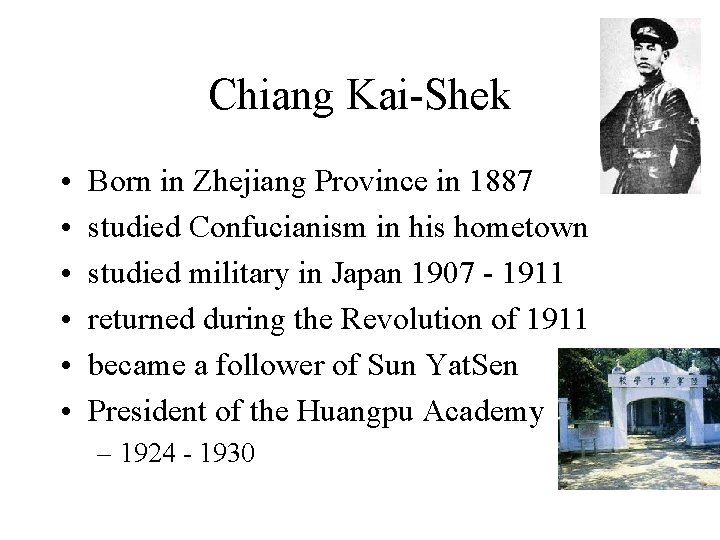
Chiang Kai-Shek • • • Born in Zhejiang Province in 1887 studied Confucianism in his hometown studied military in Japan 1907 - 1911 returned during the Revolution of 1911 became a follower of Sun Yat. Sen President of the Huangpu Academy – 1924 - 1930
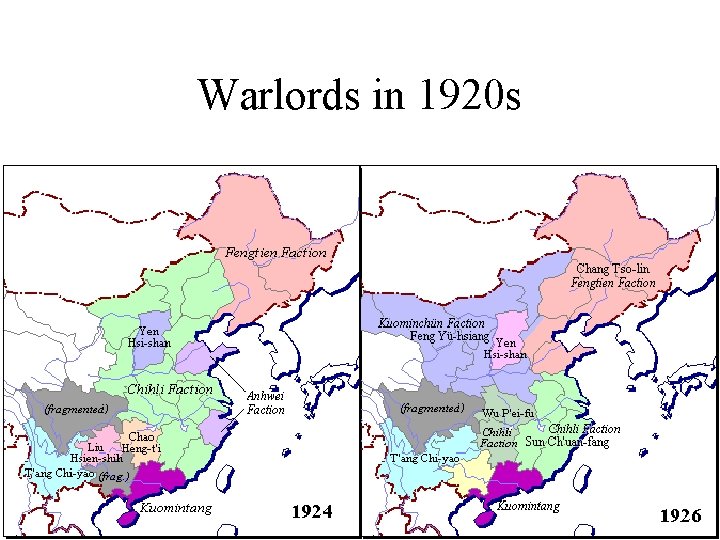
Warlords in 1920 s
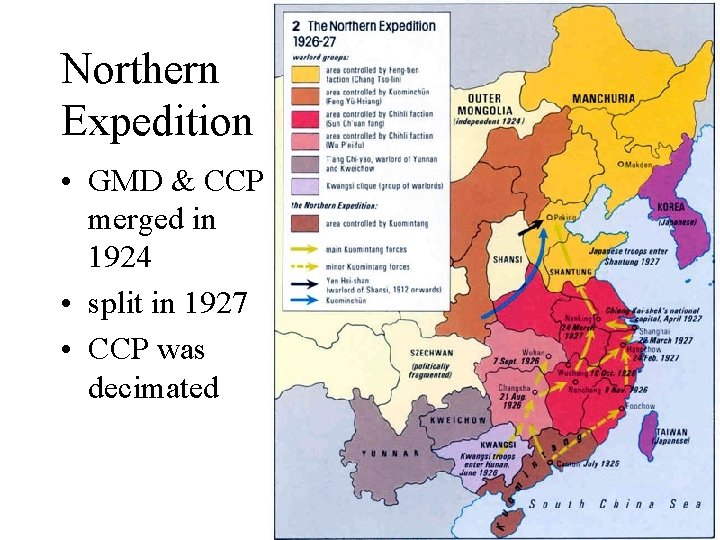
Northern Expedition • GMD & CCP merged in 1924 • split in 1927 • CCP was decimated
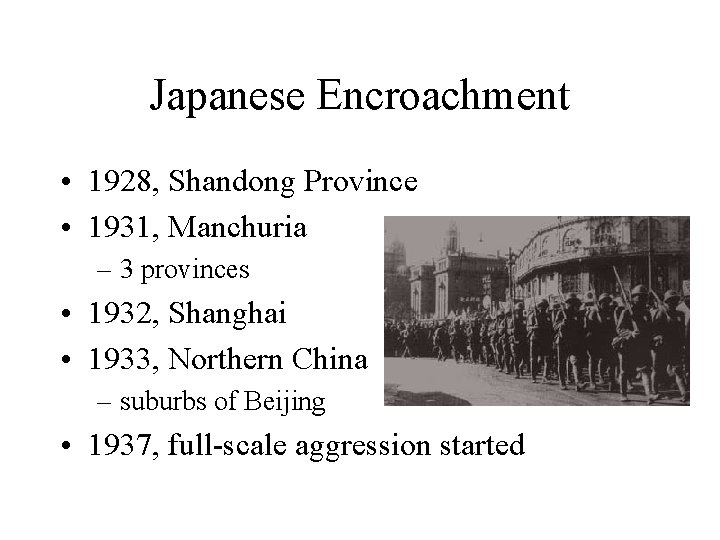
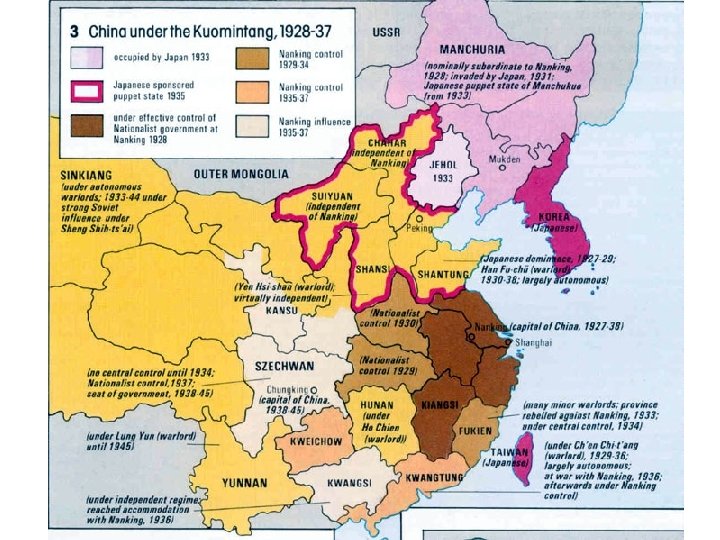
Japanese Encroachment • 1928, Shandong Province • 1931, Manchuria – 3 provinces • 1932, Shanghai • 1933, Northern China – suburbs of Beijing • 1937, full-scale aggression started
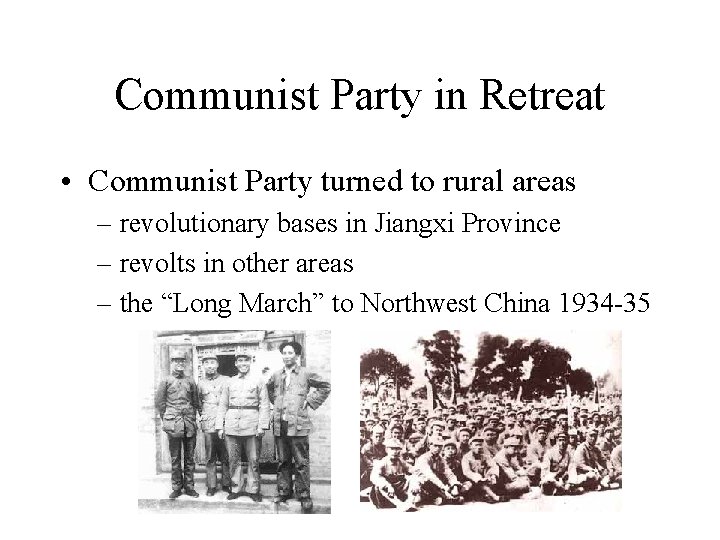
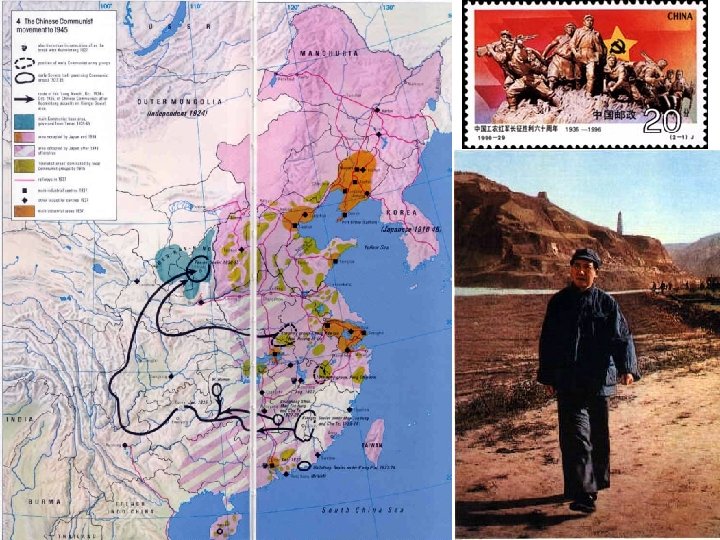
Communist Party in Retreat • Communist Party turned to rural areas – revolutionary bases in Jiangxi Province – revolts in other areas – the “Long March” to Northwest China 1934 -35
ROC Elites under Chiang • • First Lady: Wellesley College graduate Executive Yuan leader: Columbia & U. Cal. Minister of Finance: Oberlin & Yale Foreign Minister: Yale, Class of 1904 Minister of Education: U. of Pittsburg Bank of China director: Harvard …
ROC Government under Chiang • Negotiated with Western powers and Japan – regained the sovereign right to set tariffs – abolished extraterritorial rights – abolished or revised “unequal treaties” with Western powers of the Qing dynasty – recovered some of the “leased areas” from Western powers • How was CCP able to defeat GMD?
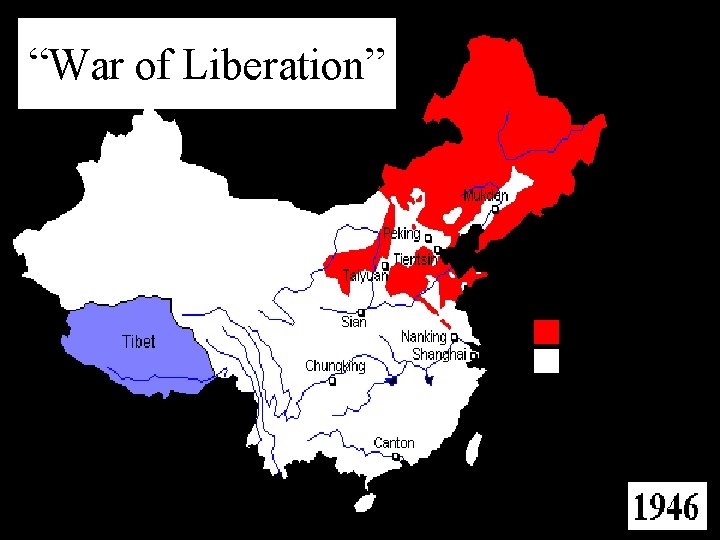
“War of Liberation”
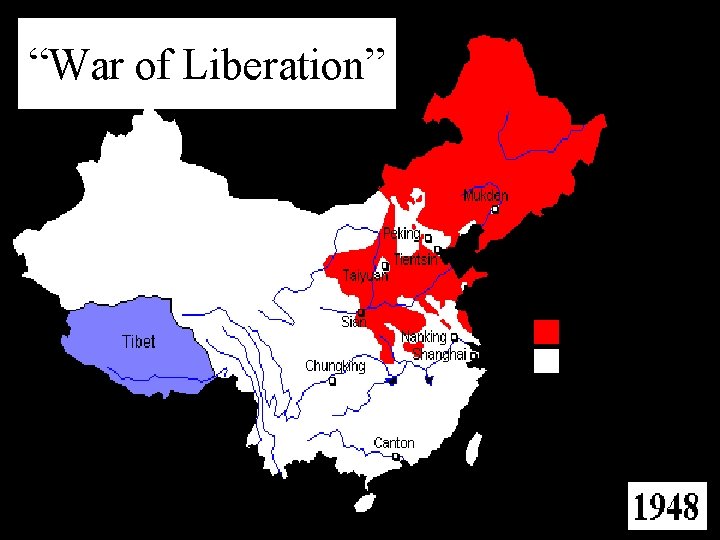
“War of Liberation”
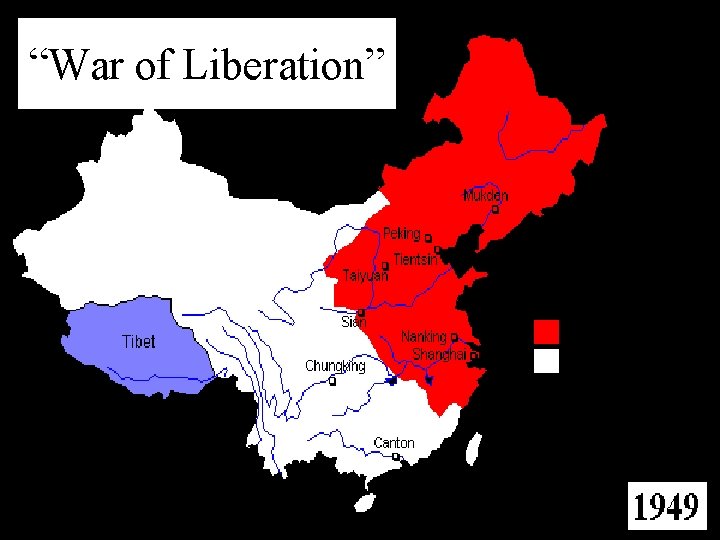
“War of Liberation”
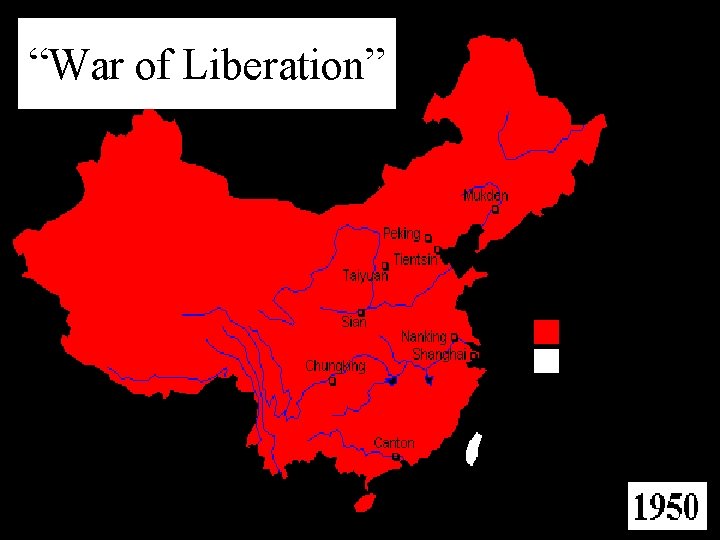
“War of Liberation”
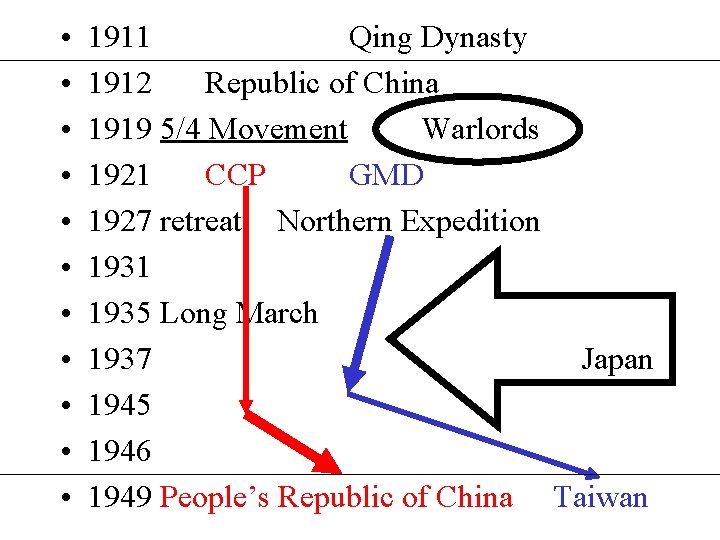
• • • 1911 Qing Dynasty 1912 Republic of China 1919 5/4 Movement Warlords 1921 CCP GMD 1927 retreat Northern Expedition 1931 1935 Long March 1937 Japan 1945 1946 1949 People’s Republic of China Taiwan
- Slides: 29