
The Reproductive System Overview Chapter 21 Biology 12

The Reproductive System Overview Chapter 21 Biology 12
Overview/Objectives 21. 1 - Male Reproductive System o Male anatomy o Testes and how they relate to sperm production and male sex hormones o Hormone regulation in males 21. 2 - Female Reproductive System o o Female anatomy External genetals and orgasm 21. 3 - Female Hormone Levels o Hormonal control of the uterine cycle, ovarian cycle, and maintaining pregnancy o Hormones that control the sex characteristics of females 21. 4 - Control of Reproduction o Birth control and conceiving methods 21. 5 - Sexually transmitted diseases
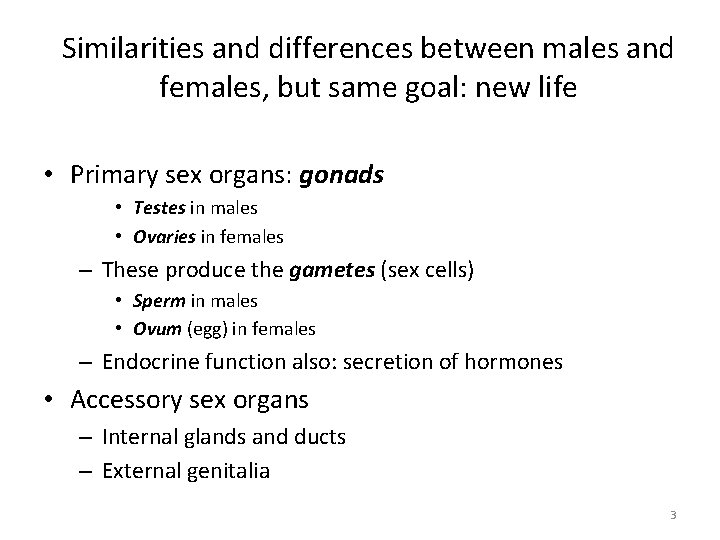
Similarities and differences between males and females, but same goal: new life • Primary sex organs: gonads • Testes in males • Ovaries in females – These produce the gametes (sex cells) • Sperm in males • Ovum (egg) in females – Endocrine function also: secretion of hormones • Accessory sex organs – Internal glands and ducts – External genitalia 3
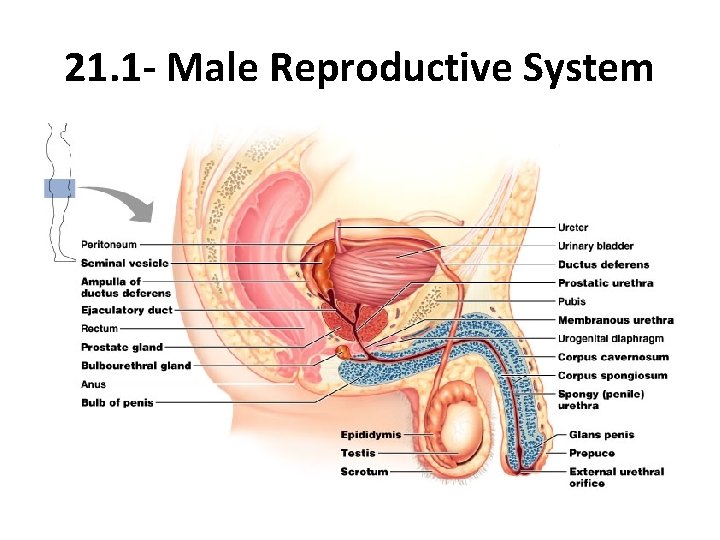
21. 1 - Male Reproductive System
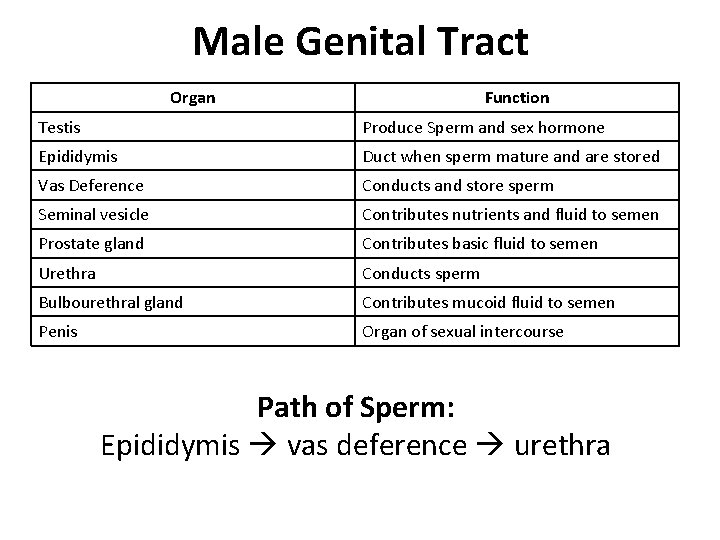
Male Genital Tract Organ Function Testis Produce Sperm and sex hormone Epididymis Duct when sperm mature and are stored Vas Deference Conducts and store sperm Seminal vesicle Contributes nutrients and fluid to semen Prostate gland Contributes basic fluid to semen Urethra Conducts sperm Bulbourethral gland Contributes mucoid fluid to semen Penis Organ of sexual intercourse Path of Sperm: Epididymis vas deference urethra
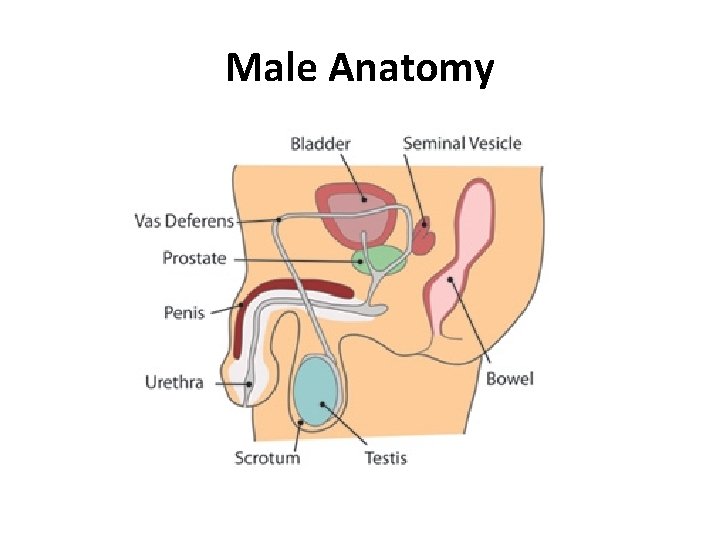
Male Anatomy
Male Gonads: The Testes • Testes – produce sperm and male sex hormones • Location: outside the abdominal cavity in the scrotum because inside temp. is too high for viable sperm scrotum regulates the temperature of the testes • Composition: seminiferous tubules (tightly coiled tubules) contains cells undergoing spermatogenesis (production of sperm)
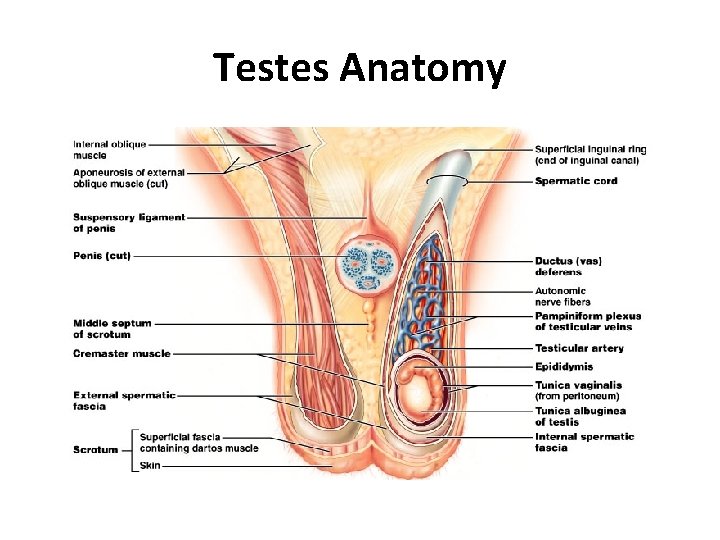
Testes Anatomy
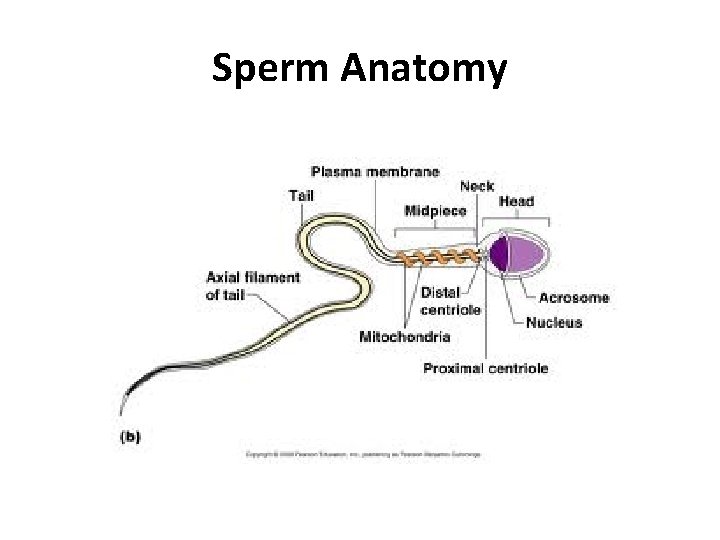
Sperm Anatomy
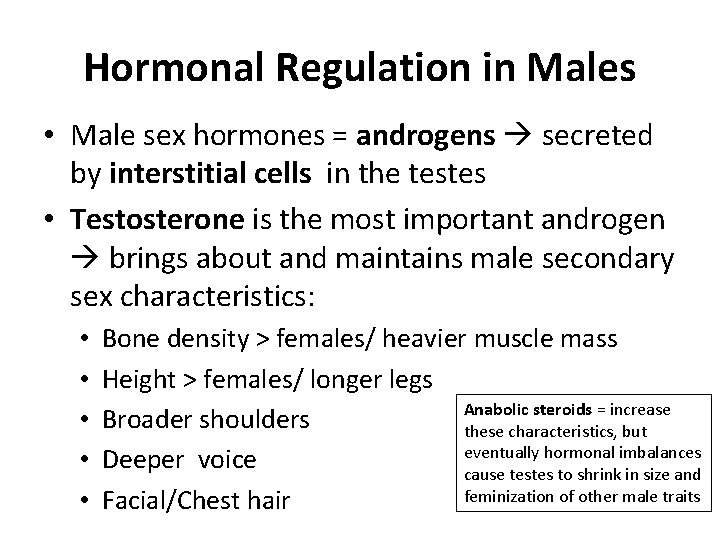
Hormonal Regulation in Males • Male sex hormones = androgens secreted by interstitial cells in the testes • Testosterone is the most important androgen brings about and maintains male secondary sex characteristics: • • • Bone density > females/ heavier muscle mass Height > females/ longer legs Anabolic steroids = increase Broader shoulders these characteristics, but eventually hormonal imbalances Deeper voice cause testes to shrink in size and feminization of other male traits Facial/Chest hair
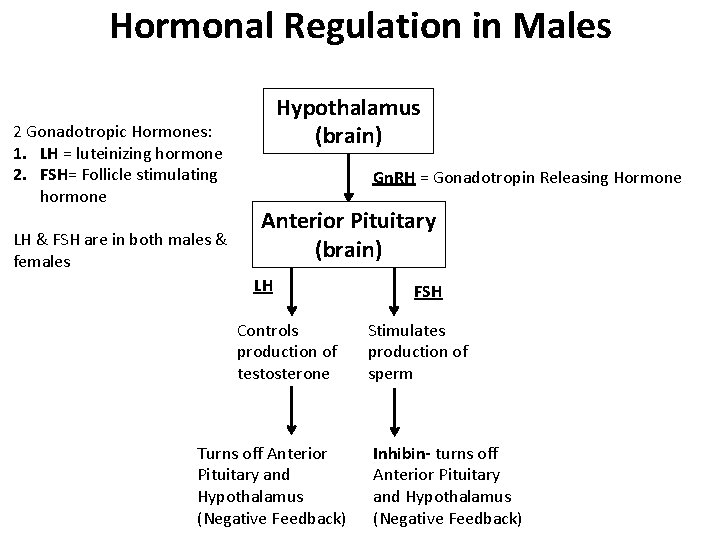
Hormonal Regulation in Males 2 Gonadotropic Hormones: 1. LH = luteinizing hormone 2. FSH= Follicle stimulating hormone LH & FSH are in both males & females Hypothalamus (brain) Gn. RH = Gonadotropin Releasing Hormone Anterior Pituitary (brain) LH Controls production of testosterone Turns off Anterior Pituitary and Hypothalamus (Negative Feedback) FSH Stimulates production of sperm Inhibin- turns off Anterior Pituitary and Hypothalamus (Negative Feedback)
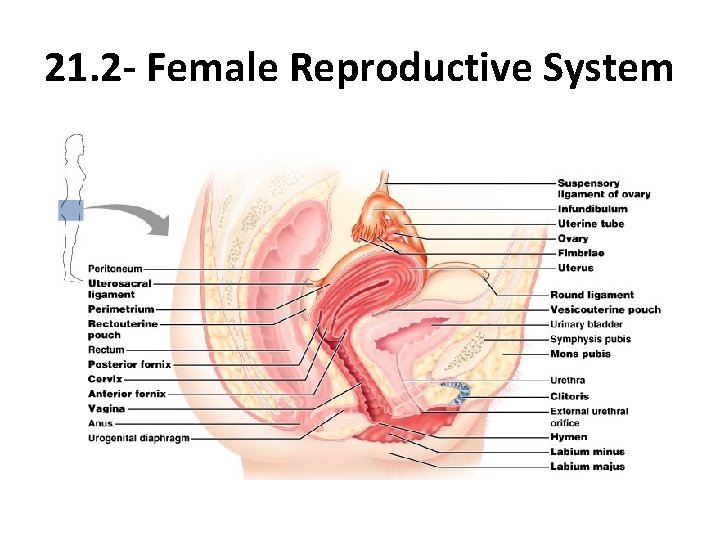
21. 2 - Female Reproductive System
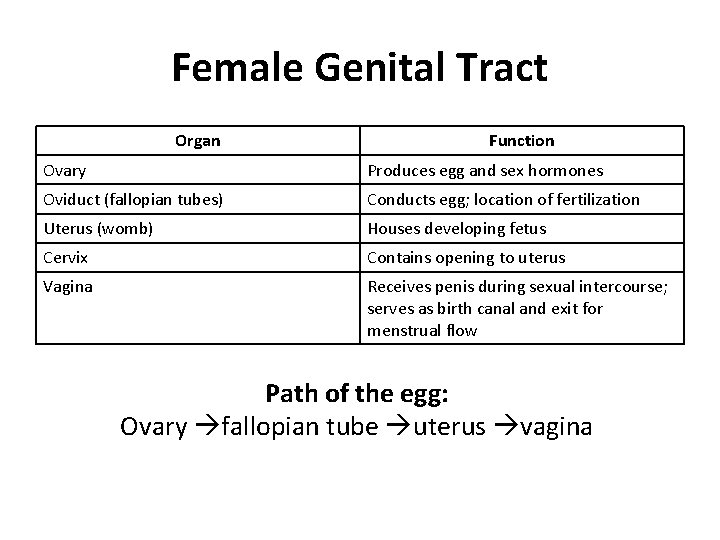
Female Genital Tract Organ Function Ovary Produces egg and sex hormones Oviduct (fallopian tubes) Conducts egg; location of fertilization Uterus (womb) Houses developing fetus Cervix Contains opening to uterus Vagina Receives penis during sexual intercourse; serves as birth canal and exit for menstrual flow Path of the egg: Ovary fallopian tube uterus vagina
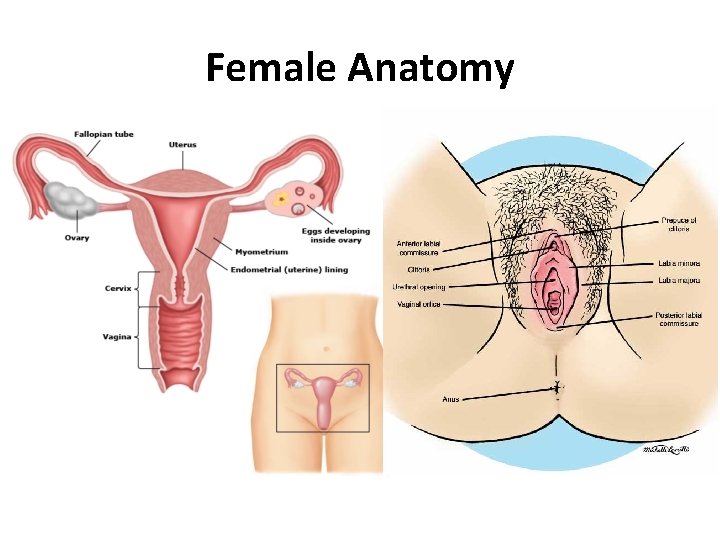
Female Anatomy
21. 3 - Female Hormone Levels Structure of the Ovary: • Consists of outer cortex and inner medulla • Cortex contains many follicles, each containing an immature egg oocyte • Females are born with ~ 2 million follicles, only 1 egg/month matures during reproductive years • Oocytes age as women age, which is why older women have a higher chance of producing children with genetic defects
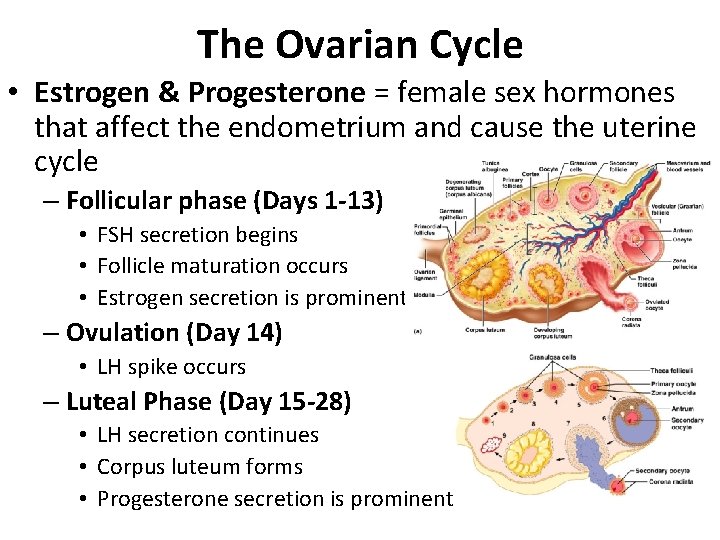
The Ovarian Cycle • Estrogen & Progesterone = female sex hormones that affect the endometrium and cause the uterine cycle – Follicular phase (Days 1 -13) • FSH secretion begins • Follicle maturation occurs • Estrogen secretion is prominent – Ovulation (Day 14) • LH spike occurs – Luteal Phase (Day 15 -28) • LH secretion continues • Corpus luteum forms • Progesterone secretion is prominent
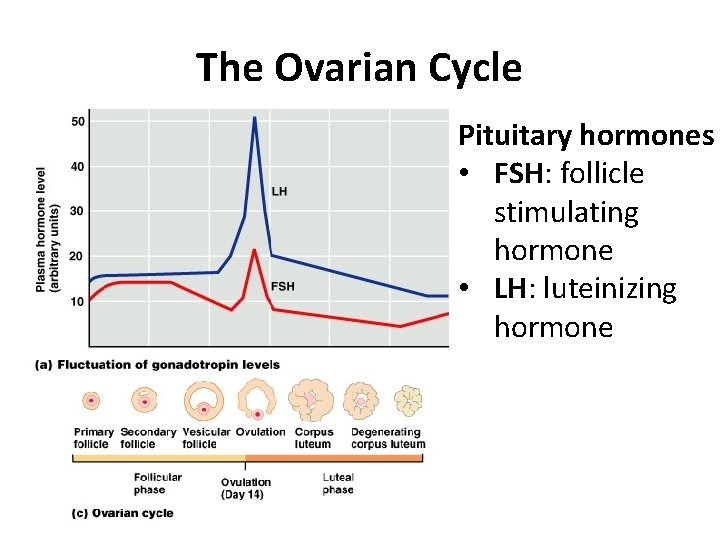
The Ovarian Cycle Pituitary hormones • FSH: follicle stimulating hormone • LH: luteinizing hormone
The Uterine Cycle • Menstruation (Days 1 -5) – endometrium breaks down • Proliferative Phase (Days 6 -13) – endometrium rebuilds due to estrogen production • Secretory Phase (Days 15 -28) – Endometrium thickens and glands are secretory due to increase production of progesterone
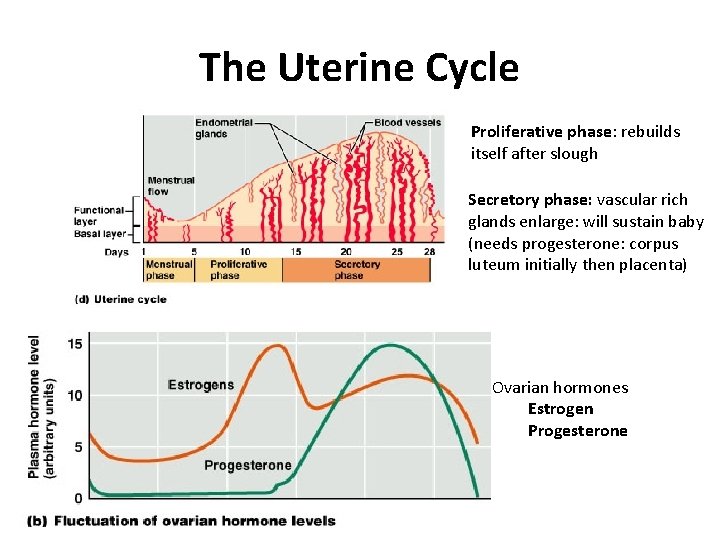
The Uterine Cycle Proliferative phase: rebuilds itself after slough Secretory phase: vascular rich glands enlarge: will sustain baby (needs progesterone: corpus luteum initially then placenta) Ovarian hormones Estrogen Progesterone
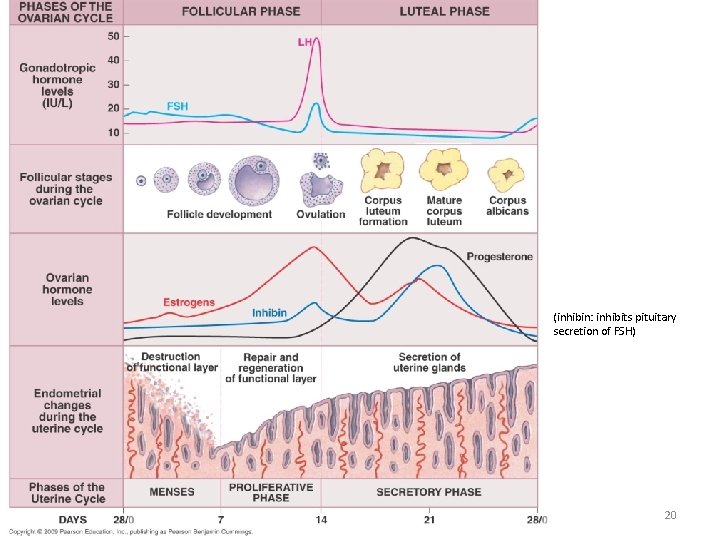
(inhibin: inhibits pituitary secretion of FSH) 20
Menstration • Endometrium lining, mucus and blood are shed • Fibrinolysin = enzyme released by dying cells that prevents blood clotting Why is it painful? • Prostaglandin levels are higher causes muscle contractions – Did you know the pain of period cramps can be reduced with a diet high in fiber (fruit and vegetables), natural bacteria (yogurt), and low in sugar!
Fertilization and Pregnancy • If fertilization of the oocyte occurs in the fallopian tubes between days 14 -22, an embryo begins to develop • The developing embryo implants in the endometrium (lining of the uterus) • The placenta, originates from both fetal and maternal tissues and produces human chorionic gonadotropin (HCG) which maintains the corpus luteum in the ovary until the placenta is developed enough to produce its own estrogen & progesterone (the pregnancy hormone)
Fertilization & Pregnancy Continued • Pregnancy tests look for HCG (a molecule present only during pregnancy no false positives) • Progesterone & Estrogen do 2 things: 1. Stop anterior pituitary from maturing a new follicle 2. Maintain the endometrium
21. 4 - Control of Reproduction • Birth Control Methods – Abstinence = most reliable – Contraceptives (medication & devices that reduce chance of pregnancy) • • • Oral Contraceptive (Birth control pill) Intrauterine device (IUD) Female and male condom Contraceptive implants Contraceptive Injections & Vaccines Most contraceptives are not 100% reliable, and they do not protect from STD’s. Also, some increase your risk of cancer and decrease future fertility.
21. 5 - Sexually transmitted diseases • Acquired Immunodeficiency Syndrome (AIDS) – HIV Infections • Genital herpes • Genital warts • Hepatitis Infections – Hepatitus B • Chlamydia • Gonorrhea • Syphilis
- Slides: 25