
The Reproductive System Male and Female Reproductive Systems




- Slides: 44
The Reproductive System
Male and Female Reproductive Systems � � Are functionally different Female produces 1 gamete per month: � � retains and nurtures zygote Male disseminates large quantities of gametes: � produces 1/2 billion sperm per day
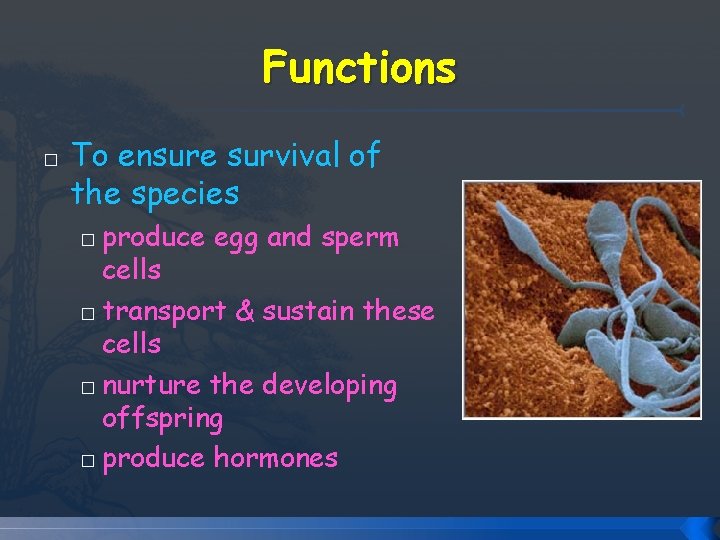
Functions � To ensure survival of the species produce egg and sperm cells � transport & sustain these cells � nurture the developing offspring � produce hormones �
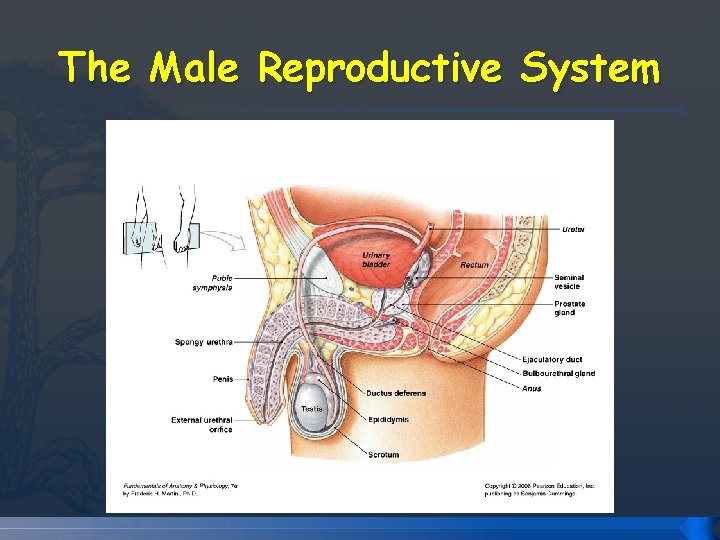
The Male Reproductive System
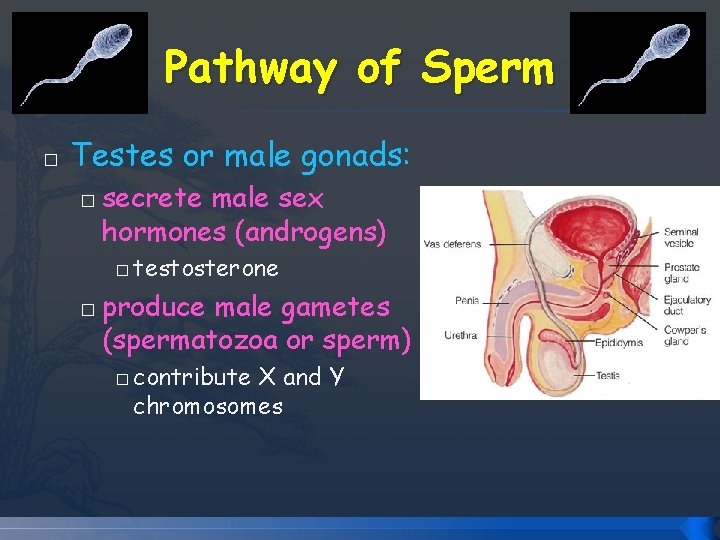
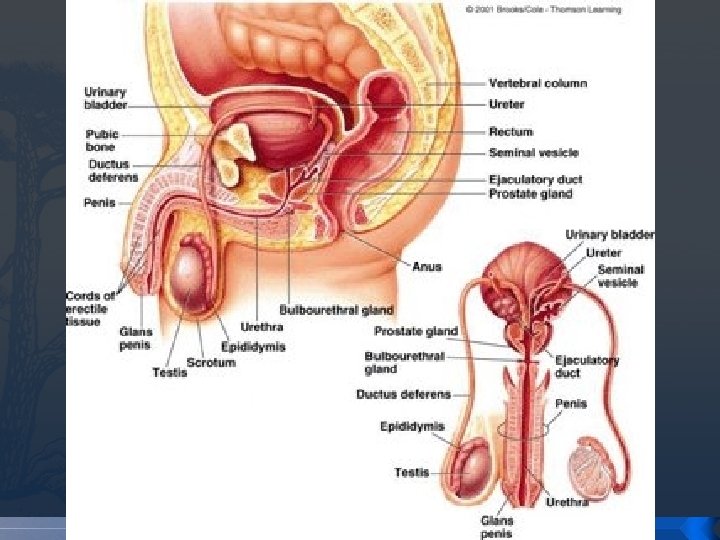
Pathway of Sperm � Testes or male gonads: � secrete male sex hormones (androgens) � � testosterone produce male gametes (spermatozoa or sperm) � contribute X and Y chromosomes
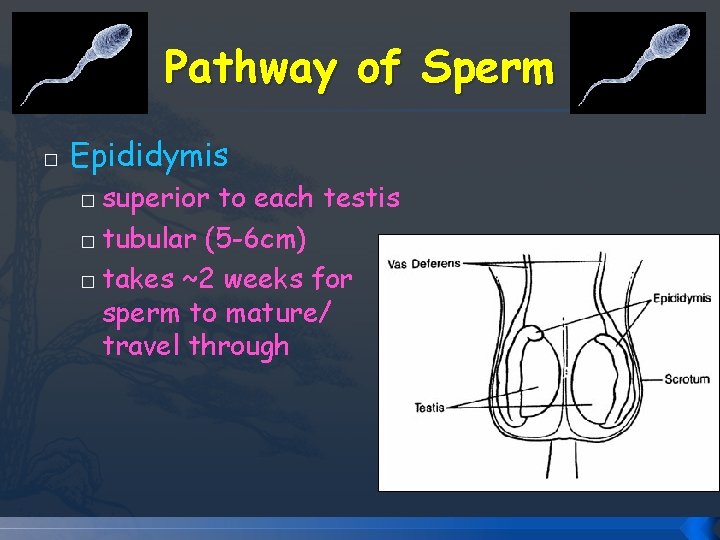
Pathway of Sperm � Epididymis superior to each testis � tubular (5 -6 cm) � takes ~2 weeks for sperm to mature/ travel through �
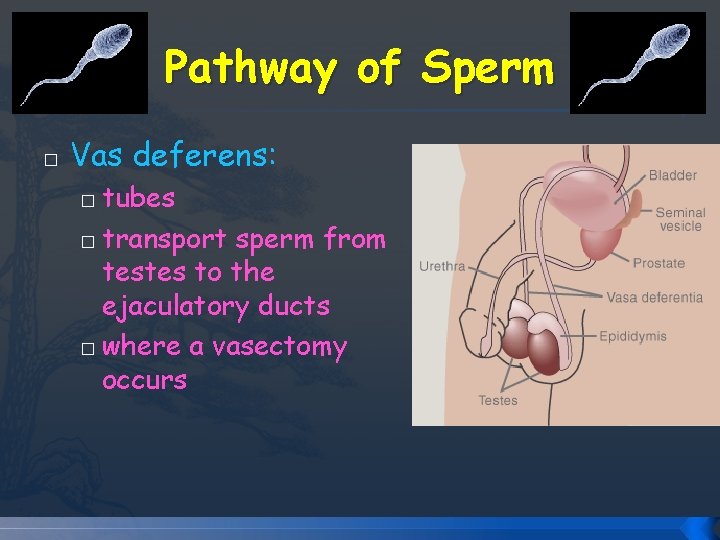
Pathway of Sperm � Vas deferens: tubes � transport sperm from testes to the ejaculatory ducts � where a vasectomy occurs �
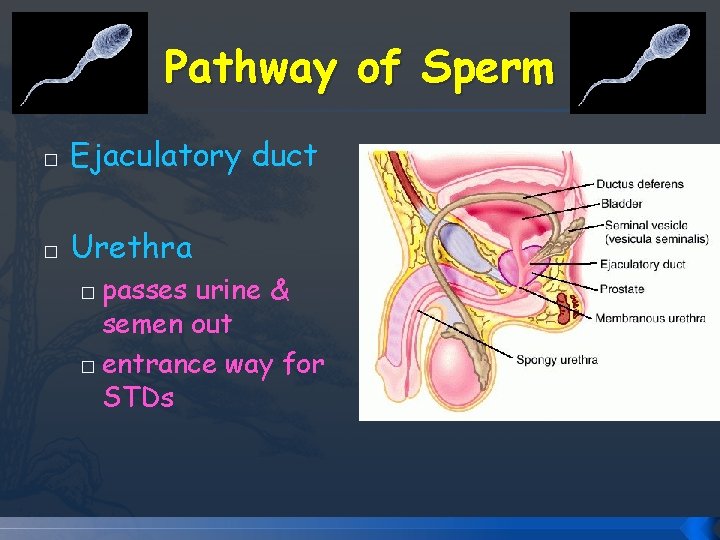
Pathway of Sperm � Ejaculatory duct � Urethra passes urine & semen out � entrance way for STDs �
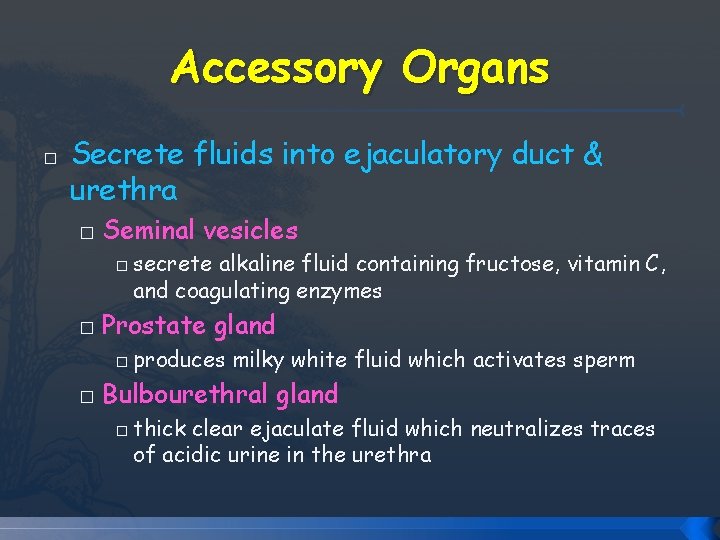
Accessory Organs � Secrete fluids into ejaculatory duct & urethra � Seminal vesicles � � Prostate gland � � secrete alkaline fluid containing fructose, vitamin C, and coagulating enzymes produces milky white fluid which activates sperm Bulbourethral gland � thick clear ejaculate fluid which neutralizes traces of acidic urine in the urethra
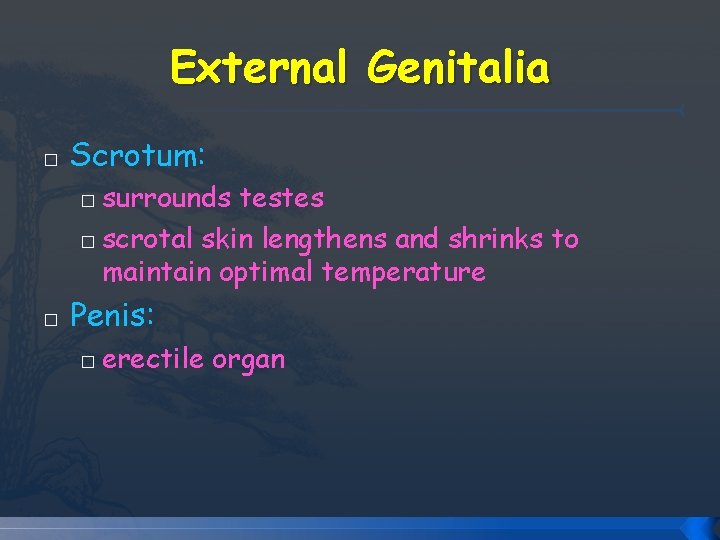
External Genitalia � Scrotum: surrounds testes � scrotal skin lengthens and shrinks to maintain optimal temperature � � Penis: � erectile organ
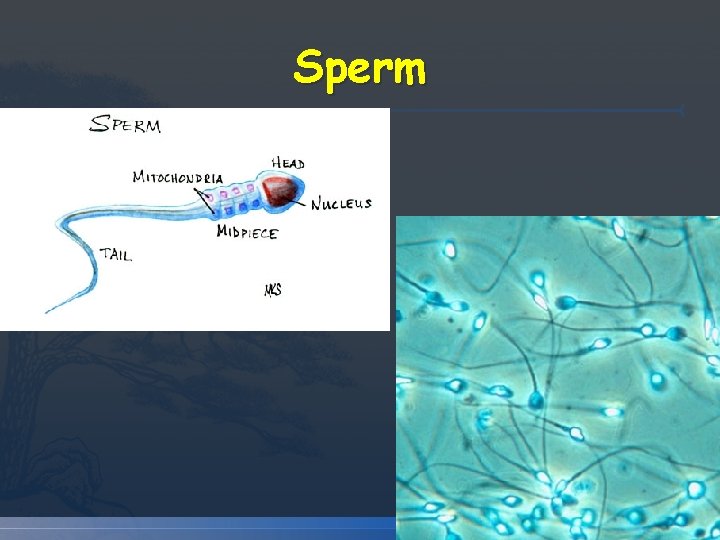
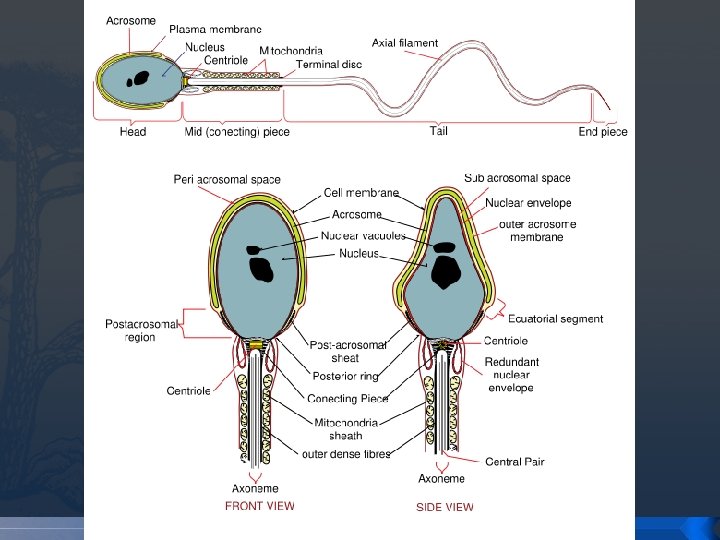
Sperm
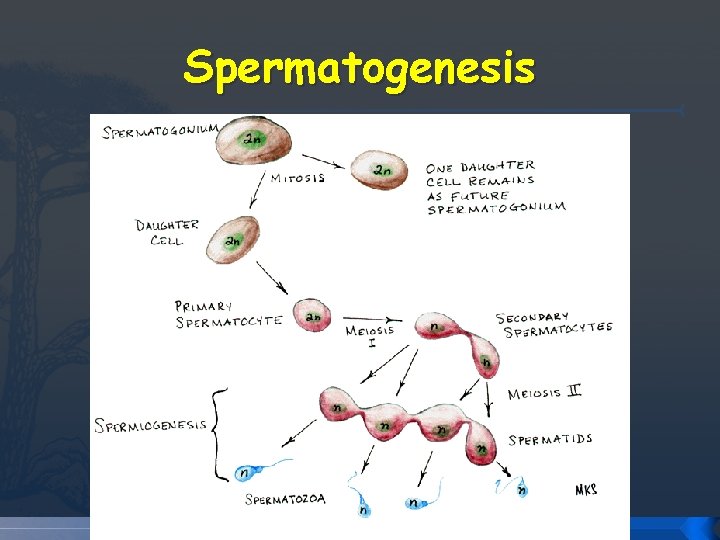
Spermatogenesis
Testosterone � � Stimulates spermatogenesis Affects CNS functions � � libido & related behaviors Stimulates metabolism � blood cell formation, muscle growth
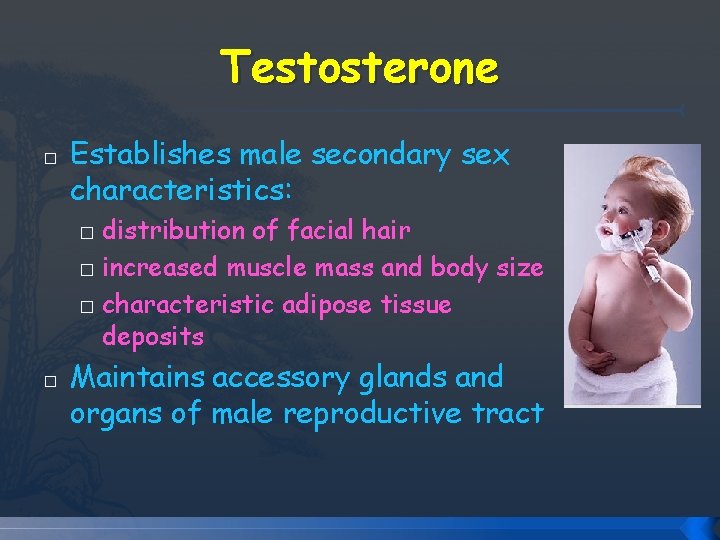
Testosterone � Establishes male secondary sex characteristics: distribution of facial hair � increased muscle mass and body size � characteristic adipose tissue deposits � � Maintains accessory glands and organs of male reproductive tract
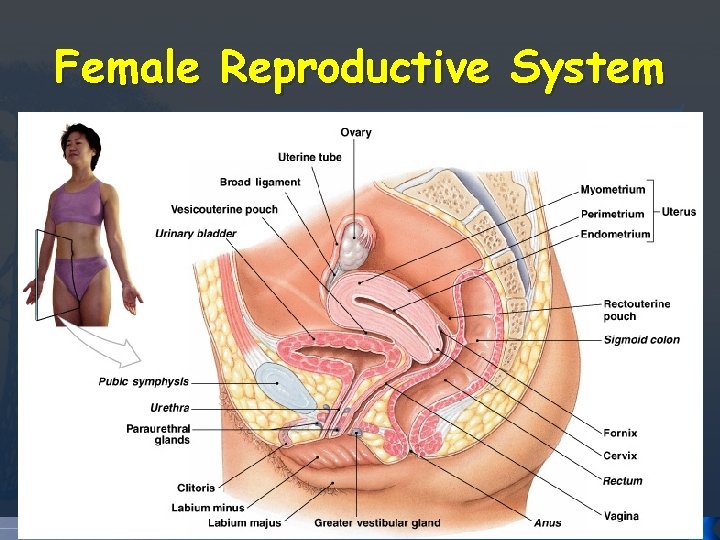
Female Reproductive System
Functions � � � Produces sex hormones and functional gametes Protects and supports developing embryo Nourishes newborn infant
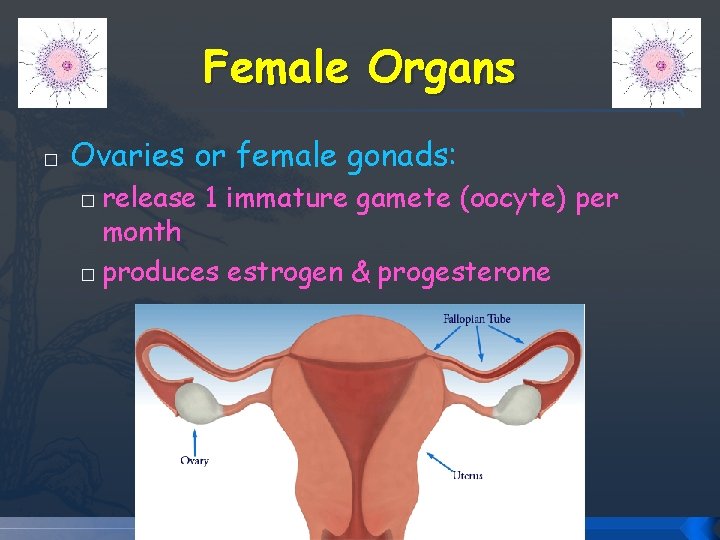
Female Organs � Ovaries or female gonads: release 1 immature gamete (oocyte) per month � produces estrogen & progesterone �
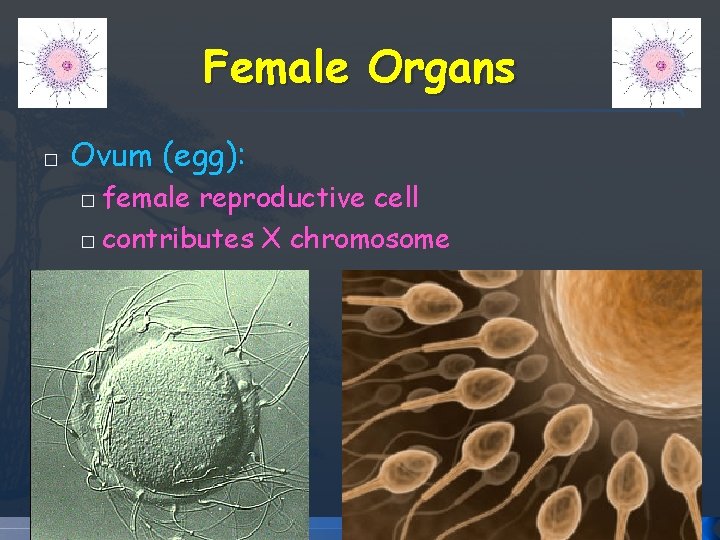
Female Organs � Ovum (egg): female reproductive cell � contributes X chromosome �
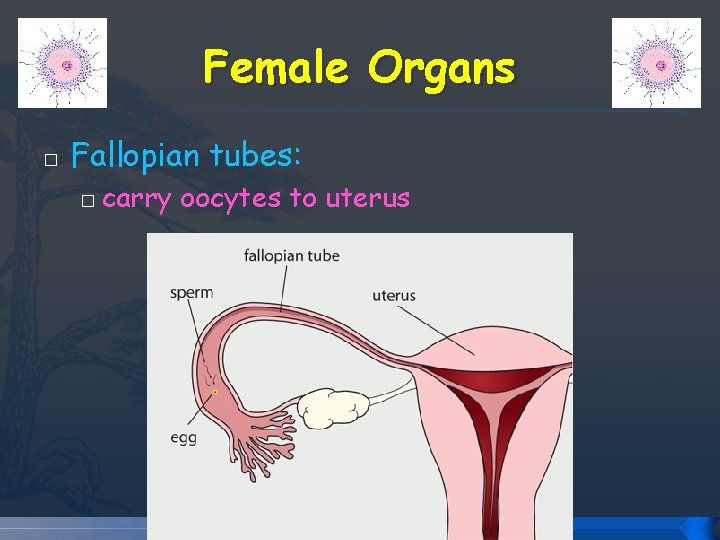
Female Organs � Fallopian tubes: � carry oocytes to uterus
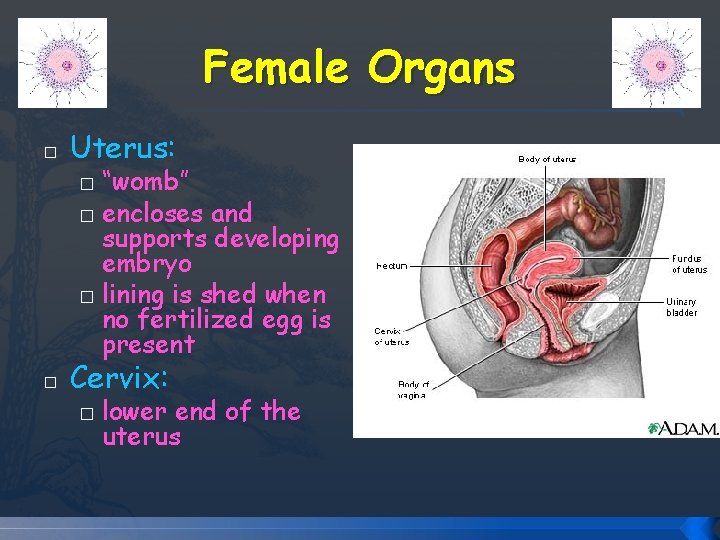
Female Organs � Uterus: “womb” � encloses and supports developing embryo � lining is shed when no fertilized egg is present � � Cervix: � lower end of the uterus
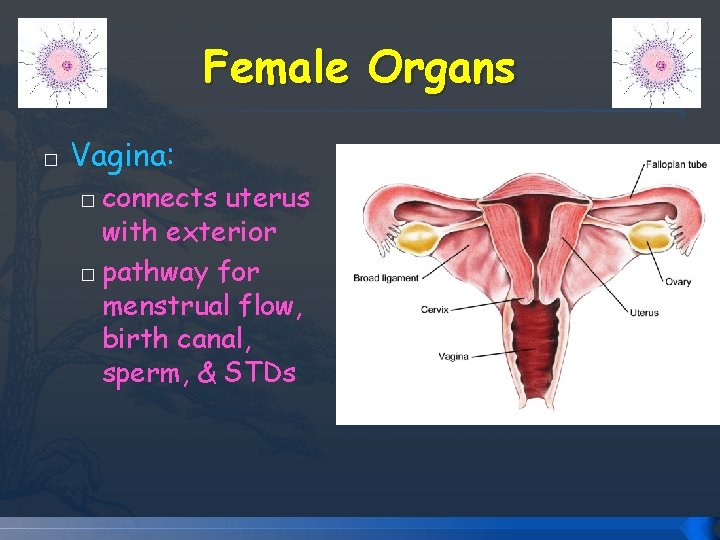
Female Organs � Vagina: connects uterus with exterior � pathway for menstrual flow, birth canal, sperm, & STDs �
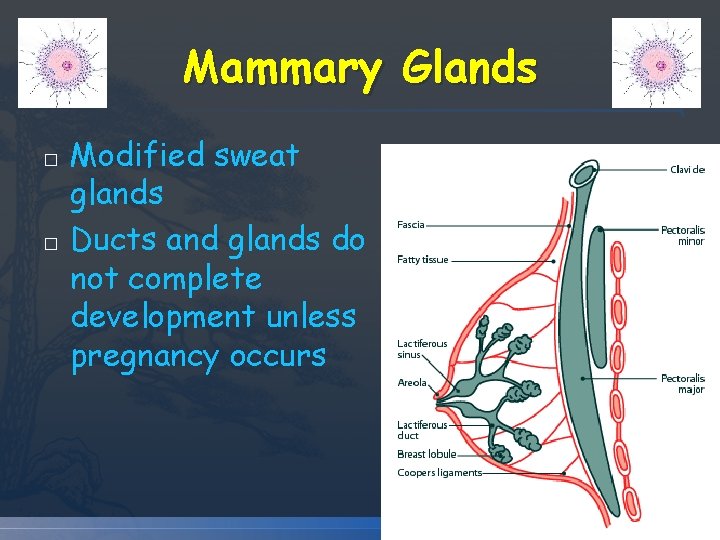
Mammary Glands � � Modified sweat glands Ducts and glands do not complete development unless pregnancy occurs
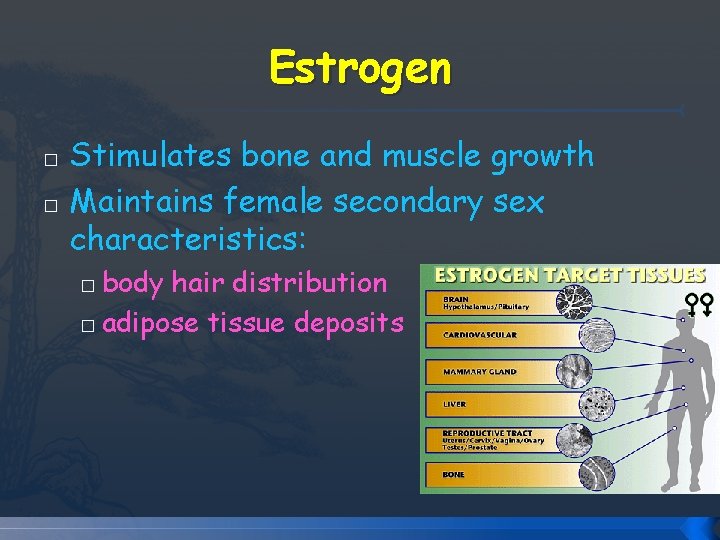
Estrogen � � Stimulates bone and muscle growth Maintains female secondary sex characteristics: body hair distribution � adipose tissue deposits �
Estrogen � � � Affects central nervous system (CNS) activity (especially in the hypothalamus, where estrogens increase the sexual drive) Maintains functional accessory reproductive glands and organs Initiates repair and growth of endometrium
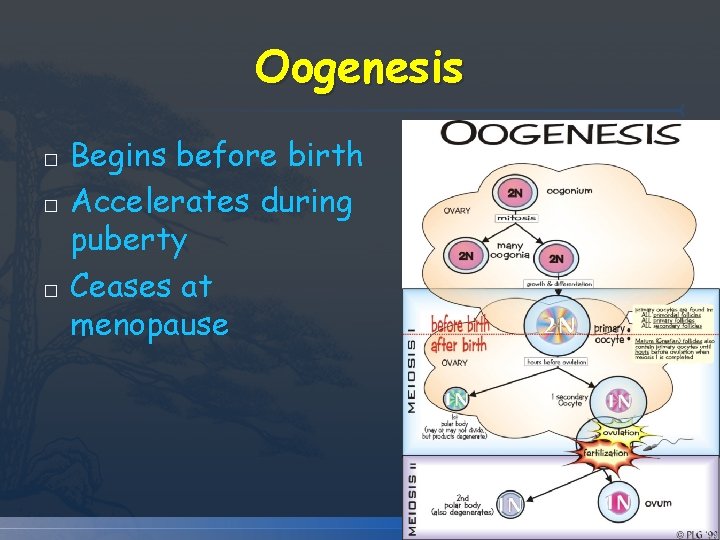
Oogenesis � � � Begins before birth Accelerates during puberty Ceases at menopause
Aging - Females � Menopause ovulation and menstruation cease � ~ ages 45 -55 � levels of estrogen & progesterone decline � reduction in uterus & breast size � reduction in bone deposits (osteoporosis) �
Aging - Males � Andropause aka male climacteric � occurs over a gradual period of time � testosterone declines � ~ age 50 -60 � sperm production continues �
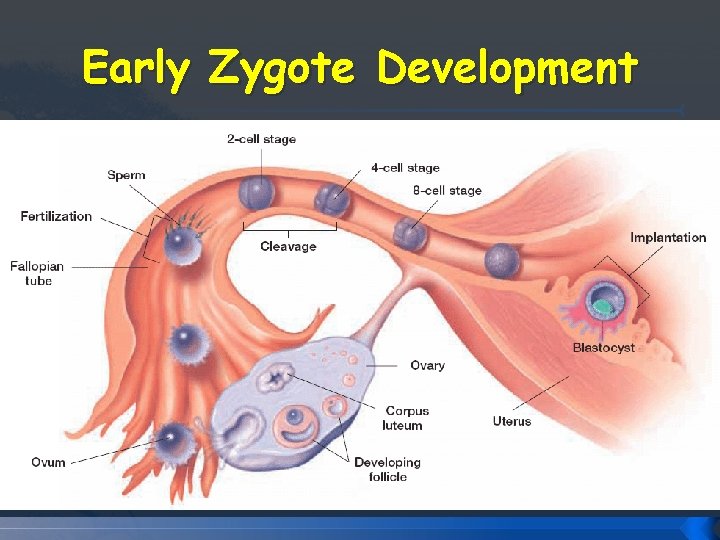
Fertilization � May occur when: � � � Location: � � sperm are present a few days after ovulation fallopian tube Process: � � � head of sperm enters ovum nuclei fuse zygote is formed
Fertilization � Cleavage: initial division of the zygote � continues as the zygote moves towards the uterus � � � the zygote becomes a blastocyte (hollow ball of cells) Implantation: ~ 6 days after fertilization � blastocyte burrows into the lining of the uterus �
Early Zygote Development
Pregnancy � � 9 month gestation period Divided into trimesters � � 3 -month periods First 8 weeks of pregnancy: � developing human is called an embryo
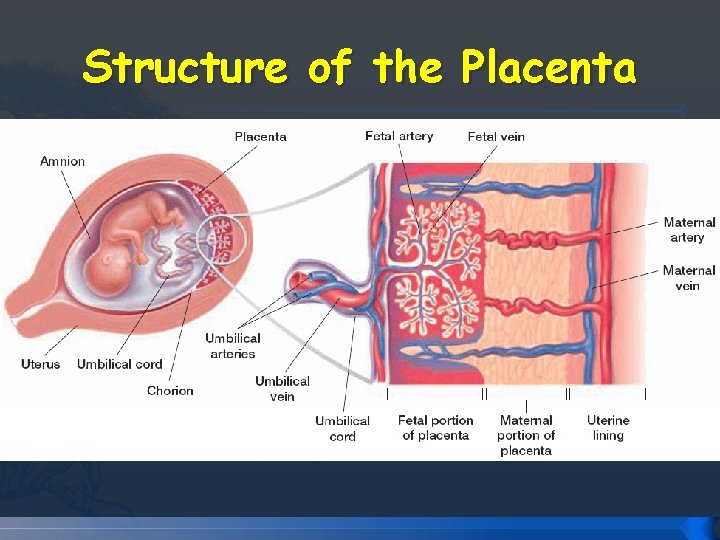
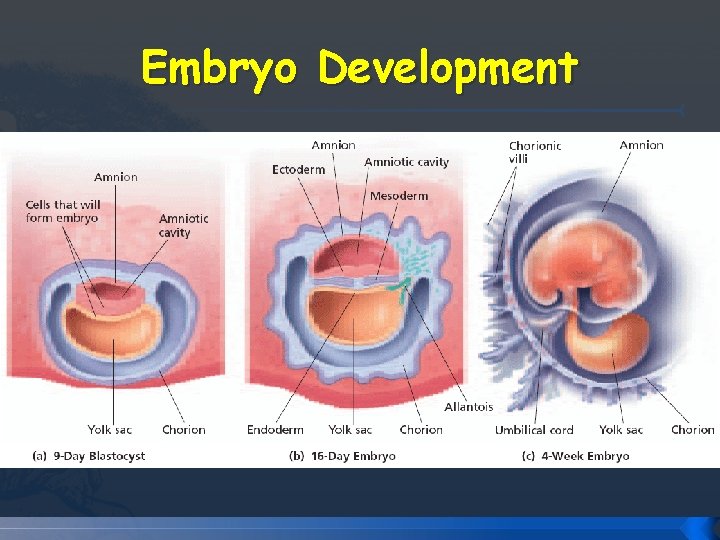
Pregnancy � First Trimester: supportive membranes � rapid growth � amnion closes & protects the embryo � chorion forms the placenta � � structure through which the mother nourishes the embryo
Structure of the Placenta
Pregnancy � First Trimester: Development of Embryo � 4 th week: major organs are formed � heart begins to beat � � 2 nd month: arms and legs take shape � major internal organs are evident �
Embryo Development
Pregnancy � First Trimester: Development of Fetus � � from 8 th week - delivery After 1 st trimester: sex can be distinguished � recognizable body features � organ systems have begun to form �
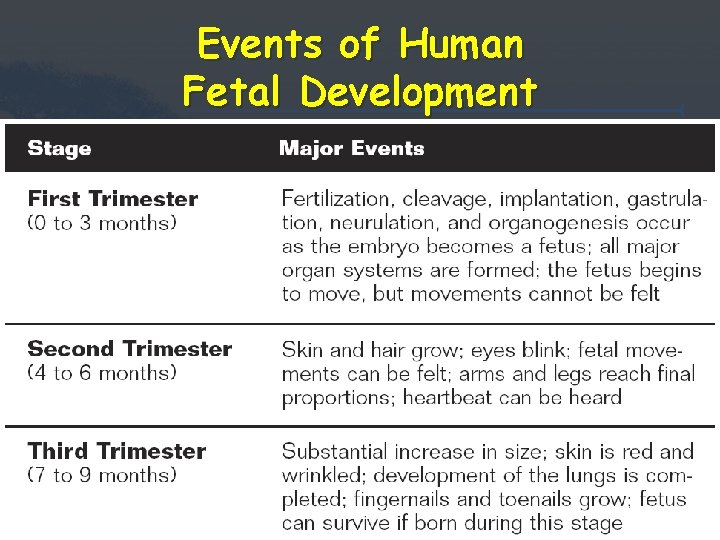
Pregnancy � Second and Third Trimesters: � � � 3 rd trimester: � � fetus grows rapidly organs become functional fetus can exist outside the mother’s body ~9 months: � fetus leaves the mother’s body in a process called labor � usually lasts several hours
Events of Human Fetal Development
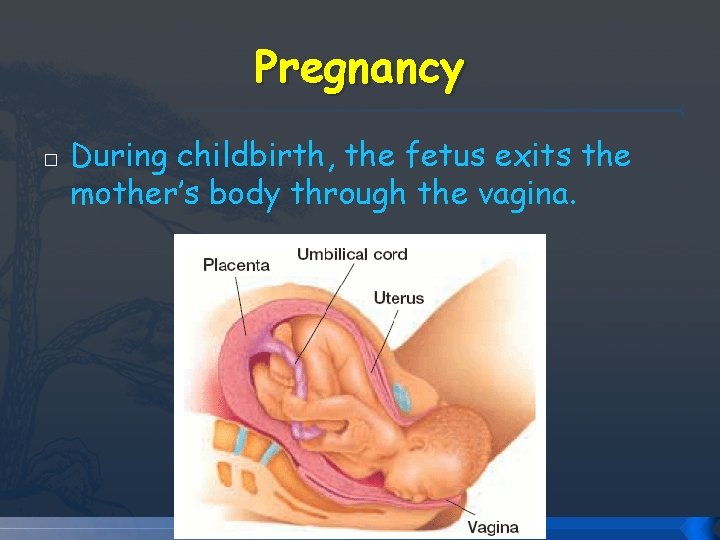
Pregnancy � During childbirth, the fetus exits the mother’s body through the vagina.