
The Reproductive System Errol Phalo Due Date Monday
- Slides: 15
The Reproductive System Errol Phalo Due Date: Monday 5/17 2010 (Hard Copy) Presentations 5/17 -5/21
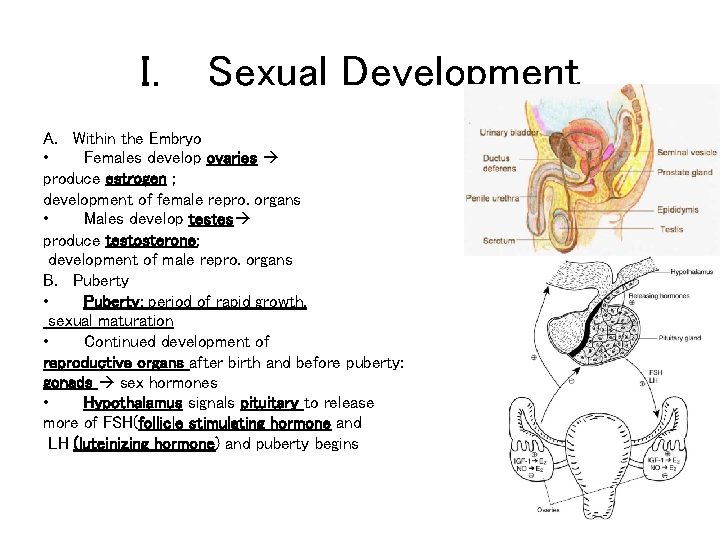
I. Sexual Development A. Within the Embryo • Females develop ovaries produce estrogen ; development of female repro. organs • Males develop testes produce testosterone; development of male repro. organs B. Puberty • Puberty: period of rapid growth, sexual maturation • Continued development of reproductive organs after birth and before puberty: gonads sex hormones • Hypothalamus signals pituitary to release more of FSH(follicle stimulating hormone and LH (luteinizing hormone) and puberty begins
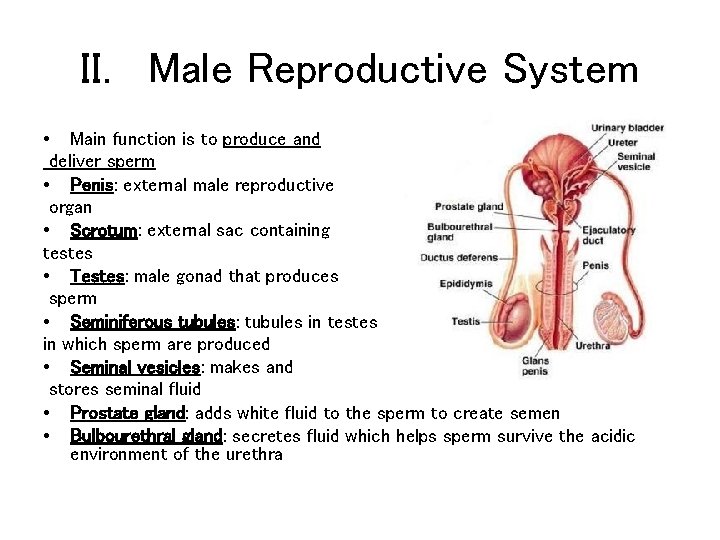
II. Male Reproductive System • Main function is to produce and deliver sperm • Penis: external male reproductive organ • Scrotum: external sac containing testes • Testes: male gonad that produces sperm • Seminiferous tubules: tubules in testes in which sperm are produced • Seminal vesicles: makes and stores seminal fluid • Prostate gland: adds white fluid to the sperm to create semen • Bulbourethral gland: secretes fluid which helps sperm survive the acidic environment of the urethra
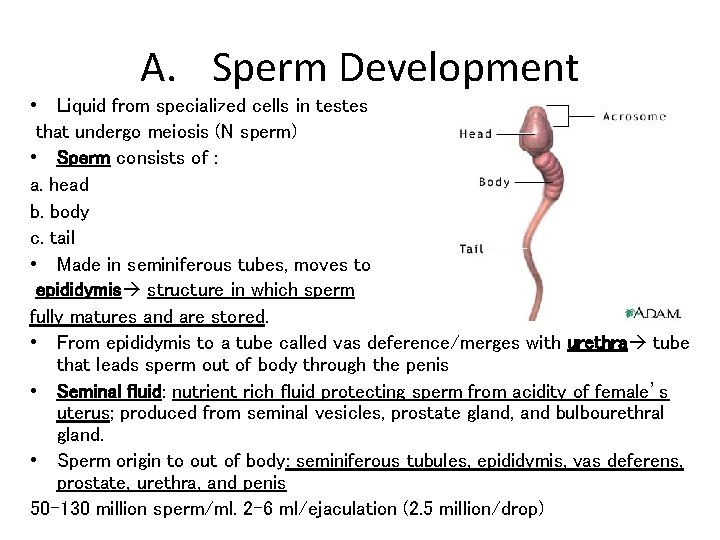
A. Sperm Development • Liquid from specialized cells in testes that undergo meiosis (N sperm) • Sperm consists of : a. head b. body c. tail • Made in seminiferous tubes, moves to epididymis structure in which sperm fully matures and are stored. • From epididymis to a tube called vas deference/merges with urethra tube that leads sperm out of body through the penis • Seminal fluid: nutrient rich fluid protecting sperm from acidity of female’s uterus; produced from seminal vesicles, prostate gland, and bulbourethral gland. • Sperm origin to out of body: seminiferous tubules, epididymis, vas deferens, prostate, urethra, and penis 50 -130 million sperm/ml. 2 -6 ml/ejaculation (2. 5 million/drop)
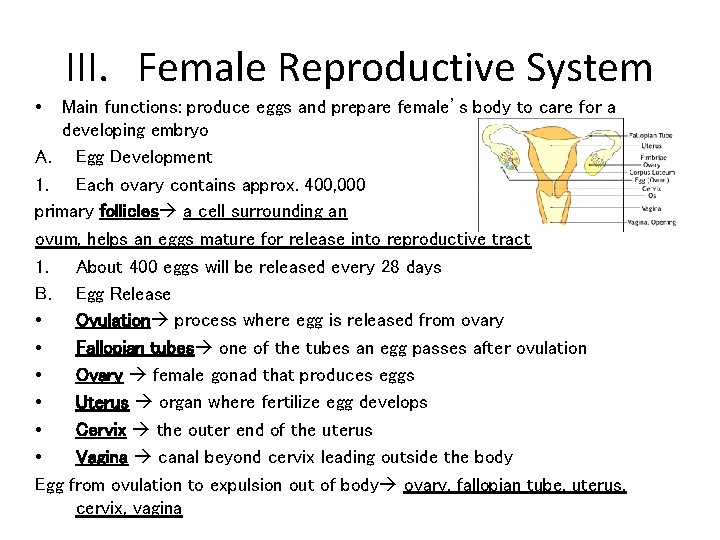
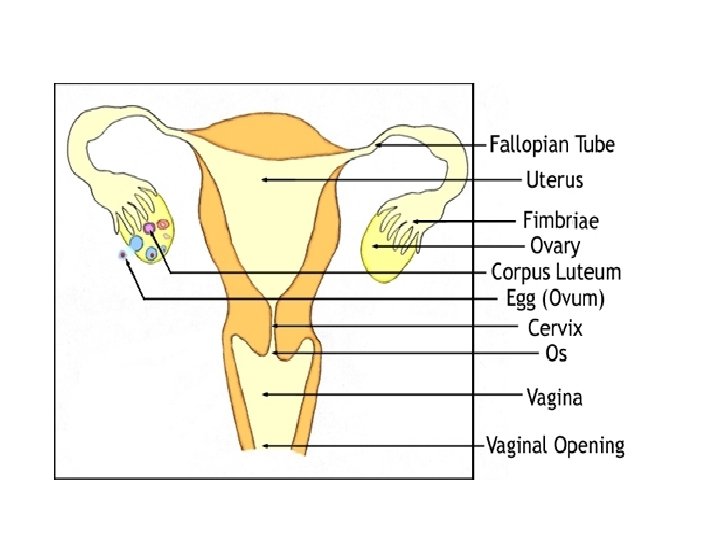
III. Female Reproductive System • Main functions: produce eggs and prepare female’s body to care for a developing embryo A. Egg Development 1. Each ovary contains approx. 400, 000 primary follicles a cell surrounding an ovum, helps an eggs mature for release into reproductive tract 1. About 400 eggs will be released every 28 days B. Egg Release • Ovulation process where egg is released from ovary • Fallopian tubes one of the tubes an egg passes after ovulation • Ovary female gonad that produces eggs • Uterus organ where fertilize egg develops • Cervix the outer end of the uterus • Vagina canal beyond cervix leading outside the body Egg from ovulation to expulsion out of body ovary, fallopian tube, uterus, cervix, vagina
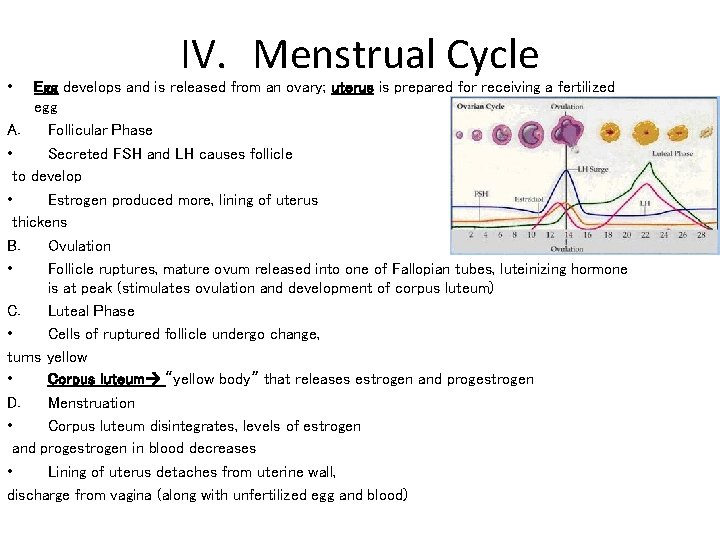
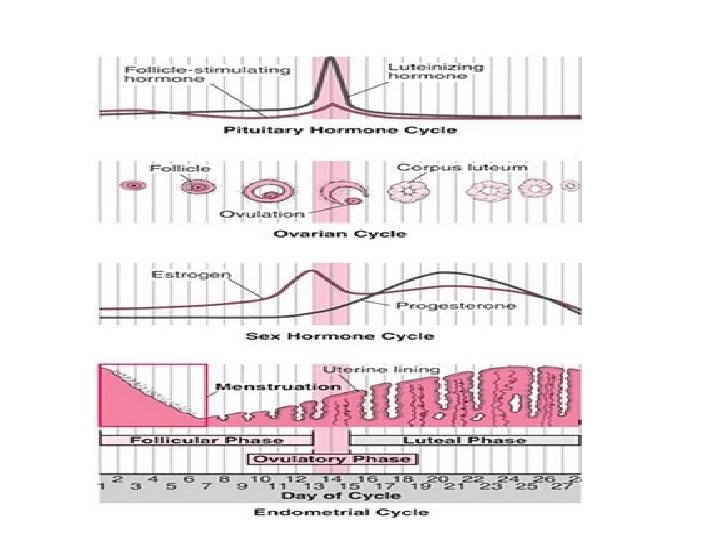
• IV. Menstrual Cycle Egg develops and is released from an ovary; uterus is prepared for receiving a fertilized egg A. Follicular Phase • Secreted FSH and LH causes follicle to develop • Estrogen produced more, lining of uterus thickens B. Ovulation • Follicle ruptures, mature ovum released into one of Fallopian tubes, luteinizing hormone is at peak (stimulates ovulation and development of corpus luteum) C. Luteal Phase • Cells of ruptured follicle undergo change, turns yellow • Corpus luteum “yellow body” that releases estrogen and progestrogen D. Menstruation • Corpus luteum disintegrates, levels of estrogen and progestrogen in blood decreases • Lining of uterus detaches from uterine wall, discharge from vagina (along with unfertilized egg and blood)
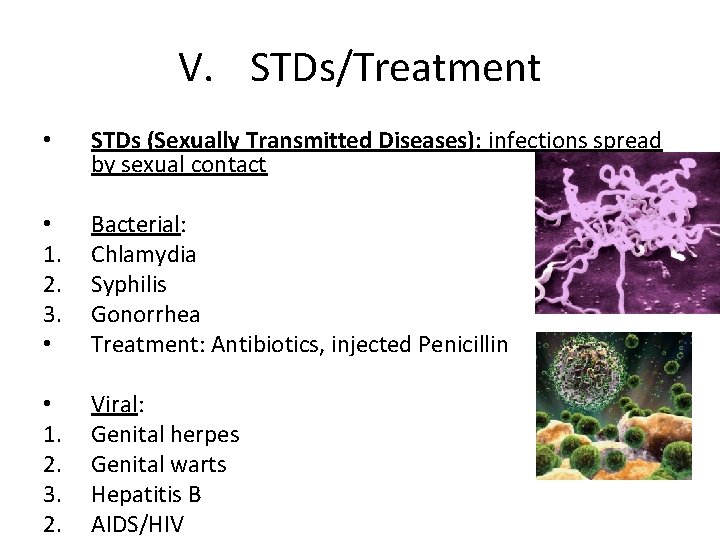
V. STDs/Treatment • STDs (Sexually Transmitted Diseases): infections spread by sexual contact • 1. 2. 3. • Bacterial: Chlamydia Syphilis Gonorrhea Treatment: Antibiotics, injected Penicillin • 1. 2. 3. 2. Viral: Genital herpes Genital warts Hepatitis B AIDS/HIV
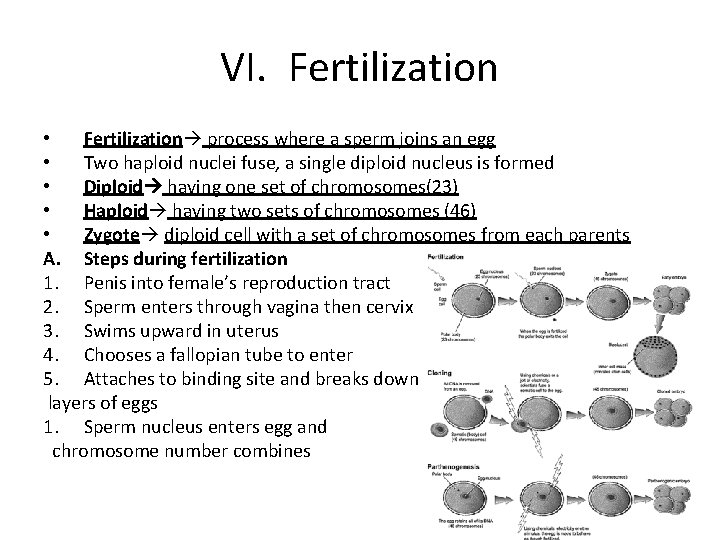
VI. Fertilization • Fertilization process where a sperm joins an egg • Two haploid nuclei fuse, a single diploid nucleus is formed • Diploid having one set of chromosomes(23) • Haploid having two sets of chromosomes (46) • Zygote diploid cell with a set of chromosomes from each parents A. Steps during fertilization 1. Penis into female’s reproduction tract 2. Sperm enters through vagina then cervix 3. Swims upward in uterus 4. Chooses a fallopian tube to enter 5. Attaches to binding site and breaks down layers of eggs 1. Sperm nucleus enters egg and chromosome number combines
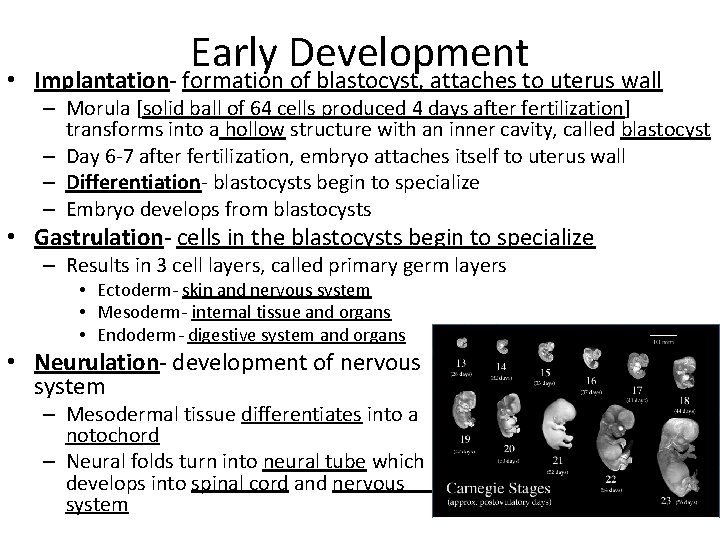
Early Development • Implantation- formation of blastocyst, attaches to uterus wall – Morula [solid ball of 64 cells produced 4 days after fertilization] transforms into a hollow structure with an inner cavity, called blastocyst – Day 6 -7 after fertilization, embryo attaches itself to uterus wall – Differentiation- blastocysts begin to specialize – Embryo develops from blastocysts • Gastrulation- cells in the blastocysts begin to specialize – Results in 3 cell layers, called primary germ layers • Ectoderm- skin and nervous system • Mesoderm- internal tissue and organs • Endoderm- digestive system and organs • Neurulation- development of nervous system – Mesodermal tissue differentiates into a notochord – Neural folds turn into neural tube which develops into spinal cord and nervous system
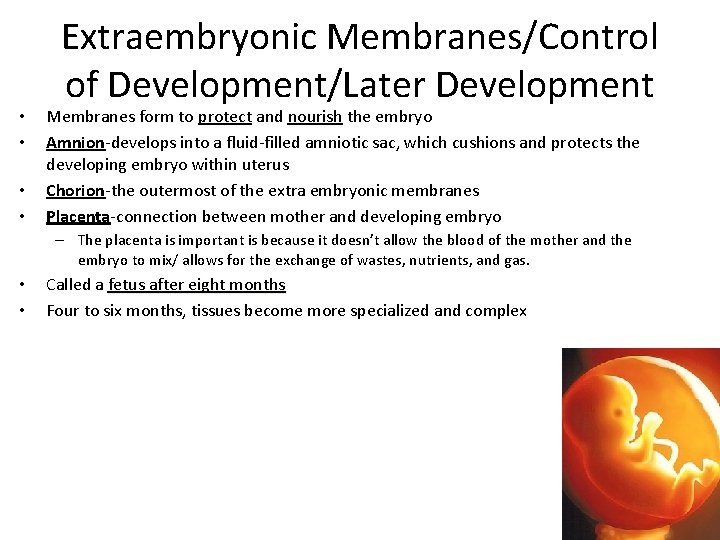
• • Extraembryonic Membranes/Control of Development/Later Development Membranes form to protect and nourish the embryo Amnion-develops into a fluid-filled amniotic sac, which cushions and protects the developing embryo within uterus Chorion-the outermost of the extra embryonic membranes Placenta-connection between mother and developing embryo – The placenta is important is because it doesn’t allow the blood of the mother and the embryo to mix/ allows for the exchange of wastes, nutrients, and gas. • • Called a fetus after eight months Four to six months, tissues become more specialized and complex
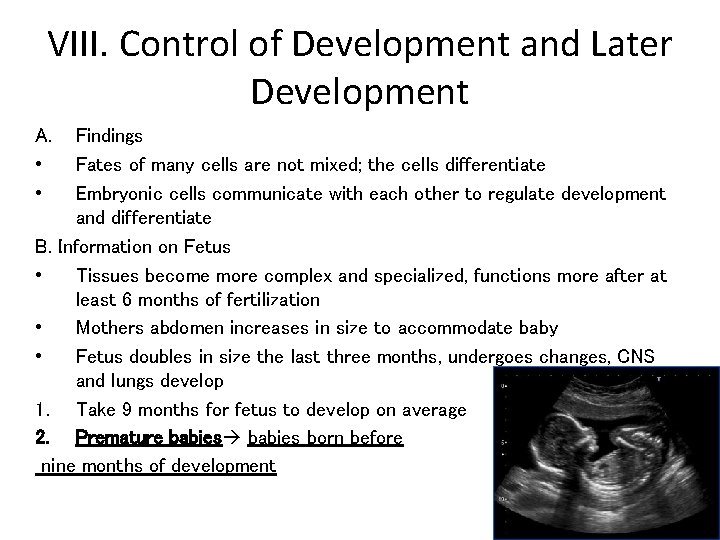
VIII. Control of Development and Later Development A. • • Findings Fates of many cells are not mixed; the cells differentiate Embryonic cells communicate with each other to regulate development and differentiate B. Information on Fetus • Tissues become more complex and specialized, functions more after at least 6 months of fertilization • Mothers abdomen increases in size to accommodate baby • Fetus doubles in size the last three months, undergoes changes, CNS and lungs develop 1. Take 9 months for fetus to develop on average 2. Premature babies born before nine months of development
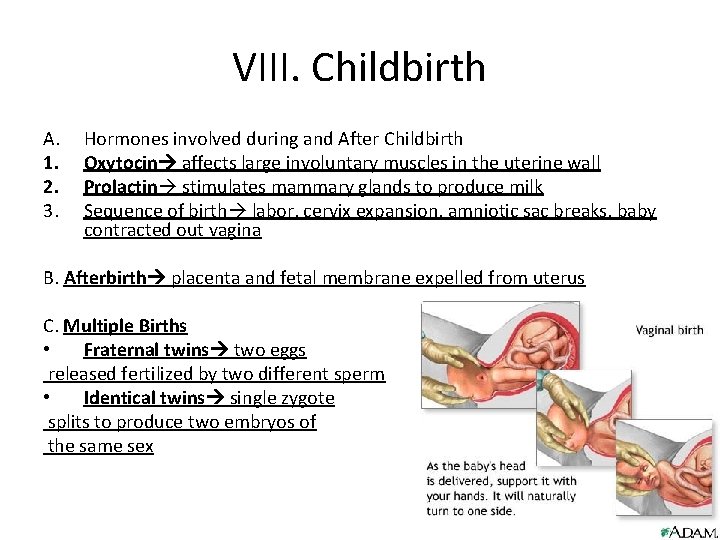
VIII. Childbirth A. 1. 2. 3. Hormones involved during and After Childbirth Oxytocin affects large involuntary muscles in the uterine wall Prolactin stimulates mammary glands to produce milk Sequence of birth labor, cervix expansion, amniotic sac breaks, baby contracted out vagina B. Afterbirth placenta and fetal membrane expelled from uterus C. Multiple Births • Fraternal twins two eggs released fertilized by two different sperm • Identical twins single zygote splits to produce two embryos of the same sex
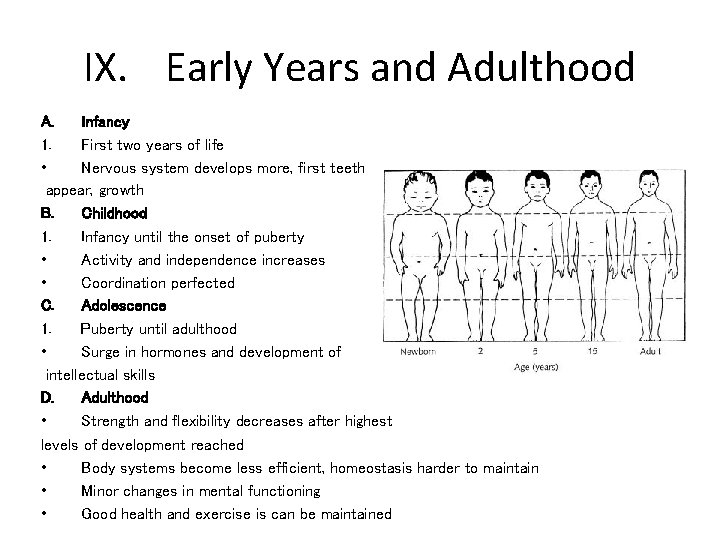
IX. Early Years and Adulthood A. Infancy 1. First two years of life • Nervous system develops more, first teeth appear, growth B. Childhood 1. Infancy until the onset of puberty • Activity and independence increases • Coordination perfected C. Adolescence 1. Puberty until adulthood • Surge in hormones and development of intellectual skills D. Adulthood • Strength and flexibility decreases after highest levels of development reached • Body systems become less efficient, homeostasis harder to maintain • Minor changes in mental functioning • Good health and exercise is can be maintained