
The Renaissance The beginning of the Modern Period

The Renaissance The beginning of the Modern Period A period of transition
“renaissance” means rebirth The Renaissance began a period of renewed interest and engagement with “classical” (Ancient Greece and Rome) learning, culture, literature, art, style, etc.
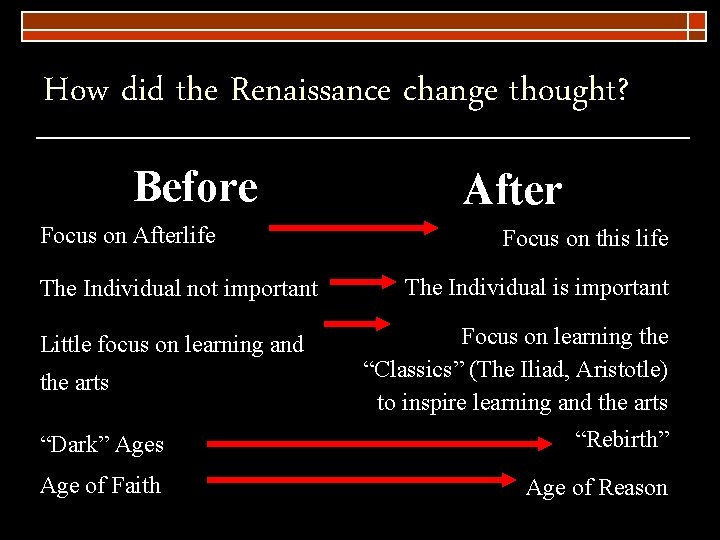
How did the Renaissance change thought? Before Focus on Afterlife The Individual not important Little focus on learning and the arts After Focus on this life The Individual is important Focus on learning the “Classics” (The Iliad, Aristotle) to inspire learning and the arts “Dark” Ages “Rebirth” Age of Faith Age of Reason

Renaissance: People o Focus on humans and their abilities and actions (humanism) • Machiavelli wrote The Prince • Said rulers should be mean instead of nice • “End justifies the Means”
5 Humanism o Really an old idea from Ancient Greece and Rome o Based on the Socratic and Platonic ideas of observation and reasoning o Idea that man, not God, was the center of the universe o Man controls his own destiny o Man can learn about and understand his world by observation and reason without God’s help o Helped spark a new age of secular learning and the development of early modern schools and universities such as Oxford and Cambridge o Led many to question both governments and the institutional Church
Northern Renaissance o The spread of the Renaissance was delayed in Northern Europe n War and political unrest o o n Hundred Years’ War of the Roses in Britain Plague and famine
Major Themes of the Renaissance o Humanism (both secular and religious) n o o Human potential, human progress, expansion of human knowledge Secularism-greater emphasis on non-religious values and concerns Individualism-focus on the unique qualities and abilities of the individual person
Major Historical Events of the Renaissance Period o o Age of Exploration (Period of European Expansion) Protestant Reformation and the Religious Wars Scientific Revolution- Rise of Modern Science The Rise of the Modern Nation-state
Background of the Renaissance. High and Late Middle Ages o o o o Increased trade and commercial activity during the High Middle Ages Urbanization-growth of cities and towns Commercial and business developments (banking) Middle class merchant elite developed Decline in feudalism A decline in the Church’s hold and control on society and government Growth in vernacular literature/growing literacy Rise of universities and the expansion of learning
The Renaissance spread to Northern Europe
Focus of the Northern Renaissance o o o The focus of the Renaissance in Northern Europe was more religious Many sought religious reform and a return of the Church to its true mission and spirituality Many were highly critical of the worldliness and corruption in the Church and papacy Northern Renaissance figures believed that education and literacy were key to social and religious reform Advocated the translation of the scriptures into the vernacular languages
Major figures of the Northern Renaissance
Sir Thomas More o o Lord Chancellor of England during the reign of Henry VIII- highest political office in England Lawyer and scholar Wrote Utopia – explored the idea of a “perfect” society Eventually executed by Henry VIII for refusing to agree to the king and Parliament’s Act of Supremacy
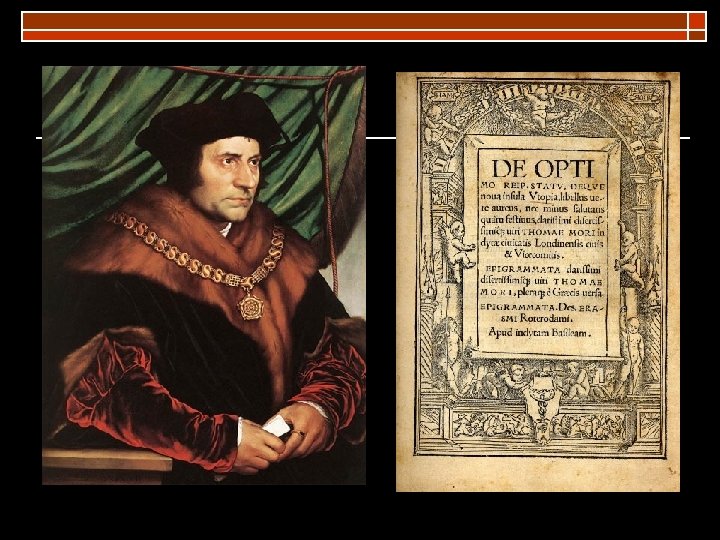
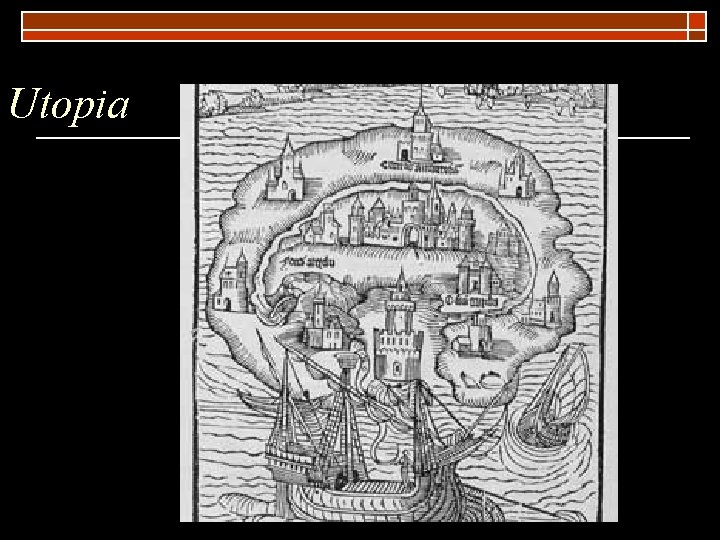
Utopia
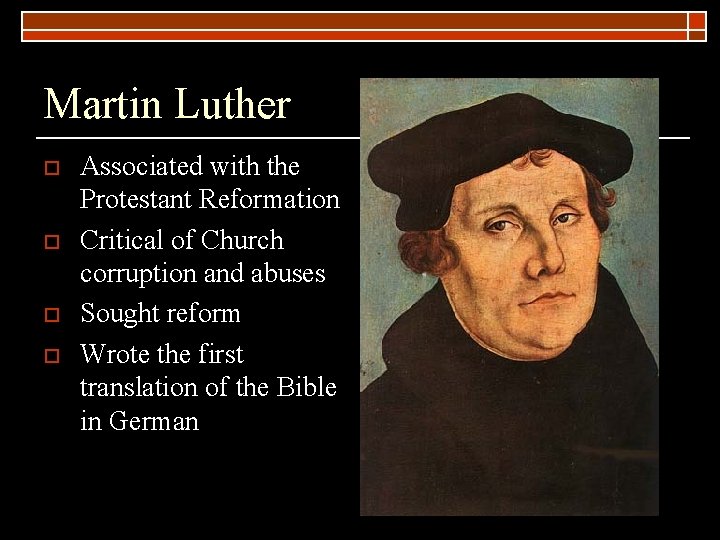
Martin Luther o o Associated with the Protestant Reformation Critical of Church corruption and abuses Sought reform Wrote the first translation of the Bible in German
Renaissance Art A reflection of Renaissance ideals and values Emphasis on the classical style and classical themes Humanistic - with an emphasis on the individual Religious art remained very important
Characteristics of Renaissance Art Realism Three-dimensional Balanced and ordered Portraits Landscapes and attention to depictions of nature Classical style Depiction of classical themes and stories
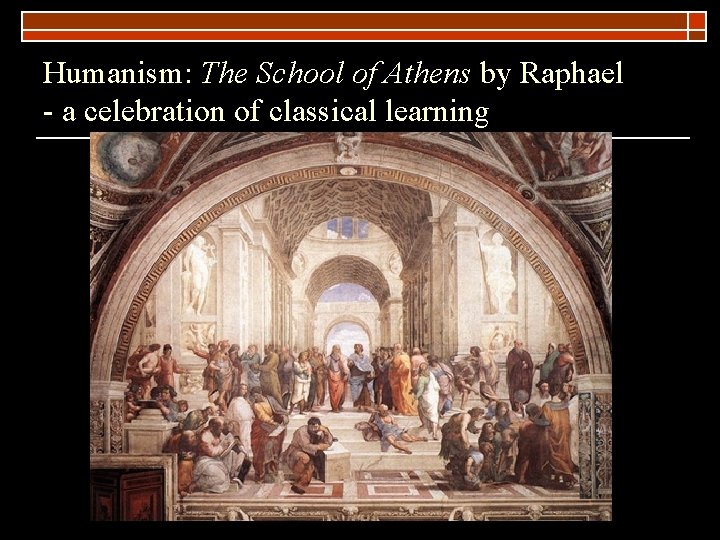
Humanism: The School of Athens by Raphael - a celebration of classical learning
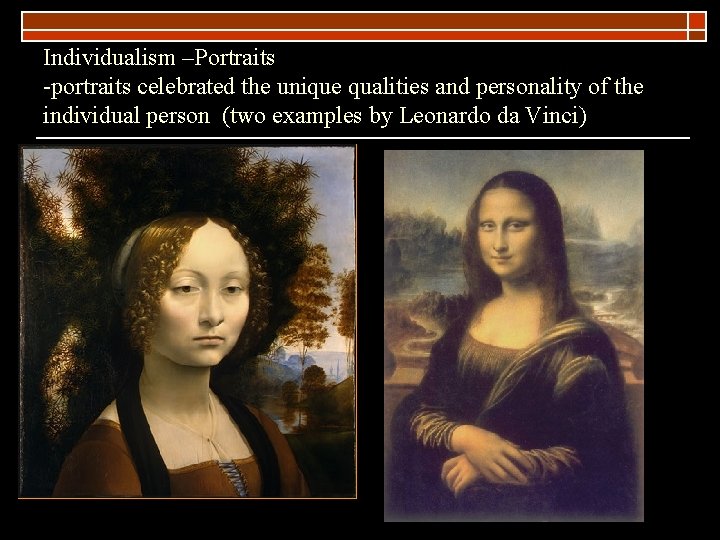
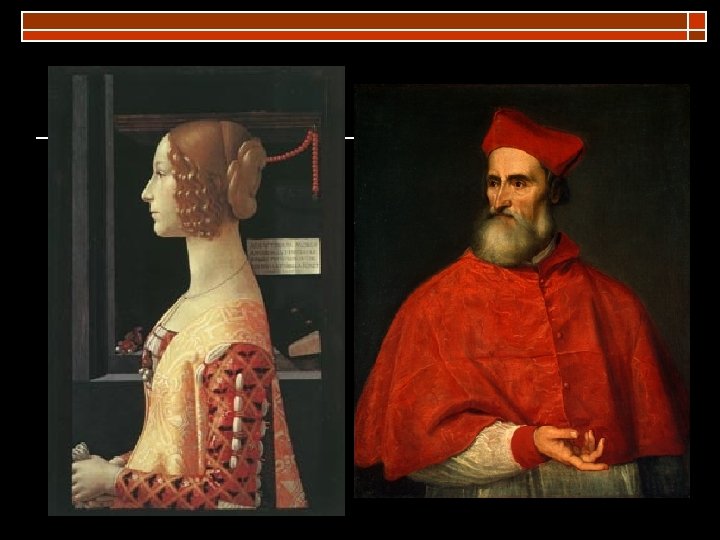
Individualism –Portraits -portraits celebrated the unique qualities and personality of the individual person (two examples by Leonardo da Vinci)
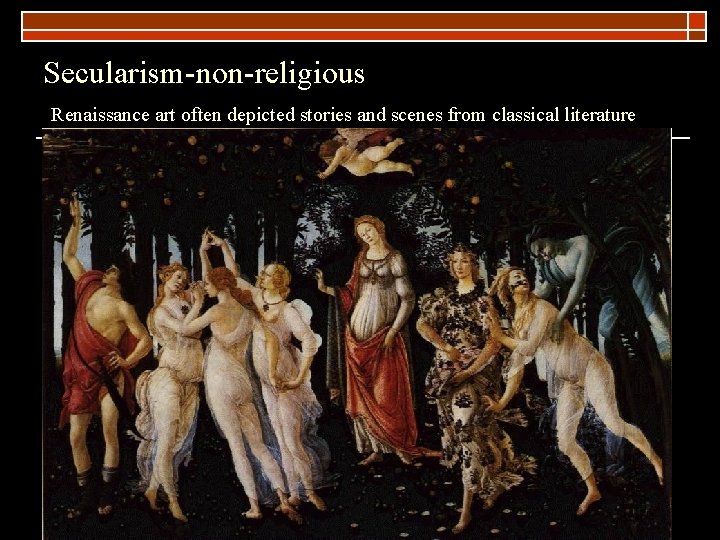
Secularism-non-religious Renaissance art often depicted stories and scenes from classical literature
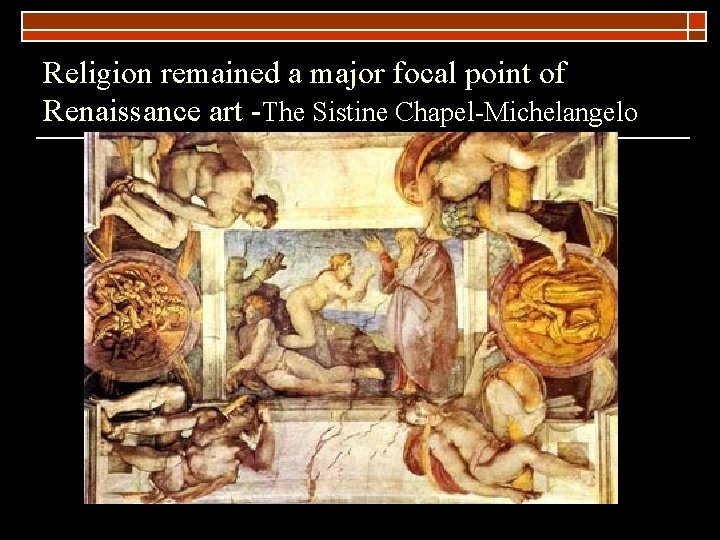
Religion remained a major focal point of Renaissance art -The Sistine Chapel-Michelangelo
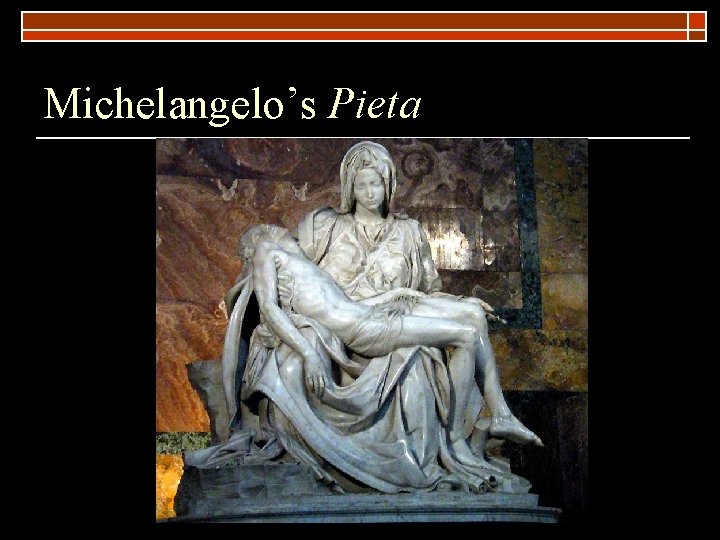
Michelangelo’s Pieta
Major innovations of the Renaissance
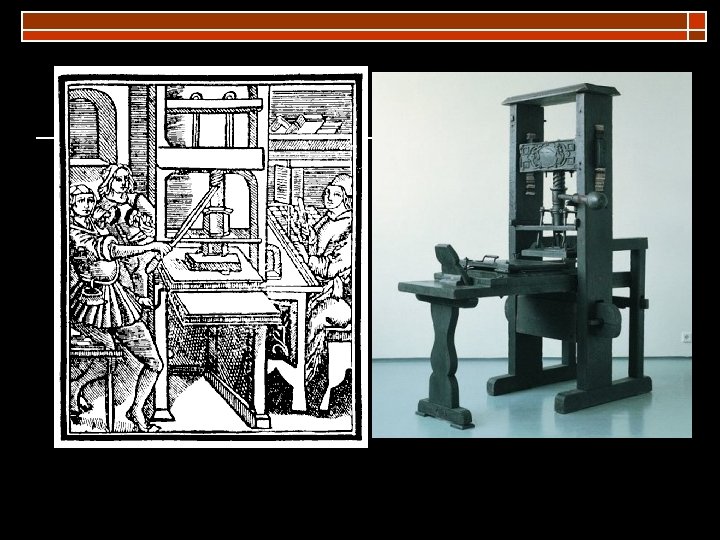
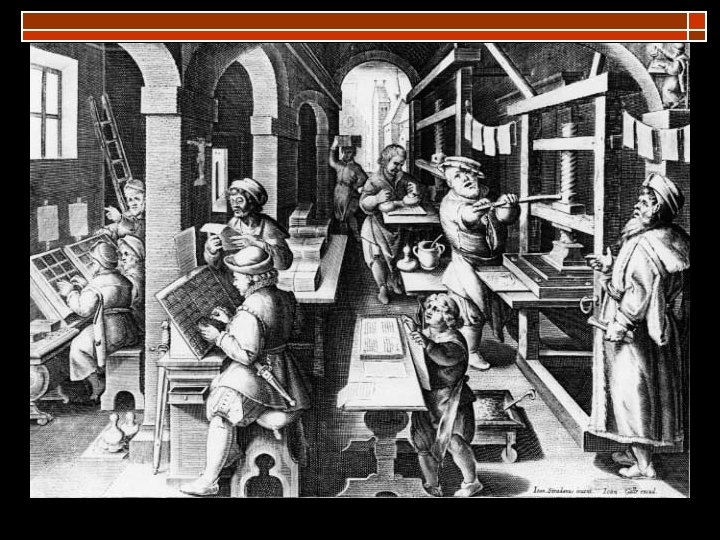
Printing Press o o o 1455 Moveable type printing Developed in Germany Associated with Gutenburg 1456 the first Gutenburg Bible was printed Printing press allowed for the spread of knowledge and ideas throughout Europe
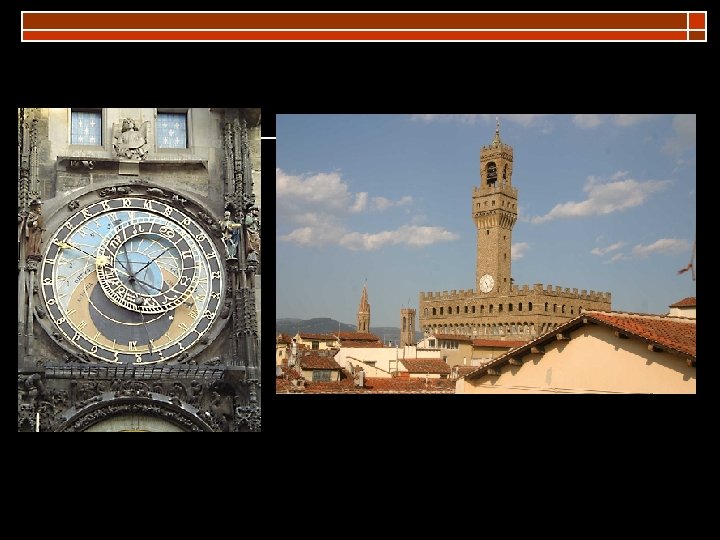
The Clock o o The idea of quantification developed The universe came to be conceived in more quantifiable terms (measurable terms) Allowed for more precise measurements Changed the focus of daily life which had been guided by the rhythms of the Church
The Renaissance brought a new way of thinking and living to Europe A new worldview was emerging The medieval Christian worldview was giving way to a more MODERN (secular and humanistic) view of the world and humanity
- Slides: 31