
The Renaissance Mr Whites World History Big Questions
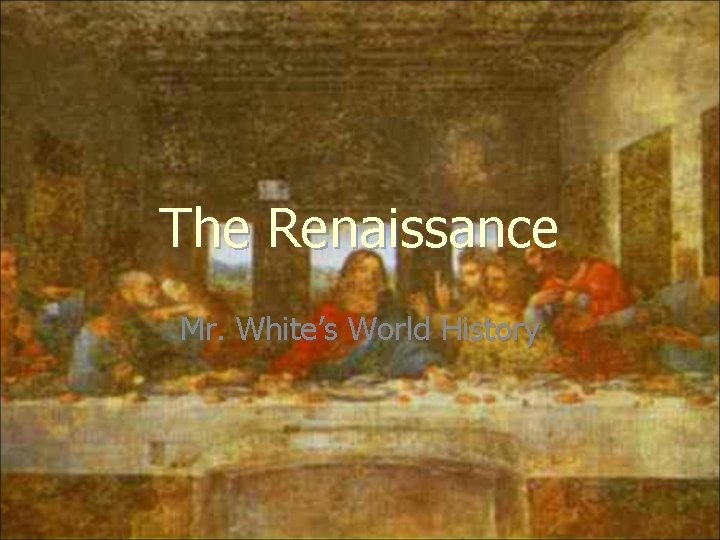
The Renaissance Mr. White’s World History
Big Questions ► As we learn about the Renaissance, here are the questions we should be able to answer: § How did the revival of classical ideas, culture, and learning start to change ways of life in Europe during the Renaissance? § What sorts of things helped spread the ideas of the Renaissance to other parts of Europe?
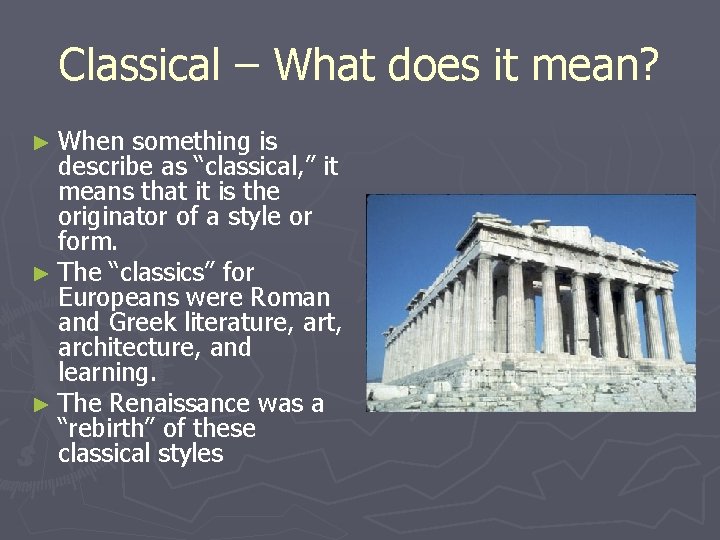
Classical – What does it mean? ► When something is describe as “classical, ” it means that it is the originator of a style or form. ► The “classics” for Europeans were Roman and Greek literature, art, architecture, and learning. ► The Renaissance was a “rebirth” of these classical styles
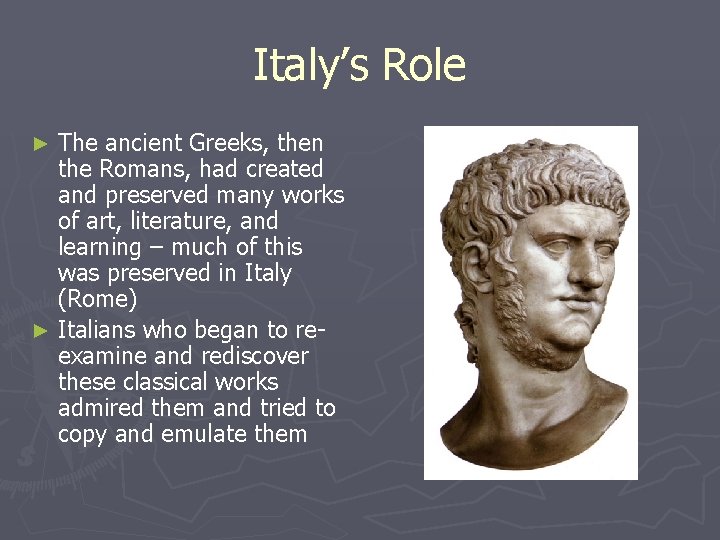
Italy’s Role The ancient Greeks, then the Romans, had created and preserved many works of art, literature, and learning – much of this was preserved in Italy (Rome) ► Italians who began to reexamine and rediscover these classical works admired them and tried to copy and emulate them ►
Renaissance Values ► In contrast to medieval times, the leaders of the Renaissance valued three important qualities – § Humanism – the belief in human value and potential § Secularism – the focus on worldly and nonreligious learning and experience § Individualism – the focus on the ability and potential of the individual
Scholarship ► Renaissance scholars challenged old traditions, assumptions, and institutions – especially those of the church, and sometimes the church itself ► As new discoveries were made, the Renaissance thinkers began to challenge even more ► This led to many clashes and disagreements with the Catholic church, which did not agree with the Renaissance values Humanism – humans were naturally evil and sinful Secularism – learning came from the church and God § Individualism – the individual should remain obedient § §
City Life ► In Renaissance Italy, no feudal system formed ► As the Renaissance went on, wealth and ability mattered more than titles of nobility or the ownership of land ► The rich in Italy got that way by trading, banking, or being merchants ► A middle class also developed – lesser merchants, artisans ► Peasants still made up the lowest class
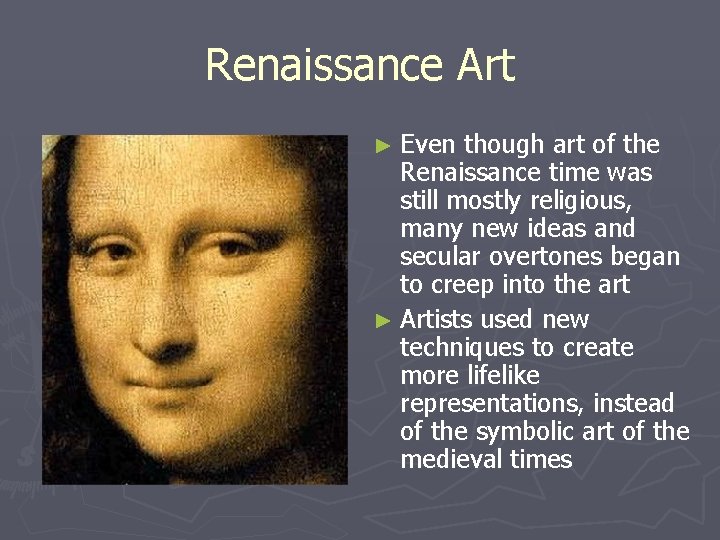
Renaissance Art ► Even though art of the Renaissance time was still mostly religious, many new ideas and secular overtones began to creep into the art ► Artists used new techniques to create more lifelike representations, instead of the symbolic art of the medieval times
Renaissance Architecture ► The architecture of the time returned to the classical style ► Medieval times – Gothic architecture § Pointed arches § Ribbed vaults § Flying buttresses ► Renaissance § § § – classical architecture Rounded arches Rounded vaults Domes
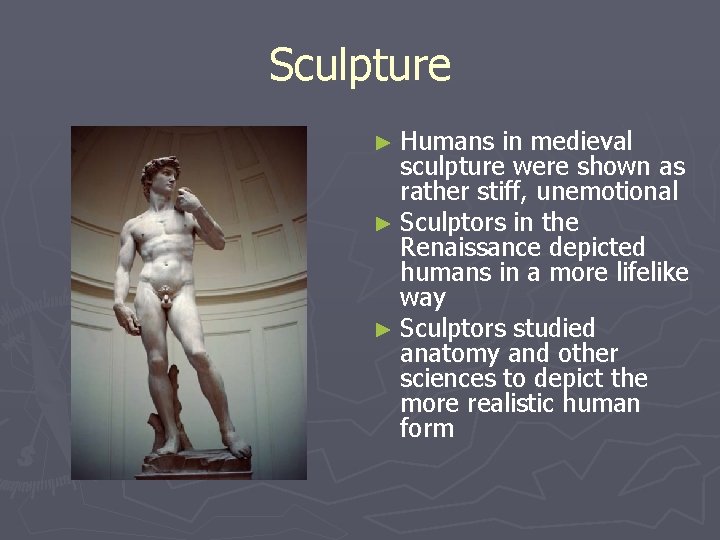
Sculpture ► Humans in medieval sculpture were shown as rather stiff, unemotional ► Sculptors in the Renaissance depicted humans in a more lifelike way ► Sculptors studied anatomy and other sciences to depict the more realistic human form
Painting ► Medieval paintings were typically “flat, ” – Renaissance paintings began to give depth to scenes ► Leonard da Vinci – portrayed personalities and feelings in his works ► Da Vinci also studied: § Astronomy § Mathematics § Anatomy
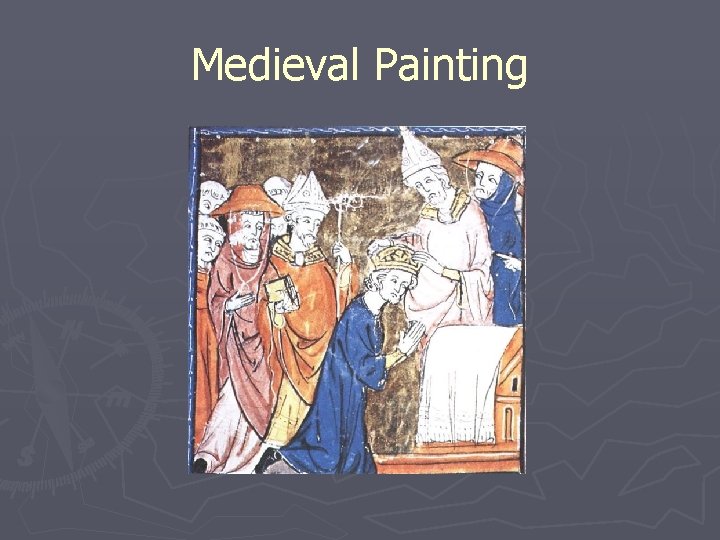
Medieval Painting
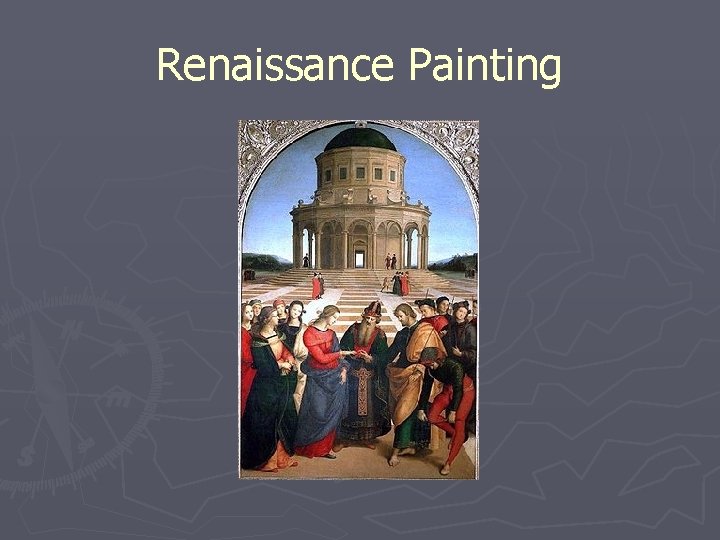
Renaissance Painting
The Spread of the Renaissance ► The ideas of the Italian Renaissance spread north to France, England, the Netherlands, and other European countries ► These ideas spread through different ways – § French kings, after invading Italy, brought many ideas back § Italian traders in northern cities spread ideas § The invention of the printing press allowed ideas to be printed and spread more rapidly and farther
The French Renaissance ► French Renaissance architects blended the Gothic and classical styles to create chateaux ► French Renaissance writers started new forms of writing, with new themes – § § § Love The passing of youth The immortality of the poet ► Many writers rejected the medieval focus on the afterlife and thought people should enjoy their lives to the fullest
Northern Renaissance ► In the northern countries, like the Netherlands and Germany, many people wanted religious reforms ► Felt the Catholic church was corrupt; wanted to restore the simplicity of the early church ► Believed people should study the Bible themselves – they would have to learn to read ► Erasmus – encouraged people to learn Greek and Latin so that they could read the Bible
The English Renaissance ► English Renaissance writers were interested in social issues – how people lived and interacted with each other ► Thomas More – criticized society of the day and wrote a book about the ideal society, Utopia ► William Shakespeare – jealousy, ambition, love, and despair
- Slides: 17