
The Renaissance Factors that Contributed to the Beginning

The Renaissance

Factors that Contributed to the Beginning of the Renaissance • Trade and commerce increased • Cities grew larger and wealthier • Newly wealthy merchants and bankers supported the growth of the arts and learning • The Renaissance was an age of recovery from the disasters of the 14 th century, such as the plague, political instability, and a decline of Church power • Recovery went hand-in-hand with a rebirth of interest in ancient culture (e. g. , ancient Greece and Rome) • A new view of human beings emerged as people in the Italian Renaissance began to emphasize individual ability

What was the Renaissance? The Renaissance was a cultural movement and a time of renewal (Europe was recovering from the Dark Ages and the Black Death/Bubonic Plague) Renaissance means “rebirth” of classical knowledge and “birth” of the modern world (new intellectual and artistic ideas that developed during the Renaissance marked the beginning of the modern world)

Where did the Renaissance begin? • Italy • Italian Cities • Urban Societies • Major Trading Centers • Secular Movement • People lost their faith in the church and began to put more focus on human beings and material possessions
When did the Renaissance Take Place? Roughly the 14 th to the 17 th century
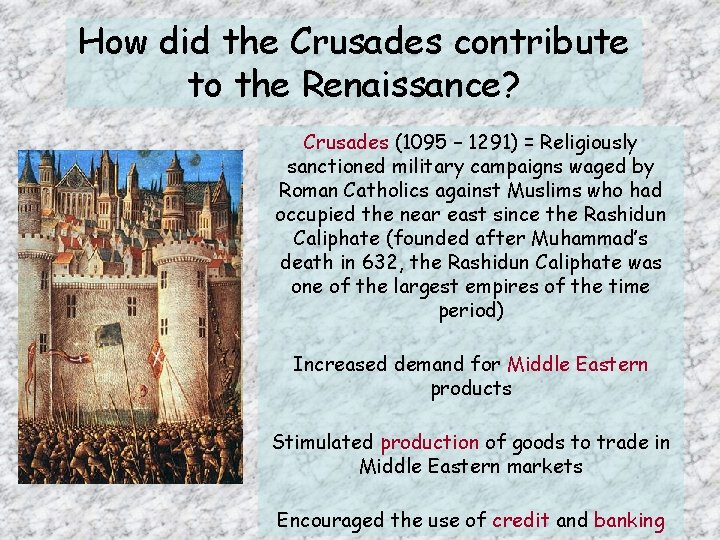
How did the Crusades contribute to the Renaissance? Crusades (1095 – 1291) = Religiously sanctioned military campaigns waged by Roman Catholics against Muslims who had occupied the near east since the Rashidun Caliphate (founded after Muhammad’s death in 632, the Rashidun Caliphate was one of the largest empires of the time period) Increased demand for Middle Eastern products Stimulated production of goods to trade in Middle Eastern markets Encouraged the use of credit and banking
The Black Death: Bubonic Plague • 1330 s - An outbreak of deadly bubonic plague occurred in China • Mainly affects rodents, but fleas can transmit the disease to people • Once people are infected, they infect others very rapidly • Plague causes fever, painful swelling of the lymph glands, and spots on the skin that are red at first and then turn black = Black Death • Since China was one of the busiest of the world's trading nations, it was only a matter of time before the outbreak of plague in China spread to western Asia and Europe • In 1347, Italian merchant ships returned from a trip to the Black Sea, one of the key links in trade with China. When the ships docked in Sicily (Italy), many of those on board were already dying of plague. • Within days the disease spread to the city and the surrounding countryside

Bubonic Plague Continued • After five years 25 million people were dead--one-third of Europe's population. • Even when the worst was over, smaller outbreaks continued, not just for years, but for centuries. The survivors lived in constant fear of the plague's return, and the disease did not disappear until the 1600 s. • The disease took its toll on the church as well. People throughout Christendom had prayed devoutly for deliverance from the plague. Why hadn't those prayers been answered? A new period of political turmoil and philosophical questioning lay ahead.
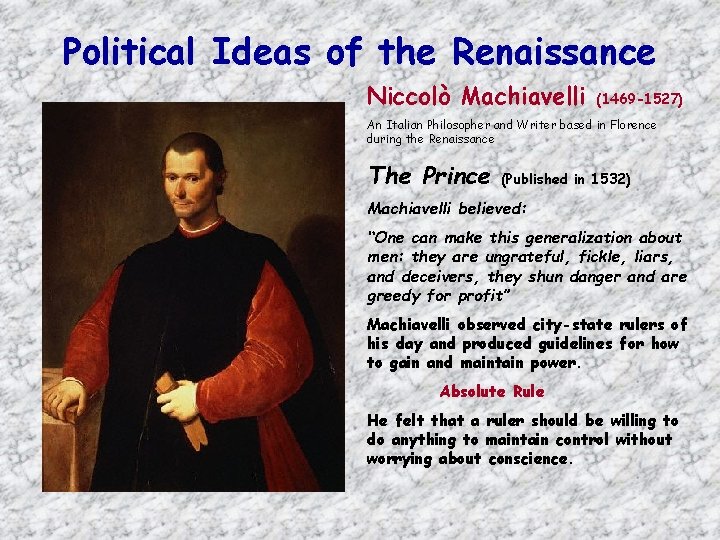
Political Ideas of the Renaissance Niccolò Machiavelli (1469 -1527) An Italian Philosopher and Writer based in Florence during the Renaissance The Prince (Published in 1532) Machiavelli believed: “One can make this generalization about men: they are ungrateful, fickle, liars, and deceivers, they shun danger and are greedy for profit” Machiavelli observed city-state rulers of his day and produced guidelines for how to gain and maintain power. Absolute Rule He felt that a ruler should be willing to do anything to maintain control without worrying about conscience.
• Better for a ruler to be feared than to be loved • Ruler should be quick and decisive in decision making • Ruler keeps power by any means necessary • The end justifies the means • Be good when possible, and evil when necessary Today, the term “Machiavellian” refers to the use of deceit in politics

Video Clip http: //www. youtube. com/watch? v=s. Mkt 1 Vq 7 t. J 4 It is important to view first ten minutes if you are interested in Machiavelli and wish to watch the whole video, please feel free to do so!
Italian City-States Because Italy failed to become united during the Dark Ages, many independent city-states emerged in Italy. Each city-state was controlled by a powerful family and dominated by a wealthy merchant class. Their interest in art and emphasis on personal achievement helped to shape the Italian Renaissance. Example: The Medici family of Florence ranked among the richest merchants and bankers in Europe; they ruled Florence for over 70 years.
Centralized Power One governing authority (ex. U. S. Federal Government; principals) controls power over several smaller entities (ex. State governments; teachers)
Reminder Renaissance means “rebirth” of interest in ancient culture (Greece and Rome)
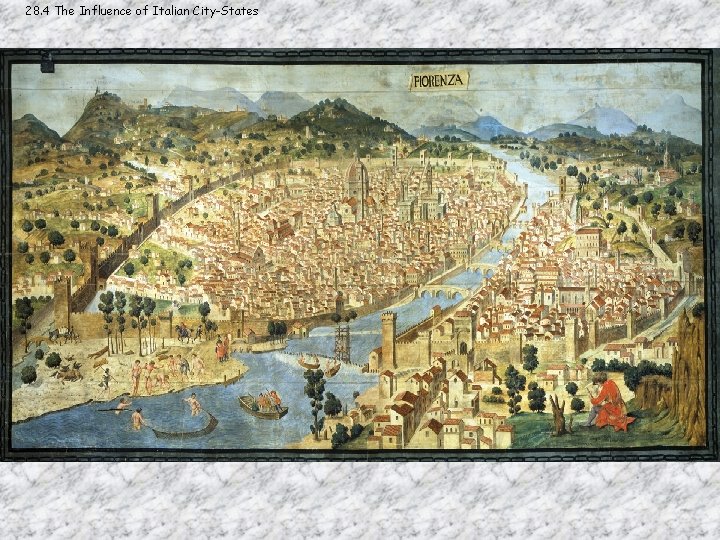
28. 4 The Influence of Italian City-States

How does trade help spread culture, ideas, beliefs, etc. ? Think about how the internet has brought us together today. Is it positive or negative?
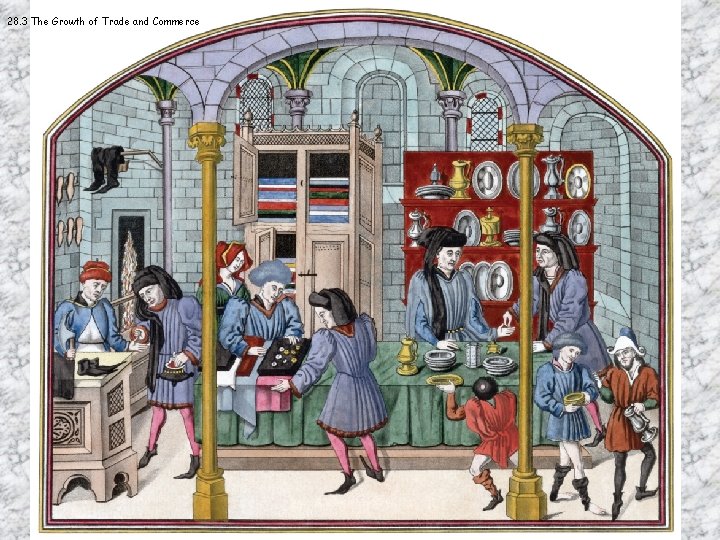
28. 3 The Growth of Trade and Commerce
Why do you think art was so influential during the Renaissance?
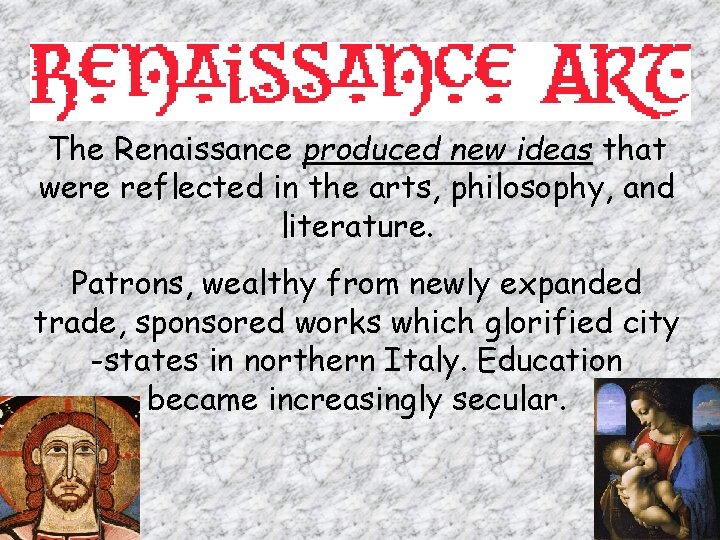
The Renaissance produced new ideas that were reflected in the arts, philosophy, and literature. Patrons, wealthy from newly expanded trade, sponsored works which glorified city -states in northern Italy. Education became increasingly secular.
Renaissance Art • Artists showed religious and nonreligious scenes • Art reflected a great interest in nature • Figures were lifelike and three-dimensional, reflecting an increasing knowledge of anatomy • Bodies looked active and were shown moving • Figures were either nude or clothed • Scenes showed real people doing everyday tasks • Faces expressed what people were thinking • Paintings were often symmetrical (balanced, with the right and left sides having similar or identical elements)
Renaissance artists embraced some of the ideals of ancient Greece and Rome in their art. The purpose of art would no longer be to glorify God, as it had been in Medieval Europe. Artists wanted their subjects to be realistic and focused on humanity and emotion. New Techniques also emerged.
Renaissance painters created the following: Realism Perspective Emphasis on individualism Geometrical arrangement of figures Light and shadowing Softening of edges Artist able to live from commissions

Characteristics of Renaissance Art
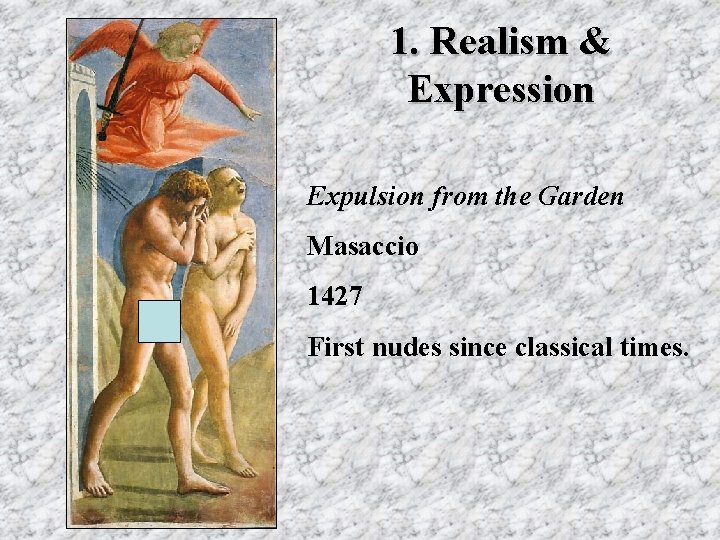
1. Realism & Expression Expulsion from the Garden Masaccio 1427 First nudes since classical times.
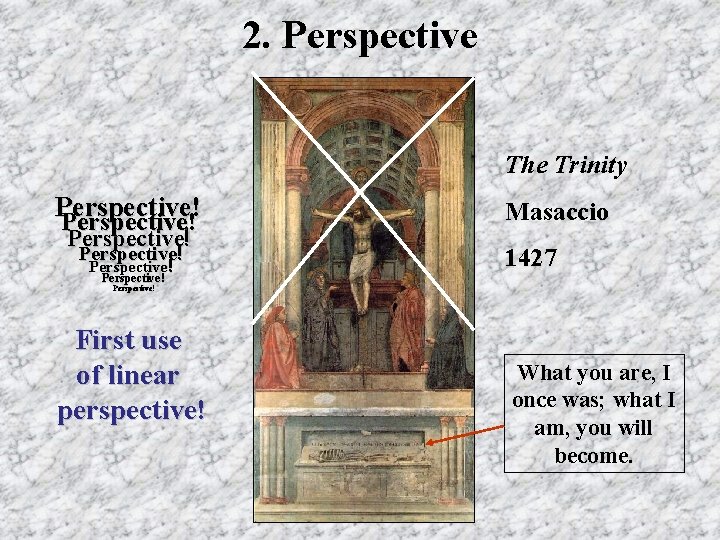
2. Perspective The Trinity Perspective! Perspective! Masaccio 1427 Perspective! First use of linear perspective! What you are, I once was; what I am, you will become.
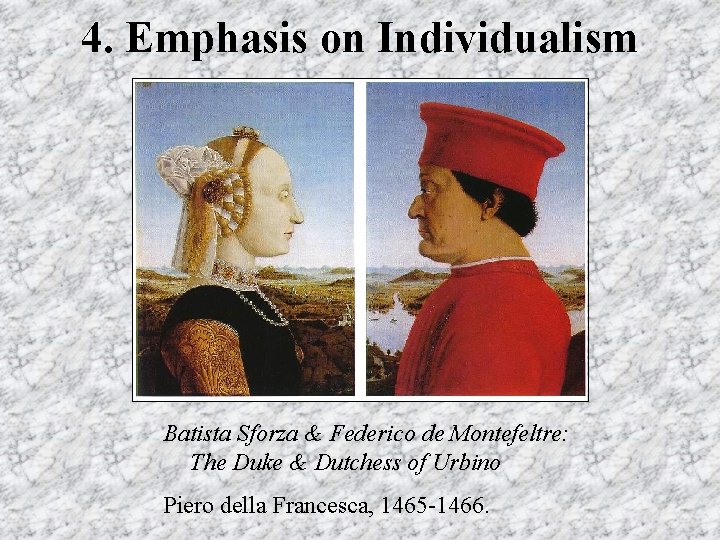
4. Emphasis on Individualism Batista Sforza & Federico de Montefeltre: The Duke & Dutchess of Urbino Piero della Francesca, 1465 -1466.
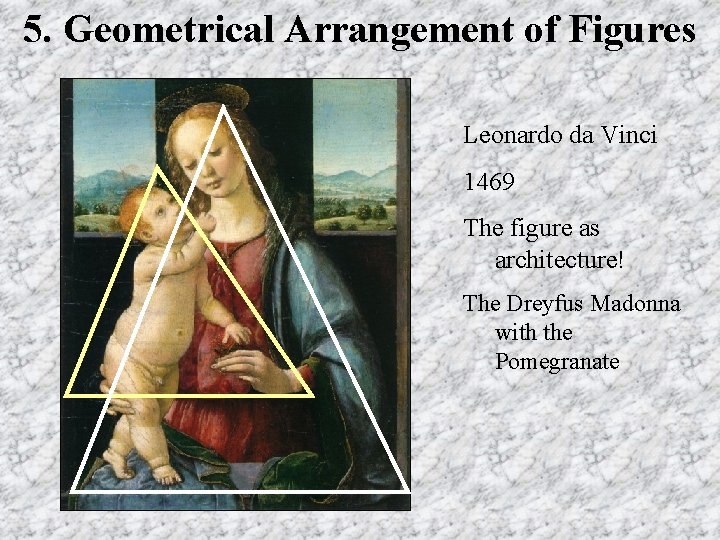
5. Geometrical Arrangement of Figures Leonardo da Vinci 1469 The figure as architecture! The Dreyfus Madonna with the Pomegranate
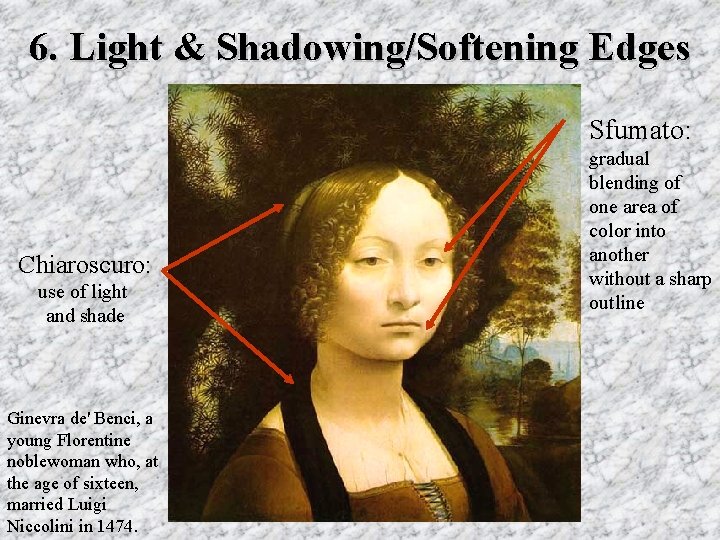
6. Light & Shadowing/Softening Edges Sfumato: Chiaroscuro: use of light and shade Ginevra de' Benci, a young Florentine noblewoman who, at the age of sixteen, married Luigi Niccolini in 1474. gradual blending of one area of color into another without a sharp outline
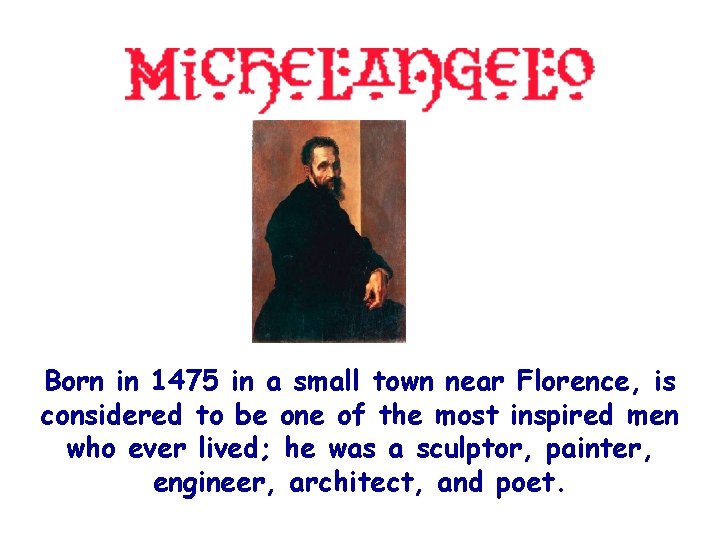
Born in 1475 in a small town near Florence, is considered to be one of the most inspired men who ever lived; he was a sculptor, painter, engineer, architect, and poet.
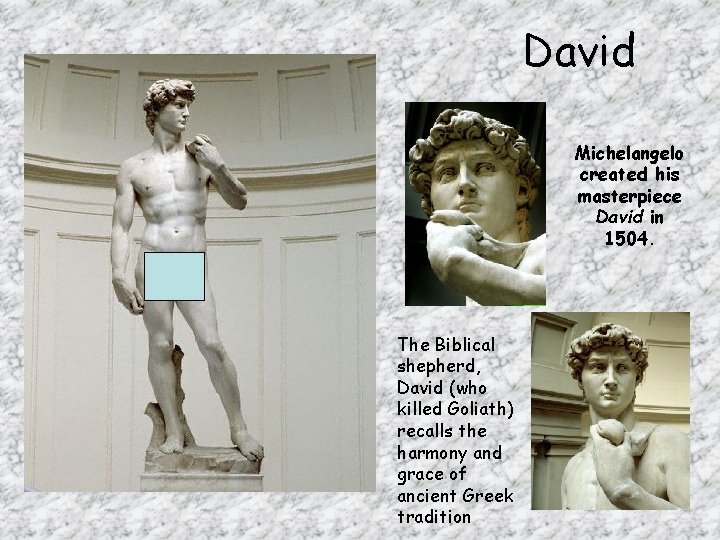
David Michelangelo created his masterpiece David in 1504. The Biblical shepherd, David (who killed Goliath) recalls the harmony and grace of ancient Greek tradition
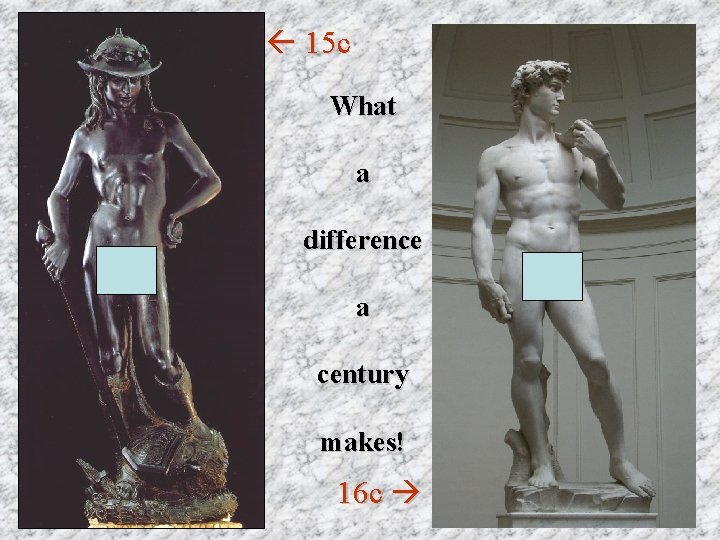
15 c What a difference a century makes! 16 c
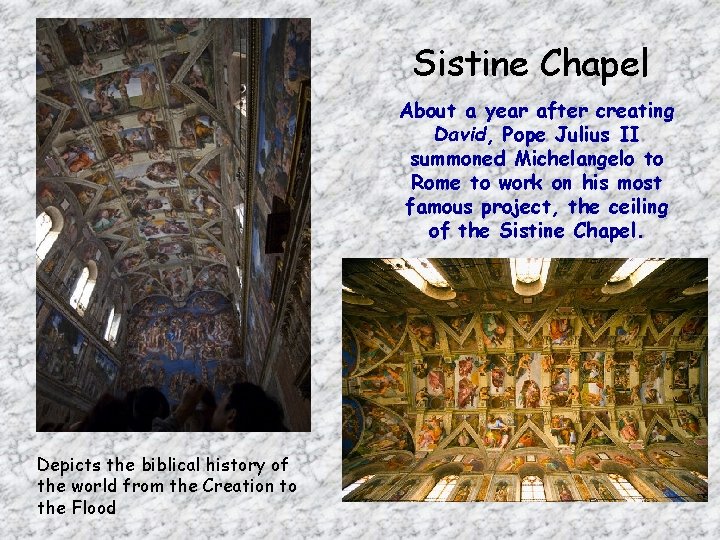
Sistine Chapel About a year after creating David, Pope Julius II summoned Michelangelo to Rome to work on his most famous project, the ceiling of the Sistine Chapel. Depicts the biblical history of the world from the Creation to the Flood
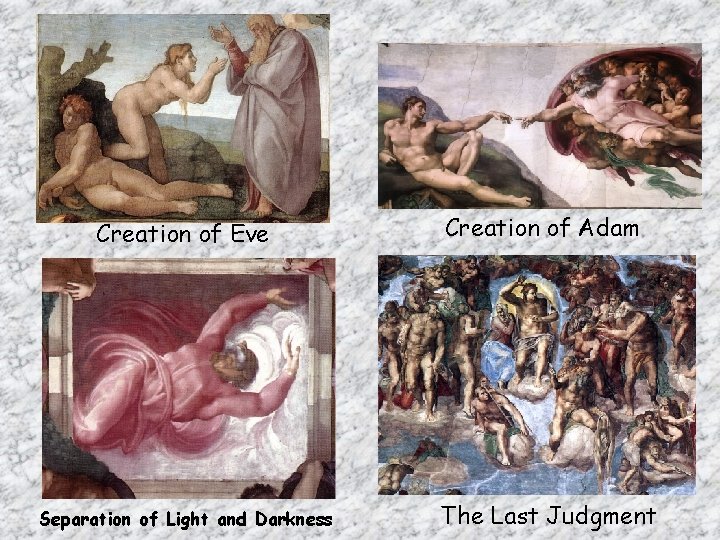
Creation of Eve Separation of Light and Darkness Creation of Adam The Last Judgment
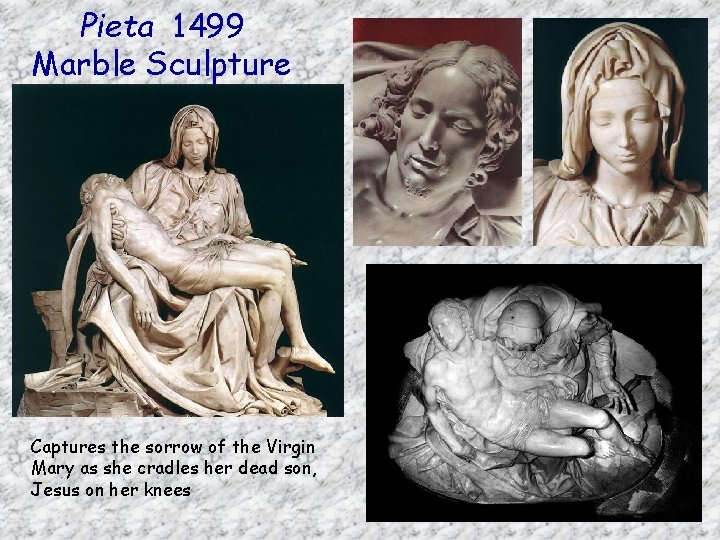
Pieta 1499 Marble Sculpture Captures the sorrow of the Virgin Mary as she cradles her dead son, Jesus on her knees
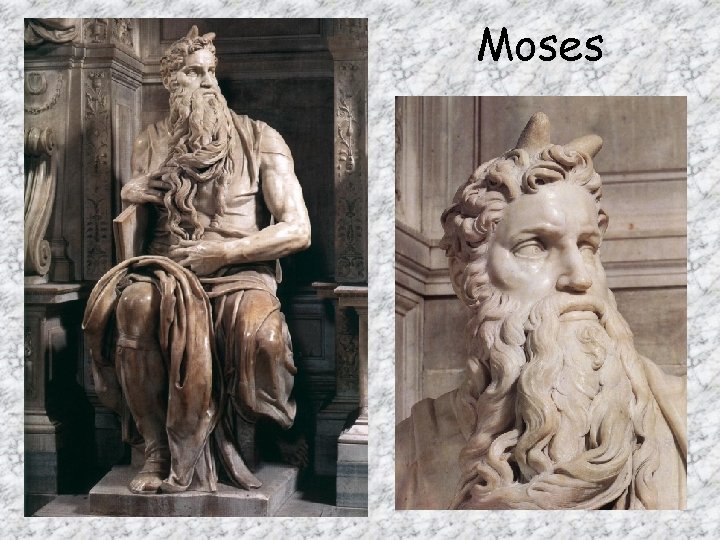
Moses
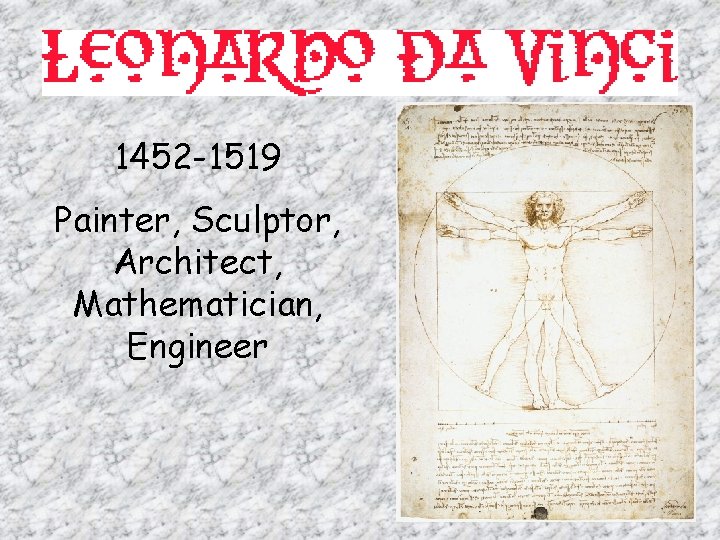
1452 -1519 Painter, Sculptor, Architect, Mathematician, Engineer
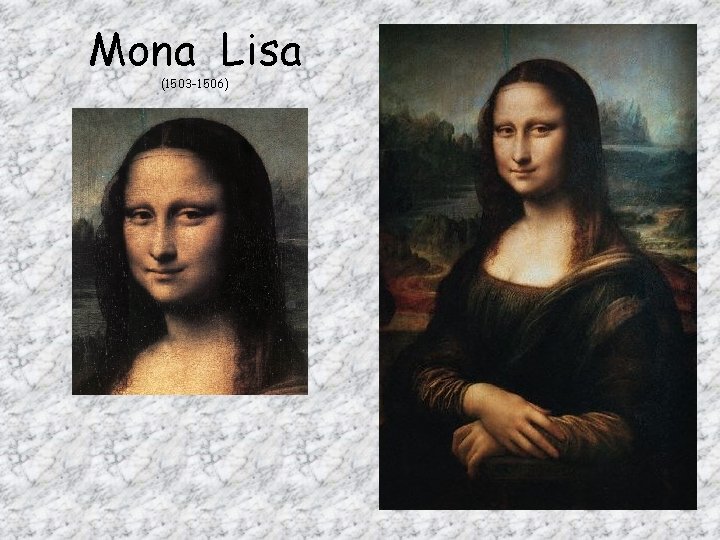
Mona Lisa (1503 -1506)
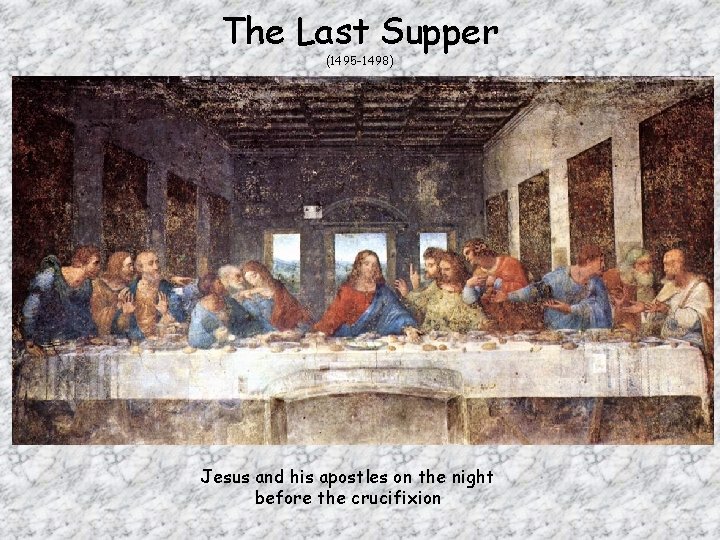
The Last Supper (1495 -1498) Jesus and his apostles on the night before the crucifixion
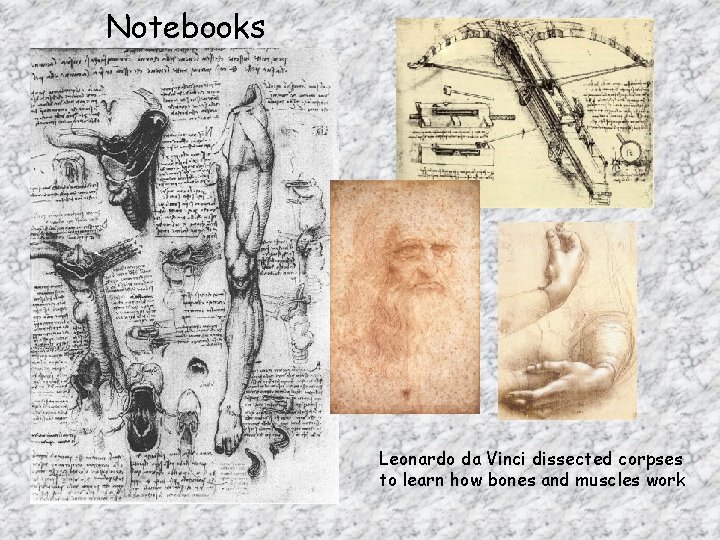
Notebooks Leonardo da Vinci dissected corpses to learn how bones and muscles work
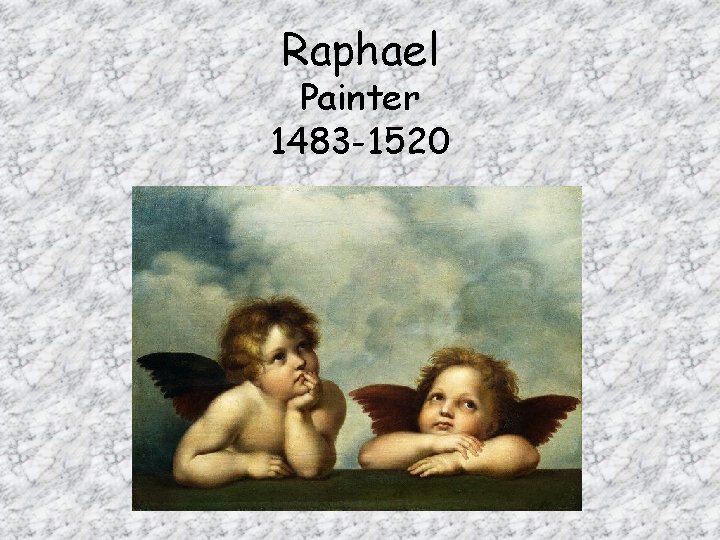
Raphael Painter 1483 -1520
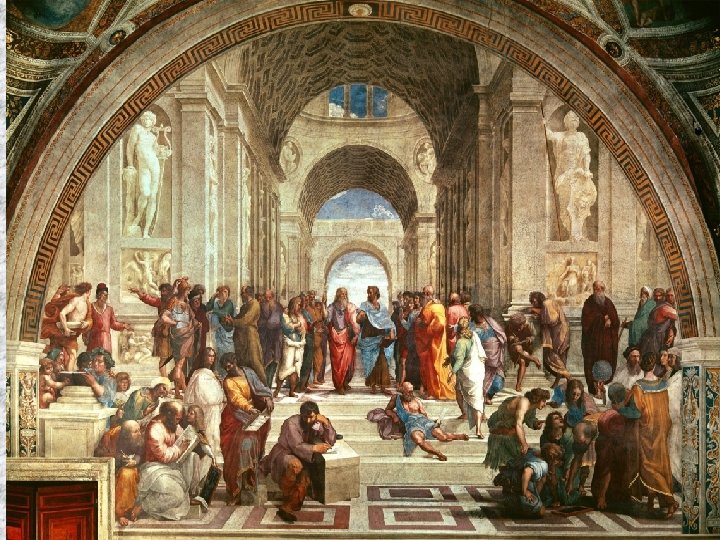
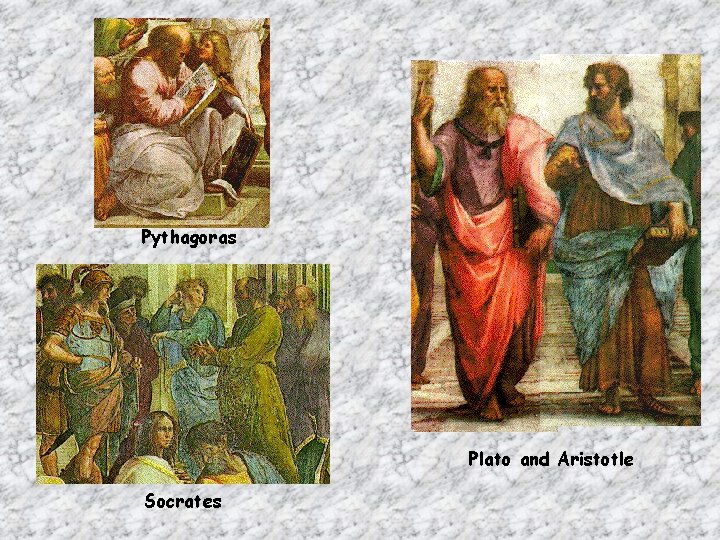
Pythagoras Plato and Aristotle Socrates
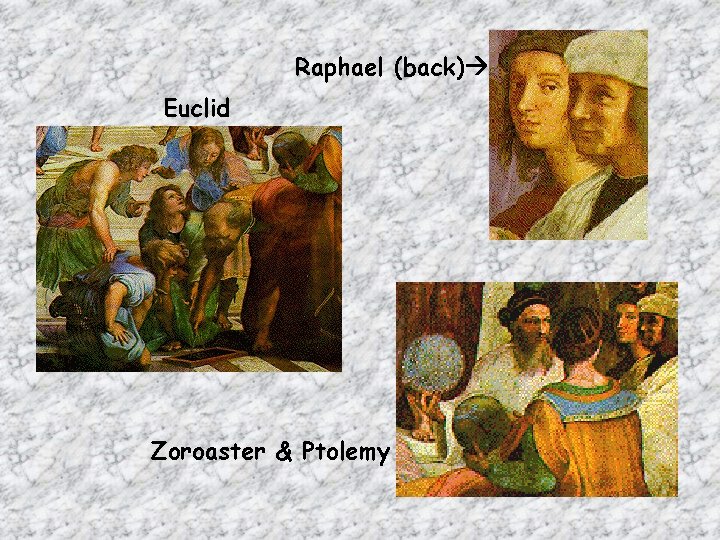
Raphael (back) Euclid Zoroaster & Ptolemy
Northern Renaissance The Renaissance in northern Europe (outside Italy) • There was increased cultural exchange between European countries • Printed materials helped to spread ideas ****Printing Press • Centralization of political power made the northern Renaissance distinct from the Italian Renaissance (e. g. , nation-states instead of Italian city-states)
• Growing wealth in Northern Europe supported Renaissance ideas. • Northern Renaissance thinkers merged humanist ideas with Christianity. • The movable type printing press and the production and sale of books (Gutenberg Bible) helped disseminate ideas and allowed more people to become educated.
• Cultural and educational reform • The study of classical culture (ancient Greece and Rome), in contrast with the study of things related to the church and religion • Celebrated the individual • Was supported by wealthy patrons (financial supporters)
Literature flourished during the Renaissance and spread Renaissance ideas, which can be greatly attributed to Johannes Gutenberg. In 1455 Gutenberg printed the first book produced by using moveable type, The Bible, and started a printing revolution that would transform Europe. Literacy rates increased
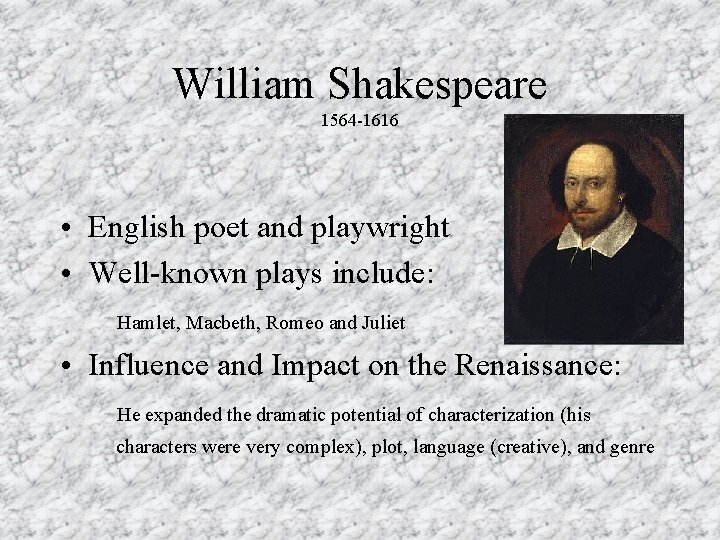
William Shakespeare 1564 -1616 • English poet and playwright • Well-known plays include: Hamlet, Macbeth, Romeo and Juliet • Influence and Impact on the Renaissance: He expanded the dramatic potential of characterization (his characters were very complex), plot, language (creative), and genre
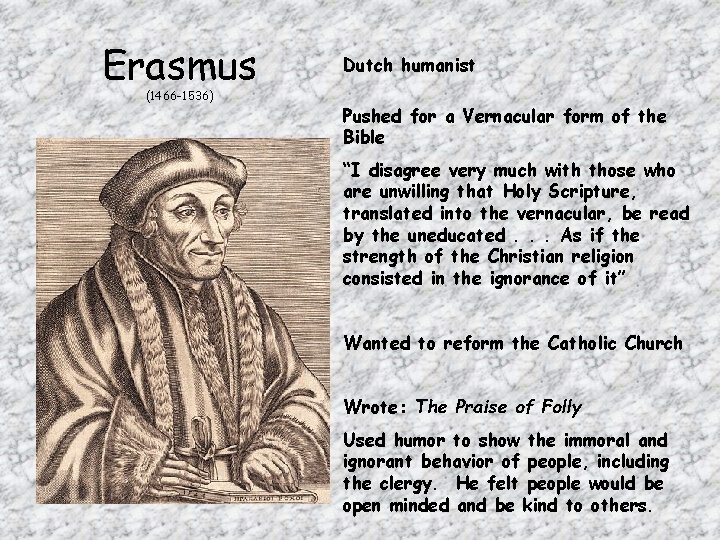
Erasmus (1466 -1536) Dutch humanist Pushed for a Vernacular form of the Bible “I disagree very much with those who are unwilling that Holy Scripture, translated into the vernacular, be read by the uneducated. . . As if the strength of the Christian religion consisted in the ignorance of it” Wanted to reform the Catholic Church Wrote: The Praise of Folly Used humor to show the immoral and ignorant behavior of people, including the clergy. He felt people would be open minded and be kind to others.
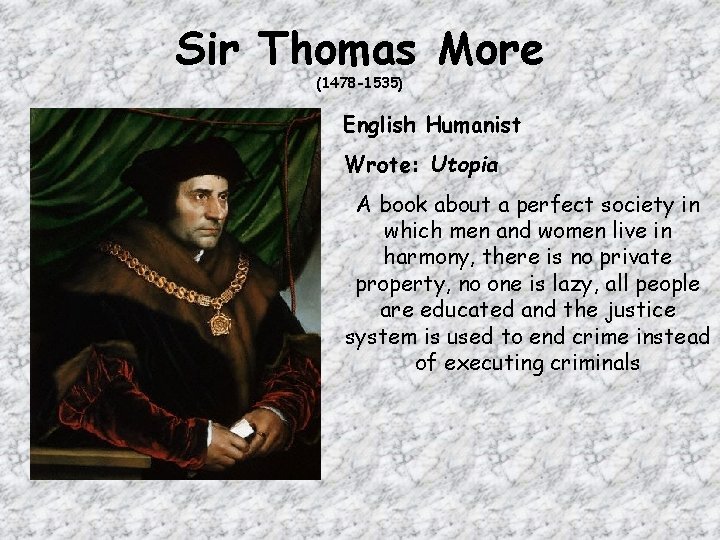
Sir Thomas More (1478 -1535) English Humanist Wrote: Utopia A book about a perfect society in which men and women live in harmony, there is no private property, no one is lazy, all people are educated and the justice system is used to end crime instead of executing criminals
Important to Remember • Accomplishments in the visual arts – Leonardo da Vinci, Michelangelo, Raphael • Accomplishments in literature (sonnets, plays, essays) – Petrarch, Shakespeare • Accomplishments in intellectual ideas (humanism) – Erasmus
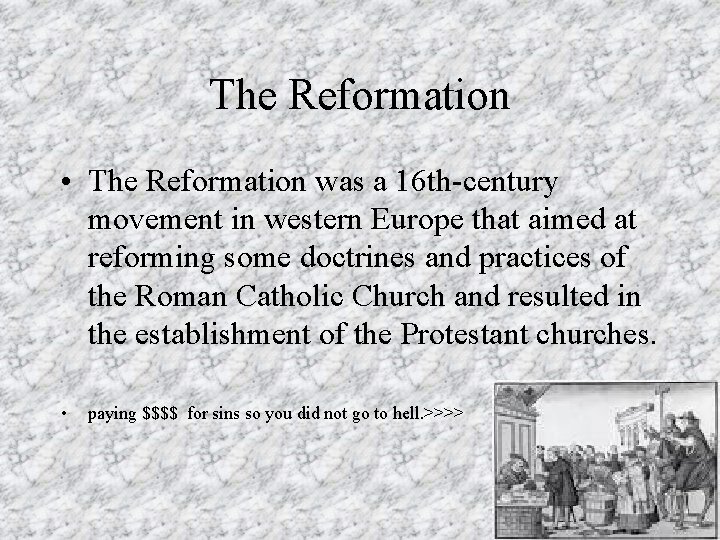
The Reformation • The Reformation was a 16 th-century movement in western Europe that aimed at reforming some doctrines and practices of the Roman Catholic Church and resulted in the establishment of the Protestant churches. • paying $$$$ for sins so you did not go to hell. >>>>
• There were many Christians in western Europe who believed that the church was going against Christian beliefs. Two examples of these practices were the sale of indulgences, paying for sins so you would not go to hell, and the appointment to positions of authority in the church to those who made contributions.
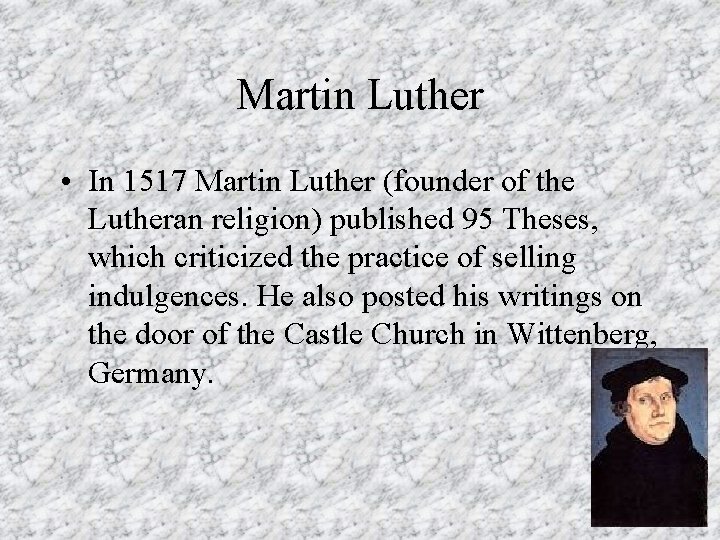
Martin Luther • In 1517 Martin Luther (founder of the Lutheran religion) published 95 Theses, which criticized the practice of selling indulgences. He also posted his writings on the door of the Castle Church in Wittenberg, Germany.
Invention of Printing Press • The dissent of Martin Luther started a quick spread of discontent with the church. The invention of the printing press by Johannes Gutenberg in 1445 allowed many people to become part of the protest. Many other reformers came to the front. John Calvin had ideas similar to Luther, but there was much controversy between the two reformers. Luther was excommunicated (thrown out of the church).
• Reform movements began in Switzerland, Scotland Hungary at the same time as those of Luther. The separation of the Church of England under the rule of Henry VIII in 1529 brought England into the reform movement as well.
Scientific Revolution • During the Middle Ages science was not really an acceptable practice to the watchful eye and strength of the church. During this period there was little scientific inquiry and experimentation. Rather, students of the sciences simply read the works of the alleged authorities and accepted their word as truth. However, during the Renaissance this all began to change. The quest to understand the natural world led to the revival of botany and anatomy.
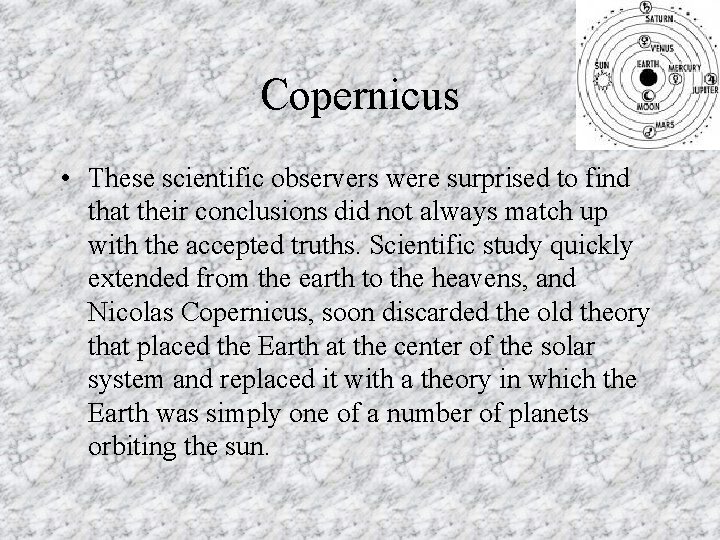
Copernicus • These scientific observers were surprised to find that their conclusions did not always match up with the accepted truths. Scientific study quickly extended from the earth to the heavens, and Nicolas Copernicus, soon discarded the old theory that placed the Earth at the center of the solar system and replaced it with a theory in which the Earth was simply one of a number of planets orbiting the sun.
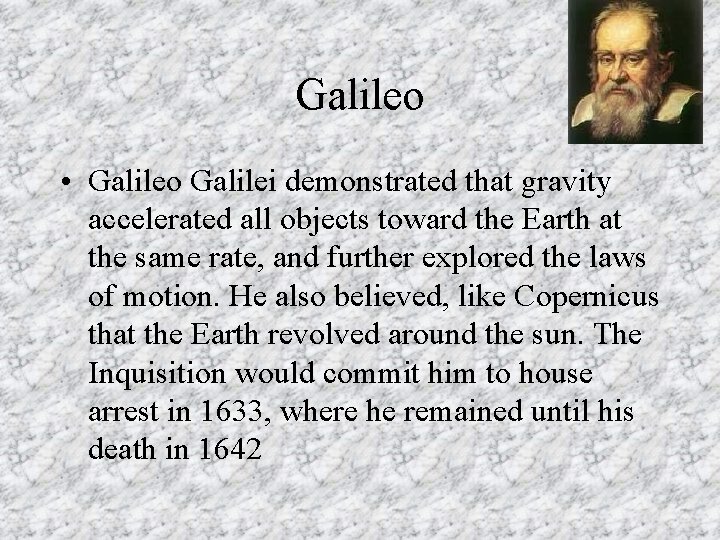
Galileo • Galileo Galilei demonstrated that gravity accelerated all objects toward the Earth at the same rate, and further explored the laws of motion. He also believed, like Copernicus that the Earth revolved around the sun. The Inquisition would commit him to house arrest in 1633, where he remained until his death in 1642
Enlightenment • The Enlightenment was a sprawling intellectual, philosophical, cultural, and social movement that spread through England, France, Germany, and other parts of Europe during the 1700 s.
• The Scientific Revolution and the Enlightenment, opened a path for independent thought, and the fields of mathematics, astronomy, physics, politics, economics, philosophy, and medicine were drastically updated and expanded. The amount of new knowledge that emerged was staggering.
Thomas Hobbes (1588– 1679) • Hobbes believed that all humans are inherently self-driven and evil and that the best form of government is thus a single, all -powerful monarch to keep everything in order.
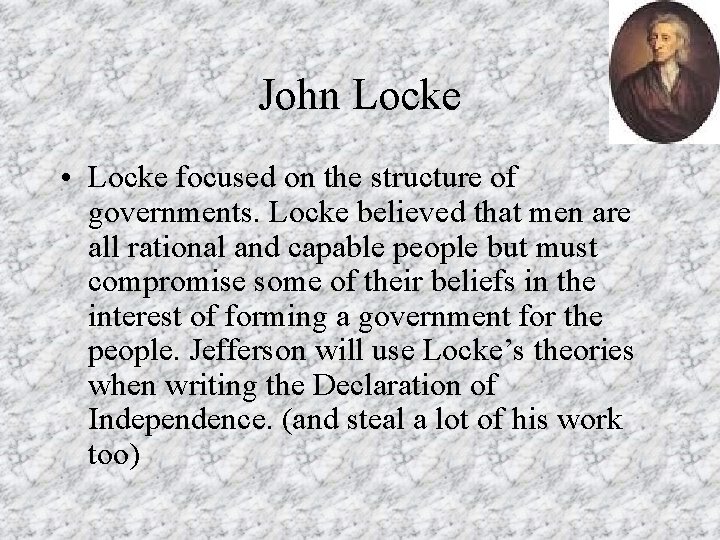
John Locke • Locke focused on the structure of governments. Locke believed that men are all rational and capable people but must compromise some of their beliefs in the interest of forming a government for the people. Jefferson will use Locke’s theories when writing the Declaration of Independence. (and steal a lot of his work too)
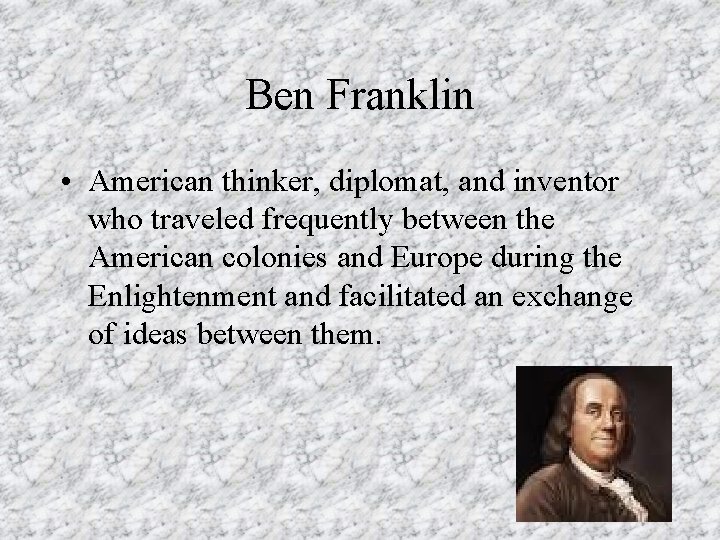
Ben Franklin • American thinker, diplomat, and inventor who traveled frequently between the American colonies and Europe during the Enlightenment and facilitated an exchange of ideas between them.
- Slides: 64