
The Relationship Between TCells and HIV Progression Kiran

The Relationship Between T-Cells and HIV Progression Kiran Dhillon and Kelly Nuibe
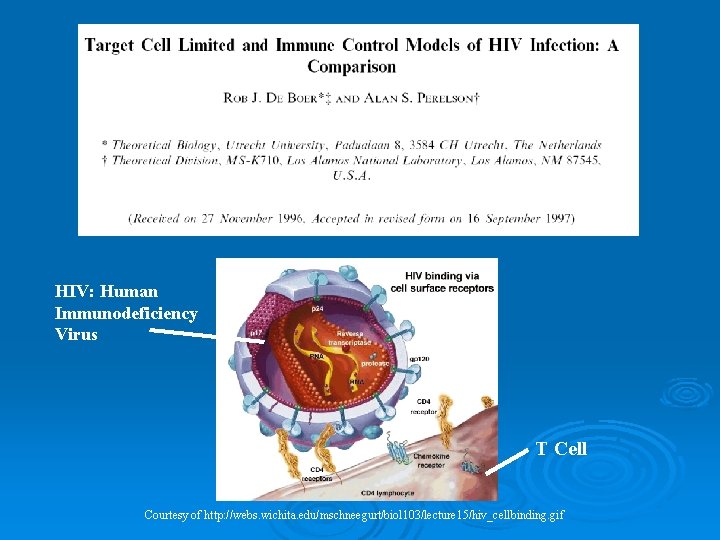
HIV: Human Immunodeficiency Virus T Cell Courtesy of http: //webs. wichita. edu/mschneegurt/biol 103/lecture 15/hiv_cellbinding. gif
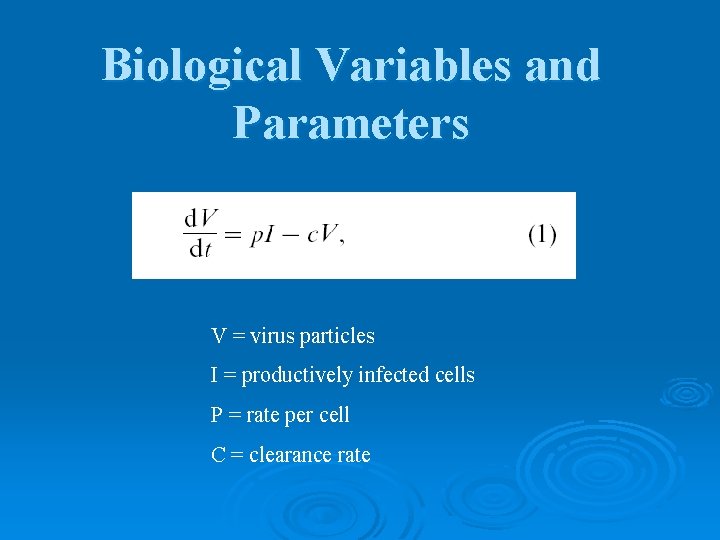
Biological Variables and Parameters V = virus particles I = productively infected cells P = rate per cell C = clearance rate
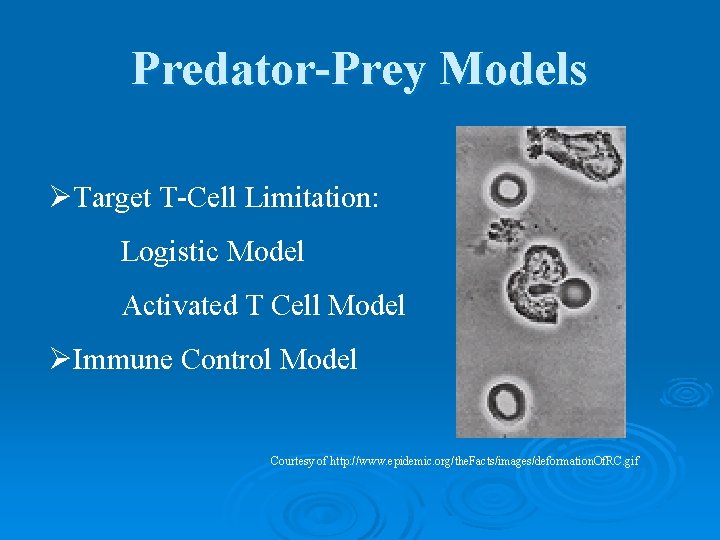
Predator-Prey Models ØTarget T-Cell Limitation: Logistic Model Activated T Cell Model ØImmune Control Model Courtesy of http: //www. epidemic. org/the. Facts/images/deformation. Of. RC. gif
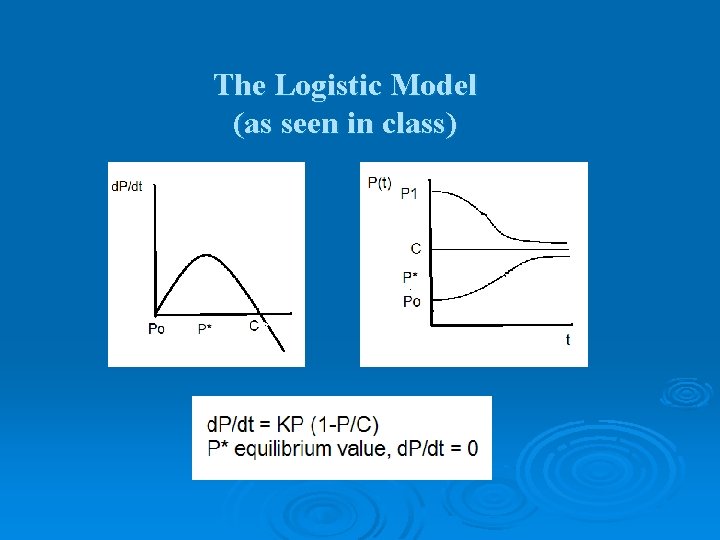
The Logistic Model (as seen in class)
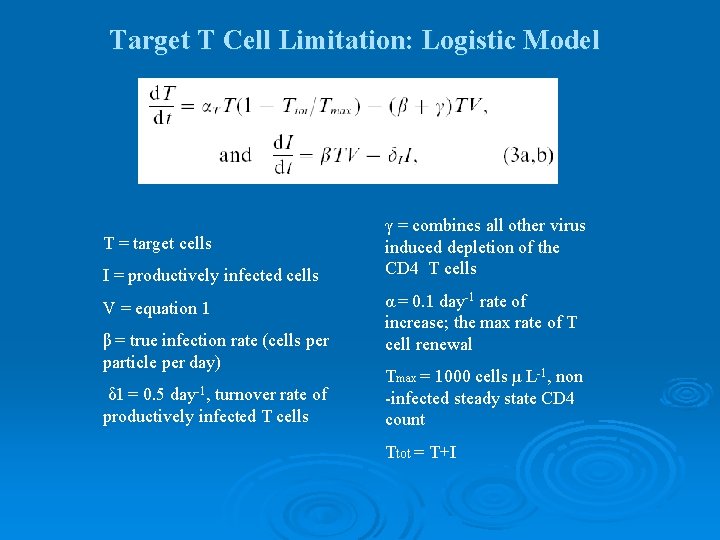
Target T Cell Limitation: Logistic Model T = target cells I = productively infected cells V = equation 1 β = true infection rate (cells per particle per day) δ 1 = 0. 5 day-1, turnover rate of productively infected T cells γ = combines all other virus induced depletion of the CD 4 T cells α = 0. 1 day-1 rate of increase; the max rate of T cell renewal Tmax = 1000 cells µ L-1, non -infected steady state CD 4 count Ttot = T+I
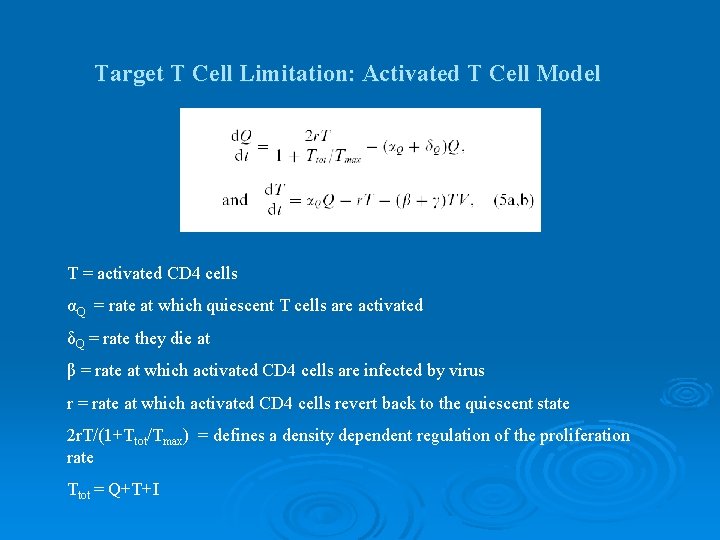
Target T Cell Limitation: Activated T Cell Model T = activated CD 4 cells αQ = rate at which quiescent T cells are activated δQ = rate they die at β = rate at which activated CD 4 cells are infected by virus r = rate at which activated CD 4 cells revert back to the quiescent state 2 r. T/(1+Ttot/Tmax) = defines a density dependent regulation of the proliferation rate Ttot = Q+T+I
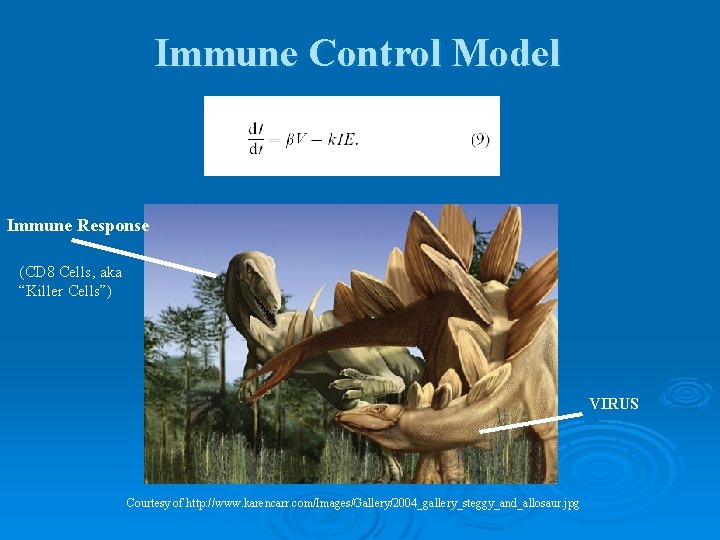
Immune Control Model Immune Response (CD 8 Cells, aka “Killer Cells”) VIRUS Courtesy of http: //www. karencarr. com/Images/Gallery/2004_gallery_steggy_and_allosaur. jpg
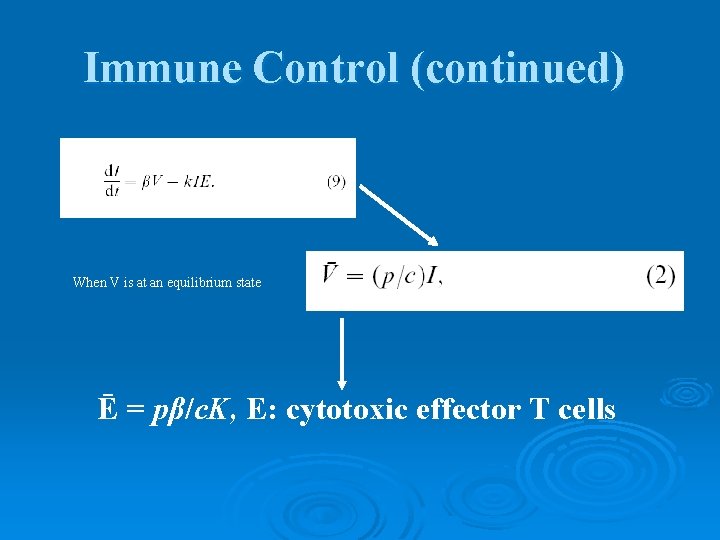
Immune Control (continued) When V is at an equilibrium state Ē = pβ/c. K, E: cytotoxic effector T cells
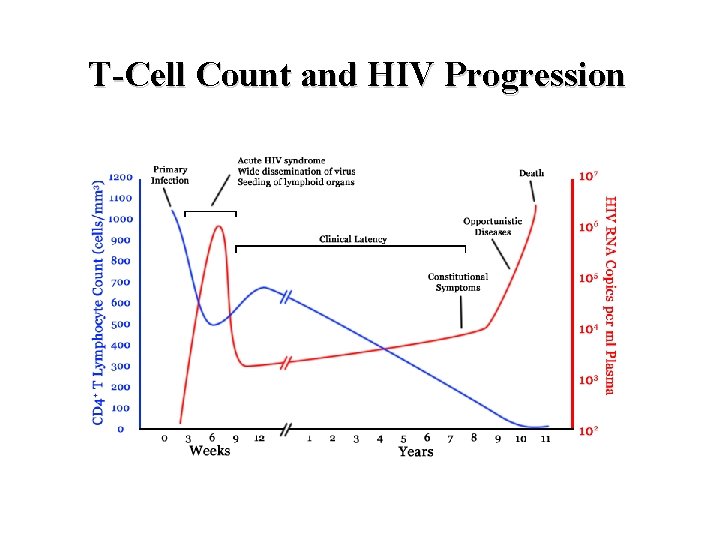
T-Cell Count and HIV Progression

- Slides: 11