
The Relationship between Humor and Stress Reduction Done
The Relationship between Humor and Stress Reduction Done by: Leena Al. Muhaish
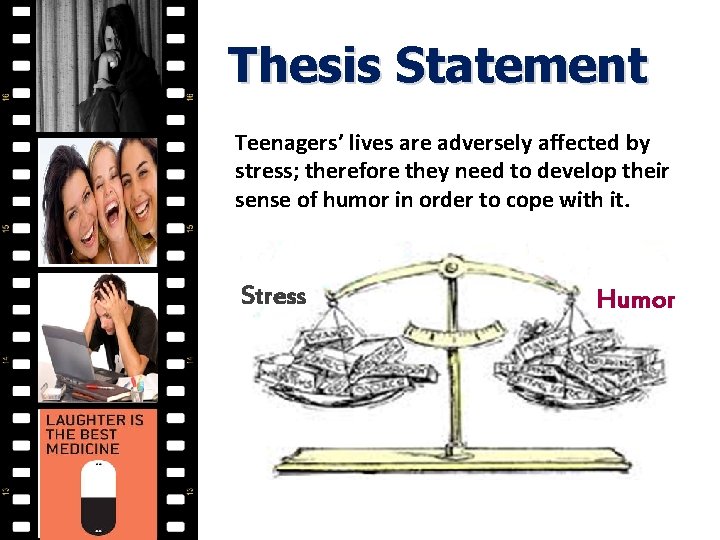
Thesis Statement Teenagers’ lives are adversely affected by stress; therefore they need to develop their sense of humor in order to cope with it. Stress Humor
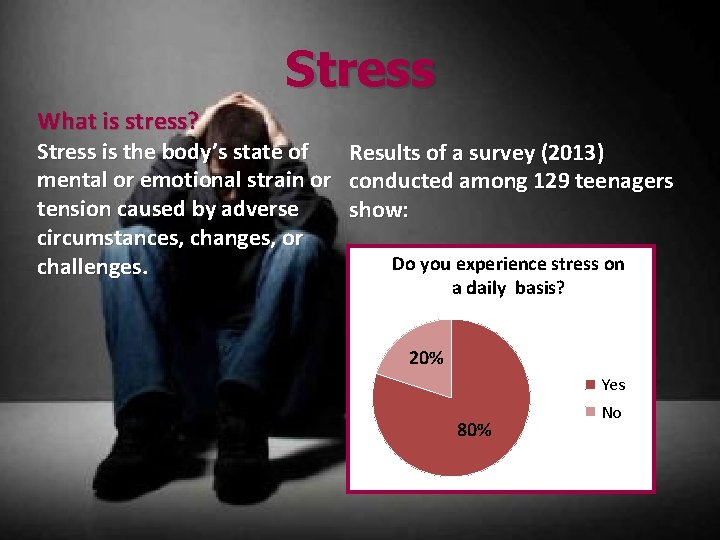
Stress What is stress? Stress is the body’s state of mental or emotional strain or tension caused by adverse circumstances, changes, or challenges. Results of a survey (2013) conducted among 129 teenagers show: Do you experience stress on a daily basis? 20% Yes 80% No
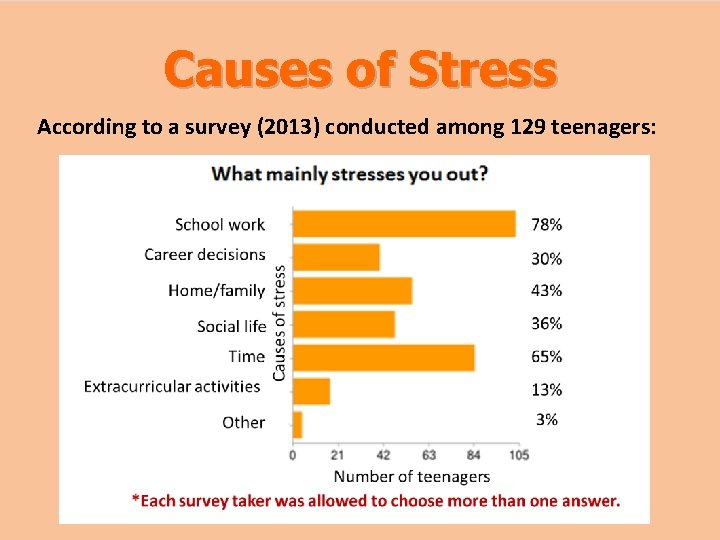
Causes of Stress According to a survey (2013) conducted among 129 teenagers:
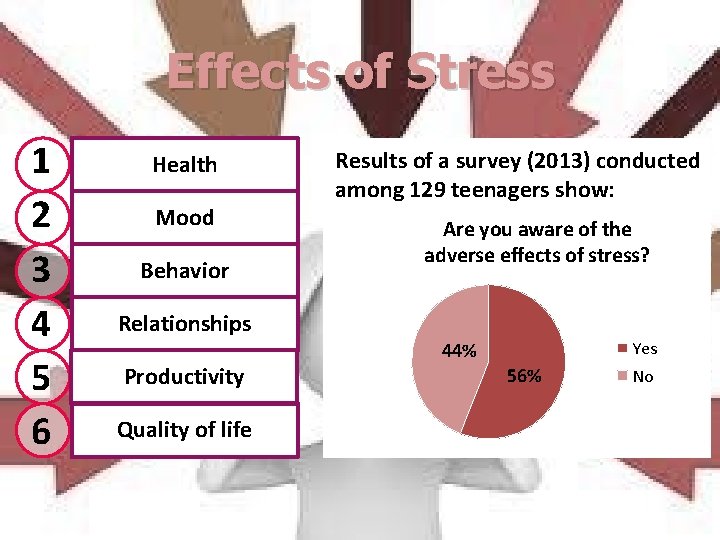
Effects of Stress 1 2 3 4 5 6 Health Mood Behavior Results of a survey (2013) conducted among 129 teenagers show: Are you aware of the adverse effects of stress? Relationships Productivity Quality of life Yes 44% 56% No

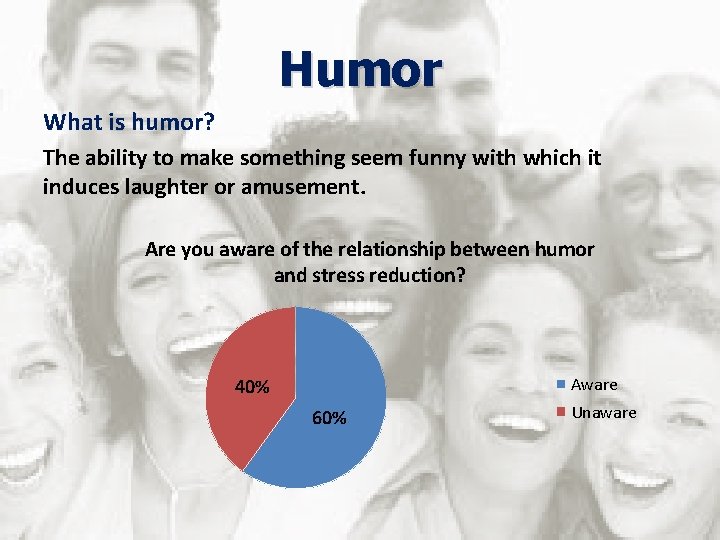
Humor What is humor? The ability to make something seem funny with which it induces laughter or amusement. Are you aware of the relationship between humor and stress reduction? Aware 40% 60% Unaware
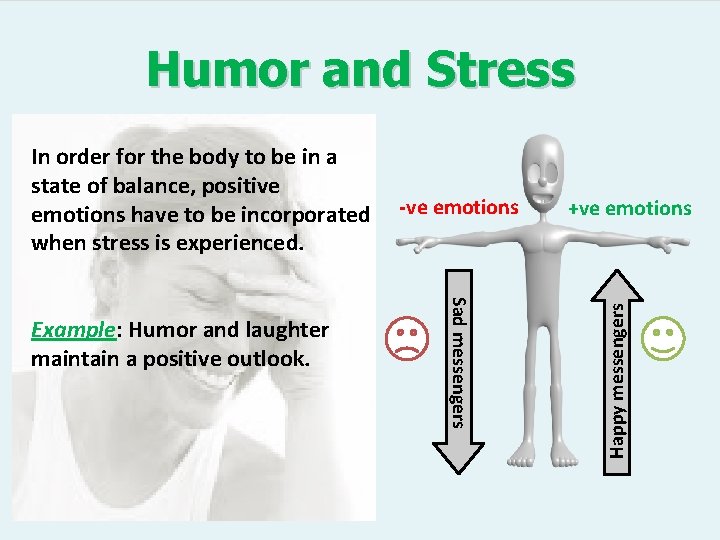
Humor and Stress Sad messengers Example: Humor and laughter maintain a positive outlook. -ve emotions +ve emotions Happy messengers In order for the body to be in a state of balance, positive emotions have to be incorporated when stress is experienced.
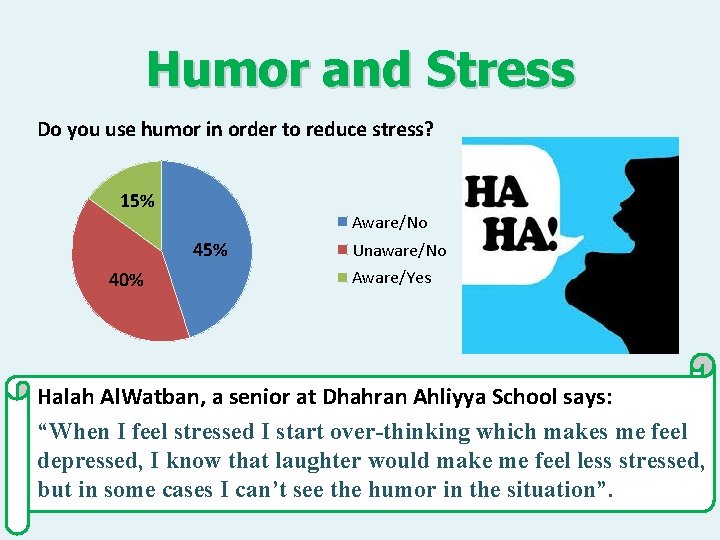
Humor and Stress Do you use humor in order to reduce stress? 15% Aware/No 45% 40% Unaware/No Aware/Yes Halah Al. Watban, a senior at Dhahran Ahliyya School says: “When I feel stressed I start over-thinking which makes me feel depressed, I know that laughter would make me feel less stressed, but in some cases I can’t see the humor in the situation”.
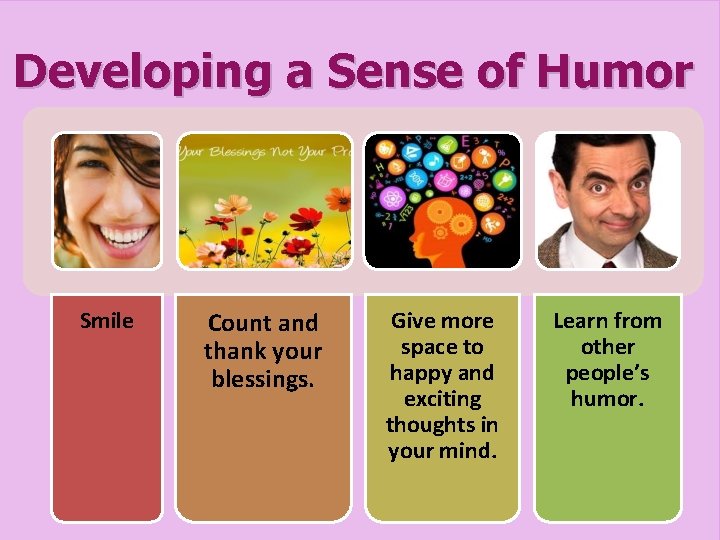
Developing a Sense of Humor Smile Count and thank your blessings. Give more space to happy and exciting thoughts in your mind. Learn from other people’s humor.
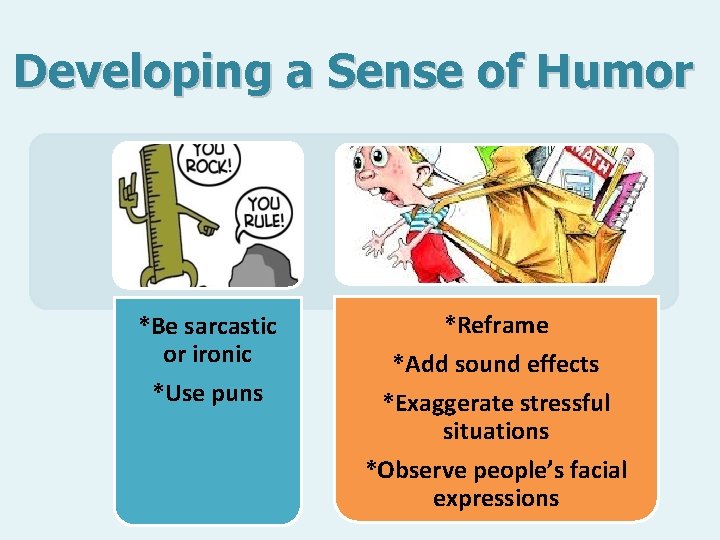
Developing a Sense of Humor *Be sarcastic or ironic *Use puns *Reframe *Add sound effects *Exaggerate stressful situations *Observe people’s facial expressions
Developing a Sense of Humor Plan to cheer up at least one person who is feeling down. Develop a routine to break the dark mood.
References Krantz, D. D. , Thorn, B. , Kiecolt-Glaser, J. (2012). How stress affects your health. American Psychological Association. Retrieved from http: //www. apa. org/helpcenter/stress. aspx Mc. Neely, C. , Blanchard, J. , (2008). The Teen Years Explained. Adolescent Health: A guide to Healthy Adolescent Development. Retrieved from http: //www. jhsph. edu/research/centers-and-institutes/center-for-adolescenthealth/_includes/Teen_Stress_Standalone. pdf Seaward, B. L. (2011). Managing stress a creative journal (4 th ed. ). Sudbury, Mass. : Jones & Bartlett Publishers. Smith, M. , Segal, R. , & Segal, J. (2013). Stress Symptoms, Signs & Causes: Effects of Stress Overload. Helpguide. Retrieved from http: //www. helpguide. org/mental/stress_signs Watson, K. K. , Matthews, B. J. , & Allman, J. M. (2006). Brain Activation During Sight Gags And Language-Dependent Humor. Cerebral Cortex, 17(2), 314 -324. (2011). Teens and Stress. UCLA/RAND Prevention Research Center. Retrieved from http: //www. ph. ucla. edu/prc/downloads/SM_Teen (2012, June 25). Why stress makes you miserable. Science. Retrieved from http: //news. sciencemag. org/brain-behavior/2012/06/why-stress-makes-youmiserable (2013). Stress. Palo Alto Medical Foundation Sutter Health. Retrieved from http: //www. pamf. org/teen/life/stress/50 stresses
Product Purpose: -To spread awareness on the adverse effects of stress caused by various factors. -To spread awareness on the different techniques for developing a sense of humor.
-Mrs. Malick -Mrs. Ameena Abdussamad -Participants of the survey (2003) -Sarah Al. Abdullatif -Najla Al. Jabr -Halah Al. Watban -Lama Al. Muhaish
- Slides: 15