
The Relationship Between Doctoral Students SelfReported Type of
The Relationship Between Doctoral Students’ Self-Reported Type of Statistics Anxiety and Final Grades in an Online Statistics Course Kirsten Hoegh School of Education Liberty University
Background • Increased enrollment in online doctoral programs • Research methods courses and dissertation phase problematic
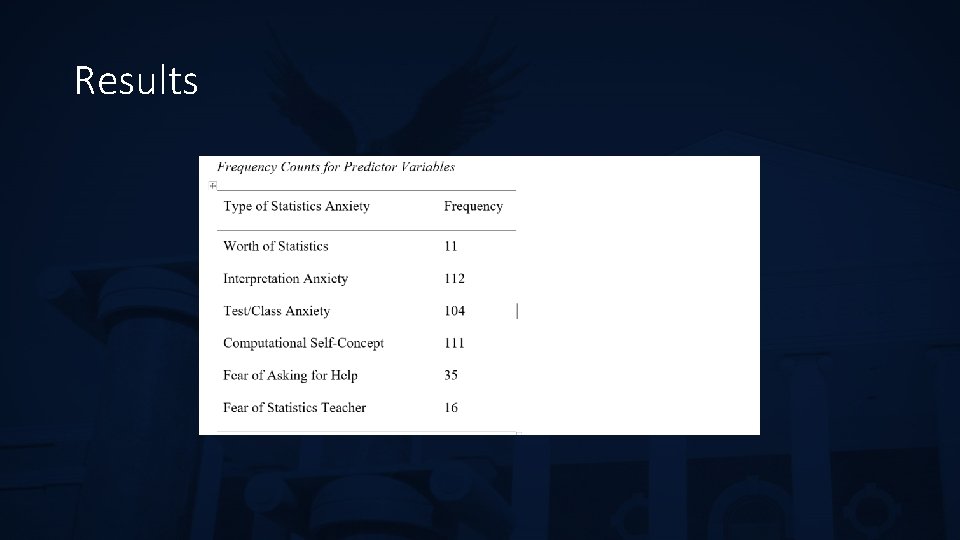
Background (continued) • Statistics anxiety • Six dimensions: • • • Worth of statistics Interpretation anxiety Test and class anxiety Computational self-concept Fear of asking for help Fear of statistics teacher
Research Question What type of self-reported statistics anxiety best predicts final grades for doctoral students in an online statistics course?
Problem Statement • The problem is that there is limited current research that looks at how specific types of statistics anxiety affect students’ performance in an online statistics course.
Purpose Statement • The purpose of this predictive correlational study was to determine what type of statistics anxiety best predicts final grades for doctoral students in an online statistics course at a large faith-based university in the southeast United States.
Significance of the Study • Lack of current research • Support for doctoral students in online statistics courses
Related Literature • Self-Efficacy Theory • Cognitive-Attentional Theory • Statistics Anxiety • Attitudes Toward Statistics
Research Question • What type of self-reported statistics anxiety best predicts final grades for doctoral students in an online statistics course?
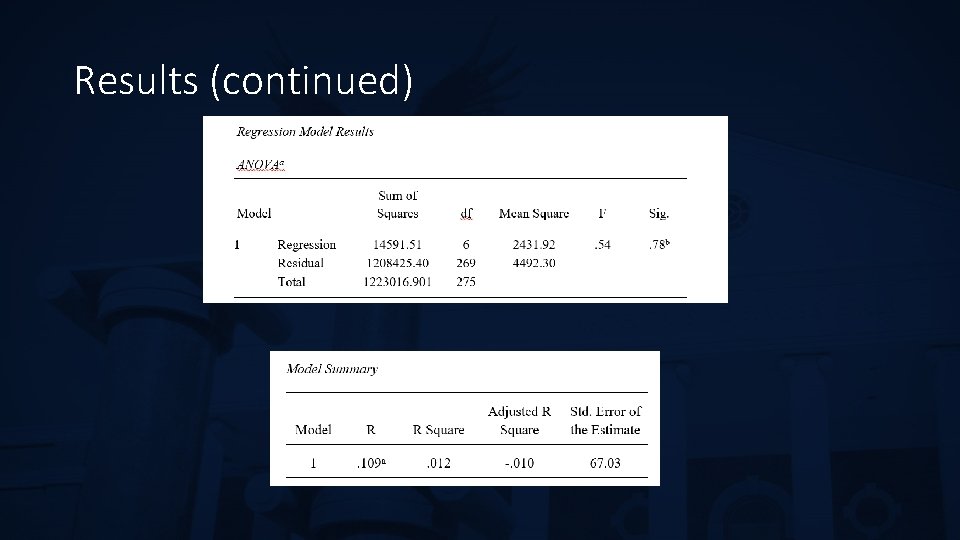
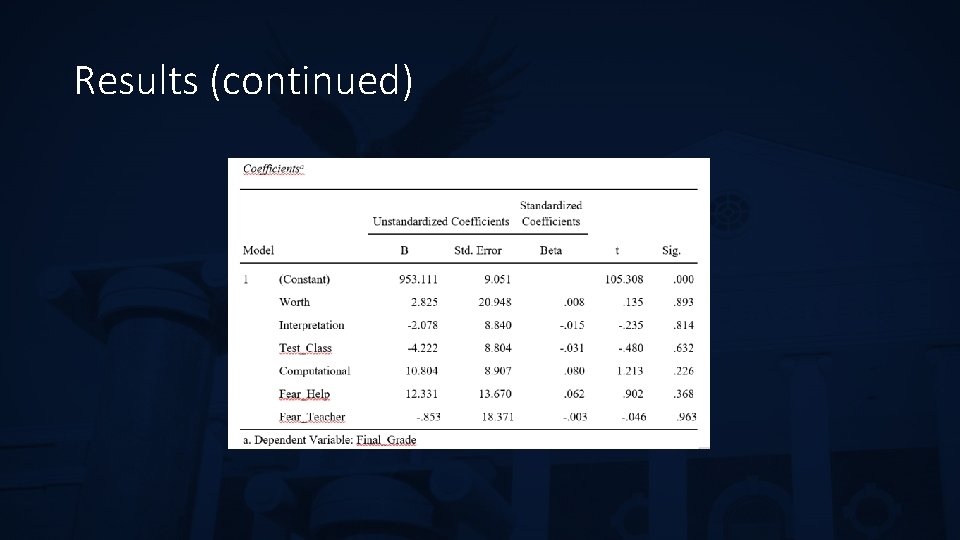
Null Hypothesis • There is no statistically significant predictive relationship between the criterion variable (final course grade) and the predictor variables related to the six dimensions of statistics anxiety (worth of statistics, interpretation anxiety, test and class anxiety, computational selfconcept, fear of asking for help, and fear of statistics teacher) for doctoral students in an online statistics course.
Design • Predictive correlation • Archival data • Predictor variables: Six dimensions of statistics anxiety • Criterion variable: Final course grade
Setting • Large faith-based university in Southeast United States • EDUC 812: Advanced Educational Statistics • Blackboard • 8 -week, asynchronous format • 15 student cap
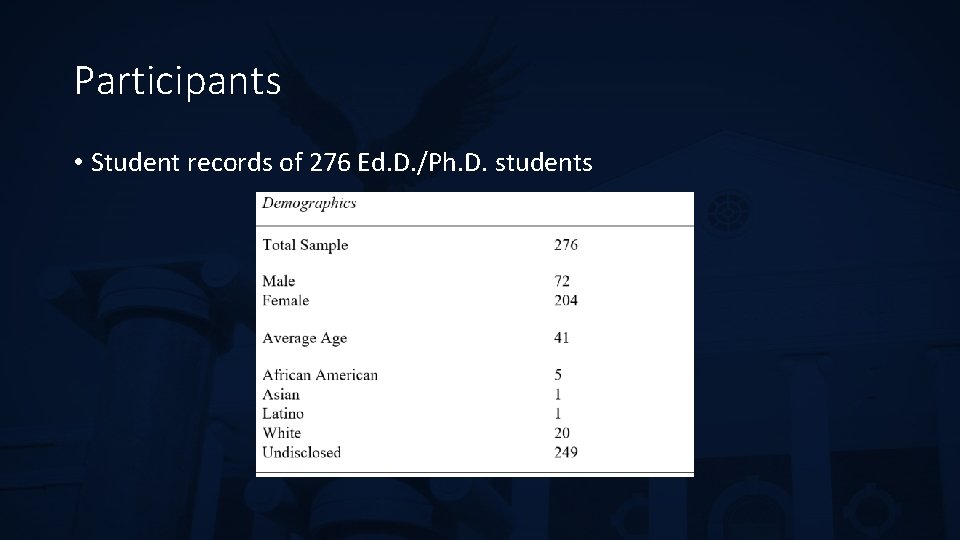
Participants • Student records of 276 Ed. D. /Ph. D. students
Procedures • SOE and IRB permission obtained • Collected archival data from • Self-reported type of stats anxiety through discussion board • Final course grades • Content analysis
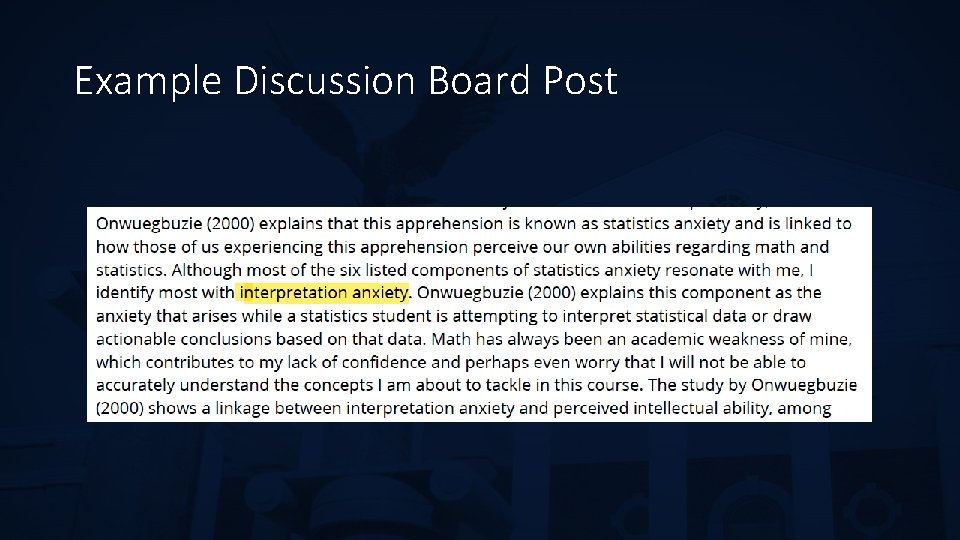
Example Discussion Board Post
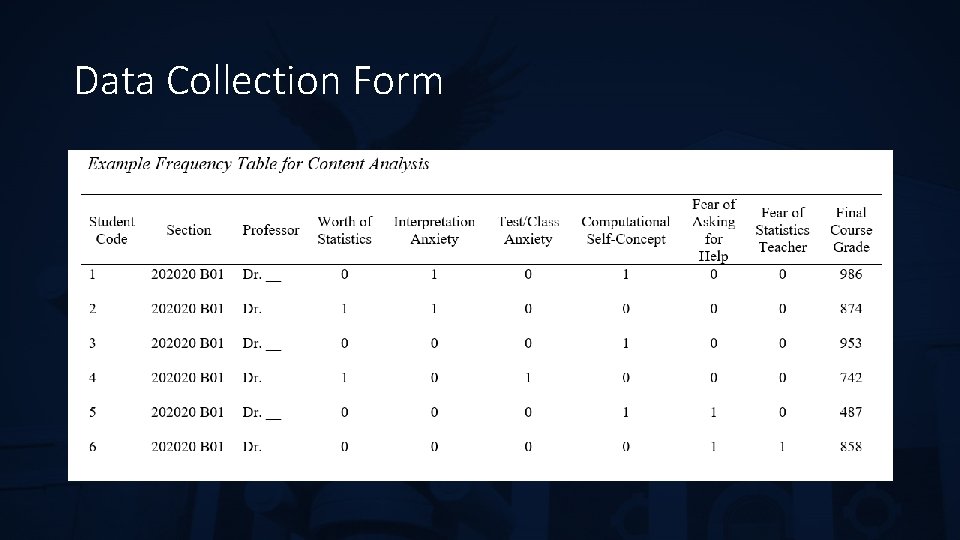
Data Collection Form
Results
Results (continued)
Results (continued)
Conclusions • Discussion • Ogbonnaya et al. , 2019 • Onwuegbuzie, 2003 • Conclusions • Chew & Dillon, 2014 • Denton, 2018 • Implications
Recommendations for Future Research • Other settings • Anxiety vs. attitude • Reflective journaling
- Slides: 21