
The Relationship Between Diet and Evolution In Primates
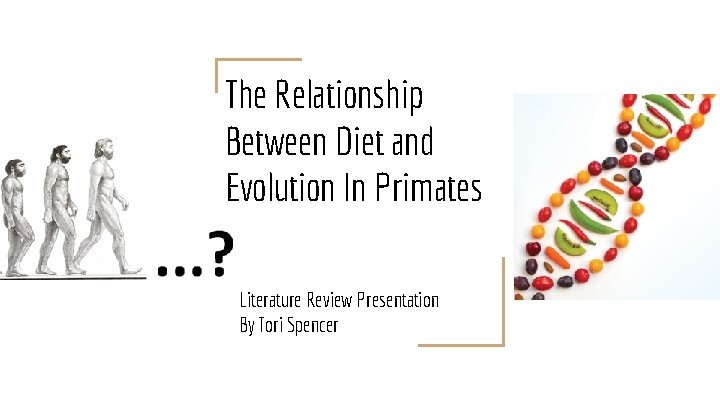
The Relationship Between Diet and Evolution In Primates Literature Review Presentation By Tori Spencer
● is individualized ● Our eating habits change our bodies ● These changes can be genetic! o What could they be? ● Let’s look in the past and at other primates for clues!

This review investigates diet’s effect on trends in primate: ● Head Features ● Lifestyle and Behavior ● Growth Rate and Heredity ● Immunology and Gut Flora ● Senses
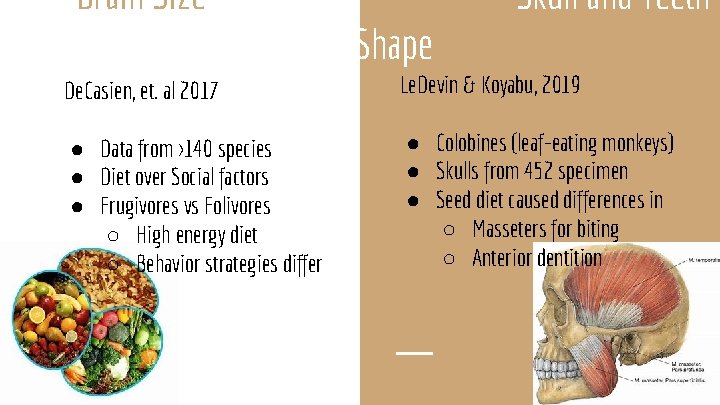
Brain Size Skull and Teeth Shape De. Casien, et. al 2017 Le. Devin & Koyabu, 2019 ● Data from >140 species ● Diet over Social factors ● Frugivores vs Folivores ○ High energy diet ○ Behavior strategies differ ● Colobines (leaf-eating monkeys) ● Skulls from 452 specimen ● Seed diet caused differences in ○ Masseters for biting ○ Anterior dentition

Brain Development Behavior Rivera, et. al, 2015 Sullivan, et. al, 2017 ● Macaca fuscata (Japanese macaques) ● Pregnant mothers fed high fat diets ● Infants after birth have decreased dopamine signaling and receptors ● Macaca fuscata (Japanese macaques) ● Decreased infant body weight ● Decreased hypothalamic melanocortin pathways
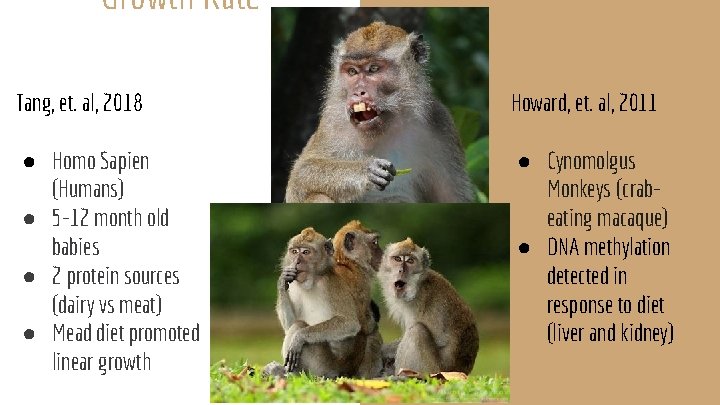
Growth Rate Heredity Tang, et. al, 2018 Howard, et. al, 2011 ● Homo Sapien (Humans) ● 5 -12 month old babies ● 2 protein sources (dairy vs meat) ● Mead diet promoted linear growth ● Cynomolgus Monkeys (crabeating macaque) ● DNA methylation detected in response to diet (liver and kidney)
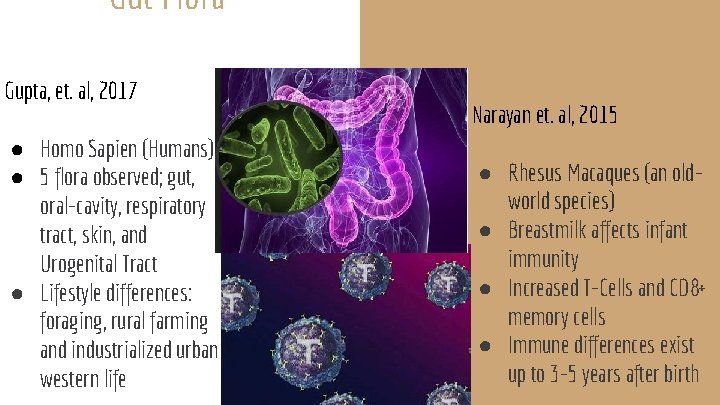
Gut Flora Immunology Gupta, et. al, 2017 ● Homo Sapien (Humans) ● 5 flora observed; gut, oral-cavity, respiratory tract, skin, and Urogenital Tract ● Lifestyle differences: foraging, rural farming and industrialized urban western life Narayan et. al, 2015 ● Rhesus Macaques (an oldworld species) ● Breastmilk affects infant immunity ● Increased T-Cells and CD 8+ memory cells ● Immune differences exist up to 3 -5 years after birth
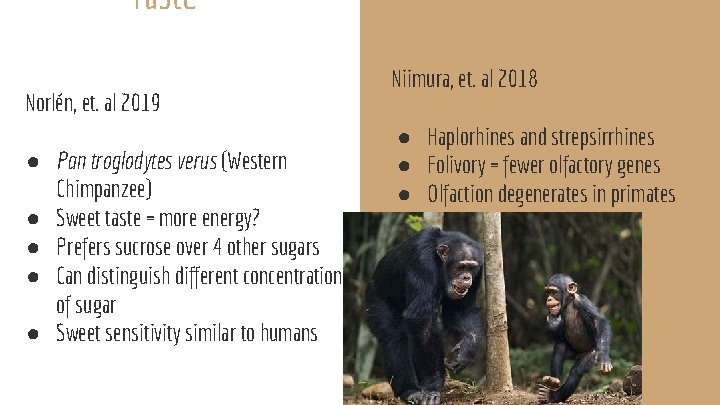
Taste Smell Norlén, et. al 2019 ● Pan troglodytes verus (Western Chimpanzee) ● Sweet taste = more energy? ● Prefers sucrose over 4 other sugars ● Can distinguish different concentrations of sugar ● Sweet sensitivity similar to humans Niimura, et. al 2018 ● Haplorhines and strepsirrhines ● Folivory = fewer olfactory genes ● Olfaction degenerates in primates
Decreased olfaction What may be next? Increased sweet detection Community-specific gut flora Changes in teeth shape Decreases in dopamine centers Altered growth rates Changes in brain size Increased methlyation
- Slides: 9