
The relationship between cognition and the affective domain
The relationship between cognition and the affective domain (especially selfconfidence) in mathematics Dr. Ray De. Witt Professor De. Witt will discuss the development of the affective domain (feelings and emotions) with learners. Then he will discuss the relationship between cognition and this affective domain as it pertains to mathematics, and the recent findings of his finding here at Lake Superior State University.
Overview • Describe the affective domain. • Development of affect. • Constructs that are critical in mathematical achievement. • The relationship between affect and cognition. • My future research direction and goals.
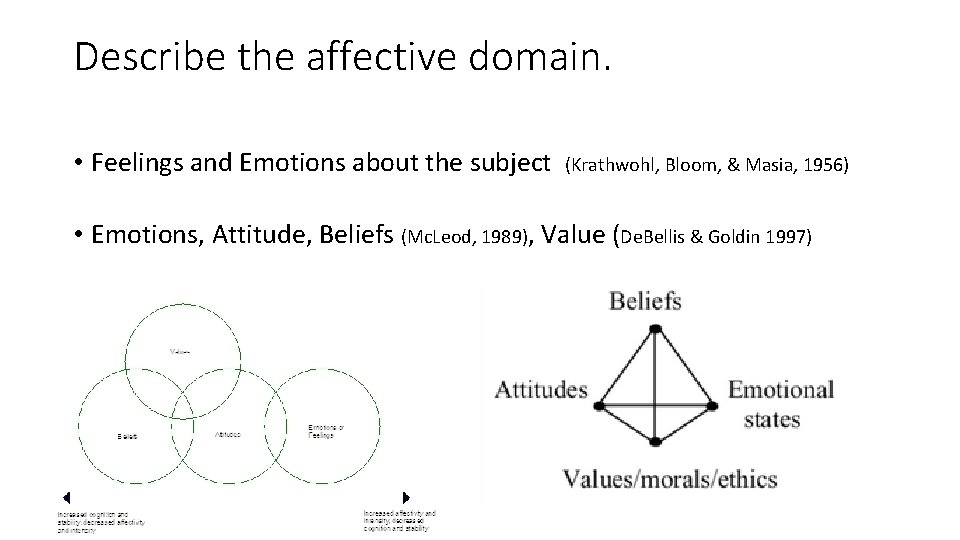
Describe the affective domain. • Feelings and Emotions about the subject (Krathwohl, Bloom, & Masia, 1956) • Emotions, Attitude, Beliefs (Mc. Leod, 1989), Value (De. Bellis & Goldin 1997)
Development of affect. • Local Affect • A single activity that produces some emotion toward the activity (positive or negative)
Development of affect. • Local Affect • A single activity that produces some emotion toward the activity (positive or negative)
Development of affect. • Local Affect • A single activity that produces some emotion toward the activity (positive or negative)
Development of affect. • Local Affect • A single activity that produces some emotion toward the activity (positive or negative)
Development of affect. • Local Affect • A single activity that produces some emotion toward the activity (positive or negative)
Development of affect. • Local Affect • A single activity that produces some emotion toward the activity (positive or negative)
Development of affect. • Local Affect • A single activity that produces some emotion toward the activity (positive or negative)
Development of affect. • Local Affect • A single activity that produces some emotion toward the activity (positive or negative)
Development of affect. • Local Affect • A single activity that produces some emotion toward the activity (positive or negative)
Development of affect. • Local Affect • A single activity that produces some emotion toward the activity (positive or negative)
Development of affect. • Local Affect • A single activity that produces some emotion toward the activity (positive or negative)
Development of affect. • Local Affect • A single activity that produces some emotion toward the activity (positive or negative)
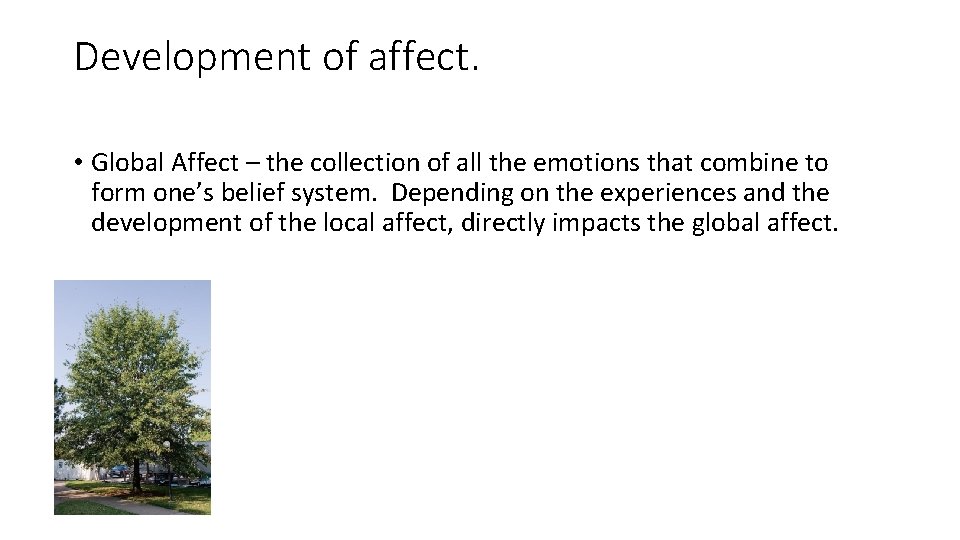
Development of affect. • Global Affect – the collection of all the emotions that combine to form one’s belief system. Depending on the experiences and the development of the local affect, directly impacts the global affect.
Development of affect. • Global Affect – the collection of all the emotions that combine to form one’s belief system. Depending on the experiences and the development of the local affect, directly impacts the global affect.
Development of affect. • Global Affect – the collection of all the emotions that combine to form one’s belief system. Depending on the experiences and the development of the local affect, directly impacts the global affect.
Constructs that are critical in mathematical achievement. • Self Confidence/Self-efficacy: a person’s belief in their capability of performing a behavior required to reach a goal • Motivation: the measure of interest in mathematics and desire to pursue studies in mathematics
The relationship between affect and cognition. Why should educators care? How can this help education?
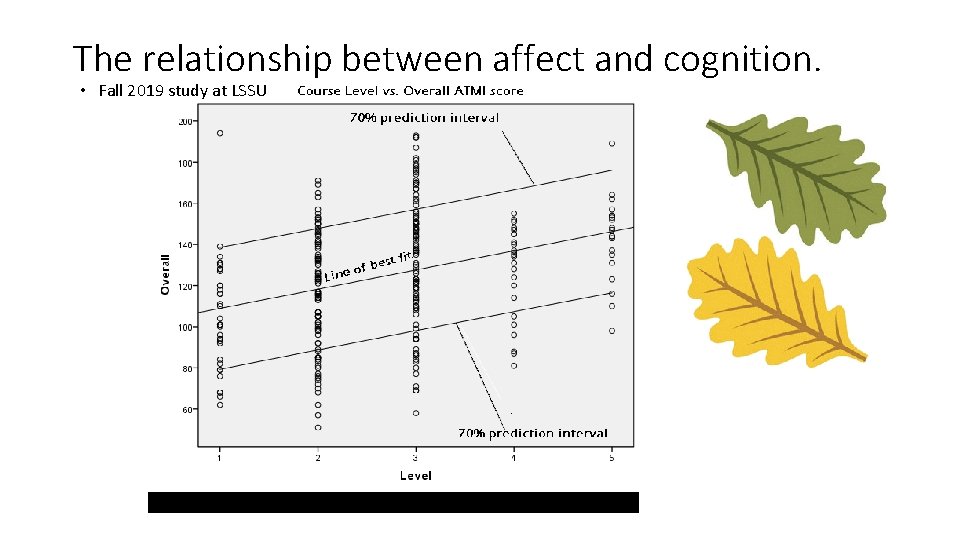
The relationship between affect and cognition. • Fall 2019 study at LSSU
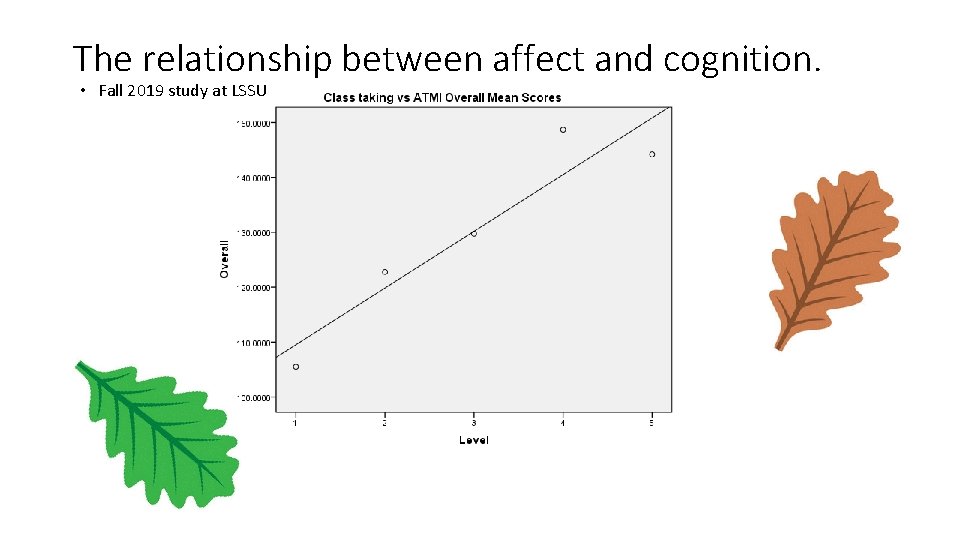
The relationship between affect and cognition. • Fall 2019 study at LSSU
The relationship between affect and cognition. Research projects moving forward
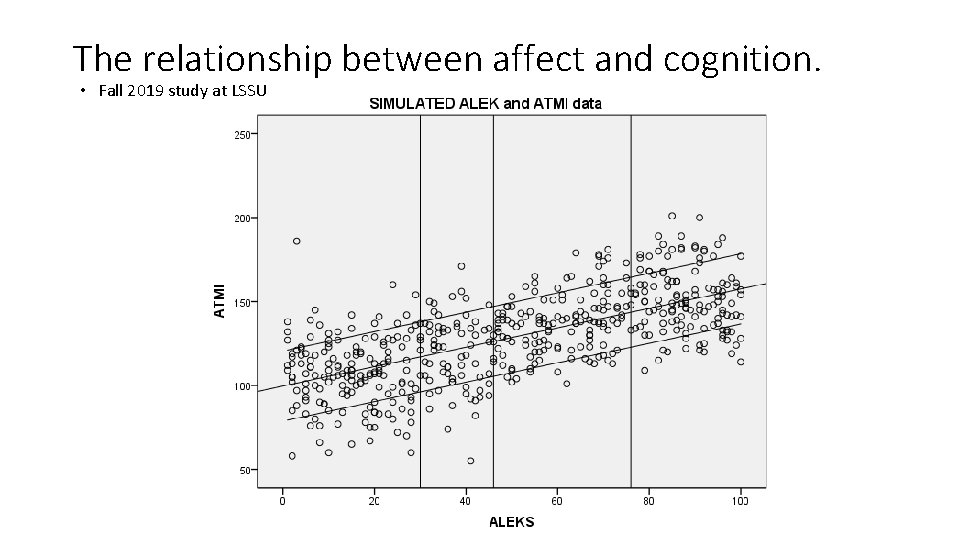
The relationship between affect and cognition. • Fall 2019 study at LSSU

Questions?
- Slides: 25