
The regenerative process is one of the fundamental

- Slides: 18
“The regenerative process is one of the fundamental attributes of living things. . . ” Thomas Hunt Morgan (1901), from his book Regeneration.
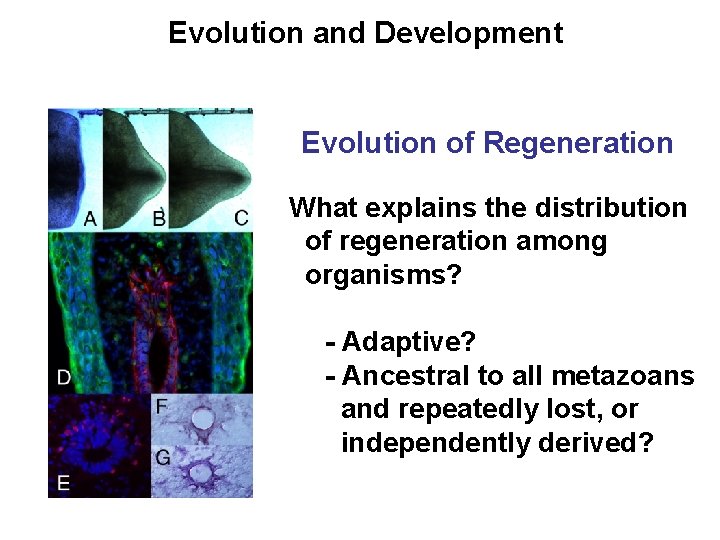
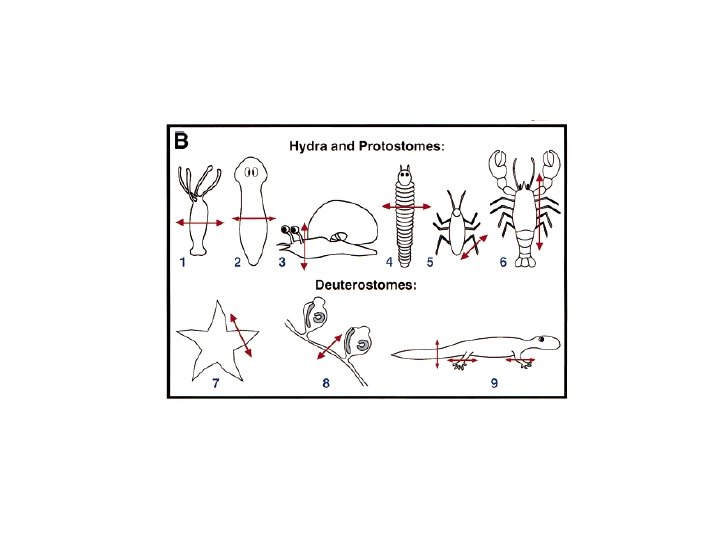
Evolution and Development Evolution of Regeneration What explains the distribution of regeneration among organisms? - Adaptive? - Ancestral to all metazoans and repeatedly lost, or independently derived?
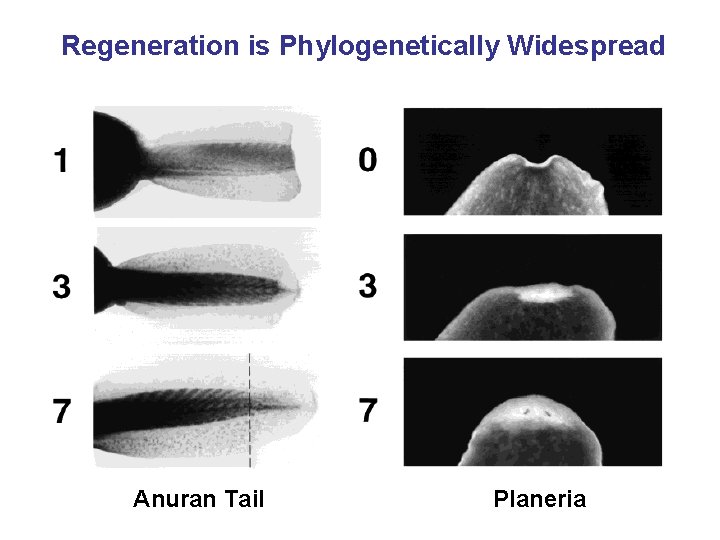
Regeneration is Phylogenetically Widespread Anuran Tail Planeria
Regeneration: Adaptive? • Seemingly, the ability to regenerate should benefit individuals of a population (i. e. is adaptive). • Can you think of a way to test the idea that regeneration is adaptive?
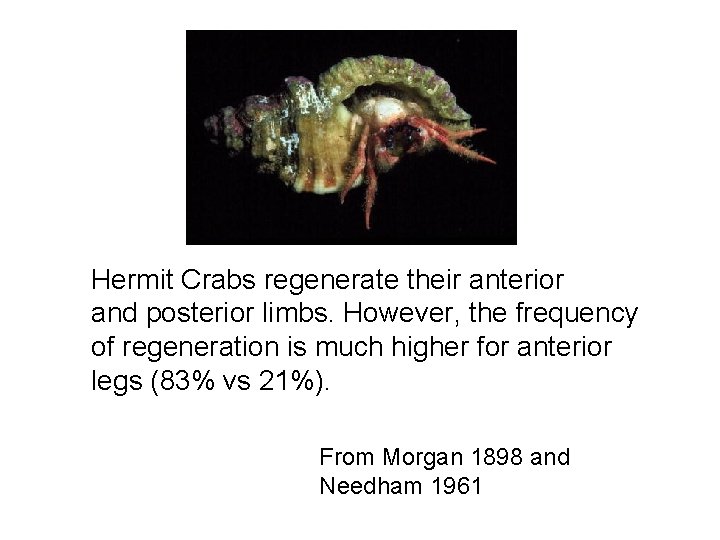
Hermit Crabs regenerate their anterior and posterior limbs. However, the frequency of regeneration is much higher for anterior legs (83% vs 21%). From Morgan 1898 and Needham 1961
Regeneration: Ancestral? • Much of what is accomplished during regeneration is first accomplished during embryonic development (same mechanisms are deployed). • Can you think of a way to test the idea that regeneration is inherent?
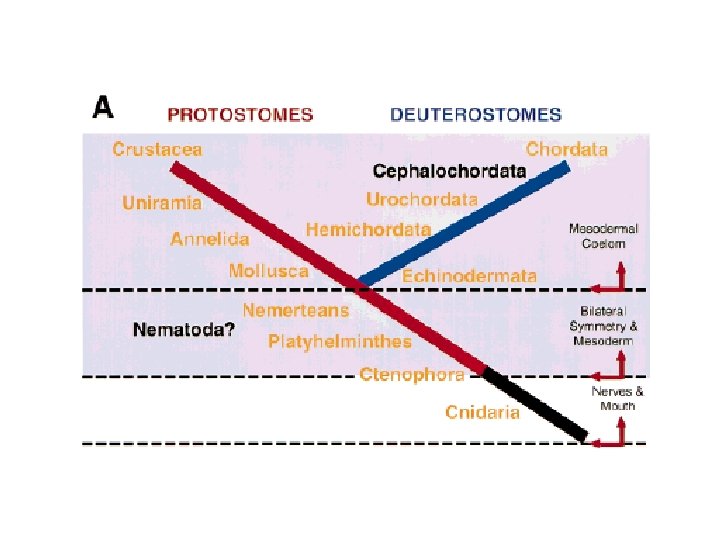
Observations Supporting the Idea that Regeneration is Ancestral • Phylogenetically widespread • Lost between closely related species • Aspects of regeneration are similar among organisms in a developmental sense • Some organisms that can not regenerate body parts, do so partially during development.
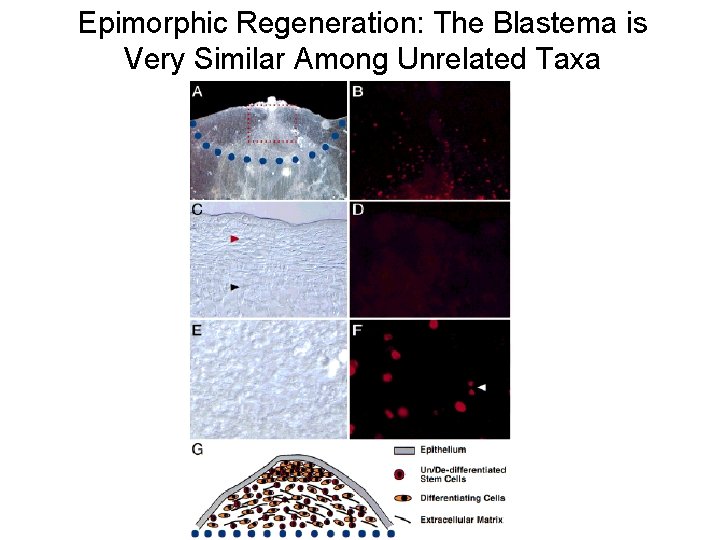
Epimorphic Regeneration: The Blastema is Very Similar Among Unrelated Taxa
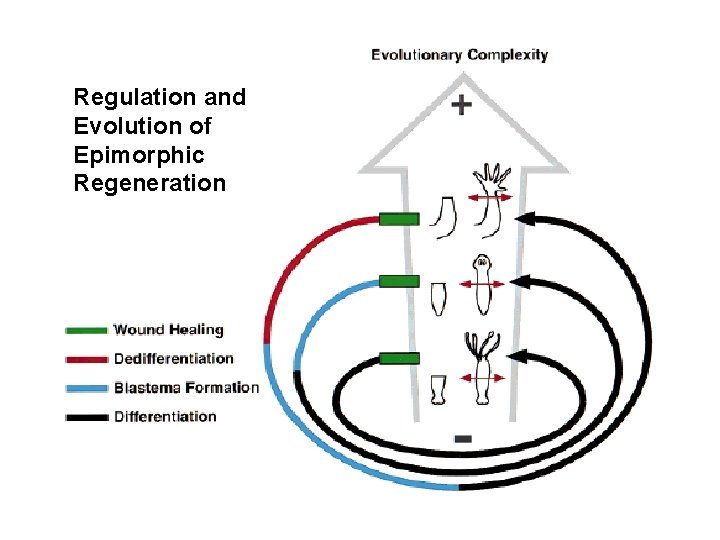
Regulation and Evolution of Epimorphic Regeneration
Why Not Regeneration? Why don’t we observe it more? • Loss of regeneration may reflect major evolutionary changes: – With respect to amniote vertebrates: • • Water to land transition Poikilothermy to homothermy Loss of metamorphosis Evolution of immune system
However, there is variation among amphibians Unlike salamanders, Xenopus has limited regenerative potential • Can regenerate limbs as immature larvae • Loses ability to regenerate at metamorphosis • Adults regenerate a cartilagenous spike after limb amputation. • Is the generation of a spike an adaptation?
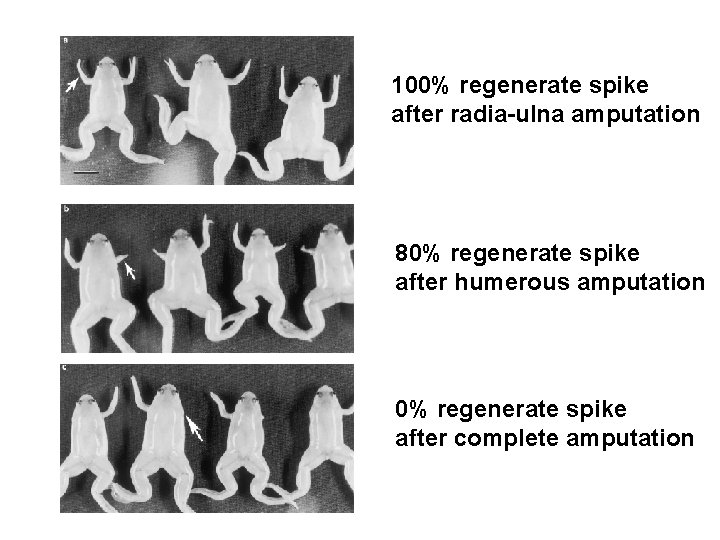
100% regenerate spike after radia-ulna amputation 80% regenerate spike after humerous amputation 0% regenerate spike after complete amputation
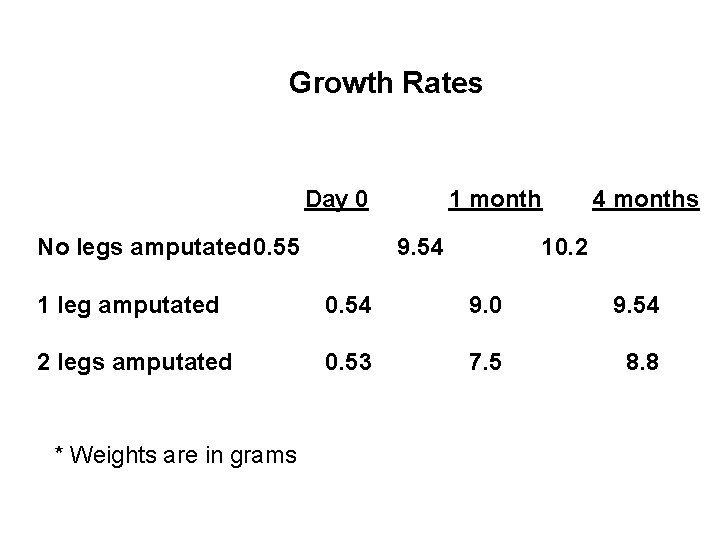
Growth Rates Day 0 No legs amputated 0. 55 1 month 9. 54 4 months 10. 2 1 leg amputated 0. 54 9. 0 9. 54 2 legs amputated 0. 53 7. 5 8. 8 * Weights are in grams
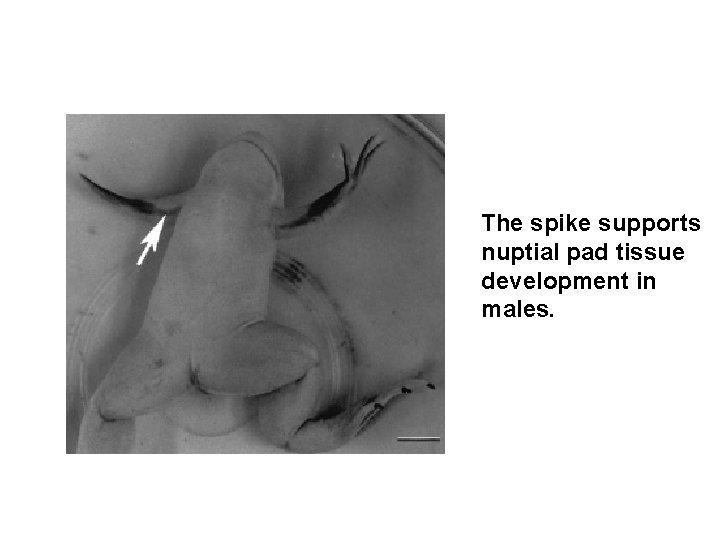
The spike supports nuptial pad tissue development in males.
2 of 3 males with 1 regenerated radia-ulna spike were able to successfully amplex and mate with a female.
• The results suggest that spike regeneration maybe adaptive. • But why did Xenopus frogs presumably loose the ability to reform perfect limbs?