
The Reformation The Power of the Church The
- Slides: 18
The Reformation
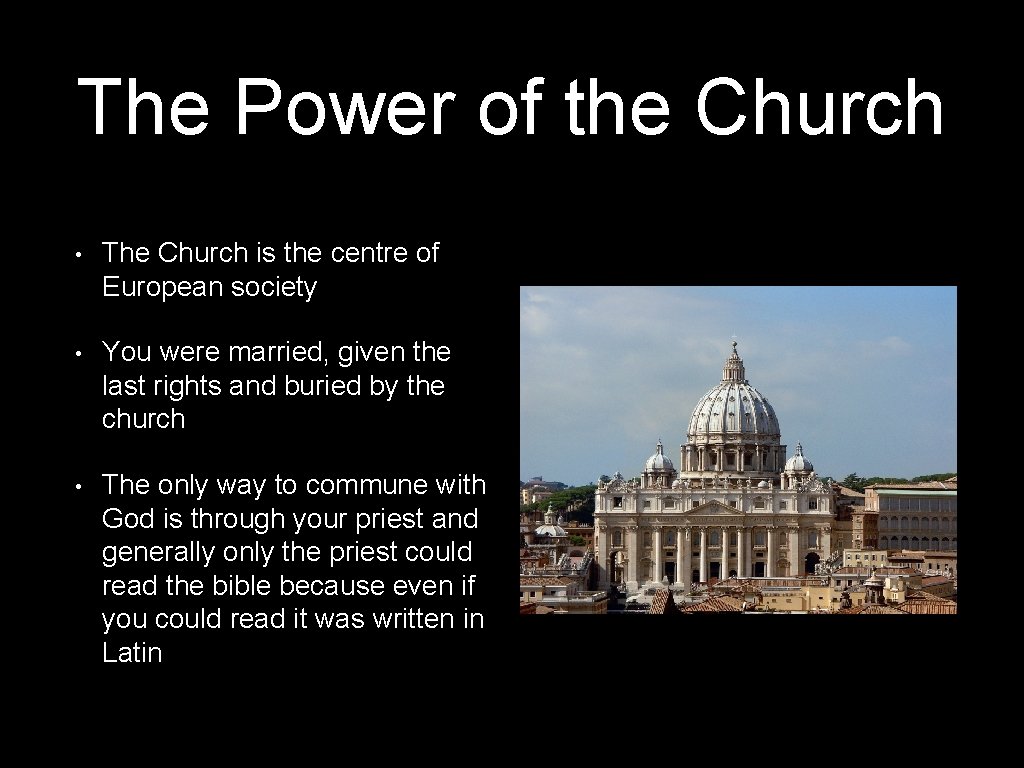
The Power of the Church • The Church is the centre of European society • You were married, given the last rights and buried by the church • The only way to commune with God is through your priest and generally only the priest could read the bible because even if you could read it was written in Latin
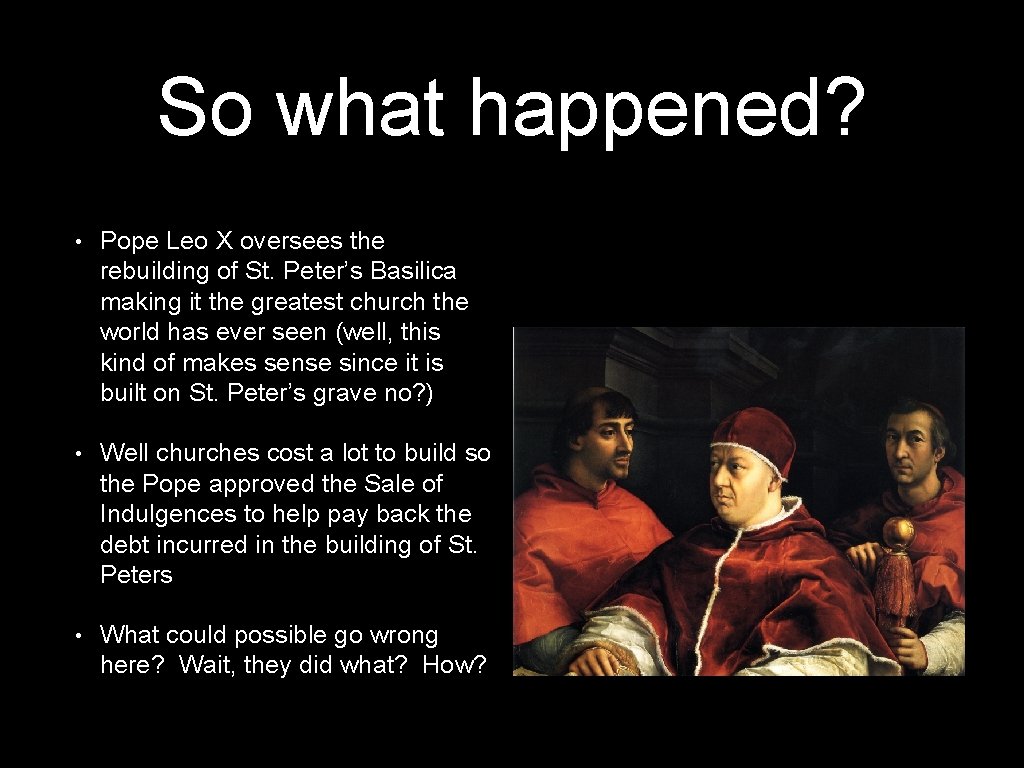
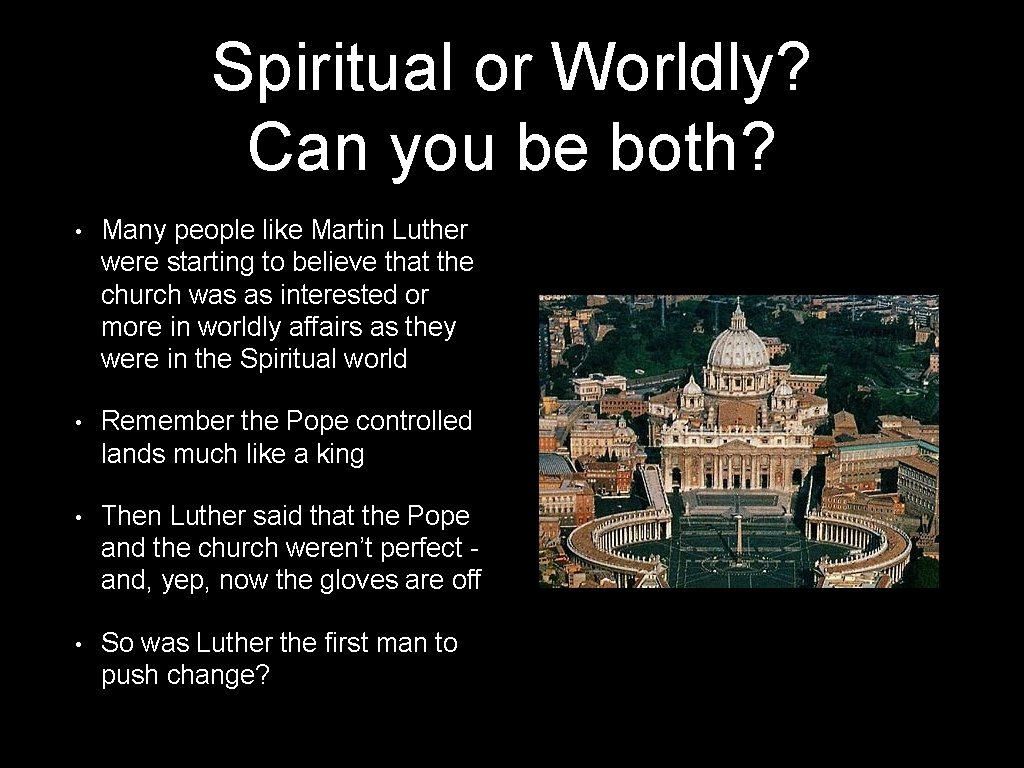
So what happened? • Pope Leo X oversees the rebuilding of St. Peter’s Basilica making it the greatest church the world has ever seen (well, this kind of makes sense since it is built on St. Peter’s grave no? ) • Well churches cost a lot to build so the Pope approved the Sale of Indulgences to help pay back the debt incurred in the building of St. Peters • What could possible go wrong here? Wait, they did what? How?
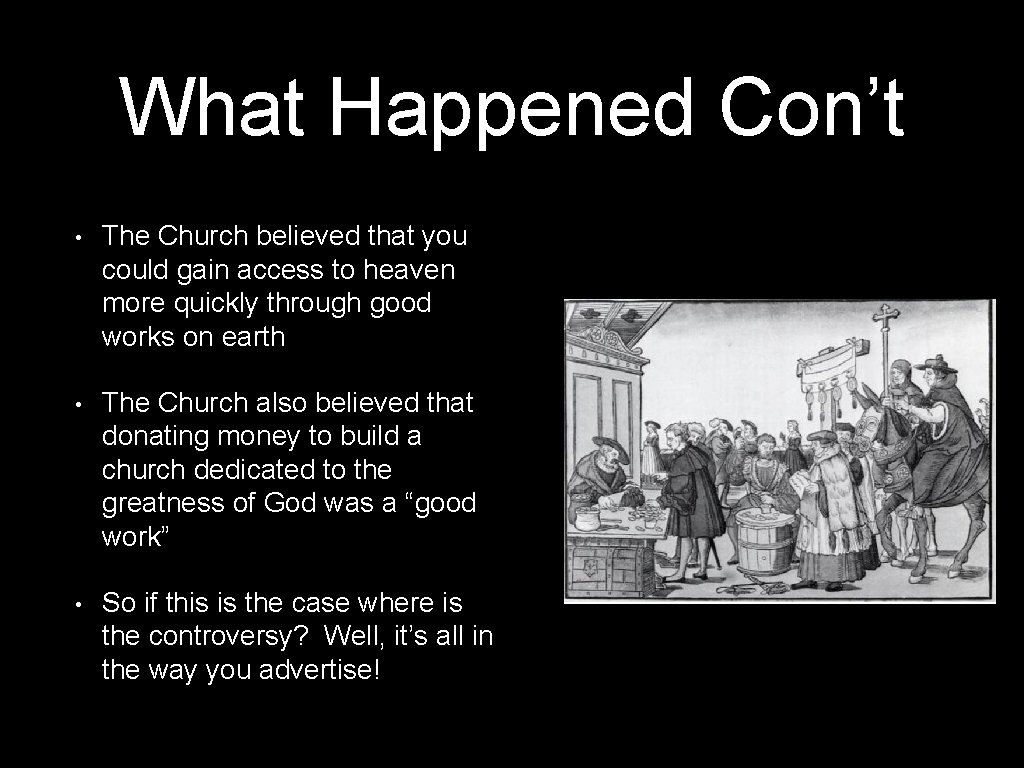
What Happened Con’t • The Church believed that you could gain access to heaven more quickly through good works on earth • The Church also believed that donating money to build a church dedicated to the greatness of God was a “good work” • So if this is the case where is the controversy? Well, it’s all in the way you advertise!
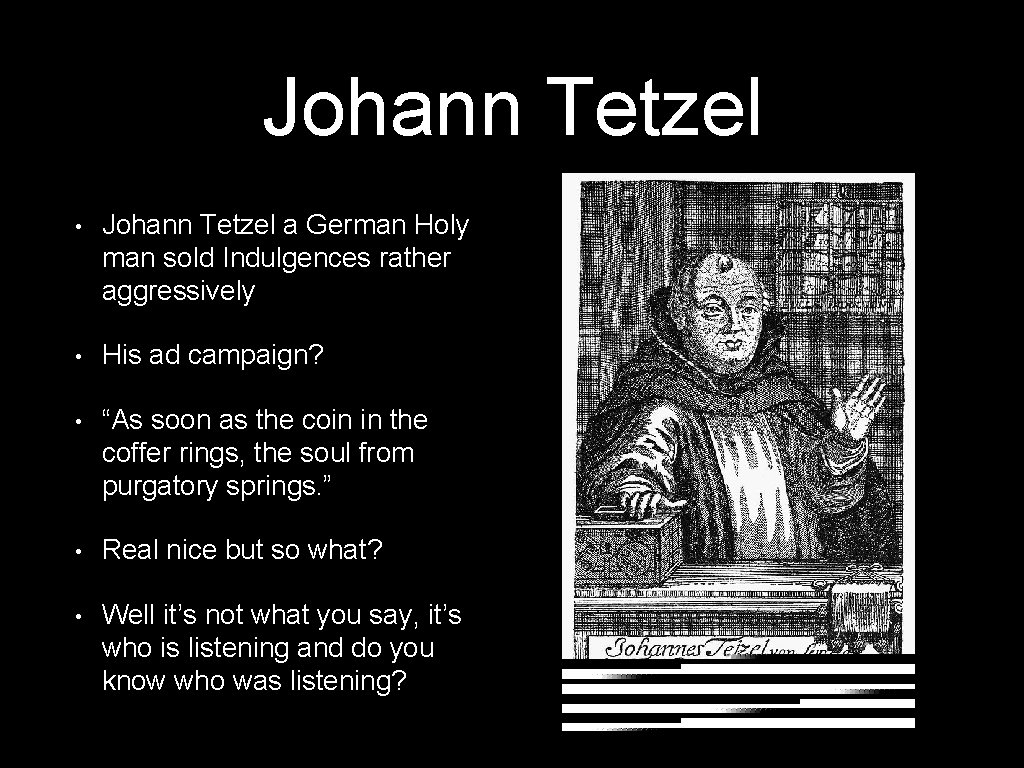
Johann Tetzel • Johann Tetzel a German Holy man sold Indulgences rather aggressively • His ad campaign? • “As soon as the coin in the coffer rings, the soul from purgatory springs. ” • Real nice but so what? • Well it’s not what you say, it’s who is listening and do you know who was listening?
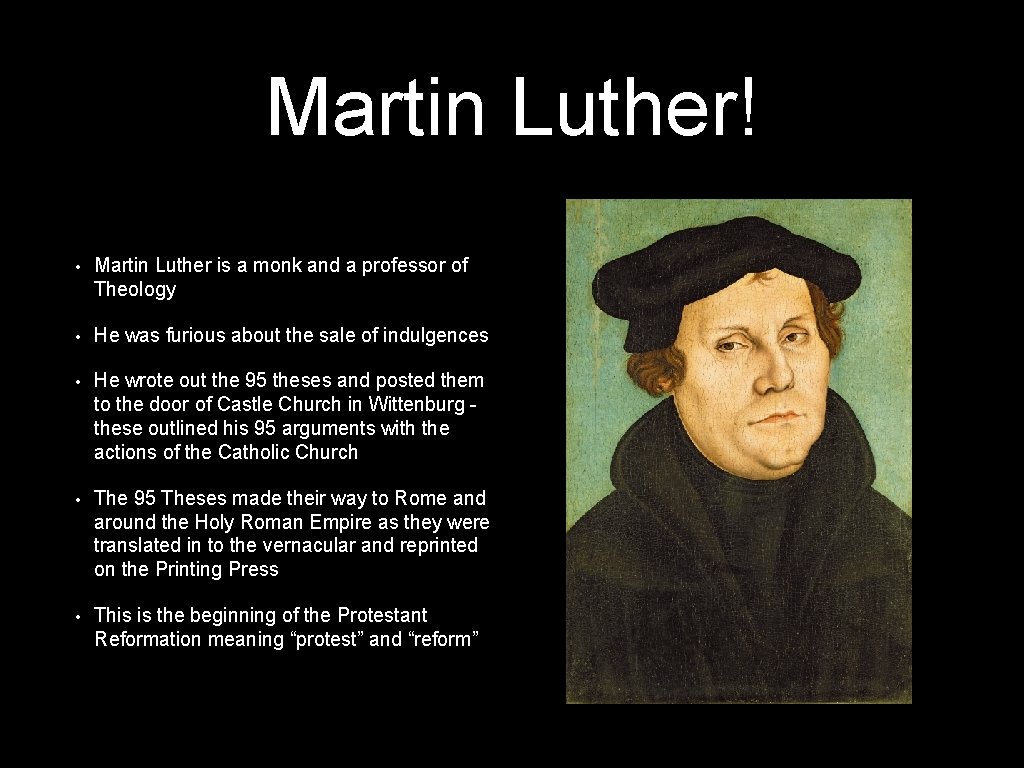
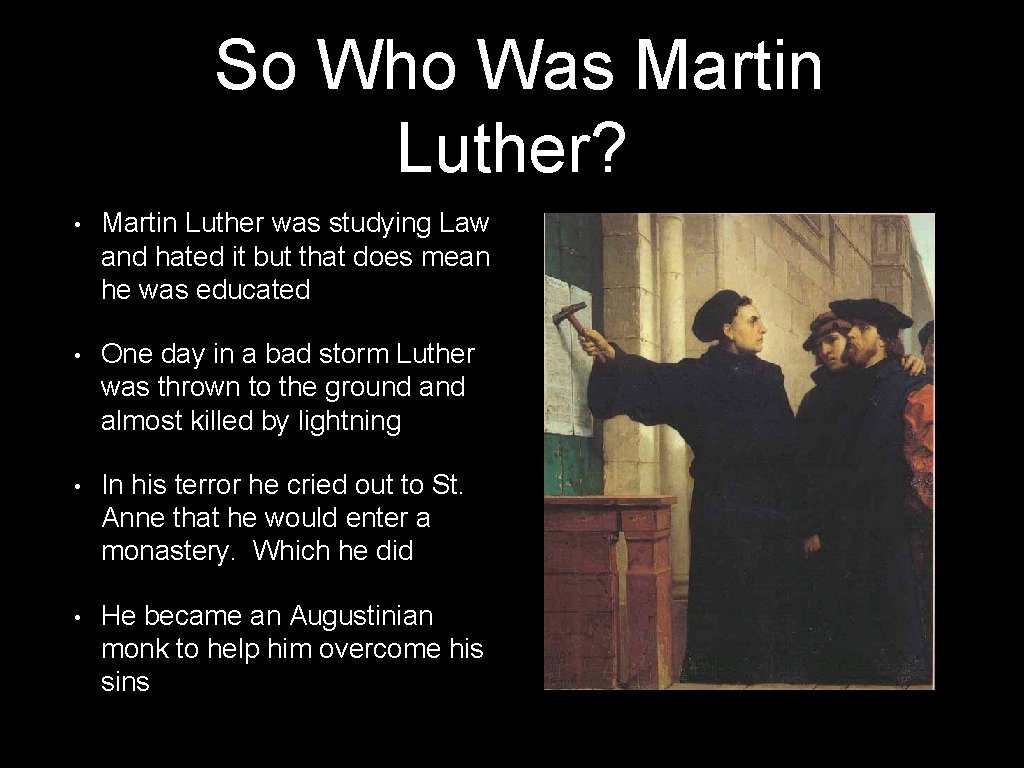
Martin Luther! • Martin Luther is a monk and a professor of Theology • He was furious about the sale of indulgences • He wrote out the 95 theses and posted them to the door of Castle Church in Wittenburg these outlined his 95 arguments with the actions of the Catholic Church • The 95 Theses made their way to Rome and around the Holy Roman Empire as they were translated in to the vernacular and reprinted on the Printing Press • This is the beginning of the Protestant Reformation meaning “protest” and “reform”
So Who Was Martin Luther? • Martin Luther was studying Law and hated it but that does mean he was educated • One day in a bad storm Luther was thrown to the ground almost killed by lightning • In his terror he cried out to St. Anne that he would enter a monastery. Which he did • He became an Augustinian monk to help him overcome his sins
Spiritual or Worldly? Can you be both? • Many people like Martin Luther were starting to believe that the church was as interested or more in worldly affairs as they were in the Spiritual world • Remember the Pope controlled lands much like a king • Then Luther said that the Pope and the church weren’t perfect and, yep, now the gloves are off • So was Luther the first man to push change?
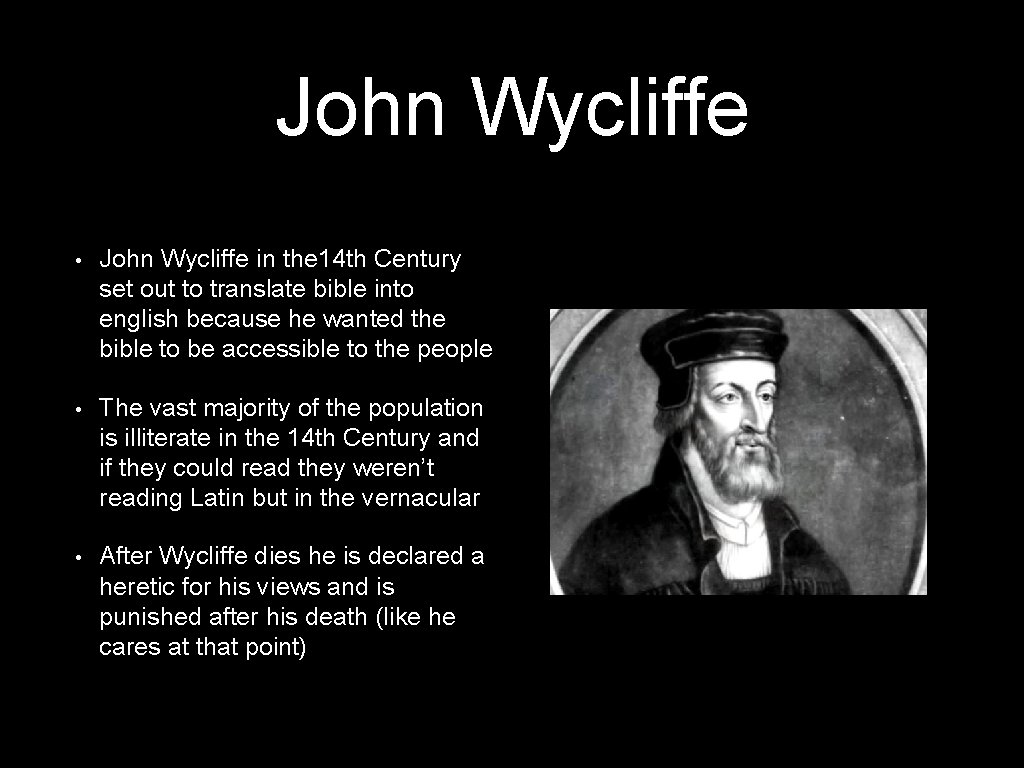
John Wycliffe • John Wycliffe in the 14 th Century set out to translate bible into english because he wanted the bible to be accessible to the people • The vast majority of the population is illiterate in the 14 th Century and if they could read they weren’t reading Latin but in the vernacular • After Wycliffe dies he is declared a heretic for his views and is punished after his death (like he cares at that point)
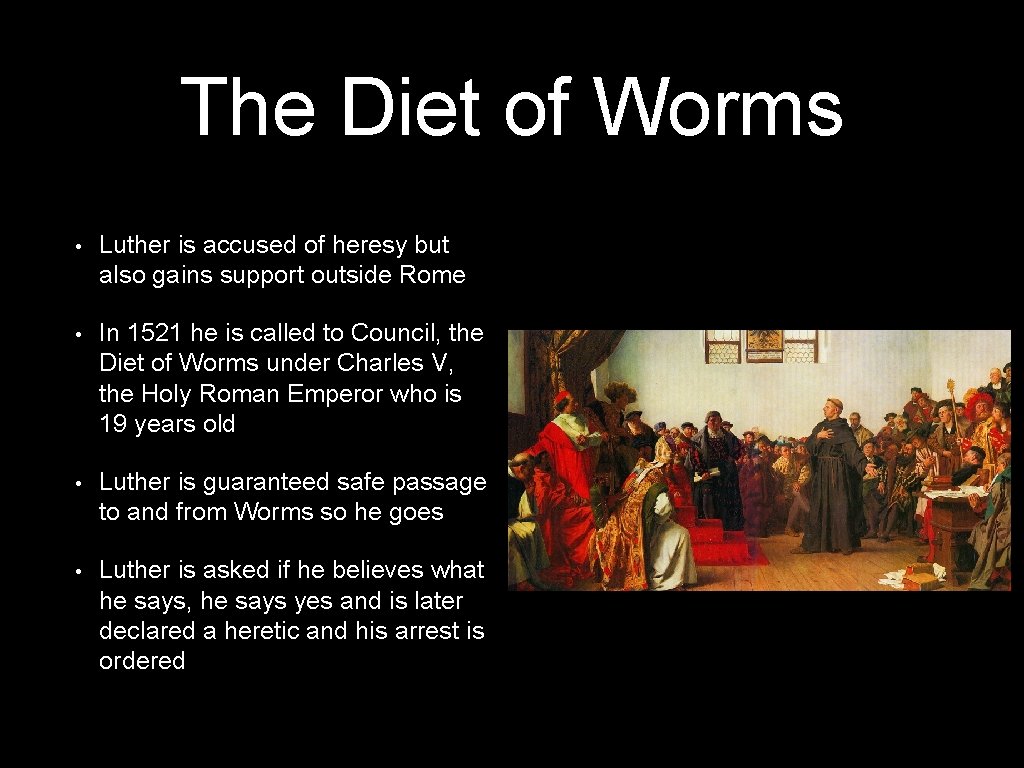
The Diet of Worms • Luther is accused of heresy but also gains support outside Rome • In 1521 he is called to Council, the Diet of Worms under Charles V, the Holy Roman Emperor who is 19 years old • Luther is guaranteed safe passage to and from Worms so he goes • Luther is asked if he believes what he says, he says yes and is later declared a heretic and his arrest is ordered
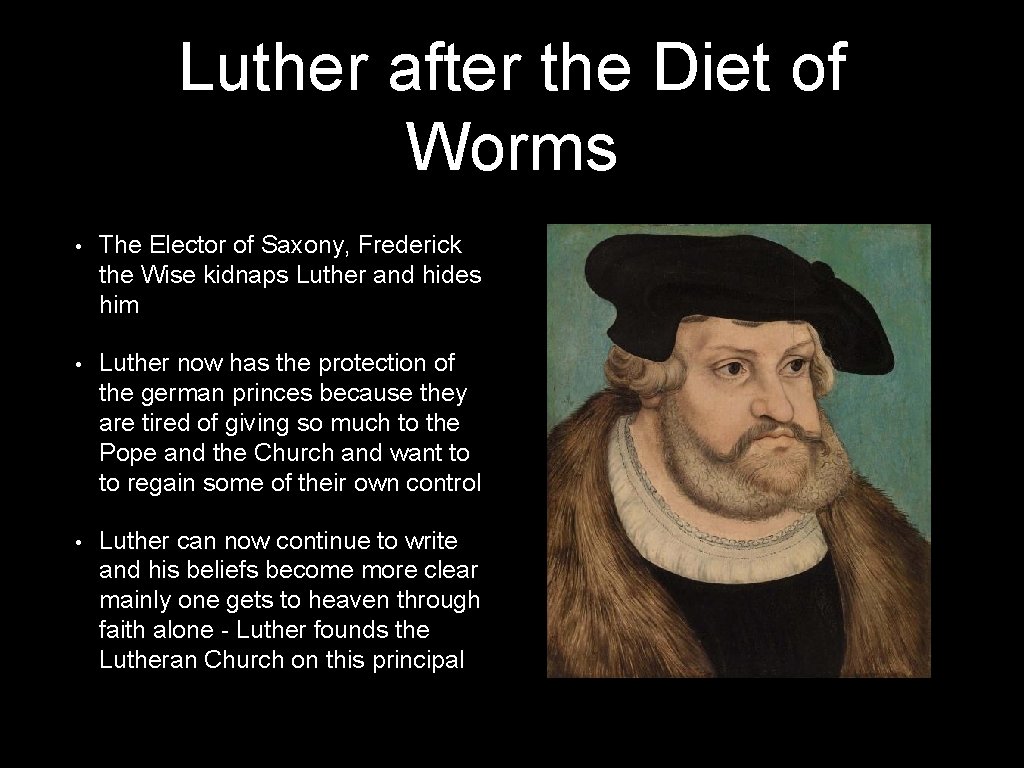
Luther after the Diet of Worms • The Elector of Saxony, Frederick the Wise kidnaps Luther and hides him • Luther now has the protection of the german princes because they are tired of giving so much to the Pope and the Church and want to to regain some of their own control • Luther can now continue to write and his beliefs become more clear mainly one gets to heaven through faith alone - Luther founds the Lutheran Church on this principal
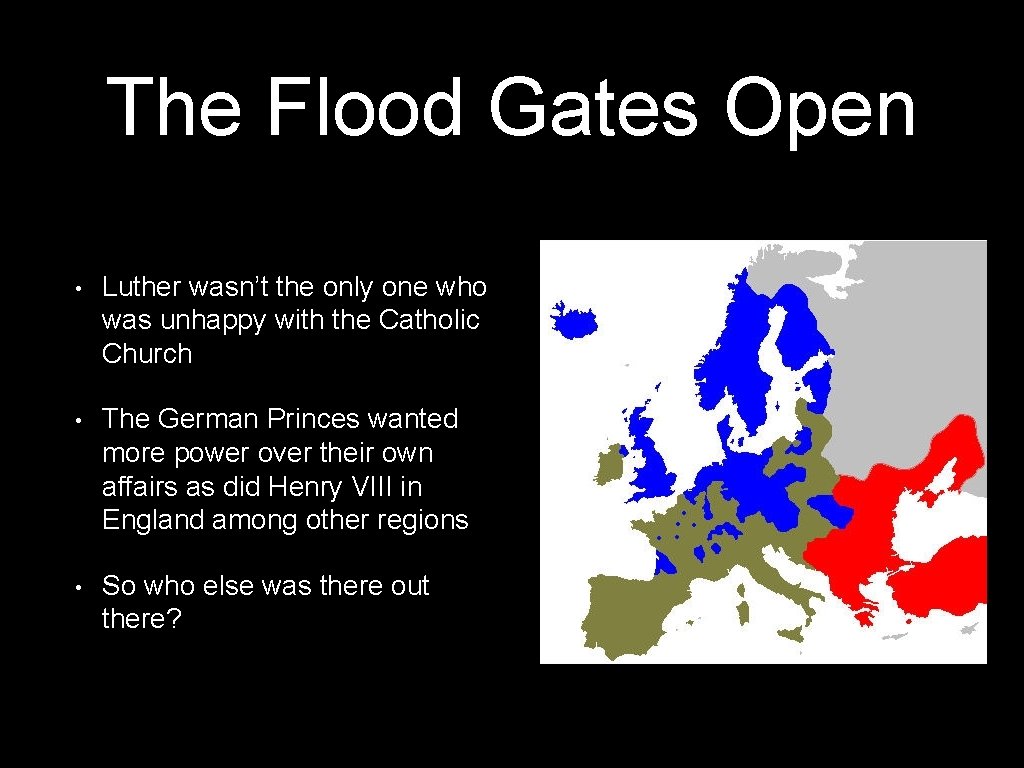
The Flood Gates Open • Luther wasn’t the only one who was unhappy with the Catholic Church • The German Princes wanted more power over their own affairs as did Henry VIII in England among other regions • So who else was there out there?
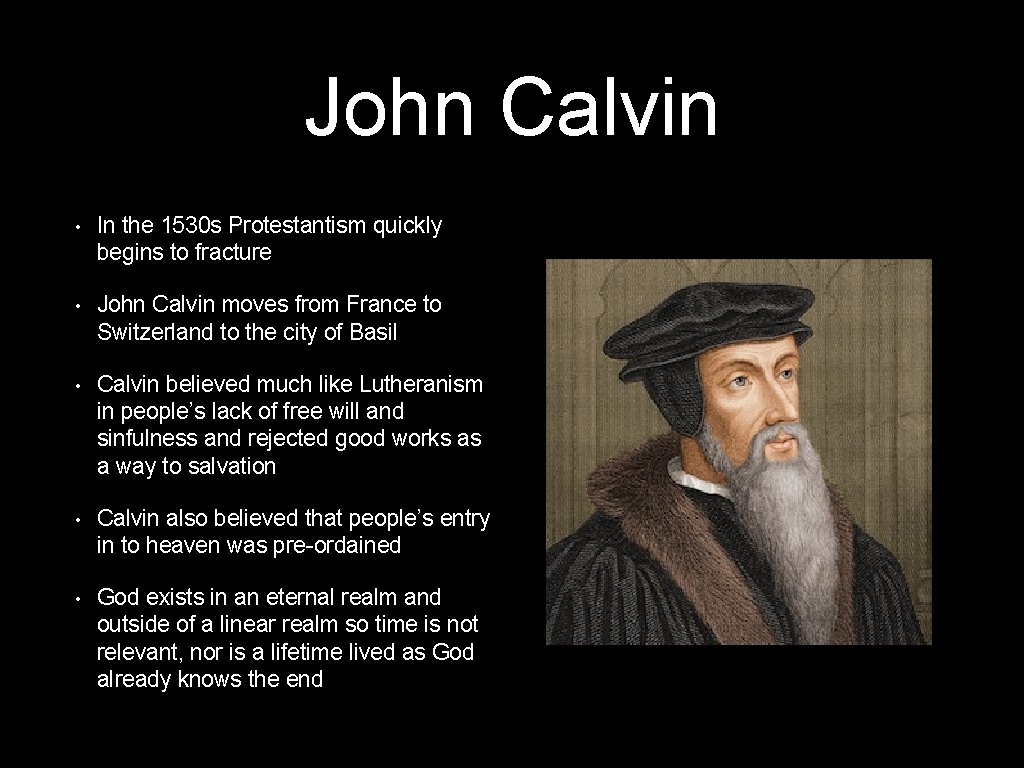
John Calvin • In the 1530 s Protestantism quickly begins to fracture • John Calvin moves from France to Switzerland to the city of Basil • Calvin believed much like Lutheranism in people’s lack of free will and sinfulness and rejected good works as a way to salvation • Calvin also believed that people’s entry in to heaven was pre-ordained • God exists in an eternal realm and outside of a linear realm so time is not relevant, nor is a lifetime lived as God already knows the end
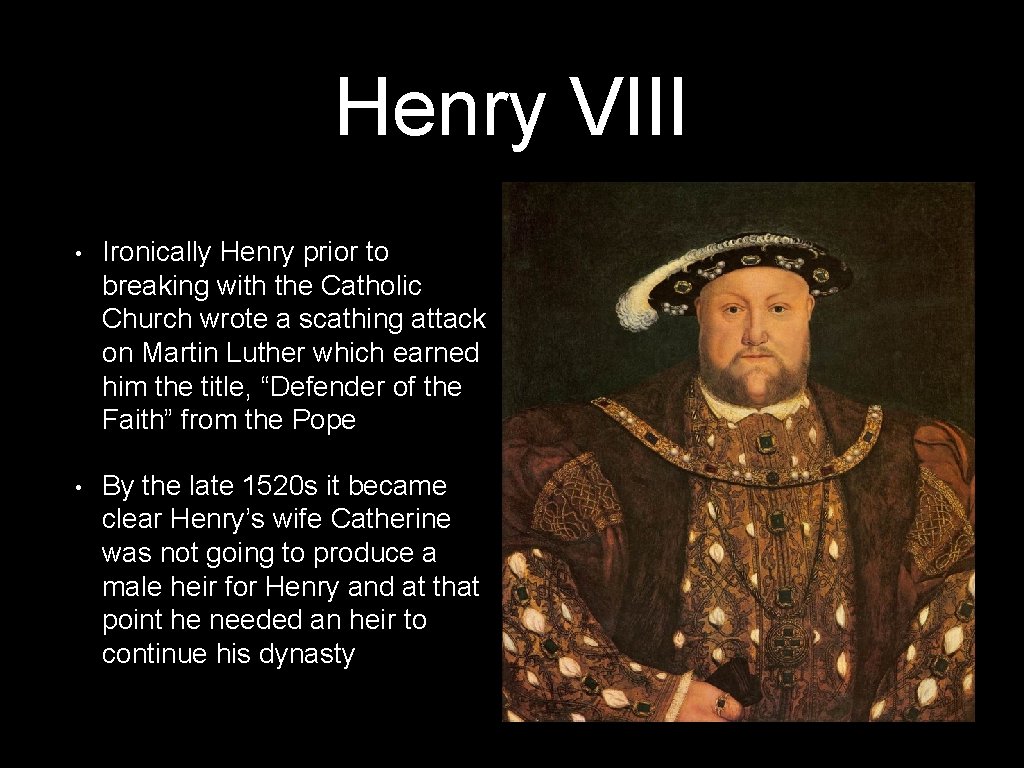
Henry VIII • Ironically Henry prior to breaking with the Catholic Church wrote a scathing attack on Martin Luther which earned him the title, “Defender of the Faith” from the Pope • By the late 1520 s it became clear Henry’s wife Catherine was not going to produce a male heir for Henry and at that point he needed an heir to continue his dynasty
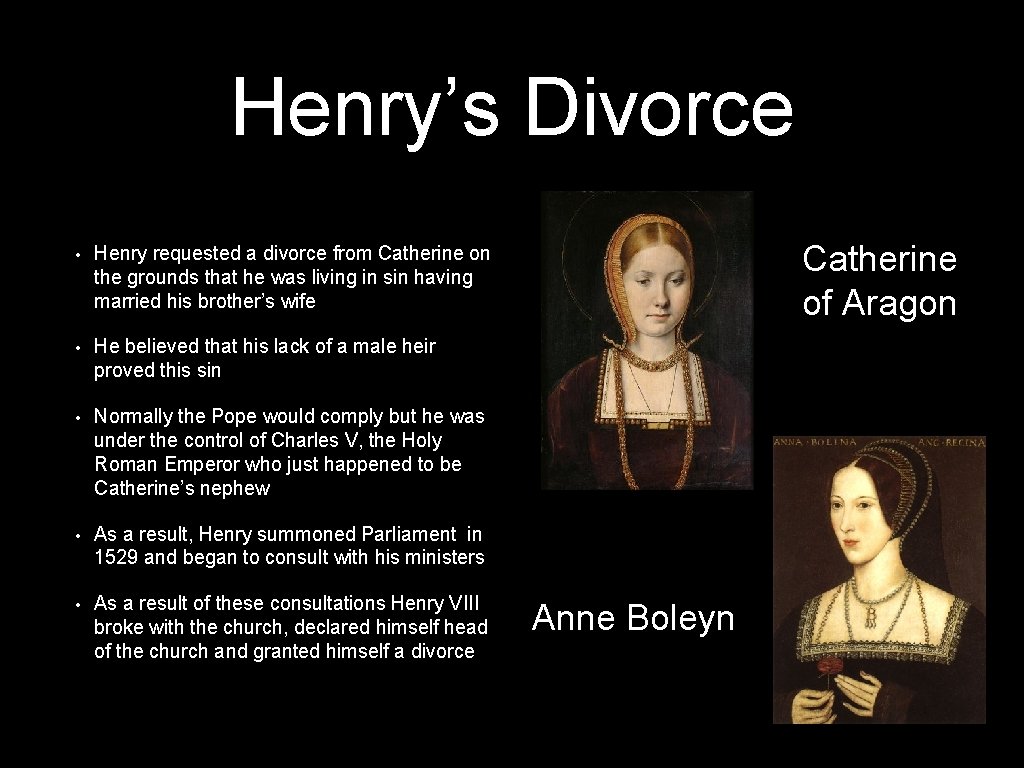
Henry’s Divorce • Henry requested a divorce from Catherine on the grounds that he was living in sin having married his brother’s wife • He believed that his lack of a male heir proved this sin • Normally the Pope would comply but he was under the control of Charles V, the Holy Roman Emperor who just happened to be Catherine’s nephew • As a result, Henry summoned Parliament in 1529 and began to consult with his ministers • As a result of these consultations Henry VIII broke with the church, declared himself head of the church and granted himself a divorce Catherine of Aragon Anne Boleyn
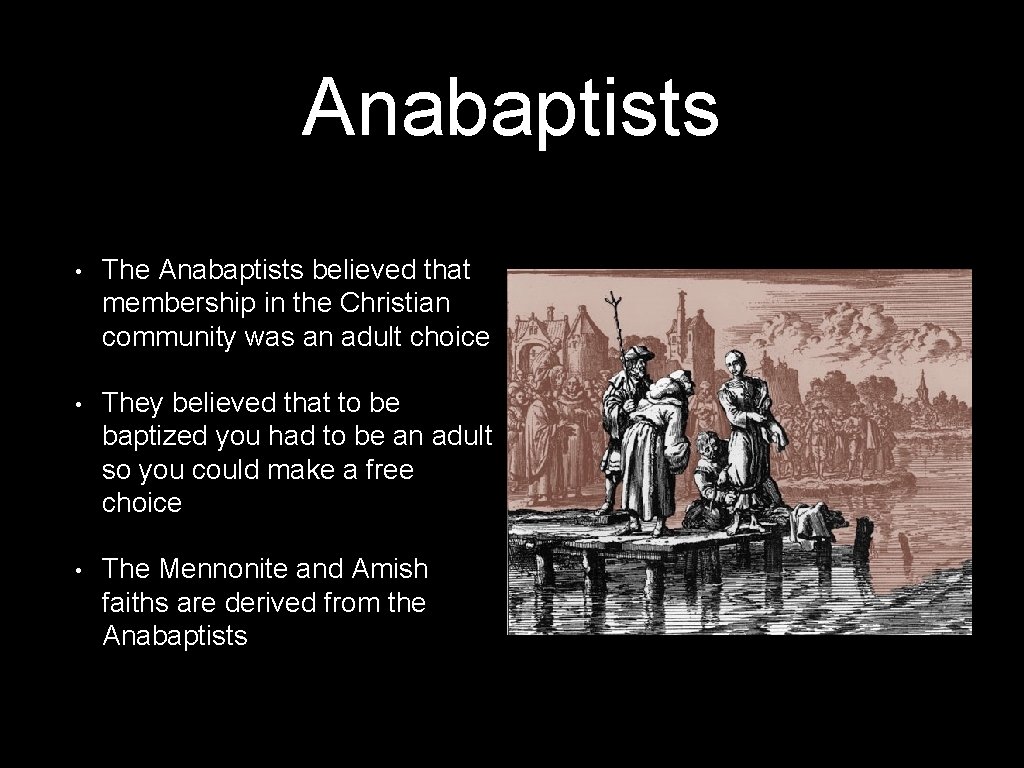
Anabaptists • The Anabaptists believed that membership in the Christian community was an adult choice • They believed that to be baptized you had to be an adult so you could make a free choice • The Mennonite and Amish faiths are derived from the Anabaptists
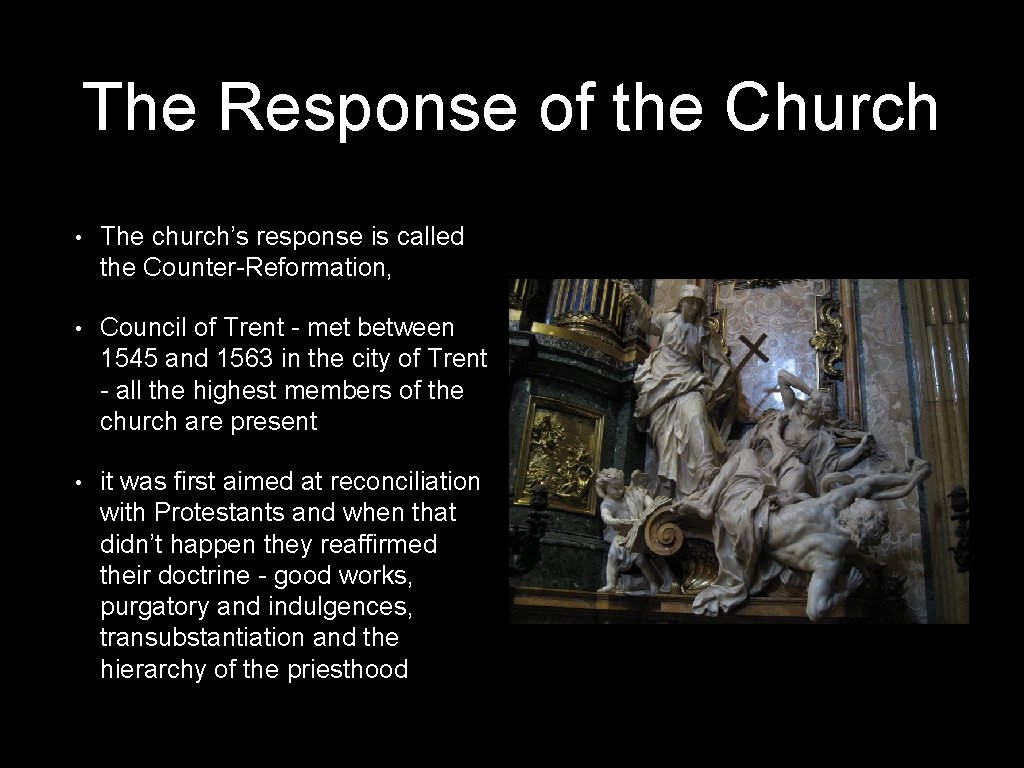
The Response of the Church • The church’s response is called the Counter-Reformation, • Council of Trent - met between 1545 and 1563 in the city of Trent - all the highest members of the church are present • it was first aimed at reconciliation with Protestants and when that didn’t happen they reaffirmed their doctrine - good works, purgatory and indulgences, transubstantiation and the hierarchy of the priesthood
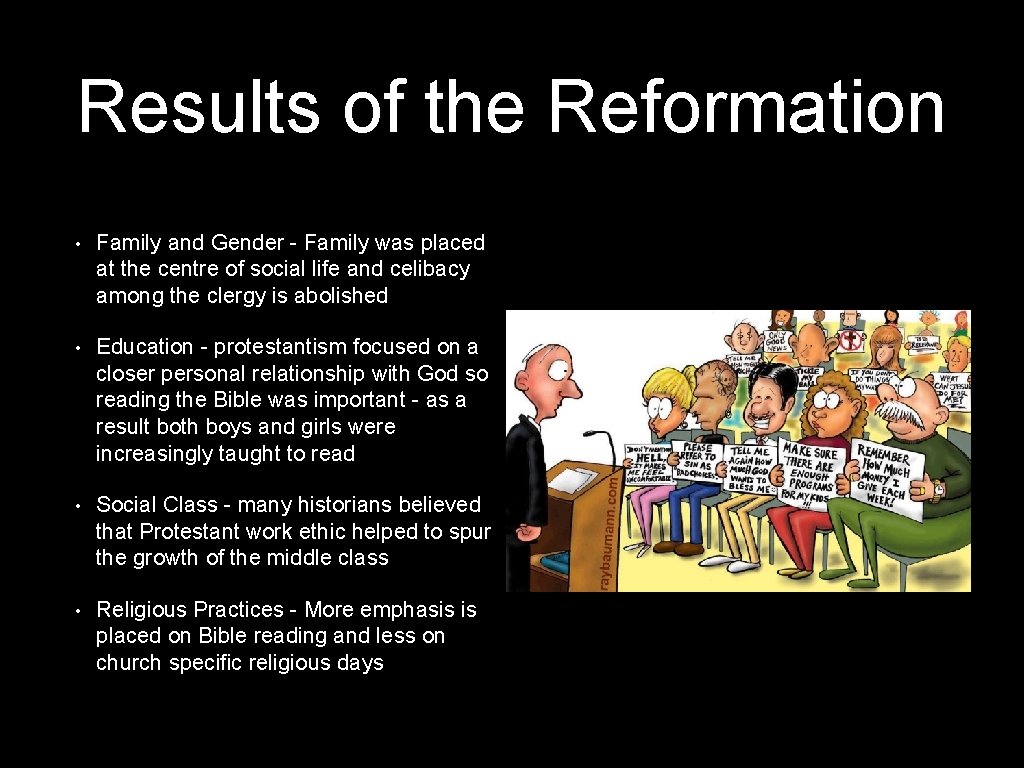
Results of the Reformation • Family and Gender - Family was placed at the centre of social life and celibacy among the clergy is abolished • Education - protestantism focused on a closer personal relationship with God so reading the Bible was important - as a result both boys and girls were increasingly taught to read • Social Class - many historians believed that Protestant work ethic helped to spur the growth of the middle class • Religious Practices - More emphasis is placed on Bible reading and less on church specific religious days