
The Reform Process of the German Pension System

- Slides: 14
The Reform Process of the German Pension System International Forum on Pension Reform Bled, Slovenia, June 7 – June 9, 2007 Konrad Haker Federal Ministry of Labour and Social Affairs phone: +49 228 527 12 23 Mail: konrad. haker@bmas. bund. de
Content è The German Pension System è Demographic Challenges è Reform Process u “Riester-Reform” u Old Age Pension Insurance Act u Retirement Age Adjustment Act è Financial Sustainability and Adequacy è Concluding Remarks 2
Key Characteristics of the Statutory Pension Scheme è earnings related PAYG system based on pension points è includes old age, disability and survivors pensions è provides specific benefits for child care è 51, 4 mil. insured, 20 mil. pensioners è expenditures: 236 bil. € ≈ 10, 2% of GDP è revenues: 74% contributions, 25% subsidies 3
Pension Entitlements è contribution based on average earnings for one year one pension point è sum of personal pension points are multiplied by u pension type factor (1. 0 for old age pension at the age of 65) u pension point value (currently 26. 13 €) è annual indexation of pension point value è pension point value is applied on new retirees as well as on all existent pensioners 4
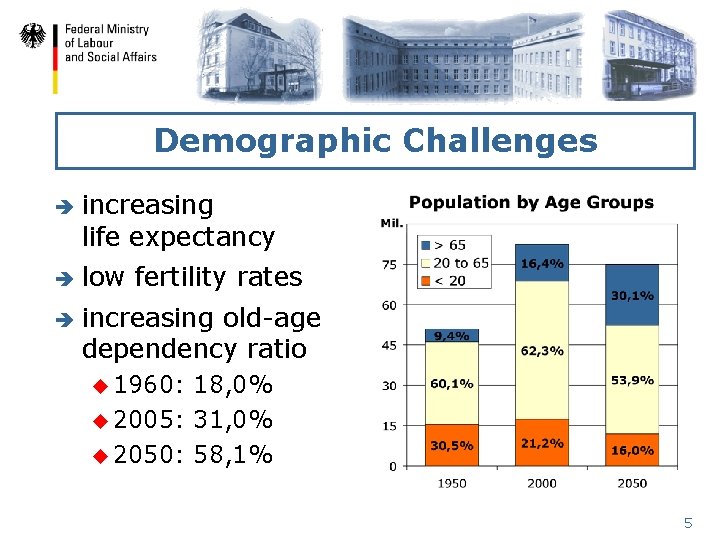
Demographic Challenges è increasing life expectancy è low fertility rates è increasing old-age dependency ratio u 1960: 18, 0% u 2005: 31, 0% u 2050: 58, 1% 5
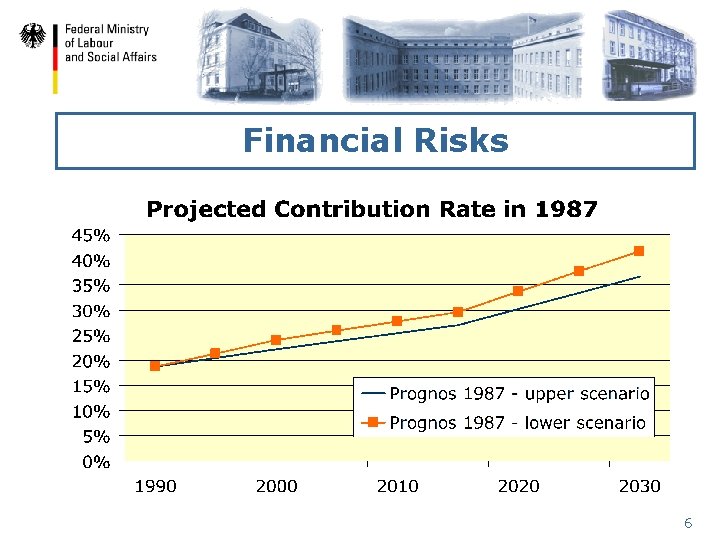
Financial Risks 6
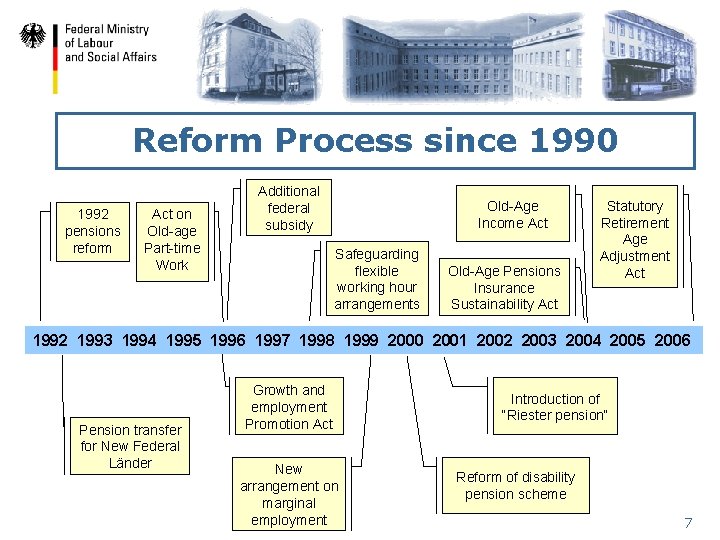
Reform Process since 1990 1992 pensions reform Act on Old-age Part-time Work Additional federal subsidy Old-Age Income Act Safeguarding flexible working hour arrangements Old-Age Pensions Insurance Sustainability Act Statutory Retirement Age Adjustment Act 1992 1993 1994 1995 1996 1997 1998 1999 2000 2001 2002 2003 2004 2005 2006 Pension transfer for New Federal Länder Growth and employment Promotion Act New arrangement on marginal employment Introduction of “Riester pension“ Reform of disability pension scheme 7
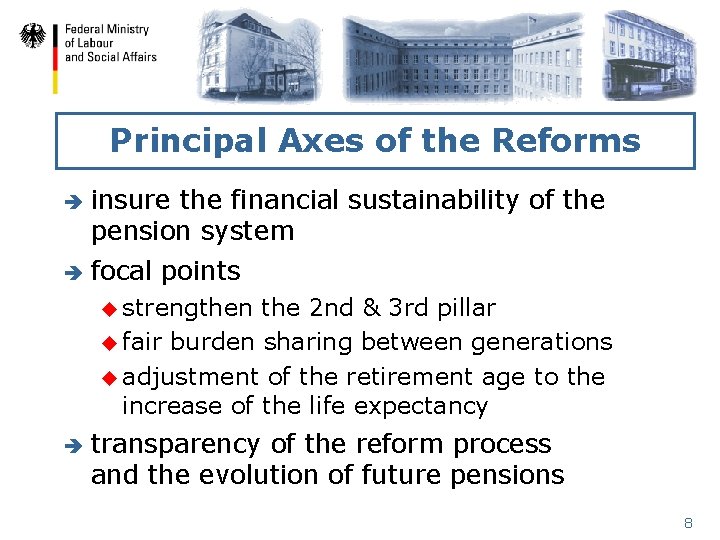
Principal Axes of the Reforms è insure the financial sustainability of the pension system è focal points u strengthen the 2 nd & 3 rd pillar u fair burden sharing between generations u adjustment of the retirement age to the increase of the life expectancy è transparency of the reform process and the evolution of future pensions 8
Recent Reforms (I) è “Riester-Reform” (2001) u creation of a state subsidised capital-funded voluntary old-age pension provision in the second and third pillar è Old Age Pension Sustainability Act (2004) u modification of the indexation rule (sustainability factor) u legally fixed target values up to 2030: contribution rate <22% net replacement rate before taxes > 43% 9
Recent Reforms (II) è Retirement Age Adjustment Act (2007) u increase of the statutory retirement age from 65 to 67 transition process between 2012 and 2029 new statutory retirement age of 67 applies for the birth years 1964 and onwards u strengthen the employment of older people “Initiative 50 plus” national employment target employment rate 55 -64: 55% until 2010 10
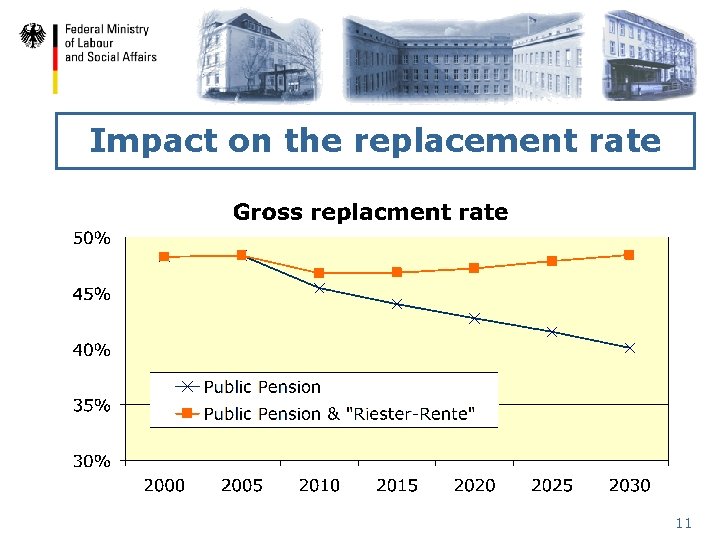
Impact on the replacement rate 11
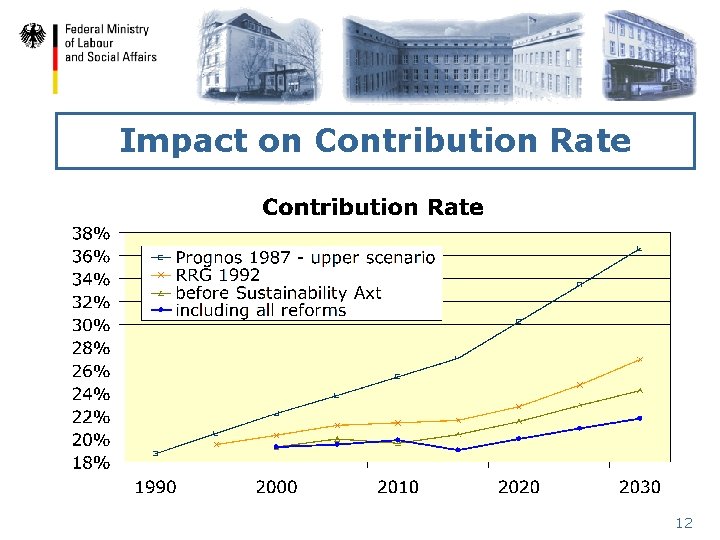
Impact on Contribution Rate 12
Concluding Remarks è Germany has gone a long reform process è the challenge is to find the equilibrium of u financial u and è sustainability adequacy of pensions the German pension system is prepared for the oncoming demographic change 13
Thank You !