
The Red Eye and Selected Ocular Emergencies www


- Slides: 62
The Red Eye and Selected Ocular Emergencies www. wordpress. com American College Health Association 2009 Annual Meeting San Francisco, CA May 28, 2009 Frederick H. Bloom, O. D. Director, Eye Care Services, University Health Services University of Massachusetts Amherst 413 -577 -5383 • fbloom@uhs. umass. edu
“If two people agree on everything, then only one of them is thinking. ” - Senator Sam Rayburn
“Your job is to ask questions. ” - Pierre Rouzier, M. D. esteemed UHS colleague author, The Sports Medicine Patient Advisor
Learning Objectives Review: • • • Ocular anatomy, danger signs, subjective pearls, eye examination & pearls, ocular injection, antibiotics Non- vision threatening red eye Vision-threatening red eye & emergencies STDs Clinical pearls & indications for referral Avoiding medical eye liability Supplemental handout for reference only
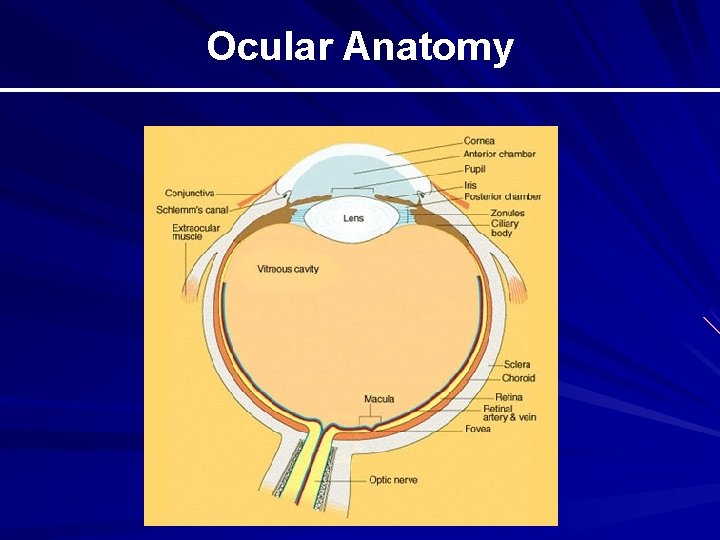
Ocular Anatomy
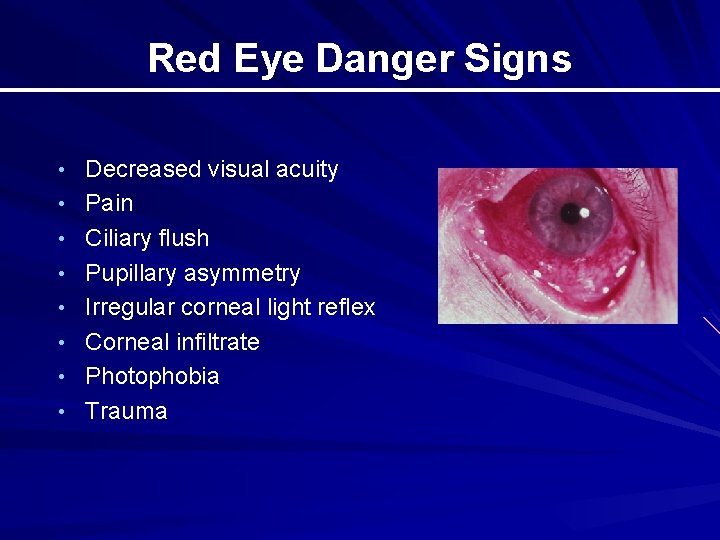
Red Eye Danger Signs • Decreased visual acuity • Pain • Ciliary flush • Pupillary asymmetry • Irregular corneal light reflex • Corneal infiltrate • Photophobia • Trauma
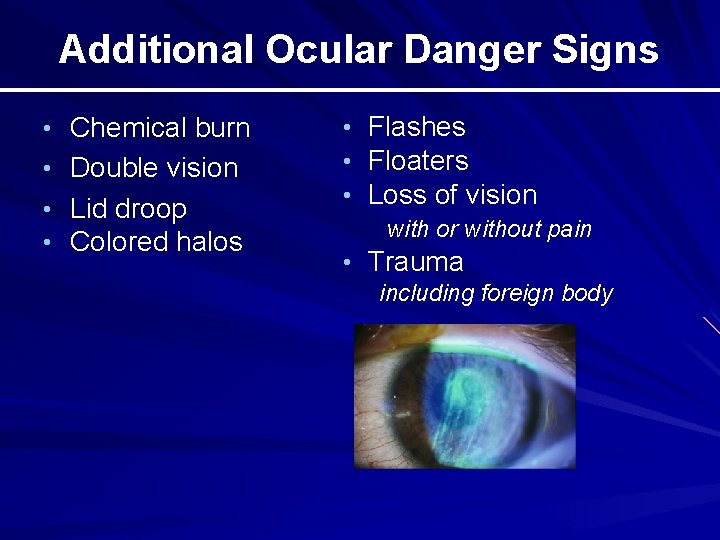
Additional Ocular Danger Signs • Chemical burn • Double vision • Lid droop • Colored halos • • • Flashes Floaters Loss of vision with or without pain • Trauma including foreign body
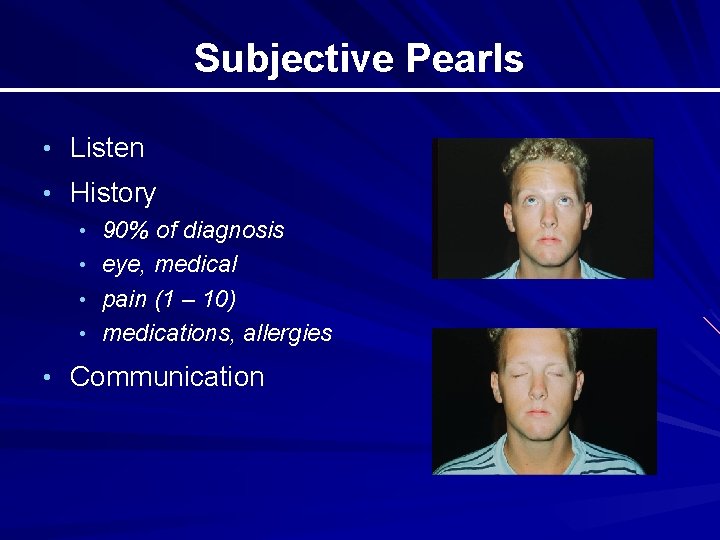
Subjective Pearls • Listen • History • 90% of diagnosis • eye, medical • pain (1 – 10) • medications, allergies • Communication
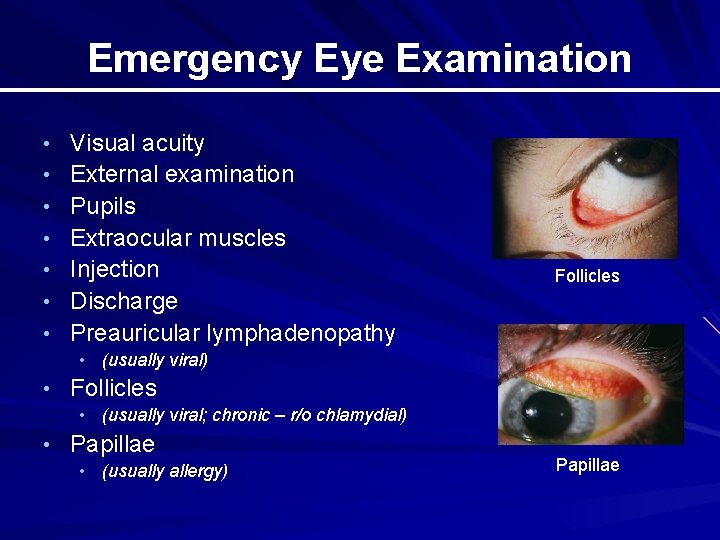
Emergency Eye Examination • • Visual acuity External examination Pupils Extraocular muscles Injection Discharge Preauricular lymphadenopathy Follicles • (usually viral) • Follicles • (usually viral; chronic – r/o chlamydial) • Papillae • (usually allergy) Papillae
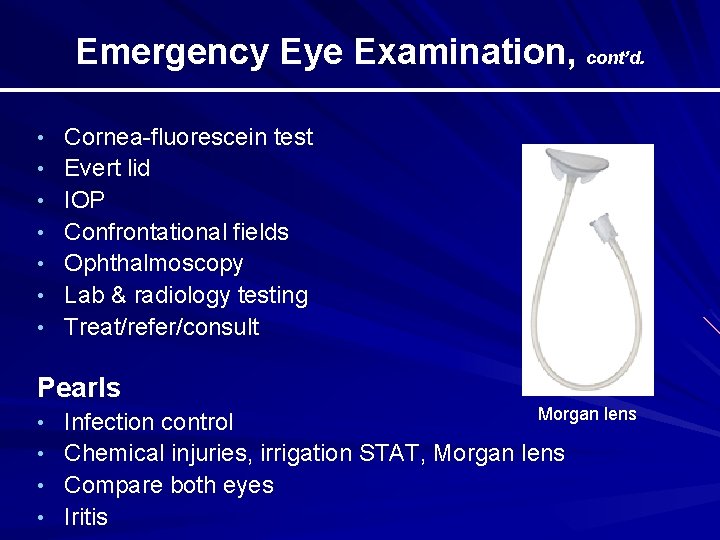
Emergency Eye Examination, cont’d. • • Cornea-fluorescein test Evert lid IOP Confrontational fields Ophthalmoscopy Lab & radiology testing Treat/refer/consult Pearls • • Morgan lens Infection control Chemical injuries, irrigation STAT, Morgan lens Compare both eyes Iritis
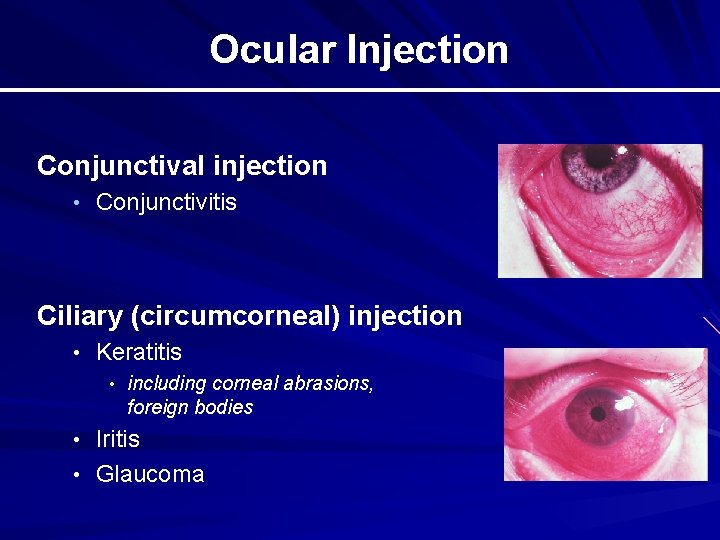
Ocular Injection Conjunctival injection • Conjunctivitis Ciliary (circumcorneal) injection • Keratitis • including corneal abrasions, foreign bodies • Iritis • Glaucoma
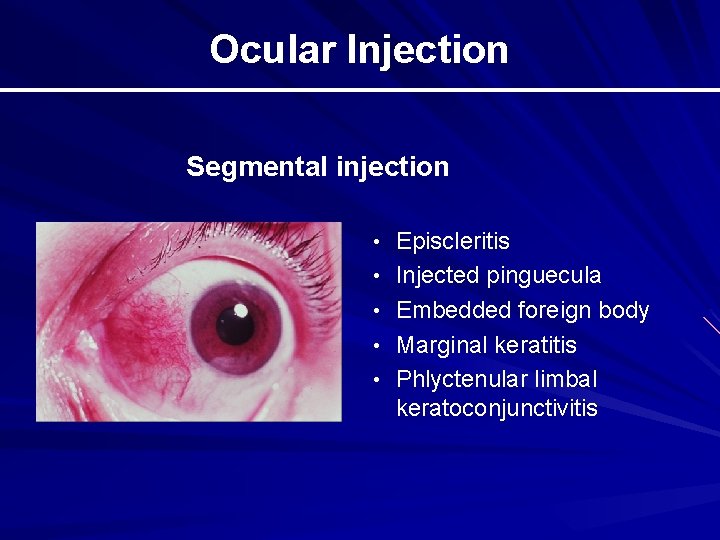
Ocular Injection Segmental injection • Episcleritis • Injected pinguecula • Embedded foreign body • Marginal keratitis • Phlyctenular limbal keratoconjunctivitis
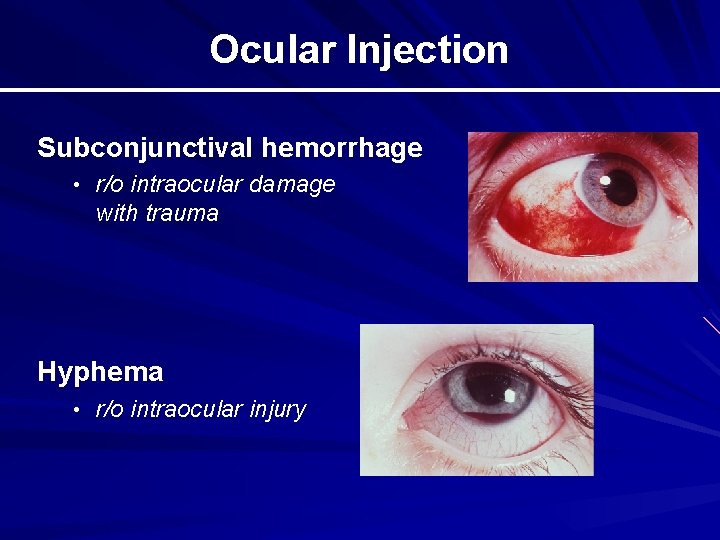
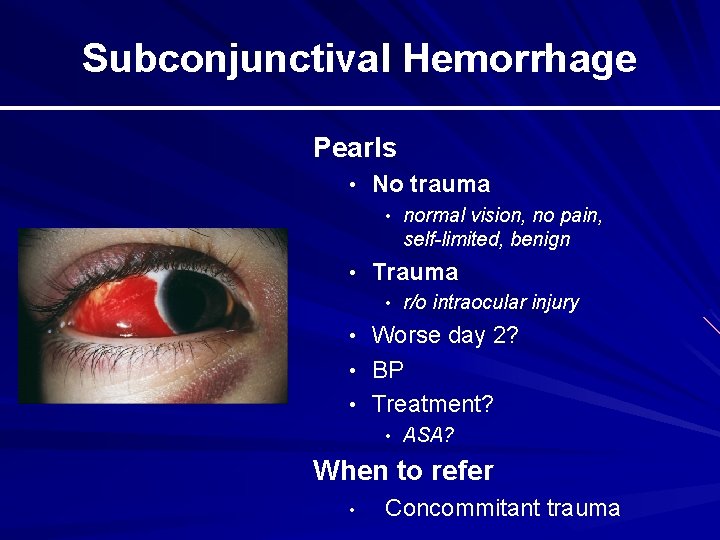
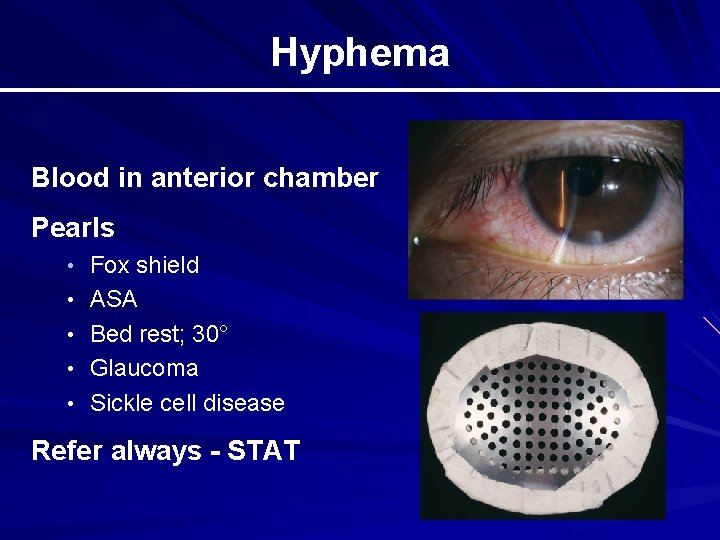
Ocular Injection Subconjunctival hemorrhage • r/o intraocular damage with trauma Hyphema • r/o intraocular injury
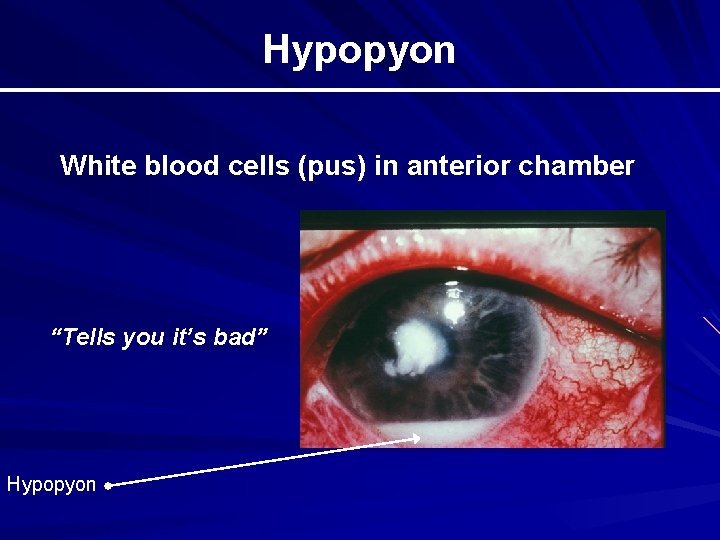
Hypopyon White blood cells (pus) in anterior chamber “Tells you it’s bad” Hypopyon
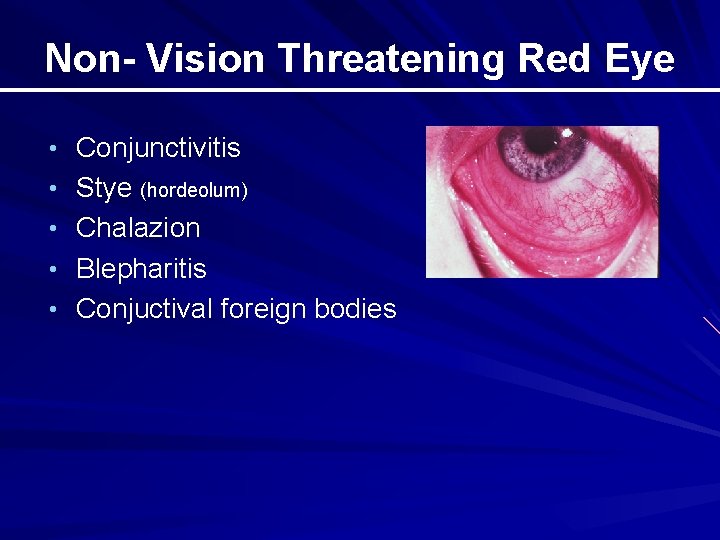
Non- Vision Threatening Red Eye • Conjunctivitis • Stye (hordeolum) • Chalazion • Blepharitis • Conjuctival foreign bodies
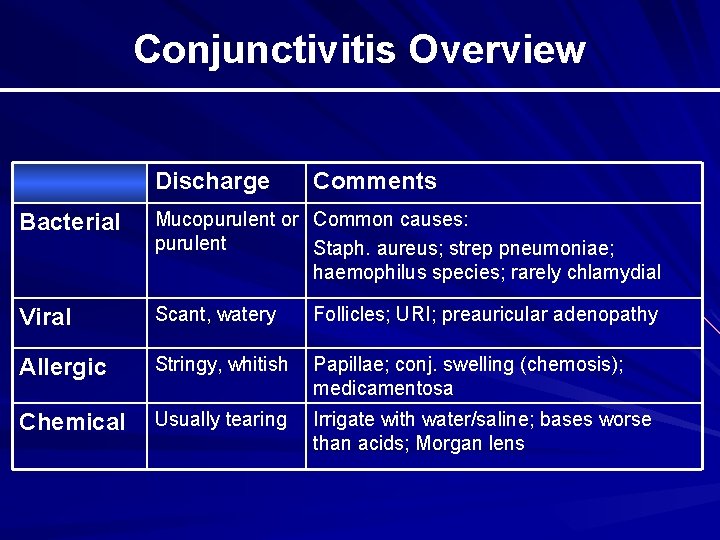
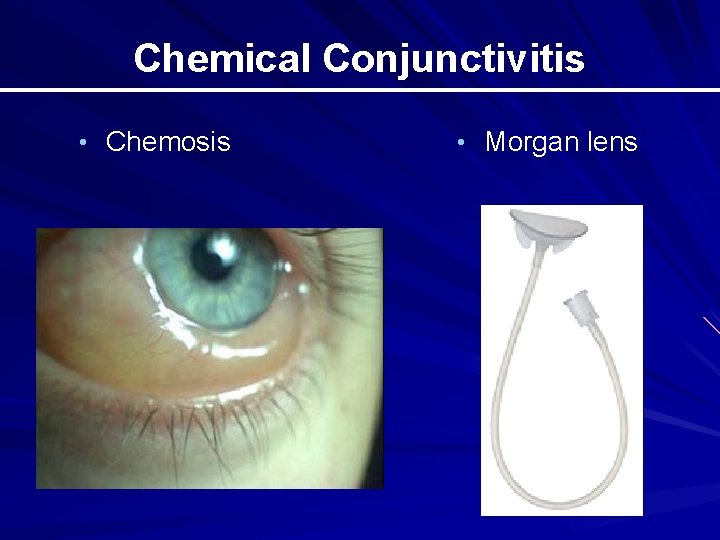
Conjunctivitis Overview Discharge Comments Bacterial Mucopurulent or Common causes: purulent Staph. aureus; strep pneumoniae; haemophilus species; rarely chlamydial Viral Scant, watery Follicles; URI; preauricular adenopathy Allergic Stringy, whitish Papillae; conj. swelling (chemosis); medicamentosa Chemical Usually tearing Irrigate with water/saline; bases worse than acids; Morgan lens
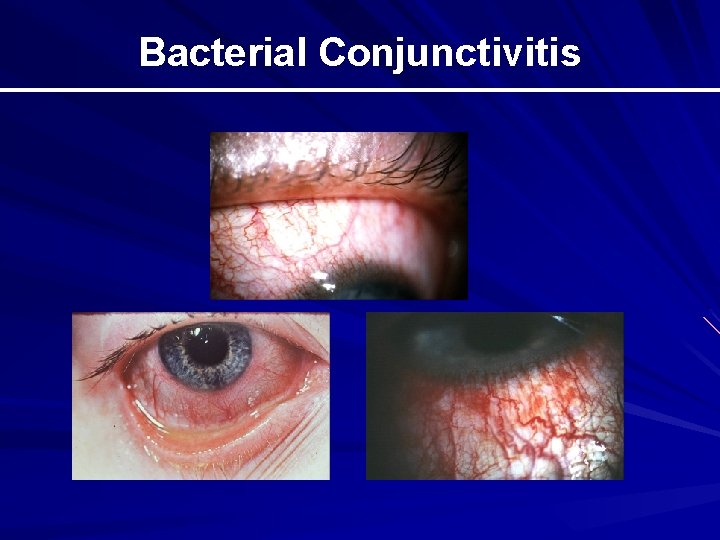
Bacterial Conjunctivitis
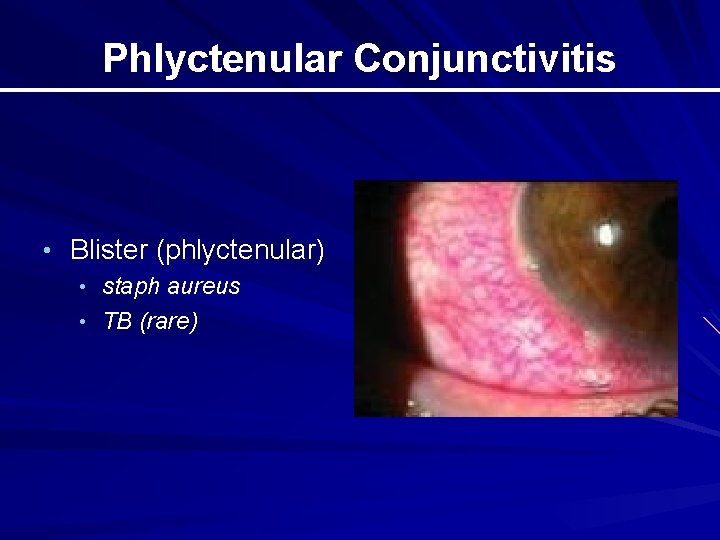
Phlyctenular Conjunctivitis • Blister (phlyctenular) • staph aureus • TB (rare)
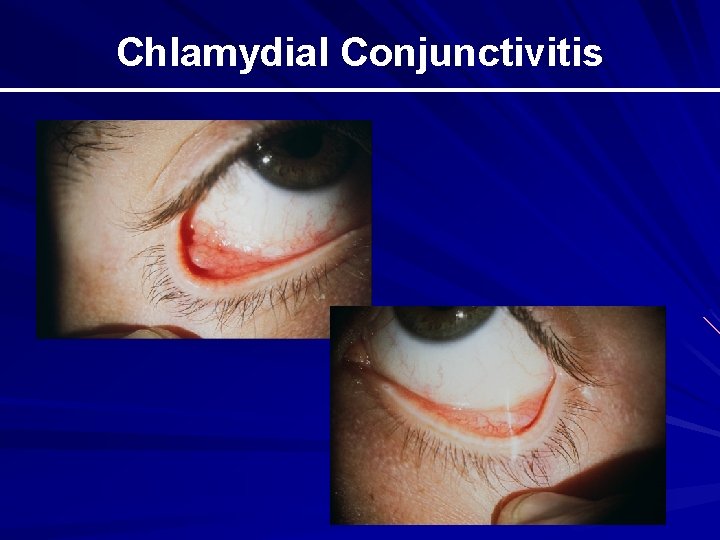
Chlamydial Conjunctivitis
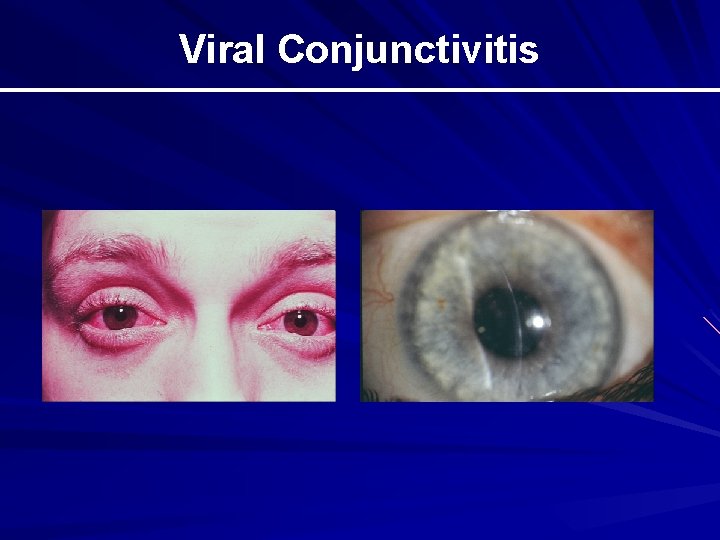
Viral Conjunctivitis
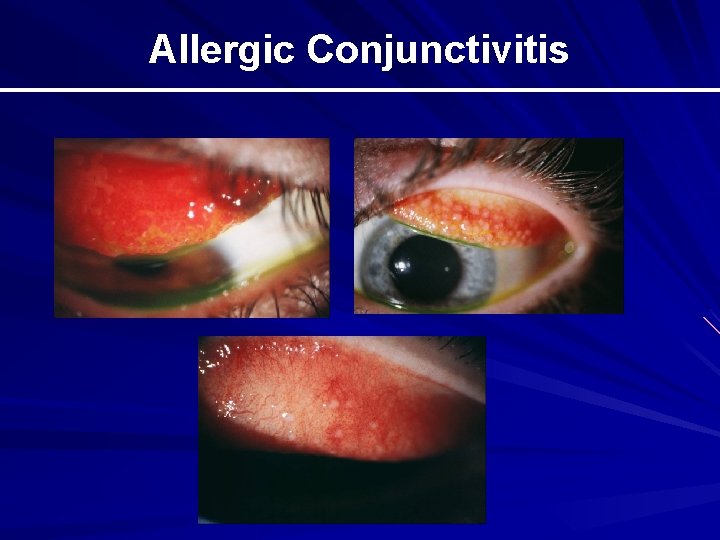
Allergic Conjunctivitis
Chemical Conjunctivitis • Chemosis • Morgan lens
Cultures and Testing • Routine bacterial culture not recommended • Culture if: • no treatment response after 2 – 3 weeks • recurring • severe, purulent • Chlamydial assay if: • follicular conjunctivitis lasting longer than 2 – 3 weeks and • pt. sexually active • sexual partners, genital symptoms (approx. 75% asymptomatic? )
Topical Antibiotics Aminoglycosides • Tobrex • gentamycin, neomycin Macrolides • Ilotycin (erythromycin) • Azasite (azithromycin) Peptides • Bacitracin • Polysporin (polymixin B/ bacitracin) • Polytrim (polymixin B/ trimethoprim) Sulfonamides
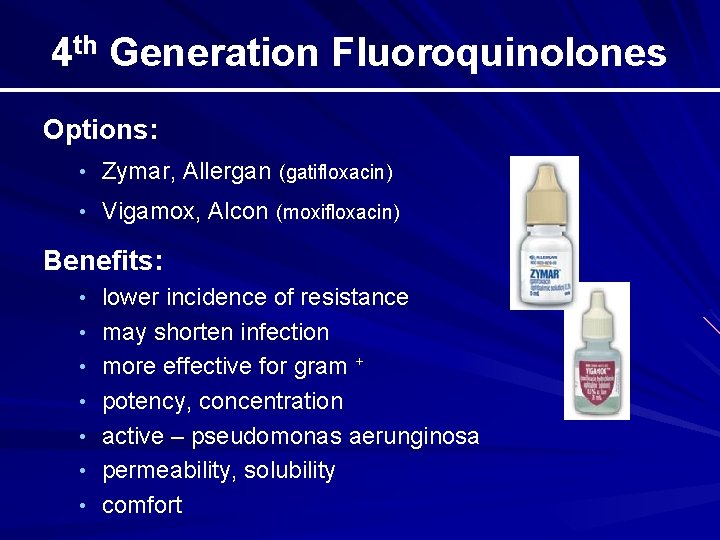
4 th Generation Fluoroquinolones Options: • Zymar, Allergan (gatifloxacin) • Vigamox, Alcon (moxifloxacin) Benefits: • lower incidence of resistance • may shorten infection • more effective for gram + • potency, concentration • active – pseudomonas aerunginosa • permeability, solubility • comfort
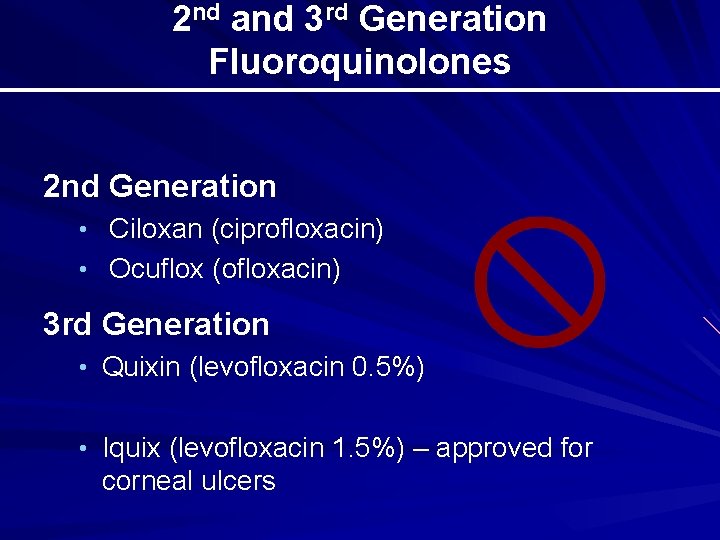
2 nd and 3 rd Generation Fluoroquinolones 2 nd Generation • Ciloxan (ciprofloxacin) • Ocuflox (ofloxacin) 3 rd Generation • Quixin (levofloxacin 0. 5%) • Iquix (levofloxacin 1. 5%) – approved for corneal ulcers
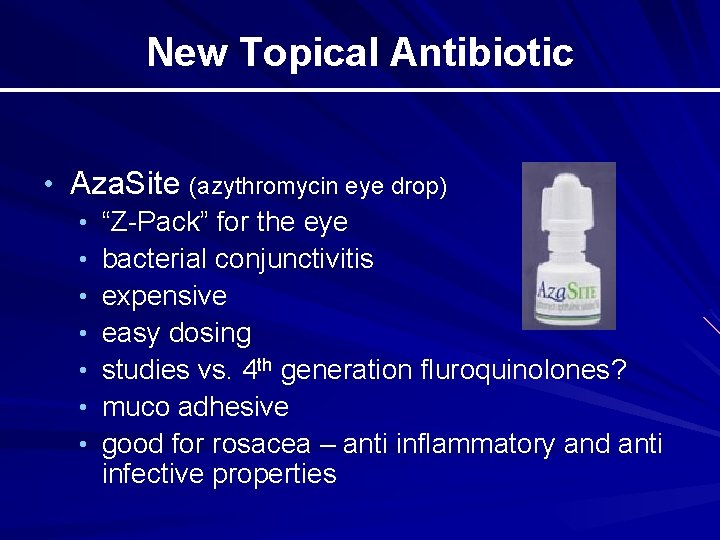
New Topical Antibiotic • Aza. Site (azythromycin eye drop) • “Z-Pack” for the eye • bacterial conjunctivitis • expensive • easy dosing • studies vs. 4 th generation fluroquinolones? • muco adhesive • good for rosacea – anti inflammatory and anti infective properties
Prescribing Decisions • Resistance concerns • ophthalmic use less a factor than systemic use? • Decision making • medical standard of care • literature review • clinical experience
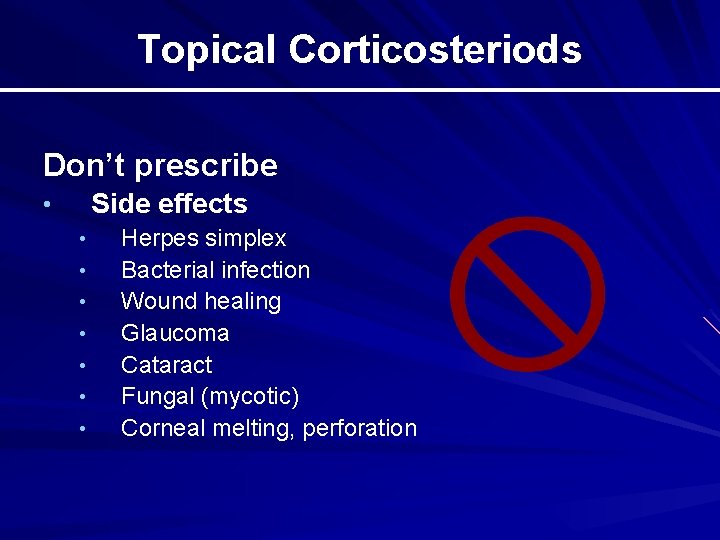
Topical Corticosteriods Don’t prescribe Side effects • • Herpes simplex Bacterial infection Wound healing Glaucoma Cataract Fungal (mycotic) Corneal melting, perforation
Conjunctivitis Pearls • Red, painful eye w/o mucous: usually not conjunctivitis • r/o corneal abrasions, foreign bodies, keratitis, iritis, glaucoma (rare) • Preauricular adenopathy • usually viral • can be present in acute hordeolum or chlamydial • Systemic medications • eg. Accutane – dry eye, conjunctivitis, night vision problems • Medicamentosa When to refer • • Unsure of diagnosis Severe mucopurulent discharge Unresolved within 2 weeks Corneal involvement suspected
Subconjunctival Hemorrhage Pearls • No trauma • normal vision, no pain, self-limited, benign • Trauma • r/o intraocular injury • Worse day 2? • BP • Treatment? • ASA? When to refer • Concommitant trauma
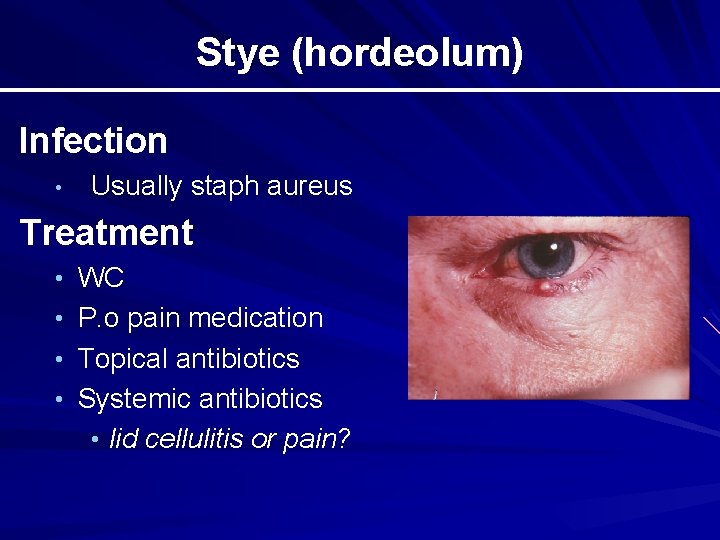
Stye (hordeolum) Infection • Usually staph aureus Treatment • WC • P. o pain medication • Topical antibiotics • Systemic antibiotics • lid cellulitis or pain?
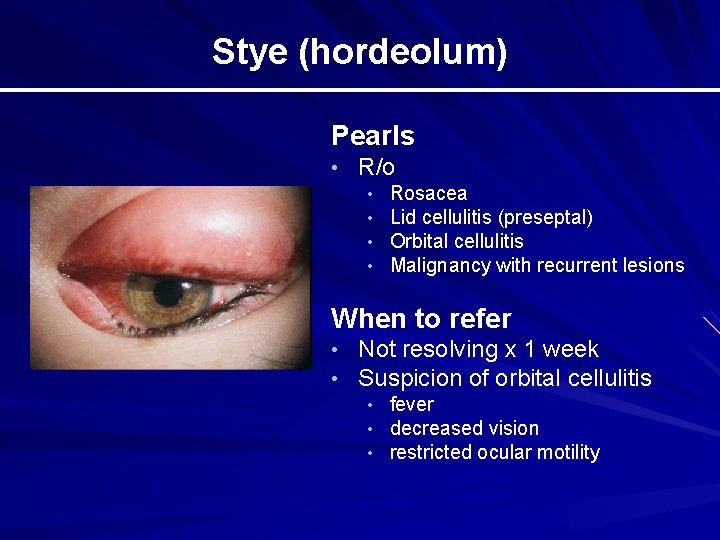
Stye (hordeolum) Pearls • R/o • • Rosacea Lid cellulitis (preseptal) Orbital cellulitis Malignancy with recurrent lesions When to refer • Not resolving x 1 week • Suspicion of orbital cellulitis • fever • decreased vision • restricted ocular motility
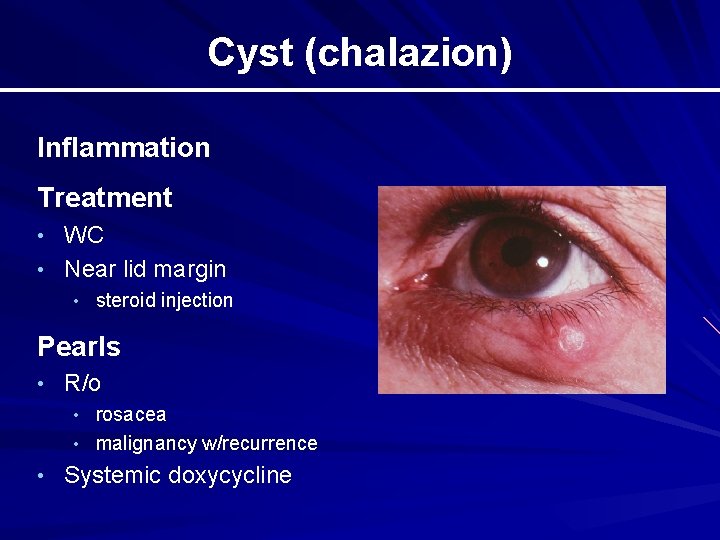
Cyst (chalazion) Inflammation Treatment • WC • Near lid margin • steroid injection Pearls • R/o • rosacea • malignancy w/recurrence • Systemic doxycycline
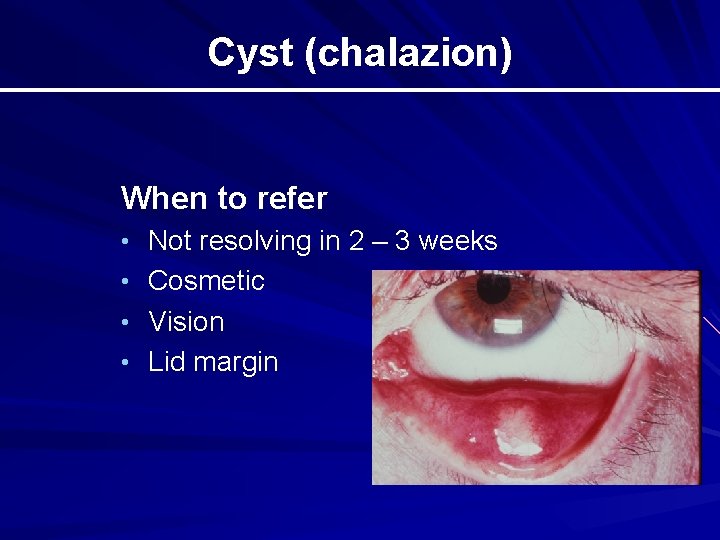
Cyst (chalazion) When to refer • Not resolving in 2 – 3 weeks • Cosmetic • Vision • Lid margin
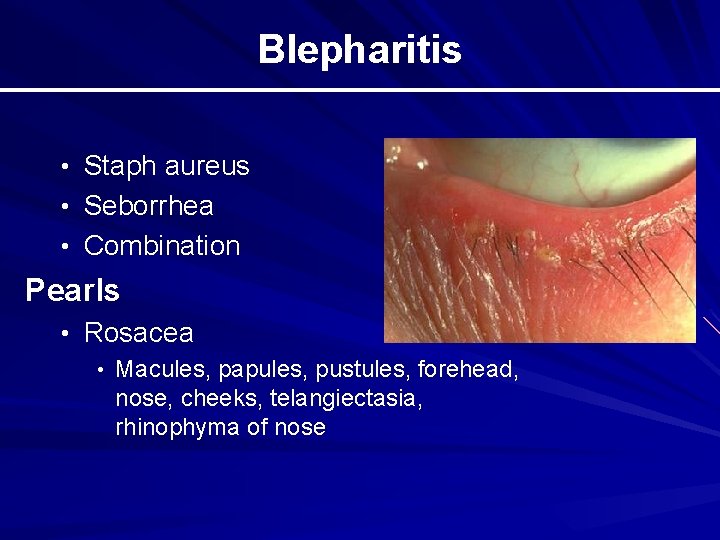
Blepharitis • Staph aureus • Seborrhea • Combination Pearls • Rosacea • Macules, papules, pustules, forehead, nose, cheeks, telangiectasia, rhinophyma of nose
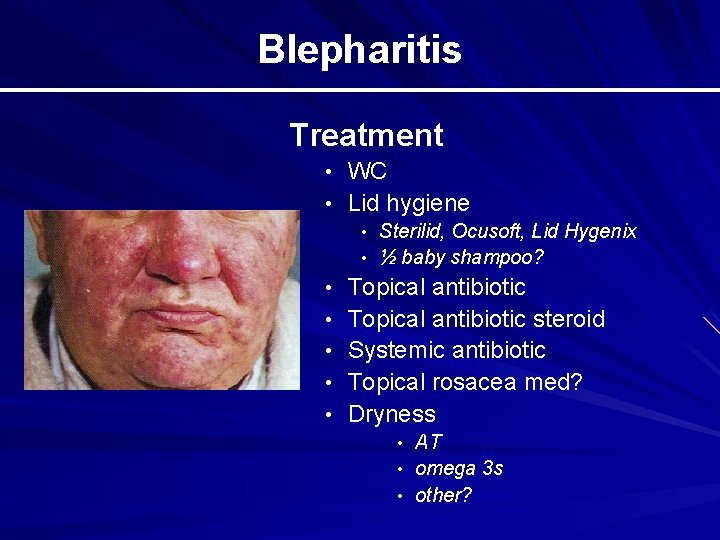
Blepharitis Treatment • WC • Lid hygiene • Sterilid, Ocusoft, Lid Hygenix • ½ baby shampoo? • • • Topical antibiotic steroid Systemic antibiotic Topical rosacea med? Dryness • AT • omega 3 s • other?
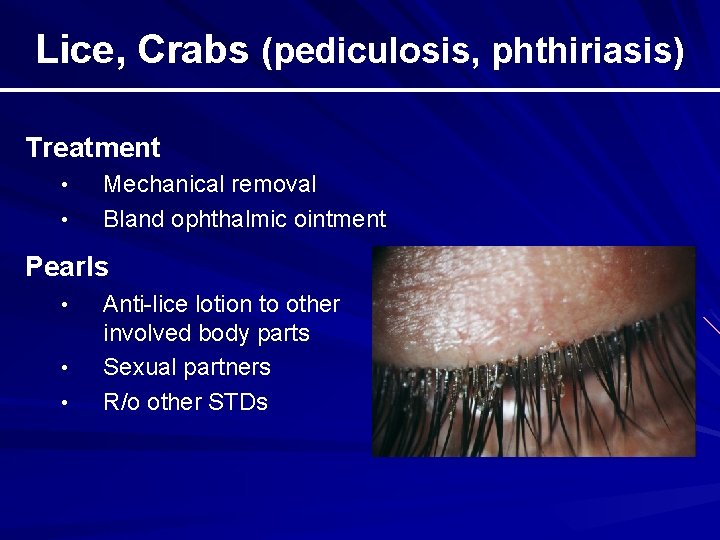
Lice, Crabs (pediculosis, phthiriasis) Treatment • • Mechanical removal Bland ophthalmic ointment Pearls • • • Anti-lice lotion to other involved body parts Sexual partners R/o other STDs
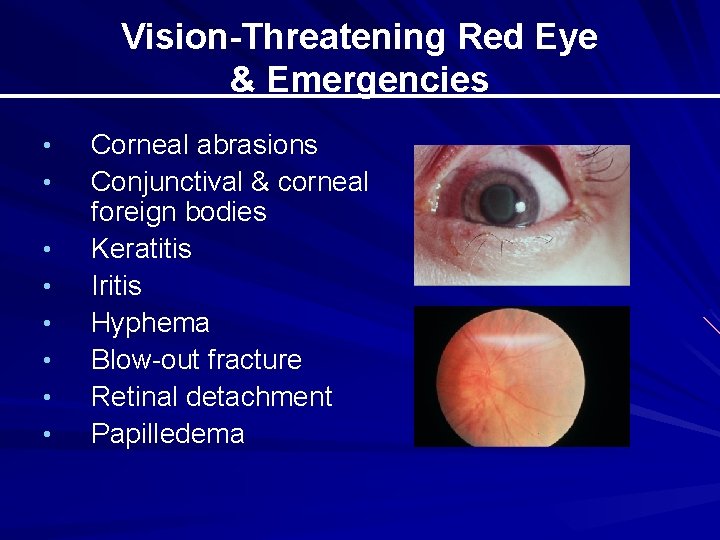
Vision-Threatening Red Eye & Emergencies • • Corneal abrasions Conjunctival & corneal foreign bodies Keratitis Iritis Hyphema Blow-out fracture Retinal detachment Papilledema
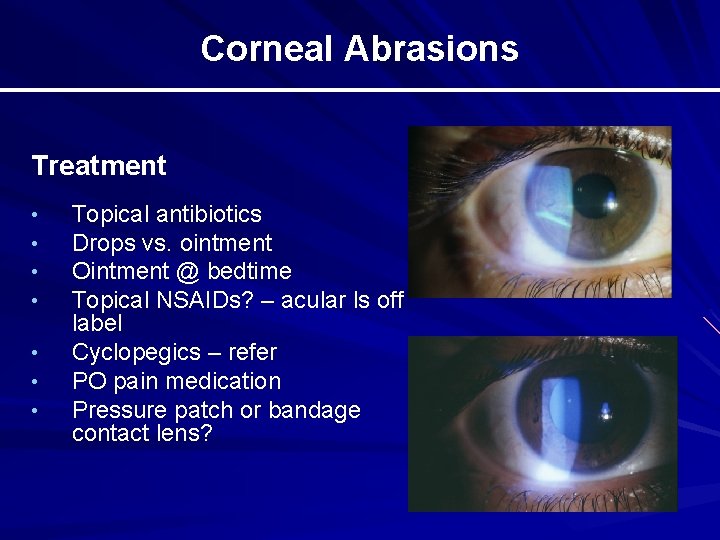
Corneal Abrasions Treatment • • Topical antibiotics Drops vs. ointment Ointment @ bedtime Topical NSAIDs? – acular ls off label Cyclopegics – refer PO pain medication Pressure patch or bandage contact lens?
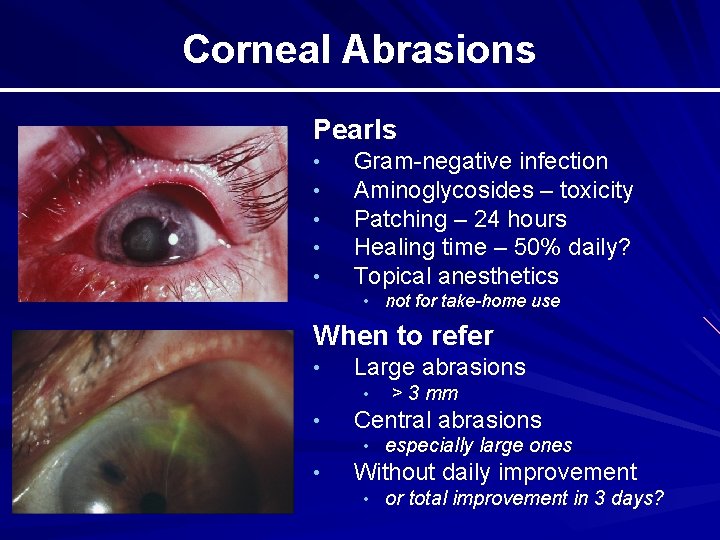
Corneal Abrasions Pearls • • • Gram-negative infection Aminoglycosides – toxicity Patching – 24 hours Healing time – 50% daily? Topical anesthetics • not for take-home use When to refer • Large abrasions • • > 3 mm Central abrasions • especially large ones • Without daily improvement • or total improvement in 3 days?
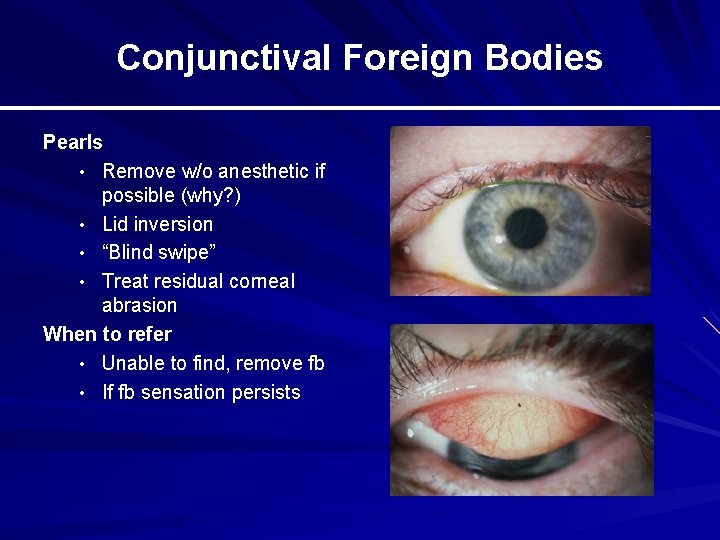
Conjunctival Foreign Bodies Pearls • Remove w/o anesthetic if possible (why? ) • Lid inversion • “Blind swipe” • Treat residual corneal abrasion When to refer • Unable to find, remove fb • If fb sensation persists
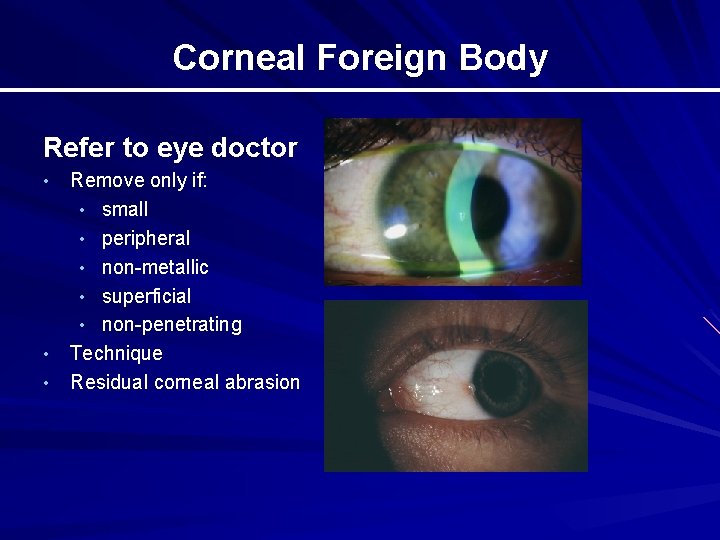
Corneal Foreign Body Refer to eye doctor • • • Remove only if: • small • peripheral • non-metallic • superficial • non-penetrating Technique Residual corneal abrasion
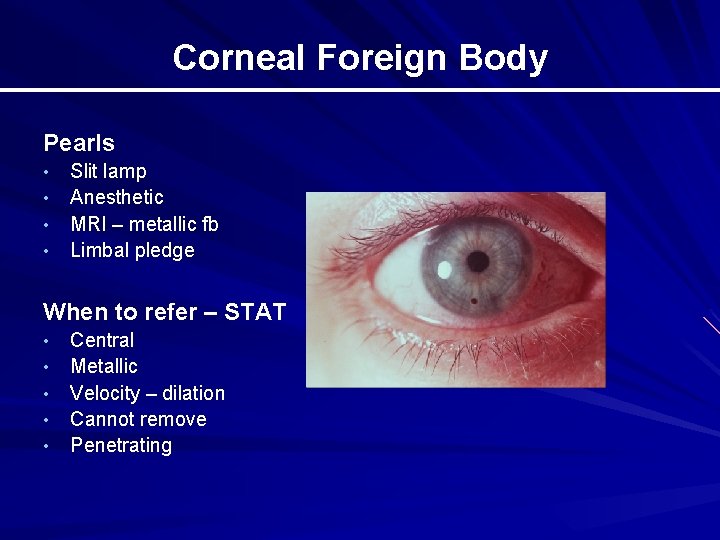
Corneal Foreign Body Pearls • • Slit lamp Anesthetic MRI – metallic fb Limbal pledge When to refer – STAT • • • Central Metallic Velocity – dilation Cannot remove Penetrating
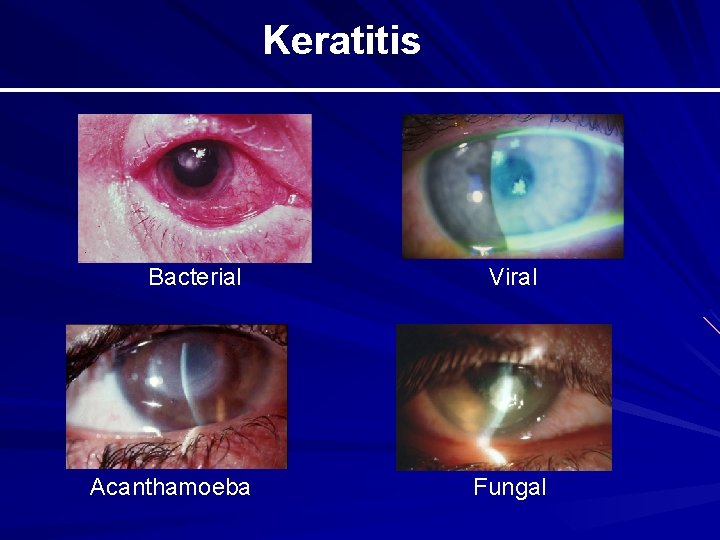
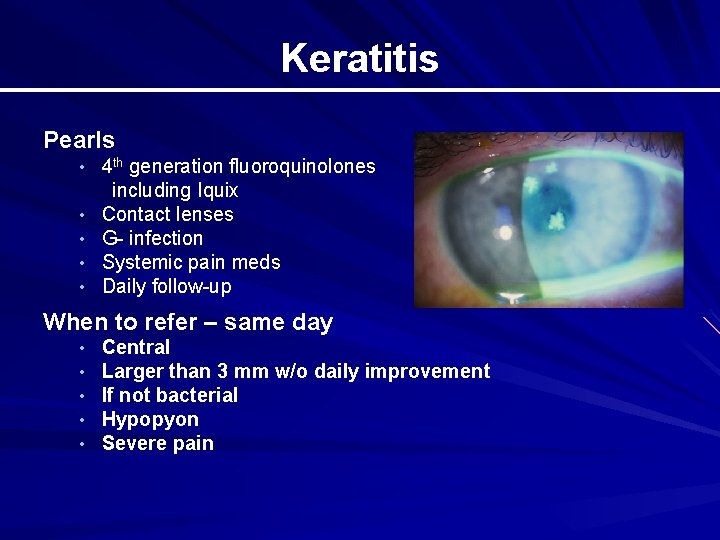
Keratitis Bacterial Acanthamoeba Viral Fungal
Keratitis Pearls • 4 th generation fluoroquinolones • • including Iquix Contact lenses G- infection Systemic pain meds Daily follow-up When to refer – same day • • • Central Larger than 3 mm w/o daily improvement If not bacterial Hypopyon Severe pain
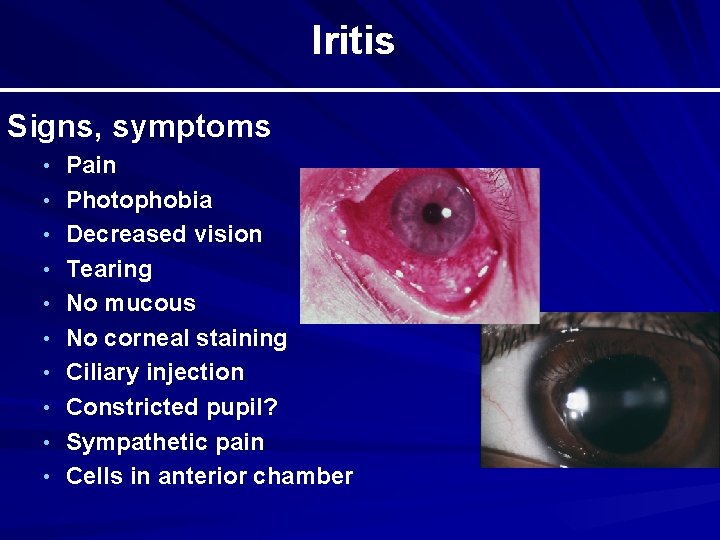
Iritis Signs, symptoms • Pain • Photophobia • Decreased vision • Tearing • No mucous • No corneal staining • Ciliary injection • Constricted pupil? • Sympathetic pain • Cells in anterior chamber
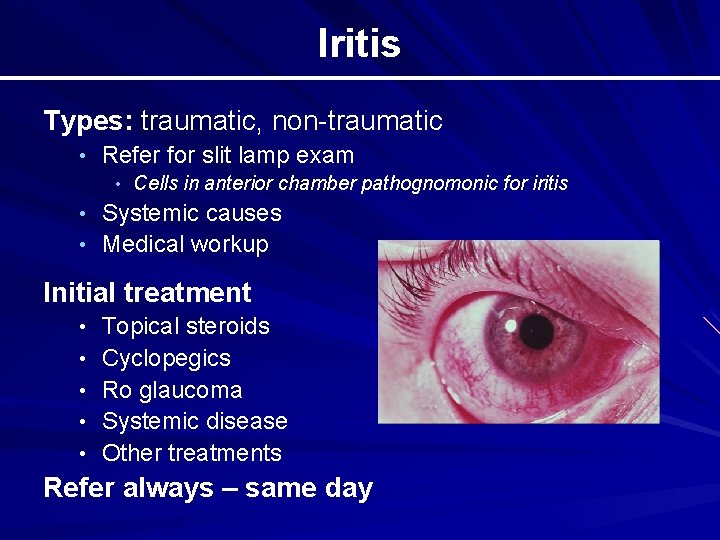
Iritis Types: traumatic, non-traumatic • Refer for slit lamp exam • Cells in anterior chamber pathognomonic for iritis • Systemic causes • Medical workup Initial treatment • • • Topical steroids Cyclopegics Ro glaucoma Systemic disease Other treatments Refer always – same day
Hyphema Blood in anterior chamber Pearls • Fox shield • ASA • Bed rest; 30° • Glaucoma • Sickle cell disease Refer always - STAT
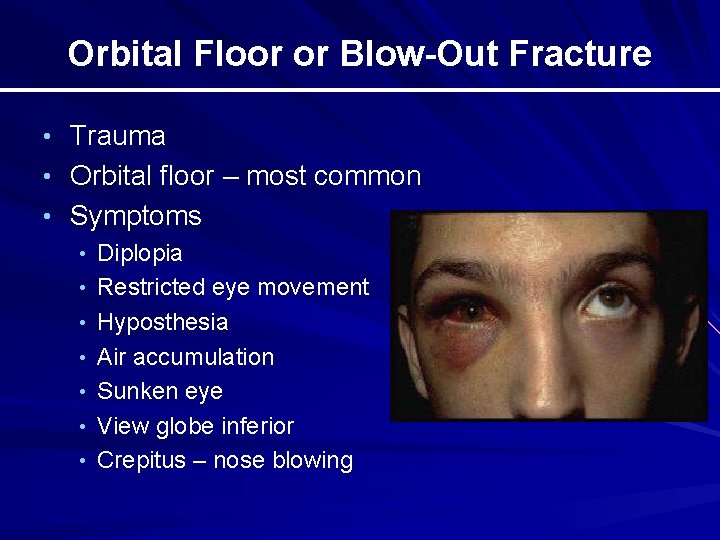
Orbital Floor or Blow-Out Fracture • Trauma • Orbital floor – most common • Symptoms • Diplopia • Restricted eye movement • Hyposthesia • Air accumulation • Sunken eye • View globe inferior • Crepitus – nose blowing
Orbital Floor or Blow-Out Fracture Pearls • • • Broad-spectrum po antibiotic Cold compress – ice pack Nasal decongestants Nose blowing Retinal detachment – coup, counter-coup CAT scan of orbit Refer always, same day • Opthalmology, ENT
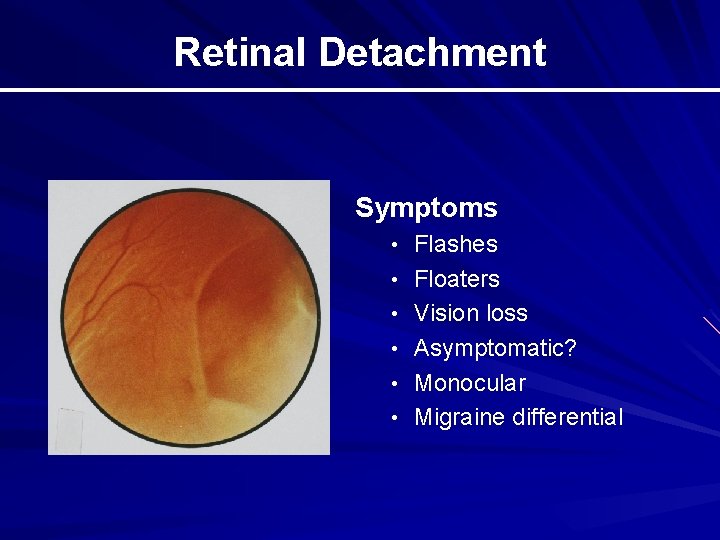
Retinal Detachment Symptoms • Flashes • Floaters • Vision loss • Asymptomatic? • Monocular • Migraine differential
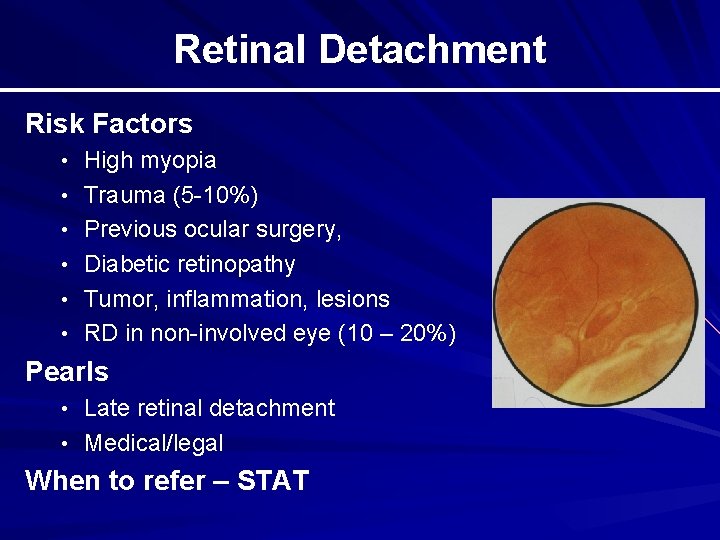
Retinal Detachment Risk Factors • High myopia • Trauma (5 -10%) • Previous ocular surgery, • Diabetic retinopathy • Tumor, inflammation, lesions • RD in non-involved eye (10 – 20%) Pearls • Late retinal detachment • Medical/legal When to refer – STAT
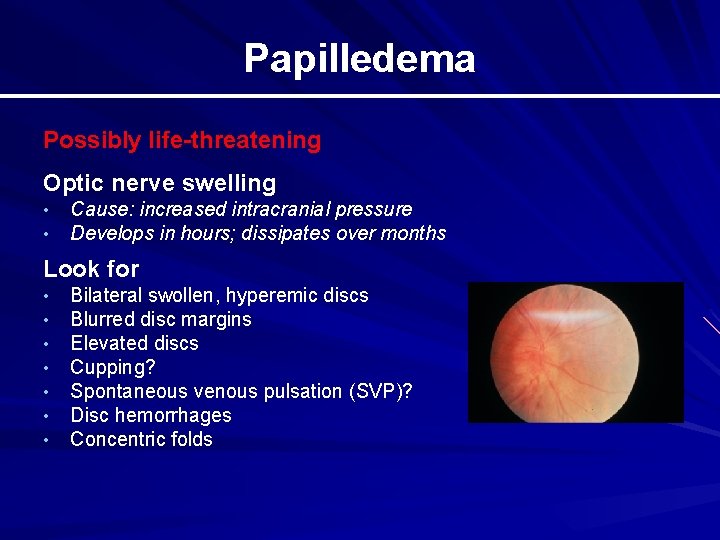
Papilledema Possibly life-threatening Optic nerve swelling • • Cause: increased intracranial pressure Develops in hours; dissipates over months Look for • • Bilateral swollen, hyperemic discs Blurred disc margins Elevated discs Cupping? Spontaneous venous pulsation (SVP)? Disc hemorrhages Concentric folds
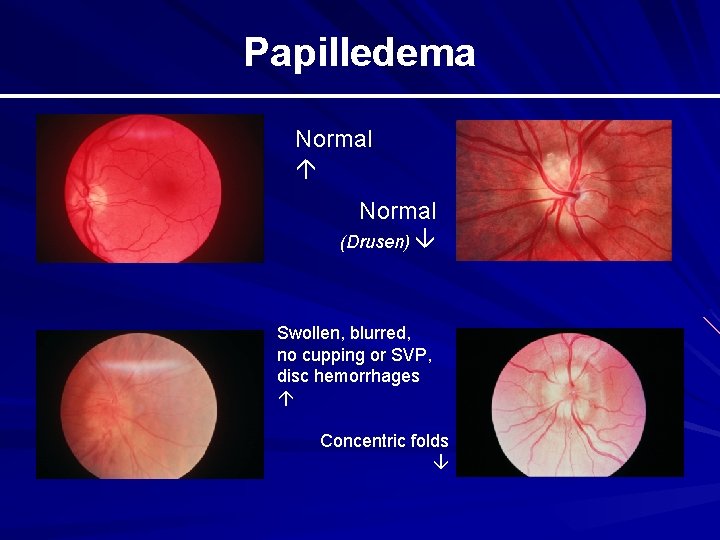
Papilledema Normal (Drusen) Swollen, blurred, no cupping or SVP, disc hemorrhages Concentric folds
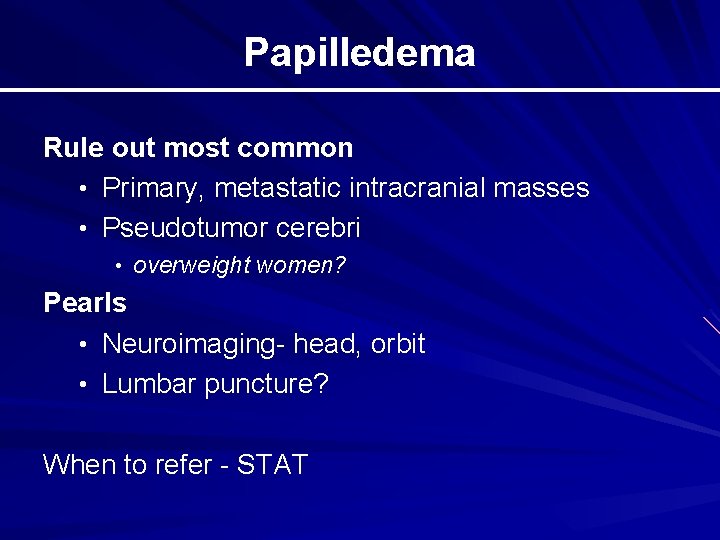
Papilledema Rule out most common • Primary, metastatic intracranial masses • Pseudotumor cerebri • overweight women? Pearls • Neuroimaging- head, orbit • Lumbar puncture? When to refer - STAT
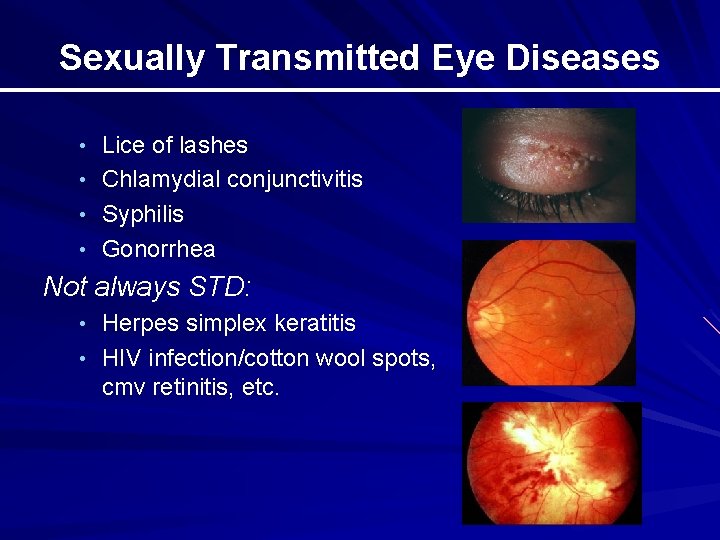
Sexually Transmitted Eye Diseases • Lice of lashes • Chlamydial conjunctivitis • Syphilis • Gonorrhea Not always STD: • Herpes simplex keratitis • HIV infection/cotton wool spots, cmv retinitis, etc.
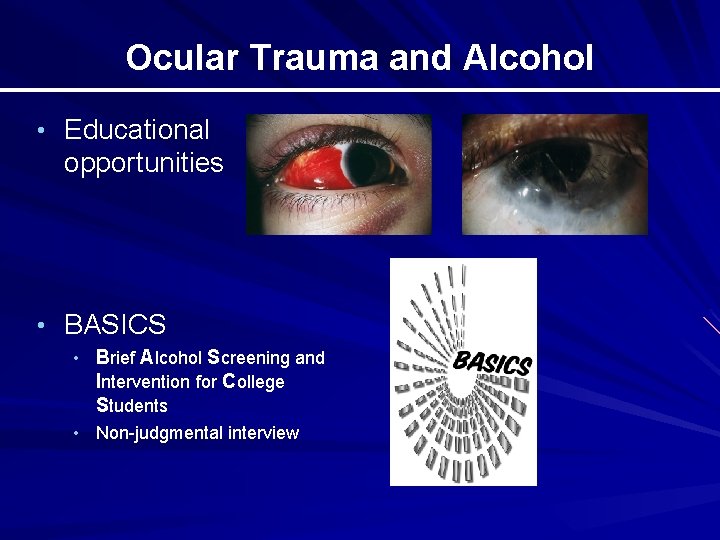
Ocular Trauma and Alcohol • Educational opportunities • BASICS • Brief Alcohol Screening and Intervention for College Students • Non-judgmental interview
Avoiding Eye Liability • Act like a healthcare professional • Show you care • “Captain of the ship” • Document, document • “If it’s not in the chart, it wasn’t done” • Lead, follow or get out of the way • Comfort level with case • “Sunshine is the best disinfectant” • Be honest
Avoiding Eye Liability • Standards of care Visual acuity on everyone Don’t prescribe, dispense topical steroids Don’t prescribe topical anesthetics Refer papilledema STAT Warn of signs, symptoms of retinal detachment • Don’t ignore red eye & ocular danger signs • Informed refusal • • • Patient, witness signatures
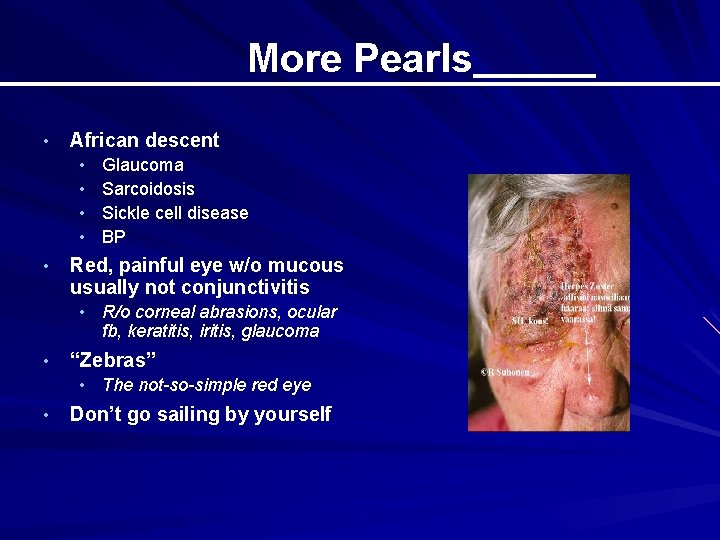
More Pearls • African descent • • • Glaucoma Sarcoidosis Sickle cell disease BP Red, painful eye w/o mucous usually not conjunctivitis • R/o corneal abrasions, ocular fb, keratitis, iritis, glaucoma • “Zebras” • The not-so-simple red eye • Don’t go sailing by yourself
Thank you! Blessings to you and your staff for continued success and good health!