
The reconstructed theory of memory BARTLETT 1932 Is
The reconstructed theory of memory BARTLETT (1932) Is memory simply made up? Schema Theory
Listen Carefully ‘When the man entered the kitchen, he slipped on a wet patch and dropped the delicate glass jug on the floor. The glass jug was very expensive and everyone watched the event with horror. ’ (Bransford, 1979)
Tell me a story Please write down in as much detail as you can, the story I detail read out to you in a previous lesson – it was the Inuit folk tale. It was called ‘The War of the Ghosts!’
How did you do? Compare your story to the actual story What were the main differences? How could we summarise what has happened in the retelling of the tale? How can we explain WHY this happened?
How much can you remember? Now write out the paragraph you heard at the start of the lesson. Give as much detail as you can recall. Hand in
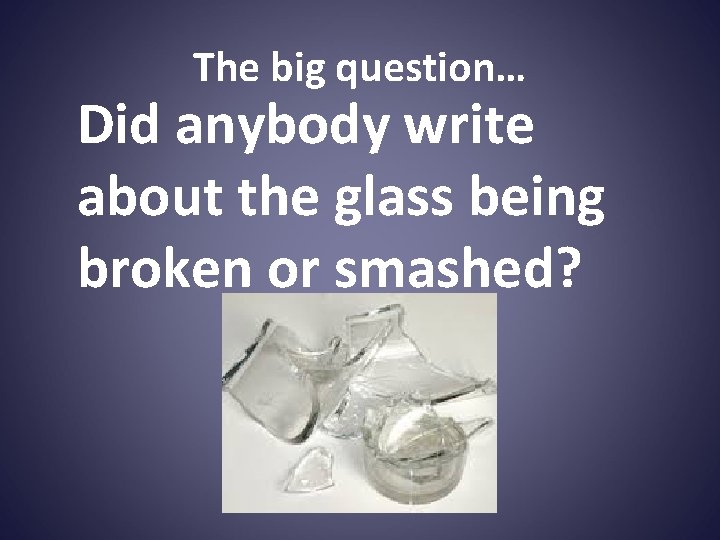
The big question… Did anybody write about the glass being broken or smashed?
Broken glass is not mentioned in the original paragraph but the story implies that it occurred. This triggers a ‘schema’ for broken glass and so it is recalled in that way. In other words – memory is reconstructed from what we already know about the world! What is Boo’s schema?
https: //www. youtube. com/watch? v=TZ 2 C 9 Ecat 24
Bartlett (1932) Gave us the term SCHEMATA (schema) which are ideas and scripts about the world which we have developed over time. These scripts or schema also provide people with expectations and rules about what to do. Can you think of any schemas we hold?
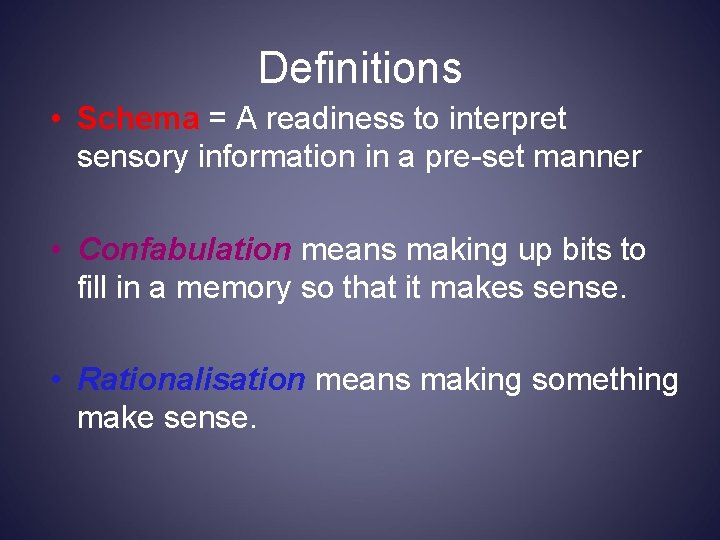
Definitions • Schema = A readiness to interpret sensory information in a pre-set manner • Confabulation means making up bits to fill in a memory so that it makes sense. • Rationalisation means making something make sense.
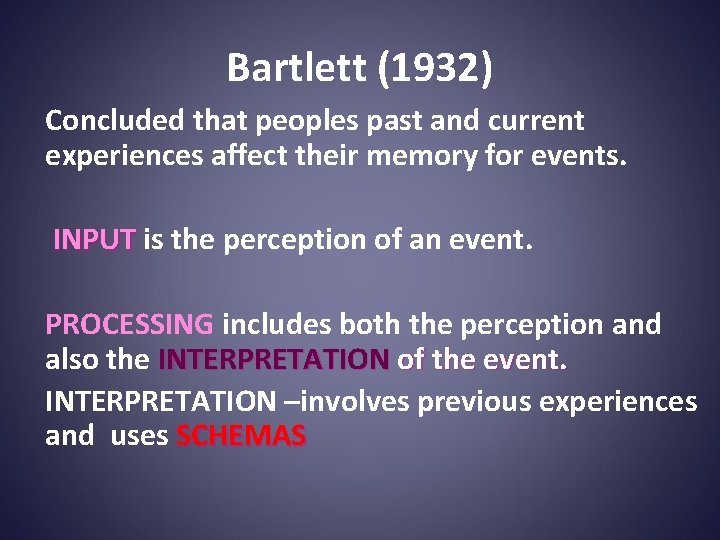
Bartlett (1932) Concluded that peoples past and current experiences affect their memory for events. INPUT is the perception of an event. PROCESSING includes both the perception and also the INTERPRETATION of the event. INTERPRETATION –involves previous experiences and uses SCHEMAS
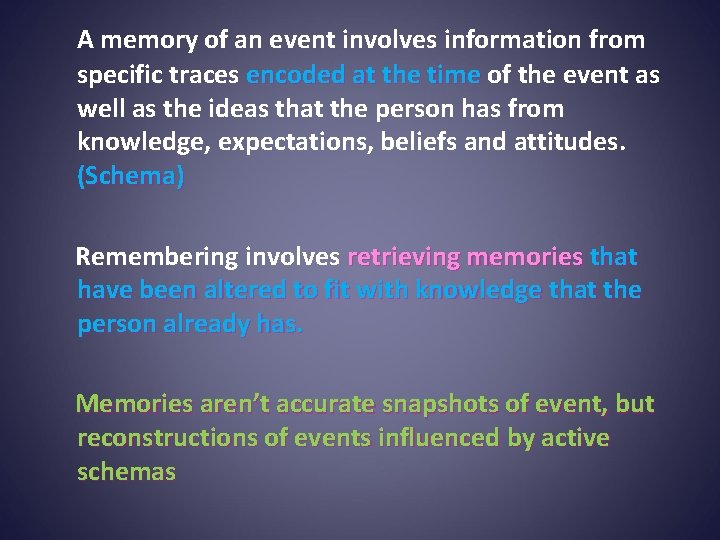
A memory of an event involves information from specific traces encoded at the time of the event as well as the ideas that the person has from knowledge, expectations, beliefs and attitudes. (Schema) Remembering involves retrieving memories that have been altered to fit with knowledge that the person already has. Memories aren’t accurate snapshots of event, but reconstructions of events influenced by active schemas
A Schema is…. “A mental model or representation built up through experience about a person, an object, a situation, or an event. ” (Head, 1920) “Organised structures of knowledge and expectations of some aspect of the world. ” (Bartlett, 1932)
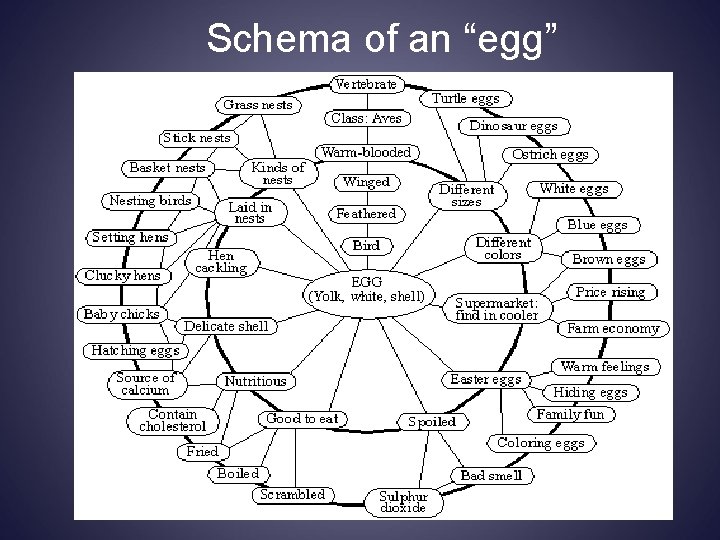
Schema of an “egg”
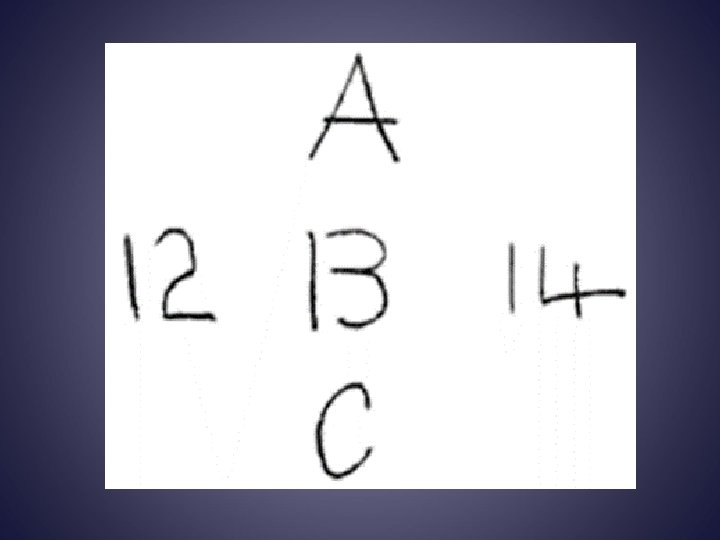
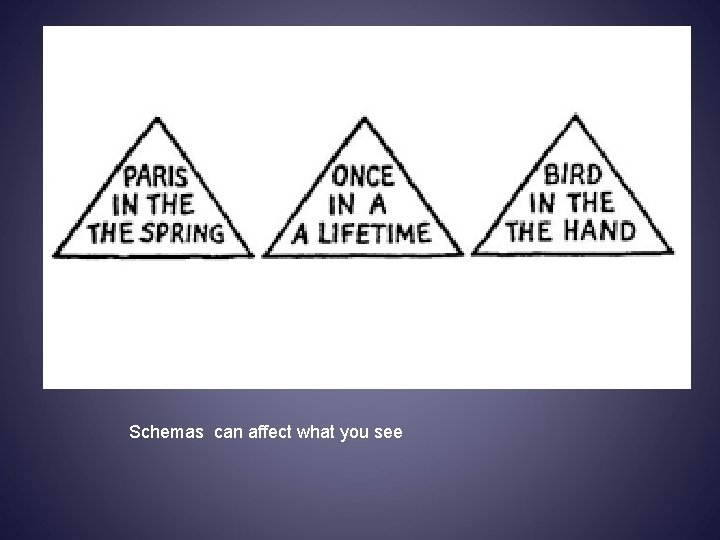
Schemas can affect what you see
So according to Bartlett (1932) • Memory is not like a tape recorder • Memory is not perfectly formed, perfectly encoded and then perfectly retrieved • A memory that is retrieved is unlikely to be exactly the same as the original
Evaluating a Theory You need to build Castles
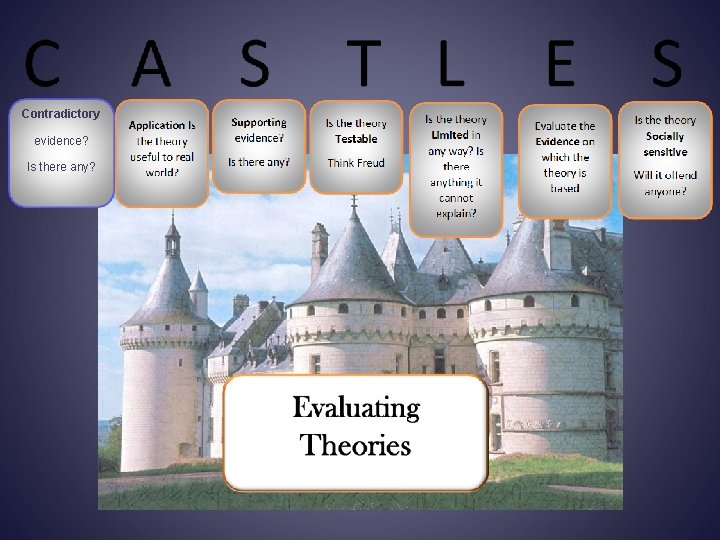
Contradictory evidence? Is there any?
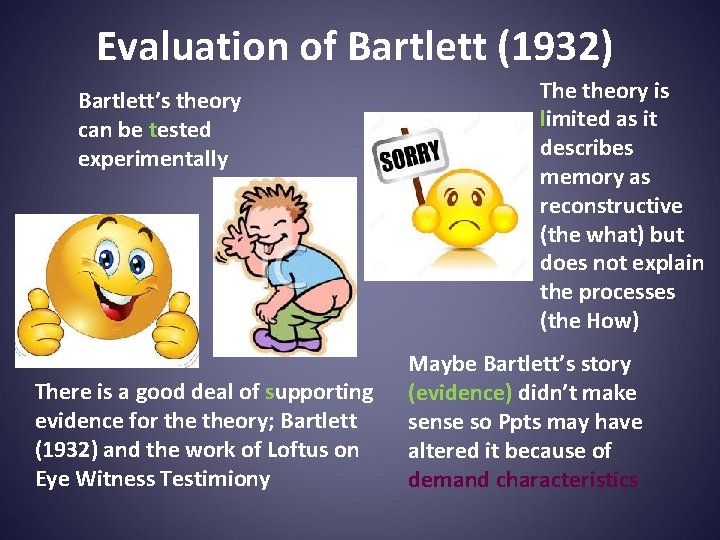
Evaluation of Bartlett (1932) Bartlett’s theory can be tested experimentally There is a good deal of supporting evidence for theory; Bartlett (1932) and the work of Loftus on Eye Witness Testimiony The theory is limited as it describes memory as reconstructive (the what) but does not explain the processes (the How) Maybe Bartlett’s story (evidence) didn’t make sense so Ppts may have altered it because of demand characteristics
PEEL Your Answers.
Point What is your point? Introduce your point. . “A strength of this theory is that…”
Evidence Present the evidence to support your point… “_____ conducted an experiment… and found…. ”
Example Give an example to support your point… “For example many people say that …. ”
Explain the evidence/example in relation to the point. How does it support your point? “This shows/suggests…. ”
Link your ideas back to the question or the point you are making if you can. “Therefore this supports…”
Read ahead • GHG Digital text book P 58 -63 • The effect of Misleading Information on EWT • The effect of anxiety on EWT • Improving EWT using the Cognitive Interview
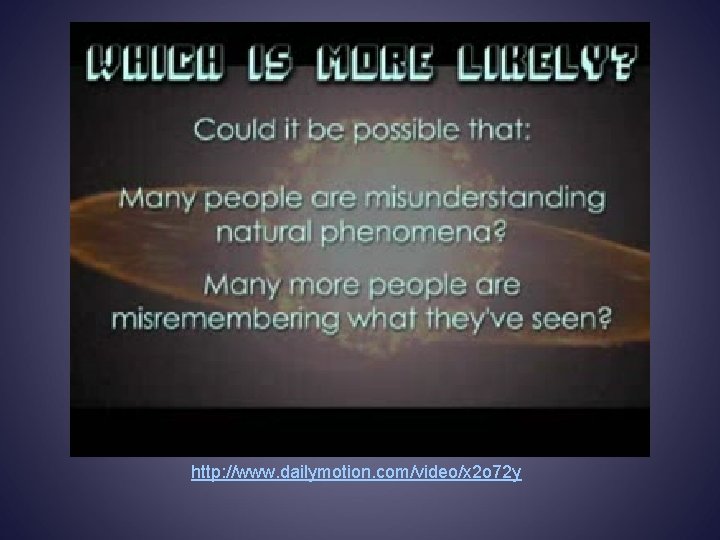
http: //www. dailymotion. com/video/x 2 o 72 y
- Slides: 28