
The Rapid Needs Assessment tool in the Mosul

- Slides: 11
The Rapid Needs Assessment tool in the Mosul Operation context
Session objective and outline Shared understanding of what the tool can and cannot do. . • What is the RNA Iraq? • Why develop it? • Why use it? • Where are we in the process? • Your role. • Our support.
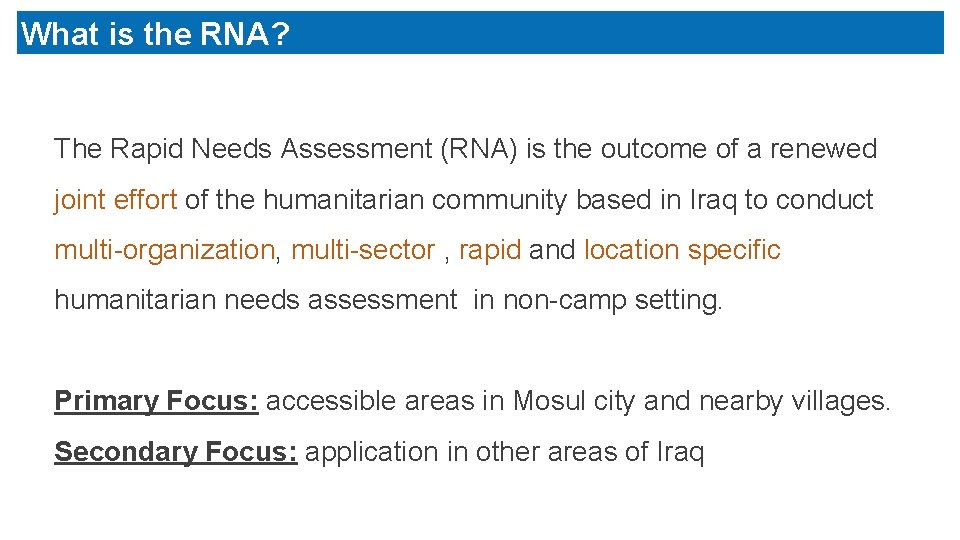
What is the RNA? . The Rapid Needs Assessment (RNA) is the outcome of a renewed joint effort of the humanitarian community based in Iraq to conduct multi-organization, multi-sector , rapid and location specific humanitarian needs assessment in non-camp setting. Primary Focus: accessible areas in Mosul city and nearby villages. Secondary Focus: application in other areas of Iraq
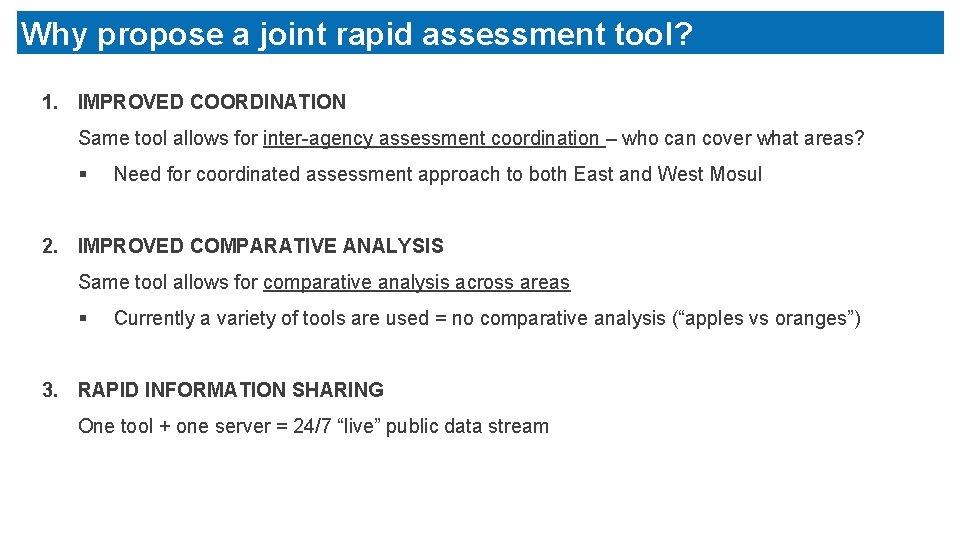
Why propose a joint rapid assessment tool? 1. IMPROVED COORDINATION Same tool allows for inter-agency assessment coordination – who can cover what areas? § Need for coordinated assessment approach to both East and West Mosul 2. IMPROVED COMPARATIVE ANALYSIS Same tool allows for comparative analysis across areas § Currently a variety of tools are used = no comparative analysis (“apples vs oranges”) 3. RAPID INFORMATION SHARING One tool + one server = 24/7 “live” public data stream
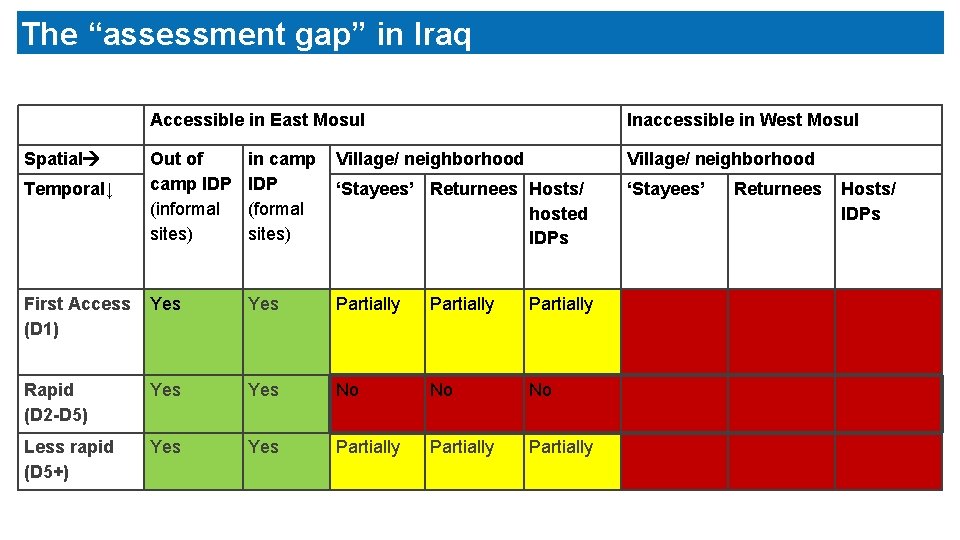
The “assessment gap” in Iraq Accessible in East Mosul Inaccessible in West Mosul Out of camp IDP (informal sites) in camp IDP (formal sites) Village/ neighborhood ‘Stayees’ Returnees Hosts/ hosted IDPs ‘Stayees’ First Access (D 1) Yes Partially Rapid (D 2 -D 5) Yes No No No Less rapid (D 5+) Yes Partially Spatial Temporal↓ Returnees Hosts/ IDPs
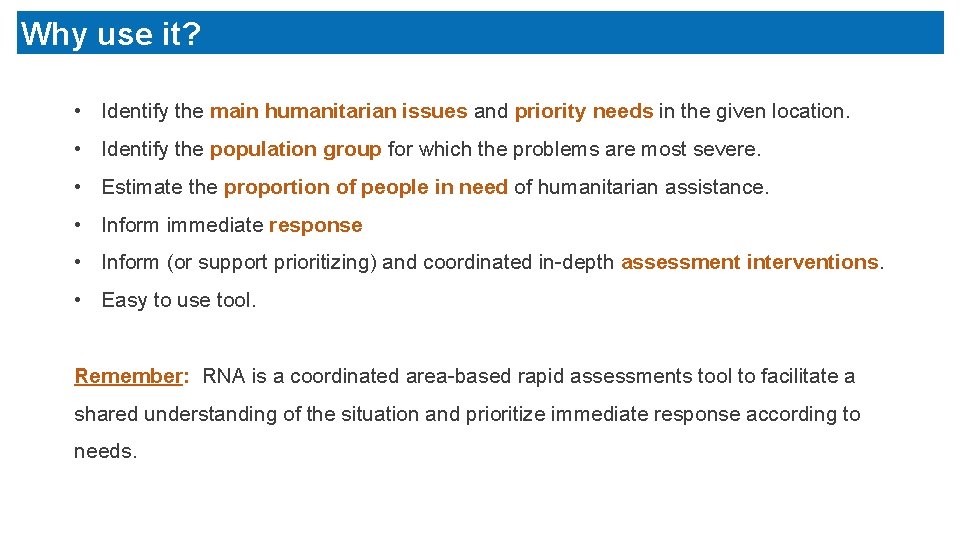
Why use it? • Identify the main humanitarian issues and priority needs in the given location. • Identify the population group for which the problems are most severe. . • Estimate the proportion of people in need of humanitarian assistance. • Inform immediate response • Inform (or support prioritizing) and coordinated in-depth assessment interventions. • Easy to use tool. Remember: RNA is a coordinated area-based rapid assessments tool to facilitate a shared understanding of the situation and prioritize immediate response according to needs.
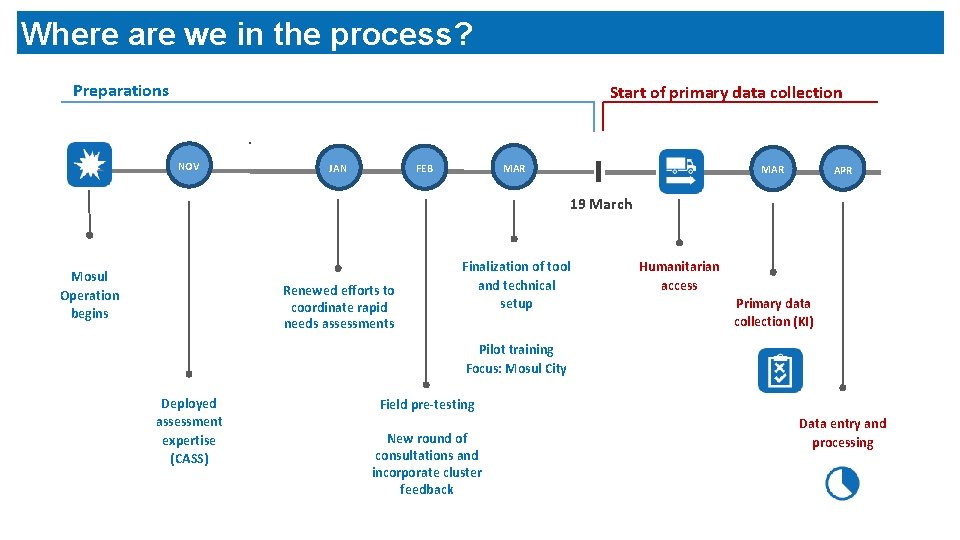
Where are we in the process? Preparations Start of primary data collection. NOV JAN MAR FEB MAR APR 19 March Mosul Operation begins Renewed efforts to coordinate rapid needs assessments Finalization of tool and technical setup Humanitarian access Primary data collection (KI) Pilot training Focus: Mosul City Deployed assessment expertise (CASS) Field pre-testing New round of consultations and incorporate cluster feedback Data entry and processing
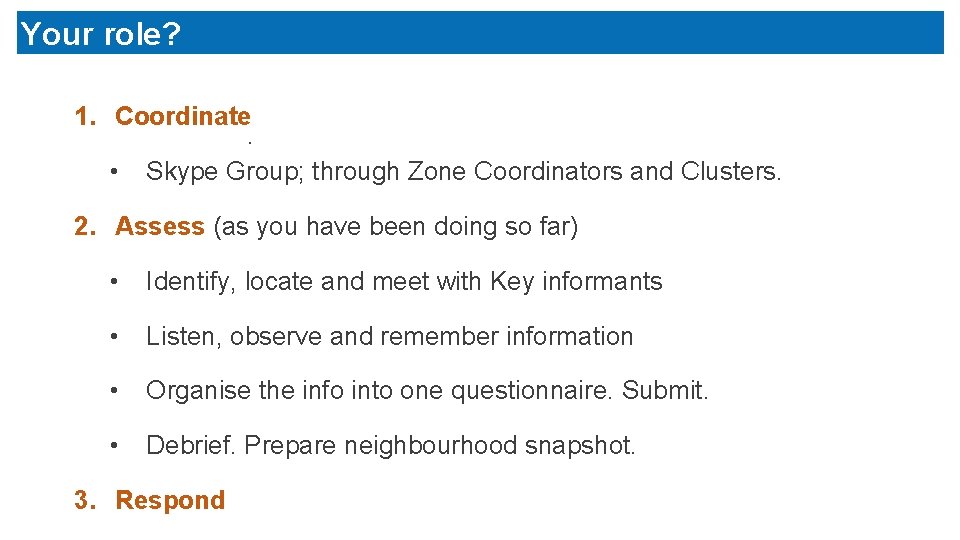
Your role? 1. Coordinate . • Skype Group; through Zone Coordinators and Clusters. 2. Assess (as you have been doing so far) • Identify, locate and meet with Key informants • Listen, observe and remember information • Organise the info into one questionnaire. Submit. • Debrief. Prepare neighbourhood snapshot. 3. Respond
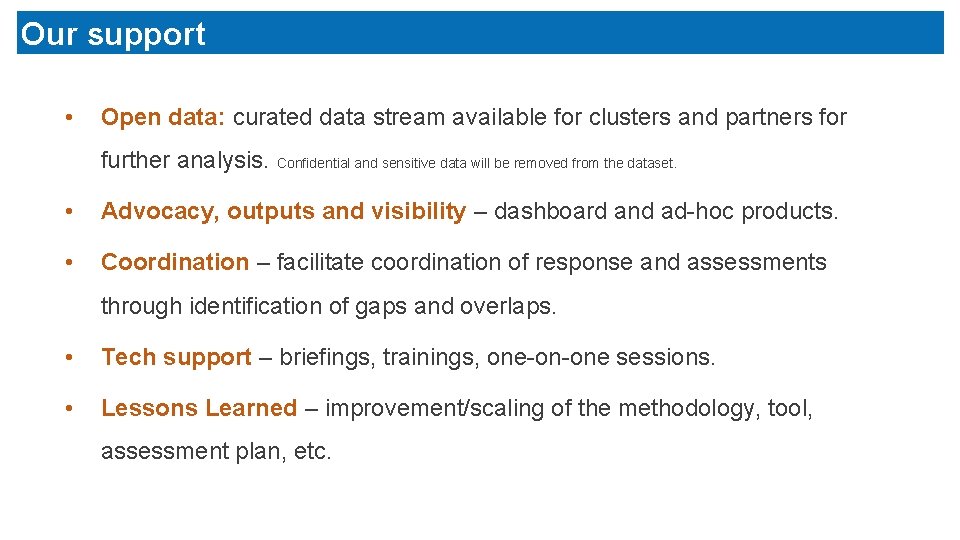
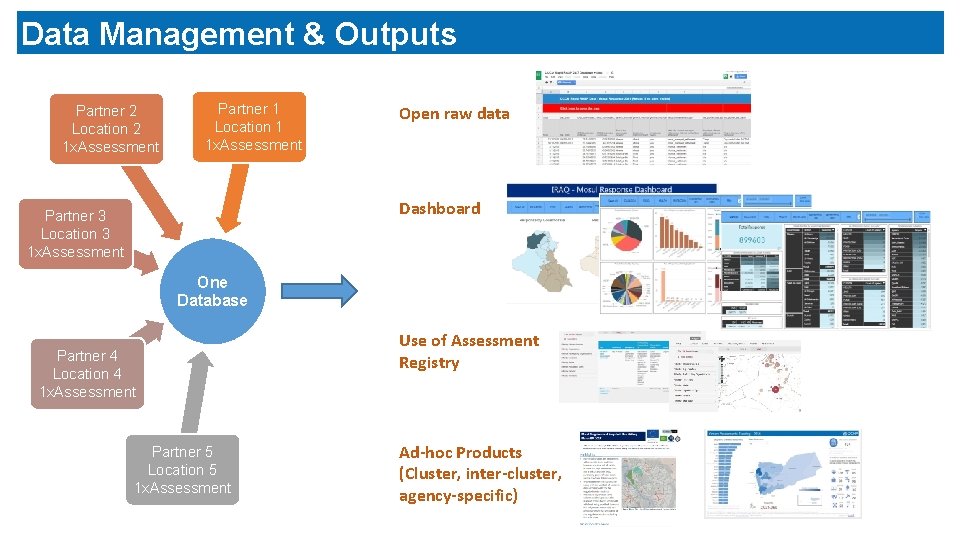
Our support • Open data: curated data stream available for clusters and partners for further analysis. Confidential and sensitive data will be removed from the dataset. • Advocacy, outputs and visibility – dashboard and ad-hoc products. • Coordination – facilitate coordination of response and assessments through identification of gaps and overlaps. • Tech support – briefings, trainings, one-on-one sessions. • Lessons Learned – improvement/scaling of the methodology, tool, assessment plan, etc.
Data Management & Outputs Partner 2 Location 2 1 x. Assessment Partner 1 Location 1 1 x. Assessment Open raw data Dashboard Partner 3 Location 3 1 x. Assessment One Database Partner 4 Location 4 1 x. Assessment Partner 5 Location 5 1 x. Assessment Use of Assessment Registry Ad-hoc Products (Cluster, inter-cluster, agency-specific)
. Questions?