
The Radical Risings of 1820 1 Research project
- Slides: 30
The Radical Risings of 1820 1
Research project GWE, Paisley and District, Falkirk, and Perth U 3 A local history groups. • • Who are we? Why did we decide to carry out this project? How did we approach it? What had we planned to do with our work? 2
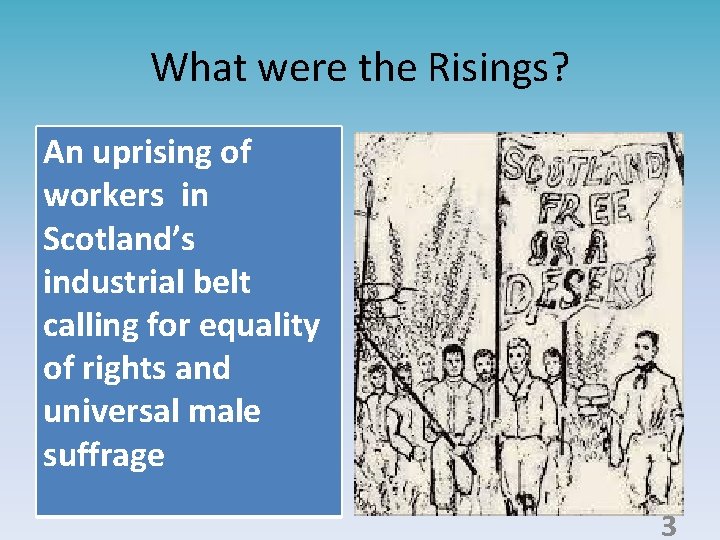
What were the Risings? An uprising of workers in Scotland’s industrial belt calling for equality of rights and universal male suffrage 3
Why did the Risings occur? th 18 Since the late century new political philosophies had been emerging. . . 4
• In 1775 Americans launched a war for independence from Britain, based on the idea that government should exist only by the consent of the people. • In 1789 The French Revolution began and revolutionaries adopted the Declaration of the Rights of Man and of the Citizen. 5
• In 1791 The political activist Thomas Paine published ‘The Rights of Man’ setting out the idea that government should support: � life, �liberty, �free speech, �freedom of conscience, and �civil rights. 6
• In 1792 a year of protest took place in Scotland. People were dissatisfied as: Ø Less than 1% had the right to vote. Ø Many also felt that the lairds should not be the ones to choose the ministers of local churches and that it should be ordinary people who had this right. • Reformers set up organisations, known as the Friends of the People, across Scotland to campaign for democratic voting rights. 7
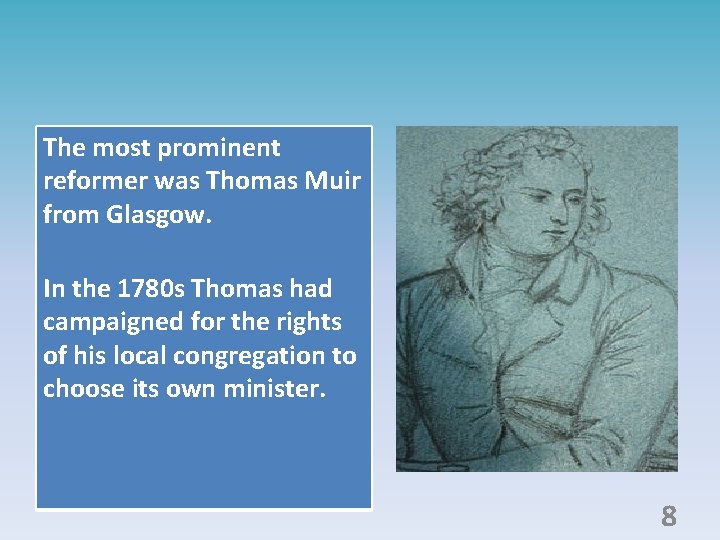
The most prominent reformer was Thomas Muir from Glasgow. In the 1780 s Thomas had campaigned for the rights of his local congregation to choose its own minister. 8
• In 1793, Thomas set up Friends of the People Associations in Kirkintilloch and surrounding areas. • Thomas was arrested , put on trial for sedition, and sentenced to 14 years transportation to Australia. His trial speech promoting democratic ideals became famous around the world. 9
• In 1797 reformers set up a new body, the ‘United Scotsmen’, but the Government again clamped down and the organisation disappeared. • Radicals lost heart for a time • However, in the opening decades of the new century dissatisfaction again increased. . . . 10
• Wages were decreasing and taxes on necessities were increasing (the infamous ‘Corn Laws’). • There was widespread unemployment as soldiers returned from the Napoleonic wars and people migrated from the Highlands. • Workers had no way of expressing their discontent as they had no vote and trade unions were banned. 11
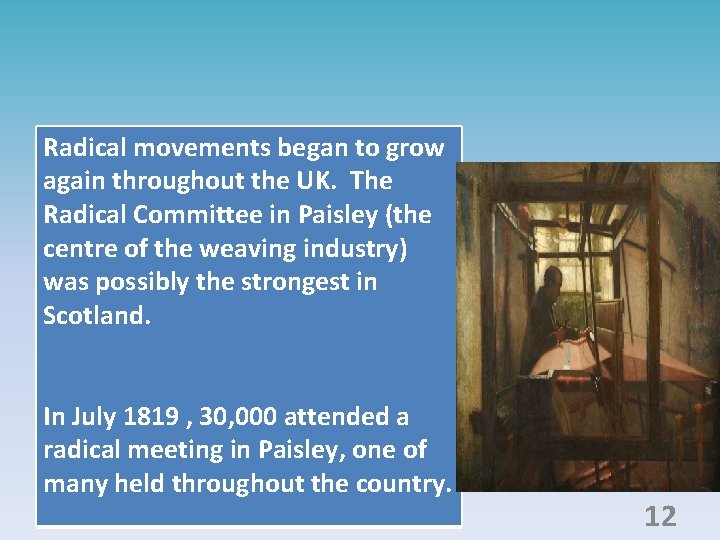
Radical movements began to grow again throughout the UK. The Radical Committee in Paisley (the centre of the weaving industry) was possibly the strongest in Scotland. In July 1819 , 30, 000 attended a radical meeting in Paisley, one of many held throughout the country. 12
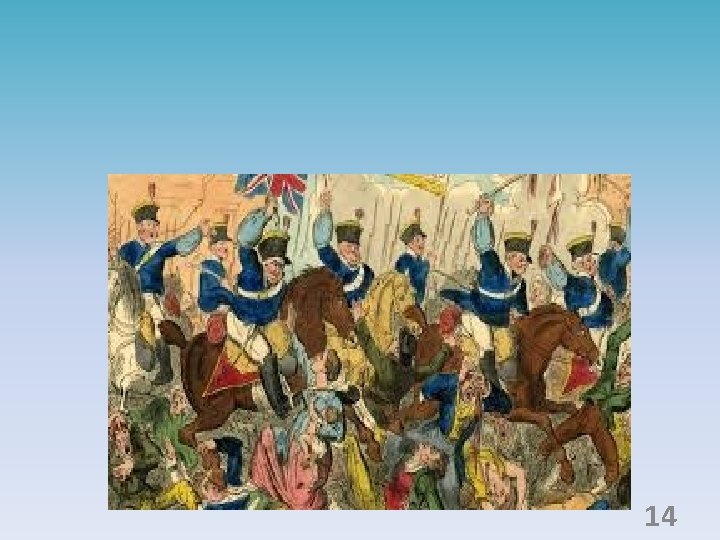
• In August 1819, 60, 000 people attended a meeting in St Peter’s Fields, Manchester in support of parliamentary reform and repeal of the Corn laws. • The military dispersed the meeting by force resulting in the death of an estimated 18 people and injury to nearly 700. • Newspaper headlines referred to it as the ‘Peterloo massacre’. 13
14
• In September 1819, thousands gathered on Meikleriggs Moor, Paisley to protest the Peterloo massacre. • Authorities deployed the military. • The Riot Act was read out. • Radical leaders were arrested. 15
Over the next few months: • A Scottish radical newspaper was launched but suppressed after 11 issues and the editor sentenced to transportation. • Large scale gatherings continued. • The editor of Glasgow Herald, an anti-Radical, requested permission to establish his own Yeomanry. 16
Finally, on 1 April 1820: • An Address, signed by the ‘Committee of Organisation forming a Provisional Government’, was posted in Glasgow, Dumbarton, Stirling, Renfrew, Lanark and Ayr counties. • It called for a general strike in support of worker demands. • Some historians have suggested that the Address was the work of Government spies to justify the forceful suppression of radicalism. 17
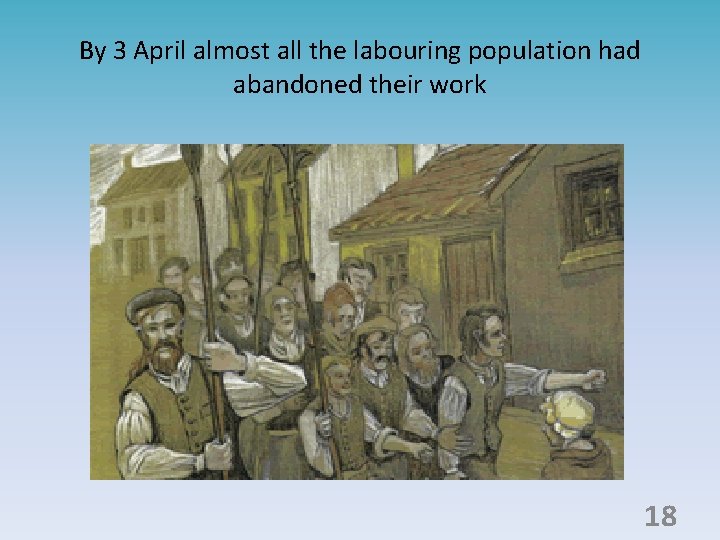
By 3 April almost all the labouring population had abandoned their work 18
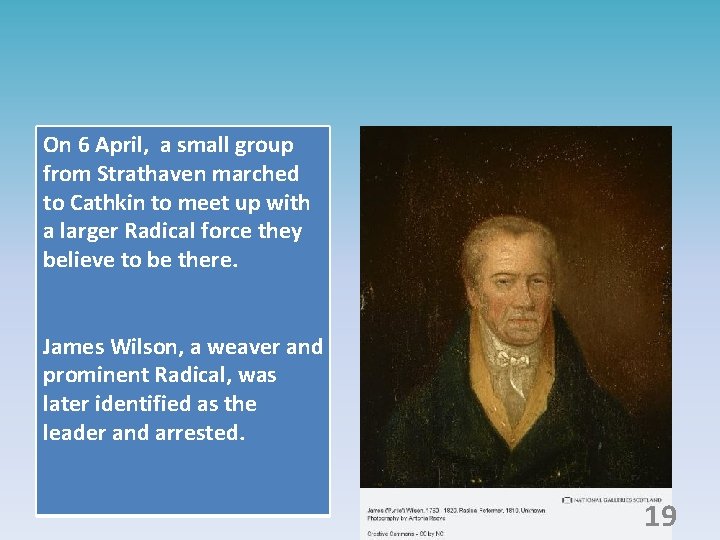
On 6 April, a small group from Strathaven marched to Cathkin to meet up with a larger Radical force they believe to be there. James Wilson, a weaver and prominent Radical, was later identified as the leader and arrested. 19
• On 5 April , a small group of radicals, including John Baird and Andrew Hardie , weavers and former soldiers, marched on the Carron Iron Works, Falkirk. • They were defeated by troops and arrested. The incident became known as the ‘Battle of Bonnymuir’. 20
How did the authorities respond to the Risings? • The Government fortified bridges over the Clyde with cannon. • The wealthy moved what they could into the Royal Bank of Scotland vaults. • The authorities sent troops to Paisley. During the following days these troops fired on the crowd and charged with fixed bayonets, killing two and wounding several. 21
• On 8 April, the Provost of Paisley asked troops to transfer five prominent Radical leaders to Greenock jail. • Crowds gathered in Greenock. The troops fired, resulting in nine deaths, including an eight-year old child, and several wounded. • The crowd made their way to Greenock jail, smashed in the wooden gates and released the five prisoners. 22
• The Risings, however, were effectively over. • Authorities had rounded up known Radicals. • Many other Radicals had fled the country, some never to return. 23
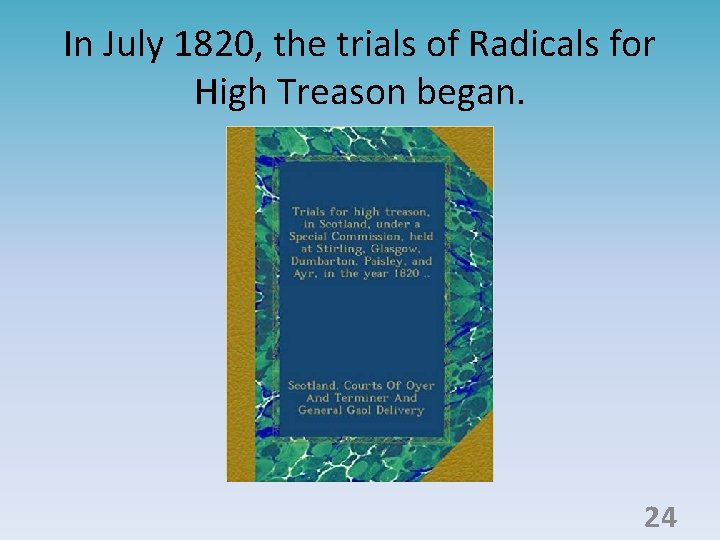
In July 1820, the trials of Radicals for High Treason began. 24
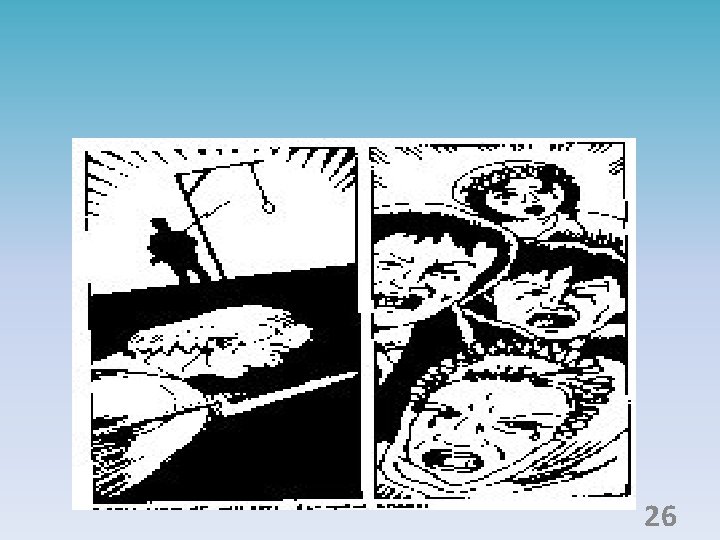
• At Court in Stirling John Baird and Andrew Hardie were sentenced to death. • At Court in Glasgow James Wilson was sentenced to death - despite the jurors’ pleas to the Court for clemency. • Other accused were sentenced to transportation. 25
26
Other trials took a different turn: • Jurors at trials in Paisley refused to convict the accused. • At court in Ayr, charges were dropped against three of the accused. Another was sentenced to be executed but the sentence was later remitted. • Charges against accused due to appear at Court in Dumbarton were also dropped. • It seemed the government wanted no further embarrassments such as they had suffered in Paisley. 27
Nevertheless, the Radical movement had been dealt a major blow from which it took years to recover. Postscript: In 1832, an exposure of the ‘spy’ system operating in 1820 was s published and those who had been transported were granted pardons. 28
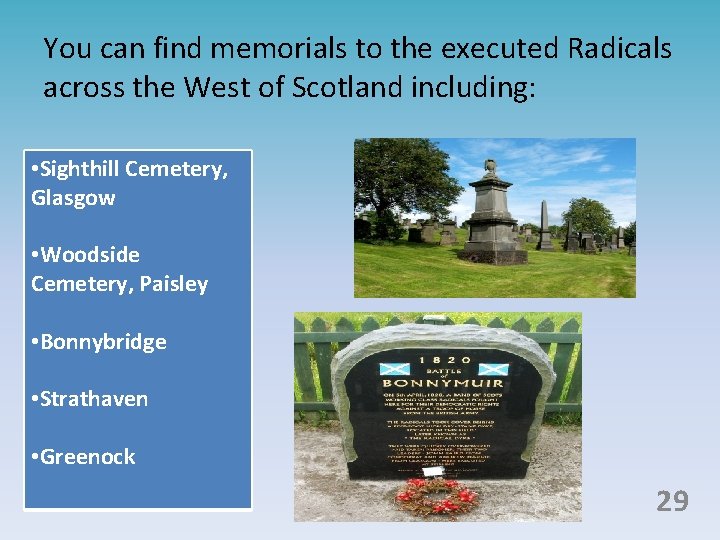
You can find memorials to the executed Radicals across the West of Scotland including: • Sighthill Cemetery, Glasgow • Woodside Cemetery, Paisley • Bonnybridge • Strathaven • Greenock 29
The journey continues. . . . • In 1832, the right to vote was extended from 5, 000 to 60, 000 men and in 1867 and 1884 was extended a little further. • In 1918 it was extended to all men over 21 and women over 30 who meet a property qualification. • In 1928 women were given the vote on the same terms as men. • In 1969 the voting age was reduced from 21 to 18. • In the Scottish Independence Referendum 16 year olds were able to vote. 30